2,000 Scientists gather at city Infosys

Deliberate on space studies

Mysore, July 14

More than 2,000 scientists from 75 countries have gathered at the Narayana Murthy Centre of Excellence (Infosys campus, Hebbal) in city to deliberate on contemporary topics in the realm of space over the weekend.

The week-long gathering will witness presentations on over 3,600 scientific papers, posters and reports through more than 630 sessions, according to Indian Space Research Organi-sation (ISRO), which is hosting the event — 39th Scientific Assembly of the Committee on Space Research (COSPAR) with the theme ‘Space — for the benefit of Mankind’.

This conference is cohosted by Infosys Limited. The conference starts with ‘International Academy of Astronautics day’ today and the scientific sessions of COSPAR will start from July 15. The opening and awards ceremony of the conference will be held on July 16.

Accommodations

Apart from the boarding and lodging facilities provided for the delegates in the Infosys campus, rooms in more than 26 major hotels of city have been booked for the delegates, it is learnt.

Tight security arrangement has been provided by the N.R. Sub Division Police led by ACP C.D. Jagadeesh, with 150 Police personnel posted at the campus. Sniffer dogs squad, finger-prints experts and bomb detection squad have been checking every nook and corner of the campus since the past three days and will be posted there for three days after the event too.

Prof. U. R. Rao, former Chairman of ISRO, is Chairing the COSPAR Scientific Programme Committee. Dr. Giovanni F. Bignami, Chairman of European Space Agency’s Advisory Council, is the current President of COS-PAR, founded in 1958 by the International Council for Science. COSPAR is one of the foremost space science research associations.

source: http://www.StarofMysore.com / General News/ July 14th, 2012


Meghana, Fakeerappa sparkle

Bangalore, July 14,2012 DHNS:

High jumpers Jesse, Srishti shine as Karnataka win four gold on second day.

Meghana Shetty and Fakeerappa V Bangi conquered the hurdles events in style while Jesse Sandesh and Srishti Sunil soared to gold medals in high jump as Karnataka enjoyed a profitable day in the 9th National Youth Athletics Championships at the Sree Kanteerava Stadium on Saturday.

Meghana set a meet record en route to the girls’ 100M hurdles gold medal, asserting her status as the best in the country in her category at the moment. She had won the Junior Federation Cup gold earlier in the season and picked up a bronze in the Senior inter-state meet last month in Hyderabad.

Belgaum boy Fakeerappa dominated the boys 110M hurdles while Jesse proved a cut above in the high jump pit. Srishti had to endure a close battle in high jump, finishing first on a countback with 1.54 metres as  Karnataka finished the day with four gold medals.
The 17-year-old Meghana, a trainee of VR Beedu clocked 14.06 seconds to improve upon the meet record of 14.43 set by Haryana’s Pooja in 2004. The II PU student of Mount Carmel College had a quick start and led all the way through to fetch Karnataka their first gold of the day.

Fakeerappa, hailing from Bijaguppi but training in Sports Authority of India’s Dharward centre under PC Jagannathan, too was a comfortable winner, clocking 14.51 seconds for his first gold medal at the national level.  He had won two silver medals in the Junior Nationals in hurdles and pentathlon two years ago at the same venue. C Shivakumar, also of Karnataka took the bronze.

Gaonkar-ward Jesse, had unveiled his potential in the State meet a few days ago with a 2.06M leap, went down a notch but still clinched the gold medal, sailing past the bar at 2.04 metres.

Late in the evening, Orissa’s Dutee Chand completed a double, equalling the meet and national records in the girls’ 200 metres in 24.49 seconds. Ranjita Mahanta had set the mark two years ago.

Dutee had won the 100M on Friday, with Ruma Sarkar and Himashree Roy of Bengal taking silver and bronze. On Saturday, Himashree took the silver and Ruma the bronze.
Results: Boys: 200M: Ramanand (Madhya Pradesh) 22.08 seconds, 1; Kamberdeep Singh (Punjab) 22.31, 2; Gaurang Rajendra Ambre (Maharashtra) 22.47, 3.

110M hurdles: Fakeerappa V Bangi (Karnataka) 14.51 seconds, 1; Rahul Kumar Mishra (Jharkhand) 14.63, 2; C Shivakumar (Karnataka) 14.91, 3.
2000M steeple chase: Loverinder Singh (Jharkhand) 6:04.14, 1; Vivek (Rajasthan) 6:12.05, 2; Shijo Rajan (Kerala) 6:16.59 3. High jump: Jesse Sandesh (Karnataka) 2.04 metres, 1; Sreenith Mohan (Kerala) 2.02, 2; Ajay Kumar (Haryana) 2.00, 3.   Discus throw: Sachin (Haryana) 56.67 metres, 1; Ashok Kumar (Madhya Pradesh)
51.63, 2; Rajat Kumar (Orissa) 44.59, 3.

Octathlon: Akit Sani (Haryana) 5539 points, 1; Amolak Singh (Maharashtra) 5237, 2; Amal Manohar (Kerala) 5093, 3. Javelin throw: Parvinder Kumar (Haryana) 66.09 metres (NMR. Old: 64.09, Naveen Kumar), 1; Satyendra Kumar (UP) 63.09, 2; Shiv Pal Singh (UP) 61.85, 3.

Girls: 200M: Dutee Chand (Orissa) 24.49 seconds (Equalled National Record) 1; Ruma Sarkar (Bengal) 25.12, 2; Himashree Roy (Bengal) 25.13, 3.
100M hurdles: Meghana Shetty (Karnataka) 14.06 seconds, (NMR. Old: 14.43, Pooja) 1; Arya T S (Kerala) 14.81, 2; Dhanalakshmi (Tamil Nadu) 15.03, 3. 2000M steeple chase: Neha (MP) 8:24.71, 1; Safeeda M P (Kerala) 8:25.47, 2; Lovely Tiwari (MP) 10:23.34, 3. High jump: Srishti Sunil (Karnataka) 1.54 metres, 1; Nikita Kochrekar (Maharashtra) 1.54, 2; Sangeetha P G (Kerala) 1.54, 3.

Discus throw: Manisha (Haryana) 39.62 metres, 1; Jyoti (Haryana) 38.68, 2; J S Priyanka (Karnataka) 36.52, 3.
Javelin throw: Kumari Sharmila (Haryana) 47.09 metres, 1; Abha Khatun (Bengal) 40.50, 2; Prajitha C K (Kerala) 38.91, 3.

source: http://www.Deccan Herald.com / Home> Sports / DHNS, Bangalore / July 14th, 2012

Karnataka on way to retaining crown

Chennai,July 14,2012 DHNS

Likith SP sparkled with yet another national record as Karnataka stayed on course to retain the overall title in the 39th Junior National Aquatic Championships at the Velachery Aquatic Complex here on Saturday.

Defending champions Karnataka won eight gold medals on the penultimate day. Likith, who lowered the 100M breaststroke national mark on the first day, clocked two minutes 20.12 seconds to pocket the boys’ Group II 200M individual medley title. The Basavanagudi Aquatic Centre swimmer in the process erased the nine-year old mark of 2:22.21 created by Aditya Sangvekar of Maharashtra.

Results: Boys: Group I: 400M freestyle: Mitesh Manoj Kunte (Kar) 4:12.52, 1; Ajay A (Kar) 4:15.52, 2; Vedant Rao (Mah) 4:18.87, 3. 200M backstroke: Pranam B (Kar) 2:12.10, 1; Rohit Imoliya (MP) 2:14.30, 2; T Sethu Manickavel (TN) 2:17.50, 3.
50M butterfly: Rakshith U Shetty (Kar) 26.69 seconds, 1; Bobby Rana (Dli) 26.93, 2; A Govind Chakkaravarthy (TN) 27.00, 3.

200M individual medley: Arvind M (Kar) 2:14.60, 1; R Vishak (TN) 2:19.52, 2; Akhilesh Ram (Kar) 2:20.06, 3.

Group II: 400M freestyle: Md Yaqoob Saleem (Kar) 4:27.83, 1; Amitesh Raghav (Mah) 4:29.60, 2; Ishaan Jaffer (Mah) 4:29.75, 3. 200M backstroke: P Mukundhan (TN) 2:22.92, 1; Vedant Seth (Dli) 2:23.01, 2; M Kireety (AP) 2:26.15, 3. 50M butterfly: Shubham Upadhyay (MP) 27.38, 1; Ishaan Mehra (Mah) 28.60, 2; N Sriniram (TN) 28.77, 3.
200M individual medley: Likith SP (Kar) 2:20.12, NR (2:22.21, Aditya Sangvekar, Maharashtra, 2003) 1; Jason Smith (Mah) 2:20.81. BMR; Shwejal Mankar (Mah) 2:26.54, 3.

Girls: Group I: 800M freestyle: Pratima Kollali (Kar) 9:38.87, 1; Anusha Mehta (TN) 9:44.84, 2; Ashritha N Bharadwaj (Kar) 9:51.61, 3. 50M backstroke: Ananya Panigrahi (Mah) 2:32.23, 1; R Sushmitha (TN) 2:32.42, 2; Tulasi R Haritsa (Kar) 2:32.62, 3.
50M butterfly: Shivani Kataria (Har) 30.33 seconds, 1; Mugdha Mallareddy (TN) 30.35, 2; Rujuta Bhatt (Mah) 30.49, 3.

200M individual medley: Priyanka Priyadrshni (Dli) 2:30.00, 1; Kanchi Desai (Mah) 2:31.72, 2; VKR Meenakshi (TN) 2:32.21, 3.
Group II: 1500M freestyle: Aakanksha Vora (Mah) 18:03.83, NR (Old: 18:26.99, Surabhi Tipre, Maharashtra, 2007) 1; Nikita Bhaiya (TN) 19:25.78, 2; Nivya Raja (TN) 19:55.29, 3.
50M backstroke: Neha Prasad (Mah) 2:32.31, 1; Gitanjali Pandey (Guj) 2:32.73, 2; Akanksha Mahapatro (Dli) 2:37.99, 3.

50M butterfly: Damini K Gowda (Kar) 30.48 seconds, 1; Sherlyn Meghna Devadason (TN) 31.32, 2; Akanksha Mahapatro (Dli) 31.34, 3.
200M individual medley: Aakanksha Vora (Mah) 2:29.44, NR (Old: 2:31.43, Kanchi Desai, Maharashtra, 2010) 1; A V Jayaveena (TN) 2:30.03, 2. BMR; Akanksha Mahapatro (Dli) 2:35.57, 3.

Water polo (semifinals): Boys: Bengal bt Karnataka 7-1. Girls: Kerala bt Karnataka 12-1.

source: http://www.DeccanHerald.com / Home> Sports/ DHNS, Chennai, July 14th, 2012

Govt schools to start LKG, UKG

Bangalore:

Now on, the government schools will start providing kindergarten classes as well. As many as 31 government schools in Bangalore Rural will get LKG and UKG classes from this academic year.

The initiative is part of a pilot project headed by the department of public instruction and department of women and child welfare. The classes will be held either in the anganwadi centres if they are attached to the schools or free classrooms in the government schools. The project was taken up after the realization that many parents are attracted to private schools as they offer kindergarten.

This was attributed as one of the reasons why the enrollment dropped in the government run schools. The 31 government higher primary schools will also begin class 8 as part of the continuous comprehensive evaluation system. The system considers class 6 to 8 as higher primary and class 9 and 10 as high school.

source: http://www.timesofindia.indiatimes.com / Home> City> Bangalore / by Sruthy Susan Ullas / TNN / July 09th, 2012

Roadkings parade on city roads


Today is International Jawa Day

Mysore, July 8

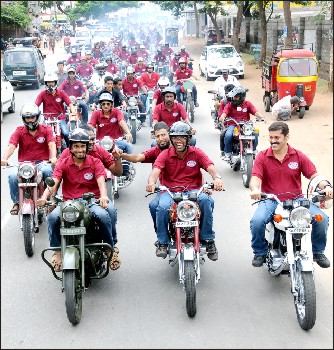
Vintage Jawa Yezdi bike-lovers had a gala day in city this morning with the CZ Jawa Yezdi Owners’ Club taking out a rally of Jawa and Yezdi bikes as part of International Jawa Day.

About 150 participants from Mysore, Bangalore, Tamil Nadu, Kerala and Goa took part in the rally which was flagged off from Doddakere Maidan by DCP Basavaraj Y.Malagatti at 10 am.

Gavin Wilson, one of the organisers, told Star of Mysore that this rally is being organised since 2007 in city.

He said that among the 150 participants of the rally, 65-year-old Das and 10-year-old Jaden (pillion rider) were the oldest and the youngest.

The rally consisted of bikes such as Jawa / Yezdi 350 Twin Type, Jawa 250, Yezdi 250 Roadking, Yezdi Colt, Yezdi 250 CL II, Yezdi Deluxe, Yezdi Classic etc.

Curious onlookers, both the young and old, cheered the Roadkings as these machines cruised past them.

The rally, which was flagged off from Doddakere Maidan in front of Mysore Palace, passed through Chamaraja Double Road, Ramaswamy Circle, JLB Road, Ballal Circle, New Kantharaj Urs Road, Vijaya Bank Circle, Vishwamanava Double Road, Open Air Theatre Road, Kalidasa Road, Nirmala Convent Road, Mysore Akashavani Road, Dhanvantri Road, New Sayyaji Rao Road and Highway Circle, and culminated at Bannimantap Torch Light Parade Grounds

source: http://www.StarofMysore.com / General News / July 08th, 2012

Farmer’s daughter discovers green pesticide

Bangalore:

This 15 year-old from Puttur saw her dad losing his cocoa crop to pests. It spurred her to start work on making a bio-pesticide with five plant extracts. The invention finally took her to an international competition in the US in May.

When Sindoora Saraswati walked on to the stage, hundreds of government school children gathered at the Shikshakara Sadan were bowled over. “I am a farmer’s daughter. I also hail from a village, like many of you. Whatever small thoughts you have, start implementing them,” she said.

This Class 10 student from Vivekananda English Medium School, Puttur, best describes scientific temper. Sindoora was speaking as part of Intel India’s ‘Intel Future Scientist Programme’ in Karnataka. She was part of the five-member team that represented India at Intel International Science and Engineering Fair in the US.

Raghavendra Ramachandra, who just completed his Class 12, astounded the fair with his project in organic chemistry along with Sindoora. He will be at Sweden this December to witness the Nobel award ceremony. His project was about using sunlight to rejuvenate fuel.

Intel India, with an aim to instill scientific temper among students and teachers, is planning to reach out to seven districts in the state. Four specially designed mobile vans will be sent on a Vigyan Yatra to attract onlookers with science exhibits with on-board scientists and science material. They are expected to tour each district for three days, conducting science workshops for students. They plan to reach out to 500 teachers and 5,000 students.

The programme will consist of seven modules delivered over two days of training, comprising inquiry-based learning and facilitating scientific inquiry. It will help science teachers present their curriculum from an inquiry-based perspective to help build a spirit of research and innovation in students.

Primary and secondary education minister Visvesvara Hegde Kageri said: “The government is also coming up with a lot of initiatives to encourage children to take up Science. Entrepreneurs and companies should come forward to adopt schools. If organizations want to invest money in social service, they should look at education as a priority.”

source: http://www.articles.timesofindia.indiatimes.com / Home> City> Bangalore> Scientific Temper / TNN, June 28th, 2012

Empowering The Filipino People : EMPOWERING PEOPLE

AT this time of economic and political flux in major power centers around the world, this columnist has been privileged to visit India once more to perform an important task. The Malaysia-based “Asia Human Resources Development Congress” is holding its 2012 International Conference, Exhibit and Awards at Bangalore on 10-12 July with the theme “So You Want To Succeed?” and has invited FVR as keynote speaker.

Under the guidance of founder Dato’ Dr. R. Palan, the Asia HRD Congress – surprising to many – is managed by Malaysian graduates of our Asian Institute of Management who have attained national prominence in their respective professional fields and in government service.

Its most eminent sponsor is Malaysia’s First Lady, Datin Seri Rosmah Mansor, herself an AIM alumna. Indians, on the other hand, constitute the largest number of foreign AIM graduates – including several now in government ministerial positions and in Parliament.

Silicon Valley of India

The capital of the southern State of Karnataka, Bangalore (aka Bengaluru) is India’s proud showcase, and among the world’s top 10 preferred entrepreneurial locations.

As an Asian metropolis, Bangalore is home to many famous universities and research institutions plus numerous heavy industries, software companies, aerospace, telecommunications, and defense organizations. Bangalore is known as the “Silicon Valley of India” because of its position as the nation’s leading IT exporter. A demographically diverse city, Bangalore is the second fastest growing metropolis in India, next to Mumbai.

Blessed with a salubrious climate (at 3,000 feet elevation) and a legacy of the ancient Mysore maharajahs consisting of gardens, parks, natural lakes, and architectural landmarks, Bangalore is the ideal gateway to modern India for business opportunities.

In crafting its 2012 theme, the Asia HRD Congress explains that: “Today’s Human Capital (or HRD) is seen as the ‘DNA’ of organizational and professional success and consists of ‘competencies, knowledge, and personal attributes embodied in the ability to perform labor to produce economic value.’ At the individual talent level, it points to qualities gained through education, training, and experience.”

Human capital management is closely connected to employee passion, increased productivity, and superior performance to achieve organizational success.

India And The Philippines

Like many other Filipinos, we empathize with India because it is so like the Philippines – multiplied a dozen times. Our countries are very similar – as vibrant and “disorderly” democracies with colorful cultures, intense factionalism, dysfunctional politics, and even the gap between the few who are very rich and the many who are very poor among our peoples.

India today is unique in its immense pool of world-class young people in science and technology. But there was a time – not too long ago – when India’s economy and educational system were so out of synch that its renowned universities and management institutes were, in effect, producing engineers, scientists, doctors, and economists for export to the US  and Europe.

The Philippines, too, exports professionals and workpeople instead of goods; our 10 million migrants and overseas workers are spread out in some 135 countries – although they remit home well over 18% of our annual GNP.

While the bustling Philippine call centers have apparently overtaken those of India, we hire only 3 to 5 applicants out of every one hundred interviewed. Joblessness remains high at 7.1% compared to regional rates.

New Perspectives In HRD

Since the world is turning into a global village because of revolutionary information/communication technologies, it is time now for India, the Philippines, and other ASEAN countries to enhance formation of socio-economic, cultural, and professional networks; encourage mobility of talent across borders; and expand our cooperation to insure a brighter future for younger generations.

The Asia HRD Congress offers a dynamic learning platform from which to understand emerging issues and chart success paths for organizations. Everywhere, government agencies and corporate entities need to comprehensively assess and change approaches to human capital management. For instance, what new parameters must be brought in? What old ways must be discarded? Which “best practices” are to be adopted? What national policies should be crafted to encourage healthy competition?

Will this new learning culture encourage innovation and knowledge production? Relatedly, how will leaders balance: (a) purchasing power and markets, (b) inclusiveness and economic efficiency, (c) environmental conservation and economic production, and (d) people empowerment and economic growth?

Components Of HRD

Foremost among the learning tracks identified by the Asia HRD Congress are:

Transformational Leadership. “Transformation” may be a much abused word, but in the context of human capital, it means reaching out beyond mundane transactions that result in incremental change. It is about motivating people to achieve goals that may appear impossible or beyond reach. Such leaders do not wait for things to happen but instead face risks and dive into the unknown to make transformations reality.

Performance Pipeline (Talent). Effective managers who enable workers to perform efficiently make the difference between success and failure. They reward innovation and drive growth. Successful players know how to unlock human potential and insure long-term success by creating a continuous talent pipeline.

Active Learning. Organizations need “learner engagement.” With engaged learners, “learning cycle” time is reduced, retention is enhanced, and transfer of learning to the workplace is accelerated dramatically.

Human Capital Frameworks. Strategic management of human capital is necessary to ensure that human resources are effectively developed – because optimizing human capital is more demanding than ever. An organization’s mission/vision may require fundamental shifts in the way employees and organizations interact. Positivism in human capital management provides comprehensive support to elevate team performance.

Passion/Purpose/Engagement. Bringing passion to work in a job is vital to individual and organizational productivity. It will overcome the “Thank God It’s Friday” syndrome. With passion, the workplace can be fun, challenging and rewarding, and the entire organization surpasses competition.

Striving For Excellence

Among the recurring themes in FVR’s speeches, writings, and interaction with others, especially the younger generations (to whom we must pass on accumulated wisdom), is the virtue of striving for excellence in everything that we do. Excellence should become the driving force to become globally competitive.

As Kuya (elder brother) in the extended Filipino family of almost 100,000,000 souls, FVR has pushed many to raise the bar of achievement in their respective fields, guided by a culture of excellence in every aspect of their professions, business operations, and personal relations.

Recall FVR’s mantra: “People empowerment leads to a culture of excellence, and results in global competitiveness.” Excellence simply means being better than the others.

Our intent in sharing “best practices” is not the “who,” but the “why” and the “how.” It is not to imitate but rather to learn from each other’s experiences and to improve upon them.

Diplomats like to talk about increasing global opportunities in our time. As modern technology brings far-flung or untapped markets closer to people’s doorsteps, we do believe that – by that very fact – our chances toward global success automatically increase.

Only The Best Is Good Enough

The Ramos Peace and Development Foundation (RPDEV) has continued to keep in touch with the rest of the world, particularly with those countries that have become our partners in win-win endeavors, and whose successes and “best practices” could serve as worthy role models.

We have seen that transformative decision-makers never settle for what is easy and convenient, or for what is contrived and merely improvised. They study, analyze, and plan until what they wish to achieve is clearly configured and understood in the minds of all who must help bring about success. They align their resources and focus these on the attainment of the mission/vision. They are relentless and unforgiving about unnecessary distractions and diversions. They forego small comforts and instant gratification because only the best is good enough for them. They keep learning from previous experience and constantly search for ways to do better next time around.

They keep track of what the competition is doing and have the humility to accept where they may be falling short so that they can quickly make necessary adjustments to stay apace or even take the lead.

Nurturing Philippine Excellence

Such is the “Culture of Excellence” that has enabled some nations that are smaller than ours, or whose natural resources are more limited than our own, to achieve much more than we have done – in terms of economic development and, as a consequence, people’s quality of life.

IF WE PERSIST IN INCORPORATING THIS “CULTURE OF EXCELLENCE” INTO EVERY FACET OF OUR LIVES, AND ENCOURAGE OTHERS IN OUR FAMILIES, COMMUNITIES, AND ORGANIZATIONS TO SETTLE FOR NOTHING LESS THAN THE BEST THAT WE CAN DO OR BECOME, THEN THE OVERALL IMPROVEMENT OF OUR LIVES WILL LIKELY BECOME A REALITY AND NOT JUST AN IMPOSSIBLE DREAM.

TO BE BETTER THAN THE OTHERS IN ECONOMIC COMPETITIVENESS, SOCIAL RESPONSIBILITY, AND PEOPLE’S QUALITY IS EVERY NATION’S AIM. INDEED, A.I.M. IS MORE FUN IN THE PHILIPPINES!!!

Please send any comments to fvr@rpdev.org. Copies of articles are available atwww.rpdev.org.

source: http://www.mb.com.ph / Manila Bulletin Publishing Corporation / by Fidel V. Ramos, Former Philippine President / July 07th, 2012

Young singer’s musical saga

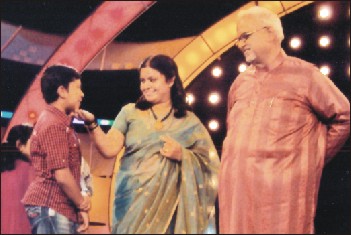
Caption: Jaswanth being greeted by well-known playback singers Sangeetha Katti and Dr. S.P. Balasubramaniam at ETV’s Ede Tumbi Haaduvenu singing contest.

Mysore, July 6

It is said that true talent cannot be hidden for long and comes forth at a very young age. This has been proved to be especially true in the case of D.K. Jaswanth, an 8th std. student of Marimallappa School in the city.

Son of K.V. Dattatreya and Jaya, residents of Siddhartha Layout in city, Jaswanth began to sing at an incredibly young age of four and went on to win the State-level Bhavageethe contest at age five.

The versatile youngster is learning senior grade Karnatak classical music under Vidu. Dr. Sukanya Prabhakar apart from Sugama Sangeetha under Divya and also keyboard.

His musical saga began with the Chinnara Loka (2005) programme in Udaya TV and Saregamapa Little Champs (2007-08). He bagged runner-up place in ETV’s Ede Tumbi Haaduvenu contest (2009-10). He has also sung many songs for Mysore Akashavani in 2009-10.

Jaswanth went on to win many laurels with first place in Kuhu Kuhu Kogile singing contest organised by Amoghavahini and Sad-hana Music, apart from being bestowed the title Mysore Kogile. Other titles too have followed him including Mandya Kogile.

His first places are not restricted to TV channels alone; he won the singing contest held at Amba Bhavani Temple in NR Mohalla in city, bagging the title Bhavani Ganasiri. He also won the Bhavageethe contest in the State-level Prathibha Karanji competition and the singing contest held under the aegis of Kannada & Culture Department.

At present, Jaswanth has been selected to sing in well-known playback singer Rajesh Krishnan’s music album. He has also lent voice to Muddu Madesha cassette with renowned singer B.R. Chaya and a solo CD Geethegala Gayana. Hope this young singer’s musical saga continues to reach greater heights.

source: http://www.StarofMysore.com / General News / July 06th, 2012

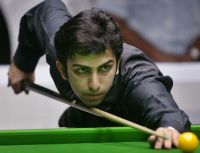
Mane & mirror are Pankaj Advani’s obsessions

©CyberMedia News
source: http://www.ciol.com / Home> News / by Preeti S / Monday, July 02nd, 2012

Rs 100 cr for renovation of monuments

The Union government has released a sum of Rs 100 crore to the State for renovation of historic monuments maintained by the Archaeology Department.

Of the 24,000 monuments in the State, 700 come under the purview of the State Archaeology Department. The money will be used to renovate them over a period of four years, said Basavaraju, Secretary to Kannada and Culture, Information Department here on Wednesday. As many as 100 temples had been renovated in association with Dharmasthala Manjunatheshwara Trust.

While the Trust and the Department have shared the expenses at 40 pc each, the temple managements and local people have contributed the balance 20 per cent, he said.  Infosys Foundation had come forward to take up renovation of the Someshwara temple at Lakshmeshwara in Gadag district at a cost of Rs three crore, he said.

The grants being given to drama companies which have completed 25 years would be increased soon. Monthly honorarium is being paid to about 1,600 artistes and around 1,000 applications seeking the allowance have been received. The Finance Department had given approval to provide honorarium to 400 more artistes this year, he said.

source: http://www.DeccanHerald.com / Home> State / DHNS, Hubli, July 04th, 2012