The Infosys Science Foundation on Tuesday announced the winners of the Infosys Prize 2013 across six categories: Engineering & Computer Science, Humanities, Life Sciences, Mathematical Sciences, Physical Sciences and Social Sciences.
The winners were recognised for their outstanding achievements and contributions to scientific research. The Infosys Science Foundation also announced an increase in the prize purse by Rs 5 lakh to Rs 55 lakh for each category for 2013. The prize for the humanities category will be split equally between the two winners.
Prize winners include, Ramgopal Rao from Indian Institute of Technology, Mumbai in Engineering and Computer Science; Nayanjot Lahiri, Professor – Department of History, University of Delhi in Archaeology; Ayesha Kidwai, Professor – Centre for Linguistics, School of Language, Literature and Culture Studies, Jawaharlal Nehru University in Linguistics.
Rajesh Gokhale, Director, Council of Scientific and Industrial Research – Institute of Genomics and Integrative Biology, New Delhi in Life Sciences; Rahul Pandharipande, Professor – Department of Mathematics, Eidgenössische Technische Hochschule, Zürich (ETH Zurich) in Mathematical Sciences; Shiraz Naval Minwalla, Professor – Department of Theoretical Physics, Tata Institute of Fundamental Research in Physical Sciences; and Aninhalli R Vasavi, Senior Fellow, Nehru Memorial Museum and Library in Social Sciences.
Member of Infosys Board Srinath Batni said, “Continuing its efforts to encourage and attract young minds towards science and research in the country, the Foundation has decided to increase the prize money from Rs 50 lakh to Rs 55 lakh with an aim to build a strong future in science, mathematics and humanities.”
The seven winners were chosen based on significant progress showcased in their chosen spheres, as well as for the impact their research will have on the specific field.
In addition to the prize purse, each category award includes a gold medallion and a citation certificate. The winners of the Infosys Prize 2013 were evaluated by a panel of jurors comprising eminent scientists and professors from around the world.
source: http://www.deccanherald.com / Deccan Herald / Home> Business / DHNS / Bangalore – November 12th, 2013
(Top) Prof. U.N. Ravi Kumar (Below) Prof. Ravi Kumar showing Anila stove.
By Depalan
Mysore :
Prof. U.N. Ravi Kumar is a man driven by passion and reminds you of what Aristotle once wrote ‘Energy of mind is essence of life’. A practical man that he is, Prof. Kumar has taken a step further, from creating awareness to creating actionable awareness. He is a pioneer of sorts as when he was a Professor at National Institute of Engineering (NIE), Mysore, he initiated the Centre for Appropriate Rural Technology (CART).
There was a realisation that there were many technologies available for rural development but the target group for whom these technologies are designed, namely the rural and the poor, were not getting the benefits due to lack of proper implementation. Prof. Kumar firmly held Gandhian thought of technology as a means to empower and not to enslave.
Accordingly the Centre, under his aegis, took initiative to collect available information on rural technologies, compile them and methods to disseminate them to people needing technological assistance. He is known for his tireless efforts in Ecological Sanitation as also Rainwater Harvesting and Biochar Stove. The common feature being dissemination of technology in a practical and sustainable manner, using locally available materials and requirements that makes it affordable and easy to use.
Ecological Sanitation or EcoSan is sustainable and eco-friendly model for toilet which conserves water, prevents contamination and recycles human waste as sanitised manure. The objective being to protect human health and environment while reducing water consumption in sanitation system and recycling nutrients to help reduce need for artificial fertiliser in agriculture.
EcoSan works on the principle of keeping the solid waste separate from liquid, consequently there is a separate exit for urine. Unlike faeces, urine is full of nutrients hence diluted and used as fertilizer. Sanitation is a major issue in India with staggering 65% people not having access to proper sanitation facilities and forced into open defecation. These open faeces are extremely harmful and contaminate air, water and soil.
This has contributed to spread of communicable diseases. Lack of water is a major concern as also the cost involved in laying drainage system and so on. This is where EcoSan toilets gain critical significance. Further, even in areas where water tables are at comfortable levels the flush toilets and septic tank seepages tend to contaminate groundwater and thus are polluting and disease spreading. The case is worsened in water logged areas.
EcoSan provides a perfect solution to these problems and has revolutionary potentials. It is a safe, sustainable and affordable sanitation solution. With increasing population and pressure on natural resources, EcoSan provides an effective alternative model.
There are roadblocks, the most important being, as Prof Ravi Kumar puts it “we have faecal-phobia”, we as a society don’t want to talk about faeces or matters related to toilet. “We just want to flush it down, literally!” This issue also has socio-historical baggage and tends to excite extreme emotions among people. The reason why these are neglected at the policy making level, ironically with detrimental effect on common people. Thankfully with much determination and persuasion EcoSan is now functioning as a pilot project in three locations at Udupi, Bangalore rural and Raichur district through UNICEF intervention.
As a community initiative, EcoSan toilets have been adopted in Mosara Halla in H.D. Kote and Kurabara Kunte in Devanahalli as also by schools in Doddaballapur, Krishnapura, Moodalakoppal and Kempammanahosur.
EcoSan toilet’s spin off benefit too is significant in terms of organic manure. “This will reduce the dependence on chemical fertilisers” asserts Prof. Kumar. Many farmers are falling into debt due deteriorating soil nutrient content caused by intensive use of chemical fertilisers, they are trapped in a vicious attritional cycle. Prof. Kumar informs “an individual’s faeces produces 7.5 kg of NPK over a year, this is the manure requirement for cereals that is consumed by an individual in a year. Life is in a self sustaining cycle”. It is not that these are new knowledge; many communities have been practicing these since ages like for instance the Tibetans.
Prof. Kumar points to Mahatma Gandhi as a source of inspiration, when he visited Wardha he found that Gandhiji practiced compost toilets. EcoSan generates opportunities that add value to human waste and decentralised waste management. Prof. Kumar has also been instrumental in the creation of Nesara, an organic farmer’s community in Mysore with a motto of safe food at affordable price.
Prof. Kumar took me to the porch of his house to show the model of Biochar stove, called Anila, he had developed that has earned him international repute. It is unique in its design as biomass fuel is placed between two concentric cylinders while the outer filling biomass undergoes pyrolysis thus produces biochar, these activated carbon helps in heat recovery and also negligible smoke.
Biochar has appreciable carbon sequestration value and is a soil enhancer, these highly porous charcoal helps retain soil nutrients and water. Also, biomass of any sizes could be added and therefore is not dependent on wood. “In villages there is a substantial bio-residues during agriculture related activities that go waste, like arecanut husk or coconut shell these can be turned into efficient biofuel and biochar manure,” informs Prof. Kumar.
Anila is a cost effective and efficient smokeless stove that is ‘carbon negative’. Though there is a demand for the stove in rural areas, Prof. Kumar is gloomy as he is not able to break even. There is an institutional support needed for these efforts apart from of course policy making that understands the needs of common people and sustainable development.
e-mail: depalan@gmail.com
[Depalan conducts Nature Walks in and around Mysore. He can be visited at www.iseeebirds.blogspot.com]
source: http://www.starofmysore.com / Star of Mysore / Home> Feature Articles / November 28th, 2013
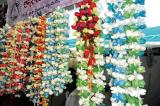
The recently concluded Krishi Mela in Bangalore had a head-turner. Displaying bouquets of multihued flowers, garlands and greeting cards, all created out of used and damaged cocoons, the Cocoon Craft stall was stunningly attractive. Holding bunches of artificial flowers modelling tulips, dahlia and rhododendron, the stalls were swarmed by many a well-heeled women who were attracted to the novelty of the art.
Cocoon shells, either damaged or discarded from silk reeling units, have traditionally been considered a waste product which are dumped in compost pits for their protein content. But no longer so. They are being turned into art by a growing breed of students pursuing sericulture.
The project to make art out of cocoon shells is the brainchild of Dr Fatima Sadatulla, a teacher in the Department of Sericulture at the University of Agricultural Sciences (UAS) in Bangalore. Fatima says the idea of using such an unusual material for craftwork came to her by chance. During her days as an undergraduate student at the UAS in the late 1980s, sitting amid cocoons scattered all around her, she would cut a few shells into various shapes, paint them and create artistic motifs for greeting cards. The pastime grew into a hobby, and, still later, began to take shape as an artistic skill.
Having joined the department as a teacher a few years later, she began to train her students into collecting damaged or waste cocoons from granages and cut them into various patterns, chiefly flowers. She began training students of sericulture four years ago under an entrepreneurship scheme. She would collect damaged cocoons from the Central Silk Board office in Madiwala to teach students. She would even train women farmers during her project work in sericulture farms.
The production of this craft has also been undertaken on a larger scale at the College of Sericulture in Chintamani by Vijeyendra who teaches there and was among the early trainees at the UAS. The college has even organised training camps in several villages around Chintamani. He says two NGOs, Aadhar and Swabhimana Sangha in Chintamani and Kolar taluk respectively, have begun producing bouquets and garlands in large quantities and are selling them in shandies in the nearby towns of Andhra Pradesh and Tamil Nadu.
Several physically disabled persons too have been trained in the art. The college which received finance from the UAS towards a revolving fund, is now able to generate enough revenue to sustain its activities. Vijeyendra says the bouquets and garlands could have a shelf life of two years. But careful preservation under glass cases can ensure a life span of ten years.
The transformation of cocoon shells into such arts and crafts certainly signals the emergence of a new art form. With districts of Old Mysore being the bastion of silk farming, the new art form has unlimited prospects for expansion.
source: http://www.deccanherald.com / Deccan Herald / Home> Supplements> Spectrum / by M A Siraj / DHNS – November 26th, 2013
The Dariya Daulat Bagh (Tipu Sultan’s summer palace) at Srirangapatna in Mandya. Superintendent of Police Borase Bhushan Gulabrao has suggested that the Tourism Department appoint trained guides at popular tourism spots in the district. / File photo / The Hindu
‘Develop well-known religious places into tourism hubs’
Superintendent of Police Borase Bhushan Gulabrao has suggested that the Tourism Department initiate measures to give a boost to religious tourism in Mandya.
Mr. Gulabrao convened a meeting of religious leaders at his office on Sunday.
He said there were several tourism spots of religious importance in the district. “However, many tourism spots are yet to be developed,” he said.
The district has war memorials, archeologically important temples, ancient churches, centuries-old mosques, Buddhist temple and other pilgrimage-cum-tourism destinations.
Emphasising the need to promote religious tourism in the district, Mr. Gulabrao requested department officials to develop well-known religious places into tourism hubs.
Uniforms for guides
He said that thousands of tourists came to Srirangapatna every day to visit the tourism spots. But, guides did not have enough knowledge about the historical significance of places in the town. The department should provide information and uniforms to the guides, Mr. Gulabrao said. He suggested that the department appoint trained guides at popular tourism spots in the district.
‘Several plans made’
Adilakshmi, Assistant Director of Tourism Department, also underlined the need to promote religious tourism in Mandya.
She said the department had several plans to strengthen pilgrimage-cum-tourism destinations in the district.
Suggestions received
Mr. Gulabrao and Additional Deputy Commissioner Shankarappa received suggestions during the meeting on popularising religious tourism. Karnataka Dalit Sangharsh Samiti leader Venkatagiri, activists Jayaramu and Mahesh, senior citizen Shivaramaiah, social worker Mehboob Pasha and others requested the district administration to develop Kere Thonnur, Kere Thonnur dargah, Kunti Betta, Balmuri waterfalls, war memorials at Srirangapatna and other popular tourism spots by improving infrastructure.
Additional Superintendent of Police Puttamadappa, Deputy Superintendents of Police B.J. Shobharani and Geetha were present.
source: http://www.thehindu.com / The Hindu / Home> News> National> Karnataka / by Staff Correspondent / Mandya – November 11th, 2013
Sunday Soul Sante, in association with Bangalore Mirror, was the place to be spotted at in the city on Sunday
When the ball-of-white-fur Django walked into the Sunday Soul Sante on his leash escorted by his owner, he was in for a treat — from colourful stalls, to fashionably dressed folk of different ages and lots of food treats… It was a mela.
It was a spectacle of Bangalore’s fantastic community spirit at this new venue at Embassy Riding School in Devanahalli. Geared to bear the sun with their shades and scarves, Bangaloreans were in for a picnic after an hour long drive from MG Road to the venue. “What I love about this venue is that there is no garbage or plastic or dust around,” says Asha Rao (59), founder, Soul Sante. “There is greenery all around. It’s a beautiful location.”
The average age group of visitors was between 20 to 28 and everyone at the venue shared equal enthusiasm. During the Bangalore Mirror Talent Show, children from the age group of 4 to 10 danced, sang and did some mimicry. The one that stood out was five-year-old Kaya Gupta who sang Give me some sunshine from the flick Three Idiots. “This was her first stage performance and we will walk out of this festival remembering that forever as proud parents,” says her mother Gunjan Gupta. Apart from the Talent Show stage that had people crowding around and cheering contestants, every stall had people hovering around shopping or window shopping.
From Meghna Khanna’s new jootis to Jayant Srikumar Gauri’s glow lanterns and even Manjunath’s OWL lamps, people were spoilt for choice at the Sante.
Many youngsters head to the Sante in search of kitsch stuff. Pink Jalebi was one such stall where youngsters were looking for laptop sleeves, purses and phone cases. Another popular stall was Rishabh Sachdeva’s Chalk Peace. This artist makes his works on Power Point. “It takes me three days to make a piece and Power Point is my canvas,” says Sachdeva as he shows off a notepad with a cover of his. Including the multiple food stalls serving a range of cuisines, there were 250 stalls at the Sante.
The crowd puller though was definitely Amrapali Shindhe’s melodious voice. While she performed at the main stage, people would rush from any corner of the festival just to hear her cover of Adele.
Rao concludes, “If I can pull the crowd here, I’d love to be in this serene location forever.” The crowd she did pull, because by 7 pm, it was bursting at the seams.
source: http://www.bangaloremirror.com / Bangalore Mirror / Home> Bangalore> Others / by Khushali P. Madhwani, Bangalore Mirror Bureau / November 12th, 2013
There’s the Adam’s Family, the Jetsons, the Simpsons and The Flintstones and then there is Bangalore’s very own biker family —the Acharya family. This family of five — mother Jayashree, 56; father GV Acharya, 64; brother Srikanth, 31 and sister-in-law Namitha, 30 — led by daughter Shubra Acharya, holds the Limca Book Record of being the only family to have crossed the world’s highest motorable pass the Khardung La pass in Leh in 2011.
Riding through the 18,379 ft pass, Shubra, anardent biker, says, “We felt like we had conquered the world! My father owned a Bullet. Since then, we are familiar with the thump of the bike.”
It was during her MBA in 2010 that Shubra’s brother got her a Bullet Classic 500cc on her birthday. The brother-sister duo would set out on road trips around Bangalore with their dad; who would borrow a bike from friends and set out on a road trip. “I would write about the trips on my blog. Once my mother read the stories and wanted to be with us on a trip.”
It was during the Tonnur Kere ride on Mysore Road in December 2010 that they decided on a bike trip to Ladakh. “We just wanted to do it with mum. So we coaxed her to ride pillion with dad.”
It was a surreal experience for the Acharya family. “We stopped after the two and- a-half hour ride from Leh to the top of the pass and were drinking a lot of lemon tea because it was freezing,” says Shubra. They met other bikers who told them to send applications to the Limca Book of Records. They garnered two records: GV Acharya at 64 became the oldest man to have crossed the pass and the Acharya family became the “largest family” to have conquered Khardung La pass. For this family, no mountain is too high!
source: http://www.bangaloremirror.com / Bangalore Mirror / Home> Columns> Work / by Ayesha Tabussum, Bangalore Mirror Bureau / November 11th, 2013
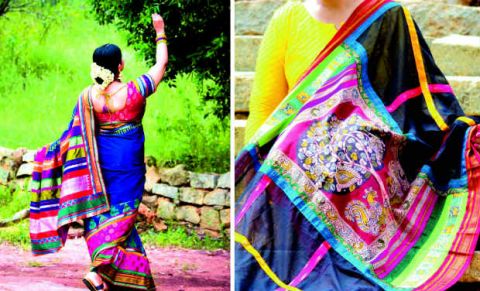
“Clothes are like an extension of one’s personality, so it really shouldn’t matter from which part of the world it comes,” believes Lavanyaa KR, a 30-year-old techie-turned-fashion designer. This Bengalurean is blowing minds away with her vibrant collection of South Indian traditional wear, titled Varnanggall.
“Varnanggall is a Tamil word for ‘colours.’ It’s about an artiste’s dream and vision to paint the world with her colours!” explains a passionate Lavanyaa. She is the light at the end of the tunnel for all those desis stuck abroad desparately planning their wedding.
“Based on my travels to some parts of the globe I sensed that people abroad were missing the online presence of an ‘affordable, unique 24 carat’ Indian traditional wear. I found it difficult to plan my wedding sitting in Boston, USA in spite of the existence of many e-commerce Indian fashion platforms,” she explains.
Her clothing line comprises sarees, dupattas, stoles and langa dhawanis. She also has home décor items. The starting price of a saree during an exhibitions is Rs 3,500.
During October, she held an exhibition called Aalapana in Bengaluru and was stunned with the response. “I will remain forever grateful to all the ladies for trusting and accepting this budding artiste,” she smiles.
Moving to UK with her husband helped her expand the reach of her products. She has sold her products in India, USA, UK, Dubai, Australia, Finland, Germany, Malayasia, Singapore and Canada. She informs that there is a mad demand for Indian traditional wear all over the world, “Especially the South Indian traditional wear with zari work, traditional temple borders, kalamkari motifs, block prints, vibrant colours and beautiful workmanship,” all of which she offers.
What makes her clothing so accessible is that she operates entirely on Facebook. “With the confined investment in my kitty, it was not feasible and practical to set up a physical store. So I opted to work online,” she says, but she says a new store is “positively in the pipeline.” She has been strongly supported by her family and friends, who model for her brand and help her gain popularity. “My friend Supriya even wrote about me in her blog Aalayam and has helped my customer base know who I really am,” she says, sounding grateful.
Lavanyaa doesn’t just design. She also loves to bake, photograph, visit flea markets and charity shops. “I enjoy collecting artwork, swimming and doing pottery as well. But quality time with my family tops my list,” she concludes.
source: http://www.deccanchronicle.com / Deccan Chronicle / Home> Lifestyle> Fashion-Beauty / by Agencies/DC Online / by Swathi Chatrapathy / November 10th, 2013
(1-Top Left )Sabu, the elephant boy. (2-Top Right) Sabu with his father, a mahout (3- Middle) This is the rear of the building from where Kennedy was shot and killed. (4-Bottom) The memorial like a wall with vertical lines at the spot where Kennedy delivered his last speech. Dr. Sunder Raj is seen standing by the side of the information plaque.
A couple of days back, an old friend of mine from Bangalore had come to meet me and casually asked if Dr. J.K. Sunder Raj, a well-known family doctor of our city, had hung his stethoscope. Since I am in regular contact with him either in the Sports Club or Mysore Race Club or in connection with the Zoo (where he treats the gorillas), I answered in the negative.
“What makes you think Dr. Sunder Raj has called it a day and closed shop?” I asked.
It seems my friend had gone to see him at his clinic on Old Mysore Bank Road in city and found there was no clinic. That was news for me too. I called him on telephone to check. Yes, indeed he had closed his city clinic, but continues his service to the sick families from his house on Vivekananda Road in Yadavagiri. It was then that the good doctor said he was wanting to see me personally to hand over a unique newspaper that he had purchased in Dallas, Texas, where he had been recently to be with his daughter.
As promised, he came to my office with his special newspaper and more. The cover page of the newspaper is produced here… and the headline is self-speaking.
The daily newspaper ‘The Dallas Times Herald’, in its Friday evening Nov. 22, 1963 Final Edition, had carried world’s most shocking and tragic news of the day that happened in the city from where the paper was published. The assassination of US President John F. Kennedy. Looking at the paper that appeared as pulled out from the well-preserved archive, I wondered how our doctor managed to get the paper which will have huge antique value ! He asked me to take it easy. There is nothing like grabbing an old copy of that day of tragedy of Nov. 22, 1963. The credit for making available this copy of the newspaper to tourists should go to the Curator of Kennedy Museum at Dallas where Dr. Sunder Raj purchased it by paying $ 4.60. The cover price of the newspaper in 1963 was five cents.
The Museum authorities periodically print this historic newspaper as it was printed on that tragic day and sell them. What better souvenir one would want for visiting the Kennedy Museum ?
I took a copy of it before returning the original to the doctor and wondered if anything like this is being done at Gandhi Museum or Nehru Museum in our country. Readers with information on this may please write or e-mail to me.
Dr. Sunder Raj also gave me two photographs he had taken — one of the building from where Lee Oswald, the assassin, shot the President from the sixth floor which has now been converted into a Museum and another, the spot where President Kennedy delivered his last speech.
Dr. Sunder Raj also had two more surprise photographs with him which were of personal nature. One was a photograph he had clicked in the year 1951-52 at the elephant stables of the Maharaja, known famously as ‘Anekaroti.’ Now the new generation as also of the old generation may not know that the Anekaroti ever existed in Mysore, attracting huge number of tourists those days.
The stable was located where the JSS Hospital Complex is now. There used to be 20 to 25 elephants, well fed and healthy, says the doctor. The area of the Anekaroti used to be green and cool with plenty of trees, adds Dr. Sunder Raj.
The doctor recalls: Once a team of Hollywood film-makers visited Mysore in around 1950. They also visited the then famous Anekaroti. As they went around Anekaroti, they saw a young, bright and handsome boy playing with a huge elephant. His name was Sabu Dastagir who later became a famous Hollywood actor under the name Mysore Sabu (27.1.1924 – 2.12.1963). He was born in Karapore in H.D. Kote, the famous hunting forest of the Maharaja of Mysore. His father was a mahout (elephant attendant) and trainer of elephants. Sabu, his son, too was following his father’s profession where he was spotted by the Hollywood film-maker Robert J. Flaherty.
Dr. Sunder Raj says that Robert Flaherty persuaded Sabu’s father to let him take Sabu to Hollywood. Once in the US, Sabu was taught English and given training in acting.
Sabu acted in several English movies, specially connected to the jungles. His first movie was ‘Elephant Boy’ which was a great hit. Other movies were ‘Song of India,’ ‘The Jungle Book,’ ‘The Thief of Baghdad’ etc. It is sad that such a talented Mysore boy died young at the age of 39.
To those working to develop Mysore as a tourist destination, I may suggest that they revive the ‘Anekaroti’ which is sure to become a tourist attraction. Some lessons from the ‘elephant show’ of Bangkok’s ‘Rose Garden’ may be learnt and incorporated to this Anekaroti. Howzzat?
source: http://www.starofmysore.com / Star of Mysore / Home> Abracadabra….Abracadabra / by K.B. Ganapathy, Editor e-mail kbg@starofmysore.com / November 18th, 2013
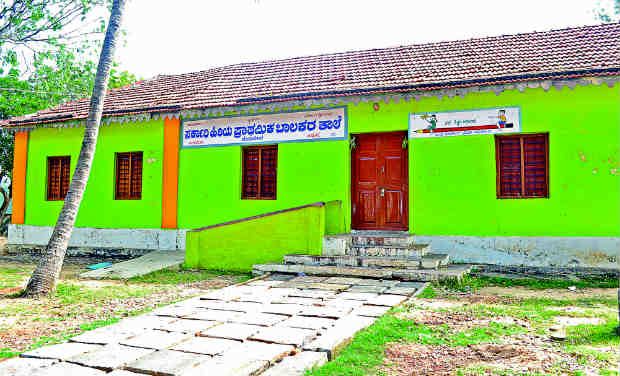
Kannada poet Purohita Thirunarayana Narasimhachar, or PuTiNa as he is more popularly known, did his schooling here as did many other prominent figures. But the 138 year old government Kannada primary school in Melkote, Mandya district lacks even basic infrastructure, and its students continue to sit on the floor as the classrooms are bereft of chairs or desks.
Located on the main street of Melkote, the school has produced prominent journalists like Khadri Shamanna, and judges such as Justice Shivappa, but in 2012 it nearly lost its identity.
Concerned by its poor student strength and lack of basic facilities, the government seriously considered merging it, despite its history, with other, more ordinary institutions. The school, which boasted of 300 students, was left with only 32 at the time.
But fortunately for the institution, education officers and teachers came to its rescue and worked collectively to give it a face-lift.
Thanks to their efforts it now has 85 students and its walls have received a fresh coat of paint after decades. The school compound has been rebuilt and the teachers have sunk a borewell in its grounds to solve its drinking water problem.
But the school clearly has a long way to go as it still has no chairs, desks, a computer learning centre, study or sports material.
Having done everything they could, the teachers say they can do no more and it is upto the government and philanthropic organisations to provide all the equipment the school needs. It is time they acted considering the illustrious alumini it has produced, they emphasise.
source: http://www.deccanchronicle.com / Deccan Chronicle / Home> News> Current Affairs / DC / by S V Krishna Chaitanya / November 12th, 2013
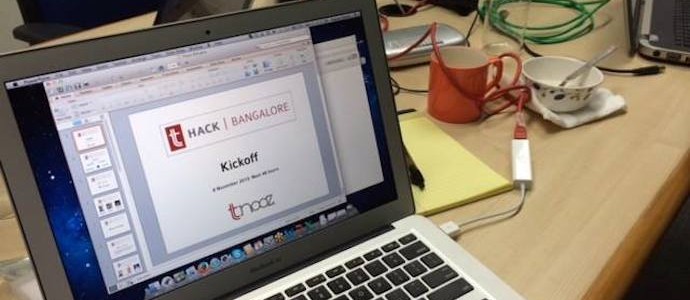
For the first time in India, a travel vertical focused hackathon (THack) took place in the country’s own Silicon Valley – Bangalore.
THack Bangalore was planned to be slightly different from the other THacks we have been doing for a few years.
In our regular hackathons (recent ones in SFO, Boston, Sydney ), we make travel APIs available to developers in advance. Participants are given eight (sometimes more) days to build hacks/products on top of the APIs and, finally, present at a showcase on the final day.
However, THack Bangalore (hosted at Cleartrip‘s Bangalore office) turned the idea around, with no travel branded APIs made available – rather, a 48-hour, open hackathon concluding on midday Sunday 12 pm on November 10.
The event attracted 60 developers forming 22 teams. One team among the 22 included students, the remaining 21 teams were developers and engineers working at various companies.
Participants came from a string of organisations including Amadeus, Nibodha Technologies, RedBus, C-soft Technologies , TripThirsty, OLA Cabs, Cleartrip , Yahoo, Armor Technologies, FindMyCarrots , and PayPal.
Tnooz CEO Gene Quinn briefing developers.
Highlights
Amadeus had two teams involved in the event – one developed a service which alerts a traveller about local events during his/her travel. The other team developed a trip recommendation engine based on user’s social media data.
The team from Armor built NFC-based use cases for the airline industry. For example: A traveller browsing and buying inflight products and food using NFC technology.
Yahoo hackers built a marketplace for finding information regarding destination related souvenirs – browse, read, customize and buy souvenirs.
Teams from RedBus built crowd-sourced location tracking engine for buses and cars. A number of travel planning hacks were also built in the event.
The judging team – Mahesh Murthy, founder of SeedFund; Ram Badrinathan, CEO of GlobalTHEN ; Mukund Mohan, head of Microsoft Ventures – focused on four areas: creativity, originality, technical proficiency, and business purpose/revenue scope.
Every team was given four minutes to present their final product to the judges and fellow participants, followed by two minutes of Q&A (these turned out on a number of occasions to live consulting sessions).
Third place
The third place was shared by two teams.
Hack 1: This team of three from Nibodha Technologies built a trend-based travel opportunity creation engine. Depending on a local trend, the engine creates automatic posts with travel content in it that can be posted to a company’s social media pages.
Example: Sachin Tendulkar’s last test match (before he retires) that is scheduled to happen in Mumbai is a local trend. The hack engine picks this trend, validates a travel opportunity, and creates a post something like this – “Travel to Mumbai to watch Sachin’s last test match, hotels in Mumbai starting at $50, book here: <a link>”.
Hack 2: This team of two from OLA Cabs built a personalized destination recommendation platform by retrieving data from Facebook friends. The team says:
“We were developing Facebook app for the first time. We spent nearly half the event time in figuring out auth-token and FQL. Best thing we did was we kept going, kept the spirits up. We didn’t know then, but others were struggling as well.”
Second place
This team of two from RedBus built a real-time group trip planning service – bringing people who wish to travel together into a closed group where they can discuss their travel ideas, share details, and create a travel plan.
All searches and destination suggestions by people (in a group) gets pinned to the group’s wall. Each pin can be upvoted or downvoted by group users. All of these activities happen realtime so that group users get an update.
The team used technologies like Node.js and Redis to enable real time communication between users. Also, Wikipedia pages were scraped and Google APIs like search, images, maps, places were used to aggregate a lot of information into pins.
The team also wrote an algorithm to find the best possible order of locations in cities to help users who do not have much knowledge about the location.
The team says:
“This was our first experience in a hackathon and it was a memorable one. From sleepless nights to Redbulls to long hours of coding and designing, it was fun and a good learning experience. We interacted with other teams and were able to understand and learn a lot. Also we got to know about a lot of interesting ideas that we never thought could help solve problems in travel.”
The winner
All three judges unanimously picked Salil Panikkaveettil. Working on his own, Panikkaveettil built a prediction service which will work out if an Indian railway’s wait-list ticket will be confirmed or not.
The Indian Railway is the fourth biggest train network in the world. Considering this fact and the technically challenged railway reservation service, there exists a good chance for a user to end up in wait-list status.
Panikkaveettil built PNR.me, a service which tells in advance whether a waiting list ticket will be confirmed or not with 75% accuracy, (a kind of Big Data hack). Panikkaveettil works as an online marketing analyst at BankBazaar.
Panikkaveettil was awarded Rs 50,000 for winning the THack, the second team was awarded Rs 30,000, and the third place teams were awarded Rs 10,000 each.
Judges pointed out that a number of the products had very good solution developed as hacks, but they lacked a real business problem which needed solving
They also pointed out that a hack always need not result in a big product/company, and only 2% of the hacks developed make it to become a big company.
source: http://www.tnooz.com/ TNOOZ / Home> Articles / by Karthick Prabu / November 13th, 2013