Puttur: Agriculturist takes up sandalwood farming to conserve species

Puttur : 

“Today the land of sandalwood is seeing its extinction; sandalwood trees are now an endangered species in India,” says Jairam Sharma, owner of a sandalwood nursery in Nelyadi.

Sharma is an agriculturist and his love for nature and concern for the environment led him to cultivate a sandalwood nursery on his 16 acre plot. Sharma started this model nursery ‘Chandana’, under the National Horticulture Mission, National Medicinal Plant Board, to grow the endangered species in 2003.

His mission was to provide more income to farmers and economically empower them, while increasing the extinct species ‘Santalum Album’ and ‘Pterocarpus Santalinus’ that are an asset to the nation and to the government.

Sharma is not only an agriculturist but is an expert on sandalwood plantation. He mourns for man’s perversion towards exploiting nature for his selfish wants.

He also said, “Karnataka is said to be the ‘Land of Sandal’ – ‘Gandhada Nadu’ – but what is the present of condition of  this land of sandalwood? Sandalwood trees are reaching extinction. Both Santalum Album and Pterocarpus Santalinus have become endangered species. Even the huge trees in the forest are trampled down by the smuggling mafia.”

Narrating the techniques of sandalwood cultivation, Sharma said, “Basically, sandalwood cultivation is well-suited for dry land. On one hectare, a farmer can cultivate 500 plants. Today, in Australia, sandalwood cultivation has become a regular crop.”

“Cultivated plants can be grown for 25 to 30 years, but it is viable at the age of 15 years and it gets good market value. The cost of a sandalwood plant depends on its age and height. Basically, the Santalum Album is a semi root parasitic plant. Sandalwood plant can also be cultivated as a mixed crop between Mango or Sapodilla plantations. Seeds of this plant can be used for fat extraction for soaps and detergents. Apart from this, it can be also used as cereal grains for food but it is not affordable to the common man,” says Sharma form his experience of cultivation.

“India is pioneer of sandalwood and East Indian sandalwood has wide demand and market throughout the world because of its quality. Till 2001, there was restriction on growing sandalwood. In 2001, the Act was amended with regard to growing sandalwood trees in Karnataka, where in 2003 the state government implemented the Act on growing and cutting sandalwood trees without any restrictions. But a farmer has to sell the sandalwood to government-owned bodies like Karnataka Soap Factory, Karnataka Handicraft Emporium, or to Karnataka Forest Department. Unfortunately, a farmer doesn’t have an open market for sandalwood,” said Sharma.

Sharma sells sandalwood plants from his nursery in states like Himachal Pradesh, Chhattisgarh, Bihar, Madhya Pradesh, Gujarat, Andhra Pradesh, and Orissa, but selling is not the sole aim. He also visits such places to check the condition of plants he has sold.

Talking on the products and demand of Red Sanders, he said, “Red Sanders is also used in preparing music instruments and idols especially which are exported to Japan. So, it has wide demand in the world.”

Sharma, feeling proud about his profession, says, “This profession gives me more peace and happiness where one can show love towards nature. If the market for sandalwood falls, no matter, but we can save this earth from global warming.”

As Franklin D Roosevelt said, “A nation that destroys its soil destroys itself. Forests are the lungs of our land, purifying the air and giving fresh strength to our people.”

source: http://www.daijiworld.com / DaijiWorld.com / Home> Top Stories / by DaijiWorld Media Network – Puttur / by Deekshith  D.V. / Tuesday – July 02nd, 2013

A tribute ….. : Passing of Dr. Parpia : End of an Era of active Activism in Mysore

Dr. Parpia with Andal Siddharthachary during “Save People’s Park” protest when he was 90 years young.

By Bhamy V. Shenoy, Convenor, MGP

How many top scientists we can identify in Mysore who after having achieved the pinnacle of success will take up the equally important role of questioning the status quo in our society and fight for the much-needed reform? But for Dr. H.A.B. Parpia, I have not come across any such person in Mysore.

With his passing on July 9 at the age of 91 years, Mysore has lost a great social worker with many outstanding qualities.

Just two weeks before his demise, he was busy writing letters to different authorities on the justification for awarding high grade to Amity University by NAAC. Since one year, he was collecting information on the amount of money spent on different Ministers in Karnataka using RTI.

Parpia was pushing the MGP members to publish an article using the information before the recent Assembly election so that voters can elect the right candidates.

He was very much agitated about the corruption in high places. He had gathered volumes of information through RTI on this issue and was very serious in exposing this malady in our democracy.

As an educationist, he constantly questioned the rote learning and examination oriented education system. He was involved in the management of People’s Education Trust (PET) as its Founder-President.

PET must have helped several hundred poor students from different parts of Mysore. He took active part in promoting education reform.

It was because of Parpia’s efforts as a member of MGP education committee that today students in Karnataka are able to get their answer sheets back to make sure they have been evaluated correctly.

Dr. Parpia was also instrumental in convincing the Education Department to stop announcing ranks based on public examination marks. He never believed that examination marks are the true indicator of one’s capacity. It is unfortunate that private schools/coaching centres are again highlighting “ranks” to promote themselves.

He constantly worried about the worsening traffic situation in Mysore. Whenever there was a new Police Commissioner he gave a lot of information which he had collected from different countries on how to improve traffic conditions. Because of his initiative, NIE conducted the first scientific traffic study of Mysore.

Soon after Bangalore Agenda Task Force was constituted, he wrote a vision paper for Mysore to convince the then Chief Minister S.M. Krishna to have a Mysore Agenda Task Force (MATF). He succeeded. He was one of the most active members of MATF constantly pushing the bureaucrats to improve governance.

Having spent one year in Sevagram serving Mahatma Gandhi, he imbibed many qualities (punctuality, men toring young talents, courtesy to all, never exceeding time allotted to deliver talks, etc.) at a young age.

Parpia never hesitated to stand for principles even if he was the only one in the group and consequences could work against him.

During Ayodhya riots in the city, Dr. Parpia took an active part to bring about peace in the city. Fighting for religious harmony and to get rid of casteism in the society remained his cherished goals till the last.

One of his great contributions to promote activism in Mysore was the role he played during the start of Mysore Grahakara Parishat (MGP) and also later as it took up civic issues. He never hesitated to call a spade a spade. He was never afraid to expose corruption even at the highest levels. This made him an unpopular figure in several government offices and also educational institutions.

Because of his scientific background, Dr. Parpia had the unusual talent of identifying the strategic factors needed for bringing about any reform.

A mantra he used to chant for any activist group (MGP, MATF, PET, etc.) he was involved, was that we need a sound policy, a good strategy and well thought-out plan of action to bring about any reform.

In Mysore today, sincere activists receive less gratitude than they deserve for the good they do. But Dr. Parpia soldiered on without worrying about bouquets or brickbats. Mysore will miss him.

Years to come, Mysore will be recalling the great service Dr. Parpia has rendered in the areas of education, traffic, environmental protection and above all governance.

source: http://www.starofmysore.com / Star of Mysore / Home> Feature Articles / by Bhamy V. Shenoy, Convenor, MGPJuly 11th, 2013

‘Hindustani music will be alive till Hindustan is alive,’ says 106-Yr-old Ustad

Ustad Abdul Rashid Khan of Kolkata is seen addressing the scribes in city this morning.  At left is Sarod maestro Pt. Rajiv Taranath.
Ustad Abdul Rashid Khan of Kolkata is seen addressing the scribes in city this morning. At left is Sarod maestro Pt. Rajiv Taranath.

Mysore  :

Mysore District Journalists’ Association (MDJA) had the fortune of inviting a centenarian guest for its regular interaction programme at Patrakarthara Bhavan in city this morning.

The guest was none other than the famous Hindustani vocalist, 106-year-old Ustad Abdul Rashid Khan of Kolkata, who is in city to perform on an invitation from SPIC MACAY (Society for the Promotion of Indian Classical Music And Culture Amongst Youth) and SJCE. During the interaction, the Ustad, who was felicitated by Sarod maestro Pt. Rajiv Taranath, said Hindustani music was given a lot of importance during the rule of kings but as days passed, the encouragement dipped.

The Government has been encouraging Hindustani classical music but there is a need for further encouragement, said Ustad Khan of Gwalior Gharana. He said he would speak to the concerned authorities regarding the steps to be taken to encourage Hindustani music in the State.

Speaking about his concerts throughout his professional career, he said that it was difficult to decide upon his best concert. He mentioned that till Hindustan would be alive Hindustani music will be alive, despite the craze of western music.

Ustad Khan said that it was important to popularise Hindustani music among children to carry forward the legacy.

Speaking about his daily routine, he said that he has only breakfast in the morning and dinner at around 11 pm. He does not have lunch in the afternoon and practices music throughout the day.

The Ustad was brought in a car to the venue and later shifted to a wheel-chair in which he sat throughout the interaction.

Born on 19th August 1908, he belongs to the musical tradition of Miya Tansen. Apart from khayal, he sings dhrupad, dhamar and thumri with equal versatility. Padma Bhushan Ustad Khan’s traditional compositions have been recorded by the BBC and Iraq Radio.

MDJA President C.K. Mahendra, General Secretary K. Deepak and others were present. The Ustad is scheduled to perform at SJCE today at 6 pm.

source: http://www.starofmysore.com / Star of Mysore / Home> General News / July 11th, 2013

Drops of Science

ProjectBF16jul2013

SUSHANT KULKARNI follows members of Project Meghdoot as they try to understand the monsoon by following the clouds

It is not raining. It seems as if the deep grey monsoon clouds have nothing to offer to this patch of north Karnataka, for the time being, at least. Inside a speeding minibus, a choir of 15 sing Kaale megha from Lagaan. As we come to the end of the song, a cooler breeze wafts in and the next moment the raindrops become the drum beat of the song.

The choir here is unusual, it comprises scientists, science students and meteorology-lovers who have set out on a journey to accompany the monsoon rains as they arrive in India in the first week of June and slowly proceed towards the Western Ghats. Our journey begins from Agumbe village in Karnataka, the Cherrapunji of south India, where the TV series Malgudi Days was shot. On the way, the team meets locals, studies the biodiversity of the landscape and takes weather readings to scientifically understand what the monsoon means to India.

The journey is a part of Project Meghdoot, an initiative of the Pune-based group Centre for Citizen Science and this is the third year of the activity. The aim is to gather, collate and analyse traditional knowledge about the monsoon from peoples across India and connect that with available scientific know-how.

Mayuresh Prabhune, a Pune-based freelance science journalist and researcher, who founded the group, says it is named after Kalidasa’s poem Meghadootam. “Like the yaksha who has been exiled to central India and who asks the clouds to take his message to the love of his life, who is in the Himalayas, we too travel with the cloud messengers. We meet people — fishermen, farmers, old people in villages.” He explains that Project Meghdoot consists of three teams of three or four members each; one team takes observations and readings of the biodiversity indicators of the monsoon. One tries to understand how the lives of people are affected by the monsoon by talking to people. Speaking to people provides an invaluable resource as knowledge about local climate has been accumulated over generations. Documenting these stories helps determine the long-term effect of man’s actions on the climate. And the third team focuses on taking readings of weather parameters like temperature, humidity, pressure, wind speed and direction.

In Agumbe, the group stays at the 120-year-old house of Kasturi Akka Shenai, which happens to be Swamy’s house in Malgudi Days. “The people we interviewed — most of them local villagers — told us that the rains have reduced significantly in the recent past. But the people at the local observatory in Agumbe told us that they see cycles of increasing and decreasing rain every six years. Both are important observations,” says Sumit Tambe, a member of the group who is an aerospace engineer.

Through interviews with the local police, members learned that after the onset of monsoon, the movement of Naxalite groups hiding in the jungles of the Agumbe also increases as it becomes difficult for the police to enter and comb the forests. An officer with an anti-Naxal cell of the Karnataka police says, that deployment of the police in villages increases during the monsoon.

On the picturesque mountain top named Kundadri near Agumbe, the group records the call of the Malabar whistling thrush. A group member, Spandan Waghmare says, “A particular whistle is a mating call that one hears only in the monsoons.” The same call is also recorded in Amboli, another beautiful spot in the Konkan, “The call is as melodious as a song,” says Waghmare.

Every morning, you see members of the group recording the calls of toads, frogs and crickets. Ashutosh Alekar, a zoology student says, “To us, all those noisy calls may seem alike. But in reality, the calls vary from species to species, with differences in duration of the call, the pitch and the intensity. We can also see an increase in the population of insects like ants, bugs, grasshoppers and arachnids.” All these observations are discussed during the group meetings that are held every night on the six-day tour.

From Agumbe, the group moves to Karwar in Karnataka and then reaches Goa on the fourth day. Throughout the journey, heavy rains accompany the group. On the way, they meet farmers from whom they learn that the arrival of pre-monsoon showers has shifted ahead and these areas are receiving less pre-monsoon showers. Spandan says, “In Goa the fishermen told us that they predict the arrival of the monsoon when a species of fish is seen swimming on the surface to avoid sea current and when a particular snake is spotted in the waters. We will be verifying these observations and try to find out if they have any scientific basis.”

The group is also accompanied by acclaimed Canadian filmmaker Sturla Gunnarsson, who is making a film on the monsoon. He says, “Travelling with the group was wonderful. I experienced parts of India I would never have seen otherwise, in the company of young people, optimism and scientific inquiry.” The film is about the season, as experienced by people. Gunnarsson adds, “It deals with the spectacle, the science, the cultural and spiritual dimensions of the rains. I found the project exciting as it attempts to reconcile scientific knowledge with ancient, traditional knowledge, in search for a new narrative for the subcontinent.”

In the last phase of the journey, the group comes to Mhaswad village in Sangli district of Maharashtra, an area that was badly hit by drought this summer. The group visits a camp set up during summer to provide fodder to cattle. A group member, Sneha Kulkarni says, “This part of Maharashtra receives rains mostly during two Nakshatras — the constellations that mark the time of the year — Rohini, that is the end of May and Hasta, the beginning of August. But this year, they have not received rains during Rohini. They wish there was no need for fodder camps.”

As the group readies to end their week-long journey, they pore over hundreds of photographs, dozens of weather parameter readings, and observations on biodiversity and recordings of interviews. Some of the data will also be submitted to institutes like Agharkar Research Institute and Indian Institute of Tropical Meteorology in Pune for analysis.

As the luggage is unloaded from the buses the group seems to share the thought that the monsoon can be better understood but never fully known in India.

source : http://www.indianexpress.com / The Indian Express / Home / by SushantKulkarni / New Delhi – June 30th, 2013

Live the, music

While it may be some time before the Centre for Indian Music Experience joins Bangalore’s skyline, the project’s head Manasi Prasad takes After Hrs on a virtual tour through India’s first experiential music museum.

MusicBF16jul2013

The idea of having 50,000sq.ft of space dedicated to music is like a dream come true for each one of us who loves music. The Centre for Indian Music Experience (IME)  then is that idea taking concrete shape even as you are reading this story. And because a crucial part of bringing the endeavour to life is her responsibility, the project has classical singer Manasi Prasad gunning on all her wheels, excited, nervous and full of hope.

“As the name suggests, the Centre for Indian Music Experience is a place dedicated to appreciation of Indian music in all its facets,” opens Manasi Prasad, adding, “You may also view it as a centre where people can participate in making music.” She takes care to point out however that, “while IME is a music museum, I don’t want people wrongly associating it with the stereotypical images they generally have of a museum — of it being staid, dusty and boring.” “Today, museums the world over, have become places associated with education and enrichment. On a similar vein, you may view IME as an interesting, fun-filled place to engage with music,” explains Manasi.

Verily why, “unlike your regular museum where you are not allowed to touch anything, at IME, you are encouraged to touch everything. We are putting the visitor at the centre of the experience. The idea is to allow people to have fun with music,” states Manasi.

That, we learn, will be done through the different components that constitute the museum. “The centre has three distinct segments — the multimedia exhibit area, the sound garden and the learning centre,” she elaborates (refer box).

Divulging details of the museum’s current status, Manasi says, “the building is ready and we are in the process of working on the exhibits.” “We are looking to open next year,” she says, and while that is glad news, we put forth one last question — what makes Bangalore the ideal place for a venture as dynamic as IME and Manasi enthuses, “It’s a combination of things really. Bangalore is one city that has an audience for every genre of music, which is precisely why initiatives such as these find audiences.

Then there’s the fact that museums rely heavily on technology and the city provides the ideal ambience required in terms of artistes and technical talent required. Most importantly, the city is a melting pot. Where other cities like Chennai are comfortable with their musical identities so that they don’t feel the need to do something extra, Bangalore has a restless energy. A lot of interesting stuff is always happening here.”

An overview of IME
Multimedia Exhibit Area: This section will have eight galleries —equipped with photos, audio kiosks, music memorabilia, artefacts et al—spread over two floors.

The idea is to enable the visitor with an interactive experience. There’s the Gallery of Diversity where you can listen to all representations of Indian music, from folk to film to contemporary. The Gallery of Musical Conversations will focus on music collaborations/ jugalbandis/ fusion music.

There’s a gallery dedicated to International music that has influenced Indian music and vice versa. The idea is to highlight how India as a country shares a strong musical culture with countries the world over. There’s a gallery that is dedicated to 100 years of the Indian recording industry right from the time of LPs to cassettes to CDs. The Gallery of the Individual is dedicated to iconic figures in Indian Music. From legendary classical musicians like Bhimsen Joshi to music composer A R Rahman, every musician who’s left an indelible mark will be represented here.

“The idea is to inspire visitors to think that they can be successful too,” offers Manasi. Besides the galleries, there is going to be an interactive room where people can play music and jam on electronically stimulated music instruments.

And then there’s a booth that’s been designed with the idea to give a visitor a firsthand experience of auditioning for a music reality show. An entire gallery is also being dedicated to musical instruments and will have 250 instruments on display.

SOUND GARDEN: The second component of IME, the idea behind Sound Garden is to introduce really young children to sounds through an array of instruments such as jugular bells, wind chimes and singing stones.

LEARNING CENTRE: The learning centre, already functional, comprises classrooms and a music hall. “We are looking to engage in and launch outreach programmes in various schools. The idea here is to ignite a spark in the kids for music,” Manasi explains. A 100-seater mini theatre will be added where films  on music and baithaks will be held.

source: http://www.dnaindia.com / dna / Home> Lifestyle> Report / by Mahalakshmi Prabhakaran / Sunday – June 30th, 2013

A tribute ….Dr. H.A.B. Parpia, the man

Mysore : 

Freedom fighter,  Scientist,  Activist

By Maj. Gen. S.G.Vombatkere (Retd.)

Dr. Hossain Ali Bhimji Parpia, “Hossy” to his friends, passed away in his home in Mysore on 9th July 2013. It is difficult to break up his 90-years lifetime into his “working years” and his “retired life” because he was a do-er, a go-getter, in his thoughts, words and actions throughout his life.

In his early years as a volunteer at Gandhiji’s Sewagram Ashram, he learned about truth, freedom and secularism from his personal interactions with the Mahatma. Later, while in college at Bombay (now Mumbai), he was a student leader active in the freedom movement, beaten and arrested by Police under British rule. This motivation and experience in his formative years made him what he was in later life — a fighter with a powerful drive to use his skills and abilities to better the lives of his fellow countrymen.

He went to USA for higher studies and earned his Ph.D in Food Science & Technology from Oregon State University at Corvallis, returning to India in 1951. It was in Corvallis that he met Carolyn Wilkes, who joined him in Bombay, where they were married on Republic Day 1953, and Carolyn relinquished her US citizenship to become an Indian citizen.

His expertise in food technology was recognised by Pandit Nehru, who urged him to join the CSIR and this led him to CFTRI in 1956. As Director from 1962-72, Dr. Parpia’s remarkable abilities helped place CFTRI on the world map for research in food science and technology. His initiative got CFTRI recognised as a centre for academic research. He was doctoral guide to 18 candidates for their PhD degrees, and was Visiting Faculty in Food Science at M.I.T, USA, from 1967-78. This led to key, prized UN appointments in Rome, New York and Tokyo in the areas of food science and technology, development and education, between 1972 and 1984.

In his eventful professional life as a scientist, he rose to be an authority in his chosen field, with a host of scientific publications. He organised national and international workshops and symposia, and chaired sessions at many other international and national events. It would need too much space to mention the awards and honours that he received in India and USA for his work in food science and its practical applications. He was a member of several professional scientific bodies both in India and abroad, and a regular reader and contributor to their journals.

He later remained in touch with his profession as Founder-President, Afro-Asian Federation of Food Science and Technology Institutions.

On retirement, Dr. & Mrs.Parpia settled in Mysore. Never one to sit back and put his feet up, he along with six others, Dr. Bhamy V. Shenoy notable among them, founded Mysore Grahakara Parishat (MGP) in 1989, to address Mysore’s consumer, civic and environmental problems and was its first President.

As a student of comparative religion and his early exposure to the Mahatma, he had respect for all religions. When the fallout of the 1992 Babri Masjid demolition hit Mysore, he was among the few intrepid, communally neutral stalwarts who, with moral and physical courage, dared to walk the troubled streets of Mysore, calling upon all to cease violence.

Though some people saw a rough exterior when he strongly objected to wrong-doing, corruption and inefficiency in government working, Dr. Parpia was in reality gentle at heart, compassionate and generous. He never turned away anybody who came to him for help, involving himself in their problems, with his ready personal participation, advice or financial assistance.

He actively participated in the civic and environmental affairs of Mysore City and was the initiator of Mysore Agenda Task Force (MATF) by personal liaison with the then Chief Minister, S.M.Krishna. Along with Sheila Irani, he conducted the activities of People’s Education Trust as its President, and was devoted particularly to education of the girl child and to women’s empowerment.

Dr. Parpia was vigorous and tenacious in pursuing issues of education and food adulteration at the local level, and reforms and policy at national level concerning civil liberties, food, agriculture and elections. He always used his considerable influence and personal contacts for greater social benefit, never with partisan aims. In later years, even failing health did not diminish his zeal and he continued to wield his pen and telephone to fight for causes that were close to his heart.

At a personal level, Hossy was gifted with a quick wit and a wry sense of humour. With a prodigious memory, he always had an appropriate anecdote or joke for every occasion and, together with Carolyn, was always excellent company. A man of impeccable integrity and forthright honesty, he was a mentor to many and a beacon for his dedication to the principles of democracy and secularism, and peaceful protest.

His passing away is an irreparable loss to Carolyn and their four children and ten grandchildren. It is also a great loss to his many friends and admirers in India and abroad, who will miss his towering presence.

source: http://www.starofmysore.com / Star of Mysore / Home> Feature Articles /  By Maj. Gen. S.G.Vombatkere (Retd.) / July 10th, 2013

Former CFTRI Director H.A.B. Parpia passes away

Dr. H.A.B. Parpia
Dr. H.A.B. Parpia

Mysore :

Dr. H.A.B. Parpia (91), former Director of Central Food Technological Research Institute (CFTRI), Mysore and Founder-Member of Mysore Grahakara Parishat (MGP), passed away at 7.30 am early this morning at his residence in Emerald Enclave, behind Infosys, Mysore.

He leaves behind his wife Carolyn Wilkes of Corvallis, Oregon whom he married in 1953, two sons — Fareed and Ijaz who reside in the US; two daughters — Sheralyn, who resides in Italy and Juli, who has married Vivek Cariappa, the well-known Organic farmer who resides at Krac-a-Dawna Organic Farm in H.D. Kote taluk.

As per Parpia’s last wish, his body was donated to the Mysore Medical College and Research Institute in city today.

A large number of his admirers, well-wishers and friends paid their last respects to the departed soul.

A profile

Born on September 5, 1922, Dr. Parpia was taught by private tutors until the age of 10 and then went to Primary and Secondary School in Burhanpur, Maharashtra and Bhopal, Madhya Pradesh.

After spending a year in “SEVAGRAM” Mahatma Gan-dhi’s Centre at Wardha as a volunteer, he finished High School in Bharda New High School, Bombay and also studied at St. Xavier’s College, University of Bombay.

He completed Bachelor’s Degree in Microbiology (Industrial & Medical) and Chemistry with first class Honors in 1946. He studied Food Technology at the University of California, Berkeley, California for one Semester, then moved on to Oregon State University for further advanced study and completed his Ph.D in 1951. After returning to India in 1952, he joined Pure Products and Madhu Canning Ltd., Bombay as Chief Technologist and Production Manager (1952-56).

Dr. Parpia joined CFTRI (Council of Scientific and Industrial Research-CSIR), Mysore, as Asst. Director in charge of Information, Statistics, Process Development and Food Plant Design in 1956. He was promoted as Asst. Director General, CSIR, 1959 in charge of Industrial Liaison Office and Extension (at that time CSIR had 45 National Research Laboratories as its component parts), Delhi.

He joined Kisan Products Limited in 1961 (an Associate Company of Cadberry – Schwepps of UK) as Chief Executive, Bangalore.

Dr. Parpia was requisitioned by the Government of India to work as Chief Defence Research Co-ordinator of CSIR during India’s war with China, 1962, Delhi.

Dr. Parpia was appointed Director of CFTRI in 1963 as well as Director of FAO International Food Technology Training Centre at CFTRI and also Director of International School of Milling Technology at the Institute, 1972.

He joined Food and Agricultural Organisation of the United Nations, Rome, as Senior Officer in charge of Agro-Food Industries Development, 1972.

He was appointed Principal Adviser, UN Conference on Science and Technology, 1978 for Development, New York. He has visited over 70 countries to help them write their country papers on need of science and technology for accelerating their development and improving the quality of life, as a preparation for the Vienna Programme of Action to be prepared by the Conference. He was appointed Director of Planning and Evaluation at the UN University Headquarters in Tokyo, Japan, 1981. He has prepared total scheme for creation of Ministry of Food Processing Industry, Government of India. He retired in 1994 and returned to Mysore.

CFTRI condoles Dr. Parpia’s death

Mysore, July 9- The Director and staff of Central Food Technological Research Institute (CFTRI) have in a press release condoled the death of Dr. H.A.B. Parpia, who served as the Director of the premier food research Institute from 1963 to 1972.

Paying tributes to Dr. Parpia, Prof. Ram Rajasekharan, Director, CSIR-CFTRI, said: “Dr. Parpia was instrumental in taking the Institute to a global platform. Besides, he was an exemplary humanitarian and would go to great extent to take up social causes. The Institute remembers him for the fine human being and the leader that he was.”

source: http://www.starofmysore.com / Star of Mysore / Home> General News / July 09th, 2013

New age healer of all maladies

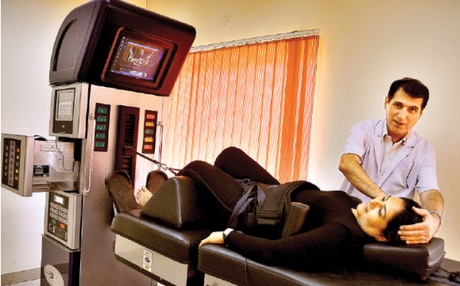
Dr Ahmed J Ansari is a new age healer, who with his revolutionising techniques and equipment, has given a new dimension to alternative healing. (Photo: Sudhakar Jain)

Holistic healing follows the alternative medicine route and Dr Ahmed J Ansari from Bangalore has been a leading light for several years with his Pristine Natural Health Centre.

Ansari never asks his patients to stop their allopathic drugs; all he wants is for them to be open to other therapies and a strong desire to be cured. An ardent practitioner of Baha’i, Ansari’s caring and compassionate nature perhaps bolsters the treatments he offers at his clinic.

Pristine offers painless and non-invasive therapies for orthopaedic ailments. Ansari’s team of orthopaedic surgeons use the two tonne massive DRX 9000, imported from NASA, US. It’s indeed space-age cure for back pain. It is used to correct slipped disc (spondylosis), of the neck and lower back. Approved by the US Food and Drug Administration (FDA), this treatment has proved to be economical and has a noteworthy success rate with low incidence of recurrence. The treatment takes 20 to 30 days and needs 30 to 45 minutes session every day. The DRX9000 gradually relives nerve compression by applying pressure to the affected areas. The treatment enlarges the space around the disc, strengthens spinal ligaments and keeps the lower spine properly aligned.

From space-age cure to molecular therapy, Pristine is path-breaking in its approach. Ozone therapy is another popular and safe therapy at Pristine. Ozone is one of the most potent purifiers of water and more than a hundred major cities in Europe have been using ozone for over a century.

There are different routes of entry of Ozone (O3) to the body—intravenous infusion, drinking ozonized water, through skin with ozone water bath and ozone injections to joints. “Having treated hundreds of patients since the last decade, we have not found a single patient developing any form of allergy or complication to it,” says the doctor.

In an age when the atmosphere is laden with toxic stuff, Chelation is emerging as a popular therapy. The water from gouging the earth is contaminated with toxic, heavy metals. The vegetables that we ingest are full of poisonous heavy metals. Even the air we breathe is laden with these heavy metals emitted from factories. These heavy metals invade the organs of our bodies and binds with the tissues, including our arteries, thereby hardening them. This hardening affects the efficiency of arteries, resulting in deterioration of the organ’s functions.

“We, at our centre, administer EDTA (Ethylenediaminetetraacetic acid) that is used to chelate heavy metals from the body. Chelation therapy helps eliminate and reduce heavy metal toxicity, aiding in the pooling of blood to different organs and leading to healthier functioning of organs. EDTA also helps to reduce blood cholesterol levels,” says Ansari. He adds, “Since EDTA is so effective at removing unwanted minerals and metals from the blood it has been the standard FDA approved treatment for lead, mercury, aluminum and cadium poisoning for more than 50 years.”

Platelet Rich Plasma (PRP) therapy is a relatively new treatment designed to aid in the healing and regeneration of orthopaedic soft tissues in injuries of muscles, tendons and ligaments. Of late it is used in cartilage injuries, defects and arthritis. Any injured, inflamed or degenerated area in the body needs good blood flow to repair or regenerate the damaged tissue. Blood flow to the area increases to aid in healing.  The blood carries platelets and growth factors that allow for healing of the tissue by creating new matrix of the respective soft tissue.

In PRP the patient’s blood is taken with a simple blood draw. Using a special centrifuge machine this blood is spun down to separate out and concentrate the platelets and growth factors that are essential for tissue healing. This small amount of fluid with concentrated platelets and growth factors is called platelet rich plasma (PRP).  Nothing else is added to the patient’s blood so there is no risk of allergy, reaction or rejection. PRP therapy is a purely natural process using the body’s own healing factors.

Once these platelets and growth factors are in the area of injury, they become activated.  They also recruit other healing proteins and factors to the area and healing and regeneration of the tissue begins.

“PRP therapy is an option for two different patient populations. One is the patient with chronic injury that never seems to go away.  The other is the patient with an acute injury, which might otherwise take 8-12 weeks to heal and is looking to do something to speed up recovery.  That is why PRP has become popular among athletes and those with sports injuries,” signs off the doctor.

source: http://www.newindianexpress.com / The New Indian Express / Home> LifeStyle> Health / by Sangeeta Cavale Radhakrishna / July 07th, 2013

Retired employee displays rare collection of Butterfly stamps

Top : Hanumantha Nayaka displaying his collection. Bottom :Children taking a look at the rare stamps on display.
Top : Hanumantha Nayaka displaying his collection.
Bottom :Children taking a look at the rare stamps on display.

It a universally accepted truth that each and every person has his own hobbies. Some excel in public life through their hobbies and one such person is retired Government employee K.M. Hanumantha Nayaka, who had put up eye-catching butterfly stamps on display at Ideal Jawa Rotary School on JLB road under the aegis of Mysore Philatelic Association and Numismatics Society in city yesterday.

Seventy-one-year-old Hanumantha Nayaka, a retired clerk at Maharaja’s PU College, took to collecting stamps at the age of 14 and has so far collected stamps issued exclusively in honour of butterflies by countries like United States of America, Brazil, Australia and England.

Speaking to Star of Mysore, he said butterflies were magnificent creatures which are necessary for the ecological equilibrium in nature and are very important for pollination and added that butterflies play an important role in the reproduction of plants.

Hanumantha Nayaka said that he does not organise exhibitions to win awards or for money and added that he organ- ised exhibitions at various schools to spread awareness about Philately.

Ravindra Kumar, Director, Mysore Philatelic Association and Numismatics Society, said stamps were being printed in 215 countries in the world which is related to almost all subjects and added that many persons in city were involved in its collection.

He further said having more than 1 lakh stamps was not a big issue, but the quality of stamps and its importance was essential in grading its value.

Ravindra Kumar said that Hanumantha Nayaka after retirement indulged himself in collection of various stamps which is an achievement and added that Hanumantha Nayaka has involved himself fully in the same.

It is to be appreciated that though Hanumantha Nayaka is 71 years of age, the enthusiasm he shows in stamp collection is of a 20-year-old.

These rare stamps will be on display on the first and third Sunday of every month.

source: http://www.starofmysore.com / Star of Mysore / Home> General News / June 08th, 2013

Mangalore: Hungarian Dr Alexandra Szoke enchants city with Bharatanatyam

Mangalore :

It was an evening of enchanting display of beauty blended with grace and breathtaking talent, as Dr Alexandra Szoke from Hungary performed Bharatanatyam for first time in the city on Saturday June 22.

The programme was organized by Sanatana Natyalaya dance academy at its auditorium in Ballal Bagh here.

Dr Szoke, with just one year of training in Bharatanatyam, captured the audience attention with her stunning performance. The members in the audience appreciated the fact that an Indian classical dance had been mastered by a Hungarian and executed with such elan.

Dr Szoke and her husband Ian Cook have made the city their second home ever since they came here 18 months ago on research work. She was impressed with Bharatanatyam and learnt the art form under the tutelage of Sharadamani Shekar.

As a mark of respect and gratitude, Dr Szoke honoured her tutor Sharadamani Shekar on the occasion, and also Muralidhar Rao who was tutor of Sharadamani. Dr Szoke and her husband too were felicitated.

Dr Chinnappa Gowda, Mangalore University registrar spoke on the occasion and lauded Dr Szoke for showing immense interest in the art and mastering it in such a short period of time. He further said that she was an inspiration to youngsters in India.

Dr Szoke in her address thanked all those who helped her achieve her goal, especially her tutor Sharadmani Shekar, Sanatana Natyalaya for giving her an opportunity to learn the dance and perform, and Radhika Shetty, founder of Nrityaangan Charitable Trust and performing artiste in India and the USA who helped her along the way.

Srilatha Nagaraj compered the programme. Dr Szoke’s husband Ian Cook was present.

source: http://www.daijiworld.com / DaijiWorld.com / Home> Top Stories / by DaijiWorld Media Network – Mangalore / Sunday, June 23rd, 2013