Sarod Maestro Pandit Rajiv Taranath turns 80

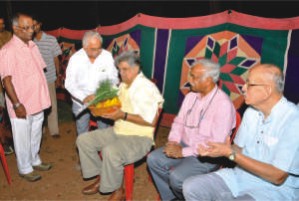
Sarod Maestro Pt. Rajiv Taranath being greeted by Jnanpith awardee Dr. Chandrashekar Kambar at a simple function at the maestro’s house yesterday as Retired IGP C. Chandrashekar, Hindustani vocalist Pt. Indudhar Nirodi and Himamshu, organiser of music programmes at 8th Cross Ganapathi during Ganesha fest, look on.

Mysore, Jan. 7 – It was a simple programme sans any ostentation at a house on 9th Main, Saraswathipuram here last evening where Sarod Maestro Pandit Rajiv Taranath was felicitated on his completing 80 years.

Well-wishers, fans and friends of the musician greeted him on the momentous occasion in the simple ceremony.

Jnanpith awardee and litterateur Dr. Chandrashekar Kambar felicitated Rajiv Taranath, who incidentally happens to be a close friend of the latter for over four decades.

Speaking later, Dr. Chandrashekar Kambar said that Rajiv was portrayed through his novel ‘Chakori’.

Reminiscing his first meeting with Rajiv in Dharwad, Dr. Kambar recalled that the latter was instrumental in teaching literature to him (Kambar) though music. “I was attempting to transform the Swaras of Sarod to words. The innovative style of my literature was actually motivated by Rajiv,” reiterated Dr. Kambar.

Former city Police Commissioner & retired IGP C. Chandrashekar and Hindustani vocalist Pt. Indudhar Nirodi spoke. Litterateur Dr. N. Ratna, KSOU’s Prof. Vikram Raje Urs and others were present.

source: http://www.StarofMysore.com / General News / January 07th, 2013
Osaka varsity Don visits university Urdu dept.

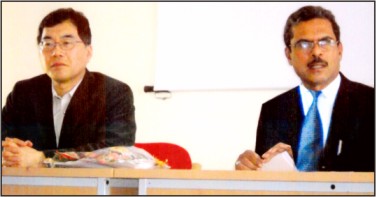
Caption: Guest speaker Prof. Takamitsu Matsumura (left) seen with Prof. S. Masood Siraj, Chairman, DoS in Urdu.

Mysore, Jan. 4

Prof. Takamitsu Matsumura of the Graduate School of Language and Culture, Osaka University, Japan, who was in city recently, delivered a lecture in the Department of Studies in Urdu, University of Mysore.

Though Urdu has its origin in India, modern generation feel that it is a language of Pakistan. The question before a learner is that whether he should follow the Delhi School or Lucknow School to learn the language, he said and added that translation works from Urdu to other languages are the need of the day.

Urdu has a rich heritage which is depicted in its literature, he observed and rued that foreigners who intend to learn Urdu are facing a lot of problems.

Later, he interacted with students and research scholars of Urdu Department.

Prof. S. Masood Siraj, Chairman, DoS in Urdu, was present.

source: http://www.StarofMysore.com  / Home> General News / January 04th, 2013

Discoverer of Sri Krishna’s Dwaraka passes away

Bangalore, Jan. 4

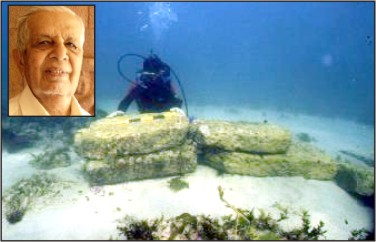
Scientist and archaeologist Dr. S.R. Rao, who discovered the legendary Dwaraka city of Sri Krishna su-bmerged in the Arabian Sea 3,500 years ago [see pic alongside], passed away at his residence in Jayanagar here yesterday afternoon.

Last rites will be held at the burial ground near T.R. Mill in Chamarajpet today, according to family sources.

Dr. Rao had two major path-breaking excavations to his credit, namely the Harappan port of Lothal and the submerged city Dwarka of Lord Krishna. Dr. Rao had carried out excavation work at north Gujarat’s Siddhpur- based Rudramahal site amid protests by local Muslims. He had discovered a Mandir within the structure of converted mosque.

Dr. Rao had led the sixth marine archaeological expedition of the National Institute of Oceanography, Goa, which discovered hitherto unknown features of Dwaraka. During Nov. 1987 to Feb. 1988 the expedition said it had come across the inner and outer gateways of the proto-historic port city, flanked by circular bastions built of massive blocks of sandstone. From the inner gateway, a flight of steps led to the Gomati river, the submerged channel of which has been traced over a length of 1.5 km in the seabed. Excavations done by Dr. S. R. Rao (one of Bharat’s most respected archaeologists) at Dwaraka prove that the descriptions as found in these texts are not to be discarded as fanciful but are to be treated as based on actualities as seen by their authors.

Before the legendary city of Dwaraka was discovered, some scholars were of the view that the Mahabharata being only a myth it would be futile to look for the remains of Dwa-raka and that too in the sea. Others held that the Mahabharata battle was a family feud exaggerated into a war.

source: http://www.StarofMysore.com / Home> General News / January 04th, 2013

Ornaments for all occasions

Shardah Uniyal, Marketing Head, Gitanjali Group, says trust is a key factor in influencing jewellery buying decisions.

Gitanjali is a household name in Bangalore. However, competition in the city is fierce. How do you set yourself apart from the rest?
For the young, tech-savvy, fashion-conscious consumers of India’s Silicon Valley, branded jewellery from a large and trustworthy name like Gitanjali Group has been the solution to all their jewellery needs. Gitanjali has been the name they can trust to deliver quality and purity with modern, contemporary designs that complement their lifestyle. The wide spectrum of brands means that there is something for every consumer, for every type of occasion, across a range of price points. While these factors have given the Gitanjali Group an edge over others, the extensive marketing campaign and strategic associations with events like Bangalore Fashion Week, Max Miss Bangalore, Pantaloons Fresh Face Hunt and many others give brands associated with Gitanjali an obvious edge.

What new changes are taking place in the jewellery industry? Have you noticed any interesting trends?
There has been a huge rise in the popularity of diamond studded jewellery, especially lightweight jewellery for daily wear and work, in recent years. With the huge rise in gold prices over the last two years, diamonds are also relatively more affordable. And since they have a clear aspirational value when compared to gold, and also make more modern style statements, younger consumers are opting for them more. There has also been a trend towards combining diamonds with other stones like emeralds, rubies and even pearls. For festive wear, we have seen a resurgence in demand for stylized interpretations of traditional Indian styles — the rose cut, or polki diamonds, kundan work and jadau jewellery.

Is there more demand for platinum as well?
Consumer interest in platinum jewellery has also grown in the last couple of years, though the white metal addresses the needs of a slightly more niche elite group of buyers. Besides diamonds, other gemstones too are gaining popularity. Yes. The Indian consumer has some eternal favourites like emeralds and rubies, though currently there is popular trend of combining diamonds with these precious gemstones and even with high quality pearls.

What designs are in vogue currently?
For daily wear and work wear, diamond studded lightweight jewellery is popular. Elegant and minimal is the current trend in these categories. When it comes to jewellery for social occasions, larger pieces like chokers and chandeliers are back in fashion for the special days, and even traditional Indian styles like rose-cut diamonds and polki have made a comeback. In the casual evening wear segment, diamonds in combination with emeralds, rubies and pearls are the current fashion statement.

How different is Gitanjali from other jewellery brands?
Trust has always been a key factor influencing jewellery buying decisions, and Gitanjali’s legacy of nearly five decades in the diamond jewellery business is something that sets us apart from other all-India brands. Conversely, Gitanjali sets itself apart from other jewellers who have many decades in the business, due to its all-India and even international presence, and the sheer breadth of choice it is able to offer to the jewellery lover.

source: http://www.dnaindia.com /  Daily News & Analysis / Home> LifeStyle> Interview / by Caroline Diana,  Place: Bangalore, Agency: DNA / Tuesday, January 08th, 2013

Orange Mela in Lalbagh from today

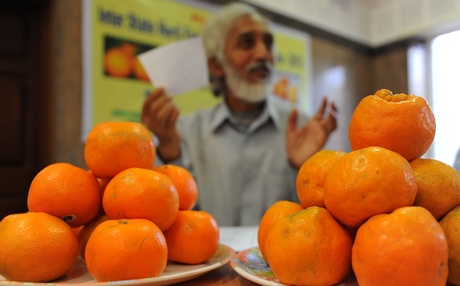
Oranges on display at the 3-day Inter-State Orange Mela in Lalbagh | Nagaraja Gadekal P / Express

A wide range of oranges, kinnows, grapes and many other fruits are up for grabs.

The Horticulture Department, in association with National Horticulture Board,  is organising a three-day Inter-State Orange Mela at Lalbagh Botanical Garden from Friday.

Addressing reporters, S V Hittalmani, additional director, Department of Horticulture (Fruits), said the objective of organising the mela was to create a platform for marketing, through direct participation by farmers.

“Farmers from Karnataka, Maharashtra, Punjab, Rajasthan, North-eastern states, West Bengal and Tamil Nadu will participate in the mela. This event will also provide them (farmers) an opportunity to learn from one anothers’ performance and experience,” he added.

“Prices of fruits will range between Rs 45 and Rs 65 per kg. People should look at the quality of produce than comparing prices. Rare varieties of saffron and spices grown in Kashmir will also be sold at the mela,” he said.

source: http://www.newindianexpress.com / Home> Cities> Bangalore / by Express News Service – Bangalore / January 04th, 2013

Violinist MSG no more

Mysore, Jan. 3 :

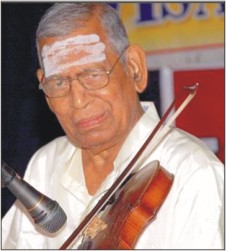
Legendary violinist M.S. Gopalakrishnan, popularly known as MSG, passed away at Chennai around 2 am today. He was admitted to a hospital in Chennai, following complaints of breathlessness on Wednesday evening. He was 82.

Hailing from the revered Parur lineage, MSG was taught violin by his father late Parur Sundaram Iyer, who had a remarkable knowledge of both Hindustani and Karnatak systems of Indian music.

Gopalakrishnan had given his first performance at the age of 8. He was accompanying other artistes in his younger days and later became one of the most popular names in solo violin recitals. He was known as one of the violin trinities, along with his contemporaries Lalgudi G. Jayaraman and T.N. Krishnan.

A recipient of several honours, MSG was a classic example of an artiste who was always open to new ideas and research. He had evolved a unique fingering and bowing techniques in playing violin. Even in playing there was a unique blend of the Karnatak and Hindustani phrases, which is now known as Parur Style. He had even developed a ‘one finger playing style’, producing an entire octave on a single string. He had accompanied artistes like Omkarnath Thakur, D.V. Paluskar in Hindustani.

He had extensively toured all over the world to countries like Australia, US, UK, Netherlands, South Africa, Malaysia, and Hong Kong. Apart from Padmashri (1975), Padma Bhushana (2012), Sangeetha Kalanidhi (1998) awards, he was recipient of T. Chowdaiah Award (1980), Kalai Mamani (1978), Kerala Sange-etha Nataka Award (1979), Central Sangeetha Nataka Academy Award (1982), Sapathagiri San-geetha Vidwanmani (Tirupathi) and many more.

His contribution in the musical field spanned over 75 years.

Violin-Flute Jugalbandi postponed

The Jugalbandi programme by H.N. Bhaskar (Violin) and Praveen Godkindi (Flute) organised by Tyagaraja Sangeetha Sabha at Veene Seshanna Bhavana today stands postponed to a future date, as a mark of respect to the demise of Violin Maestro Parur M.S. Gopalakrishnan.

It may be recalled, one of the organisers of Tyagaraja Sangeetha Sabha Vid. H.K. Narasimha Murthy was a disciple of MSG. The revised date of the programme will be notified later.

source: http://www.StarofMysore.com / Home> General News / January 03rd, 2013

SJCE students bags highest paying job

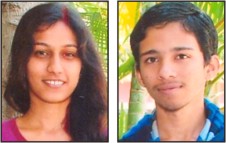
Caption: Nandini, Darshan

Mysore, Jan. 2:

Two final year students of Sri Jayachamarajendra College of Engineering (SJCE) — N.A. Nandini Bhavasar and T.A. Darshan — have bagged the highest paying job offer from Microsoft Corporation, an American Multinational Software Corporation. It has recruited these students SJCE from BE Computer Science and Information Science branch for its Research and Development job profile by paying the highest salary of Rs. 16 lakhs.

College Principal Dr. B.G. Sangameshwara said that Microsoft interviewed over 100 students from various branches and selected Darshan and Nandini after several rounds of interviews and added that the pay package is the highest in the College’s 50-year history.

Placement officer N. Pradeep said that the interview had six rounds spread over three months in which three rounds were held at the campus and the other three rounds were held in the Company’s Bangalore office.

Principal Dr. B.G. Sangameshwara has congratulated the students and lauded the efforts and support from the Management & staff of the College and placement team led by Prof. B. Mahananda, supported by Dr. Srinidhi and Pradeep.

source: http://www.StarofMysore.com / General News / January 02nd, 2013

Orange fair at Lalbagh gardens

The Lalbagh Botanical Gardens will host an Orange Mela from January 4 to 6.
The exhibition is being organied to provide a platform for farmers producing oranges to directly interact with their potential buyers.

While farmers will have a better profit for their yield, the orange produced will be cheaply available to the customers, M Jagadeesh, Joint Director of Horticulture (Parks and Gardens), said.

About 20 tonnes of oranges from different parts of the country such as Rajasthan, Maharastra, Punjab, North East, Nagpur, West Bengal, Tamil Nadu and several districts of Karnataka, including Kodagu, Chikmaglur, Hassan will be exhibited at the Mela.

The event will be hosted by the National Horticulture Board, along with the State department.

The regional variety of oranges vary in their production technique, climate, type of irrigation and so on, Dr S V Hittalmani, Additional Director of Horticulture (Fruits) said.

For example, Coorg mandarins are grown like an intercrop in Kodagu. The irrigation is not regular and as a result they are tight-jacketed (peel), whereas the Nagpur oranges, due to proper irrigation have loose jackets,” he added.

Apart from oranges, the exhibition will also have 40 stalls of processed and dehydrated orange products, saffron, capsicum, exotic vegetables, spices and dry fruits, grapes, raisins, flowers, biofertilizers and vegetation tools. The exhibition will not carry any additional fee for the visitor.

Karnataka, with over 5,000 hectares of production area, has a huge potential from such exposition and ultimately the farmers will benefits from such wider network, Jagadeesh said.

source: http://www.DeccanHerald.com / Home> City / Bangalore, DHNS / January 04th, 2013

Bangalorean helped physicist calculate a second

Bangalore :

American physicist David J Wineland, who along with French scientist Serge Haroche won the 2012 Nobel Prize for his works in quantum physics, has a Bangalore connection. This link, incidentally, contributed significantly to the works that eventually got the physicist the honour.

Dr Bhanu Pratap Das, the top boss of the city’s Indian Institute of Astrophysics, has known Dr Wineland since 1984 when both were involved in academic works in the National Institute of Standards and Technology (NIST) at Colorado, US.

The scientists share a common interest: developing extremely precise clocks. They kept in touch after Das moved back to India.

According to Das, Cesium ions were used to measure time accurately until scientists like Wineland started using aluminum ions which got better results. “The time taken by a Cesium ion to give out a frequency of 9192631770 Hz was considered the most accurate calculation for a second,” he said, “until the scientists started experimenting with aluminum ions.”

In 2010, Wineland asked Das to reduce the error in calculating time. “He was not very sure whether the black body radiation figures which are instrumental in calculating a second were correct or not,” Das said. Blackbody radiation refers to an object or system which absorbs all radiation incidents upon it and re-radiates energy.

Das, his former students, HS Nataraj and BK Sahoo, and their two foreign research collaborators, Lucas Visscher and Mihaly Kallay, concluded their theoretical experiments in less than a year. “Our Blackbody Radiation Shift calculation had reduced the systematic error by about 28%,” said Das.

Das’s work was published in a journal in March 2011. The next year, Wineland’s work based on conclusions of Das, fetched the American physicist the Nobel for ‘ground-breaking experimental methods which enable measuring and manipulation of individual quantum systems’.

What was the Nobel for

Wineland’s finding has enabled scientists take the “first steps towards building a new type of super fast computer based on quantum physics. Perhaps the quantum computer will change our everyday lives in this century in the same radical way as the classical computer did in the last century. The research has also led to the construction of extremely precise clocks that could become the future basis for a new standard of time, with more than hundred-fold greater precision than present-day caesium clocks”, the Royal Swedish Academy of Sciences said.

source: http://www.articles.timesofindia.indiatimes.com / Home> City> Bangalore> Physicist / TNN / January 02nd, 2013

Colle Farmers Market Says UAS Organic Technology is “A Step Forward”

On January 1, Colle Farmers Market, an online farmers market community, continues to bring awareness of the organic movement as it spreads at a global rate. Colle recognizes the developing technologies of University of Agricultural Sciences (UAS) an India based organization that is developing organic production technologies for major crops.

According to The Times of India, “To encourage farmers to switch over to organic farming, Institute of Organic Farming of the University of Agricultural Sciences, Dharwad (UAS) has developed organic production technologies for major crops.” The UAS organic technology program focuses on “studying productivity, profitability, suitability, quality and input use efficiency in different crops and cropping system under organic production in comparison with conventional and integrated systems under rain-fed conditions,” reports The Times of India.

The article states that the prof. HB Babalad, Institute of Organic Farming, commented on the UAS making a “significant contribution by standardizing organic farming practices in important crops of north Karnataka region.”

The Times of India further reports that “The organic agriculture captures and store more water than soils under conventional cultivation Production in organic agriculture systems is thus less prone to extreme weather conditions, such as drought, flooding, and water logging.”

Colle Farmers Market believes that the UAS organic technology program is a step forward for a global [organic farmers market. Organic technology is improving and the more institutions that invest in this technology, the more populated our farm lands will become with organic products. Organic farming has become more than a passing phase adds Colle Farmers Market representatives. The farming communities deserve the best in organic technology and this can happen one step at a time.

source: http://www.FoodWorldNews.com  / Home / January 02nd, 2013