Varsity Asst. Professor bags DBT- CREST Award

Mysore, Feb. 11-

Dr. K.N. Amruthesh, Senior Lecturer, Assistant Professor & Principal Investigator, at the Department of Studies in Botany, University of Mysore, has been given the prestigious “Government of India- DBT- CREST Award” (Department of Biotechnology- Cutting Edge Research Enhancement and Scientific Training Award) for 2010-11.

This award will provide him an opportunity to have advanced research training in foreign laboratory/ University — University of North Texas (UNT), Denton, Texas, USA, in the field of “Life Sciences- Plant- Microbe Interactions (Plant and Agricultural Biotechnology)” for one year for enhancement of his contributions towards the development of Biotechnology in the country.


This prestigious award, which aims to promote capacity building in cutting-edge areas of Biotechnology and Life Sciences and also will promote and support Indian Young Scientists of highest merit in their pursuit of skill enhancement in scientific research in any of the foreign Institutions/ Laboratories abroad and interact with Scientists there

Dr. Amruthesh is also the recipient of “ISCA & DST- Young Scientists Awards” and currently guiding nine Ph.D. candidates; has undertaken three important research projects on Agricultural Crop disease management funded by DST, UGC and MHRD/ UGC-UOM- IOE, Government of India.

He has successfully organised two national conferences at the Department and published more than 40 research articles in reputed national and international journals.

source: http://www.StarofMysore.com / General News / February 11th, 2012

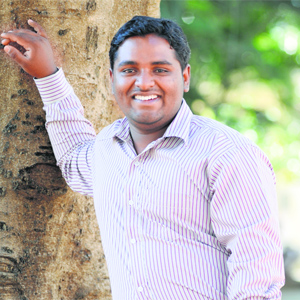
‘At 10, I was an orphan; at 12, I won the state award’

Living out loud with Manjunath (23), Lifeskills Coordinator

He essayed the role of Nandita Das’s brother in the award-winning film Deveeri. You don’t get to choose your parents or the events in your childhood. But you get to choose how you want to live your life as an adult. Just like this young man.

One day my parents had a fight over something trivial and my father walked out of the house. Forever! I was six years old.

My maternal grandfather was ailing. Mother couldn’t ask him for help. So, it was just mom and I against the whole world. My mother loved acting so she began acting in natakas (dramas), but the money wasn’t  sufficient. Within a year we were thrown out of our home because we couldn’t afford the rent. I dropped out of school in the third standard. I  was seven years old.
There’s only so much my mother could take. In the next couple of years, she became weak and sick. Today, I know the name of what she was suffering from– extreme depression. We were living on the pavement near the railway station. I began to work as a coolie and would make Rs 60-70 per day. I was nine years old.
The police barred me from working. “Child labour is not allowed,” they said. We could barely make ends meet. I’d sneak into the station and try to get some work. During one such  operation, I met Shanthi from Bosco Mane. She asked me to visit their open shelter in Gandhi Nagar. I was desperate. So, I went.
The folks in Bosco got medical help for my mother. She was admitted to a hospital. For about three months I visited the open shelter. Later I went to live at Bosco Mane in Chamarajpet.  I hardly visited my mother at the hospital; I couldn’t bear to see her frail, sickly and dying. The Fathers at Bosco and my counsellor, Sr Sheba, urged me to study. But I resisted. Instead, I opted for vocational training. I wanted to earn to take care of my mother.
One day director Kavita Lankesh came to Bosco Mane. She took pictures of a few kids including me and when she came back a week later, she asked me if I was interested in acting. I said yes. I now got a chance to do what my mother loved doing– acting. After a week’s training, we began shooting for Deveeri. I didn’t know it was a film shooting,I thought it was a documentary or a television serial. I was enjoying myself. One afternoon I was told that my mother had died. I was 10 years old.
I was devastated. I knew she was going to die, but not so soon. I was doing all this for my mother and now she was gone. I wept.  She was only thirty years old.
I had a vague memory of my grandfather’s house. I went to his place, along with members of Bosco Mane. Grandfather didn’t say much. I guess he was sad too. I  performed my mother’s last rites. My estranged father was watching me from the sidelines. He was married and had two children. Somebody, from Bosco must’ve informed him. I didn’t know. I didn’t care.
A week later, I was back to complete the shooting. Deveeri became a hit and received many awards. My proudest moment was when I received the state award from the governor. I felt sad that my mother was not there to see it.
By now I had come to a decision that I will pursue academics. I began studying in a Kannada medium school. I was a good student; topped my class; excelled in sports,especially cricket. I was the school topper in the seventh standard board exams. I requested the Fathers to send me to an English medium. They did. I went to St Joseph’s Boys High School, the first kid from Bosco Mane to attend an English school. It was a struggle. The English language frustrated me. But I persisted. I began conversing with the foreigners who volunteered at Bosco. I read newspapers… I passed my tenth and later PUC with a first class. It was now time to earn a living. I began working as a Field Coordinator at Dream A Dream Foundation. I was elated. I had also progressed to playing league matches in cricket. Life was looking up.
When I was living in Bosco Mane, my father visited me a couple of times. I hated him. I was angry at him for turning his back against his wife and child. When I started working, he visited me again. He was diabetic. He looked frail and ill. He also had family problems. Father apologised for abandoning me. I couldn’t be angry with him anymore. A month later I heard he had died. I watched his son perform the last rites. Father was forty-five years old.
Life goes on. I don’t have excessive emotional attachments to anyone. But I thank God that in every phase of my life there was someone to help me. Even today when I see a mother and child, my heart grips me with pain. I lock myself in my room and weep. Once the tears dry up, I tell myself, “Man, don’t cry. Go do something worthwhile.” When life becomes difficult, I tell myself -this too shall pass. After all, I survived my past, didn’t  I? Playing cricket helps me deal with sadness and pain.
Last year I applied for a passport because it’s been my dream to see the world. I got the little blue book in August. In September, I applied for a scholarship in Germany and got it in January. In April I will be going to Hamburg for a year. I am twenty-three years old.
Sometimes, I feel that I do have a guardian angel looking after me. Or is it just mother?

—As told to Jayanthi Madhukar
source: http://www.BangaloreMirror.com / Home> Sunday Read> Special /by Jayanthi Madhukar / January 29th, 2012


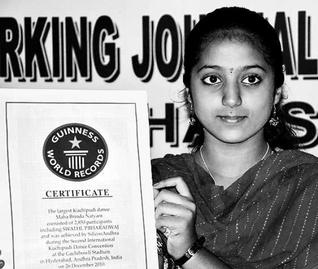
She danced her way to the Guinness

Swati Bhardwaj has been dancing since she was four and has won several awards.

It is a dream come true for Swati P. Bhardwaj, an eighth standard student in Channarayapatna. For, she has entered the Guinness World Records as part of the 2,850-member troupe that performed the largest Kuchipudi dance.

The event was held as part of the second annual International Kuchipudi Convention at the Gachibowli Stadium in Hyderabad on December 26, 2010. Swati received the certificate from the Guinness World Records recently. The record-setting performance lasted for four hours and 26 minutes.

Swati has been into dancing since she was four and has performed Bharatanatya at various programmes.

She has won several medals in the State- and national-level dance competitions.

“Swati, who has been learning Bharatanatya for the last 10 years, now conducts classes for over 350 children in Channarayapatna,” said her father, M.K Prakash Bhardwaj, an employee in the Alur court. Swati wants to teach Bharatanatya to children in rural areas under the banner of Sri Natya Bhyravi Trust, headed by her mother, Anita. She plans to identify schoolchildren interested in learning dance and conduct classes for them during weekends from next month.

Swati performed Kuchipudi with a 2,850-member troupe for four hours, 26 minutes

source: http://www.TheHindu.com / National / by Staff  Correspondent / Hassan, July 08th, 2011


Treasure trove of manuscripts

For historians and research scholars, the ‘Hastaprati Bhandar’, a treasure trove of manuscripts, at the Institute of Kannada Studies of Gulbarga University is a paradise of sorts.

Housing over 6,000 manuscripts including the rarest ones, called ‘Uddharani’, each one of them tells its own story.

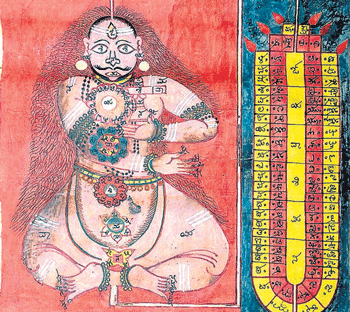
‘Uddharani’ is a form of pictorial manuscript explaining different philosophies. It is four to five meters long and can be conveniently rolled, like a scroll. It is very difficult to decipher the language in which the works are scripted. Colourful handdrawn pictures are pasted on a cloth.

According to experts, most of the ‘uddharanis’ are connected to ‘kaalajnana’ (futurology).

The laborious drawings in original colours are stunning. Traditional palm leaf manuscripts are the other important components of the collections. The earliest palm leaf manuscript is the work ‘Shivayoganga Bhushana’ and ‘Sadguru Rahasya’ by unknown authors (dated 22.2.1799). The works may be of an earlier period, but the manuscript is at least 210 years old.

Palm leaf manuscripts are said to have a longer shelf life, lasting even up to 600 years. The collection also contains some of the works of poet Nagavarma of the ninth-tenth century. Another important possession of the Institute is ‘Namalinganushasana’, popularly known as ‘Amarakosha’, written by Amara Simha of the 13th century. There are 180 palm leaf manuscripts running in to tens and hundreds of pages. The Institute also has over 4,000 paper manuscripts with the earliest one dating back to the 18th century.

All these manuscripts including the ‘uddharanis’ have been collected mostly from the Hyderabad-Karnataka region. They usually pertain to Veerashaiva philosophy, Sharana Sahitya and Vachana Sahitya. They are found in different literary forms including prose, poetry, drama, folk songs, folk tales, astrology, futurology, philosophy, bayalata (a form of performing theatre unique to North Karnataka), and medical literature. Though Kannada manuscripts outnumber the others, there are also scripts in Sanskrit and Telugu. The University has so far published two books from among the manuscripts.

They are ‘Kumar Vijaya Vilasa’, a work written in the 17th century, and ‘Yayathi’, a rare work on folk drama of bayalata form. The University is planning to bring out two more works based on these manuscripts as part of the ongoing Kannada Language Development Scheme of the State government.

It is only from the last one year that the priceless manuscripts, dumped in a room, have been opened and stored scientifically.  K G Narayan Prasad, formerly with the Osmania University and now visiting professor of Gulbarga University, is busy giving a definite shape to the manuscripts. Cataloguing has also been going on. Prasad said the first volume will be ready in a couple of months.

All the manuscripts are being scanned and will be stored electronically, said Chairman of Institute of Kannada Studies D Nagabai Bulla.

The collection of manuscripts was undertaken in 1985-86 under a scheme sanctioned by the National Archives for five years. It was discontinued after three years as the University failed to submit proper accounts to the National Archives. “There is a dire need to collect the archives and establish an Archives of Manuscripts which can be made use of by scholars from all over India,’’ suggests Narayana Prasad.

source: http://www.DeccanHerald.com / Home> Supplements> Spectrum / by Srinivas Sirnoorkar / February 14th, 2012


KLE University’s College of Pharmacy receives Rs.30 lakhs grant from VGST

Vision Group of Science and Technology (VGST), Government of Karnataka has funded the research grant of Rs.30 lakhs to the Department of Pharmacognosy of KLE University’s College of Pharmacy, Belgaum at NIAS JRD Tata memorial auditorium, Bengaluru.

VGST presented the reward to the department for the research project entitled “Chemical and Biological Activity Profiling of Some Ayurvedic Drugs with Controversial Nomenclature” under CISE-2011-12 (Centre of Innovative Science Education).

In the function organised by VGST, Prof. CNR Rao, National Research Professor and chairman of VGST and M N Vidyashankar, principal secretary to Government of Karnataka, Department of IT, BT and S&T, Member Secretary, VGST has awarded the certificate of honour and the cheque to the Prof. (Dr) A D Taranalli, principal and Dr Kirankumar Hullatti, associate professor, Department of Pharmacognosy, principal investigator of the project.

source: http://www.pharmabiz.com / Home> News> Education / our Bureau, Mumbai / Monday, Friday 13th, 2012

Bengaluru, Bangalore: Two names, one soul

“Metropolitan regions with high concentrations of technology workers, artists, musicians, lesbians and gay men — ‘high bohemians’, exhibit a higher level of economic development. Collectively called as the ‘creative class’ they foster an open, dynamic, personal and professional urban environment. This environment, in turn, attracts more creative people, as well as businesses and capital. Attracting and retaining high-quality talent versus a singular focus on projects such as sports stadiums, iconic buildings, and shopping centres, would be a better primary use of a city’s regeneration of resources for long-term prosperity.”
—Urban Studies Theorist,
Richard Florida

It was this quote that inspired seasoned photographer Mahesh Bhat to look at Bangalore from the perspective of an outsider — an identity Mahesh Bhatgave up almost 20 years ago.

“Bangalore is now home to me, but that wasn’t always the case. I grew up in Mangalore but moved here when I was quite young and now the city is home,” enthuses Mahesh, as we sit across a table at Koshy’s.

Koshy’s, so much a part of ‘identity’ Bangalore, does feature in the book that brought about this meeting, and like many other Bangalore mainstays, the book inspires, records and chronicles a face of Bangalore that’s ever changing, but wonderfully constant.

“I was quite clear about what I wanted from this book — it took me four years to get down to finally putting it together and so I had enough time to ideate. I knew I wanted this book to be about transition — not about famous people and landmarks. Bangalore has always been about multiple identities, it really never has been the same city for any two people,” Mahesh tells us.

Bangalore has indeed been a city of many changes and the city has meant many things to different people, across the 900 years or so of the existence of this city. The powers have changed with almost each century, but the heart and soul of the city largely have remained intact.

Bengaluru/Bangalore — in first person singular opens to a wonderful image of the Basavanagudi Bull Temple — an image that quite wonderfully captures the timelessness of this Bangalore.

“I began the journey for this book at Kalasipalya and then meandered through what remains of the pété, before the book halts temporarily at the Cantonment and all that it stands for — the Raj legacy included, before I finally make my way back to the layouts and newer areas that are now as intrinsically Bangalorean as Brigade Road,” shares Mahesh.

As said, the book does journey through Bangalore in all its elements, giving you a fair picture of what the city was, is and is probably moving towards — all in one linear movement that personifies an energy now quintessentially known as Bangalore.

One of the first images in the book is that of the Infosys pyramid, juxtaposed with slum-dwellings in Electronics City. The picture hits hard and quite succinctly portrays the economic divide in modern Bangalore.

“Bangalore changed after we became an IT city. We lost focus and wanted to be the next Singapore or Beijing. Change is important and inevitable, and don’t get me wrong, I am waiting for the metro as much as any other enthusiastic Bangalorean — but I am worried about the attitude behind this change. A city should be creative class friendly. It shouldn’t be about building infrastructure and then waiting for development — this should be a hand-in-hand process,” says Mahesh, quoting Richard Florida’s theory.

Bangalore has indeed evolved in more ways than one and it often is the easiest option to just sit back and complain about how these changes are turning Bangalore for the worse. Mahesh however prefers to be more far-sighted in his opinion

source: http://www.dnaindia.com / Daily News & Analysis / Home> Bangalore> Report / by L Romal M Singh / Place: Bangalore /Agency: DNA / Sunday, February 12th, 2012


Striving to save Heritage

By M.S. Apuurva

Heritage City is a popular tag attached to Mysore. However, just being proud of the name is not enough. It is a common sight to see people write on the walls of monuments, peel out paintings or even spit on the walls. But it is everyone’s responsibility to protect this heritage for years to come. One institute in city, with the motto ‘Save Heritage’ has been striving to protect our monuments, structures, paintings, manuscripts etc., not just in Mysore but in the whole of Southern India. Know more about this institute in this Weekend Star Supplement.
National Research Laboratory for Conservation of Cultural Property:

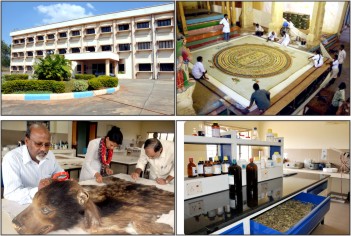
The National Research Laboratory for Conservation of Cultural Property (NRLC) was established in 1976 at Lucknow by the Department of Culture, Government of India, as a centre of excellence in the field of conservation of cultural property. Initially, NRLC was developed with technical assistance from United Nations Development Programme (UNDP) and United Nations Educational, Scientific and Cultural Organisation (UNESCO), and it is now an associate member of Rome-based International Centre for the study of the Preservation and Restoration of Cultural Property (ICCROM). The major objectives of the lab are: Research for development of better methods of conservation; Study of art and archaeological materials; Assistance to museums, archaeological departments and other institutions and training and documentation.

Regional Conservation Laboratory:

With a view to cater to the needs of Southern regions, the first Regional Conservation Laboratory (RCL) was established in Mysore in 1988 at a rented house in the Palace premises. RCL shifted to its own building in a five-acre campus in Siddharthanagar during 2003. Around 15 members are presently working at the lab. Four more RCLs have been proposed at Kolkata, Chandigarh, Bhopal and Pune. The RCL is currently being headed by B.V. Kharvade who is also the Director of NRCL.

Facilities:

RCL has six conservation labs — three big and three small studios. It also houses six research labs. These include labs for paper conservation, manuscript conservation, metal conservation, material analysis, fumigation, wood work and painting conservation. RCL also has a library with more than 1,000 volumes, subscription of 15 periodicals and a huge collection of rare books on conservation science. Guest house and kitchen facilities have also been provided for those taking up research work at the Lab.

Procedure for conservation:

“We generate awareness among the institutions and they write to us in case they need our help. Next, we send our team to carry out a detailed examination, prepare a report along with an estimate, and submit it. Once this is approved, we start our work,” says B.V. Kharbade.

For conservation or restoration, a detailed examination is conducted which includes visual, scientific, microscopic and pathological examination depending on the problem. Following this, the problems are documented. This can be digital, graphic, IR or UV photography, etc. From this the depth, type and extent of damage is analysed based on which a plan is devised. The most appropriate one from among the available methods is selected and implemented. The final stage is training and dissemination of knowledge. A report is prepared on the work done and made public.

“Not repainting but reintegration”

“Repainting would be the wrong term for our work. It is a misconception and just repainting will appear as patch work. What we do is reintegration of paintings. If some area of the art work has flaked off and chips are not available, we reintegrate it with our own colour and document where we have retouched it. It is a globally accepted method. We maintain the aesthetics of the painting and carry out reintegration only where it is required,” says Kharbade.

Field Projects:

In 2006, RCL started a new scheme called field projects which was developed by B.V. Kharbade. Its primary aim was research and training. Although numerous research works were being carried out at RCL and NRLC, lack of their own museum to implement the findings of the research posed a problem. Hence to implement the results, partnership programmes were introduced in which museums, palaces and other cultural institutions became partners of the lab and were involved in the conservation work. Under this scheme, many conservation and restoration works have been carried out by RCL.

Oil paintings at Mysore Palace: A total of 31 paintings, of which 26 depict different scenes of Dasara, in the Kalyana Mantapa of the Palace were restored by RCL in 2009. The paintings were sagging, had folds, extensive cracks, flaking, loss of paints, accidental tears and holes, patchy appearance due to dirt, splashes of cement plasters, varnishes, white washes and water stains and fungus and insects colonies. The work took almost two years for completion and now the paintings have been restored to their original glory.

Challenge: Transporting the paintings to the lab posed a challenge to the RCL staff since the size of the paintings was enormous. A special trolley was designed and fabricated from teak wood for the purpose, an innovation by RCL members. These trolleys were then loaded to trucks and taken to the lab for restoration.

Jaganmohan Palace: The restoration and conservation of Raja Ravi Varma’s paintings Victory of Meghanada, Syrendri and Malabar Lady were the first to be taken up in 2003 after Kharbade took charge of RCL. Most of the paintings are over a hundred years old. The work was carried out inside the art gallery and at the spot where the paintings were on display as most of the works could not be moved out.

Murals: The conservation and restoration of a 150-year-old mural covering four walls of a hall at Jaganmohan Palace was taken up during 2010. The mural, spread over 2,080 sq. ft., depicts Dasara procession, portraits of Maharajas, ancient Indian games and Wadiyar family tree.

The murals were showing signs of dis-colouration, flaking and cracks.

Karanji Mansion: The Mansion which now houses the Postal Training Centre has Italian mosaic tiles, many of which were lost or cracked. It was RCL’s first project on structural conservation.

Challenge: After analysis of the tiles, the lab approached many Indian companies for manufacturing the tiles but they declined since the cost was very high. The lab staff took it as a challenge and decided to mould the tiles in RCL itself. The tiles were moulded in polymer and were placed in the Mansion, perfectly blending with the original ones.

Malai Mahadeswara Swami Temple, Kollegal: The temple made of stone had many intricately carved pillars and ceilings. However, the art work was covered with many layers of whitewash and soot deposits from burning of lamps. The soot was removed by specially prepared jute cloth pack, prepared from paper pulp and soot stripping chemicals. The pack was applied on the surface, kept overnight or more depending on the hardness of deposition and stripped out by pulling. A similar method was used to remove layers of white-wash. This removal revealed many sculptures and art work which would have otherwise remained hidden.

Meenakshi Sundareswarar Temple, Madurai: Conservation of 120-year-old Tanjore-style paintings which had deteriorated completely and become fragile was taken up during 2007. These paintings in the Kalyana Mandapam of the temple were made on canvas pasted on wooden panel. The canvas was found too fragile and was breaking to powder on touch.

Other projects undertaken by RLC include resto-ration of paintings at CAVA, Central Excise and Cus-toms, Goa and artefacts at a museum in Bagalkote.

On-going projects:

Roerich paintings, Bangalore: Work is going on to restore the paintings of Russian-born artist Svetoslav Roerich who was married to Devika Rani. Around 241 paintings of the painter and his father have been kept at the Venkatappa Art Gallery. The litigation over the Tataguni estate owned by the artist ended with the Supreme Court entrusting the State government with the responsibility of maintaining the estate. Paintings include a life-size portraits of Jawaharlal Nehru, sketches of Indira Gandhi, painting of Jesus after crucification, etc. While some of the paintings have degenerated due to humidity, others have become fragile and are being chemically treated. The work is being carried out at the venue itself and not being brought to the lab.

Lalitha Mahal Palace: The officials of Lalitha Mahal had approached RCL since walls and dome of the Palace had developed cracks. The damage is presently being examined and analysed.

Maharani Salon, Railway Museum: The job of restoring the Maharani Salon housed at the Railway Museum in city, which is almost a hundred years old has been entrusted to RCL. A report on the inspection carried out has been submitted. Although the wagon had very good interiors, it has now become brittle and is flaking off. Cleaning of a few areas is also required. The job will mainly be interior and decorative conservation. RCL is hoping to take up the project during this year.

National Mission for Manuscripts:

RCL was designated as a research centre for the National Manuscripts Mission. Under this, the Lab carried out research and innovation on conser-vation of manuscripts which include alternative to silicone acetate lamination, use of oxygen-free environment, adhesives for palm-leaf manuscripts and traditional methods of conservation.

Oxygen-free environment for conservation: The method used for displaying and storing objects in oxygen-free environment was extended to pres-erving manuscripts. A prototype was developed and observations showed that mortality of silverfishes was good in the chamber and possibility of rusting was low.

Traditional materials for conservation: Neem leaves have been used in storing food grains and other materials like books, rare manuscripts, etc. Neem oil from seeds did not prove to be effective. Also, in many houses, neem leaves were used for curing chickenpox. This made RCL members try a new method of extracting neem aroma from leaves and developing papers with the aroma.

These papers were then interleaved in books and manuscripts. Curcumin is an active ingredient in turmeric. It was found that cloths with this ingredient can be used to wrap manuscripts in order to protect them.

Modification of cellulose acetate lamination: Use of cellulose acetate lamination was increased after solvent lamination method was developed by National Archives in 1958. But it was reported that cellulose acetate releases acetic acid on hydrolysis in hot and humid condition and when the free acid level goes to 0.5mq/g, the hydrolytic degradation reaction becomes auto catalysed. These reactions can be arrested if the free acid level of the laminated paper is kept below 0.5mq/g. Hence, an alkaline reserve in two tissue papers to be used in lamination was developed. Barrow’s two step method using calcium hydroxide and calcium carbonate and single step magnesium bi-carbonate were found suitable.

Adhesives for palm-leaf manuscripts: There was a need for finding suitable adhesive for palm leaf manuscripts. A study on evaluation of available adhesives, natural and synthetic for palm leaf manuscripts was undertaken. Viscosity and surface tension of all the adhesive formulations were measured by simple viscometer and stalagnometer before applying on the samples of palm leaf manuscripts and the tensile strength of the samples after mending with the adhesive formulations was measured by simple apparatus, designed in the laboratory. To ascertain the strength of the adhesive formulations on ageing, tensile strength of the samples was measured before and after subjecting the samples to accelerated ageing test.

Eco-friendly show-cases: Preservation of artwork in museums requires heating, ventilation and air-conditioning which in turn require electricity. RCL developed eco-friendly showcases which can control humidity and air pollution automatically without using electrical gadgets. A prototype with Silica gel to stabilise humidity, Zeolite and activated charcoal used in calculated amount was developed. While the artefacts were placed in the upper chamber which had glass covering, the preserving materials were placed in the lower chamber which was covered on all sides and holes were drilled on the ceiling of the lower chamber. The materials need to be changed once a year making it easy to maintain.

When one institute is striving this hard to save our heritage, it will be the duty of the citizens to join hands with them and play our part in preserving what has been restored. The Regional Conservation Laboratory can be contacted on Ph. 2421507.

___________________________________________________________

” Imparting Training in Conservation is my Mission “
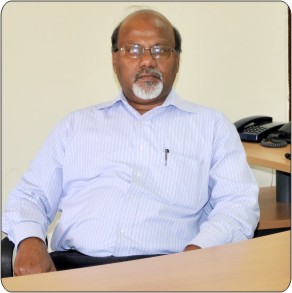
B.V. Kharbade was posted to RLC in 2002 and is presently holding the post of both Project Officer as well as Director of NRLC. Graduating with a Masters in Chemistry from Nagpur University, Kharbade joined the Central Forensic Science Laboratory, New Delhi, in 1977. He later joined NRLC in 1980. Speaking to Star of Mysore, Kharbade stressed on the need for training in conservation and the training programmes at NRLC.

“There is a lack of awareness as not many visit museums. Museums are knowledge-based institutions and India has billions of artefacts. The size of the cultural heritage of India is huge but there are very few trained personnel to preserve this heritage.

“Training plays an important role in moulding conservators, restorers and scientists. NRLC Training Institute is coming up at a separate campus in Lucknow and will function from this academic year. The institute will be purely for skill development and not for academic courses. Short-term and long-term courses will be held here.

“Conservation mainly has three streams — preventive conservation, remedial conservation and restoration. Till now we have been conducting six-month courses for freshers having Bachelor in Fine Arts for Restorers and Science with Chemistry as a specialisation for Conservators.

“From the next academic year, we will be modifying the course and will call only Post Graduates. The programme will be of one year and once the participants complete their training, they will be absorbed by the institute for projects. Hence, once they join us, they can be with us for their life. We have created many posts from interns to Assistants and Associates; but these are not government jobs. The salary will start from Rs. 10,000 (+HRA) for interns and will increase by two thousand every two years. Associated will get a salary of Rs.30,000.

“Previously, the trainees would finish the course but would not have any job. Hence, after taking charge as the Director, I called back all the trainees who finished the course during the past five years and put them in projects. This is an employment generation scheme. The present batch has 12 trainees including two from Bhutan whose fellowship is being funded by the Mini-stry of External Affairs. Further, we are planning to include Museology graduates. We will be increasing the number of seats from 20 to 30 — 10 for Fine Arts, 10 for Science and 10 for Museology students. The students will be combined during the 1st semester and will be split according to their specialisation for the 2nd semester.

“At RCL, training is in the form of 10-day workshop on preventive conservation for museum directors and curators. If anyone wants to conduct lectures on topics related to conservation, we organise talks and invite colleges. Even we reach out to colleges by holding lecture programme there.”

Assisting students:

“Any person who is interested and wants to work on conservation can approach us for guidance. They are welcome to use our infrastructure for conducting research.

“They are also welcome to use the material available in our library. We will soon be uploading the findings of researches conducted at RCL on the internet. Interested can take prior permission and we are ready to guide them.”

Country’s first Authentication Lab in city:

“In the 12th Five Year Plan we have proposed to start an Authentication Lab in Mys-ore. It will be the first of its kind in the country. Many instances of fake paintings being sold in the name of the original artiste has been coming up lately. It is a field which requires specialisation and we do not have an exclusive lab for the same. In Kolkata, I have sub-mitted a report to the High Court on authenticity of a Tagore painting. For this we compare real and fake art work on the basis of material, technique, texture, medium, canvas, etc. But since it is a vast field and needs a different protocol, we have proposed such a lab.”

source: http://www.StarofMysore.com / Feature Articles / February 04th, 2012
Bangalore Fashion Week kicks off

Despite news that the Bangalore Fashion Week may not be able to take place, the show started on Thursday as planned.

It had been reported that Dream Merchants, the organisers of the week, hadn’t bought ‘adequate licenses’ for playing music during the fashion shows.

Consequently, the Phonographic Performance Ltd (PPL), the apex music licensing arm of the Indian music industry, obtained an injunction by the Delhi High Court against them and the Interncontinental Hotel Group.

The injunction meant that during the fashion week, which will go on till February 5, no music administered by the PPL can be played since that would amount to music copyright infringement.

Sowmya Chowdhury, country head for PPL, told us, “The Bangalore Fashion Week is a habitual offender. They’ve now told us that they’ll not play our music, but how can you have a fashion show or a fashion week party without popular songs like “Kolaveri Di” or “Ooh La La”? We will monitor their shows closely to see if they are defying the injunction. We’ll not do anything during the event, but will only decide our course of action post February 5.”

However, Feroz Khan, creative director, Dream Merchants, told us, “They can’t take action against us. They’ve been speaking to our designers and telling them stories, but we know we are not in the wrong. PPL has about 200 labels under their ambit, but it’s not mandatory for me to play only the music they have. I’ve paid the licence fee to a company named Novex Communication Pvt Ltd, which has 5-6 labels under it. Our DJs are also creating their own music. Why should I pay lakhs for the PPL license when I don’t need their music? My requirement’s limited and that’s what I’ll pay for. Also, the order from the Delhi High Court clearly says that we’ll not use music administered by the PPL, which we’ll abide by, and they in turn will not derive mileage out of this issue. Why are they still forcing us to pay the license fee?”

Among others, Delhi designer Ritu Beri is participating at the fashion week, doing the grand finale.

source: http://www.articles.timesofindia.indiatimes.com / Home> Collections> Life & Style> Fashion / by Garima Sharma / TNN / February 03rd, 2012

YEDE THUMBI HADUVENU: B’lore Girl Wins

Mysore, Jan. 31:

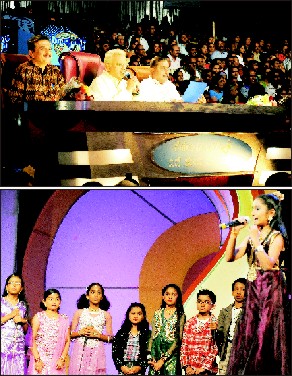
S. Sanjana of Bangalore has won the first prize at the second edition of the 8th mega final of ETV’s Yede Thumbi Haduvenu which was organised at the Open Air Theatre in Manasagangotri here on Sunday. She bagged a cash prize of Rs. 2 lakh after scoring 84.75 marks.

An audience of over 3000 enjoyed the show with the kids rendering songs from recent movies. The other 7 contestants too were awarded cash prizes of Rs. 1 lakh each contributed equally by ETV and the sponsors Canara Bank.

ETV General Manager R. Subba Naidu, Judges S.P. Balasubramanyam (playback singer), Hamsalekha (film Director), Jayanth Kaikini (lyricist), Canara Bank GM V.S. An-anda Murthy, AGM S.T. Rama-chandra and others were present.

source: http://www.StarofMysore.com / General News / January 31st, 2012


City’s Oriental Research Instt. gets US Aid


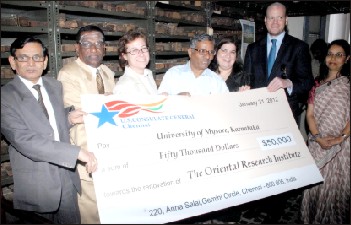
US  Consul General hands over cheque for $50,000 to VC

Caption: Consul General of US Consulate in Chennai Jennifer McIntyre handing over the cheque to Mysore University Vice-Chancellor Prof. V.G. Talwar at a function at ORI this morning. Others seen are University Registrar P.S.Nayak, ORI Director Dr. M. Shivakumara Swamy, Acting Public Affairs Officer, US Consulate, Chennai, Corinnay Arnold and Economic Officer Maxwell Hamilton. [Pic. by Pragathi Gopalakrishna]

Mysore, Jan.31-“Out of deep respect for the culture and heritage of countries around the world including India, the United States has provided a grant of nearly 26 million dollars for preservation of 640 projects in over 100 countries,” said Jennifer McIntyre, Consul General of US Consulate in Chennai, here this morning.

She was speaking after handing over a cheque for 50,000 US dollars (Rs. 25 lakhs) to Mysore University Vice-Chancellor Prof. V.G. Talwar towards the development of Oriental Research Institute (ORI) on Dr. S. Radhakrishnan Avenue, opposite Crawford Hall in city.

She said these funds were being used to support a wide range of activities such as restoration of historical buildings, assessment and conservation of museums, preservation of archeological sites and documentation of vanishing traditional craft techniques.

Stating that she was aware of the 1000-year-old cultural heritage of India, she added that one can spend their lifetime in India studying its culture and tradition. She also said that she was glad to be in India as she had the opportunity of witnessing some of the traditions of the country.

ORI, which was established in the year 1891 by the then Maharaja of Mysore Sri Chamaraja Wadiyar, has over a lakh rare palm leaf and paper manuscripts including Kautilya’s Arthashastra on State craft and Military strategy which was being used during those days and lauded the efforts of Dr. R. Shama Shastry, who was the former librarian at ORI to whom goes the credit of bringing the manuscripts to the attention of the world.

Political Specialist Anjana Chatterjee, Cultural Affairs Specialist Rathna Mukherjee, ORI Deputy Director Dr. Sathyanarayan were present. ORI collects, edits, exhibits and publishes rare manuscripts in Sanskrit and Kannada. It also has manuscripts in Sanskrit, Devanagari, Kannada and Tulu.

source: http://www.StarofMysore.com / General News / January 31st, 2012