India Post celebrates Fifa World Cup 2014

Mysore :

Fifa World Cup 2014 stamps, miniature sheets and first-day covers are up for grabs at the Philately Bureau of the Mysore Head Post Office, Nazarabad.

Philatelists and soccer fans in Mysore made their way to post offices on Friday morning, snapping up over 6,000 stamps. Three of the stamps depict players in action; the fourth one is of mascot Fuleco.

“A total of 514 sheets, each of all the four stamps, are being sold. Each sheet comprises 49 stamps; 4,000 miniature sheets are also available. In addition, 560 first-day Covers and 560 information sheets are on display too. Stamps worth of Rs 9,95,580 are here,” said S Mahadevaiah, senior post master.

“We have 849 philately account holders. When Sachin Tendulakar’s 200 century commemoration stamp was released, we got a good response. Around 1 lakh stamps were sold then. This time, too, we are expecting a similar response,” he added.

The Head Post Office will despatch these stamps to the regional post offices at Nanjangud, Kollegal, Chitradurga, Chikkaballapur, Davanagere, Tumkur, Tiptur, Mandya, Madikeri and Srirangapatna. In Mysore, the stamps will be on sale at the Saraswathipuram Head Post Office from Saturday.

Philatelist Anand Kumar observes: “These commemorative stamps popularize sports especially among youths. India Post must release sports-related stamps on every such occasion.”

“The size of the stamps could have been increased. The pictures are not clearly visible and not so attractive,” says Nagendra, a student of Banvai College.

A set of four stamps costs Rs 60. Two stamps cost Rs 25 each and two Rs 5 each. First-day covers cost Rs 5 and information sheets Rs 5, said Tabassum, a postal assistant at the Mysore Head Post Office.

source: http://www.timesofindia.indiatimes.com / The Times of India / Home>  City> Mysore / TNN / June 14th, 2014

Gokulam gets Open Air Theatre

GokulamBF19jun2014

District in-Charge Minister performs guddali puja; Construction to be completed in nine months; Rest rooms for senior citizens in second phase

Mysore :

The citizens residing near Gokulam and surrounding areas have all reasons to smile as the Mysore Urban Development Authority (MUDA) will be constructing an Open Air Theatre along with walkway and other facilities on a one acre land near the Doctor’s Corner in Gokulam 3rd Stage.

MUDA will be constructing the Open Air Theatre and walkway at a cost of Rs. 99.50 lakh and the facility is expected to be made available for public in nine months. The Open Air Theatre will have 250 seating capacity along with green rooms, toilets and drinking water facilities.

District in-Charge and Revenue Minister V. Sreenivasa Prasad performed guddali puja for the project at the site this morning in the presence of MLA Vasu and Corporators Girish Prasad and Bhagya.

The contract for the construction of the Open Air Theatre and walkway has been awarded to Mysore-based contractor A. Dinesh.

The project will be taken up on a land measuring 43,253 sqft. and has been designed by M/s Imprints of Bangalore.

This apart, MUDA has also planned to construct rest rooms for senior citizens, library and a gym in the second phase for which the tender process is yet to commence.

MUDA Superintending Engineer M. Shivakumar, Executive Engineer S. Veerabhadraiah, Zonal Officer Rajashekar, Junior Engineer S. Satyanarayana Joshi and other officials were present on the occasion.

source: http://www.starofmysore.com / Star of Mysore / Home> General News / June 17th, 2014

Amazon India gets FDI battleready


Amazon India has commissioned two warehouses in Karnataka bigger than those in Mumbai and Bangalore.

SUMMARY

Continuing with its rapid expansion plans, Amazon India has commissioned…

________________________________________________________________________

Continuing with its rapid expansion plans, Amazon India has commissioned two warehouses in Karnataka bigger than those in Mumbai and Bangalore.

The two new warehouses, or fulfilment centres as Amazon calls them, are at Tumkur, 70 km from Bangalore, and Hoskote, 30 km from the city. The warehouses are said to be around 200,000 sq ft, bigger than the company’s two existing 150,000 sq ft fulfillment centres.

The warehouses are expected to give a fillip to the Seattle-based Amazon’s operations in India if the Centre allows foreign e-commerce companies to hold their own inventory and sell directly to consumers. At present, foreign companies can engage in business-to-business e-commerce, where 100% FDI is permitted.

Consequently, Amazon is restricted to being a marketplace in the country, providing third-party sellers with a platform to trade their wares.

The Centre is likely to open up the sector to foreign investment as early as next month, which, industry observers believe, might give players like Amazon — with deep pockets and proven infrastructure — an edge over its Indian competitors. The Indian e-commerce industry is valued at $3.1 billion and is expected to cross the $20-billion mark in the next five years.

Amazon declined to comment on the warehouses. A company spokesperson, however, said the company believed that opening up e-commerce to FDI would be good for consumers and businesses.

“We believe that opening up this sector to FDI will be good for consumers and Indian businesses as it would allow us to partner with local manufacturers to source products not carried by other sellers on the marketplace, giving Indian consumers unique and wider choices at lower prices. Allowing FDI will positively impact infrastructure development in the country,” the spokesperson said.

Since its arrival in India last June, Amazon has expanded its portfolio at a rate which has alarmed its rivals in the country. In the last one year, the company has increased its offerings to 15 million products across 28 categories and claims to have the largest selection in 11 segments, including books, movies & TV shows, home and kitchen ware, music and video games. The number of sellers on its platform has also grown 50 times since its launch to 5,000. Amazon has also forayed into the high-margin fashion with the launch of apparel stores for men and women.

According to Ankur Bisen, senior VP, retail, at advisory firm Technopak, “In the US, Amazon’s share is around one-fourth of the $220-billion e-commerce industry. It’s not that Amazon will come and take away everything that domestic players have accrued over the years. We will see some fair competition between the Indian and foreign players,” he said.

source: http://www.financialexpress.com / The Financial Express / Home> Companies / by Sayan Chakraboty / Bangalore – June 12th, 2014

NRDC ready to commercialise UAS’ patent-pending instant Ragi Mudde Mix

The National Research Development Corporation (NRDC) is ready for the  commercialisation of instant ragi mudde mix, a patent-pending product of the University of Agricultural Sciences, Bengaluru’s (UAS-B) Department of Food Science and Nutrition (FSN) of Process Technology.

The department, led by Dr H B Shivaleela, professor and university head, FSN, academic council member and scheme head. She, along with S Meenakumari and Rani Arvind, provided the technical know-how about the product to NRDC, which could be accessed by the small and medium food companies in India.

The instant ragi mudde mix formula has been developed to suit both small-scale and  mechanised processing. It does not involve a tedious process or require advanced processing equipment.

It could simply be blended with a specific amount of water in the desired cups/bowls, and heated in a microwave for four minutes, or steamed for four minutes in a pressure cooker.

“Ragi is known for its phyto-chemicals and calcium and fibre content. Developing an instant ragi mudde mix would now allow consumers easy access to the required daily nutrition intake,” said Dr Shivaleela.

The invention is aimed at developing simple process to prepare the ragi-based dumpling mix, which is a specialty food of Karnataka. The mix has brought stability and enhanced the value addition to cater to the growing demand of the product, particularly by the natives of Karnataka and Andhra Pradesh.

“There is also immense export potential for the instant ragi mix. People from Karnataka and Andhra Pradesh residing overseas can now pick it off supermarket shelves,” said N G Lakshminarayan, manager, business development; coordinator, IPFC, and chief vigilance officer, NRDC.

“A novel feature of the invention is that the mudde mix is a processed flour blend and ready to be used to prepare the Karnataka specialty, which is consumed by all strata of the local population,” said Dr Shivleela.

“In fact, the readymade mix is far more convenient with no lump formation during the predation process in contrast to the conventional process of preparing ragi mudde, which requires skill,” she added.

Therefore, UAS-B viewed it as a nutritionally-improved value-added processed food, saving considerable time vis-a-vis the traditional mode of preparation.

The option of easy preparation and cooking in microwave ovens could attract modern consumers towards instant ragi mixes in an age of ready- to-cook versions of processed foods.

source: http://www.fnbnews.com / FnBnews.com / Home> WideView> Top News / by Nandita Vijay, Bengaluru / Saturday – June 07th, 2014

Kannada cinema going global

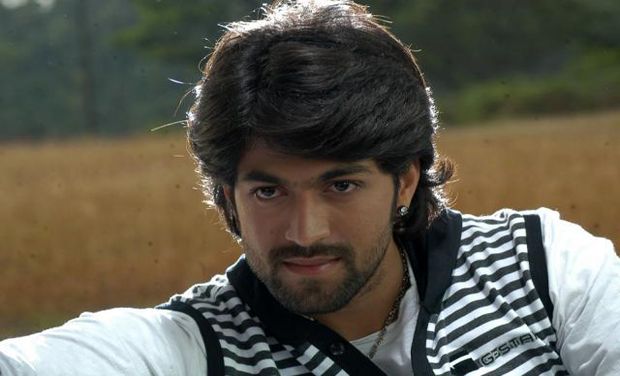
Actor Yash (Photo: DC archives)

Bengaluru: 

Kannada cinema’s market has widened up, thanks to the class and hit movies it is producing. After Maanikya creating records, Gajakesari will be releasing in as many as nine countries shortly. The overseas release is being planned with 5 digital prints.

Gajakesari will be screened in the US, Australia, Germany, Ireland, Singapore, Canada, Japan, Hong Kong and the UK in the month of June and July. One of the overseas distributor has disclosed this information.

Yash will be attending the premiere at most of the places.

source: http://www.deccanchronicle.com / Deccan Chronicle / Home> Entertainment> Sandalwood / by DC Correspondent / June 05th, 2014

A R Ramalingam, activist and former botany professor, dies

Mysore :

A R Ramalingam, activist and former botany professor of UoM and Karnatak University (Dharwad), died on Friday morning. The 78-year-old veteran was ailing for some time. Being the voice of the oppressed class, Ramalingam had inspired many people to fight for their rights.

He leaves behind his wife Kusuma and daughter Vijaya Narasimhan. His doctor-son Ajay, who ran an NGO providing safe drinking water to the villagers of Mysore taluk, died long ago.

Born in a rich zamindar’s family from a village in Vishakhapatnam district of Andhra Pradesh, he arrived here in the late 60s and joined UoM as a botany teacher. While discharging his duties at the university, he took up various public issues and fought for them, becoming a rebel of sorts.

While being in the forefront of various pro-people movements and agitations in the city, Ramalingam joined Mysore Grahakara Parishat (MGP) and worked for the cause of consumers and the general public.

His long-drawn battle against the government on the issue of establishing Rare Metal Plant (RMP) at Ratnahalli village near here made him to face the wrath of the government. The fight also made him move out of Mysore city — he was transferred to Karnatak University. But the undeterred activist kept fighting on the issue. His agitation, backed by some progressive organizations in the city, was so intense that it forced the central government to constitute an expert team which ordered that the plant should not harm the people. But Ramalingam, who had tasted the crops and many horticultural produces grown in the vicinity of the plant, found them to have been affected by the radioactive emissions from the plant. He had contended that the tamarind fruits grown near the plant were small in size due to radiation. He also got the fruits tasted in a private lab in Mumbai and Hyderabad to substantiate his claim.

The agitations and movements carried out by him posed danger to his teaching profession, and the rebel in him deprived him of retirement benefits. On occasions, he led a miserable life having almost nothing to sustain. He lived in a small rented house in the city. The activist was made to run from pillar to post to meet his medical expenses.

Green crusader

Ramalingam had a lot of love for the environment, particularly trees. By identifying the species of trees, he branding some of them as Heritage Trees, so as to prevent their felling. After his retirement in 1997, he settled down in Mysore and fought for several public issues, particularly the contamination of drinking water and water sources, by associating himself with MGP.

He used to give lectures to rural and urban groups and students on safe drinking water. His booklet in Kannada explains the importance of safe drinking water, complete with details on how water gets contaminated. It also narrates simple and inexpensive methods to make water potable. Consumers from across the district have been benefitted from his work on water issues.

His detection of a cause of pollution of the water source of Mysore city prompted the city corporation to take remedial action. Similarly, he had made the corporation repair a dilapidated structure of a water reservoir.

To make bacteriologically contaminated water potable, he developed a simple copper-plate method and inexpensive chlorination kits. He had also developed an easy method to estimate the amount of dissolved solids in water. He propagated simple and inexpensive rainwater harvesting methods.

In 2008, he unearthed a tea powder adulteration scandal in Mysore. His campaign for burning several hundred kgs of adulterated tea powder forced the civic authorities to raid shops and confiscate adulterated tea. Most of his public-interest activities were financed by himself.

As per wishes, his family members donated his body to JSS Medical College.

source: http://www.timesofindia.indiatimes.com / The Times of India / Home> City> Mysore / by M B Maramkal, TNN / June 06th, 2014

Maritime Firm Makes Hot Picks at UVCE

Bangalore :

For the first time in its campus placement process, a Nagpur-based company has selected 22 students of University Visvesvaraya College of Engineering (UVCE) with a pay package each of a whopping Rs 18 lakh per year!

A first-time recruiter at UVCE, Phoenix Maritime Sea Services, a ship management company providing services to shipping firms and merchant navy academies, has picked 11 mechanical, three electronics and communication and eight electrical and electronics students for jobs based out of Karnataka.

“A single company making so many offers with such impressive packages has not happened before,” said UVCE Principal K R Venugopal. However, there is a catch, he says. “The company requires students to pay `3-4 lakh towards training as a means to ensure students don’t take it up and leave.”

Vinay P, a mechanical engineering student, who has received the offer, said Phoenix works like a consultancy company to provide further training. “After we are trained, we can join merchant navy companies where our CTC may even increase,” he said.

Thumping Into UVCE

E-commerce giant Amazon selected two computer science students offering `11 lakh per year, investment banker Goldman Sachs selected one mechanical student for `10 lakh, Adobe offered two computer science students `8.3 lakh and Oracle offered seven students `7.5 lakh per year. But it is not the big payers that got students excited this time.

According to Varun K, a third year electrical and electronics student and placement coordinator, the maker of the legendary Bullet motorcycle, Royal Enfield, came to UVCE for the first time offering three mechanical students Rs 3.60 lakh per year.

“More than Phoenix, we were excited with RE coming here, which is the first time they are recruiting outside Chennai,” he said.

In the fag-end of its 2013-14 placement process, the 97-year-old UVCE had 87 companies visiting its campus making 539 offers to 301 students.

With results from six companies awaited, another 20 students could be placed. In 2012-13, there were 699 offers to 362 UVCE students.

Other Maiden Recruiters

First-time recruiters Godrej & Boyce made offers of `3.60 lakh each to seven students and Dell Research and Development also offered `5.50 lakh each to seven computer and information science students.

Other maiden big payers this year were Google, which came with an offer of Rs 13 lakh per annum and Tokyo-based Work Applications, which came with `30 lakh per annum.

However, they did not select any student.

“We have done better than R V College of Engineering, PES Institute of Technology and even M S Ramaiah Institute of Technology. But BMS College of Engineering is competing neck-and-neck with us,” Varun added.

source: http://www.newindianexpress.com / The New Indian Express / Home> Cities> Bangalore / by Bharath Joshi / June 07th, 2014

For this Artist, ‘Pain is Inevitable, Suffering Optional’

Bangalore :

Rohini Sen, the Bangalorean artist whose first solo show in the city opens today, suffered a foot injury a couple of years ago. It left her in extreme, chronic pain. A Chitrakala Parishath graduate, she was teaching arts and running when the pain overtook her life, and marathon plans.
RohiniSenBF19jun2014

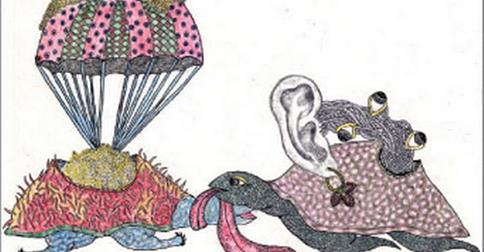
Her exhibition of drawings at Five Forty Five (from June 7 to 14), tells the story of her emotions as she grappled with the negativity surrounding her. She tells City Express how the pain changed her life and art:

You have titled your show ‘The Efficacy of Exquisite Pain’. Why do you describe pain as exquisite? And are you talking about its efficacy in making you see the world differently?

My drawing The Choice Between Freshness and Decay deals with how I began to look at pain as an exquisite gift when my injury posed an emotional dilemma—to look at myself as a person decaying from inside or to celebrate the discovery of a new lens with which to look at myself. And so, pain for me was exquisite in terms of the observations it facilitated. The efficacy of my injury perhaps culminates in these 20 drawings — which otherwise would have  been stories I would have never known to tell.

Are you free from pain now? Does your show reflect ’emotion recollected in tranquillity’?

While I think I am free from physiological ‘real’ pain now, anyone who has had a chronic injury will tell you that one is never free from the peripherals that pain leaves in its wake. The fear of the injury relapsing comes back to me every time I am at the gym, training for a run or coming down a staircase. My doctor, Dr KMK Varma of Manipal Hospital, first introduced me to this idea of associations when he sat with me and some of my drawings, trying his best to understand what I was going through!

To reflect on any situation, perhaps quietude is paramount. At the beginning of my injury I was hell bent on looking for a quick fix. Several cortisone shots later (I would get a Cortico steroid shot and get back to training!), I came to realise that it was not about conquering my own body and proving to my injury, “Hey, see? I still finished a 25 km run, so you lost and I won”. Patience, a sense of calm and nurturing my dysfunctional foot really helped me reach a space of acceptance. The drawings Learning to Listen and The Acceptance Conference deal with this idea.

What artistic strategies helped you deal with the pain? Were you drawing and painting through the pain? Any particular works of art that you drew strength from?

I do not think I have ever looked at my drawings as a catharsis of any kind. I was drawing through the second half of my injury: the series started when I was admitted in an ayurvedic hospital. At I-iam Hospital (Yelahanka, Bangalore), between yoga and treatment sessions, I began to reflect on what this injury taught me. More than works of art, I drew great strength from the other patients admitted there. They had come with the determination to transform themselves and begin the process of healing. The 15 days I spent there taught me a certain meditative discipline with which I now approach my art  practice, running and training.

What is the status of your marathon dreams?

While I am now ‘back’ on the running scene and successfully finished the TCS 10k in May with the help of my coach Mutie Mohammad and my extraordinarily supportive running team Jayanagar Jaguar, I do not think I nurture serious marathon dreams any more! I am now grateful for whatever little distance my body grants me.

Your paintings portray a wide range of animal characters, from parrots to emus to rats. What explains the absence of human characters?

I made a conscious artistic decision not to make literal representations of situations, but to find visual metaphors. My animals allowed me to say it so much more beautifully because each animal stands for a certain characteristic. My rats talk about the plague that a painful association gives rise to, my emu and other ratites express the frustration I faced when people who did not run kept giving me ‘advice’, and my turtles represent being alive for long—their slowness allows them to absorb the experiential ambit of life in a profound way.

Tell us about your art training.

I was taught Madhubani art by national award-winning master craftsperson Sasikala Devi while I was at Rishi Valley School. I completed my Bachelor’s in visual art from Karnataka Chitrakala Parishath in 2010. I then went on to become an art and running teacher for middle school children at the Mallya Aditi International School. In 2012 I went to do my MA in Art Education at the Rhode Island School of Design, USA, which was a turning point in my artistic approach. Between 2012 and 2014, I have exhibited at quite a few internationally acclaimed galleries such as The Awagami Gallery, Japan, and the Drawing Box, Belgium. I am now represented by Cade Tompkins Projects in the US. This is my first solo show in India.

What advice would you offer people with chronic pain, and sufferers who want to use art as a way out of pain?

I personally do not subscribe to the idea that art is a way out of pain and injury!

My process of drawing allowed me to reflect and make observations.

What do you do when you aren’t drawing and painting?

I am currently adjunct faculty at Srishti School of Art, Design and Technology, where I offer courses on reflective praxis, drawing as a thinking tool, and narrative form and structure.

How did you deal with other people’s comments about your pain?

They were at times comforting and at others unkind, but most often not useful. Using birds that cannot fly, I wanted to say this kind of advice comes often from a feeling of not being able to help. When a person is injured like the way I was, it is really the whole family that suffers sleepless nights, so a lot of the advice was from my loved ones experiencing a sense of helplessness. I also faced a lot of unkind remarks about the weight gain as a result of my injury.

Anything else you would like to share?

More than anything else, I would like for the running fraternity of Bangalore to engage with my work and recognise that this was one runner’s way of reflecting about injury. As Haruki Murakami says in his book What I talk about when I talk about running, “Pain is inevitable, suffering is optional.” I wish to share this with  every runner and fitness enthusiast who has faced the obstacle of a sports injury.

source: http://www.newindianexpress.com / The New Indian Express / Home> Cities> Bangalore / by S. R. Ramakrishna / June 07th, 2014


Bangalore’s own Tudor Taj Mahal

For those who regularly cross the Queens Road-Cunningham Road junction in the heart of the city, this stone building, halfheartedly bordering the road leading towards Shivaji Nagar, is not a rare sight. A few may even know that it’s called the Lady Jehangir Kothari Memorial Hall, but what marks it out as special is the fact that it is dedicated to a Pakistani woman who died in 1923 in Bangalore.

Goolbai, better known as Lady Jehangir, was the wife of Sir Jehangir Hormasji Kothari, a rich merchant of the Parsi community, who was born in Karachi. Sir Jehangir was famous for his philanthropic ways and was the first Indian from the provinces of the Punjab or Sindh to be knighted. A globetrotter, Sir Jehangir visited Bangalore with his wife as part of their south India tour in 1923. The journey ended on a tragic note with his beloved wife taking ill in Bangalore, where she breathed her last. She was interred at the Parsee Aramgah or burial ground in the city.

At that time, Bangalore only had a handful of Parsis. The Iranian Zoroastrians started migrating to Gujarat from their homeland Persia (now Iran) following the Arab invasion in the 8th century AD, says Yezdi N Unvalla, a member of the Bangalore Parsee Zoroastrian Anjuman, tracing the earliest days of the community in the country. “After his wife’s death, Sir Jehangir visited Bangalore again and decided to build a memorial in her name. He felt Bangalore’s Parsis need a place to get together and celebrate community functions,” adds Unvalla. The hall today belongs to the Bangalore Parsee Zoroastrian Anjuman.

The distinctive feature of the building is its archaic Tudor architecture. Even the ceiling is made of granite slabs. Sir Jehangir, who was an unofficial world ambassador for the British Empire, had good contacts with the officials who were in charge of the Bangalore Cantonment. The construction of the hall started in 1931 and it was declared open in 1932. Today, the community pays tribute to the Kothari couple by celebrating Annual Club Day with a prayer ceremony.

“The building is now used for community functions and recreational purposes and is given on rent for conducting exhibitions and annual fairs,” the Parsi association’s president Dinshaw Cawasji says.

Though the once tranquil place has now been engulfed by the expanding city, the community’s timely repairs have ensured that the decades-old building has withstood the vicissitudes of time.

Parsis arrived in Bangalore in view of increasing business prospects and settled in the Cantonment area by the end of 18th century. They maintained good relationship with the Europeans and the hall might have been built in old English Tudor style to suit their cultural taste. Bangalore Palace built by the Mysore royal family is another fine example of this style.

Dr. SK Aruni, Indian Council of Historical Research (ICHR), Bangalore

source: http://www.timesofindia.indiatoday.com / The Times of India / Home> City> Bangalore / by M. Ashtitha, TNN / April 07th, 2014

The Mysore that was … Part 21


 Sri Suvidhinath Rajendrasuri Jain Temple in Halladakeri.
Sri Suvidhinath Rajendrasuri Jain Temple in Halladakeri.

by M.L. Krishnaswami

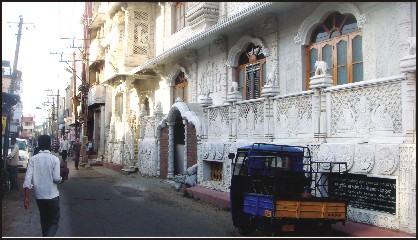
The old Halladakeri is now renamed Mahaveernagar and all the broken tiled roof houses have been demolished and in their place, modern constructions of two or more storeys have come up. The whole area is inhabited by Rajasthani and Sindhi Merchants and gives an entirely new look. A Jain temple has also come up in the area and during early mornings, one can see worshippers — both men and women in their traditional religious dresses — making a beeline to the temple.

A month or so back, in the early morning hours, a having dropped my wife in the suburban bus stand, I decided to park my car on the eastern wing of Irwin Road, opposite the Wellington Lodge and then proceeded to take a stroll along the stretch of road in between the Suburban Bus Stand on the East and Ashoka Road on the Western side. It is about a kilometre or a little more long and was way back called by a peculiar name “Halladakeri” or a street with lot of pits, I do not know why and how?

This Halladakeri, about 60 years or so ago, was dotted on both sides by old tiled roof houses and some of them nearing dilapidation with broken walls, ramshackled in nature, and with low doorways of wood with very small openings in the walls — an apology for windows also of wood. Most of these houses were inhabited by Brahmins and some of them were occupied by a few other people who sold butter, oil etc.

Towards the Circle near the Mysore Bank and Central Police Station — now called Nehru Circle — there was a Choultry by name ‘Jaggulal Chathra,’ a very big building (single storey) built of thick mud brick walls and with tiled roof, I do not remember exactly. If I am not mistaken, this Choultry belonged to members of the Sindhi Community who were a small minority in Mysore in those days. This Choultry building is still there — unused and unkempt — like an ageing elephant in distress. Let it be. If my memory is correct, the small by-lane housing the Jaggulal Dharmashala — that was its real name — was called ‘Hamsarajagalli’, whatever it means or refers to I do not know.

Apart from the above, the old Halladakeri is a remnant of the past. It was early morning when I strolled through — about 7.30 am — and not many people were on the move. There used to be a Ganeshothsav celebrated in a grand scale for about a fortnight or so and, if I remember correctly, one gentleman by name Murthy was in charge of the arrangements for the festival which included very good music programmes in the evenings by well-known musicians of the day who were specially called from Madras, Andhra and, of course, a few local luminaries. Orchestral music was not much in vogue those days and it was perhaps due to the patrons who lent their ears to classical variety and encouraged it.

The Brahmin houses were mostly occupied by Palace Priests who were held in high esteem by the community. Along the road was living one family which was related to our family by four generations backwards. I remember visiting this family for taking part in some ceremonies in those houses. I also remember one old lady by name Kuppa Chikkamma living there and who happens to be the grandmother of the famous Kannada poet K.S. Narasimhaswamy of Mysore Mallige-fame.

The above are only memorabilia now:

The old Halladakeri is now renamed Mahaveernagar and all the broken tiled roof houses have been demolished and in their place, modern constructions of two or more storeys have come up. The whole area — or practically the whole — is inhabited by Rajasthani and Sindhi Merchants and gives an entirely new look. A Jain temple has also come up and early mornings, one can see worshippers — both men and women in their traditional religious dresses — making a beeline to the temple. The road, small in width — hardly 20 to 25 feet or so — reminds me of the Girgaum Road or Kalbadevi Road, both very busy commercial centres of Bombay, with the only difference, this is more a residential area, with only a few business outlets here and there. Strangely and to my utter surprise, in the midst of all the above developments on either side of the road, I saw the old business establishment of Someshwara Steel Traders run jointly by M/s Somanna and Brother. This is like an oasis in a vast desert. May I say, ‘Hold on, Mr. Somanna’ who is a good friend of mine?

On another day, I took a stroll in a locality enclosed in a quadrilateral shape made up of Hundred Feet Road in the North, Thyagaraja Road on the East, Vanivilasa Road in the South and lastly D. Subbaiah Road on the West. This area is intersected into two parts as Chamundeshwari Road and Narayana Shastri Road. Incidentally, Narayana Shastri Road is named after the grandfather of the famous T.P. Kailasam and a fairly big building belonging to the above Narayana Shastri has since been demolished and a multistorey structure is in place now.

The area between Thyagaraja Road and Soppinakolada Beedhi (the road that runs North at right angles to the K.R. Police Station on V.V. Road) is dotted in the north by two or three Agrahara’s which are endless housing schemes built and gifted by the late Maharaja to needy citizens and these are intact even now with more or less the successors of the original owners in occupation.

Beyond this is the Sunnadakeri which has also maintained its original shape with small houses and shops with independent water and electricity connections. Only Soppinakolada Beedhi (now called Renuka Temple Street) is slowly undergoing change with neat housing complexes coming up in place of old houses.

The stretches between N.S.Road as above and Diwan’s Road from double tank side to Chamaraja Double Road has a cluster of housing appendages, very small in size and with poor ventilation and with a majority of housing units depending on street water taps for their water needs. Just behind the now closed (perhaps) Kiran’s Nursing Home, I saw a group of houses where the womenfolk have to make do with street water taps for washing utensils and clothing, as also bathing their small kids in the open. This is really a miserable sight and reflects poorly on our civic responsibilities. The population in this section is composed of backward class Hindus and Muslims living side by side since generations. The situation above needs redressal urgently.

Muharram is a great festival of the Muslims and a number of pendals used to come up in the area where the deities were kept and worshipped. Even Hindus would participate in this festival and the last day function saw the bon-homie of the two major communities in a large measure.

In the above quadrilateral area the redeeming feature is that Hindus and Muslims are living together for generations and I know this as I was a resident of V.V. Road for a long time. It is heartening to know that there is a small unit manufacturing sandal sticks or agarbathies in this locality and founded by the late M.R. Jattappa, a pioneer in this line and his brand name was ‘Premaleela Agarbatti’, emanating a romantic fragrance to the passers-by all around. This is like a rose flower in the midst of a thorn.

There was also a hair-cutting saloon jointly owned by two brothers by name Shivaram and Govindaraju and this used to be visited by the big-wigs of those days like Professors, Doctors, Lawyers, etc. The major attraction was Shivaram who happened to be the hair dresser of the Palace and who used to talk about his experiences there. This saloon is still there and must have passed on to the third generation now. Half a rupee was the charges for a hair cut and affluent people could shell out a rupee for the same.

Note: My humble suggestion in this connection is that educated and enlightened citizens should abandon the use of their vehicles once in a while and take a walk in the lanes and bylanes of the city, to get a real feel of the development that has taken place over a period of time. This will certainly go a long way in improving the lot of the poor and underprivileged citizens by addressing their problems before the powers that be.

source: http://www.starofmysore.com / Star of Mysore / Home> Feature Articles / June 17th, 2014