Completing a starry two decades

The Prakash Padukone Badminton Academy is 20 years old, and has a lot to remember

urning dreams to realityPrakash Padukone with Anup Sridhar and Vimal Kumarphoto: murali kumar k.

The who’s who of Indian badminton — past and present — assembled at a city hotel a few days ago to celebrate the Prakash Padukone Badminton Academy’s 20th anniversary. Dronacharya awardee and 2001 All-England champion P. Gopichand, nine-time national champion Aparna Popat, Olympian Vimal Kumar, Asian Championship bronze medallist Ashwini Ponnappa and many others spoke about their association with the PPBA, which was initially set up at the Canara Union courts (Malleswaram) before moving to the Karnataka Badminton Association premises.

The academy, founded by Padukone, Vimal and Vivek Kumar was launched to give young Indian talent the best chance to reach their true potential. The initiative has been an undeniable success, with the PPBA producing several international and national champions. The thoroughly enjoyable occasion, with former India international and PPBA product Vijay Lancy excelling in his role as the master of ceremonies, was also graced by the presence of former India leg-spinner Anil Kumble, veteran athletics coach V.R. Beedu (he has also provided fitness training to many of the PPBA stars) and ace archers Deepika Kumari and Jayanta Talukdar.

Plain-talker Prakash Padukone:

Aparna (Popat) won the silver medal in World junior championship in 1996, but it seems like just yesterday. There is an upswing in Indian badminton now, and the seeds were laid with the founding of the PPBA in 1994. When BPL came forward to sponsor us, we became the first privately-funded badminton academy in the world. Before that, the facilities that most players take for granted now were not present. When some of the current players complain about not having the best of facilities, my mind recalls the 1974 national camp at New Delhi.

We did not have beds or water. The toilets were filthy, and we had to make our own food. All this, however, did not bother us. We went on to win the men’s team event bronze medal at the 1974 Tehran Asian Games. Now, there seems to be all sorts of complaints about lack of sponsorship, support, grants and other things. Players need to realise that success lies in his/her own hands. Everyone needs to accept what is given to them, and just carry on. Players have to find a way to succeed; they must use their energy to win matches.

An emotional Vimal Kumar :

Have we really completed 20 years? I just can’t believe it; my elder daughter was born in 1994. In the early 1990s, Vivek and I wanted to start a badminton academy, so we met Padukone, who was then the Chairman of the Karnataka State Sports Council. Padukone told us that he had the same idea, and asked: ‘May I join you?’ The first task was to find a sponsor. We had made a project report and I took it with me wherever I took part in tournaments.

I once travelled to Chennai to play a tournament, when a close friend introduced me to Vinay Kamath (a senior journalist at The Hindu Business Line). Kamath had arranged for an interview with Rajeev Chandrasekhar (BPL Mobile founder) and Ajit Nambiar (BPL Chairman), and he agreed to take me with him. I met Chandrasekhar and Nambiar with the project reports, and we got our first sponsor. BPL gave us everything we needed, from funds to infrastructure. I must thank Kamath for facilitating this association.

I am also grateful to our current sponsor, Tata Capital, for their tremendous contribution.

An appreciative Anil Kumble:

Growing up, Padukone was my hero. I looked up to him as an iconic Indian who had achieved so much, at a time when success in badminton was unimaginable.

He was the one who showed all of us that we could dream big. And now, with the PPBA, he has passed on this confidence to his wards. To sustain an academy of this size for 20 years is no joke. I was told that 90 per cent of Indian badminton players have been produced by the PPBA, which is a tremendous achievement.

A reverential P. Gopichand:

When I began playing badminton at Hyderabad, it did not boast of much infrastructure. To become the State champion was the maximum reward that you could expect. I can recall that leading into the 1992 National championship, we played only football, because we did not have shuttles to practice with. When I moved to the PPBA, all this changed. The academy gave us funding, and provided courts, racquets and shuttles. I remember those long and tiring practice sessions with Padukone. We dreaded those sessions, but we also knew that we were learning from the master.

source: http://www.thehindu.com / The Hindu / Home> Features> MetroPlus / December 08th, 2014

Why Deepika Padukone went back to her school?

DeepikaBF10dec2014

Deepika Padukone will be making a special  visit to her school for a fund raiser event. Deepika was born and bought up in Bangalore and went to Sophia High School.The ace actor got approached by her school a month ago and the faculty requested her to be part of the event.

She had a brief conversation with the faculty where they shared details of the event. The school has organized a big scale event for fund raising which will go towards building a new wing in the school. The school will also be expanding and providing better facilities and amenities to students.

Deepika immediately confirmed her presence and requested her team to ensure her dates can be worked out as she was very keen to make time and visit her school. She has been in the middle of a busy schedule as she is shooting for Piku but she accommodated this on priority basis.

source: http://www.dnaindia.com / DNA / Home> Entertainment / Agency: DNA Webdesk  / Wednesday, December 10th, 2014

The heart of the natter

Chatterers both, these siblings are each other’s sounding boards, critics and best friends. The energy is infectious, we find

DanishKubraMPOs10dec2014

Relative Value with Danish (26) and Kubra Sait (31)

A riot. That’s what this brother-sister duo is. What was meant to be an hour-long interview steamrolls at full speed into nearly three, before plodding to a reluctant halt. They laugh a lot. They also tease, crack abundant jokes, high five each other repeatedly, make casual conversation with onlookers and fans, and are generally high on life. Exhaustingly so, especially to reticent people not given to much exuberance. Danish and sister Kubra, well known in Bangalore as anchors, emcees, TV hosts and him, the voice of prankster Nagaraj on the radio (or Chacko, Azhgar…take your pick), make no effort dispel the notion that they are talkers. Fun ones, at that.

Older sister Kubra will repeatedly deny that she is a bully — and Danish will say she used to be one — but it is apparent that she is very involved in her little brother’s life. Case in point — the T-shirt, shoes and socks she has carried with him to change into photographs for this interview, which Danish obligingly accedes to without a thought or a look at her choices. He trusts her implicitly, it’s clear. “This is my world — my mom and sister. We are each other’s best friends,” he says earnestly, and she nods.

They get along like a house on fire, and it’s almost impossible to catch them out of tune. Danish starts a sentence, Kubra completes it. Kubra teases a train of thought, Danish responds with perfectly-timed laughs. They put their synergy down to having grown up in a broken home, where their parents were constantly at odds. Through it all, Kubra, a self-proclaimed “warrior”, remained fiercely protective of her brother. “He was so cute! Not that he isn’t now,” she says, looking at him fondly. ‘Didi’ (older sister) as Danish endearingly calls her even as we are surrounded by starry-eyed autograph-hunters, is the proverbial older sibling — pampering, indulgent, and sometimes domineering.

She recalls growing up with an “adorable” kid, who ate up all his chocolates and asked her to share as per mom’s strict instructions. “He didn’t even have his own clothes!” she says with a giggle. “He was so fair that if you gave him a tiny slap on the cheek, he would start bawling and turn beetroot red,” she says, gesturing animatedly. “So my mum would put him in my red frilly frock, which had layers and layers going right down to the floor, and give him a small smack on the cheek, and then click a picture while he would cry.” That is all she can complete before collapsing into laughter while a mortified Danish yells into the microphone — “We were poor! POOR! Put that down as the reason please.”

Mother and daughter would “torture” the littlest member of the family, but also made him the centre of their universe. Kubra has drawn his biology diagrams for him, driven him to boarding school and even sat with his head on her lap as they bawled when it was time to leave him there. “Of course we miss each other — first when she went to Dubai and now that she is in Mumbai,” says Danish, restlessly swirling chopsticks in the air before Kubra promptly puts them away. “Some of my best childhood memories are of the family going to the movies — she and mom on one bike and me and dad on another — and all I’d want to do is sit with Didi because she was the cool one.” Kubra also dropped him to school — a ride on a black, kickstart TVS bike filled with chatter and games where they would follow the fastest person ahead of them on the road.

Danish too weighs in on his sister’s relationships, work choices, and even plays mediator when she fights with their mother, who he says, “runs their lives.” “And when we quarrel with mom, one will stand up for her saying ‘you can’t talk like that about her!’ before becoming one unit and telling mom to leave the other alone. But while I’ll listen and resolve things, this one will go add more fuel to the fire — bloody!” he says, gesturing at his sister who is convulsing in laughter before saying guiltily, “Yes he’s right, I do that!”

Danish’s sister is his first critic — pulling him up for everything from calling an old man a ‘rascal’ in humour during a prank call to critiquing his clothes — “Look at what he’s wearing!” She recalls how as a child, he fought with her and went to Lalbagh, dressed in a casual t-shirt and his school tie, “and then clicked photos with all the Mickey Mouse dustbins.” He’s also honest with her. In fact, a week before they co-anchored the Pro Kabaddi League for TV, Kubra says she was on edge, unconvinced that it would work. “He was sure — and look how well it did!” They go on to talk about how much they love Shah Rukh Khan, who they met during Temptations 2004 in Bangalore and then during the Pro Kabaddi league. Once again, it’s hard to pries them apart.

Kubra says it “melts her heart” when “no matter where we are or with who we are, he’ll turn around and say, ‘Didi, can we go? Didi, can we do this?’ He’s taller than me, super independent and so, good at what he does, but still accords me that respect and fondness.” On stage, therefore, the first time he referred to her as Kubra, it gave her a jolt. “I also find it very weird ya, to call her Kubra. So I just say ‘HEY’!” he says loudly, with his trademark energy. And just when it seems like it’s all sibling love, he pulls her leg. “After a point when we’re hosting, I’ll call her Didi and she’ll call me Dan. But this one toh goes into a trance! We were doing a show where we’re giving the 1,000 ranked person an award and she goes ‘you are the lonely lamp in this darkness…’. I’m thinking, God, stop it already!”

Being in the same profession, they say, was a happy accident. “He was doing really well in theatrics school, while I was in Dubai, working for Microsoft and also anchoring events for the company before realising I wanted to do it for myself. Somehow, we both found our way into this profession. We took separate paths, but landed up in the same place,” Kubra says.

Ever since, there has been no looking back. Today, the two try and work together when possible, and make it a point to solicit feedback from the other “and mom, of course” no matter where they are. Work is central to both their lives, especially Danish’s, who admits that he doesn’t have too many friends. “In the last two-three years, people have gotten to know me. But for old Bengalurians, I’m still Kubra’s brother. In fact, we sometimes whet events like that. If I introduce myself as Kubra’s brother and they don’t know who she is, I know what kind of work they’ll give me,” he says. She nods, adding, “And now Danish is doing so well that people recognise me through him. It’s a weird twisted heirloom.”

We’ve hurtled from early evening to night, and it is time to wrap up. They banter about how she went from being a tomboy who wore Danish’s WWE t-shirts to college to one “glam” chick because of the “double poverty” they were in, he says with a guffaw. Loud laughter, again. The hilarity, we realise, is just one of the many reasons these two are as tight as thieves.

source: http://www.bangaloremirror.com / Bangalore Mirror / Home> Columns> Sunday Read / by Sowmya Rajaram , Bangalore Mirror Bureau / November 15th, 2014

The lawn ranger

In place of paddy and vegetables, this farmer in the interiors of Varthur is cultivating four acres of different varieties of grass to meet the city’s growing demand for lawn turf

Muniraj, who has leased four acres of land for Rs 30,000 per year, is growing different types of grass

If you enjoy a hot cuppa every morning in the balcony overlooking a green patch of grass below, you should be counting yourself as lucky. Plus, you would have probably paid extra for that view given the escalating real estate prices. Not surprisingly, a big chunk of demand for lawns comes from apartment buildings and office complexes. And while some of us might assume that nurseries on Outer Ring Road, Marathahalli and Whitefield will be stocking acres of lawn turfs, the reality is different. Most of these nurseries source lawn turf from elsewhere. After a bit of digging, we found the place of origin a few kilometres into Varthur.

As one negotiates the narrow, bustling Varthur Road, crowded with local market goers, the landmark to look out for is the Police Station. Past the station is a blink-and-you-will-miss-it road on the right. The Balagere Road widens up and runs past government schools, small shops and temples. At one such roadside temple is a dirt road. If you haven’t got lost yet, this is the place to turn right and brace for a short, bumpy ride. On the left and right are fields growing vegetables and grains. The vast acres are dotted with coconut trees.

Hardly 200 metres down the road is the home of Krishna Reddy (85). He is the owner of 12 acres of land that has been in the family for more than 100 years. His four sons are not prepared to be farmers. They have jobs in Bengaluru, a city which is fast approaching their fields. The robust and friendly Reddy shows off his land dotted with coconut trees. But more than the land, he speaks of the new home that his sons are building nearby which is bigger and better than his current modest dwelling. There is no one to take care of the land, he says, but he will live off it and not depend on anyone till he dies. Mid-reverie, Reddy shakes off his thoughts and looks around for Muniraj in the distance.

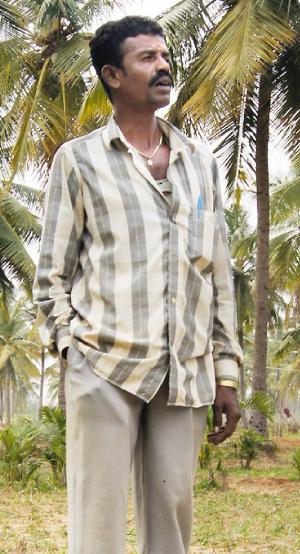
He is the man Reddy has rented out his fields to. Where there were once vegetables are patches of green grass which can easily be mistaken for paddy by the untrained urban eye. We have finally reached the place where the lawns are grown.

The four acres of land is a veritable supermarket for lawns. “Thirty thousand for a year’s lease,” Muniraj says as he shows us around the patches of grass growing randomly in different areas.

Bermuda, Mexican, Shade, Pondicherry, Elephant, Buffalo… Muniraj rattles off, sounding like a Darshini waiter. These are the varieties available at his ‘lawn store’. We walk to a patch of Bermuda grass that is being tended by his wife Manjula. He informs us that there are 25 people who work for him but have now gone to their native place, Bellary, for a festival. “Bellary has no water or jobs,” he adds.

However, water for his grass fields is aplenty. The Varthur Kere (lake) is their saviour. Relying on its acid waters, Muniraj has only kind words for the much-polluted lake. Yes, the water is acidic. Yes, it froths vile white foam. But without its water, “we might as well shut shop”, he goes on to say.

His shop has been running for 20 years now. There are few more like him, but not many, he adds. Lawn grass from here has travelled to Chennai and Coimbatore too.

A sack of Bermuda grass sells at Rs 200, while a sack of Shade grass is marked at Rs 300 (it would approximately cover a 10×10 feet lawn). Mexican grass is dearer at Rs 15 per square feet. In a day, he needs to make at least Rs 20,000 to keep even. With a weekly expenditure of Rs 25,000 in terms of salary, manure and pesticides, Muniraj relies on the year-long demand.
Walking around, we see an empty field with just a square metre of Bermuda grass. That field is almost sold, Muniraj says, and he is waiting to plant the land once again after the remaining patch is gone. Bermuda grass, the most popular of the lot, is a four-times-a-year crop. Mexican grass has twice-a-year harvest. What he has to check is that the grass blades are sharp and uniform. “Bermuda grass is the best,” he says. He should also ensure that the grass does not flower before being sold. “Look at this,” he points to Pondicherry grass with delicate white flowers. “People don’t want flowers in the lawn.”

But people do want lawns. It is hard to make profits every month. In business, there is never saying what happens, Muniraj offers as a way of explanation. He looks at the distant buildings, many of them apartment complexes. That is where his fortunes are. He banks on the pleasure its residents have in looking at a green patch of grass while drinking their morning cuppa.

Green trivia Sun loving grasses like Bermuda and Mexican grass are available as mats making them popular with urban gardeners. While Mexican tends to clump if neglected, Bemuda, although slower to grow, is easy to maintain. Shade grass, Elephant and Buffalo grass need dappled sunshine for at least two-three hours. With wider, almost nati-looking (local) blades, these varieties of grasses are not popular in ‘posh’ areas.

source: http://www.bangaloremirror.com / Bangalore Mirror / Home> Columns> Sunday Read / by Jayanthi Madhukar, Bangalore Mirror Bureau / November 15th, 2014

636 Ancient Gold Coins recovered

Chamarajanagar :

Ramasamudra Police have recovered 636 ancient gold coins from labourers who dug the soak pit near the house belonging to one Sadiq at Haradanahalli village. The pit was being dug behind Sri Venugopalaswamy Temple. The Department of Archeology and Museums had recovered 93 gold coins on Monday.

Sadiq had also lodged a complaint with the Ramasamudra Police suspecting more coins could have been found by the labourers. Sub-Inspectors P.P. Somegowda and M. Mahadevaswamy, who were investigating the case, took Kumara, Suresh, Nanjunda and Sundar into custody for interrogation during which all the four accused confessed to have found more coins while they were digging the pit.

Ramasamudra Police recovered 106 gold coins from Kumara, 168 gold coins from Suresh, 183 gold coins from Sundar and 183 gold coins from Nanjunda. The Police said that the gold coins were of different shapes and sizes. The four were arrested and later released on bail. Department of Archeology and Museums officials who visited the spot had ordered to filter the mud using a sieve during which they found 560 gold coins. The Police have recovered a total of 797 ancient gold coins so far.

The officials said that ancient gold coins were around 200 years old and suspected it to be of Hyder Ali and Tanjavur Maratha period.

Chamarajanagar SP S. Rangaswamy, Additional SP M. Mutturaj, DySP Mahantesh E. Muppinamutt, Inspector M.M. Mahadevappa, Sub-Inspectors P.P. Somegowda and M. Mahadevaswamy and staff C.K. Mahesh, Shantharaju, N. Mallikarjun were a part of the investigation.

source: http://www.starofmysore.com / Star of Mysore / Home> General News  /  Thursday , December 04th, 2014

Karanji Park gets Orchidarium

Wildlife photo expo inaugurated; Great Indian Rhinos released for public viewing at Zoo

Mysuru :

Adding to the existing attractions at Karanji Lake Nature Park, an Orchidarium with 98 Orchid plants of various varieties was inaugurated by Rehana Banu, Chairperson, Zoo Authority of Karnataka (ZAK), at the Park premises on Lalitha Mahal Road in city this morning.

RehanaBanuMPOs10dec20134

Orchidarium is an indoor enclosure for keeping and cultivating plants and observing them under natural conditions, especially for the cultivation of various types of Orchids.

Orchidarium is an area that provides the desired environmental conditions for different varieties of Orchids grown abundantly for cultivation and conservation of Orchids both endangered and otherwise.

It is provided with optimum lighting conditions for the plants while protecting them from direct and harsh sunlight. The structure is covered with mesh with a roof to protect the plants from direct sunlight.

Prior to the inauguration of the Orchidarium, the Wildlife Photography exhibition was inaugurated at the Zoo Library by MLA M.K. Somashekar.

The expo, which is being held in two categories like Zoo Animals and Wildlife Photography has a total of 220 pictures clicked by both amateur and professional photographers.

In the Zoo Animals category, pictures of Hippo and its baby, playful bear cubs, tiger and its cubs playing and other pictures of Zoo animals are on display.

In the Wildlife Photography category, prize winning photos of World Wildlife Day contest clicked by photographers S.R. Madhusudhan, G.S. Ravishankar, M.K. Sapthagirish and others has been put on display.

A pair of Great Indian Rhinos, three-year-old Virat and one-year-old Bablee, brought to Mysuru Zoo from Patna’s Sanjay Gandhi Biological Park about two months ago, were released for public viewing by Mayor R. Lingappa and MLA M.K. Somashekar at an enclosure made for them at the Zoo premises.

Zoo Executive Director B.P. Ravi, Manager Shivanna, Zoo Veterinarian Dr. Suresh, RFO Girish and others were present.

source: http://www.starofmysore.com / Star of Mysore / Home> General News  /  Thursday , December 04th, 2014

Dr.Sri Shivarathri Rajendra Swamiji Memorial : 21st Music Conference begins in City

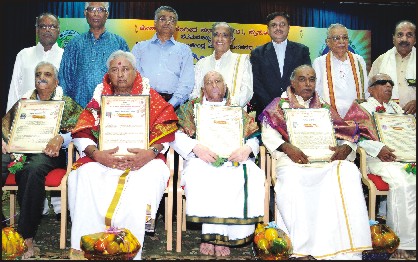
Vid. P. Shivakumar (Tumkur) - vocal, Vid. Hosahalli K. Venkataraman - violin, Vid. G.S. Siddagangachar Chitradurga - veena, Vid. Sampagodu D.S. Suryanarayana Bhat - vocal and K.S.N. Prasad (Mysuru) - music patron, who were felicitated during the inaugural of the Dr. Sri Shivarathri Rajendra Swamiji Memorial 21st Music Conference in city yesterday, are seen with Conference President Vidwan H.K. Narasimhamurthy, City Police Commissioner Dr. M.A. Saleem, Industrialist and connoisseur of art K.V. Murthy, Star of Mysore Editor-in-Chief K.B. Ganapathy, art promoter C.R. Himamshu and others.
Vid. P. Shivakumar (Tumkur) – vocal, Vid. Hosahalli K. Venkataraman – violin, Vid. G.S. Siddagangachar Chitradurga – veena, Vid. Sampagodu D.S. Suryanarayana Bhat – vocal and K.S.N. Prasad (Mysuru) – music patron, who were felicitated during the inaugural of the Dr. Sri Shivarathri Rajendra Swamiji Memorial 21st Music Conference in city yesterday, are seen with Conference President Vidwan H.K. Narasimhamurthy, City Police Commissioner Dr. M.A. Saleem, Industrialist and connoisseur of art K.V. Murthy, Star of Mysore Editor-in-Chief K.B. Ganapathy, art promoter C.R. Himamshu and others.

Mysuru :

The 21st Music Conference in memory of Dr. Sri Shivarathri Rajendra Mahaswamiji took off with pomp by extending a ceremonious Nadaswara welcome to the President of the Conference Vidwan H.K. Narasimhamurthy in a procession escorted by many musicians and the office-bearers of JSS Sangitha Sabha. The programme was inaugurated yesterday at JSS Women’s College in Saraswathipuram by Dr. M.A. Saleem, City Police Commissioner. K.V. Murthy, connoisseur of art presided. K.B. Ganapathy, Editor-in-Chief, Star of Mysore, released the souvenir — ‘Nada Namana.’

Five persons, who have served in the music field were also felicitated. Vid. P. Shivakumar (Tumkur) – vocal, Vid. Hosahalli K. Venkataraman – violin, Vid. G.S. Siddagangachar Chitradurga – veena, Vid. Sampagodu D.S. Suryanarayana Bhat – vocal and K.S.N. Prasad (Mysuru) – music patron were the ones who were felicitated.

As per the custom, the inaugural concert was given by the conference president. H.K. Narasimhamurthy (HKN), being a violinist, presented not one but a violin trio along with H.M. Sindhu and H.M. Smitha. They were accompanied by Neyveli Venkatesh (mridanga) and G.S. Ramanujam (ghata). In a short time, HKN did manage to present an impressive concert. The trio took off with a fine Varna (Dwijavanthi), composed by Pacchamirai Krishna Ayyar in a fast pace and in perfect unison. He accommodated compositions of each Muthuswami Dixitar, Tyagaraja and Purandaradasa. Dixitar’s ‘Gajaananayutam’ (Chakravaka) and ‘Hiranmayeem Lakshmeem’ (Lalitha), Tyagaraja’s ‘Ethavunnara’ (Kalyani) and Purandaradasa’s ‘Venkatachalanilayam’ (Sindhubhairavi) were presented very neatly.

A string of crisp kalpanaswaras by the trio added beauty to ‘Gajaananayutham.’ A pleasant sketch of Raga Lalitha by Sindhu Suchethan was followed by ‘Hiranmayeem Lakshmeem.’ Narasimhamurthy, in his typical cool manner, took up raga Kalyani for elaboration. The systematic development of the raga highlighted the phrases omitting Panchama. That added pep to his alapa. Some of the phrases reminded of his Guru M.S. Gopalakrishnan (MSG). HKN is undoubtedly spreading MSG baani in Mysuru through his innumerable disciples. ‘Ethavunnara’ was pleasing to ears. The perfect understanding between the trio is noteworthy. Every kruti they played exhibited this harmony that is very much required while playing with more than one artistes. The young Sindhu and Smitha can capture melody instantaneously. They are in perfect tune with each other.

The taniaavartahana by Neyveli Venkatesh and G.S. Ramanujam was filled with lively combination of Jathis. The duo too managed to steal the show in a short span of time. A brief alapa of Sindhubhairavi by HKN was filled with raga bhava that flowed easily through his bow. The popular Sanskrit composition of Puranadaradasa ‘Venkatachalanilayam’ and ‘Bhagyada Lakshmi Baramma’ brought the curtains down for the first day of the music conference.

The five-day conference includes morning sessions by scholars presenting papers and lecture-demonstrations, while the evenings are reserved for concerts.

source: http://www.starofmysore.com / Star of Mysore / Home> General News  /  Wednesday , December 03rd, 2014

The Man Who Has Created 33 Forests In India – He Can Make One In Your Backyard Too!

Shubhendu Sharma left his high paying job as an engineer to plant trees for the rest of his life. Using the unique Miyawaki methodology to grow saplings, Afforestt converts any land into a self-sustainable forest in a couple of years. He has successfully created 33 forests across India in two years. Here’s how he made it possible.

Did you know that you could convert a piece of land in your backyard into a beautiful forest within a year?

Shubhendu Sharma, an Industrial Engineer, is allowing you to bring nature home.

It all started when Sharma volunteered to assist a naturalist, Akira Miyawaki, to cultivate a forest at the Toyota plant where he worked. Miyawaki’s technique has managed to regenerate forests from Thailand to the Amazon, and Sharma thought to replicate the model in India.

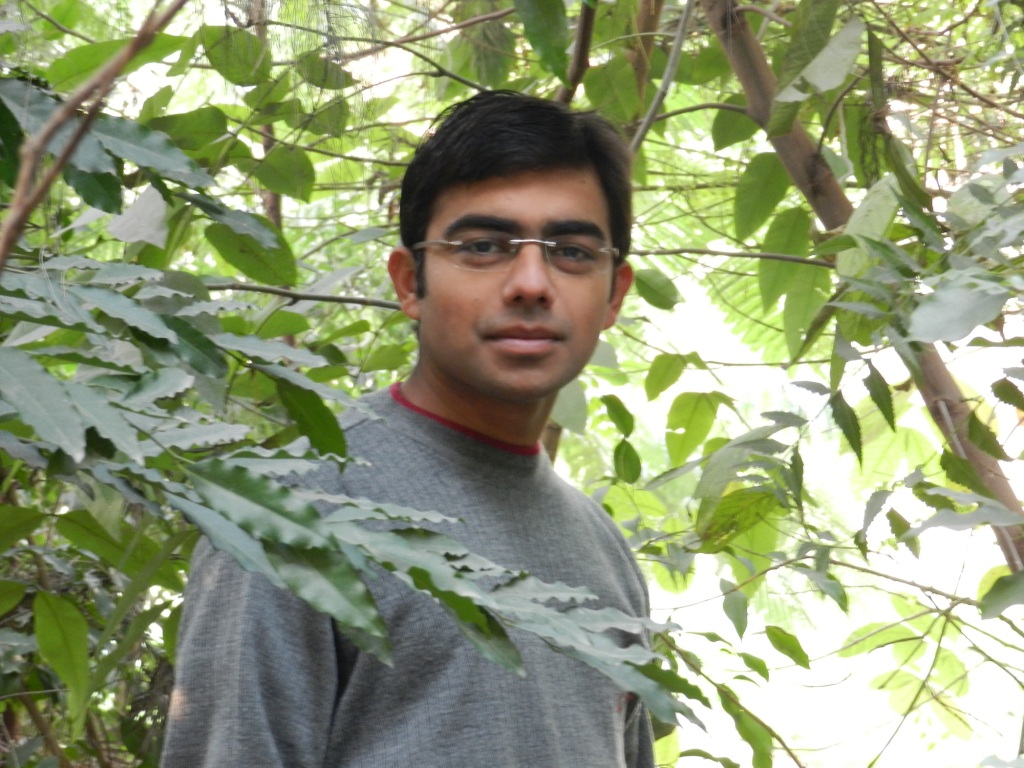
Shubhendu Sharma worked as an engineer for Toyota before he started Afforestt.

Sharma started to experiment with the model and came up with an Indian version after slight modifications using soil amenders. His first tryst with making forests was in his own backyard in Uttarakhand, where he grew a lush green forest within a year’s time. This gave him confidence and he decided to launch it as a full-time initiative. He quit his job and spent almost a year to do research on the methodology.

After much planning, research and enthusiasm, Sharma started Afforestt, an end-to-end service provider for creating natural, wild, maintenance-free, native forests in 2011.

“I realized it can’t be done as a ‘do gooder” activity. If I wanted it to succeed, I had to think it through and come up with a business plan, and a bunch of my friends helped me to set it up,” Sharma says.

Sharma, an Ashoka, TED and INK fellow was clear from the very beginning that Afforestt will be a for-profit organization. He wanted to change the industry and Afforestt was much more than just a business idea for him.

“The idea is to bring back the native forests. They are not only self-sustainable after a couple of years but also are maintenance-free,” Sharma says.

Taking the plunge

Shifting his career wasn’t easy. “Especially, convincing the family was very tough. They could not understand why I was bent on quitting a high-paying engineering job at Toyota to plant trees all my life,” Sharma says.

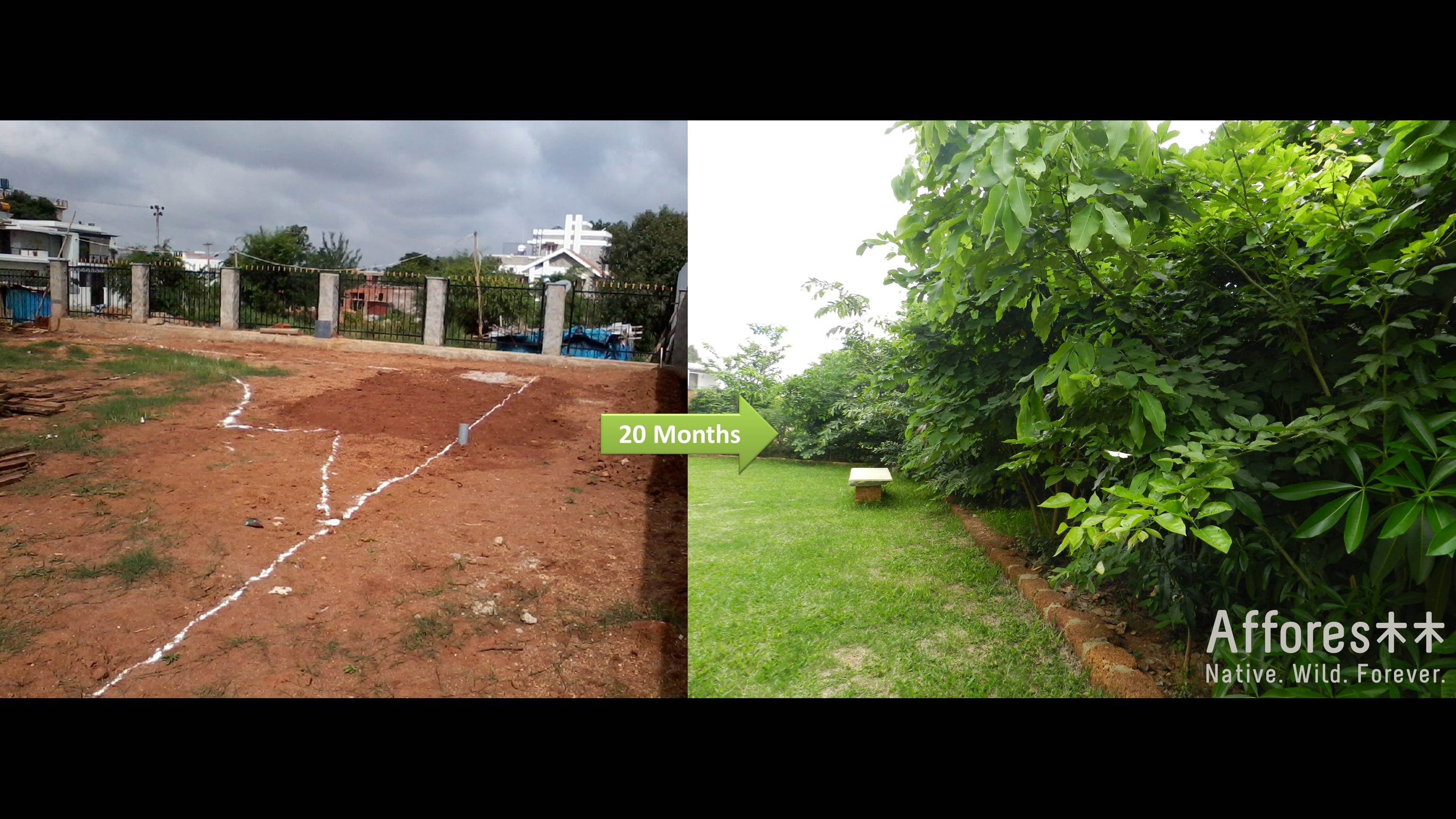
An empty land converted into a beautiful green spot in 24 months.

Sharma was adamant on making his idea work and started the company without his family’s knowledge; it was only after a couple of months of operation they got to know about it and finally made peace with it.

“My friends were a great support to me which gave me a boost. Till date, they take interest and engage in the activities of Afforestt,” Sharma says.

Having started on his own, Sharma now has a team of 6 that works from Bangalore. Initial troubles with finding the market and sustaining the business were solved to some extent when they received their first order from a German furniture maker to plant about 10,000 trees. Since then, Afforestt has served around 43 clients and planted over 54,000 trees.

How it works?

Afforestt works in two ways. One is end-to-end services, where they provide complete Project Execution and Management services which includes arrangement of labour, materials, equipment, tools and facilities required to execute an afforestation project using the Miyawaki Method. Another way is providing project management, on-site consulting and software support.

The process starts with doing a soil survey and finding out what the soil is missing. The minimum land size should be 1,000 square feet. Then a survey is done to study the native plant species and biomass.  After the survey, saplings are prepared in a nursery and soil is mixed with biomass to make it more fertile.

Finally the process of planting 50 to 100 varieties of native species at a density of 3-5/sq meter starts. The last stage involves watering and weeding the area for next two years, after which the forest needs no maintenance and becomes self-sustainable.

Sharma designs and formulates in what pattern, sequence and ratio should the saplings be planted for rapid growth. On an average, a sapling grows approximately 1 meter every year. The biggest plus point of Afforestt is its low-cost model. They charge around Rs. 150 per square foot, which is far less than what a regular Miyawaki method costs. 

The unique technique of plantation helps to grow saplings at a speed of around 2 meters per year.

The Challenges

“The biggest challenge was to launch something which had no existing market and we didn’t even know if it ever would,” says Sharma. Forests are something which require space, and not everyone is open to the idea of having a forest in their backyard.

Apart from that, as this is a one-of-its-kind initiative in India, Sharma had to do a lot of research. There was no help available as this had never been done before.

Again, as this was a unique model, finding clients and convincing people that it is actually possible was again a huge task.

What the future holds?

Afforest has created 33 forests so far across 11 cities of India and wants to increase the number. Sharma has a lot of plans to scale up and put this technology out there for more and more people to implement.

He is planning to launch a monitored crowd-sourced software where people will be able to feed their native plantation species in the tool. So, in case someone wants to plant their own forest, they would know what all species to go for. This will make their task a lot easier.

“We want to create a scenario where plucking a fruit from a tree in the backyard will be easier than buying it from the market,” Sharma says.

 Lessons learnt

“The biggest lesson that I have learnt is that you need to keep earning money. This is the only way you can sustain your initiative and actually bring a change,” Sharma says.

Another thing he learnt is that people are ready to pay money only if you sell the idea well. “This should become a livelihood cycle, where a lot more people are engaged in afforestation,” Sharma says.

Want a forest of your own? Visit their website or contact Shubhendu Sharma at- info@afforestt.com

Watch Sharma as he talks more about Afforestt-

source: http://www.thebetterindia.com / The Better India / Home> Bangalore / by Shreya Pareek / July 11th, 2014

Karnataka citizens can now access over 4,000 services on their smartphones

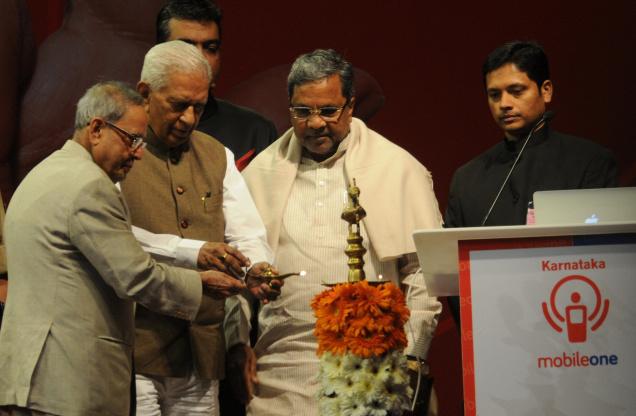
President Pranab Mukharjee, Chief Minister of Karnataka Siddaramaiah and Governor of Karnataka Vajbhai R. Vala at the launch of the Unified Mobile Governance Platform for citizens "Karnataka MobileOne" in Bengaluru on Monday. Photo: G.R.N. Somashekar.
President Pranab Mukharjee, Chief Minister of Karnataka Siddaramaiah and Governor of Karnataka Vajbhai R. Vala at the launch of the Unified Mobile Governance Platform for citizens “Karnataka MobileOne” in Bengaluru on Monday. Photo: G.R.N. Somashekar.

The country’s and the world’s largest multi-mode mobile governance platform – Mobile One – will offer 4,000 services. A unified mobile platform will enable services to citizens from both the government and private sector.

President Pranab Mukherjee will launch the initiative at BIEC in the presence of Chief Minister Siddaramaiah and Governor Vajubhai Vala.

These anytime, anywhere, anyhow services will be available round the clock throughout the year at any location in the state on any mobile device.

Through this initiative citizens can now pay utility bills, property tax, book bus and railway tickets, file income tax returns, m-passport, driving licenses and many other activities with their smartphones. Over 4000 services including G2C, B2C and G2B services can be availed through this mobile governance initiative.

Citizens can even take a simple picture of road potholes or street lights and send it automatically to the concerned officials for redressal.

This initiative named as “ICARE”, is one of a kind government-citizen engagement model.

The app is available for download on android and iOS platforms and all major mobile service providers such as Airtel, BSNL, Vodafone, Aircel, Idea, Reliance among others. Citizens can access services through this platform by dialling unique 3-digit number 161.

The Karnataka ‘Mobile One’ will integrate digital media and advertising going forward to enable it to be a self-sustaining model for some select services via advertising revenue, user fees and subscription models. Payments through a variety of modes including debit, credit cards, online wallet, PayGov are enabled.

source: http://www.thehindu.com / The Hindu / Home> News> Cities> Bengaluru / by Nagesh Prabhu / Bengaluru – December 08th, 2014

Thank you for the dance, Maya didi

Vikram Sampath pays tribute to Maya Rao, iconic dancer and choreographer who brought Kathak to south India

MayaRaoBF08dec2014

 Today, in the twilight of my life, my heart and body are a storehouse of my experiences.” These are the opening lines of iconic dancer, choreographer and teacher Dr Maya Rao’s recently released autobiography ‘Maya Rao: a lifetime in choreography’. And now with the sudden demise of this colossus in the early hours of Monday, what we have lost is an entire archive of Indian dance in general and Kathak in particular, which was her life-breath. Thankfully, the untiring efforts of her daughter and dancer Madhu Nataraj have captured slices of this story for posterity through this autobiography.

Born on 2nd May 1928 in a Konkani Saraswat Brahmin household, young Maya’s creative spirit yearned for the arts. A performance by the celebrated Uday Shankar in Bangalore catalysed a strong desire for dance, though in the 1930s girls from respected homes were discouraged from taking up the art. Finally after extracting a promise from her that she would never perform in public, her father put 14 year old Maya under the tutelage of Sohan Lal, a Kathak exponent from Jaipur. Ironically the same forbidden art became the source of livelihood for her when her father passed away when she was just 17. In one early choreographic performance at the city’s Town Hall, in 1947, she met music composer, flautist and a dealer of rare art books, M S Nataraj of Saraswathi Orchestra. A courtship of 18 long years eventually resulted in their marriage in 1964!

Maya left Bangalore in 1951 to pursue her Kathak training in Jaipur. Having completed her Honours degree in English it was easy to secure a job at the Maharani Gayatri Devi Girls’ School. Briefly she moved to Ceylon to learn the Kandyan dance from the legendary Chitrasena. Maya’s life changed when she became the first Government of India scholarship-holder in 1955 to learn under renowned Kathak maestro Shambhu Maharaj of the Lucknow Gharana, at the Bharatiya Kala Kendra, New Delhi. After a rigorous taleem under him and Sunderprasad of the Jaipur gharana, the young danseuse was all set to soar in the skies.

Maya did a three year course in Moscow in choreography which was her passion. She is the only Indian with a PG Certificate in Choreography from the former USSR. The splendour of the Russian ballet that she learnt in Moscow added new dimensions to her creative spirit. Several Indian productions like ‘Shakuntala’ that she pioneered there won great appreciation.

On her return to India, she set up the Natya Institute of Choreography in Delhion 12 August, 1964, with the support of Kamaladevi Chattopadhyay. This was a path-breaking effort in the world of Indian ballets and the country’s only degree college of choreography. She then shifted to Bangalore in 1986 with her daughter Madhu at the invitation of then Karnataka chief minister Ramakrishna Hegde.

Hegde made her in-charge of the SAARC Festival being held in Bangalore. She soon established a school for dance and choreography in Bangalore and also did a lot of research on dance. It was Maya’s efforts that brought Kathak to south India and she propagated it through training, concerts, festivals and designing a pedagogical structure for it. She has served on several government bodies like Karnataka SangeethaNrutya Academy (1987-1990) during which period she initiated festivals at Heritage monuments like Somanathapura, Pattadakkal and Halebid. Several productions by her like Amir Khusrau, Ramayana Darshanam (with Kuvempu), HoysalaVaibhava, Surdas, Krishnaleela and others are milestones in the annals of Indian dance.

Maya didi, as she is fondly remembered, has trained over 3,000 students in a lifetime dedicated to dance. She is the recipient of several awards including the National Award for Choreography from the Sangeet Natak Akademi, Rajyotsava Award and Shantala Award.

It is a deep sense of personal loss for me as I was fortunate to have been the beneficiary of a lot of affection from Maya didi. It was my book on Gauhar Jaan that caught her attention and she invited me home for dinner. The connection was almost instantaneous. Thereafter, despite her failing health, she ensured that she graced each and every special occasion in my life to bless me-be it my book launches or the exhibition of the Archive of Indian Music or IGNCA events. She in fact readily consented to be a part of the IGNCA Advisory Board only to lend support to my efforts. Ever generous in showering her appreciation and affection, it was just 10 days back that she agreed to chair an IGNCA lecture I had organised. Seeing her off that rainy evening at the Bangalore International Centre, I could never have imagined that this would be the final adieu. Even as I was gearing up to welcome her home this week, the midnight message from Madhu, announcing her sudden demise, left me totally numbed and shocked. For me, Maya didi’s zest for life, subtle sense of humour and disarming smile will remain etched forever. While her loss is irreplaceable, her colossal contributions to the dance world, her memory and her legacy live on.

The author is a Bangalore-based author/historian and Executive Director of the Indira Gandhi National Centre for the Arts (IGNCA).
THEY REMEMBER

It was the summer of 1984. Veteran critic BVK Shastry had invited Maya Rao to conduct a choreography workshop in Bangalore. I joined and was fortunate to receive training from the doyenne herself. She chose me to essay the role of Queen Shantala in her production Vijayanagara Vaibhava. She brought Kathak and the concept of choreography to Bangalore way back in the 80s. Maya aunty’s shifting to Bangalore then changed the dance scene. She brought in group choreography, professionalism, technology, and aesthetics into a field that had only soloists, whose occasional flashes of excellence carried the performance. Chief Minister Ramakrishna Hegde, a man of the arts, helped Maya aunty move to Bangalore and gave a generous government funding to start the Institute of Choreography. Hundreds of dancers trained in the Institute and came out as ‘finished dancers’, whatever be the style. It is a great loss to the arts scene. May her soul always be at peace.Prathibha Prahlad, Dancer

Dr Maya Rao has a special place in Rangoli Metro Art Centre. This July, we had curated her show and she was in her rare wit and humour. “Conversation with Maya Rao” was specially held at the Art Centre to honour her. It was a pleasure to hear this cultural activist who set a benchmark on how much a person can do in a lifetime. Vasanth Rao General Manager (finance), Bangalore Metro Rail Corporation

I got the news Monday morning just when I left town. It came as a shocker, but at least, she didn’t have to go through the ordeal of being sick. That is particularly difficult for an artiste who has always been on her feet. I remember travelling with her and her husband once to Mysore, where we were guests for a programme. It was an enjoyable trip, where we chatted about dance. I’ve also spent some quiet evenings with Maya didi at her place. This year has been particularly special and she must have been satisfied the way things panned out. Vani Ganapathy, Dancer
Maya Rao took her final bow last night. Oh what a year it has been for her: her darling daughter found a life partner, her autobiography was released and a fantastic new show ‘Kathak Through the Ages’ had its premier. I read out these lines from Maya Rao’s book at its launch recently: “Even in the winter of my life there are many aspirations and dreams I look forward to. God willing and energy permitting, I hope that my zest for life and dance will continue.” It will continue in Madhu Nataraj Kiran, their students, and all of us whose lives Maya di touched. She was not just any octogenarian.Sandhya Mendonca Managing Director & Editor in Chief,Raintree Media Pvt Ltd

source: http://www.bangaloremirror.com / Bangalore Mirror /  Home> Bangalore> Other / by Bangalore Mirror Bureau / September 02nd, 2014