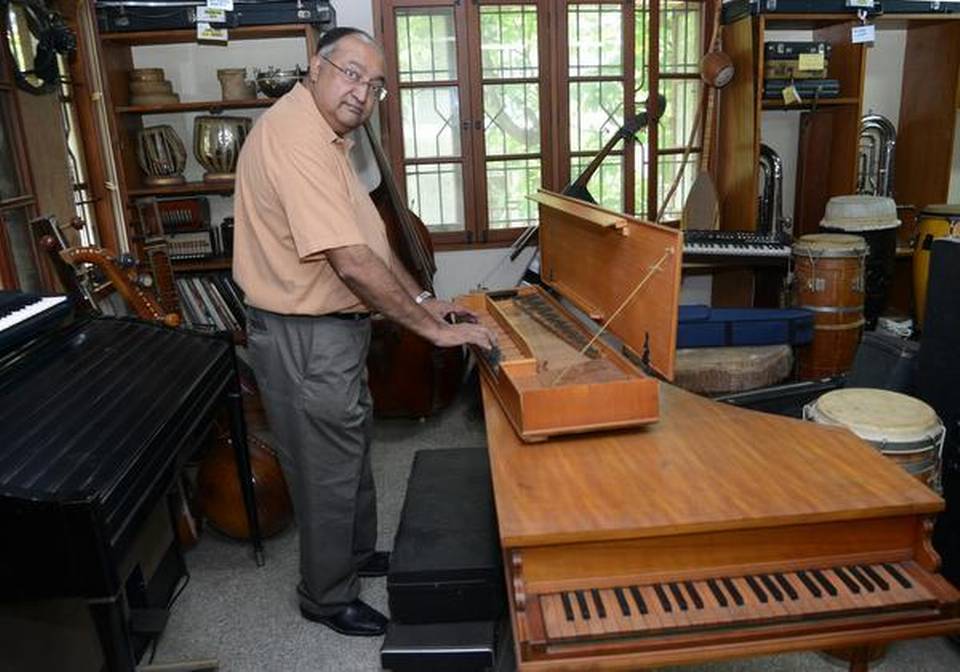
Silver Talkies presents the orthopaedic surgeon’s collection of over 300 musical instruments
Bengaluru – The Bengaluru-based Silver Talkies has been holding online sessions for elders during the lockdown. There have been informative talks and fun events that people can enjoy from the comfort of their homes. As part of this endeavour, Silver Talkies is presenting a virtual tour of Dr Thomas Chandy’s collection of musical instruments.
The orthopaedic surgeon and Chief Managing Director of HOSMAT has collected over 300 musical instruments over the last six decades. “I have 80 rare guitars, harpsichords, a clavichord, and a concert harp that was custom-made for me in the US with an image of
King David carved on it,” says Chandy. “The collection also includes a bassoon, flutes, and trombone, a Chinese instrument called Koto, 16 saxophones, six clarinets, two xylophones of concert quality and a South American instrument, marimba. Some instruments date back to the Elizabethan era.” Chandy is an accomplished musician and currently the lead singer of one of the city’s oldest bands, the 17-year-old The Jazz and Rock Revival.
Silver Talkies presents A Dose of Music By Dr Thomas Chandy between 4.30 pm and 5.30 pm on May 15. Entry is free. Register by logging into
Kiran Hegde’s psychological thriller has bagged three awards at the 10th Dada Saheb Phalke Film Festival
Bengaluru – Début director Kiran Hegde’s dream of launching his film Manaroopa in style came to naught as COVID-19 swept the world. Kiran was undeterred and started sending his film to festivals, showcasing it on various online platforms and is now reaping the harvest of his hard work. The Kannada psychological thriller has bagged three awards at the 10th Dada Saheb Phalke Film Festival for Best Debut Director; Best Cinematography for Govinda Raj and Best Supporting Actor for Amogh Siddarth.
Manaroopa (Reflection of Mind), deals with issues such as self-obsession, narcissism, loneliness self-destruction, divorce and more. “These awards are precious for me and the entire film crew. The idea was to highlight issues relevant to millennials such as the meaninglessness of life and existential nihilism. In the film, a few characters are absurd and think their life is meaningless. I believe the relevance of its theme which resonates with the times is attracting juries at various film festivals at both national and international level,” says a happy Kiran.
Manaroopa stars Dilip Kumar, Anusha Rao, Nisha Yash Ram, Aryan and Shivaprasad who excelled in their roles as millennials. The film also stars Siddarth, Gaja Ninasam and Prajwal Gowda.
source: http://www.thehindu.com / The Hindu / Home> Entertainment> Movies / Bengaluru , May 06th, 2020
They are already in talks with chemical manufacturing companies. “The chemical can be used on pillow covers, bedspreads, covering sheets etc.
With an increase in the number of Covid-19 cases in Bengaluru as of Saturday, doctors at Victoria Hospital find themselves busier than usual | Shriram BN
Bengaluru :
Scientists at Bengaluru’s National Centre for Biological Sciences (NCBS) have developed a chemical coating that can be applied to personal protective equipment to prevent the virus from sticking to the cloth. NCBS director Prof Satyajit Mayor told The New Sunday Express, “This germicidal molecule will provide better protection to frontline healthcare workers. The coating neutralises bacteria or viruses when applied on cotton fabrics.
It neutralises anything that has a membrane. All bacteria and a large number of viruses have membranes,” he said. The chemical compound used for the coating is based on quaternary ammonium salts and is the brainchild of Prof Praveen Kumar Vemula, associate professor at NCBS’ Institute for Stem Cell Science and Regenerative Medicine (InStem) and lead researcher of the project.
(Quaternary ammonium salts are water soluble compounds that can be used as disinfectants in textiles.)
“Masks/PPEs act as physical barriers on which the virus gets deposited. It can remain active at least for seven days. If you coat PPE with this chemical it will be resuable,” Vemula said. Lab results show the compound is promising, but regulatory approvals are awaited, he said, adding that once they are obtained, it can be manufactured on an industrial scale in four months.
They are already in talks with chemical manufacturing companies. “The chemical can be used on pillow covers, bedspreads, covering sheets etc. It is working very well on cotton materials and will surely help the healthcare sector,” explained Mayor said. The compound can be used in two ways. It can be applied through a solution on cloth which must be heated as prescribed for the molecules to get attached. Or, mask/gloves/PPE manufacturers can be given fabric which has been pre-attached to the compound. The molecule is efficient for up to 25 washes of the cloth on which it is used.
source: http://www.newindianexpress.com / The New Indian Express / Home> Cities> Bengaluru / by Chetana Belagere / Express News Service / May 17th, 2020
Jackfruit in chocolates, cookies, and seed flour that can be stored for a year… CK Narayana, Principal Scientist at Indian Institute of Horticultural Research, is giving the fruit new forms
The Indian Institute of Horticultural Research (IIHR), in Bengaluru has developed a technology to make jackfruit juice, chocolates and cookies. “It took me three years of research to develop this technique,” says CK Narayana, Principal Scientist, and Former Head of the Division of Post Harvest Technology, IIHR, Hessaraghatta.
Jackfruit, unlike the mango, was largely ignored until a few years ago. “Jackfruit is believed to have originated in the Western Ghats and finds mention in traditional systems of medicine,” says Narayana. Its benefits are varied. “100 grams of jackfruit bulbs provide 95 calories of energy, which is better than honey. The fruit is made of soft, easily digestible flesh with simple sugars such as fructose and sucrose that replenish energy instantly.”
Narayana spoke to MetroPlus on what makes jackfruit special. Excerpts:
How much jackfruit is grown in India?
As per the National Horticulture Board Statistics, we produce 1.74 million tonnes annually. Tripura, Odisha, Assam, West Bengal, Karnataka, Kerala, Chhattisgarh and Jharkhand produce more than one lakh tonnes. Most are natural hybrids and each has a unique taste and texture. Many farmers grow jackfruit in their field bunds or backyards for their consumption. Huge quantities come from forests where they grow wild.
Could you talk about the field gene bank?
IIHR Bengaluru, a subsidiary of Indian Council of Agricultural Research (ICAR), is a National Active Germplasm Site (NAGS) for jackfruit. We maintain a collection of more than 75 types collected from all over India. This is a continuous process and we keep enriching our gene bank. We help custodian farmers who have been conserving jackfruit trees in their homes or orchards for several generations. We recognise and reward these farmers, and also spread these rare types among other farmers and growers.
Arka Halasuras
Was jackfruit always a part of our traditional diet?
Long ago, before India became self-sufficient in food grains, people from Kerala, coastal Karnataka, and Maharashtra used to boil jackfruit seeds and eat them during the rainy season or drought as no other food was available. After rice and wheat was made available in plenty, post the Green Revolution, people stopped eating jackfruit seed as it was seen as a symbol of poverty. Over the last few years, jackfruit started getting attention from global scientists, policy makers and farmers.
What is IIHR doing to build awareness of the nutritional benefits of jackfruit?
We have been organising jackfruit diversity shows for the last three years. I have also started researching ways and means to use every part of the fruit (edible flake, seeds and rind). As part of this project, I developed three products using jackfruit seeds, one from the pulp and one animal feed formulation using the rind.
Could you tell us about the products you have developed?
I have developed a process to make a ready-to-drink beverage, without added sugar or acid that can be stored for up to six months at room temperature without any preservative. We also have a process by which jackfruit seeds can be converted into flour that can be stored for up to one year. At IIHR, we have standardised the optimum ratio to be blended into rice or wheat without the taste being compromised. After our laboratory trials, we collaborated with a food processing industry (an IIHR off-site incubatee) in Mangaluru district to introduce this into the market as ready-to-eat chapatis.
We have also developed a jackfruit seed chocolate, where the seed flour is blended with other food additives and non-sugar sweeteners and wrapped in chocolate. The jackfruit comprises almost 50% of the weight of each chocolate, reducing the calorific value by one-third, while raising its mineral content, as the fruit seed is rich in iron, zinc and calcium and other phytochemicals.
Arka Jackolate
The seed flour-based cookies we developed have 10% lesser calories and high amounts of iron, calcium, magnesium and zinc compared to the commercially available cookies. The licence to manufacture the cookies has been given to an entrepreneur in Shivamogga in Karnataka. Production will begin once lockdown is lifted.
What are the nutritional benefits of jackfruit?
Jackfruit is a wonderful gift of nature. The ripe fruit is a delicious dessert, while the unripe one can be cooked as a vegetable, as it has crude as well as dietary fibre. The seed is rich in resistant starch and phytochemicals that have medicinal properties.
source: http://www.thehindu.com / The Hindu / Home> Life & Style> Food / by Ranjani Govind / Bengaluru – May 14th, 2020
Farmers in Karnataka, struggling to sell 2,000 tonnes of ash gourd under lockdown, have found a sweet solution
At a press meet convened by Member of Legislative Assembly (MLA) Araga Jnanendra of Thirthahalli, a town on the banks of the Tungabhadra, petha was served. And thereby hangs a tale.
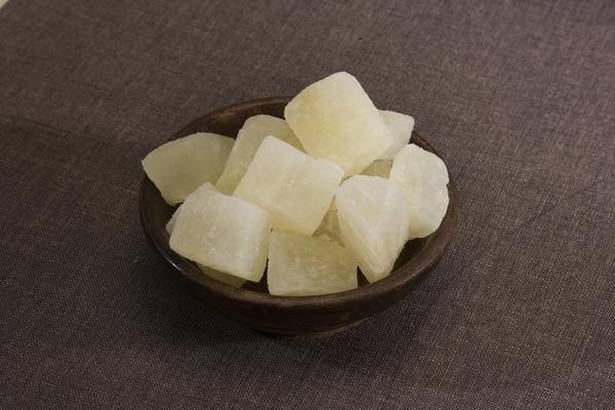
The delicacy that is known to the world as Agre ka petha,is made from ash gourd (known locally as kumbalakai). The sweet is usually made in the North of India, far away from Thirthahalli, but barely a week ago, out of sheer desperation, it began to be made right here. A week ago, Shashank Hegde, also from Thirthahalli, put out an impassioned plea on social media. The 35-year-old posted how farmers had cultivated 2,000 tonnes of ash gourd that should have found its way into Agre ka petha. But with the lockdown, they were left holding the gourd.
_________________________
Warm Welcome Juice by Mallika Badrinath
Ingredients
White pumpkin: 400 gms
Cucumber: one or two
Carrots: one or two
Tomato
Ginger: an inch-long piece
Apple: 1
Celery: (optional)
Karpooravalli leaves: (optional)
Salt, white pepper
Just a drizzle of honey
Method
Wash, peel, de-seed and chop the vegetables. Add them to the juicer or mixer. First put in the ginger and celery. Add the karpooravalli leaves if you enjoy the taste it lends. Add the rest of the vegetables and grind. Do not add water. Strain, add white pepper and salt and very little honey. Your nutrition-packed juice is ready.
_____________________________
MLA Jnanendra, industrialist Kuntolli Vishwanath, tehsildar Sripadh and president of the Agricultural Produce Market Committee HR Mahabalesh, along with the Horticulture Department, and Shashank’s Hingaara Foundation, swung into action to help the farmers.
“Someone from Delhi suggested that instead of trying to transport trucks of ash gourd to Delhi, why not make the petha right here? It was not that complicated to make,” and so the Thirthahalli petha was born, says Shashank.
______________________________
Ash Gourd Minestrone by Chef Bakshish Dean
Ingredients
Ash Gourd: 1 cup (150gm), 1/2” dices
Olive Oil: 3 tbsp (you can also use gingelly oil)
Garlic: 4 cloves, sliced thick
Onion: 1/4 cup (30gm), 1/2-inch dices
Carrot: 1/4 cup (30gm), 1/2” flat dices
Bell Peppers: 1/2 cup (50gm), 1/2” flat dices
Cabbage: 1/2 cup (40gm), 1/2” flat dices
Spinach: 1/2 cup (40gm), 1/2” flat dices
Parmesan Rind: 2/3” piece (optional)
Pasta (short): 4 tbsp (40gm), dry
Chickpeas: 3/4 cup (120gm), boiled
Chickpea water: 2 cups (400ml)
Water: 2 cups
Salt: 1 1/2 tsp (to taste)
Pepper: 1/2 tsp, freshly ground
Pesto: 3 tbsp (45gm)
Method
In a heavy bottom pan, over medium heat, add the sliced garlic, followed by the vegetables, except spinach, mix well and cook covered for 3 minutes.
Add the Parmesan rind, chickpeas, chickpea water, water, pasta, salt and pepper, mix well, allow it to come to a boil, cover and simmer gently for 8-10 minutes, stir every 3/4 minutes.
Add spinach, mix in well and simmer for another 4-5 minutes.
Check doneness of vegetables and pasta, and seasoning.
Finish the soup with Coriander Cashew Pesto.
Pour in portion bowls and garnish with grated Parmesan cheese (any good hard cheese can be used in this soup) and a drizzle of olive oil.
This is a hearty soup, which if complimented with some good rustic toasted buttered bread, can turn into a fantastic meal!
____________________________
Many hours of YouTube and consultations later, 39-year-old Kuntolli Vishwanath set his people to work and the first lot of pethas was made. Vishwanath, a mechanical engineer, also owns a food processing unit. His company is a pioneer and holds a patent for arecanut dehuskers.
“My company exists, thanks to farmers. I had to do something to pull them out of trouble. When the district administration approached me, I readied a sample in 24 hours but it was not perfect. YouTube instructions are not the most accurate and we got it 60% right,” he laughs.
So Vishwanath turned to Suresh Bhatt, who has been making sweets for weddings and other functions for 30 years. Suresh pointed out where they were going wrong. Now Vishwanath has around eight to 10 women working on the petha. “At the moment, we are manually cutting two tonnes of the gourd. Our target is 10-15 tonnes once the machines take over. We are learning by trial-and-error. I have tasted the pethas but had no idea they were made from gourds grown in my region,” says Vishwanath.
The process from start to finish takes 72 hours and needs precision. “The gourd is cut, washed, soaked in lime for several hours, then again thoroughly washed and boiled.” The sugar syrup is made to just the right consistency. The sugared pieces have to dry. “We cannot keep them out as even a drop of water will lead to fungus.”
Vishwanath is buying ash gourd from farmers in need of sales within 10-15 kilometres radius from here. “They have no money to harvest, or transport… I am reaching out to them.”
But just making pethas does not solve the problem. One is unsure how much of it will sell, and 2,000 tonnes cannot all be converted into the sweet. So they are working on a marketing campaign. “We plan to send ash gourds to Bengaluru. I have spoken to contacts at various apartment blocks and gated communities.”
They have requested residents to buy the ash gourds and distribute them to anyone who is struggling to put food on the table.
To know more, call 9900602529. Mail: info@hingaara.com
source: http://www.thehindu.com / The Hindu / Home> Life & Style> Food / by Pankaja Srinivasan / Coimbatore – May 12th, 2020
IIT Delhi, which has become the first academic institute to develop a COVID-19 testing method, is planning to give non-exclusive open licence to companies for commercialising the test.
New Delhi :
IIT-Delhi’s low-cost COVID-19 testing kit will be produced by a Bengaluru-based biotechnology firm and is expected to be available by the first week of June, according to officials.
The large scale assembly and manufacturing of the kits by Genei Laboratories will be carried out at a facility exclusively set up for COVID-19 testing kits at the Andhra Pradesh MedTech Zone (AMTZ) in Vizag.
“Genei Laboratories is one of the companies which has received the non exclusive license from IIT Delhi for the Probe free RT-PCR based COVID-19 low cost test kit,” Indian Institute of Technology Delhi Director V Ramgopal Rao said.
IIT Delhi, which has become the first academic institute to develop a COVID-19 testing method, is planning to give non-exclusive open licence to companies for commercialising the test, but with a price rider. While the institute has kept a price rider of Rs 500 per kit, Genei Laboratories has not announced the price yet.
“Genei Laboratories expects to manufacture the most affordable real time PCR testing Kits for COVID-19 in India. The final kit will have two variants and is expected to be rolled out by June 1st week of 2020,” Genei Laboratories MD S Chandrashekaran said.
The company is among the 40 companies to have reached out to the institute after it got an approval from ICMR for the test based on a real-time PCR-based diagnostic assay.
According to the team, the current testing methods available are “probe-based”, while the one developed by IIT Delhi is a “probe-free” method, which reduces the testing cost without compromising on accuracy.
With agency inputs
source: http://www.newindianexpress.com / The New Indian Express / Home> Cities> Delhi / by Express News Service / May 13th, 2020
The 60 underprivileged women are employed by a Bengaluru-based NGO
Many non-government organisations have started adapting to a country grappling with the COVID-19 pandemic by making handmade masks.
One such organisation is Craftizen Foundation, a Bengaluru-based NGO. Its founder Mayura Balasubramanian said they have sold over 10,000 plain, reusable cotton (cambric and handloom) masks made by over 50 women. It availed the services of 10 more women to make hand-painted and reversible masks, which was launched last week.
Craftizen Foundation, founded in 2014, helps traditional artisans, especially from marginalised communities. They claim their work — which includes skill development in design, production and marketing — has benefited over 2,000 persons in the last six years.
Craftizen currently runs 15 livelihood centres across Bengaluru and Hyderabad. Of the 60 women, who make the masks, 10 work in the Chikkabyratti centre (in Bengaluru) and the rest in two centres in Hyderabad.
“It’s a great challenge now to keep the artisans relevant,” says Mayura, “Their skills might not be essential in these times. But a lot of them will suddenly be unemployed. Which is why we came up with this idea of hand-painted masks.”
The women who make these masks, she adds, have been involved with Craftizen for one to three years. “The sourcing of raw materials has been difficult due to the lockdown. Which is why, most of our centres are closed. And, the delivery of the masks will take up to three weeks. Despite the difficulties, within the first two days of launching the handmade masks, we received orders for over 500 of them.”
Craftizen has also launched a children’s edition of masks.
source: http://www.thehindu.com / The Hindu / Home> News> Cities> Bengaluru / by Praveen Sudevan / May 13h, 2020
Low cost face shield developed by NITK Surathkal, in Mangaluru.
It costs only ₹12 to make such a shield
The National Institute of Technology-Karnataka (NIT-K), Surathkal, has developed an economical, reusable and transparent face shield using locally available low- cost material to fight against COVID -19.
According to Arun M. Isloor, Professor and Head, Department of Chemistry at the institute, the production cost of each face shield will be a maximum of ₹12.
Mr. Isloor who supervised a team of volunteers who prepared the shield at the institute said that the Director of the institute K. Uma Maheshwar Rao handed over 300 such face shields to Sindhu B Rupesh, Deputy Commissioner of Dakshina Kannada on Saturday.
A yoga mat, a polyester transparent sheet, a synthetic adhesive and velcro tape have been used for making the shields. “Each shield can be used for at least 90-100 days by washing it in soap water or by using some four droplets of hand sanitiser,” Prof. Isloor said.
He said that during mid-March he saw his Malaysian collaborators wearing face shields made of an elastic band, which was not only expensive but inconvenient for long-time wearing. One late evening he observed his seven-year-old son playing with his small yoga mat, which suddenly made him to think that the strip of yoga mat can be used for making the face shield.
One of the important reasons for the rapid spread of the COVID-19 across the globe is lack of availability of Personal Protecting Equipment (PPEs) such as hand gloves, protective coverage, masks, face shield, etc. The PPEs are out reach of the common people due to high cost and limited supply. Due to complete lock down of industries which can manufacture them on large scale, has also add to the lack of supply, he said.
source: http://www.thehindu.com / The Hindu / Home> News> States> Karnataka / by Special Correspondent / Mangaluru – May 12th, 2020
CSIR NAL claimed that it developed the ventilator, configured with majority of indigenous components, in 36 days
For representational purposes (Photo | Shekhar Yadav, EPS)
Bengaluru :
The Council of Scientific & Industrial Research (CSIR) laboratory, National Aerospace Laboratories (NAL), has developed a spinoff technology — portable non-invasive ventilator, ‘SwasthVayu’, that has a potential to treat moderate or mid-stage patients who do not require intubation.
NAL Director Jitendra J Jadhav said that the non-invasive ventilator with externally connected oxygen concentrator is ideal for treating COVID-19 patients in wards, makeshift hospitals, dispensaries and at home.
CSIR NAL claimed that it developed the ventilator, configured with majority of indigenous components, in 36 days. The device is simple-to-use, cost-effective and compact, it said.
It has so far been certified for safety and performance by accredited agencies, and undergone stringent biomedical tests and beta clinical trials at NAL Health Centre.
The team of scientists at NAL was headed by Dr CM Ananda, Head, Electronics Department, Dr Amarnarayan D, Chief Medical Officer, NAL, and Dr Viren Sardana, Respiratory Physiologist, IGIB.
source: http://www.newindianexpress.com / The New Indian Express / Home> States> Karnataka / by Express News Service / May 12th, 2020
Medics are able to increase air pressure into the helmet which keeps the airway and lungs open, improving oxygen levels. Patients also found it more comfortable and were able to watch TV or read.
Dr Ganapathi and his team with a patient wearing a bubble helmet
Mangaluru :
A team of doctors in Mangaluru has developed a ‘bubble helmet’ as an alternative for the traditional oxygen masks to ensure more effective treatment of patients battling COVID-19.
The team is led by Dr Ganapathi, medical director of Mangala Hospital and Mangala Kidney Foundation in the city. Speaking to The New Indian Express, Dr Ganapathi said, “This equipment will be revolutionary in the treatment of COVID-19. The bubble helmet completely covers the head of the patient and will be connected through a special collar on it. The device will help the patient overcome breathing problems and avoid using a ventilator.”
He further said that bubble helmets which are transparent and airtight help patients with respiratory problems breathe better and are more effective than face masks, according to a study.
“In fact, the head gear is so effective, it can prevent the critically ill from needing non-invasive ventilation. The helmet is sealed with an airtight collar that wraps around the user’s neck. It also has several advantages over the face mask including the fact that it is less likely to leak,” he said.
Medics are also able to increase air pressure into the helmet which keeps the airway and lungs open, improving oxygen levels. Patients also found it more comfortable and were able to watch television or read a book.
The automatic disinfection gateway is another piece of equipment which has been developed. This is designed to decontaminate people, one at a time. It is completely controlled electronically as the sensors mounted in the chamber detect the entry of a person and start the hydrogen peroxide mist generation process.
“We will hand over the technology and have taken a patent on the product,” Dr Ganapathi said.
source: http://www.newindianexpress.com / The New Indian Express / Home> States> Karnataka / by Express News Service / May 08th, 2020