A milestone in the offing in rail history of Mysuru-Bengaluru

Once electric services between Bengaluru and Mysuru are introduced, the entire journey on the Mysuru-Chennai section will be by electric locomotive hauled trains.

Track electrification complete; inspection by Commissioner of Railway Safety today

The electrification of the double track between Mysuru and Bengaluru has been completed. The Commissioner of Railway Safety (Southern Circle) will inspect the work on Tuesday before according his clearance which will pave the way for the introduction of electric train services between the two cities.

A historic development from the point of view of transport infrastructure linking the two cities, the electrification of tracks between Mysuru and Bengaluru was part of the recently completed track doubling work and was taken up concurrently. Once the electric services between the two cities are introduced, the entire journey on the Mysuru-Chennai section will be by electric locomotive hauled trains.

The electrification project was taken up by the Central Organisation for Railway Electrification (CORE), Allahabad, which completed the installation of poles in the first phase and drew overhead cables along the different stretches. The sub-stations at Bidadi and Yeliyur will feed power to the locomotive through the overhead catenary or cables.

K.A. Manohar, CRS, will conduct the statutory inspection of electrification besides the speed trial of AC electric loco hauled service on the broad gauge double line section between Yeliyur and Mysuru on Tuesday. Vijaya, Chief Public Relations Officer, South Western Railway, said the inspection will start from Yeliyur and continue till Mysuru.

“During the inspection, the traction sub-station at Yeliyur will also be inspected. After the inspection at enroute stations and yards including Level Crossings Gates, return speed trial between Mysuru-Yeliyur will also be conducted. Works related to the electrification of the double line between Yeliyur and Mysuru have been completed recently and once the Commissioner of Railway Safety accords authorisation, electric trains between Mysuru Bengaluru will become a reality,” she added.

Bidadi substation

It was only in March that the Karnataka Power Transmission Corporation (KPTCL) powered the Bidadi railway substation which facilitated the railways to operate electric locomotives till Mandya.

Until recently, the Electric Multiple Units (EMU) services operated on the Bengaluru-Ramanagaram section which was powered by the electric substation at Whitefield. The completion of the Bidadi and Yeliyuru substations were major turning points that paved the way for operationalising electric locomotive hauled trains on the Bengaluru-Mysuru section.

Reduced time

With improved traction, the running time of some of the express services are expected to be reduced. Further, it will obviate the need of a few trains like Chennai-Mysuru-Chennai Shatabdi Express to change to diesel engine for its journey on the Bengaluru-Mysuru leg and from diesel to electric on the return journey.

In all, 24 pairs of trains (including the non-daily services) operate on the highly-saturated Mysuru and Bengaluru lines. With the completion of track electrification, regular suburban services between the two cities will be introduced, reducing commuting time and enhancing connectivity.

source: http://www.thehindu.com / The Hindu / Home> News> States> Karnataka / by Special Correspondent / Mysuru – December 05th, 2017
Bharatavani portal offers digital dictionaries of vanishing Indian languages

BharatvaniBF04dec2017

The online platform hosted by the Central Institute for Indian Languages, Mysuru, publishes content in 121 Indian languages, and is working towards starting online classes.

The word for sunlight or sunshine in Angami — a language spoken by around 130,000 people in the North East — is niakikezie. In the Ao-language of Nagaland, it is anüpu oranüsangwa. And this reporter in far away Bengaluru could look up these words and many more from several Indian languages, thanks to digital dictionaries available on the Bharatavani website.

Most cities in India have infrastructure to teach many foreign languages . But how many look inwards to tap the domestic cultural motherlode of more than 1,500 Indian languages? It is this question that spurred Bharatavani, an online Indian Languages platform hosted by the Central Institute for Indian Languages (CIIL), Mysuru, to not only publish content in 121 Indian languages, but work towards starting online classes.

Searchable resource

What is particularly causing ripples of excitement among linguists and researchers is the compilation of digitised searchable dictionaries. In a little over a year since its inception, the portal offers 262 unilingual and multilingual dictionaries in 50 Indian languages — all of them in a searchable format on android platforms — which can be accessed on Bharatavani’s free Android app.

The number of languages covered will soon cross a hundred, said Beluru Sudarshana, consultant with CIIL. “Bharatavani is not publishing new works, but we are for the first time digitising available dictionaries in smaller languages, to bring it to a wider audience,” he said. Malto-English-Hindi, Odia-Ho, English-Ao and Lepcha-English are some of the dictionaries on offer — most of them available in a searchable format and not as cumbersome PDF files.

Prof. Panchanan Mohanty, Dean, School of Humanities, University of Hyderabad and an expert in Eastern Language research, who is also on the Bharatavani committee, likened Bharatavani to Project Tiger, arguing for conservation of India’s fast-depleting language heritage. But more significantly, the digitised database of dictionaries is a goldmine for linguistic research in the country, he said.

These dictionaries can now be linked to create a large database of words across various languages, using English, Hindi or regional languages as the source words. With over seven lakh source words at present, the potential of the database is immense. For instance, the use of Odia source words will result in an Odia-English-Ho-Munda-Khadia-Kui-Oraon-Saura dictionary, integrating a family of Austroasiatic languages spoken in central-eastern India. The integration of these dictionaries is still a work in progress.

Accessible curricula

Linguist G.N. Devy, who spearheaded the People’s Linguistic Survey of India, believes this resource will help speed up socio-linguistic research and not just along themes of structure and genealogy, thereby ensuring better development planning.

“One serious challenge is that children from communities speaking non-scheduled languages are pushed out of schools leading to development deprivation. For an imaginative user, content on Bharatavani may help in designing a curriculum in these languages,” he said, adding that starting from scheduled languages, Bharatavani has now broadened its scope to smaller languages that have over 10,000 speakers. “But there are several languages with fewer than 10,000 speakers, which Bharatavani needs to work on in its second phase.”

Challenges ahead

This undertaking is not without it challenges. For one, Optical Character Recognition (OCR) is still in a primitive stage even for major Indian languages. Thus constructing digitised databases for smaller languages will be a problem as their script cannot be scanned and converted into text format. Tedious desktop publishing is the only viable option.

Another hurdle is that unicode script input drivers are available in only recognised scripts. Incidentally, the Bharatavani portal will soon provide a virtual keyboard, integrating all available Unicode drivers of India languages for users to search for words by typing in language of their choice.

The bigger problem, however, is proofreading, said Mr. Sudarshana. “Ideally, for a multi-lingual digital dictionary we need to carry out a collaborative online proof-reading process, each expert looking at their language of expertise. In most of these smaller languages, it’s tough to even get language experts. Most are old and not equipped to proofread online. We have opted for assisted online proof reading, where a person reads out the text to the expert and makes suitable changes in the database on the expert’s recommendation, which is time consuming,” he said,

Bharhavani is steering in uncharted terrain, but researchers and linguists on board this project are optimistic that it will unveil India’s landscape of languages to its citizens despite the many challenges.

source: http://www.thehindu.com / The Hindu / Home> Sci-Tech> Tech> Sunday Special / by K.V. Aditya Bharadwaj / December 02nd, 2017

Nokia goes native in Bengaluru

NokiaBasavannaKF03dec2017

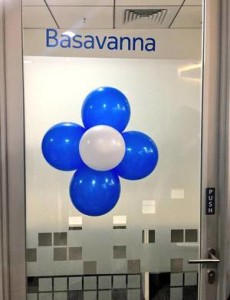
Perhaps for the first time, a multi-national corporation has decided to give itself a desi touch and named its facilities in Bengaluru after two Kannada philosophers. The Finnish telecom network equipment giant Nokia has named its recently inaugurated R&D facilities here after 12th century icons Basavanna and Allama Prabhu.

Nokia, which has presence in more than 170 countries, named its facilities after the philosopher poets “to create awareness of Basavanna and Allama to foreign employees and foreign visitors.” The centre, Nokia’s largest global R&D site, currently employs more than 6,000 engineers.

Speaking to The Hindu on Saturday, Vinayak Andangoudar, Head of Location Development, and Rajesh K, Financial Controller, of Nokia, Bengaluru, said there was “a lot of enthusiasm among employees” about these Kannada philosophers.

“After consultations and discussions with employees, we decided to name facilities after Basavanna and Allama,” said Mr. Andangoudar.

“We have over 6000 employees in our R&D and there are a good number of Kannadigas. Visiting foreign employees inquire about the two philosophers after naming the two halls after Basava and Allama,” said Mr. Rajesh.

Minister for Information and Technology Priyank Kharge inaugurated a new R&D centre at the Manyata Technology Park here.

Appreciating company’s decision, Mr Kharge tweeted: “Kannada philosophers seem to have positively impacted the IT industry with their thoughts. The new Nokia facility have collaborative spaces named after our Philosopher poets Basavanna & Allama.”

source: http://www.thehindu.com / The Hindu / Home> news> States> Karnataka / by Nagesh Prabhu / Bengaluru – December 03rd, 2017

Salil S. Parekh appointed CEO and MD of Infosys

Salil S. Parekh, who has been appointed as the Chief Executive Officer and Managing Director of Infosys   | Photo Credit: File Photo
Salil S. Parekh, who has been appointed as the Chief Executive Officer and Managing Director of Infosys | Photo Credit: File Photo

Mr. Parekh joins Infosys from Capgemini, where he was a member of the Group Executive Board.

Infosys has appointed Salil S. Parekh as the Chief Executive Officer and Managing Director of the company effective January 2, 2018. The announcement was made on Saturday.

“He has nearly three decades of global experience in the IT services industry. He has a strong track record of executing business turnarounds and managing very successful acquisitions,” said Nandan Nilekani, chairman of the board in a statement.

The Board believes that he is the right person to lead Infosys at this transformation time in our industry, Mr. Nilekani added.

Kiran Mazumdar-Shaw, chairperson of the Nomination and Remuneration Committee said: “After a comprehensive global search effort, we are pleased to appoint Salil as the CEO and MD. He was the top choice from a pool of highly qualified candidates.”

Mr. Parekh joins Infosys from Capgemini, where he was a member of the Group Executive Board.

He has Master of Engineering degree in Computer Science and Mechanical Engineering from Cornell University, and a Bachelor of Technology degree in Aeronautical Engineering from the Indian Institute of Technology, Bombay.

U.B. Pravin Rao will step down as the interim CEO and MD on January 2, 2018 and continue as Chief Operating Officer and a whole-time director of the company, according to the statement.

source: http://www.thehindu.com / The Hindu / Home> News> Cities> Bengaluru / by Jayashankar R / Bengaluru – December 02nd, 2017

Around the world in 80 days

Flying high: Captain Audrey Deepika Maben and her daughter Amy Mehta with their aircraft at the Jakkur Aerodrome in Bengaluru on Wednesday.

Woman, daughter to fly 50,000 km to garner support for women’s empowerment

In Jules Verne’s Around the World in Eighty Days, Phileas Fogg and his valet take steamers and trains and even an elephant while in India to win a bet with £20,000 at stake. Flying instructor Captain Audrey Deepika Maben and her 19-year-old daughter Amy Mehta are driven by a different goal as they get ready to fly around the world in 80 days in a motor glider: to spread awareness on women empowerment.

They will cover 21 countries and 50,000 km to garner support for the We! Udaan scholarship for underprivileged girls who want to fly.

K. Moses Chalai, Joint Secretary, Ministry of Women and Child Development, congratulated the mother-daughter duo and also read a message on behalf of Menaka Gandhi. He said the expedition would be a great example of the Beti Bachao, Beti Padhao campaign.

The expedition

Talking about the expedition, Captain Audrey said the it was very dear to her as it would help young girls around the country realise their dreams of flying. “This expedition is only one part of our mission. The larger goal is to encourage women across the country to take up flying,” she said.

She explained that this expedition would be a challenge as they would have to land for washroom breaks and prepare their bodies to accustom to tough conditions during their monthly cycles.

The expedition, in its planning stages now, will be finalised in the next two months. They plan to travel across 21 countries with 70 to 90 landings in between, which may vary depending on prevalent weather conditions and re-fuelling. They will fly eastward towards Japan, Russia, Alaska, North America, Greenland, Europe, Pakistan and back to India. As the motor glider requires fair weather and as Captain Audrey only has a daylight flying licence, they will be flying around 5-6 hours per day.

Training routine

As part of her training routine, Captain Audrey, a mother of three, works out everyday and has regular physical training. She is also following a strict nutrition plan along with yoga and meditation. The initiative is undertaken by an entertainment channel in collaboration with the Ministry of Women and Child Development and Social Access Communications.

source: http://www.thehindu.com / The Hindu / Home> News> Cities> Bengaluru / by Ashwini Raj / Bengaluru – November 30th, 2017

Ratna Prabha is new Chief Secretary

RatnaPrabhaBF30nov2017

She is the third woman CS of State

Additional Chief Secretary Ratna Prabha is the new Chief Secretary of Karntataka. She will head the State administrative machinery till March 2018.

Ms. Prabha is the third woman Chief Secretary of the State after Teresa Bhattacharya (2000) and Malathi Das (2006). She is set to succeed Subhash Chandra Khuntia, who is retiring on Friday.

Ms. Prabha, from the 1981 IAS officers’ batch, successfully conducted the Invest Karnataka Summit in 2016 and encouraged women entrepreneurship. A few years ago, she also bagged the ‘Woman of the Year’ award of the American Biographical Institute Inc., the U.S.

In a first in State, two women hold top posts

With the elevation of Ms. Prabha, for the first time in the State’s history, two top administrative offices are being headed by women.

While Neelamani N. Raju became the State’s first woman Director-General and Inspector General of Police on October 31, Additional Chief Secretary Ms. Prabha is now set to head the State’s civil service force. Chief Minister Siddaramaiah on Tuesday evening tweeted congratulations to Ms. Prabha and added: “Karnataka’s admin (civil & police) is now headed by two women.”

Ms. Prabha belongs to the 1981 IAS officers’ batch and was serving as Additional Chief Secretary. Ms. Raju, a 1983 batch IPS officer, served as DGP, Fire and Emergency Services, before her elevation. Ms. Prabha successfully conducted the ‘Invest Karnataka summit’ in 2016 and encouraged women entrepreneurship. A few years ago, she also bagged the ‘Woman of the Year’ award from the American Biographical Institute Inc., U.S.

Ahead of polls

With the Assembly election fast approaching, Mr. Siddaramaiah may be looking to score points by picking Ms. Prabha, who is a Dalit.

In September 2016, when Mr. Siddaramaiah wrote to the Centre to relieve Subhash Chandra Khuntia, who was on central deputation, the State BJP played the Dalit card and backed Ms. Prabha. The State government can seek extension of the term of Ms. Prabha till the next Assembly elections are completed. For this, the State has to submit a recommendation to the Prime Minister to obtain the concurrence of the Union government, which is mandatory.

Former Chief Secretary S.V. Ranganath’s term was extended by the Jagadish Shettar government in 2013 citing elections in the State.

source: http://www.thehindu.com / The Hindu / Home> News> States> Karnataka / by Special Correspondent / Bengaluru – November 29th, 2017

Exhibition of Jain murals from tomorrow

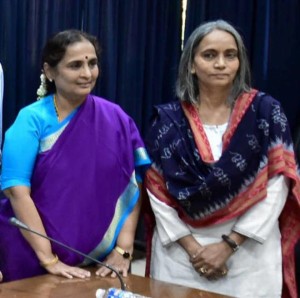
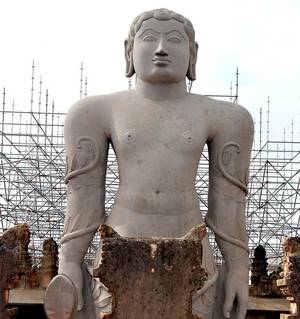
Karnataka Lalithakala Academy chairperson M.J. Kamakshi says there is more to Shravanabelagola than the Gomateshwara monolith. Prakash Hassan

Expo will introduce connoisseurs of art to some rare and finest murals of ancient times.

The Karnataka Lalithakala Academy will hold a seven-day special exhibition of ancient Jain murals, which have been documented by the academy, in Bengaluru in January 2018.

Speaking after receiving felicitations accorded by Kalamandala, Dharwad, here on Wednesday, academy chairperson M.J. Kamalakshi said that this special art exhibition will be organised on the historic occasion of Mahamastakabhisheka to be held in Shravanabelagola. The academy is also contemplating holding a similar exhibition in Shravanabelagola, she added.

This exhibition will introduce connoisseurs of art to some rare and finest murals of ancient times. They were originally painted on the walls of the Jain shrines in Shravanabelagola. Not many are aware that this famous Jain pilgrimage centre, well known for its Gomateshwara monolith, also houses ancient Jain mutts having some of the finest murals giving insight into Jain mythology. Some of these murals were lost in the passage of time. However, they have been copied and preserved by a team of artists in the 1970s. These rare paintings will be exhibited on this occasion, she said.

More to Shravanabelagola

Ms. Kamalakshi added that most of the visitors to Shravanabelagola do not visit any place other than the Gomateshwara monolith. And, this exhibition will introduce the rich heritage of murals of the State to tourists coming from across India and abroad, she added.

Ms. Kamalakshi said that during her tenure, she would plan to focus more on tribal and folk paintings and their documentation. An action plan would be chalked out in consultation with the members of the executive committee who are yet to be appointed by the State government, she said.

Earlier, Kalamandala president Madanmohan Tavarageri, Kumud Tavarageri, artists Madhu Desai, Gayatri Desai and writer Malati Pattanshetti felicitated Ms. Kamalakshi. Several artists from Hubballi-Dharwad were present.

source: http://www.thehindu.com / The Hindu / Home> News>  States> Karnataka / by Staff Reporter / Dharwad – November 30th, 2017

‘My first Bangalore book’

MadhumitaBF9nov2017

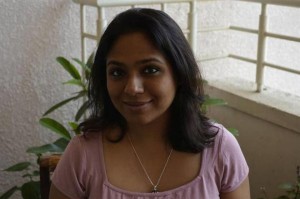
Madhumita Bhattacharya says while she enjoys writing about different spaces, she doesn’t like getting carried away by setting either

Madhumita Bhattacharya’s Murder at the Temple (Juggernaut) opens on the evening of November 8, 2016. Kavya, a young woman, reaches a small shrine in Banashankari to find the hundi stuffed with notes and the priest dead. What follows are 24 breathless hours as Kavya opens up a can of worms rife with frantic jewellery purchases, money laundering and real estate deals. The 37-year-old Bengaluru based author talks of why she chose the digital space and the importance of setting in a novel. Excerpts

How did Murder at the Temple come to be?

This book started on the night of November 8, as I watched the rug being pulled from under the nation. A panel of officials spent an hour at a press conference repeating themselves, with no apparent clue as to the extent of the chaos it had just unleashed.

Over the next few days, it became clear that not all were equally afraid or helpless. Reports of illegal transactions at jewellery stores across the country grew, and I wondered about the mechanics of it all. Money was deposited in huge amounts in temple cashboxes, and I wondered how it could possibly be returned to the ‘rightful’ owners. How much was happening in the shadows – how much had happened already? The story practically wrote itself.

Why did you choose the digital space?

Speed was important for this one, and old school publishers are not known for quick turn-around times. So I felt Juggernaut would be a great fit. I reached out and they were fortunately very receptive and responsive.

Why a novella?

Also for reasons of speed; the action of the story takes place in 24 hours, and keeping it short and tight seemed the best way to ensure the pace of the narrative kept up with the breakneck speed of the story.

What are the pros and cons of setting the novel in a particular time and space?

On this night and day, it was not as much as a problem as it might have been otherwise. If you remember, in the days following demonetisation, there was a sharp fall in movement on the streets. Otherwise Bangalore traffic would have been a serious plot-killer — there is only so much you can do when you are stuck behind an auto at KR Puram for 45 minutes!

But I enjoy writing about different spaces. This is my first Bangalore book. Each of my books has been set in a different place, and only one of those had a fictional component. My greatest complement was when an old Bangalore hand told me Murder at the Temple captured the city well. It is something that makes me nervous, because I know how much I hate it when authors get their places wrong. I don’t like getting carried away by setting either, but I want just enough of it to set the mood.

Did you have fun with the different locations in Bangalore? Are there specific locations you selected? Why?

I love the chaos of wholesale markets, the old houses, the grand trees. But there is so much more – the dusty barren parks, the random inlets for water tankers… It is the small things that make the difference.

Does Bangalore lend itself easily to crime fiction?

Every place lends itself to crime! Every place has an underbelly – even the most idyllic rural locations have their own dirt, their own politics, their own passions. Crime fiction is a way to access that place of discomfort.

How different is Kavya from Reema?

They are both young women but apart from that, they have little in common. Kavya is lost and alone, Reema is supremely on top of things and connected to her family and her place in the world. Kavya is not a detective, she is saving her own skin.

Do you prefer the first person narrative or third person? Why?

I love both, but first person does leave you confined to the head of one character. In this book, I needed to be free to get into Samar’s head too. To me, they are both the protagonists of this novel.

What next?

I am working on something quite different — a crime novel that is not detective fiction. It is a difficult story for me to write, so I want to take my time.

source: http://www.thehindu.com / The Hindu / Home> Life & Style / by Mini Anthikad Chibber / November 27th, 2017

Rs 85L Space Gallery comes up in Bengaluru

Former ISRO Chairman K Kasturirangan and incumbent  A S Kiran Kumar at the gallery
Former ISRO Chairman K Kasturirangan and incumbent A S Kiran Kumar at the gallery

It is located in Visveswaraya Industrial Technology Museum

A Space Technology Gallery set up in an area on 700 square meters at the Visvesvaraya Industrial and Technological Museum (VITM) will be an added attraction for visitors.

The gallery, the first of its kind in the country, will give a glimpse of space technology, especially India’s space programme. From Aryabhata, India’s first satellite, up to the indigenous shuttle, the air breathing Scramjet engine, till the yet to be launched solar mission Aditya, the gallery has an impressive interactive display showcasing the variety of satellites developed by ISRO.

Inaugurated on Tuesday by ISRO Chairman AS Kiran Kumar, the gallery, set up at a cost of Rs 85 lakh, brings the various facets of space technology in an easy to comprehend way through several interactive and impressive exhibits. There is an interactive display of India’s most popular and successful space programmes – the Chandrayaan-1 and Mars Orbiter Mission.

Also on display is a peep into the life of Wing Commander Rakesh Sharma, the first Indian to go into space, along with a glimpse of the life and works of Kalpana Chawla and Sunita Willams, two Indian-origin women astronauts. Food items like space idli mission developed by the Mysuru-based Defence Food Research Laboratory and which will be consumed by Vyomanauts during India’s human space endeavour are also on display.

Visitors, especially students, can catch a glimpse of how ISRO carries out its launch from its spaceport in Sriharikota as there is a spectacular exhibit of both the launch pads that demonstrates how a rocket is used to launch satellites.

The mission control room explains the way rockets and satellites are controlled and tracked. Major milestones in space technology starting from the Mysorean Rocket to Voyager, which has now reached interstellar regions in outer space, find a place in the gallery. At the satellite imagery station, one can explore images taken by satellites like the glaciers of the Himalayas, Bengaluru Metro Station and many more by waving one’s hand on air.

source: http://www.bangaloremirror.indiatimes.com / Bangalore Mirror / Home> Bangalore> Others / by Bangalore Mirror Bureau / November 29th, 2017

Razed to the ground, but a replica to rise in its place

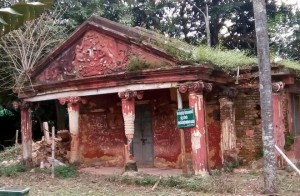
Karnataka : Bengaluru : 13/11/20017 : The front wall of the Krumbiegel-hall has been disfigured with people scribbling on it. The left wall has crumbled and the debris lies uncleared. The four pillars, holding the building together, are barely standing and the Gandaberunda (two-headed mythological bird thought to possess magical strength) has almost faded. The roof has also caved in. Around the structure, wild grass and creepers have grown unchecked. Photo: Ashwini Raj (e-mail handout by Sarumathi)

Plan on to rebuild Krumbiegel Hall in original style, but conservationists are cautious

Days after the 100-year-old Krumbiegel Hall inside Lalbagh Botanical Garden was razed to the ground, the Horticulture Department and the State Archaeology Department are planning to rebuild the heritage structure in its original style.

“A decision has been taken to build a new structure based on the old building. The project will be funded by the Horticulture Department and executed by the Archaeology Department,” said M. Jagadeesh, joint director, Horticulture, Parks and Gardens.

The Archaeology Department is creating a plan for the new building and will give a budget estimate to the Horticulture Department, after which the funds will be released. Meera Iyer, co-convener of INTACH, suggested that instead of replicating the design, the department could hold a competition for city-based architects to design a building that is a fitting tribute. “It is essential to have expert opinion in such an important garden. It’s a public garden, not a private fiefdom,” she said.

Meanwhile, conservationists remain cautious of the move. Architect and author Yashaswini Sharma said if the department plans to build a replica at the same site, it would be against international conservation principles. “It would set a bad precedent and would mean anyone can demolish a historic structure and build a new one in its place. Instead, the Archaeology Department can build a memorial for Krumbiegel.”

Alyia Phelps-Gardiner, Krumbiegel’s great-granddaughter said: “I would really like to be involved in the decision making as the hall was named in honour of my great-grandfather. The site should be a vibrant gift, remembering the history of Lalbagh and the person who contributed to it.”

source: http://www.thehindu.com / The Hindu / Home> News> Cities> Bengaluru / by Staff Reporter / Bengaluru – November 25th, 2017