A file photo of Karnatak College which was set up in 1917 in Dharwad
Celebrations will begin from tomorrow
Karnatak College, Dharwad (KCD), is is all set to celebrate its centenary, this year.
Karnatak University Dharwad (KUD)s Vice-Chancellor Pramod Gai told presspersons here on Thursday that the celebrations will begin at a function on Saturday.
The college was started following a popular demand in 1917. Since its inception, it has played a key role in helping the region’s youth have access to collegiate education. It has been planned to have year-long programmes to mark the occasion, he said.
Supreme Court Judge Mohan Shantangoudar will be the chief guest for the inaugural function of the centenary celebration. ISRO Chairman A.S. Kiran Kumar, Higher Education Minister Basavaraj Rayaraddi, Industries Minister R.V. Deshpande, RDPR Minister H.K. Patil, Labour Minister Santosh Lad and district in-charge Minister Vinay Kulkarni will take part in the programme. Plans to invite Chief Minister Siddaramaiah did not materialise due to his busy schedule.
The college, which had a handful of departments in the initial days, has witnessed tremendous growth and today it offers various courses. The student strength as on the date is over 5,000 at the undergraduate level. The college also offers postgraduate courses including Master of Arts in English, Economics, Master of Commerce, Master of Science in physics, chemistry and mathematics and Master of Tourism Administration, he added.
Prof. Gai stated that to make the centenary year memorable the university had planned a series of development works in the college.
Accordingly, it has submitted a proposal seeking Rs. 50 crore for the college. However, the State government has sanctioned Rs. 10 crore to the college of which Rs. 1.25 crore has been released, he said.
Construction of a ‘Centenary Hall’, renovation of Shriranga Open Air Theatre, launching of tree planting campaign, publication of 100 books to mark the centenary, release of souvenir ‘Ninada Smruti’, organising a lecture series, a week-long Karnatak University Inter-Collegiate and Inter-University cultural festival, special sports meet, film festival are some of the programmes planned. Mr. Rayaraddi, who is an alumnus of the college, has evinced keen interest in making the event meaningful.
Meanwhile, the Karnatak College Old Students’ Association has also chalked out plans for the year and has actively involved in the preparations, Mr. Gai added.
source: http://www.thehindu.com / The Hindu / Home> National> Karnataka / by Staff Reporter / Dharwad – November 24th, 2017
Aaron Pinto aka Prince, 25, a resident of Jeppinamogaru, a Kudla-based youth has now come up with a rap on the city.
Mangaluru :
Drawing inspiration from the local lads of Mumbai and Delhi, among other places, who immortalized their cities by glorifying them through music, a Kudla-based youth has composed a rap on the city.
What’s notable is that the rap ‘Mera Shehar -feat Prince’ is composed in Hindi – perhaps for the first time from Mangaluru – hoping to reach out to the masses across the length and breadth of the country. Songs on the coastal city, brought out in Kannada and Tulu by various artistes, have already garnered good views on the web.
Pinto said he always liked the idea of giving a desi touch to the west-originated rap genre. This is when he started listening to Indian rappers and soon got influenced by Hindi and Punjabi rap songs. “One day, I stumbled upon ‘Mera Bombay’ by rapper Divine. I got so hooked to it that I wanted my own version of a rap on my city. It took me a few years to realize this, as I had to take care of my career prospects as well. Today, I am happy that my rap on Mangaluru is on the web,” Pinto, who is soon expected to come up with a rap in Tulu, too, said.
Aaron Pinto aka Prince, 25, a resident of Jeppinamogaru, says he jotted down lyrics for the rap a few years ago, when he was employed in the UAE. “I wanted to glorify my city. Hence, I jotted down some lines about Mangaluru. Recently, after I migrated back, I weaved them into a rap,” said Pinto, who brought out the video a couple of months ago on You Tube .
The video, that lasts for 2.46 minutes ,speaks about the city as a whole, its reputation to deliver class-apart actors to various film industries, its scenic beauty, and the kind-heartedness of Mangalureans.
Successful running of Tulu movies overseas, and the frequent visits of stars from the city there, have helped popularize the name of the city across the globe. Little is known about the city in its own country’s north, where Hindi is spoken at large. Pinto also hopes to bring native Hindi speakers a notch closer to Kudla with his rap.
source: http://www.timesofindia.indiatimes.com / The Times of India / News> City News> Mangalore News / TNN / November 21st, 2017
Veteran journalist and editor of Kannada daily Andolana, Rajashekar Koti, passed away following a massive cardiac arrest at a hospital in Bengaluru on Thursday. He was 71.
Famous as ‘Koti’ among readers, he was a socialist know for fearless writings. He is survived by wife Nirmala, son and journalist Ravi Koti and two daughters.
Koti, a native of Huyilagol in Gadag district, graduated from Karnatak University and started his career in journalism with Vishwavani, edited by Patil Puttappa in Dharwad.
Later, he worked as a sub-editor for Prapancha newspaper. Koti came in contact with dalit writer Devanoor Mahadeva, Prof M D Nanjundaswamy, Prof K Ramdas, Nelamane Deve Gowda and others and started Kannada-weekly Andolana and stopped the publication during Emergency.
With support from his friends, he converted his weekly into a daily and managed to have his own printing press. Koti identified himself with dalit and farmers movements and was also active in Gokak and Cauvery agitations. He lived in a dalit colony at Ashokpuram and was the voice of the downtrodden and deprived sections.
Andolana’s circulation crossed 50,000 in Mysuru and later the newspaper started editions in neighbouring districts. His stories on the famous Sathyadev murder case and Veerappan left a mark among readers.
source: http://www.newindianexpress.com / The New Indian Express / Home> States> Karnataka / by Express News Service / November 24th, 2017
Over 300 products have received the GI certification in India, including Meerut scissors and Chamba handkerchief.
As a debate rages across state borders and on Twitter about the true origins of the rosogulla and Mysore pak, a long-drawn bureaucratic process of stamping state ownership over a commodity has become an unlikely talking point.
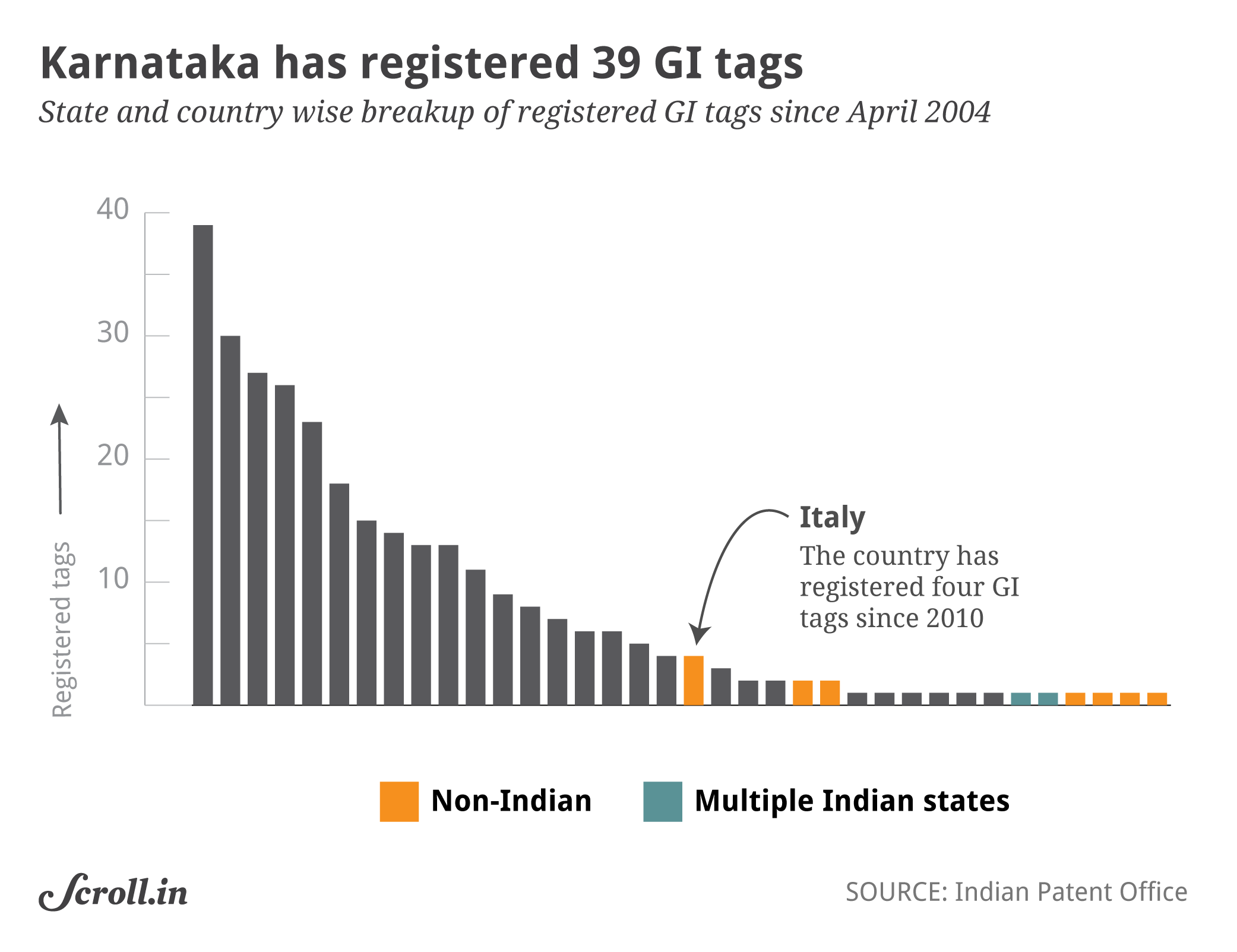
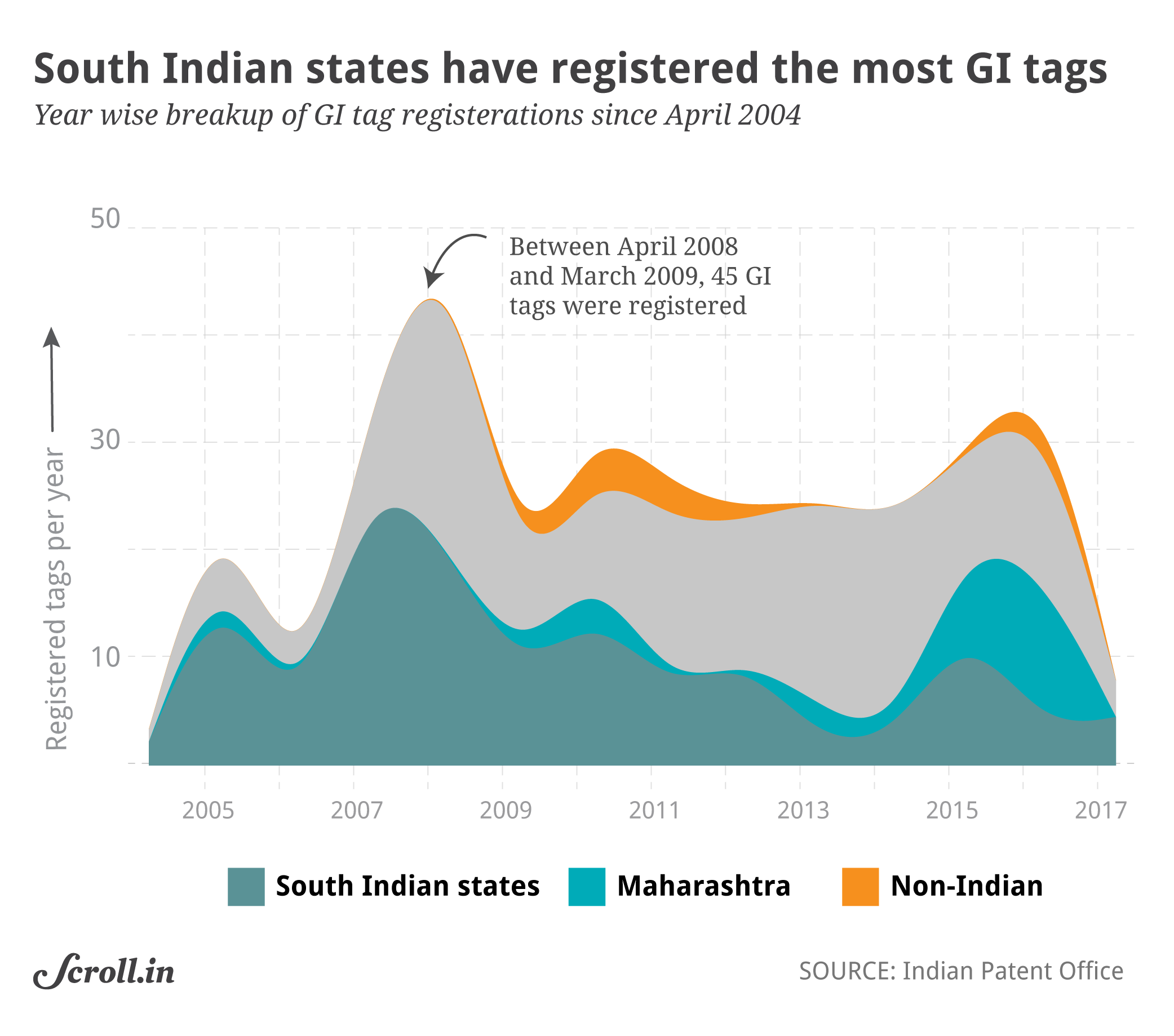
Over the past 13 years, as many as 28 Indian states and seven countries have registered for a Geographical Indication tag with the Indian Patent Office, the government agency that recognises the origin of a product. This status allows a state or a geographical region to lay an exclusive claim over a product, gives an assurance of quality, and is often an alibi for producers to command a higher price in the market.
So far, 301 products have been registered with the Indian Patent Office since April 2004. The list – typically made up of agricultural, manufactured or natural goods – is broad, varied and dominated by South Indian states.
Karnataka has successfully applied for GI certification at least 11 of the past 12 years, and notched 39 GI tags for everything from Mysore Sandal Soap to Udupi Sarees. Jharkhand is the only Indian state that doesn’t have a GI-tagged product against its name.
Though handicrafts dominate nearly 60% of the list, there is no dearth of agricultural products on it, especially rice. Thirteen variations of rice have been granted the tag, five of which belong to Kerala. In the case of Basmati rice, seven states share the certification. Eight varieties of mangoes, six kinds of banana and five types of chillies have made it to the list, just over the past 10 years.
Last year, over 33 products were granted GI status, notable among which were three products from Italy – Prosecco wine, and Parmesan and Asiago cheeses. Italy, in fact, has been the most active among foreign nations in getting the exclusive status – most others, such as Peru, France, United States, United Kingdom, Portugal and Italy, have gained Indian GI tags for their respective alcohols.
Here are some lesser-known Indian products that enjoy GI certification:
Solapur terry towel
Photo credit: SolapurChaddarsTowel/Facebook
Made with cotton yarn, the towel is manufactured in the Solapur district of Maharashtra. Its application for GI certification said: “Solapur is historically well known and owns unbeatable reputation for its uniqueness in terry towels allied product of Jacquard Chaddar. The fabric used for manufacturing terry towels…with its unique characteristics has created a demand in global market… (sic).”
Chamba rumal
Photo credit: Wikimedia Commons [Public Domain]The embroidered handicraft from Chamba in Himachal Pradesh has a long history. It is believed that Guru Nanak’s elder sister Bebe Nanaki made one in the 16th century. The Victoria and Albert Museum in London has in its collection a Chamba rumal from the 18th century that depicts “Hindu god Krishna in a variety of poses – playing his flute or talking to the female cow-herds (gopis)”. The handicraft lost its royal patronage after Independence, although it’s still a common item of gift at weddings.
Meerut scissors
Photo credit: MeerutScissors/Facebook
These scissors from Meerut in Uttar Pradesh are made entirely with metal scrap – according to a report in The Hindu, the blades are fashioned from carbon steel sourced from metal found in automobiles and the handles are made of alloys and plastics recycled from old utensils.
We welcome your comments at letters@scroll.in
source: http://www.scroll.in / Scroll.in / Home> Magazine> Royal Brand / by Anand Katakam / November 23rd, 2017
The popularity of the fruit can be attributed to its perceived health benefits for diabetics and cancer patients. | Photo Credit: G R N SOMASHEKAR
Caters to demand in Europe, Middle East and South East Asia
Pomegranates are all the rage in many European countries — thanks to its perceived health benefits for diabetics and cancer patients — and the fruit is reaching there from farms around Bengaluru.
At least a tonne of freshly peeled pomegranates from areas around Bengaluru has been reaching European countries every day over the last few months.
“During our interaction with exporters and importers, we were informed about the increasing demand due to the fruit’s perceived health benefits,” said Venkata Reddy, Chief Executive Officer of Menzies Aviation Bobba (Bangalore), which is among the two cargo handlers at Kempegowda International Airport.
Among other destinations for peeled pomegranates from Bengaluru are the West Asia and South East Asia.
“One of the exporters is procuring pomegranates from nearby areas, bringing them to the cargo village in KIA where they are peeled and packed in small containers before being put in cold storage,” said an official of Bangalore International Airport Ltd. (BIAL), which operates KIA.
According to horticulture expert and former horticulture additional director S.V. Hittalmani, export of peeled pomegranate has increased since it does not have to undergo strict phytosanitary measures while it also gives better value to exporters. He said that big consignments were exported from Karnataka till 2004 when bacterial blight started destroying the crop in north Karnataka.
“The trend of cultivating pomegranates around Bengaluru is fairly new,” he said, adding that the fruit is now grown in about 3,000 hectares in Bengaluru Rural, Kolar, Shidlaghatta, Gowribidanur and Chikkaballapura besides Ananthpur, Cuddapah and Madanpalli in Andhra Pradesh.
source: http://www.thehindu.com / The Hindu / Home> News> Cities> Bengaluru / by Special Correspondent / November 23rd, 2017
To hell and back: Sadanand Vishwanath had to deal with personal tragedy and an early end to his international career before finding his feet again.
Former ’keeper requests umpiring stint extension
He developed “friendship” with “solitude” and in the process was lost to the world of cricket.
As he explored means to sustain himself, living a hand-to-mouth existence at one point, Sadanand Vishwanath discovered a new vocation and some new friends.
From the heady days of being hounded by fans, the pin-up boy of Indian cricket, described by Sunil Gavaskar as the key man behind India’s success at the 1985 World Championship of Cricket, Vishwanath faced the harsh realities of life as he played his last match in 1988.
After toying with the idea of employment overseas, struggling to float on his own, he reconciled to a career again on the cricket field. He donned the umpire’s role and served in that capacity from 1995.
On Tuesday he retired as an umpire at 55 after the Chhattisgarh-Odisha match in the Cooch-Behar (under-19) Trophy at Bhilai.
Was he a case of talent gone astray in the world of fame and glamour? Losing his parents, he insists, in quick succession (1984 and 1985), left him disconsolate.
“It was a difficult period. My cricket was not progressing and personally I was alone. The grief of losing my parents pulled me back,” said Vishwanath.
His brilliance as a wicketkeeper has been documented with some unbelievable stuff in 1985 when India won the WCC at Melbourne and the Rothmans Cup when India tamed Pakistan in both the finals.
His international career, however, ended at 26, the age when some begin their cricket journey.
No one to blame
Vishwanath, who played three Tests, 22 ODIs and 74 First Class matches, deserved more. “I shall blame no one,” he says.
In a festival match, he was hit on the back of the head by Imran Khan. “I was never the same batsman again. I was never the same backfoot player again. Sachin (Tendulkar) and Mohinder (Amarnath) were hit too. But they hit back. I couldn’t.”
He was among the 10 candidates invited by the Board in 1995 to become umpires.
“I saw it was a nice way to get back on the field. Cricket was a passion and umpiring became an obsession. It took me to remote corners of the country and gave me an opportunity to meet so many people. I saw some young players from close. They went on to become impact players later (Virat Kohli, M.S. Dhoni, R. Ashwin, Ishant Sharma).
“I have seen them all grow and I love the joy of it all. The joy helped me overcome the pain, anxiety, hardships of being a professional player.”
Former India captain Anil Kumble had offered him a coaching job in Karnataka. “But I preferred umpiring.”
Vishwanath has requested the Board to give him an extension. “I can live cricket that way,” he concludes.
source: http://www.thehindu.com / The Hindu / Home> Sport> Cricket / by Vijay Lokapally / Kanpur – November 21st, 2017
Miss. World 2017 Manushi Chillar with aunt Dr.Usha Chillar (right)
The new Miss World Manushi Chillar, who made the country proud, has a deep connection with Bengaluru. She spent five years of her childhood in Namma city.
The 21-year-old beauty, who was crowed Miss World 2017 at a glittering ceremony in the seaside resort city of Sanya in China on Saturday, was born on May 14, 1997, in Rohtak in Haryana. When she was two years old, her parents (Dr Mitra Basu Chillar and Dr Neelam Chillar) relocated to Bengaluru.
Her relatives told BM that it was in Bengaluru that Manushi began learning Kuchupudi. Dr Usha Chillar, Manushi’s aunt, told BM, “Manushi and her parents were in Bengaluru from 1999-2004 and she learned Classical Kuchupudi there. Her father was in Bengaluru when her mother gave birth to her in Haryana. Her father was placed in DRDO as a senior scientist in Bengaluru. When Manushi was two, she was taken to Bengaluru and she lived there for close to five years,” Usha added.
From kindergarten to first standard, Manushi studied in Bengaluru. Dr Usha Chillar is also a faculty at BPS Government Medical College in Sonepat (Haryana) where Manushi is pursuing third-year of MBBS. Usha , who also teaches Manushi, said, ” She is a wonderful person. She has been a down-to-earth person and very intelligent. She used to always study and never give up. After coming from Bengaluru, she joined St. Thomas Girls school and even there she was a topper.”
Manushi’s uncle, Dr Dinesh Chillar, Usha’s husband, recalls her academic achievements. Dinesh said, “She was a good student and she cracked the Pre-Medical Test (PMT) in the first attempt.”
Her aunt and uncle said she balanced her extra-curricular activities and her academics and never gave up on any opportunity.
Her college director, Dr P S Ghalaut, BPS government medical college for women, Sonepat, told BM, “She is a very bright student. She was hardworking from the day one and she is an ever charming girl. Any kind of event, be it dance, music or sports, Manushi was always there. But, like her parents who are doctors by profession, she is also a dedicated student. ”
BM delved into her childhood days at her school St. Thomas Girls Senior Secondary School. The principal of the school, Anuradha Amos, told BM the news of Manushi becoming Miss World came in when the school was celebrating its Annual Day on Saturday. “She joined our school when she was in the second or third standard. She came in as an enthusiastic child. Right from her schooling, she was a quiet, down to earth. She was fond of Indian Dance. She had learnt it in Bengaluru before she could come here.”
“We never thought she would reach here and all the credit goes to her parents,” she added.
source: http://www.bangaloremirror.indiatimes.com / Bangalore Mirror / Home> Bangalore> Others / by Kumaran P, Bangalore Mirror Bureau / November 20th, 2017
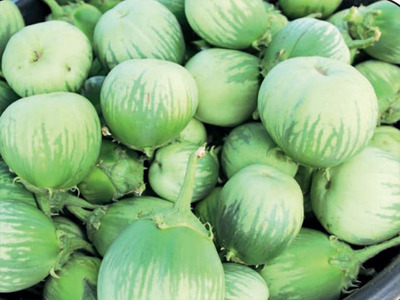
To differentiate Mattu Gullas or Mattu Brinjals from other varieties in the market, Grade-1 Mattu Gullas will be rolled out into the market with stickers.
The Mattu Gulla, which has geographical indication (GI)tag,is a special variety of brinjal grown by a handful of farmers in about 67 hectares at Mattu and Kaipunjal villages in Udupi district.
The initiative is aimed at helping farmers growing the crop to get a fair price for their produce, by restricting the different varieties of brinjal entering the market in the name of MattuGulla.
The School of Management, Manipal University, through the NABARD project, in association with Mattu Gulla Belegarara Sangha Mattu,has executed the plan. Dayananda Bangera, president of the Mattu Gulla Belegarara Sangha, Mattu Katpady, said the sangha has been promoting Mattu for the purpose of uniting farmers and to help them gain bargaining power.
Last year, the School of Management, Manipal University,identified Mattu Gulla Belegarara Sangha as a Farmer Producer Organisation (FPO) under the project proposed to NABARD. After this, the marketing for the crop received a positive boost. In the financial year 2016-17, farmers, with the assistance of the School of Management and their sangha, have been successful in restricting entry of middlemen from outside for selling the crop. Dayananda said the process of grading, collection and demand creation was done scientifically, and hence it was possible to derive a reasonably fair price for their produce. Approximately 30 to 40 per cent of additional revenue was derived in the year 2016-17, due to their systematic efforts in selling the produce, he said.
Now, with the sale of Mattu Gulla with its symbol,it aims to restrict the entry and avoid other breeds of brinjal from selling in the name of Mattu Brinjal in the market. “Most varieties of brinjals are named Mattu Brinjal in the market, irrespective of their quality and place of origin.
It is a known fact that Mattu is not grown outside Mattu village, since it is unique to this place. The use of stickers will notonly fetch a fair price for growers, but also for customers, to relish the original taste of Mattu Brinjal.
Currently, a kilogram of A gradeMattuGulla is priced at around Rs 70. The stickers are put with the intention of differentiating the brinjal from other look-alike brinjals, said Harish Joshi, professor at the School of Management.
When asked about counterfeiting the same by others, he answered that they will also make surprise visits to shops. On Sunday,the Sode Vadiraja Mutt, Udupi Vishwavallabha Swami, blessed the crop and released the stickers. Kaup MLA and former minister Vinayakumar Sorake, released the product.
source: http://www.timesofindia.indiatimes.com / The Times of India / News> City News> Mangalore News / TNN / November 20th, 2017
With youngsters becoming economic migrants, Bengaluru startups are mobilising foot soldiers and caregivers who not only run errands but also provide companionship for their parents back home
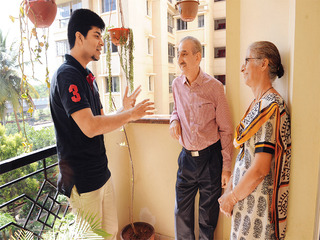
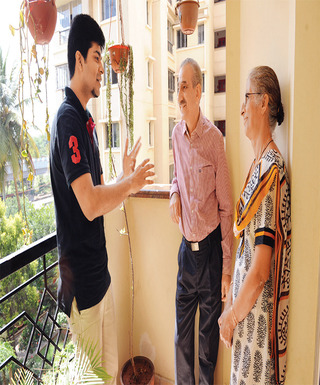
Dr Meena Nagarjunan (81) eagerly looks forward to Tuesdays when her “care manager” comes over to spend a couple of hours with her and her husband. He runs errands for them, paying the electricity, telephone bills and sometimes even goes over to the nearby South Indian restaurant to get her favourite foods.
With nuclear families on the rise and more elders fending for themselves, startups are now recognising a huge opportunity, and playing the proxy child. They make available people who can buy groceries, take them to the doctor, stay with them at the hospital, help get plumbing and electrical work done, take them to the movies, plan a lunch/dinner outing, or even just hang out with them at home.
Niranjan Acharya (72) lives by himself after he lost his wife 10 years ago. Child-free and with no relatives in the city, Acharya keeps the number of his care manager close on hand at all times. When he recently went through a dental surgery, Acharya was accompanied by his care buddy who stayed with him during the procedure and dropped him back; or another time, when he was in the ICU and didn’t have anyone to stay with him at the hospital. “The help makes a huge difference. It’s difficult for friends to suddenly come over and stay at the hospital. Otherwise, it can be a worrying situation,” he says.
It is projected that the proportion of Indians aged 60 and above will rise from 7.5 per cent in 2010 to 11.1 per cent in 2025. In 2010, India had more than 91.6 million elderly and the number of elderly in India is projected to reach 158.7 million in 2025, which means the market for service providers for senior citizens in India is only on the rise.
“There are a lot of players in the market who offer post-operative care, but there are few who offer seniors a quality life as they age. Many of them feel disconnected and lonely, and feel as if they are not adding value. We want to get rid of that mindset,” says Santosh Abraham, co-founder of ElderAid Wellness.
Devanshi Seth, founder of Caveo, agrees. She finds that often times their clients are fit but are in need of companionship. “Most parents just lack engagement. Their children want to give them time but can’t,” she says. This is why they send a trained geriatric counsellor even when their clients want to go for recreational activities.
“If we just send a volunteer, there’s going to be no conversation. After some small talk, both of them won’t know what to say or do. Many seniors often open up to counsellors about their personal lives and the counsellors know how to steer the conversation. It’s a listening mode, they talk about legal matters, their younger days, things that they can’t talk with their children,” Seth says, adding, “We often have children telling us that their parents are depressed. However, when we go over, we find that they are just in need of company and support for day-to-day activities, and are rarely clinically depressed.”
Sometimes, requests include figuring out a celebration for a parent – a task that involves choosing the right restaurant based on their likes and dislikes, picking them up, dropping them off, and in rare cases even sharing a meal with them. “We do that only if they make a special request for it,” she says. At other times, seniors ask for help with learning gadgets, taking them shopping for an hour or two and coordinating hobby classes.
Abraham and his team also encourage seniors to take up hobbies. On a pilot basis, he got a volunteer to come home and teach a senior in her late 80s the violin, something she had learnt in her younger days, which Abraham felt would now help with her dementia.
THE BACK STORY
These startups have most often stemmed from their personal experiences. Rahul Upadhyay’s seniorshelf.com, a company aggregating products and services for the elderly, says that the essential idea is to enable children to help their parents – who are otherwise hampered by age, no matter how separated they are by the distance. “The idea came about when my mom had a mishap and the doctor recommended that I buy a blood pressure machine for her. I spent almost five hours looking all over the city for a machine and finally got one near a hospital. That incident brought out the difficulty elderly have in accessing products and services that they require. Hence the idea of a website where one can find almost all things for an elderly person in one place,” he says.
Abraham and his co-founder too were in a similar situation. His parents settled in Thiruvananthapuram were keen to lead an independent life while Abraham was concerned how they would go about their day-to-day activities, which was the reason he switched roles from a corporate job to a “social enterprise”. His co-founder Dr Vandana Nadig Nair, was witness to her aunts and uncles in Bengaluru with children in other cities / countries, who needed help and support; children who visited as frequently as once a month to tend to their parents. “But there was worry on all sides,” he says.
MONEY TALKS
ElderAid offers packages starting at Rs 1,900 a month to Rs 7,200, which includes medical emergency responses (going along with the client in the ambulance to running around in the hospital, paying bills, buying medicines, and even staying with them for 48 hours until their children come in), filing in medical documents, weekly calls and visits during which they take them to a park, grocery store, supermarket etc. The website seniorshelf.com ties up with other partners for activities such as pilgrimages and tours—one of them they offer is The Ramayana Trail in Sri Lanka, and are currently in the process of offering domestic pilgrimage services too. The pricing for Caveo’s services are anywhere between Rs 2,000 and Rs 8,000 on a monthly basis, which can include outings to a mall, grocery store, and other events.
ElderCare has a subscription packages for three months, six months and a year, wherein the charges are approximately Rs 60 per day for the allocation of care buddy/ care manager. This includes two free visits a month to assess general well-being of the senior and help with household chores.
Santosh Abraham of ElderAid Wellness says elders often feel disconnected and lonely, and his startup looks to fill that void
FUNDING
Having gone live in 2015, ElderAid (which comprises a nine-member team) so far had 115 clients into the self-funded venture of Rs 20 lakh. They’ve just received a round of angel funding which Abraham says will finally help them break even by the end of the year. “For the first year, we didn’t even take a salary,” he says.
Caveo went live in January 2016. Seth started with her saving of Rs 5 lakh. Currently, Caveo’s services are available in Bengaluru, Mumbai, Kolkata and Chennai. “We’ve just started breaking even three months ago,” says Seth who has five permanent employees and 35 consultants and service 75 clients a month.
THE CHALLENGES
Seniors are hesitant to take help from an external agency. “Most children make enquiries and enroll their parents. But it takes time to convince them,” Abraham says. Somehow customer acquisition has been more difficult than Abraham thought it to be.
“The market is in a nascent stage and it’s more reactive than proactive. Most of the customers look for such a setup only after they’ve encountered a problem, in most cases the issue being a fall,” Abraham says.
Upadhyay points out that usually the point of contact is a family member rather than a senior. “Hence acceptance of the services is quite good,” he says. However, “a good vibe between the elderly and the caregiver is essential to ensure things stay smooth. This can be a challenge sometimes,” Upadhyay adds.
Five years from now, Abraham is looking at servicing various cities across India while Seth is working on a daycare centre for seniors. Seniorshelf.com is looking at expanding its offerings in the service space, legal and financial areas, which Upadhyay believes are areas in “crying need for a reliable partner.”
source: http://www.bangaloremirror.indiatimes.com / Bangalore Mirror / Home> Bangalore> Cover Story / by Vidya Iyengar, Bangalore Mirror Bureau / November 19th, 2017


![Photo credit: Wikimedia Commons [Public Domain]](http://www.bangalorefirst.in/wp-content/uploads/2017/11/GI05BF25nov2017-300x199.jpg)