For the love of the game

From the albums

drkrishnamurthybf01dec2016

Karnataka has the rare privilege of playing the first Ranji Trophy match in India in November 1934. That match also turned out to be a good one, with 30 wickets falling in one day and Mysore losing the match to Madras in a single day.

Karnataka has come a long way in Indian cricket and is now acknowledged as one of the most powerful cricket teams, one feared by all opponents. Many have contributed to this transformation — players, administrators, the cricket-loving public and employees of the cricket association.

It has been a long and difficult journey that I am happy to have been a part of, first as a player and then as an administrator.

It started in 1959, when I was chosen to play for a junior match between Mysore and Madras and a brilliant century in that match made it easy for me to get into the Ranji Trophy side and stay there for 10 long years before retiring. After a few years’ break, I entered Karnataka State Cricket Association (KSCA) as an administrator and worked to the best of my ability in various capacities. I retired a few years ago as the vice-president of KSCA.

Today, it is a well-run organisation, with set rules, a beautiful stadium, fabulous clubhouse and more than 3,000 members enjoying the facilities and the game of cricket frequently.

But it was a difficult journey then, with no ground that the association could call its own. The Central College grounds were used as the headquarters and games were also played at various other college and school grounds.

With no money to run cricket matches and expecting everyone to do a good job, the president and the secretary had a hard time running KSCA. S A Srinivasan, M Chinnaswamy, Captain Thimmappiah and C Nagaraj were the stalwarts who built the infrastructure for the present-day KSCA.

The presidents and secretaries sacrificed their personal lives and professions to spend time on the cricket grounds. Even in such difficult situations, KSCA magnanimously contributed to the various causes of the state. This rare photograph was taken on one such occasion for the Chief Minister’s Flood Relief Fund that was organised at the Central College grounds.

The then Ranji Trophy players played in several places like Tumkur, Shimoga and Kolar and raised funds for the cause. Many stalwarts seen in this photograph have left for their heavenly abode while many others have been forgotten. But a few are still active and working for the cause of cricket.

While I was playing for the Ranji Trophy, I was also picked to represent the Mysore University cricket team. Only two universities existed then — Mysore and Karnataka, headquartered in the Hubballi/Dharwad region. Mysore University consisted of all colleges in the old Mysore area.
I was a student of Bangalore Medical College and represented the university for four consecutive years. During the last two, I was the captain. We always had an excellent team and in 1962, we won the All-India Championship for Rohinton Baria Trophy, playing in the biting cold of Kanpur (two degree centigrade).

Almost everyone on those teams went on to play for the Ranji Trophy. I was also fortunate to be selected for the All-India University team against the visiting Australian cricket team, led by late Richi Benaud.
Two of my teammates P R Ashok Anand (present president of KSCA) and Deepak Das Gupta also played in that match.

Deepak Das Gupta was a fine off-spinner and has now settled down in Kolkata. Nearly all the players went on to become highly-qualified professionals in India and abroad and have done well in their respective spheres.

I was also fairly successful in the Ranji Trophy matches, becoming the captain of the Karnataka cricket team and scoring over 1,000 runs which was an achievement in those days.
As the players were not paid in those days, a majority retired early to pursue their chosen professions. I also retired early to take up my medical practice.

Today, university cricket has lost its stature with too many universities and with cricket becoming professionalised. I feel fortunate to have been among the few who savoured the true spirit of the game, surrounded by so many wonderful players.

(The author can be contacted on 9845127495)

source: http://www.deccanherald.com / Deccan Herald / Home> Supplements> Metrolife / by Dr.S. Krishnamurthy / November 21st, 2016

‘First step towards developing a wheelchair circuit ’

Rohan Bopanna speaks at the launch of Indian Wheelchair Tennis Tour’s Tabebuia Open in Bengaluru on Tuesday, along side Sunil Jain, founder-trustee of ASTHA.


India’s doubles star Rohan Bopanna exuded hope that India would one day have players competing in wheelchair tennis at Grand Slams.

Speaking on Tuesday at the launch of the Indian Wheelchair Tennis Tour’s (IWTT) Tabebuia Open, a national-level wheelchair tournament to be held at the KSLTA courts from December 2 to 4, Bopanna said that the differently-abled athletes were inferior to none.

“Wheel-chair tennis isn’t any different. For example, at premier tournaments we all share the same locker room. We are all equal,” Bopanna said.

“So it’s fantastic to see a tournament, which will help the players at the grassroots, happening here.”

The event will also mark the first time a wheel-chair event is being recognised by the AITA. Players will now be registered with the AITA and eligible for a ranking.

‘Hopefully, more to come’

“This is the first step towards developing a circuit,” said Sunil Jain, founder trustee of ASTHA, an NGO working for the uplift of the differently-abled, of which IWTT is a division.

“These athletes need a platform to build professionalism. It’s also about changing people’s perceptions through excellence. I hope this is the beginning of things to come.”

K. Gopinath, an international-level player, said that this would provide a better stage for the athletes to showcase their skills.

“We have been competing for quite a while,” he said. “But we do need some transformation. We don’t need sympathy. We just need opportunities. So we are all happy with this.”

The event will disburse in total Rs. 2.5 lakh as prize money.

In all, it will see close to 40 players competing in both singles and doubles.

Also on the occasion, KSLTA’s joint-secretary P.R. Ramaswamy, announced a National-level wheelchair tennis tournament in the near future.

It would be sponsored by a prominent India player, he said, but refused to divulge further details.

source: http://www.thehindu.com / The Hindu / Home> Sport> Tennis / by Principal Correspondent / Bengaluru – November 29th, 2016

NLSIU student bags rhodes scholarship

vanshajbf30nov2016

Bengaluru :

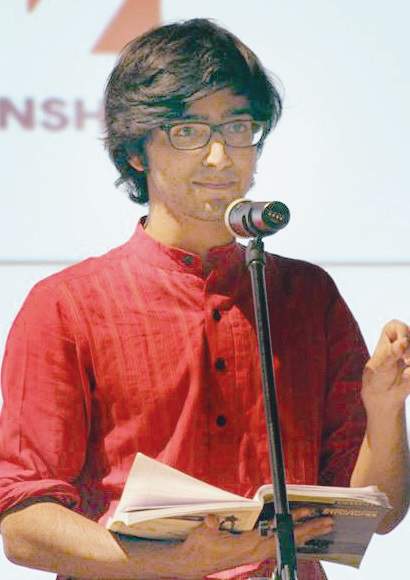
Vanshaj Ravi Jain, a final year BA LLB student from the National Law School of India University (NLSIU), Bengaluru is one of the five people from the country to have bagged the Rhodes Scholarship for 2017.

Vanshaj has a deep interest in international criminal law and will be studying the same at the University of Oxford,UK.

His interest in international criminal law peaked while studying at NLSIU. Vanshaj was a finalist at the ICC (International Criminal Court) Moot competition at Haque and has also published a article in the prestigious Columbia Journal of Transnational Law on the topic of prosecuting ISIS terrorist at international law courts.
Vanshaj will soon be travelling to Georgia for the Jean-Pictet Competition of International Humanitarian Law. “It’s a week long program and involves activities like interview victims and other practical exercises,” adds Vanshaj

While Vanshaj was always interested in international law he did not know exactly what under it I wanted to pursue.
“I used to participate in Model UN competitions during my school days and also studied humans rights,” he says.

While there is no official course on international criminal law at NLSIU, Vanshaj got immersed on various aspects on the subject during his time at the institution.
While many of his classmates will be joining prestigious law firm and are ensured of hefty salaries, Vanshaj wants to take his passion to its logical conclusion. “My dream job will be to join as prosecutor at the ICC at Haque,” he says.

NLSIU has a history of Rhodes Scholars with one or more students picking up the scholarship every year.
Dr R Venkata Rao, vice chancellor, NLSIU says “Jain is one of our best students. His writing and debating skills are exceptional. It is a matter of great pride that this year too an NLSIU student has achieved this feat”.

source: http://www.newindianexpress.com / The New Indian Express / Home> Cities> Bengaluru / by Express News Service / November 30th, 2016

Udupi college team wins TCS Rural IT Quiz

tcsruralitbf29nov2016

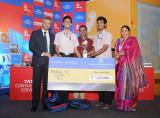
A team from Udupi won the national finals of the Rural IT Quiz organized by Tata Consultancy Services (TCS) held at Bengaluru Palace as part of BengaluruITE.Biz 2016.

Aditya B Nayak and Pranoy DSouza from MGM PU College, Udupi, competed against the winners of state-level quizzes conducted in Gujarat, Madhya Pradesh, Rajasthan, Maharashtra and Chhattisgarh. Students from class 8 to 12 compete in the annual quiz competition which aims to enhance IT awareness among students in smaller towns and districts.

The quiz, conducted by Giri ‘Pickbrain’ Balasubramaniam, was based on the theme of Digital Marketing and its significance in present times. The animation-based quiz format had five rounds — Landing Page, Search Engine Optimisation, Higher Per Hit, Going Viral and Net Worth.

The students received a trophy and an educational scholarship of Rs 1,00,000 from minister Priyank Kharge. The team from Agragami High School, Wardha were the runners-up and they received Rs 50,000.

source: http://www.deccanherald.com / Deccan Herald / Home> State / DHNS – Bengaluru, November 29th, 2016

Shivamogga girl wins state-level painting contest

An­us­h­r­ee K, a Class VII student of Shree Mahaveer Vidyalaya, Koti Road, Shivamoga eme­rged the winner of the state-level painting competition on the theme:

“Conservation of Water and Pollution”. The 7th annual competition was hosted by the Central Ground Water Board in the city.

Anushree will represent the state at the national level competition, which will be held in Delhi. The second and third prizes went to Amithraj, Class VII student from Amrutha Bharathi Vidya Kendra of Udupi and Sujana S Godbole, Class VIII student from Sant Meera’s English School of Angol – Belagavi respectively.

In all, around 55,000 students from 550 schools across the state took part in the school-level competition. Of them, 50 best paintings were selected for the state-level competition.

source: http://www.deccanherald.com / Deccan Herald / Home> State / DHNS / Bengaluru – November 28th, 2016

Buy ‘legal’ properties using this tool

Bengaluru :

One of the major problems faced by people looking for properties in the city is the legality of any such purchases. The controversial demolition drive carried out by the BBMP on encroached storm water drains and lake beds two months back is testament to the dangers of purchasing properties without proper information.

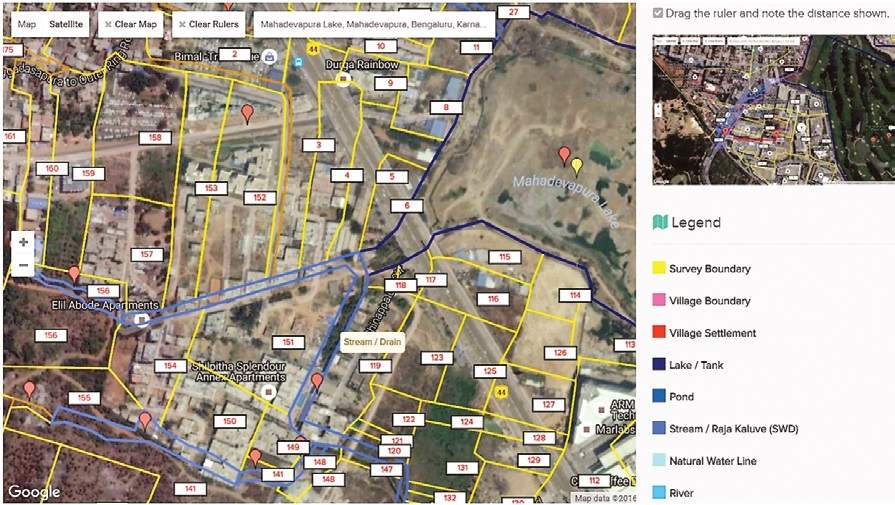
Now, a Bengaluru-based startup has developed a free Google map-based risk assessment tool to help Bengalureans assess encroachment and other information required when evaluating properties.

Sudeep
Sudeep

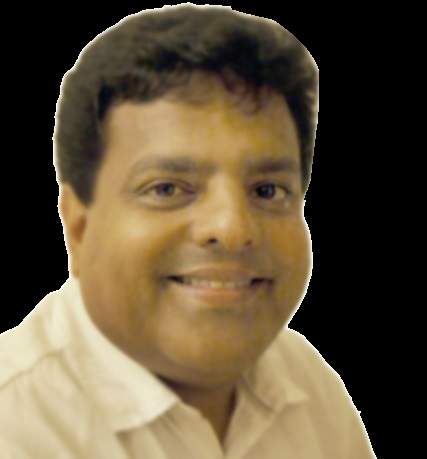
The tool – ZippServ Protect –  uses an intuitive feature to mark the storm water drains and lake encroachments based on BBMP’s revenue map. Users can search for and download relevant information from about 50 GB. One needs to only put in the location of the property on the platform and immediately one will get access to information like the land revenue maps of that particular area. Another feature enables one to measure the distance between location and the drain or lake. “It is a kind of a first level of scrutiny before making a purchase,” says ZippServ Co-founder and CEO Sudeep Anandapuram.

Sudeep and his team have collected information spanning over 800 sq km within the city and it can also highlight the primary and secondary drains and help users to measure the width of a drains and extent of encroachment.

propertymapbf28nov2016
Kathyayini Chamaraj  of CIVIC, a  voluntary citizens initiative, said that in light of government records themselves being faulty there was a need to exercise caution. “I do not know to what extent such tools will be of help when it has often been found that maps and records of authorities like the BDA and BBMP themselves are often faulty and even fabricated,” she says.

source: http://www.newindianexpress.com / The New Indian Express / Home> Cities> Bengaluru / by Ramzauva Chhakchhuak / Express News Service / November 28th, 2016

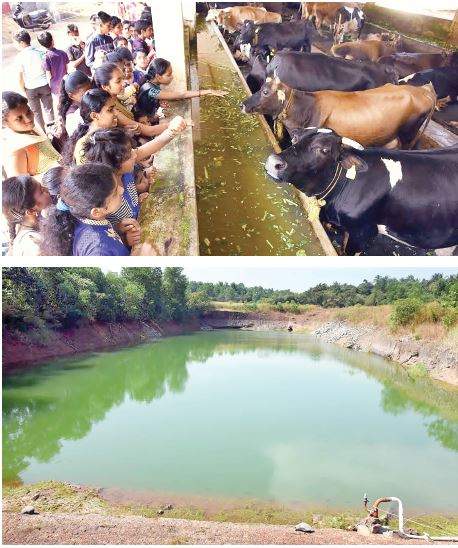
He turns arid land into lush farm

Mangaluru :

Where there’s a will there’s a way. Odduru Farm at Ganji Mutt in Bantwal Taluk, located nearly 25 km away from Mangaluru, is a classic example of this.

rajeshbf28nov2016

A once barren land where one could only find laterite rocks is now home to lush greenery, all thanks to the sheer determination and perseverance of a progressive farmer Ulepadyguttu Rajesh Naik. When Bantwal taluk was declared a grey area owing to deficient water, Naik decided to do the unthinkable and turned his 120-acre arid land lush green through organic farming.

rajesh02bf28nov2016

A BSc graduate, Naik (58) had never hankered after a routine job. He had his interests deep-rooted in agriculture. His family had a large patch of land, but it was never cultivated as it was situated on a plate of laterite stone. The barren land and lack of water, however, failed to dry out his enthusiasm. He used the laterite plate for cutting out stones for construction, and soon water started oozing from the bottom of the plate. A water tank was thus formed. He has two such large tanks today that never go dry.
The bigger challenge was to transform the barren land into thriving farm land, which took Rajesh to several places in search of models. But none impressed him. Finally, in 1986, he decided to go with his own model of a fully developed organic farm on a dry patch of 120 acres. “It has not been an easy journey. Organic fertilisers enrich soil slowly, but my patience and perseverance paid off finally,” says Rajesh.

On his 120 acres of land, he now grows arecanut, coconut, banana, cashew, different types of vegetables, pepper and fruits among others by using organic manure. The farm has as many as 10,000 arecanut and 1,500 coconut trees. Two artificial lakes, 50-ft deep at the centre, provide water to the entire land. His land has yielded great results and products.

Over 650 litres of milk are also produced at his farmland. The bio-gas slurry produced by over 180 cows, is used for plantation of coconut, arecanut, vegetable plants among others. He also generates electricity from bio-gas, which almost meets his requirement of power. Naik’s multi-farming activities can provide an idea or two to those, who always complain against less income by agriculture.

“Small land holders must always opt for multi-crop plantation. Loss is inevitable in case of single-crop farming in times of erratic monsoons. With technological advancement and organic solutions, it is not difficult to earn profits,” said Naik.

source: http://www.newindianexpress.com / The New Indian Express / Home> States> Karnataka / by Ganesh Mavanji / Express News Service / November 27th, 2016

The stealth superbug, decoded

A team of scientists in Bengaluru is behind the genome sequencing of Candida auris, a fungus that has caused disease outbreaks in five continents this year.

EMERGING THREAT: “A paper by the scientists has shown that many cases have been misdiagnosed in India.” Picture shows the structure of the fungus. Photo: Special Arrangement


On November 4, the Centers for Disease Control and Prevention, a leading public health institute in Atlanta, U.S., reported 13 cases of infection by the deadly fungus Candida auris in several parts of the country. Apart from the U.S., outbreaks have been reported this year in eight countries across four continents — India, Pakistan, South Korea, Kuwait, South Africa, Colombia, Venezuela and United Kingdom.

A paper by scientists from the Indian Institute of Science (IISc) in Bengaluru has shown that many cases of Candida auris have been misdiagnosed in the country. In 2015, a team led by Utpal Tatu, professor of biochemistry, IISc, completed the genotype sequencing of Candida auris, widely considered an emerging superbug fungus as it does not respond to conventional antifungal drugs. The genome data were submitted to the National Center for Biotechnology Information, U.S. and is now considered as the reference genome across the globe.

India, an epicentre

Candidiasis is a fungal infection caused by Candida species, often seen in patients whose immune system is compromised, such as AIDS patients or in case of transplants, malignancies and the use of catheters. Most of the infections are hospital-acquired, especially in ICU settings.

The first case reported was in Japan in an external ear canal infection in a patient in 2009. Since then, most cases have been invasive in nature and India has one of the highest number of infections caused by this superbug, says PhD student Sharanya Chatterjee, a member of the IISc team who studied isolates of Candida from a private hospital in Bengaluru. She found that in many cases, the fungus had been misidentified with another Candida species, Candida haemulonii.

Dr. Tatu’s team was among the first to report the high rate of misdiagnosis of Candida auris. “Current diagnostic procedures to detect fungal infections cannot detect Candida auris, which is resistant to common antifungal treatment. In several patients, by the time we had made the correct diagnosis, it was too late,” says Ms. Chatterjee.

The team of scientists has developed a diagnostic tool to detect Candida aurisusing polymerase chain reactions. “The rise of more virulent forms is connected to the indiscriminate use of antibiotics,” says Dr. Tatu, adding, “The strain found in the United States was resistant to even the third class of antifungal treatment.”

Highly resistant fungus

One reason for the high resistance to existing drugs is that this species has a higher number of drug efflux pumps compared to other species, says Ms. Chatterjee. Drug efflux pumps are proteins that prevent other drugs from crossing the cell membrane. The IISc team’s research was published in the September 2015 issue of BMC Genomics.

Sudarshan Ballal, director, Manipal Hospitals, which provided the isolates for the study, says the research highlighted the need for clinical-academic collaboration. “We have been able to dissect a fungus found commonly in hospitals and study it at the genome level. Some fungi look alike at macroscopic level, but their genotype could be very different, sort of like twins,” he says, adding, “If you know it is Candida auris from day one, you could start off with treatment which it is sensitive to.” Dr. Ballal agrees with Dr. Tatu about indiscriminate use of antibiotics as a possible cause: “Killing all kinds of bacteria gives space for fungi to grow.”

Dr. Tatu and his team of researchers feel that it is high time officials took note of the situation. “It is very difficult to establish how many cases have been misdiagnosed in India as very little study has been done on this, and since most patients who acquire Candida are already quite ill, a delayed diagnosis could be fatal,” he says.

Echoing Dr. Ballal, Dr. Tatu says the emergence of superbugs is a small example of the lacunae between academic research that studies the current disease scenario and current clinical practices, and shows the need for greater collaboration between the two. Apart from Candida auris, Dr. Tatu’s team is also studying numerous other infections, their evolutionary origins, diagnosis and treatment, with a view to filling this gap.

cinthya.anand@thehindu.co.in

source: http://www.thehindu.com / The Hindu / Home> Sci-Tech> Health / Research Health / by Cinthya Anand / November 27th, 2017

Telemedicine takes advancements in healthcare to distant corners

Bengaluru :

The absence of advanced healthcare services in Kalaburagi had pushed Gaurav (name changed), into a state of panic, after he developed recurrent headaches following a minor fall he suffered last month. Although the report of a CT scan at a local hospital revealed nothing alarming, Gaurav was determined to seek a second opinion. He decided to make use of the telemedicine service available in the state; the images of his brain were transmitted to doctors at a Bengaluru-based teleradiology centre, who diagnosed the problem as subdural hematoma (clot in the brain). He was subsequently referred for a neurosurgical evacuation – a procedure that involves evacuating the hematoma through a small hole. “Staying away from Bengaluru has always been a handicap to getting advanced healthcare services. However, the rapidly expanding telemedicine facility ensured early detection of my problem, and I was cured,” said Gaurav, who underwent a surgery at the Gulbarga District Hospital.

Gaurav is among the many beneficiaries of telemedicine, which has helped many citizens in remote areas of the country seek medical opinion from some of the leading doctors. Meenamma (name changed) was worried sick when her two-day-old baby’s breathing became laboured, and developed poor perfusion – process of delivering blood to a capillary bed – and listlessness. The neonatologists felt it was sepsis. But, the doctors called for a cardiac screening to make sure that the baby did not have any problems in the heart. While conducting the test, the sonographer decided to consult a senior cardiologist, not present at the hospital. However, using tele-echo, the senior doctor was able to take a look at the result of the test, and subsequently diagnosed a coarctation – narrowing of the blood vessel going to the body. The baby was put on medication, and referred for a surgery.

Cardiac paediatrician and co-founder of Teleradiology Solutions, the first-of-its-kind company established in the country, Dr Sunita Maheswari said that the organisation was working with the Karnataka health department to take teleradiology services to the rural interiors of the state. “We already cover four centres in the state. The drive was recently launched by the state government at Bowring Hospital, Bengaluru. We have reviewed scan reports of at least four million patients from across the world in the past 14 years. We started working with the Indian government this month, and we deployed services for district health centres in Tripura. From our headquarters in Bengaluru, we help patients from as many as 16 countries,” she said.

Pointing to the acute shortage of radiologists in rural India, Sunita added, “India has only 10,000 radiologists. Through teleradiology, we can take their services to other areas, where there are hospitals and diagnostic centres, but no radiologists. Also, telecardiology will help patients avail opinion of experts, who are elsewhere. It is one of the leading methods of reaching patients in rural areas, suffering from cardiovascular disorders.”

Teleradiology Solutions works with four hospitals in the state. At a recent discussion on telemedicine held in Bengaluru, head of department of forensic medicine at Victoria Hospital, Dr Devdass PK said that they had managed to analyse and send 3,500 reports through telemedicine facility.

Enabling counselling from the comfort of home

Anuradha (name changed), 45, of Mysuru badly wanted to rid her teenage son of his online addiction. She wanted to put an end to his habit of frittering away entire days, surfing social media and playing games, while paying no heed to family members. Uncomfortable with the idea of taking her son to a counsellor, Anuradha sought recourse to telepsychiatry. Aided by a Bengaluru-based telecounsellor, she managed to curb her son’s addiction to gadgets. “My son is now behaving normally with the members of the family. He was able to receive help without having to leave home,” she added.

Professor in the department of psychiatry at the National Institute of Mental Health and Neuro Sciences (Nimhans), Bengaluru, Dr Manjunath N said, “Telepsychitary was introduced here six years ago. It was made possible through the Karnataka Telemedicine Network Project, introduced by the health department in 2001. Telemedicine service at Nimhans covers 25 district hospitals and six taluks. Although direct consultation with our psychiatrists is yet to begin, we continue to provide help to rural patients.”

Telecounselling eliminates the need for a patient to be physically present in the counsellor’s chambers, and also provides privacy, opined Aruna Arumugam, a telecounsellor with Healtheminds. “Also, it is accessible to those patients who cannot otherwise seek help. We get patients from West Bengal, Karnataka, Uttar Pradesh and Pakistan, seeking help mostly on relationship issues, parenting challenges and depression,” she said.

Opthalmological services made available in rural areas

Karnataka Assisted Diagnosis of Retinopathy of Prematurity (KIDROP) was launched in 2008 by Narayana Nethralaya as a postgraduate teleopthalmology programme. Since 2010, along with the state health department, Narayana Nethralaya has managed to take retinopathy of prematurity screening to 36 centres across the state, along with wide field digital imaging services.

Chairman of Narayana Nethralaya, Dr Bhujang Shetty said, “KIDROP has trained technicians to screen infants in peripheral centres, where there are no specialists using Retcam Shuttle. They can store and subsequently upload images from the rural centres using an indigenously developed internet-based PACS system. This system delivers images live to the remote expert, who then sends the report to the technician.”

E-healthcare centres benefit nearly 40,000 patients

For the past two years, Narayana Health (NH), in collaboration with Hewlett Packard Enterprise (HPE), has been looking to take telecardiology, teleconsultation and tele-ECG services to rural areas. So far, its e-health centres have managed to reach 39,624 patients in Karnataka, Tamil Nadu, West Bengal, Gujarat and Rajasthan.

“The e-healthcare centres (eHCs) are designed such that they can be fit and deployed within a standard shipping container. Or, they are retrofitted to a pre-existing clinic, depending on the community’s existing infrastructure. They are fully equipped with workstations, open electronic medical records, biometric patient identification and integrated diagnostic devices,” a source at Narayana Health said.

“The HP cloud enabled technology allows for data – clinical and administrative – to be monitored across sites via a dynamic dashboard. Teleconsultation with relevant physicians from NH unit hospitals have been established at these eHCs, and dedicated internet services at all sites ensures seamless connectivity to the geographically linked healthcare facility. Outreach activities such as community screening programmes and customised medical programmes are organised with specialist support based on the dominant disease prevalence and incidence in the eHC location and catchment areas,” the source added.

‘We’re training doctors in telepsychiatry’

Since its inception six years ago, only 2,000 patients have availed the services of the telemedicine facilities at Nimhans. Professor at Nimhans’ psychiatry department, Dr Manjunath N attributes the underwhelming response to the lack of trained psychiatrists in telemedicine. “Though patients with common and chronic mental disorders are willing to discuss their problems through e-consultation and e-counselling, lack of doctors trained in manning telemedicine services for psychiatry is the problem. Trained professionals who can offer psychiatric services to rural patients from Bengaluru would solve the problem. We are also training resident doctors in telepsychiatry to overcome the problem of scarcity,” he added.

‘Well-trained technicians, and the will to invest is all we need’

At our vision centres, we make use of a portable Slit Lamp Biomicroscope connected via LAN network to the base hospital, which helps doctors diagnose chronic conditions such as retinopathy of prematurity, a potentially blinding eye condition that affects newborns, irreversible corneal conditions like keratoconus and diabetes-induced retinopathy. All it requires are well-trained technicians and the will to invest in quality equipment.

Dr Siddharthan KS | consultant at cornea and refractive services in sankara eye hospital.

‘Services will boost medical tourism in state’

A prior screening through telemedicine ensures that the patient is screened properly, and helps us confirm if the patient has to travel to avail services at the hospital. Many a time, it has saved patients the trouble of travelling to our hospital. Moreover, teleconsultation also increases the comfort and confidence level of the patients with their doctors, who are far away. This is a boost to medical tourism, since it makes it easier for patients to know more about their doctor.

Dr Harsha Rajaram | vice president at columbia asia hospitals

source: http://www.timesofindia.indiatimes.com / The Times of India / News> Chennai News> Bangalore News / by Sreemoyee Chatterjee / TNN / November 28th, 2016

Bengaluru boy Vishnu Raj Menon is Mr India 2016

Menon will now compete in the world pageant, which Rohit Khandelwal won last year.

Hrithik Roshan and Mr World Rohit Khandelwal, with Mr India World, Vishnu Raj S Menon, and the runners-up. Photo: Yogen Shah

Last year, Rohit Khandelwal made history as the first Asian man to win the title of Mr World. This year, it’s up to Vishnu Raj S Menon from Bengaluru to make India proud.

Menon was crowned as Peter England Mr India World by Hrithik Roshan last evening at a star-studded event. Viren Barman and Altamash Faraz, both from Delhi, were announced as the first and the second runner-up respectively at the finale of the pageant.

16 contestants from all over the country had to go through various grooming sessions that were mentored by eminent panelists from the fashion and film industry of India.

Rohit Khandelwal passed down his ‘crown’ to Menon after a tough competition from the others, at this gala event attended by many celebs like Kirti Kulhari, Gurmeet Choudhary with wife Debina Bonnerjee, Sana Khan, Madhurimma Tuli, Sharad Kelkar, Freddy Daruwalla, Ankita Shorey, Adah Sharma.

“I am very inspired. This competition is not just about looks. This shows lots of characters. These people, while doing their jobs, took out time and disciplined themselves to reach this far. I think that is commendable. I think, if they can achieve this, they can achieve whatever they want in life,” Hrithik told TOI about his experience at the event.

Now we have the global pageant to look forward to. Here’s hoping Vishnu Raj S Menon can bring home the prestigious title, just like his predecesor, Rohit Khandelwal did.

source: http://www.indiatoday.intoday.in / IndiaToday.in / Home> News> Lifestyle > What’s Hot / November 25th, 2016