Son of Mysuru shines as The Indian Hero — Narayan Rise !

Swami Vivekananda was never tired of repeating his clarion call to the youth of India, ‘You are the master of your own destiny.’ Many social reformers too have given similar calls to the youth to dream and work diligently to improve their social, academic, economic and political conditions despite being oppressed under adverse social conditions. Some listen to these spiritual and social reformers, pursue their exhortation and succeed.

Top : Narayan with wife Jayamma, son Jayaramu, daughter-in-law Shwetha (extreme left) and grandson Amith. Below : Narayan (extreme left) with his political mentor Siddharamaiah.
Top :
Narayan with wife Jayamma, son Jayaramu, daughter-in-law Shwetha (extreme left) and grandson Amith.
Below :
Narayan (extreme left) with his political mentor Siddharamaiah.

One such person to succeed in our city, I do not know if inspired by such noble souls, is Narayan, who was the Mayor of our city (in 2000-01) and now, at age 60, is the Chairman of the Karnataka State Safai Karmachari Commission.

Born into a community which, under our enlightened and secular Constitution, is called Scheduled Caste of Madiga community in Karnataka, Narayan’s parents lived in a slum and worked as Safai Karmacharis, manual workers, that included manual scavenging work as well.

As a child, he lived with his parents and six siblings in an atmosphere and milieu that would not even allow one to dream for a better future. Poverty and hunger haunted him. Poverty forever degrades a person, never enables nor ennobles one unless made of a sterner stuff. Narayan apparently was made of a sterner stuff. He decided to change the course of his destiny.

Beginning as a manual scavenger at Mysuru Railway Station for about eight months, by age 16 he managed to study ending up as a class X drop-out. He got a job in the famous Ideal Jawa motorcycle factory of Farrokh Irani, a liberal, generous industrialist of our city. Many underprivileged had benefited from Farrokh Irani’s egalitarian approach to an enterprise and Narayan was certainly one such beneficiary.

From a paltry salary of Rs. 180 a month he got from the Railways for doing that dirty job, he got a decent, dignified salary of Rs. 1,800 a month at Jawa factory. Of course, in between these two jobs he had worked as a domestic help and also at the silk factory to supplement income.

From 1978 when he became a permanent employee at Jawa, he never looked back. It was a turning point in his life made possible by people who belonged to the upper class with a heart. The popular english weekly ‘The Week’ of Aug. 30, 2015 has written about him in its ‘The Indian Hero’ column under the headline “Clean sweep — One man’s inspiring journey from a manual scavenger to a Mayor and more” where Narayan has expressed his experience as a domestic help that shows his employer in poor light. May be the meaning of domestic work is different to different persons.

Nevertheless, for Narayan that was a springboard to get into Ideal Jawa that changed his life forever, for better. The service at the upper-caste house seemed better than the one Railways offered him. More than that the upper-caste family head kept his word and got Narayan the job in the factory.

Be that as it may, what is most admirable in Narayan was that despite a respectable salary in his pocket, he did not forget to help his fellow-men, the Safai Karmacharis. Whenever there were attempts to evacuate his fellow-men from their slums without showing them an alternative place, he would protest and take the lead to meet politicians and officials to get help. He was even imprisoned about four times, he says. That was when he came close to Vedanta Hemmige, MLA of Janata Parivar who made him the Director of Karnataka Slum Development Board when Ramakrishna Hegde was the Chief Minister. Later he became close to Siddharamaiah, then of Janata Parivar and thereafter never looked back. As a politician he rose to become the Mayor of Mysore City in 2001-2002. And now he has risen higher as the Chairman of Karnataka Safai Karmachari Commission drawing a salary of Rs. 1 lakh a month, riding an air-conditioned Toyota Innova car, functioning from an air-conditioned office in Bengaluru.

The Commission is a quasi-judicial body, not an implementing agency. Narayan has persuaded the Chief Minister Siddharamaiah to set up a Development Board for the over-all development of Safai Karmachari in Karnataka whose number, according to Narayan, is over 35,000. The Board is likely to be set up soon. If so, let us hope, Narayan will be its first Chairman.

‘Fame is the by-product of success,’ says the actor-poet Ayushmann Khurrana. Our Narayan is one local example where his success as a politician has brought him this fame. Let a thousand flowers bloom, like Narayan, in the garden of Safai Karmacharis and spread the fragrance of human kindness and compassion all around.

e-mail: kbg@starofmysore.com

source: http://www.starofmysore.com / Star of Mysore / Home> Abracadabra ..Abracadabra / by K.B. Ganapathy / Saturday – August 29th, 2015

The Minstrel of Unheard Melodies

Ravindra Katoti | Vinod Kumar T

As an eight-year-old, Ravindra Katoti visited harmonium artiste Rambhau Bijapure with his parents. When he heard Bijapure’s mesmerizing music, Katoti decided he had found his calling.

“My brother used to learn the flute from him (Bijapure). It all began with a casual conversation. While we were at his house in Belagavi, he asked me what I would like to learn. And, just like that, I said, ‘Harmonium,’ ” recalls Katoti.

Now, 38 years later, Katoti contributes to popularising harmonium solo concerts through the Harmonium Habba in Bengaluru. Its ninth edition, held on June 28, saw a Hindustani solo (on the harmonium) by Sudhir Yardi, while R Paramasivan played Carnatic compositions and old songs from the Gubbi Veeranna drama company. The event ended with Colours of Harmonium, an exploration of Hindustani classical, light classical and devotional genres by Ravindra Katoti.

The annual fest is organised by the Bijapure Harmonium Foundation, set up by Katoti, as are a few more concerts and lecture demonstrations round the year. BHF has also brought out audio recordings of the harmonium, a DVD titled Learn to Play Harmonium, aimed at beginners, and a documentary on the maestro it is named after.

The foundation’s efforts to project the harmonium as an independent instrument have paid off. “Earlier, people would be astonished if you mentioned a harmonium concert, even though the violin, sarangi and many other instruments have featured as the main ones in concerts for ages. Now, at least, people are aware,’’ says Katoti.

Before he shifted base from Belagavi to Bengaluru, he found that Bengalureans were largely unacquainted with the instrument. “When I was called, performances where the harmonium took centre-stage were few and far between,” he says.

But he has witnessed people gradually develop a taste for it. “It has been 13 years since I started the foundation, and slowly I find them supporting my cause,” shares Katoti. Solo performances even have dedicated listeners these days, he says, adding, “This is an instrument that originated in France and is thriving in India,” he says.

Harmonium is a global instrument, Katoti declares. It lends itself to many genres: Hindustani, Carnatic, devotional, light-classical and even Western.

An A-grade All India Radio and Doordarshan artiste, Katoti has played in venues across India and the globe. “In places like Pune, Mumbai and Kolkata, people come from a rich cultural background and it’s always a pleasure to perform in these cities,” he says.

Concerts abroad—Europe, US and the Middle East—are another question altogether. People patronise a variety of arts, and the audiences there are far more disciplined. “Unlike in India, they listen to the concert rapt in attention and complete silence,” he says. But this makes it harder for artistes like him to gauge their response.

Scholarships and awards have punctuated Katoti’s musical journey. He was awarded a three-year scholarship by the Karnataka Sangeet NrityaAcademy in 1986. In 1993, following his brilliant performance at South Central Zone Cultural Centre’s Yuva Sangeetotsav held at Ujjain, the then Maharashtra governor P C Alexander honoured him for his top-notch performance. The following year, he was conferred the title of Sur Ratna by Bhatkande Lalitkala Academy, Raipur. He also has a doctorate in commerce from Karnataka University, Dharwar.

On the question of how he wants to further his guru’s legacy—who passed on five years ago—he says he wants to “continue doing what he is doing: teaching and performing”.

This apart, he wants to mark Bijapure’s birth centenary year, 2017, with harmonium concerts across the country. He remembers his guru as, “someone who taught me the gist of music, with harmonium as the medium”.

Though known for his gaayaki style of rendition, where the musician uses the instrument to achieve a human voice-like quality with the music, he has also shared the stage with the greats of Hindustani music, including Gangubai Hangal, Bhimsen Joshi and Pandit Jasraj.

Ask him how different playing independently and accompaniment are, and he responds with, “When you accompany someone else you follow the other artiste’s thoughts; when you perform solo, you play out your own thoughts.”

And the art of accompaniment cannot be taught, he believes. “You can teach them how to play, but accompaniment is their prerogative. It has to be habituated.”

Katoti has also composed his own music, for bhav geets and devotional songs, besides two raga maalikas. This is an entirely different ball game, for “you have to keep in mind the lyrics and the musicians who will sing or play it.”

source: http://www.newindianexpress.com / The New Indian Express / Home> Magazine / by Chetana Divya Vasudev / August 08th, 2015

Horticulture research institute in Bengaluru to develop seed potato

Krishna Byre Gowda, Minister of State for Agriculture, has said that the government has decided to develop seed potato at the Indian Institute of Horticulture Research Station at Hesaraghatta in Bengaluru and distribute them to growers in Hassan and other places in the State.

The institute would develop disease-free seeds which would assure a better yield to growers, provided it was cultivated in a scientific way, the Minister said at the drought review meeting here on Wednesday.

He was reacting to the allegations of H.D. Revanna, Janata Dal (Secular) MLA, that substandard seeds were distributed among growers in Hassan district in the past two years and the growers had incurred crores of rupees losses.

The Minister said that the production might begin in a year or two. Till then, the government would get quality seeds from Punjab, he said.

Mr. Revanna alleged that many traders and commission agents in Hassan had sold table potato as seed potato to farmers in the last few years and cheated growers.

He alleged that the district administration had failed to initiate action though he had written to the Deputy Commissioner and the Chief Executive Officer of the Hassan Zilla Panchayat.

Mr. Revanna said that the growers were discouraged by the fall in the prices of potato every year and the area under potato cultivation had come down considerably in Hassan district.

T.B. Jayachandra, Minister for Law and Parliamentary affairs, asked the Deputy Commissioner of Hassan to make a list of potato growers in the district and their requirement of seed potato. The government would get seeds from Punjab and distribute it among growers.

The Minister also said that the government might not hesitate to distribute them at subsidised rates to encourage growers.

source: http://www.thehindu.com / The Hindu / Home> National> Karnataka / by H.S.Narasimha Kumar / Mysuru – August 28th, 2015

Steps initiated to protect century-old war memorial

The historically significant war memorial ‘French Rocks’ at Harohalli in Pandavapura of Mandya district is in a pathetic condition.

Officials start evicting encroachers of the area

Evicting the encroachers from the historical war memorial at Harohalli in Pandavapura taluk of Mandya district has finally begun.

The memorial, known as ‘French Rocks’, was set up in memory of French soldiers, who had come to Pandavapura to help Tipu Sultan during his battles against the British. Tipu Sultan had granted a plot to the French army for establishing a burial ground for soldiers.

The war memorial once had at least 65 graves of different styles and structure.

As the graves were architecturally significant and contained the details of names of deceased soldiers, age and their ranks and file etched in marble plaques.

Nevertheless, the local people had encroached a major portion of the graveyard by demolishing several graves.

Historians had been requesting the district administration to protect the memorials by evicting the encroachers.

A team of revenue officials, led by Assistant Commissioner of Pandavapura (Revenue) H.L. Nagaraju and tahsildar B. Shankaraiah visited the war memorial on Wednesday and cleared the encroachments. The team had destroyed various crops cultivated at the graveyard. Mr. Nagaraju said the taluk administration would initiate steps to facelift the memorial soon.

“We will first remove the weeds and then protect the graves,” he said.

source: http://www.thehindu.com / The Hindu / Home> National> Karnataka / by M.T. Shiva Kumar / Mandya – August 27th, 2015

Jains rally for Sallekhana

Echo of Rajasthan hc order

SallekhanaBF27aug2015

Mysuru :

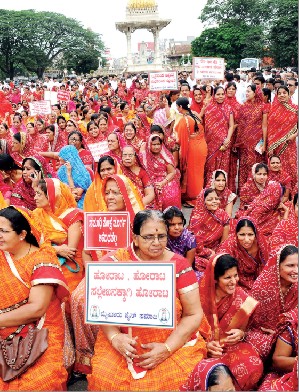
Over 2,000 members of Jain community comprising all the four sub-sects — Sthanakvasi, Moortipujak, Terapanth and Digambar Jain Samaj — took out a huge rally in the city here today to protest against the Aug. 10 ruling of the Rajasthan High Court that Sallekhana or Santhara, a religious practice of Jains, is illegal and a punishable offence.

The agitating members said that the order had deeply hurt the religious sentiments of the entire Jain community and it should be reconsidered. They noted that the Sallekhana could not be termed as an act of suicide nor it can be construed as ‘death by willingness.’ Sallekhana was a vow which was accepted by mendicants or householders according to their own wish as per the strength of the body and in tune with religious scriptures. It was a practice that was being followed since time immemorial.

Leaders of Jain community stated that as per Article 25 of the Constitution, to accept any religion, to profess it and or to propagate, is the fundamental right of any Indian citizen. Hence, the act of performing Sallekhana should be accepted as Fundamental Right of Jains.

Earlier in the morning, the members of the Jain community — men dressed in white and women representing various Mahila Mandalis attired in different hues — assembled at the Mysore Palace North Gate from where the rally commenced. Later, it passed through Ashoka Road, Mahaveer Circle, Gandhi Square, Shivarampet, D. Devaraj Urs Road and reached Deputy Commissioner’s Office to present a memorandum.

In the memorandum, they urged the Deputy Commissioner to apprise the authorities concerned to see that the Jains were not barred from following their religious rights.

The Terapanth Jain Muni Gyanendramuniji Maharaj said in his discourse that members of the Jain community would not commit violence on themselves or on others by taking recourse to Sallekhana. It was a practice to purify one’s soul and for destroying the ‘karmas.’ Prohibiting it would amount to denial of the fundamental rights allowed in the Constitution.

Calling upon the members of the community to unite on this score, he said the community would challenge it legally. Munishree Sujethakumar Maharaj was also present.

Jains regard Sallekhana or Santhara to be the highest form of passage or death and in a way not the same as suicide. It is done in full consciousness and in peace and it does require that the practitioner fast unto death. Jain texts say it is the ultimate route to attaining Moksha and breaking free from the whirlpool of life and death. The vow of Sallekhana or Santhara is taken when one feels that one’s life has served its purpose. The rationale behind Sallekhana comes from the Jain belief in karma, rebirth, asceticism and spiritual purification.

source: http://www.starofmysore.com / Star of Mysore / Home> General News / Thursday – August 27th, 2015

Fr. Anthony Kariyil is new Bishop of Mandya Diocese

Karnataka’s Onam gift for Keralites

FrAnthonyBF27aug2015

Mysuru :

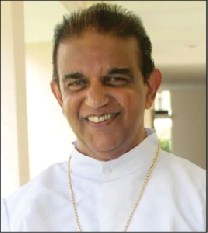
Fr. Dr. Antony Kariyil has been appointed as the new Bishop of the Mandya Diocese of Syro Malabar Church.

Antony Kariyil was born in Chalil near Cherthala, Alappuzha district in Kerala, in 1950 and became a priest in the year in 1977. Fr. Kariyil has a doctorate in Social Sciences and had decorated various Ecclesiastical positions of significance.

He has been serving as the Director of Rajagiri Engineering College in Kochi prior to the current appointment. An researcher of merit, Fr. Kariyil has several publications to his credit, including two books ‘Church and Society in Kerala: A Sociological Study’ and ‘Thiruvayassu.’

source: http://www.starofmysore.com / Star of Mysore / Home> General News / Thursday – August 27th, 2015

A unique jatra which highlights the importance of organic farming

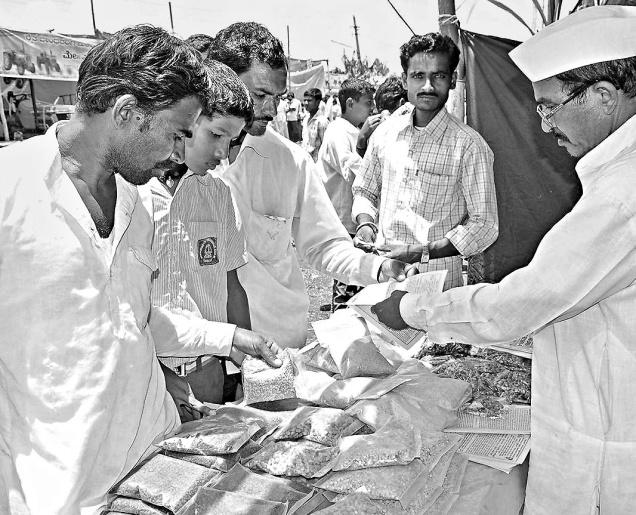
Farmers looking at various organic products displayed at the stalls during the agriculture fair at Kolhar town in Vijayapura district on Monday.— PHOTO: RAJENDRA SINGH HAJERI

For the last five years, Kolhar town of Basavanabagewadi taluk is witnessing a unique type of jatra. During the fair, an association of progressive farmers arranges a Krishi Mela (agriculture fair) for educating the farming community about the importance of organic farming.

“It is a one-of-its-kind event which is purely by the farmers, of the farmers and for the farmers. Unlike any other agriculture fair which organised by government, here, only the farmers contribute to the event,” said Siddu Balagonda.

The progressive farmer who is behind the unique event says that for the last five years he has been organising the fair with the help of other farmers in the town during the Uppashappa temple fair. He said that they noticed that during the annual religious fair, hundreds of people, mostly farmers were arriving to the temple.

“We thought of using the opportunity to hold an event which could help the farming community.

Thus, we chose to organise an agriculture fair on the issue of organic farming as it has become the need of the hour,” Mr. Balagonda said.

Winner of ‘Krishi Pandit’ and a recipient of many such awards, he said that owing to excess and unabated use of chemical fertilizer, the soil is losing fertility and commodities are becoming unhealthy.

‘Save soil’

“The best way out to save soil and have healthy food is to switch over to organic farming.

“The fair essentially focuses on this critical aspect where every year we call the experts and progressive farmers to make farmers aware of its significance for the present and future generation,” he said.

To a question, he said that the farmers have contributed around Rs. 7 lakh for holding the event.

source: http://www.thehindu.com / The Hindu / Home> National> Karnataka / by Firoz Rozindar /Kolhar (Vijayapura Dist). / August 25th, 2015

Nitte college bags awards at students’ exhibition

The students of the NMAM Institute of Technology with the trophy at 38th series State -level Student Project Seminar and Exhibition at Adyar in Mangaluru recently.

The NMAM Institute of Technology, Nitte, was adjudged for the Best Performing College of 2014-15 during the 38th State-level Student Project Seminar and Exhibition organised by the Karnataka State Council for Science and Technology at Sahyadri College of Engineering and Management at Adyar on August 20 and 21.

In a press release issued here, Niranjan N. Chiplunkar, principal of the NMAM Institute of Technology, said the award was presented by president of Institution of Engineers (India) Muralikrishna Reddy at the event. The project ‘Ethanol production from pure glycerol using Bacillus cereus ’ by final year B.E. students Samiyabanu, Krupa and Deepak, was awarded best project in the Biofuels category.

Another project ‘Unipolar SPWM-based Reactive Power Compensator’ by students Nishanth, Sourabh, Apoorva and Madhumita, was awarded best project in the seminar category. About 97 engineering colleges all over the State participated in the seminar and exhibition.

source: http://www.thehindu.com / The Hindu / Home> National> Karnataka / by Ganesh Prabhu / Udupi – August 25th, 2015

Deodurg MLA laid to rest with State honours

Thousands of people participated in the funeral procession of MLA Venkatesh Naik at Arakera village in Deodurg taluk, Raichur district, on Monday. PHOTO: SANTOSH SAGAR

Veteran Congress leader and MLA of Deodurg constituency in Raichur district, Karnataka, A. Venkatesh Naik (79), who died in a rail accident near Penukonda in Anantapur district, Andhra Pradesh, at about 2.10 a.m. on Monday, was laid to rest with State honours at his native place in Deodurg taluk. As per the customs of his community, his mortal remains were buried in his land at Juttalamaradi village at 6.30 p.m. He is survived by wife, two sons and three daughters.

Venkatesh Naik’s eldest son and Raichur Lok Sabha member B.V. Naik, along with his younger brother and president of Raichur District Central Cooperative Bank Rajashekhar Naik, performed the final rites. His grandson K. Shivanagowda Naik and other family members were present.

Ministers Sharan Prakash Patil and Shivaraj Tangadagi, Koppal Lok Sabha member Sanganna Karadi, MLAs Shivaraj Patil, Hampanagowda Badarli, Hampayya Naik, Manappa Vajjal, Raja Venkatappa Naik, A.B. Malaka Reddy, MLCs N.S. Boseraju and Halappa Achar, Tungabhadra Command Area Development Authority chairman A. Vasanth Kumar, Deputy Commissioner S. Sasikanth Senthil and Superintendent of Police Chetan Singh Rathor were among the dignitaries who participated in the funeral.

Earlier, the mortal remains of the leader were kept at the Congress party office in Raichur for 30 minutes and then at his home at Arakera in Deodurg taluk for two- and-a-half hours for the public to pay their last respect. Over 10,000 people participated in the funeral procession from his home to the burial place.

Born on June 6, 1936, Venkatesh Naik entered politics through the Congress in 1968 in the local body elections. He was Gram Panchayat president twice, APMC director and Zilla Parishat member before entering national politics through the 1991 Lok Sabha polls. He represented Raichur constituency in the Lok Sabha for four times, in 1991, 1998, 1999 and 2004. He had lost the constituency to Raja Rangappa Naik of Janata Dal in 1996.

In a bitter electoral battle in the 2013 Assembly polls, Venkatesh Naik defeated his grandson K. Shivanagowda Naik, who had contested on the BJP ticket in Deodurg constituency, by a margin of 3,700 votes. He had also played an instrumental role in earning a thin-margin victory for his son and Congress candidate B.V. Naik against his grandson and BJP candidate K. Shivanagowda Naik in the 2014 Lok Sabha polls in Raichur constituency.

Earlier, he had served Deodurg taluk Congress Committee president for two terms and Raichur District Congress Committee for one term.

Venkatesh Naik tasted defeat twice in his political career: in the 1996 Lok Sabha polls against Raja Rangappa Naik of Janata Dal and in the 2008 Assembly polls against K. Shivanagowda Naik who was then in the Janata Dal (Secular). He was denied the Congress ticket in the 2009 Lok Sabha polls and the Congress candidate Raja Venkatappa Naik was defeated by the BJP candidate Sanna Pakkirappa in the election.

“Venkatesh Naik was a literary enthusiast and had deeply studied Jaimini Bharata, a version of Hindu epic Mahabharata, authored by noted Kannada poet of 16 century, Lakshmisa. He spoke less and did more,” Bheemanagowda Itagi, a long-time associate of Venkatesh Naik, recalled.

source: http://www.thehindu.com / The Hindu / Home> National> Karnataka / by Kumar Buradikatti / Raichur – August 24th, 2015

From Bengaluru’s rock chick

Shining bright in the dark room The Majolly Project is proving its mettle with its first single.

Bands get a few gigs, go into the studio and think of an album. For us it is backwards with our debut single getting us recognition.

Bengaluru knows Neecia Majolly as a reputed concert pianist, Western classical and music theatre vocalist, conductor, teacher and composer. Until recently, however, not many knew that Neecia also dabbled in progressive rock and classical electronic music with her band, The Majolly Project.

“Yes! This is new territory for me since I’ve always been associated with classical and choral music,” she tells MetroPlus.

“To be very frank, I’ve always wanted to be a rock chick since I was a teenager!” she laughs. “It is just that I’ve been classically trained and I’ve been good at it. But TMP has been a long time coming. I’ve been trying for years to get this together in a completely opposite direction to what I was doing so far. It was so difficult to find the right and committed musicians. It was only in September last year that I got the two other musicians together and we started off with TMP.”

Neecia adds: “A lot of people are surprised that Neecia Majolly has an alter ego – classical musician by day and rock chick by night,” she laughs heartily. “Playing classical music has its own creativity in terms of interpretation, but this has brought out a whole new side of creativity for me since it is something of my own. I am also not trying to appeal to popular tastes. But people like it so far.”

Their first single got two golds at the recently held Global Music Awards, making them the only winners from India.

Released in June, their single titled ‘Dark Room’ has also received a nomination for Rock Song Of The Year by The International Music and Entertainment Association.

While Neecia is songwriter and arranger for TMP, Ashwin Shekhar is on percussion while keyboardist Anish Thomas Panikkar does the programming as well.

“It is really exciting for us since this is our first single and we did not expect it to get so much attention. I don’t think this is something bands in India do often. This is quite special for us. In fact I think we are working backwards. Bands get a few gigs, perform for some time, go into the studio and then think of a single and an album. For us it is backwards with our debut single getting us recognition,” she says.

‘Dark Room’, a poignant dark composition of voice and piano, is a very personal song, says the composer. “It’s got something to do with a lot of what I was experiencing as an artiste. People like me find it best to take that personal experience and express it in the form of music. ‘Dark Room’ is a result of that experience. Many say it’s very haunting and touches people where it needs to.”

Neecia adds that all their upcoming singles deal with personal issues. “Mostly by this month end, we will release our second single titled ‘White Bone’ that dwells more on the influences that TMP exudes in the classic progressive rock soundscape. Dark Room, though our first single, touches only a little of the sound that TMP is all about. It is personal and connects with people. The second single is very powerful. It’s on the illegal ivory trade that we feel strongly about.”

The multifaceted artiste points out that they have a bunch of songs ready for an album. “I just hope that someone becomes kind to us and funds our album,” she beams. “It’s not easy to do an album all on your own. So we will wait and see now that we have people’s attention.” On the sound, she adds that none of their songs are feel good. “None of them will make you snap your fingers or clap your hands or feel happy. This is serious stuff,” she admits.

The song, however, fits well with the listening audience in Bengaluru. Neecia agrees: “Bangalore has much more of a taste for rock and metal than any other city. In Bangalore, there is an audience for everything. We are luck that way. It is also easier now for people to listen to music, thanks to social media and online platforms.” She adds that earlier a lot of bands used to play covers. “No one is really keen on that anymore. That also is an inspiration for bands like us to do our music. The audience accepts and loves it when bands play their own music. These changes are good for us.”

Looking ahead, Neecia says the awards and nomination has given them validation for their efforts. “I want it to be as big as we can,” she sums up. Check out The Majolly Project on Facebook, Reverbnation, Soundcloud and Youtube.

source: http://www.thehindu.com / The Hindu / Home> Features> MetroPlus / by Allan Moses Rodricks /Bengaluru – August 22nd, 2015