Former Star Player is a security guard now

MohanKumarBF26may2017

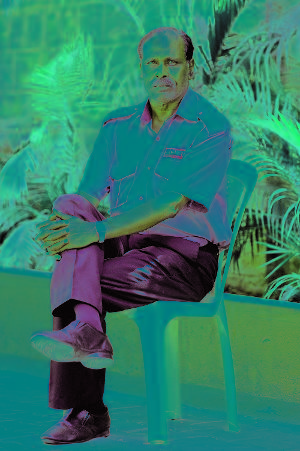
Once famous for his moves on the football pitch, former India international and ITI defender, J Mohan Kumar, now keeps vigil at the gates of Mount Carmel College

J Mohan Kumar has gotten used to obscurity. He still has the bearing of one who was once famous, and takes great pride in his job as a security guard at Mount Carmel College, but he is no more than a man in a uniform, a fixture to those who pass in and out of the gates of that famous institution.

Mohan though has fond memories of his time in another ‘uniform’, a time when his name often rang through football stadiums and his face was instantly recognizable.

The former Indian Telephone Industries (ITI) deep defender looks back with a smile on the collective exploits of his team and his teammates with whom he ached, sweated and toiled. Those were good days even if he was merely a pawn in a flawed system, discarded and forgotten once his legs turned weak and his hair gray. Not that he would trade his playing career for anything in the world, mind you.

In a 30-year career as player and coach, Mohan stayed loyal to ITI. He won the first edition of the Federation Cup with ITI in 1977. He was also briefly the coach of the Garden City College football team, but left abruptly due to differences with his players and did odd jobs for a living. He eventually wound up manning the gates at MCC.

Mohan says the job is a boon and “better than doing nothing at home”. “One of my friends worked as a driver here,” Mohan told Mirror. “I asked him if there was a vacancy for me and he told me of the opening for a guard. He did ask me if it’s something I would do considering I am a footballer who has won many laurels. I told him it’s difficult if I do nothing. Here, I have to check for ID cards and ensure there is no trouble. Since this is a girls’ college, my job is to keep the women inside safe. I don’t look at it as something that is beyond my dignity. It’s still a job and I enjoy it.”

He also enjoyed his time in ITI colours, his days with the Indian team and as coach.

As a player, he reached the final of the Stafford Challenge Cup in 1980 where they lost 2-4 to Iraqi Youth Football Club. His football skills took him to Korea, Afghanistan and Malaysia — at a time when most people didn’t even have a passport. Memories like these sustain him during his vigil at the gates.

Life for his teammates in ITI is a struggle too, Mohan says, but he has accepted the roll of the dice. “There was Rajashekhar, Silambaranathan and Kanthraj who were good defenders,” he recollects.

“Immanuel was a striker in our team and Ayatullah Khan was another great player. Some of my teammates have passed away, while some are struggling with diabetes.

There are others who are doing okay too. I’ve tried to maintain myself physically and I’m doing quite well.”

Penury is a familiar foe. His story is typical of many other great players of his time. Born in Ambur, Tamil Nadu, he moved to Bengaluru after Class 11. His parents couldn’t afford to send him to college — he was one of 11 children — so he was drawn to football like iron fillings to a magnet.

He began playing with his friends at 515 Army Base Workshop (ABW). He was soon spotted by state officials who guided him to greener pastures in the early seventies. His time with ITI earned him a call up to the national team.

Playing against an Iraqi club in the Stafford Challenge Cup in 1980 counts as one of his best moments. After that, it went downhill for Mohan as he was rejected for the post of a coach. His health began to deteriorate too and he was soon out of work. “I became restless at home,” he said. “I just couldn’t sit doing nothing and living without earning a penny. I took up this job without hesitation as it would help me feed my family. Things are starting to look up again. I greet all people here with a smile.”

source: http://www.bangaloremirror.indiatimes.com / Bangalore Mirror / Home> Sports> Others / by Farheen Ayesha, Bangalore Mirror  Bureau / May 23rd, 2017
Making brain surgeries more cost-effective

BrainsurgeryBF25may2017

Bengaluru doctor designs low-cost stereotactic head frame

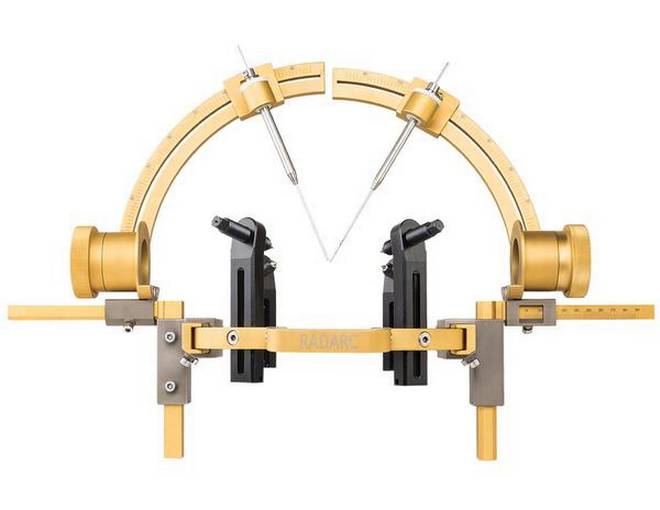
In brain surgeries, precision is everything — a shift of a few millimetres can make the difference between a successful surgery and putting a patient in coma. One device that improves the accuracy of neurosurgery is the stereotactic head frame, which provides a 3-dimensional coordinate system to help surgeons get the precise location of a nerve or tumour in the brain.

However, the device currently used is prohibitively expensive, costing between ₹75 lakh to ₹1 crore. A city-based doctor has designed a low-cost stereotactic frame which can be used to operate on both sides of the brain at a time, unlike conventional frames currently used in hospitals.

The frame designed by Murali Mohan, senior neurosurgeon with BRAINS Sparsh Hospitals, is made of medical grade titanium and costs one-third the current price. Engineers Sharath Bhat and Sadashiv Bhat of the Mahalasa Medical Technology, Bengaluru, developed the device.

Dr. Mohan’s inspiration was the late Balasubramaniam Ramamurthi, known as the father of Indian neurosurgery.

The frame which is CE marked (it conforms to European standards) and is pending patent, is currently being used by a doctors in around six to seven hospitals in Bengaluru and Hyderabad for biopsies and deep brain simulations.

source: http://www.thehindu.com / The Hindu / Home> Sci-Tech> Health / by Cynthia Anand / Bengaluru – May23rd, 2017

Bengaluru girl bags Diana Legacy Award

Nikhiya Shamsher, who won the Diana Legacy Award, with Prince William, Duke of Cambridge (R) and Prince Harry

Her crusade for better education , especially for under-privileged children, has won 14-year-old Nikhiya Shamsher from Bengaluru the Diana Legacy Award. The award was given away last week by Prince William, Duke of Cambridge and Prince Harry at the St Jame’s Palace, UK.

In December 2015, Nikhiya realized there are many children who do not have access to basic school supplies.Often entire classrooms of children share a single textbook, and many walk barefoot to school. While more children were attending school, she heard stories of bright young students dropping out because of poor educational foundation.

Yearn to Learn, the project spearheaded by Nikhiya, has, so far, set up 15 science laboratories which are benefiting 3,500 students from various schools. Nikhiya started her e-commerce website – http:www.knicnacs.com -to raise funds for her laboratory projects. Recently , she also funded the education of 25 blind children.

Inspired by Diana’s words -“Carry out a random act of kindness, with no expectation of reward, safe in the knowledge that one day someone might do the same for you” – the award, which marks 20 years since her death, recognizes young students who have socially impacted people through their actions. The award identified 20 winners as legacies of the princess.

Nikhiya was the only Indian among 20 winners rep resenting countries like the United Arab Emirates, UK, US, Canada, Belize, among others. This year, 12,000 social changemakers were nominated for the award. “The award has strengthened my believe in my project, giving me the confidence that I am doing the right thing,” said Nikhiya.”The benefit of this recognition is that a lot more people would now be interested and serious about the cause I’m working towards.”

Asked why she was so keen on bringing about a change in the education space, the teen said: “Because it is the single most important solution to all our issues.” Meeting the royal family was a unique experience for Nikhiya, who wasn’t quite expecting the award.

“The royal family was extremely encouraging and gave us the confidence that we were doing the right thing and keeping alive Princess Diana’s tradition,” she said, adding, “None of this would have been possible without the support of my parents and my school (Greenwood High).”

Her father Dr Shahid Shamsher, a trichologist, said: “We want her to follow the path she desires. She has this innate sense of responsibility and always keeps herself occupied and we know that she’ll go a long way.”

Added Niru Agarwal, trustee, Greenwood High: “At a tender age like hers, to think about the welfare and education of the downtrodden and selflessly work for it is noteworthy . She is a role model to her peers. Her qualities of kindness, compassion and service are truly admirable.”

In addition to the Diana Legacy Award, Nikhiya’s photo with information on her projects and services have been hosted at an exhibition at Althorp House, the final resting place of Princess Diana. Bengaluru

The Global Inclusion Award

Nikhiya was the sole winner from India at the Global Inclusion Awards, held in Berlin on May 3. She was chosen from among other contenders for the Global Winner of the Outstanding Youth Economic Citizenship Award 2017. The event was hosted by Germany’s G20 Presidency and Child and Youth Finance International, Germany.

source: http://www.timesofindia.indiatimes.com / The Times of India / News> City News> Bangalore News / by Deepika Burli / May 25th, 2017

Molecule discovery offers Ithope for Parkinson’s cure

Bengaluru :

City scientists have found a new molecule that can enhance the efficiency of the autophagy process in brain cells, that can significantly reduce their degeneration, which is the cause of diseases like Parkinson’s.

The scientists have initiated procedures to patent the process of discovery and the molecule itself -a potential drug -both of which have already been peer reviewed by international scientists.

Autophagy is our body’s housekeeping mechanism: a process where healthy cells clean up toxic proteins, preventing them from aggregating and killing the cells. While research on autophagy first emerged in the 1960s, a lot of serious work has happened in the past decade or so. In fact, the 2016 Nobel Prize for physiology or medicine went to Japan’s Yoshinori Ohsumi for his work in autophagy.

A major reason for diseases like Parkinson’s -which don’t have a cure yet -is aggregation of toxic proteins and inefficient autophagy or the complete lack of it, thereby resulting in the death of brain cells (neurodegeneration).

The new molecule, 6-Bio, discovered by scientists from the molecular biology and genetics unit (MBGU) at Jawaharlal Nehru Centre for Advanced Scientific Research (JNCASR), acts an autophagy modulator.”It (6-Bio) is capable of restoring autophagy and aid clearance of toxic protein aggregates, which otherwise form clumps and kill neu rons (brain cells),” said Ravi Manjithaya from MBGU.

Lead author of the paper S N Suresh

Unlike most other cells in the body, neurons aren’t easily replaceable, which means that once they are lost, they cannot be recovered. The research was led by Manjithaya and the lead author of the scientific paper was S N Suresh, a PhD student at MBGU under Manjithaya. Aravinda Chavalmane and Shashank Rai also contributed to the research.

What does 6-BIO do ?

The molecule enables neuroprotection by autophagy. It augments the efficiency of the autophagy process by enhancing the basal level (the speed at which autophagy happens). “Simply put, it quickens the process of cells taking bad proteins, which have formed clumps, to the cleanroom,” Manjithaya said. The research found a popular protein called GSK-3 Beta (a glycogen synthase protein) doesn’t allow autophagy to take place at a fast pace in brains cells affected by Parkinson’s and other similar diseases. “Our molecule removes this and quickens the process of autophagy,” he said.

Tests and publishing

The findings were published in Autophagy, a scientific journal edited by autophagy scientist Daniel J Klionsky.”Before sending them for peer review and publishing, we conducted tests in our lab, which were positive,” Manjithaya said.
Bad proteins which were found to cause neurodegenerative diseases were produced in yeast, which reacted in the same way as our brain cells. “The proteins began to form clumps and kill the yeast. We then introduced 6-Bio into the yeast and saw if it could prevent the death of the cells. It worked,” Manjithaya explained. A large part of Nobel laureate Ohsumi’s work on autophagy involved experiments on yeast.

Following this, the team tested 6-Bio on a mouse whose brain cells behaved like those of patients with Parkinson’s, and the results were positive again.

They teamed up with James Chelliah and Abhik Paul from JNCASR’s Chelliah Lab and Phalguni Alladi, Vidyadhara DJ and Yarreiphang Haorei from Nimhans. Researchers said the discovery is not a magical cure for Parkinson’s but a breakthrough that can help find a therapeutic solution.

source: http://www.timesofindia.indiatimes.com / The Times of India / News> City News> Bangalore News / Chethan Kumar / TNN / May 23rd, 2017

A women-only tour package unveiled

A selfie moment at Agumbe view point in Western Ghats of Karnataka. | Photo Credit: K. Murali Kumar

Karnataka Tourism’s maiden offer includes a tour of Mysuru and Kodagu

In what is being touted as the first of its kind by a State-run tourism corporation in the country, the Karnataka State Tourism Development Corporation (KSTDC) has decided to offer a ‘women’s special’ tour package.

The package, a three-day, two-night tour of Mysuru and Kodagu, promises to be a unique experience for women travellers.

Priced at ₹6,406 (for a 39-seater) and ₹4,596 (for a 31-seater bus), the package provides a bus for women, accommodation at KSTDC properties, and guides to help. “Our itinerary is such that women can enjoy nature, adventure, culture, architecture, and shopping. There is also a visit to a silk factory, and time to relax at coffee and spice plantations,” said an official. The package has been launched on a pilot basis.

Officials said they had received feedback and enquiries from potential travellers though the trip was yet to commence. The tour would become operational when a minimum of 35 passengers signed up.

Although rooms in KSTDC hotels were on a twin-sharing basis, single travellers could be accommodated in single rooms depending on the availability, the officials added. More destinations were likely to be added to the package based on the response to the Mysuru-Kodagu offer.

source: http://www.thehindu.com / The Hindu / Home> News> States> Karnataka / by K.C. Deepika / Bengaluru – May 22nd, 2017

Shooting for the stars

AstroPhotographyBF21may2017

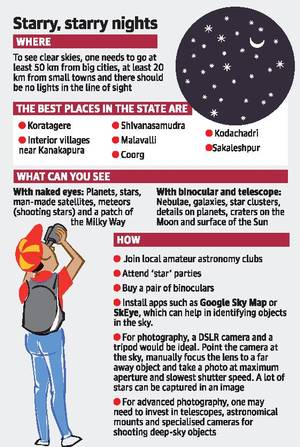
For amateur astronomers who are fascinated by stars, the sky is never the limit. They look beyond it, for galaxies, stars, satellites, meteors and more. While the city’s surrounding areas offer good opportunities for stargazers, of late Bengaluru has been seeing a rise in another kind of space enthusiasm — astrophotography.

Astrophotography is the art and science of photographing objects in space. While an amateur stargazer can only retell his experiences, these photographers capture them in pictures for all to see.

“Astrophotography is picking up fast. We have a Facebook group called Indian Amateur Astrophotographer that has over 3,600 members across India. Many of them are from the city,” says Keerthi Kiran M., a system engineer who is also a member of the Bangalore Astronomical Society (BAS), a Google group with over 3,000 members that promotes astronomy as a hobby.

BAS organises regular workshops on astrophotography and talks by experts. According to Mr. Kiran, many of the group’s members are now trying out astrophotography.

Subhankar Saha, who participated in one the workshops, took up astrophotography six years ago. “Having a basic knowledge in astronomy helped me. The best season for stargazing and astrophotography is between November and May. During this time, I try to head out and photograph deep-sky objects twice a month. I generally travel to Koratagere, near Tumakuru,” he says.

Deep-sky objects include faint objects in the sky such as nebulae and galaxies.

Though Mr. Saha has advanced equipment such as an astronomical mount, a modified DSLR, a specialised camera and three telescopes, he says a beginner can even start with a good mobile phone camera, or a DSLR, and a tripod to take stunning photographs of the night sky. With advanced equipment, one can shoot star trails, the Milky Way and even faint nebulae.

“The astrophotography community is quite vibrant today. A lot of new people are getting into the hobby,” he says.

B.S. Shylaja, director, Jawaharlal Nehru Planetarium, says many students who come for astronomy sessions to the planetarium get into astrophotography. “There is a lot of interest in the subject now.”

Partying with the stars

Karthik Subramanian, who has been an amateur astronomer for about seven years, has been accompanying his friends on regular ‘star parties’ — informal gatherings of amateur astronomers. “Last month, I went on an observing trip along with my friends. We were able to capture the Milky Way through Sagittarius and Scorpius on the camera. For me, the hobby is about appreciating the wonders of nature in the sky.”

Many members of the Association of Bangalore Amateur Astronomers are also astrophotographers. Chandrashekar G., who picked up the hobby 10 years ago, started with a DSLR. Today, he carries over 40 kg of equipment to remote places around Bengaluru to shoot stars and planets.

However, serious astrophotography requires a lot of expertise. “This kind of photography is very challenging. We are trying to photograph objects in the sky which are extremely faint. Autofocus and metering do not work. So, the photographer has to manually focus and set the shutter speed to photograph the night sky. Even then, it needs a very long shutter speed to capture enough light from these faint targets,” Mr. Kiran says.

Astrophotographers use techniques where they shoot many short-exposure images and then combine them to make one image which looks like a long-exposure one. There are a lot of do-it-yourself projects that people can try to track the stars, such as using the barn door tracker, which rotates the camera at the same rate as the Earth’s rotation. And just as light pollution affects the stargazing experience, astrophotography also needs a dark, dry place far away from lights.

It is also an expensive hobby, unlike stargazing, where many objects can be seen with just the naked eye or a simple telescope. “The stars move in the sky. So long exposure can result in streaks. One needs special equipment to track the stars. Normal photographic lens may not suffice for astrophotography. Extremely good quality lenses and telescopes are needed to take good photographs,” Mr. Kiran says.

Some equipment are not available in India and need to be imported. “One requires a lot of passion and a deep purse to pursue this hobby. But, once you get into it, it is very rewarding,” says Mr. Chandrashekar.

source: http://www.thehindu.com / The Hindu / Home> News> Cities> Bengaluru / by Sarumathi K / Bengaluru – May 20th, 2017

How to put a face to history

He had to be clad in white, and look calm and contemplative.

At most, he could hold a brush and a palm leaf manuscript.

That was the brief veteran art ist V T Kale got from the seer of a Chitradurga mutt who was commissioning a portrait of Basavanna, the 12th century poet-reformer. Kale’s research included a careful reading of history books and vachanas (pithy verses) to get the contours of Basavanna’s body and face right. But the challenge was bringing out Basavanna’s multiple identities -statesman of Bijjala, poet-philosopher, and social reformer? “It was difficult,” says the 83-year-old artist.

The painting, completed in 2005, remains one of the most popular images of Basavanna. So popular that when the state government recently decided to put it up along with portraits of Gandhi and Ambedkar in all offices, they initially didn’t bother crediting Kale. Images of public personalities from a bygone era seem to have a life of their own. And artists have a tough time capturing in bronze and acrylic the real and imagined features of Basavanna, Kempe Gowda I, Kittur Chennamma , Sangolli Rayanna and other personalities as envisaged by political parties and identity groups.

For one, there are no photographs to fall back on. “In the 12th century, people were not in the habit of making portraits of themselves. So, I had to imagine Basavanna’s character, his contribution to society and politics,” says Kale. He did at least 10 sketches before the mental picture became clear enough for him to start the painting. B C Shivakumar, whose Kempe Gowda busts and statues gaze down at Bengalureans from Lalbagh, VV Puram and Gavipuram, says the first one took him a year. “I studied the history of Kempe Gowda and the folk songs about him,” says the artist. The first one was commissioned by Kempegowda Nagar residents. At the Gavipuram signal, the city’s founder stands holding an unsheathed sword, one foot firmly on one foot firmly on a rock. By the time the next commission came from Vokkaligara Sangha in VV Puram, the local chieftain who is supposed to have carved out Bengaluru as his capital in 1537, was a swashbuckling figure on horseback.

These statues and portraits are not just about assert ing the identity politics of those who commission the works.

“They align public spaces with histori cal and mythical memories,” says Chandan Gowda, sociology professor at Azim Premji University .

But memories can be tricky. Delhi based sculptor Anil Ram Sutar, who is creating the mam moth Sardar Patel ‘Statue of Unity’ and the costly and controversy ridden Shivaji statue off the Mumbai coast with his father Ram Vanji Sutar, says such projects require a tough balancing act. Patel’s images are available but he had to be the `Iron Man’ when it came to the statue. Shivaji was tougher as he is perceived as a chivalrous king, riding a horse with a sword in hand.”People worship him for those qualities.Eventually, one has to bring to the sculpture what people believe about him and what has been painted until now,” says Sutar.

Public perception often is defined by popular culture. Vishal Kavatekar, an upcoming sculptor and guest faculty at Karnataka Chitrakala Parishath, remembers hearing a senior artist being asked to create the same costume worn by actor Rajkumar for a statue of 16th century emperor Krishnadevaraya. “Rajkumar and Vishnuvardhan have played many historical figures in their movies and people sometimes want to see a resemblance to the actors in the statues,” says Kavatekar.
Apart from looking at existing templates from descriptions in literature to historical movies, some artists take creative liberties. “They might make the skin complexion fairer or the body more sensual or muscular,” says Gowda.

There are times when historical inaccuracies are called out. There is an ongoing debate about how Kempe Gowda’s appearance has been slowly altered to suit changed sensibilities -from a figure with folded hands to one fiercely wielding a sword. Kavatekar says many complained that the founder’s statue in front of the BBMP office at Corporation Circle, one of the oldest in the city, suffers from a `Rajkumar look’ mainly due to the elaborate kurta-pyjama outfit.

Gowda says creative risks are fine but when the images are for public circulation, the motive of art shifts. Bengaluru-based artist N Shivadatta says he made 1,400 sculpture mementos of freedom fighter and queen Kittur Chennamma in a few days to be distributed at the Vishwa Kannada Sammelan in 2011. “The pressure to flatter and not offend the feelings of those from a particular community is very high,” he says.More so because these art works create a public image for a figure who may have just been a name.

Kale is non-committal about such controversies. But he insists that the artist has to study the character of the historical figure, and his life and times. “The artist should meditate on the subject and with sadhana (practice), art will get better,” he says.

source: http://www.timesofindia.indiatimes.com / The Times of India / News> City News> Bangalore News / by Sandhya Soman / TNN / May 21st, 2017

PIO doctor to open application of stem cell research in Nitte

Mangaluru :

UK-based orthopaedic surgeon, Dr Anand A  Shetty will start a clinical application of stem cell research in the city along with Nitte University. This will help in curing cancer and other related ailments.

Dr Shetty, who hails from Asode near Koteshwara in Udupi district, was honoured with the ‘Outstanding Clinical Excellence’ award by the UK’s House of Lords this year. Dr Shetty is winner of a host of awards including the prestigious Hunterian Surgical Medal and Hunterian Professorship for 2017 awarded by the Royal College of Surgeons of England for his research on stem cells in particular cartilage repair. Only four Indians have received this award so far.

A knee surgeon and director of stem cell research at Canterbury Christ Church University, Dr Shetty’s main interest lies in stem cell research, cartilage transplant, accelerated bone healing, and robotics in minimally invasive surgery.

In an exclusive tete-a-tete with TOI, Shetty spoke about his future plans for India especially the coastal city. “I began my research on stem cells around three decades ago when it was still in its very nascent stage. I got into cartilage and bone repair area. The biggest breakthrough was in 2000, where we did the first bone transplant surgery in the UK. To get such facility to India, with help of Nitte University, we set-up a multi crore facility in Deralakatte campus three years ago and a similar lab set-up in Hubballi for Dharmasthala hospital,” explained Dr Shetty.

He adds in the second phase his team wants go for cloning. “We want to clone high-milk yielding cow and pig for meat production. To start the process, we want to have clinical application in five years or by 2020 in Mangaluru,” he asserted.

Indian physicians, Dr Shetty says are most respected and trusted in the UK. If a British citizen has a health issue, he first tries to see an Indian doctor. “Racism did exist when I first entered the profession the 1980s. It changed in 1996 when the Labour government came to power,” he adds.

Apart from his surgical innovations, Dr Shetty is also the first surgeon to use robotics in arthroscopic knee surgery and gel-based cartilage repair surgery in the UK.

source: http://www.timesofindia.indiatimes.com / The Times of India / Home> News> City News> Mangalore News / by Kevin Mendonsa / TNN / May 20th, 2017