Aequs expects more business at its SEZ plant

Aerospace components manufacturer Aequs said it is sitting with an order book of $150 million over five year period and investment commitment of five more units at its SEZ facility in Belagavi.

Aequs chairman and chief executive Aravind Melligeri told Deccan Herald the company’s SEZ has 10 units operating. “We have 250 acres of land, of which 25 acres are for the SEZ. We have already made investment of $30 million to the facility,” said Melligeri.

Aequs established an aerospace industrial hub in 2009 at Belagavi. “We have developed 130,000 square metres of facility from the 65,000 square metres in the last two years. This year we are planning to add 120,000 square metres of property,” he said. The company has already developed 40 per cent of the SEZ land and 50 per cent of the land outside.

Aequs, which began its operations in 1997 as an engineering services company called QuEST Global Manufacturing based out of the US, entered into manufacturing of aerospace and defence components in 2006.

“We import 100 per cent of raw materials and 100 per cent of cutting materials. Even though we have a tie-up with HAL, we export 99 per cent of our products,” he said.

He said the company is into the automotive and oil and gas business. “These verticals help us in balancing the business cycle. Aerospace requires long gestation period in getting business returns. Oil and gas are short cycle, and auto medium cycle,” he said.

“Aerospace sector is a $80 billion-$100 billion industry globally and India is only touching at a few hundred million dollars right now,” said Melligeri.

Even though the high cost of capital, weak infrastructure and power support continue to be a challenge in India, the industry is gaining momentum with the growing skill sets of the country.

He said Aequs is the largest player in machining. “We can touch five per cent of the market in this segment. We are competing in a global scale and there is a cost advantage in India,” said Melligeri.

source: http://www.deccanherald.com / Deccan Herald / Home> Business / by N.V. Vijayakumar, Bengaluru / DHNS – February 21st, 2015

Lakshman Rau passes away

LakshmanRauBF24feb2015

Bangalore :

N. Lakshman Rau, former Administrator of the then Bangalore City Municipal Corporation and son of late N. Madhav Rau, former Dewan of Mysore, died here on Friday. He was 88 and is survived by his wife, Indira, and three daughters.

Family sources told The Hindu that Mr. Lakshman Rau had more or less maintained good health until the very end. In a way, he was the architect of new Bangalore, which has earned the sobriquet, “Garden City.” Mr. Lakshman Rau enjoyed good relations with several Chief Ministers, and he and his brother, the former Chief Secretary N. Narasimha Rau were quite popular both in the Government and the higher echelons of society. Trees were planted along many roads on the advice of Mr. Lakshman Rau to the then Chief Minister, late Ramakrishna Hegde. Mr. Rau was Home Secretary in the Devaraj Urs Government.

Mr. Rau, who developed all the 10 residential blocks of Jayanagar, did not own a house or even a housing site in Bangalore. He died at his daughter’s residence near Banaswadi. The two boulevards bisecting Jayanagar (South End Circle onwards) were developed by him. In recent years, the Government sought his services for preserving tanks and lakes in the city, and he prepared a report, “Lakes of Bangalore.” The Governor, T.N. Chaturvedi, in a condolence message, said: “Mr. Rau was an able administrator and a man of dynamic action.”

The Minister for Water Resources and Transport, M. Mallikarjun Kharge, and the Commissioner of the Bangalore Development Authority, M.N. Vidyashankar, have mourned Mr. Rau. The former Chief Secretary to the Government G.V.K. Rao and the former Chairman of the Bangalore Urban Arts Commission M.A. Parthasarathy visited his residence.

The cremation took place in the afternoon at the electric crematorium at Kalpalli.

source: http://www.thehindu.com / The Hindu / Home> Karnataka / by Special Correspondent / Online edition / Saturday – June 11th, 2005

D.A. Pandu dead

PanduBF24feb2015

Bangalore :

D.A. Pandu, 69, Chief Mentor of the Rashtreeya Sikshana Samithi Trust, which managed the R.V. Group of educational institutions, died here after a brief illness on Friday.

Born in Kolar on July 5, 1935, Mr. Pandu had his early education in R.V. School established by late M.C. Sivananda Sarma.

Mr. Sarma appointed him Assistant Secretary of the growing R.V. Group in 1964, and after the former’s death in 1969, Mr. Pandu became the Honorary Secretary. Since 2003, he was Chief Mentor of the educational institutions. Under Mr. Pandu’s visionary leadership and guidance, the R.V. Group has grown.

The State Government recognised his services by conferring on him the Karnataka Rajyotsava Award in 1995. The Bangalore Mahanagara Palike honoured him with the Kempe Gowda Award in 2002.

The Chief Minister, N. Dharam Singh, his Cabinet colleagues, and the Leader of the Opposition in the Legislative Council, D.H. Shankaramurthy, have mourned his death.

source: http://www.thehindu.com / The Hindu / Home> Karnataka / Online Edition / by Special Correspondent / Saturday – June 11th, 2005

Mysore Rail Museum expansion under way

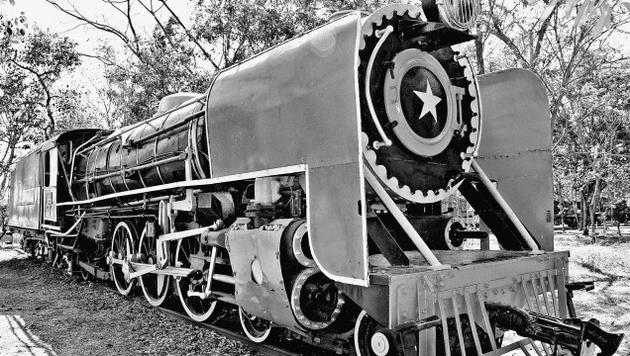
The rail museum in Mysuru is yet to become popular among tourists despite a collection of steam locomotives, rail wagons, and coaches.—Photos: M.A. Sriram

A sound-and-light show showcasing history of Railways is being planned

The rhythm of the steam locomotive conjuring up images of belching smoke and shifting tracks will come alive at the Mysore Rail Museum, which is poised for expansion.

The authorities are planning a sound-and-light programme complete with the history of the railways as part of the renovation plan.

“We have Rs. 1 crore with us while the cost of expansion is around Rs. 4.62 crore. We are awaiting the release of additional funds to take up the project, which has already been approved by the Railways,” said Rajkumar Lal, Divisional Railway Manager, Mysuru.

Rajkumar Lal,Divisional Railway Manager, Mysuru

But, expansion work has already begun in the earnest. A wooden metre gauge vintage wagon from Banapur (Hospet) of Hubballi Division has been shifted to the Mysore Rail Museum. The central workshop staff here have rebuilt and provided an under gear for the wagon,” Mr. Lal said.

In addition, two wagons of a rail bus, which was operating on the Shivamogga –Talaguppa route, have been added and so has a diesel locomotive.

A senior engineer involved with the project said they have already acquired heritage furniture from different divisions and they are being repaired for display at the museum. A steam-operated crane will be procured from Bhusaval in Maharashtra and narrow gauge coaches from Nagpur, he said.

RailBF24feb2015

Our vision is to make it a star attraction for tourists visiting Mysuru. The Additional Secretary, Tourism, Government of Karnataka, has evinced keen interest in the development of the museum and has promised aid, the official said.

In what maybe the first of its kind in the country, a touchscreen device providing comprehensive details of the Railways, the divisions, locomotives, trains, rolling stock etc. will be kept at the museum, he added.

source: http://www.thehindu.com / The Hindu / Home> News> National> Karnataka / by R. Krishna Kumar / Mysuru – February 01st, 2015


Gallery blended in heritage structure

National Gallery of Modern Art celebrates its 6th anniversary on February 18

Manikyavelu Mansion on Palace Road, Bengaluru, houses the National Gallery of Modern Art. File Photo: V. Sreenivasa Murthy

Until June 2001 when the foundation stone for NGMA was laid, the Manikyavelu Mansion on Palace Road was a verdant 3.5-acre campus with a stunning but crumbling colonial-style mansion.

“It is to the credit of Ministers, activists and officials, including Ananth Kumar, Maneka Gandhi, K.N. Srivastava and Chiranjeev Singh, that the building was restored for housing the National Gallery of Modern Art (NGMA), which is celebrating its 6th anniversary on February 18,” says architect Naresh Narasimhan who redesigned Manikyavelu Mansion. “Today, the NGMA stands as the premier cultural institution of Bengaluru and the gallery demonstrates how a heritage structure can be adaptively reused for public spaces that throb with international art and culture exhibitions.”

Mr. Narasimhan, who has also had a hand in the restoration of Metropole in Mysuru and the Maharaja’s Hotel in Brindavan Gardens, is of the view that city planners should see an ‘opportunity’ to conserve and restore heritage spaces rather than treat them as a ‘burden’.

Manikyavelu Mansion on Palace Road, Bengaluru, houses the National Gallery of Modern Art. File Photo: Bhagya Prakash K.

“It was an interesting experience to take up the over 90-year-old Manikyavelu Mansion, once the property of the Mysuru royal family,” he says. It later came to be owned by Raja Manikyavelu Mudaliar, a mine owner. It was taken over by the State government in the late sixties and handed over to the Ministry of Culture for constructing an art museum. NGMA was formally inaugurated in 2009.

The historic heritage mansion, transformed from a residence into a museum gallery at a cost of Rs. 8 crore, has been further supplemented by a Gallery Block. A 1,260-square metre extension has been added to the 1,500-square metre of the mansion, making it the best example of a surviving bungalow.

“The new design blends with spaces required for a modern museum, and coexists with the ambience of a traditional mansion,” says Mr. Narasimhan, adding that the first floor has the capacity to hold sculptures weighing up to five tonnes.

The NGMA includes a smartened up auditorium, open-air theatre, reference library, offices and art storage area, a cafeteria, and a museum shop-cum-facilitations block.

Minimalist design

Architect Sathya Prakash Varanashi of INTACH says the new NGMA building fits perfectly with the endearing old mansion in a balanced way. “With the central open space swaying with trees amidst the stone seating and water bodies, the minimalist design brings in a subdued non-dominant character required for public spaces. The external façade is skilfully retained to bring in a sense of déjà vu, which is all about adaptive re-use in conservation architecture,” he says.

Activities for art lovers

NGMA is conducting activities for art lovers on its premises on February 18 from 10.30 a.m. to 5p.m. Contact ngma.bengaluru@gmail.com

Other restored beauties

RBANM's Educational Charities building in Ulsoor. Photo: Sampath Kumar G.P.
RBANM’s Educational Charities building in Ulsoor. Photo: Sampath Kumar G.P.

RBANM’s school building in Ulsoor

Fab India building in Koramangala that retains original character of architect Charles Correa’s house

Basava Ambara near Krishna Rao Park in Basavanagudi. Photo: Bhagya Prakash K.

Basava Ambara in Basavanagudi that maintains the splendour of the original bungalow

source: http://www.thehindu.com / The Hindu / Home> News> Cities> Bengaluru / by Ranjani Govind / Bengaluru – February 15th, 2015

A Parichay with Avenue Rd’s heritage

Bengaluru:

Avenue Road may be known as the city’s wholesale trading and business hub but it’s more than that. Not all would know that the thoroughfare is probably as old as Bengaluru. Come Sunday, a group of 25 enthusiasts will take a stroll down the iconic road to discover its history.

Organized by the Bengaluru chapter of Intach, the Parichay walk aims to familiarize citizens with historical monuments and heritage sites along the road, that have survived the depredations of time. Rice Memorial Church, Rangaswamy temple, Maramma temple and the old post office are some of the structures that dot the road, which has been the city’s lifeline since its birth over 500 years ago.

The monuments are lost in the hustle and bustle of the area. “Parichay will highlight the importance of the heritage sites, when were they built and by whom, and how they should be preserved for posterity as well as for tourists,” C Aravind, chapter coordinator, told TOI.

The organizers have conducted 60-65 such walks in areas like Gavipuram, Fraser Town and Shivajinagar. “We want to make locals proud of their area and take an active interest in protecting it,” said Aravind.

Endorsing Aravind’s view, SK Aruni, deputy director, Indian Council for Historical Research (ICHR), said Avenue Road is perhaps as old as the city itself. “The aim of the walk is to explain how the city originated and trace its history through Avenue Road. Though citizens today may pass by a number of monuments, they are hardly aware of their importance,” he said.

What: Avenue Road Parichay. When: Sunday. Where: From State Bank of Mysore, K G Road, to Tipu Palace in Chamarajpet covering the Fort. The walk will begin early morning and may take around 3 hours to cover the distance of nearly 2 km.

One road, many names

SK Aruni, who will lead the guided tour giving the participants a peek into the monuments’ history, said Avenue Road is a modern name for the thoroughfare. “I think it was called Chandra Beedi or Surya Beedi or even Dodda Beedi, because of its vastness. It must have been renamed Avenue Road later as it was lined with massive trees on either side,” said Aruni. The road was also called Raja Beedi as it served as a main entrance to the city and important personalities came to Bengaluru via the road, he added.

source: http://www.timesofindia.indiatimes.com / The Times of India / Home> City> Bengaluru / by GS Kumar / February 12th, 2015

Marching first on R-Day

The SARS platoon of Carmel School, Padmanabhanagar, won the first place in Group IV, for march past at the Republic Day Parade at Manekshaw Parade Grounds this year. Himagowri, platoon leader, received the prize. High school principal Ganapathy Rao said, “We’re proud of our physical education instructors, who trained students in a short time. Our sc hool gives importance to co-curricular activities and academics, which culminates in awards!”

Kalam on confidence 

“I will fly! I will fly! I am confident I will fly!” This was the mantra former President A P J Abdul Kalam taught children assembled for the Annual Day celebrations at United International School, Kannur, on January 19, 2015.

Children and parents were spell-bound as chief guest Kalam spoke on the topic “I have confidence, I will fly”. He encouraged them to nurture a positive attitude, dream big and work to make it happen. He also spoke on how to make a happy home and challenged kids to make their mothers happy, adding that only then will society and the country be happy.

He answered questions of the motivated children, offered to answer more questions over email and posed for photographs with students and teachers. He presented the school library a set of his books, with his autograph.

The school presented him a beautiful painting by a student Jebastin. Earlier, he was received by founder-chairman John Peter Kirubagaran, principal Chithra Mony and admini strator Rajini Alexander and was escorted by the school band.The principal highlighted activities of the year. Students from neighbouring schools also participated .

Dance and drama 

SG International Public School celebrated its 24th Annual Day on January 7. The school staged two spectacular shows. Ekta (Jack and the Bean Stalk) by the juniors included resplendent dance forms from various states of India. A dance drama Navarasa by seniors was a potpourri of legends from Hindu mythology. The participants, benefactors and choreographer received an ecstatic ovation.

The chief guest for Ekta was singer LN Shastri. Renowned playback singer and actor Rajesh Krishnan was the chief guest for Nava rasa. He also enthralled the audience with a song from the new movie Melody.

Earlier, academic advisor Anuradha Ramesh welcomed the gathering. Principal Varsh Jaideep presented the annual report. The chief guests and dignitaries were honoured by chairman Palanetra and secretary Sunandha.

source: http://www.timesofindia.indiatimes.com / The Times of India / Home> City> Bengaluru / TNN / February 23rd, 2015

A Museum That is a Repository of the Past

Bengaluru :

Is it enough to preserve the past or do we also need to maintain its particularities with informed respect?

museum01bf24feb2015

Architect and restoration expert H C Thimmaiah, who is part of The Indian National Trust for Art and Cultural Heritage (INTACH) in Bengaluru says, “It is heartening that we are at least talking about Bengaluru’s heritage but we must be careful with how we maintain it. The Government Museum is a beautiful building. The brick red colour of such classical buildings must not be tampered with. The museum has very specific features right from the details on its pillars to its windows that have been maintained well but all old structures require an understanding of historical and architectural context. And sensitivity towards just how they must be painted, how the flooring, ceilings, the facade must be treated.”

Restore with sensitivity

As the debate about the need to retain and maintain heritage structures in Bengaluru warms up, we are told by a source that The Bowring Institute was considering a facelift sometime back. Thankfully, the plan to replace the original flooring with marble was met with some resistance within the circle of influential members who asked for Attangudi tiles or something more contextual considering it is hard today to reproduce the classic mosaic from the past.

museum02bf24feb2015

Thimmaiah, who built a house in Kodagu with upcycled elements taken from destroyed old homes, is passionate about authenticity and recalls, “A few years ago when Bangalore Club was being repainted, a paint manufacturer scratched the walls to take a sample of the signature greyish blue paint and recreated it for a fresh coat. He later told me that the paint colour would be called Bangalore Club Blue from now on.”

Prominent buildings like the Bangalore Club and the Government Museum may be better off but the architect wishes that INTACH was more active in the city for the sake of other structures. After the death of convener H R Pratibha, INTACH has been keeping a low profile. He says, “Today, bodies like INTACH and The Archeological Survey of India (ASI) must come together to guard even the lesser known aspects of our heritage and not just the showpieces. In Bengaluru, you won’t find even a single space like Mumbai’s Dadabhai Naoroji Road.”

Are private spaces not our heritage?

Architect and urban planner Dyan Belliappa is happy that the city is looking with fresh appreciation at buildings like the Government Museum and says, “The interest in Bengaluru’s public buildings post the Balabrooie Guest House debate is welcome but the city also has a built heritage of private structures some of which were a lot older than the Guest House and have been demolished with nobody even coming to know about them. While we will probably continue to revere a Vidhan Soudha, there are private structures in the Ulsoor area, around Majestic which are going with not one voice raised in protest.”

To the right of the new Airport Road, he shares, there was a fantastic old structure built with stone masonry. He says, “That kind of stone masonry will be hard to find or duplicate and yet it was destroyed. In Begur, there is a temple linked to a lake. The temple may outlast change but will the lake be treated as part of our heritage too? Even the Malleswaram Market is a heritage sprawl but will BBMP treat it as such? One building or two or just a few are not our heritage. Our lakes were our heritage too but they were just treated as water bodies and so many are gone, as are our trees.”

He adds, “Mumbai has a structured approach towards the preservation of   spaces. Some private buildings cannot be touched. Others can be modified but with sensitivity. The fact that an independent body like the Bangalore Urban Art Commission was dissolved in 2001 says a lot. Today the BMMP reflects what we value in our city but our heritage was our way of life. How does one codify that or our memories? How does one resist the haste to acquire and sell land and knock off structures because they get in the way of ‘urban development’? Our priorities are misplaced and we need to rethink the meaning of heritage.”

Contextualise the past

Organic architect professor A R Jaisim has the last word, “The Bengaluru Museum is a beautiful building. Attara Kacheri has been beautifully preserved too. Our city’s present must make space for its past because if the past is erased, we  will have no memories. Heritage must be contexualised and included in the present because without it, we have no stories to pass on to the next generation.”

Trivia

The Government Museum on Kasturba Road is a reminder of Bengaluru’s colonial heritage. In 1851, after the Madras Government Museum was established, Bengaluru got its own museum in 1865 and is today, the second oldest in South India. E G Balfour, a medical officer of the Madras Army, came to Bengaluru in the 1860s and with his support, the Chief Commissioner of Mysore State, L B Bowring established the Government Museum or the Mysore Government Museum on August 18, 1865. The museum was originally housed at the Cantonment’s jail building but then a site in Cubbon Park was selected. Col R S Sankey, the Chief Engineer of Mysore planned and built the museum in 1878.

Fun facts: The museum was once known as ‘Thamashe Bungalow’. On Mondays, women in purdah visited the museum and men were not allowed.

Collections: The museum has two exhibition floors which are divided into 18 galleries covering sculpture, natural history, geology, art, music and numismatics. It has a collection of archaeological, geological artefacts and artefacts belonging to the Neolithic period.

Timings: 10 am to 5 pm (except on Wednesday when it is closed)

source: http://www.newindianexpress.com / The New Indian Express / Home> Cities> Bengaluru / by Reema Moudgil / November 03rd, 2014
Organic agriculture tablet concept attracts farmers in summit

Belagavi :

The stall of organic agriculture tablets developed for the crops as a tonic by the Bengaluru based High Tech Agri Services is something innovative concept that pulling the farmers at the ‘Agrovision South’, South India’s largest agriculture and industry summit in Belagavi.

“Generally we use tablets on the doctors’ prescription when we fell sick or feel unhealthy. The same is the concept behind organic tablets,” said Nagaraj Hegde, founder of the High Tech Agri Services, speaking to the TOI.

Agriculture tablet is the formulation of growth tonic and booster, which helps plants to become more healthier and to get higher yield. These tablets can be applied directly in soil, through drip irrigation or even by foliar spray by diluting the tablet in water.

According to Hegde, organic tablets are very advantageous to plants to fight against biotic and abiotic stress. It increases the assimilation of nutrients and boost up growth besides build immunity against diseases. More advantages of tablets are these are safe to handle and no hassle of measurement.

Hegde told that company sells these tablets at various countries including Dubai, Thailand, Chilli, Vietnam, Myanmar, Malaysia apart from India. Company also has products for the plants for disease management, insect management, soil conditioning and nutrition management.

source: http://www.timesofindia.indiatimes.com / The Times of India / Home> City> Bengaluru / TNN / February 21st, 2015

Competition key cog in entrepreneurship wheel: NRN

Hubballi :

Infosys mentor NR Narayana Murthy on Saturday highlighted the role of competition in corporate entrepreneurship in sparking enthusiasm.

At a panel discussion, titled ‘Scaling by Proving’, at Development Dialogue-2015 here on Saturday, Murthy said such competition will help the sector scale newer heights. “At Infosys, we have a clear policy of disseminating innovations.”

In a lighter vein, he let out a trade secret: that entrepreneurs claim to crave competition, but in private, detest any such practice.

Madhu Pandita Dasa, head of Akshaya Patra Foundation, pointed out that the organization currently has no competitor, but dissemination of knowledge and encouragement will help others join the sector of social entrepreneurship. “Being a non-profit set-up, we are ready to pass on our functioning model.” He said stakeholders in the sector aim at minimizing expenses rather than focusing on profits.

Jeffrey L Bradach, co-founder of The Bridgespan Group, said experimentation, innovation and working in sequence will lead to success. “Support from the information technology sector can give a boost to social entrepreneurship.”

Murthy explained that social entrepreneurs works in% areas where the market is not yet developed, while corporate entrepreneurs function where there is flow of capital. “But, there is a need to focus more %on efficiency and communication among social entrepreneurs as compared to corporate entrepreneurs.” The discussion also focused on career opportunities in social entrepreneurship.

Kasturi Rangan of Harvard Business School, USA, moderated the session.

source: http://www.timesofindia.indiatimes.com / The Times of India / Home> City> Hubballi / TNN / February 08th, 2015