Pages from History : Why Mandyam Iyengars do not observe Deepavali ?

MandyamIyengarsBF05dec2014

by Prof. A.V. Narasimha Murthy, former Head, Department of Ancient History & Archaeology, University of Mysore

Recently I received an email from Janaki Krishnamurthy through N. Ramanuja. Actually, she had forwarded a note on the Mandyam Iyengars. Janaki is known to Mysoreans at Gokulam by the famous Andal Mandiram of which she is the Trustee and practically its sustainer. She is also connected with Lakshmi Venkataramanaswamy temple at Vontikoppal and there also she is active in socio-religious fields.

In fact, I first met her some years ago when Mathoorji’s discourses were being held at this temple. She was taking a prominent part in making it a great success by giving enough publicity and making excellent arrangements. Thus she is a good leader and organiser.

Now, let me come back to the note regarding the Mandyam Iyengars. They belong to a group of the Iyengar community which has a history going back to the times of Sri Ramanujacharya who is said to have converted Hoysala king Bittideva from Jainism to Vishnuvardhana of Vaishnavism. Melkote or Melukote became a stronghold of Mandyam Iyengars who belonged to Bharadwaja Gotra. They lived happily by performing vedic rituals and worship in temples. It is said, they migrated in a group to Melkote. They all belonged to Thangalai group of Iyengar sect. They spoke Tamil in addition to Kannada.

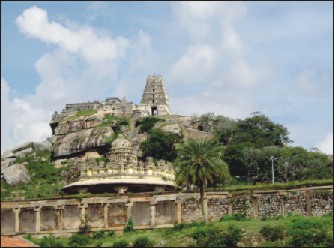
It is desirable to know something about this place Melkote. Situated in Pandavapura taluk, Melkote is famous as one of the four places: the remaining three being Sriranga, Tirupati and Kanchipuram. Melkote has antiquity going back to mythological times wherein it was referred to as Narayanadri, Vedadri, Yadavadri etc. During the Treta Yuga, Lord Dattatreya performed vedic discourses and it became famous as Vedadri. In Dwapara Yuga, Sri Krishna lived here and hence it became famous as Yadavadri and in the Kali Yuga it became famous by the consecration of Vishnu temples. In inscriptions it is referred to as Thirunarayanapura and Vaikuntavardhana Kshetra. While writing these sentences, my mind went to almost a decade back.

Vidya Bhavan’s Chairman Justice E.S. Venkataramaiah, who belonged to this place Tonnur, used to take lot of interest in the development of this area and I went for the first time to Tonnur and Melkote in his company and got a VIP treatment. During his life-time he used to arrange a lunch for the whole village along with special guests and I had the good fortune of being a participant twice in these lunches. I have another reason to be grateful to him. It was he who appointed me as the Chief Editor of the publication of 25 volumes of History and Culture of the Indian People in Kannada which is hailed as an important landmark among the Indian History series, originally edited by Kulapathi K.M Munshi. This runs into 15 thousand pages. Venkataramaiah is the first Chief Justice from Karnataka to adorn that coveted position. Thus he made Karnataka proud.

The seeds of Melkote are found in antiquity. According to history, the Cholas were the rulers of Tamil Nadu and were champions of Saivism. They were not well disposed towards Ramanujacharya who propagated Vaishnavism. Fearing for life, Ramanujacharya is said to have left Tamil Nadu and came to Karnataka. First he came to Tonnur or Tondanur where some disciples joined him. Subsequently, he went to Melkote. It is believed that he stayed at Melkote for twelve years. The Cheluvanarayana Temple is the most important temple here. It is a huge temple with an enclosure of 290 feet with many Mantapas. The Navaranga in front of the garbhagriha has three entrances. It also has a shrine for Ramanujacharya and the image therein is said to have been consecrated by his disciples when Ramanujacharya left for Srirangam. It is of importance to note that rituals and worship are done here as per the regulations and rules as promulgated by Ramanujacharya himself.

During the 14th Century, Melkote suffered an attack by the Muslims. However, during the Vijayanagara period, Thimmanna Dandanayaka repaired and rebuilt temples. The story of Baby Nacchiyar is very interesting. The processional image of Cheluvapillai (Narayana) was in the possession of Delhi Sultan’s daughter. Ramanujacharya, on learning about this, went to Delhi and brought back that image. Unable to bear this separation, Sultan’s daughter also came to Melkote and finally merged in God Narayana. This traditional account is not supported by facts of history. In connection with this event, even now a day is reserved for Delhi Utsava (Delhi festival).

God Cheluvanarayana continued to be important during the later periods also. The kings of Vijayanagara patronised this temple and gave many grants to it. Mysore Wadiyars were great devotees of this God. Raja Wadiyar was a great patron and donated lands and jewels. Ornaments Rajamudi and Krishnamudi are very famous. Tipu Sultan also gave many grants. Shamaiah Iyengar allied himself with dowager queen Lakshmammanni and secretly corresponded with the British. Tirumala Iyengar also helped the British. Finding two Iyengars against him, Tipu thought of destroying the Iyengars who were living in Melkote. The day he selected for this was Naraka Chaturdashi. When all Mandyam Iyengars were immersed in Deepavali celebrations, Tipu’s men entered Melkote and massacred at least 800 persons. The survivors abandoned Melkote and ran away and the town became a ghost town. Friends and relatives of Tirumala Iyengar were killed in cold blood. Thus Naraka Chaturdashi became a day of Sraddha or death ceremony.

As it happened on a Deepavali day, the day is considered as mourning day in almost all the houses. That is why the Mandyam Iyengars of Melkote do not celebrate Deepavali. This practice continues even to this day.

As one historian aptly remarked, most historians write that Tipu killed a tiger though they never saw it, but do not write about the massacre of Mandyam Iyengars though they have seen it or heard of it from authentic sources. Just for information, one of the most important Mandyam Iyengars today is the former Chief Minister of Tamil Nadu J. Jayalalithaa.

source: http://www.starofmysore.com / Star of Mysore / Home>  Feature Articles  /  Saturday , November 29th, 2014

Rotary Olympics – 2014 begins in city

 Participants playing carom at Sports Pavilion Indoor Stadium of University of Mysore in city this morning
Participants playing carom at Sports Pavilion Indoor Stadium of University of Mysore in city this morning

Mysuru :

Over 700 participants from nearly 50 Rotary Clubs of different parts of Karnataka, including Kundapura, Udupi, Mangaluru, Puttur, Madikeri, Mysuru, Hassan, Chikmagalur, Shivamogga, Chamarajanagar and other places are taking part in the two-day Rotary Olympics-2014 — a sports event for Rotarians and their families — that began in city this morning.

The event was declared open by Rtn. Dr. S. Bhaskar, District Governor, RI Dist. 3180, Rtn. M.S. Jayaprakash, Assistant Governor, Zone-7 and RI Dist. 3180 by playing shuttle badminton at the Indoor Stadium of Sports Pavilion of the University of Mysore. The event is being held under the Chairmanship of Rtn. A.R. Ravindra Bhat of Rotary Central Mysore.

Rtn. N.P. Vishwanath, President, Rotary Central Mysuru, in his welcome address, said that the Rotary Club will be celebrating it’s 1000th club meeting this evening and added that the Rotary Olympics-2014 has been organised to increase fellowships by attracting more people to join the Rotary Club.

Rotary Olympics-2014 features Cricket, Tennis, Volleyball, Mini Football, Tug of War, Throwball, Shuttle Badminton Singles, Shuttle Badminton Doubles, Table Tennis Singles, Table Tennis Doubles, Carrom Singles, Carrom Doubles, Chess, 100m Sprint, 50m Sprint, 200 metres Sprint, 400m Run, 4x100m Relay, 4x50m Relay, Shot-put, Swimming and Slow Cycle Race.

City’s Cricket Coach Ramesh will be the Chief Referee to lead a team of 50 officials who will be referees of various sports events.

Cricket is being played at three venues — Railway Ground, Coffee Board Ground and JK Grounds. Swimming competition will be held at University Swimming Pool in Saraswathipuram and Track & Field events at Oval Grounds. A walking competition has also been arranged for people above 55 years.

Events for Children: The events for Annettes (Children of Rotarians) include 100m sprint, shot-put, lemon and spoon race, cricket ball throw, fun games and swimming, will be held tomorrow.

Rotary Olympics-2014 Organising Committee Secretary Rtn. Vinod and Organising Committee Chairman Rtn. Vivek Attavar were present.

Track & Field events: The track and field events will be formally inaugurated by Rtn. Dr. S. Bhaskar, District Governor, RI Dist. 3180 tomorrow at Oval Grounds. R. Ananth, former Ranji Cricket Player of Karnataka and Rtn. M.S. Jayaprakash, Assistant Governor, Zone-7, RI Dist. 3180, will be the guests of honour. There will also be a march-past by all the participant clubs after which, athletes would formally take an oath. Valedictory of the event will be held at the venue tomorrow at 4 pm.

source: http://www.starofmysore.com / Star of Mysore / Home>  General  News  /  Saturday , November 29th, 2014
Litterateur CPK releases two books

Litterateur Dr. C.P. Krishnakumar (fourth from left) is seen releasing the books ‘Kacha Sanjeevini’ and ‘O Manuja’ authored by Dr. Malali Vasanthkumar (third from right) and Dr. Leela Prakash (second from right) respectively at an event held in Ramakrishna Ashram in city recently. Also seen are (from left) Prof. K. Bhyravamurthy, Dr. Kabbinale Vasanth Bharadwaj, Dr. G. S. Bhat, Swami Muktidanandaji of Ramakrishna Ashram, Prof. Dejagow and Dr. D. Thimmaiah.

Mysuru :

Litterateur C.P. Krishnakumar (CPK) released two books ‘Kacha Sanjeevini’ by Dr. Malali Vasanthkumar and ‘O Manuja’ authored by Dr. K. Leela Prakash at a function organised jointly by Vidyuth Prakashana and Karnataka Vichara Vedike at Ramakrishna Ashram auditorium in city recently.

The function, which was held in the presence of Swami Muktidanandaji, President, Ramakrishna Ashram, Mysuru branch, was presided by former Mysore University VC and litterateur Prof. Dejagow.

Yakshagana artiste G.S. Bhat and Dasti Education Trust President Dr. D. Thimmaiah were the chief guests.

Litterateur Dr. Kabbinale Vasanth Bharadwaj spoke about ‘Kacha Sanjeevini’ while writer Prof. K. Bhyravamurthy spoke about ‘O Manuja’

source: http://www.starofmysore.com / Star of Mysore / Home>  General  News  /  Saturday , November 29th, 2014
Natl. Seminar on Tribal Education begins at CIIL

Prof. T.T. Basavanagouda, Director, Karnataka State Tribal Research Institute, Mysuru, is seen addressing the gathering. S. Prathibha, Research Officer, Karnataka State Tribal Research Institute, Mysuru, Kumuda. B. Susheelappa, AEE and Writer, 110 KV Sub Station, Jog Sagara Taluk, Shivamogga district and Prof. C. G. Hussain Khan, Retired Professor, Dept. of Anthropology, Karnatak University, Dharwad are seen on the dias. Picture right shows a section of participants.

Mysuru :

A two-day National Seminar on ‘Tribal Education in India – A Special Focus on 50 Scheduled Tribe Communities in Karnataka’ organised by Karnataka State Tribal Research Institute, Mysuru began at Central Institute of Indian Languages (CIIL) on Hunsur Road in city this morning.

The major theme of the workshop is ‘Socio-Economic and educational aspects of Scheduled Tribes in Karnataka.’ The seminar is being attended by Students, Research Scholars, Lecturers and Professors of Departments of Ancient History and Departments of Anthropology of various Universities.

The programme was inaugurated by Kumuda. B. Susheelappa, Assistant Executive Engineer and Writer, 110 KV Sub Station, Jog Sagara Taluk, Shivamogga district.

Kumuda, in her inaugural address said “Nowadays, most of the youth in India are following Western culture which is not a good sign. We should respect and follow our Indian culture rather than following the culture of Western countries.”

Prof. T.T. Basavanagouda, Director, Karnataka State Tribal Research Institute, Mysuru who presided over the function said, “There are 43 lakh tribal people in Karnataka, out of which 20 lakh tribals stay in forests.” He regretted that these tribal people are illiterate and uneducated. “There are various schemes and funds available from Central and State Governments for the welfare of Tribal people. But awareness has to be created among the tribal people to utilise these funds,” he added.

Prof. C. G. Hussain Khan, Retired Professor, Department of Anthropology, Karnatak University, Dharwad, in his keynote address said “Karnataka has 4.1% of the country’s scheduled tribes.” He regretted that most of the tribal children are malnourished. He also spoke about female foeticide and urged the government to take strict action against those who indulge in female foeticide. “Education is the most important social input for the economic development of any society. But low educational status of tribal community adversely affects the socio-economic condition of tribal people.” he added.

Valedictory function

The valedictory function will be held tomorrow at 4 pm at the same venue. Prof. T.T. Basavanagouda will preside and Prof. C. Basavaraju, Registrar, UoM will deliver valedictory address.

source: http://www.starofmysore.com / Star of Mysore / Home>  General  News  /  Friday , November 28th, 2014

Karnataka Yakshagana Academy Award for G.S. BHAT

BhatBF04dec2014

Bengaluru :

Renowned yakshagana artiste from Mysuru G.S. Bhat is among the three personalities who have been conferred Karnataka Yakshagana Academy’s Parthisubba Award-2014.

The award carries a cash prize of Rs. 1 lakh and a citation.

Announcing the awards at a press meet here yesterday, Academy Chairman Belagallu Veeranna said the Parthisubba award-2012 goes to Dr. Seemanthuru Narayana Shetty (Yakshagana) of Mangaluru while M.R. Ranganatha Rao (Sootrada Salike Gombe) of Bengaluru gets the award for 2013.

Veeranna also said that 20 persons, including Nelegeri Thimmappa Achar of Mandya and Sathyappa of Hassan have been selected for the annual (2013-2014) award.

The annual award carries a purse of Rs. 10,000 and a citation.

Speaking to SOM after the announcement of the award, G.S. Bhat said he felt very delighted on being selected.

Profile of G.S. Bhat: Parthisubba awardee Bhat has made exemplary contribution to the field of Yakshagana and Bayalata for over 40 years. Born to Subbaraya Bhat and Saraswathi couple at Sirsi in Uttar Kannada district on May 6, 1943, Bhat secured his post-graduate degree in history from Karnatak University, Dharwad.

Inspired by litterateur Prof. Dejagow, he joined the Humanities Department of the University of Mysore in 1969, as the editor of encyclopaedia.

He is credited for bringing out 14 volumes of the encyclopaedia in his 33-year stint with the University.

Even after retirement, Bhat continued with his work on Kannada encyclopaedia. He has 75 Kannada works to his credit including many on Yakshagana and Bayalata. He has also served as the editor of the Quarterly brought out by KSOU. He was also involved in folklore works brought out by Hampi Kannada University.

He chaired the 9th Akhila Bharat Yakshagana and Bayalata Sammelana that took place in Mysuru.

Bhat resides in T.K. Layout, Mysuru, with his wife Tilottamma. He has two children Anitha and Dr. Rajeev Bhat.

Dr. Rajeev Bhat is a teaching faculty at Penang University, Malaysia.

source: http://www.starofmysore.com / Star of Mysore / Home>  General  News  /  Friday , November 28th, 2014

Indian scientists find key to PTSD

Bengaluru-based researchers have found that a tiny almond shaped region in the brain is responsible for post-traumatic stress disorder, a discovery that could lead to a potential cure

Post-Traumatic Stress Disorder (PTSD), a condition of persistent mental and emotional stress occurring as a result of injury or severe psychological shock, typically involving disturbance of sleep and constant vivid recall of the experience, with dulled responses to others and to the outside world.

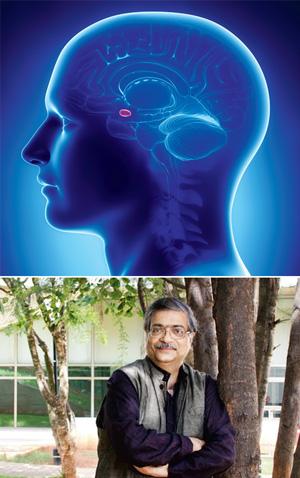
For the first time in the history of neuroscience, two scientists from National Centre for Biological Sciences (NCBS) in Bengaluru have conducted a detailed study on why and how one suffers from PTSD. They have pinpointed precise roles played by certain neurons in the part of the brain called amygdala, an almond-shaped structure located deep inside the brain, which acts as the centre that controls emotions and stores memories of fearful experiences.

Top: An illustration showing the location of the amygdala in the human brain/  Below: Sumantra Chattarji lead author of the Nature Neuroscience study
Top: An illustration showing the location of the amygdala in the human brain/
Below: Sumantra Chattarji lead author of the Nature Neuroscience study

In doing so, they have unraveled the so-far mysterious reasons behind the fear and precisely how that fear develops to make way for PTSD. The research, which appeared on Nature Neuroscience Web site, has paved the way for scientists the world over to study ways to reverse PTSD or even develop medical aids to cure the condition – a boon for many victims of sexual or child abuse, accidents, or soldiers/ combatants who are commonly afflicted by this condition.

NCBS neuroscientist, Sumantra Chattarji and his student Supriya Ghosh, discovered that PTSD sets in when individual neurons in the amygdala lose their capability to discriminate between dangerous and safe stimuli. They found that this happens when the danger stimuli is particularly intense, as in a life-threatening situation.

In normal circumstances, they found, most of the neurons are able to detect the safe signals; but when the danger levels are much increased they lose their capability to discriminate between danger and safety. This results in such neurons sending danger signals even when faced with a safe stimulus.

They also identified the precise biochemical signaling mechanism inside the amygdala neurons which caused fear and PTSD – cyclic adenosine monophosphate (cAMP)/protein kinase A (PKA) signaling. This potentially serves as a target for designing new treatments against PTSD, said Chattarji.

Chattarji and Ghosh conducted experiments on live rats, the amygdala and the neural functioning of which are similar in humans.

The two neuroscientists now plan to conduct research on the mechanism of reversing PTSD, apart from hoping that researches are undertaken to develop drugs, having identified the precise biochemical signaling mechanism that causes PTSD.

source: http://www.punemirror.in / Pune Mirror / Home> Others> Scitech / by Nirad Mudur / December 02nd, 2014

City neuroscientists decode the anatomy of fear

Discovery by NCBS could help find therapy for post traumatic stress disorder

Decades after the Vietnam war, a US army veteran recounts the intense flashbacks he still gets of the battlefield, triggered by something as innocuous as a thunderclap: “I am back in Vietnam. It is the middle of the monsoon. My hands are freezing and yet I am sweating… Suddenly I see my buddy Troy, his head on a platter, sent to our camp by Viet Cong,” he says in a well-documented case study.

Now, two city-based neuroscientists have decoded the anatomy of fear and show how sometimes this vital and primal response to danger can go completely awry, morphing into post-traumatic stress disorder (PTSD) seen often in soldiers and also in people who have been in near-fatal situations: sexual assault, natural disaster or accidents.

A study published in Nature Neuroscience, by Sumantra Chattarji and Supriya Ghosh, neuroscientists at National Centre for Biological Sciences, reveals how a certain set of neurons in the amygdala (the brain’s emotional hub), which once distinguished between safe and dangerous stimuli, begin responding even when there is no sign of threat.

For the experiment, the researchers trained rats to distinguish between two sound frequencies. One frequency was accompanied by a foot shock and the other was not. “When the shock was elevated, we found that one set of excitatory neurons that once responded only to the sound associated with a shock now began firing indiscriminately even to sound not accompanied by a shock,” said author Prof. Chattarji.

The scientists also found that a certain bio-chemical pathway — cAMP–PKA — was activated during this process of generalised fear. “This opens up neuronal and biochemical targets for therapies for PTSD, and this will be our next stage of research,” Prof. Chattarji said.

source: http://www.thehindu.com / The Hindu / Home> News> Cities> Bengaluru / by Divya Gandhi / Bengaluru – December 02nd, 2014

YOUR VIEW: Here Is How You Can Create A Tiny Organic Farm On Your Terrace

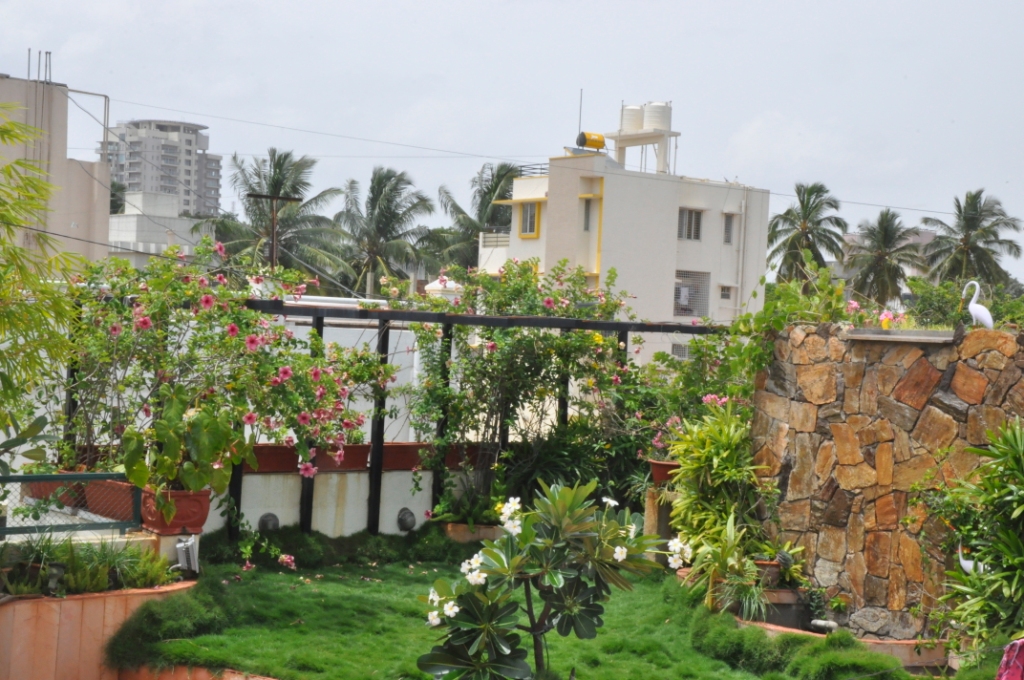
With the rising number of buildings and the decreasing open space, terrace gardening is emerging as a great option to have the best of both worlds. Want to grow a terrace garden at your home? Our reader and contributor Vikram Kapoor shares with us his guide on how to grow wonderful veggies, flowers and fruits yourself.

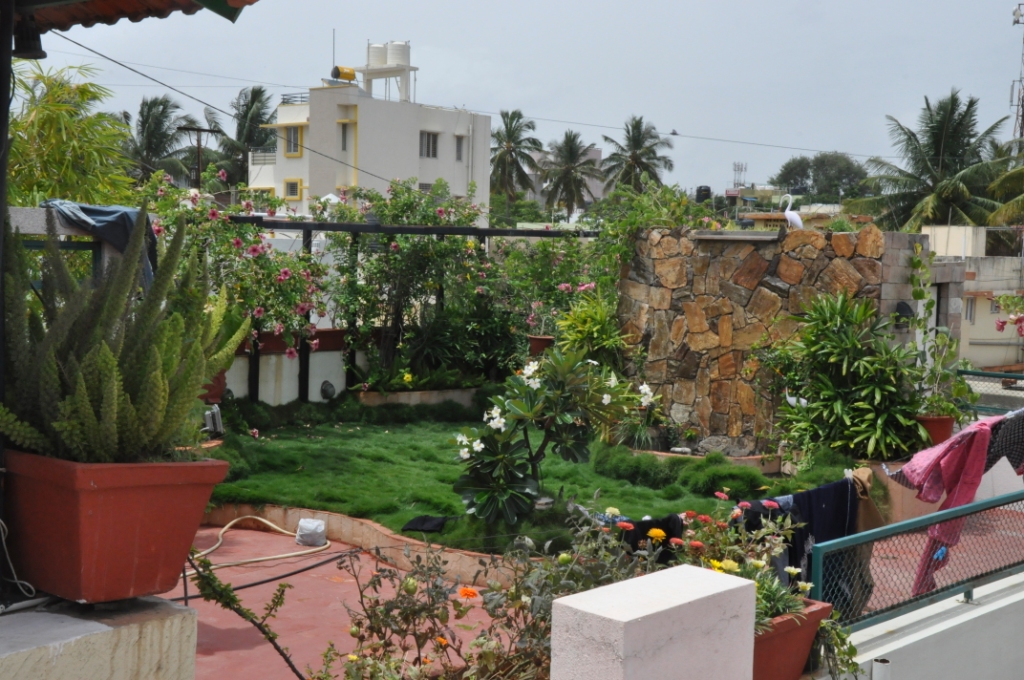
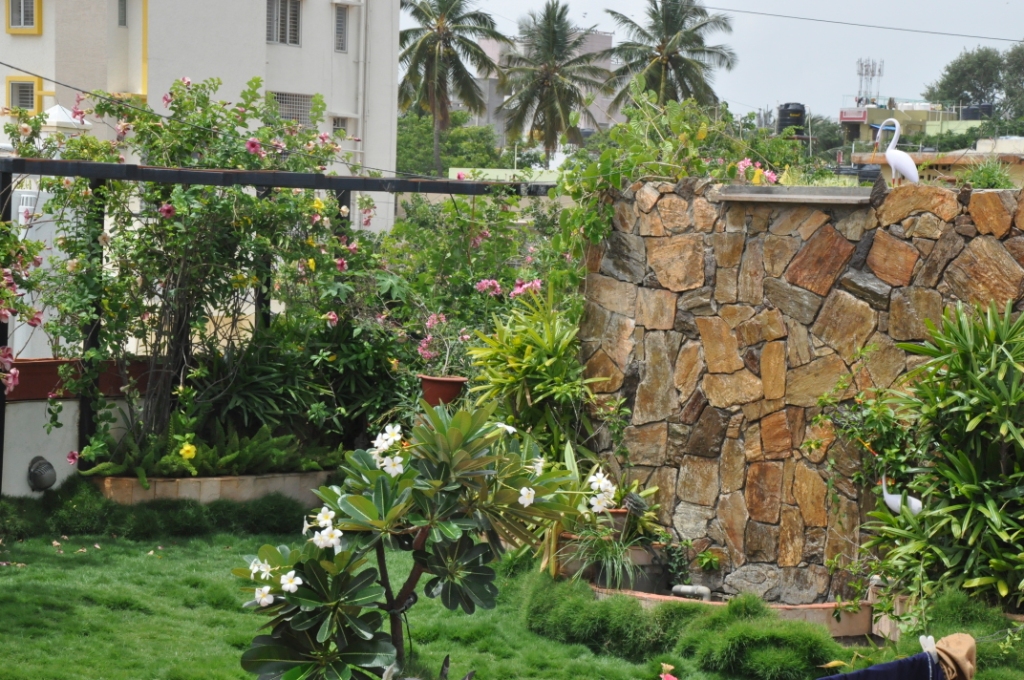
Plants also need love. They can’t express their feelings but if you take proper care they will bloom,” says Kishore Kumar, a Bangalore resident who owns a terrace garden at his home in Shantinagar.

A few decades ago, almost all houses in Bangalore had a garden since plenty of space was available. However, since the IT boom, this space has been shrinking and today, it is almost non-existent. In spite of scarcity of accommodation, many people have come up with novel ways to grow plants even in the little available space. Terrace gardening is one of them.

Garden01BF04dec2014

Kumar struck upon the idea of starting his garden around three years ago. He was very enthusiastic about gardening but did not have any space outside his house. This was when he decided to start growing plants on his terrace. “I haven’t kept any care taker or ‘maali.’ My wife and I take care of our garden ourselves and it gives us peace and satisfaction,” adds Kumar.

Why terrace gardening?

A terrace garden does not need much maintenance and it is hardly time consuming. Just devoting 10-15 minutes daily to the garden is sufficient for its upkeep. One can indulge in gardening generally in the morning hours before going to work. Most terrace gardeners prefer having their morning tea and newspaper on the terrace too.

Not just small flowering plants, one can also grow vegetables on the garden. Organic and home grown vegetables are a healthy alternative to the pesticide-ridden vegetables available in the market. However, big plants and tress cannot be grown on residential terraces because of their weight. One should water these plants with care so that the soil does not spread out. If the water falls with too much force, it can result in dirt and soil erosion. Any small area on your terrace or balcony which has access to the sun light for at least 4 to 5 hours a day can be converted into a vegetable garden.

One can harvest at least 400 grams of vegetables per week depending on the crops one chooses to plant. There are many valid reasons behind growing plants and vegetables on your terrace, some of them include getting fresh, faster cooking, nutritious & wholesome produce; it is cost effective and one also gets food safety & guarantee; you get a choice of vegetables, in fact, you can get Any Time Veggies (ATV); it is therapeutic, relaxing, educational and eco-friendly; it reduces our dependency and wastage and on the whole, is time well spent.

Garden02BF04dec2014.jpg.crdownload 

How do you do it?

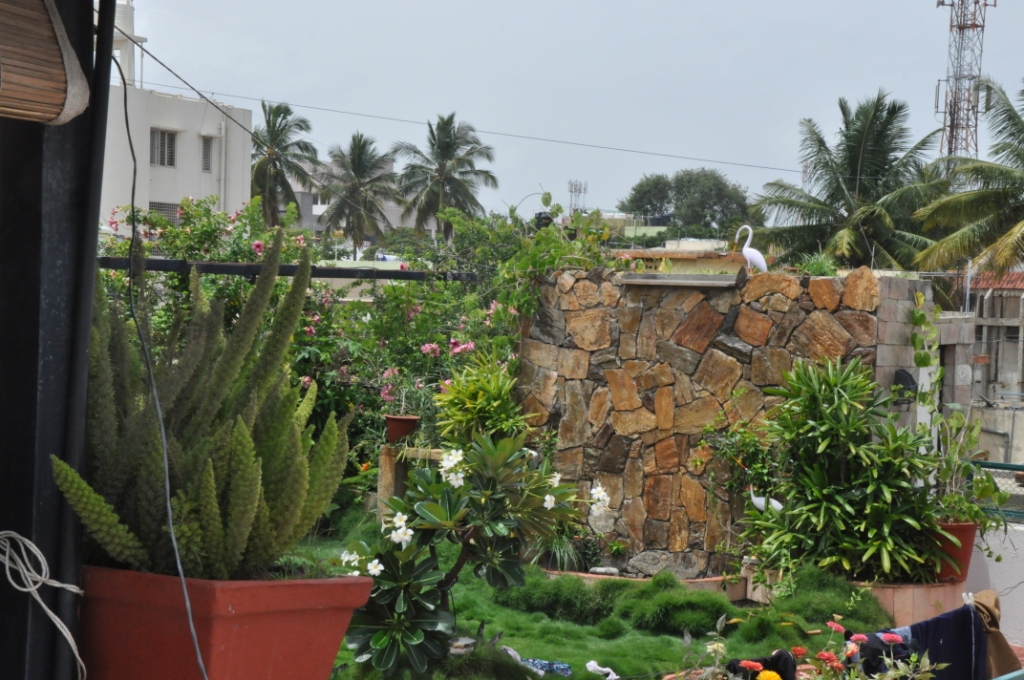
Waterproofing your terrace is a must to make a proper terrace garden to ensure that it does not result in seepage or other damage to the building structure. If the terrace is big, it can be divided into two parts – one for garden and the other for seating arrangements or for some household chores. Artificial waterfalls and colourful lights can also be installed, which can enhance the beauty of these gardens at night.

The concept of this mini farming becomes more interesting and also provides you with a sense of satisfaction when you can use your old furniture as planter boxes. The old drawer, old chair, old cupboards and shelves, plastic bottles, tin containers, broken dressing tables and old shoes can be painted with bright and eye-catching colours and made ready to grow many small plants which will enhance the beauty of your terrace space.

Garden03BF04dec2014.jpg.crdownload 

The daily leftover food in the home kitchen like fruit and vegetable peels, rotten food items and other wet waste are a rich source of minerals for the plants and can be composted and used as manure, helping us create a 100% waste-free environment.

Kumar said that regular cleaning is required as dry leaves and flowers also fall with the changing seasons. Regular cleaning and maintenance is a must for a beautiful garden.

 “Believe it or not, a large number of birds come to our garden. In fact, many a times I have seen sparrows and butterflies in the garden. Also, many new types of colourful and beautiful birds come which cannot be seen normally,” adds Kishore

How to spread the culture of terrace gardening?

Mr. Kaushik from The Vittal Mallya Scientific Research Foundation (VMSRF), a non-profit research organisation, feels that conducting workshops for kitchen gardening is an excellent idea for the people to bring awareness about organic food consumption in our country.

Garden04BF04dec2014.jpg.crdownload 

He says, “Our motto is to teach people to ‘grow your own organic food’. For this, we conduct workshops on kitchen gardening so that people can apply the same if they have open space like a roof top, a balcony, an open ground space, etc.”

While I was having a final talk with Mr. Kishore, he threw some light on the feeling of satisfaction that one gets when one does a great job to save the environment. “Summer evenings are great moments of surprise for my friends when I take them to the terrace and they feel as if they are in the arms of nature,” said Kishore

The terrace in most of our houses is an unused space and it would be ideal for gardening. Help yourself by not only making your environment healthy but at the same time helping yourself live a healthier life and also a peaceful one.

If the house owners will start applying this idea, the day will not be very far when the garbage issue of our country will end and all the waste will be consumed by our own top and Green garden.

– Vikram Kapoor

Excited? Here are a few people and groups that can help you get started with terrace gardening.
1. Purna Organics – Bangalore
2. Vani Murthy – Bangalore
3. A Facebook group for more know-how
4. My Sunny Balcony can help you green small spaces like balconies – Bangalore
5. Jiva Organics – Hyderabad
6. Greentech Life – Bangalore
7. Urban Leaves India – Mumbai
8. Hortitech Services – Chennai

source: http://www.thebetterindia.com / The Better India / Home> Bangalore / TBI Reader / by Vikram Kapoor / November 13th, 2014

IAF Chief Arup Raha to inaugrate Computerised Pilot Selection System in city tomorrow

Air Chief Marshal Arup Raha, Chief of Indian Air Force Staff

Mysuru :

Air Chief Marshal Arup Raha, Chief of Indian Air Force Staff, will be visiting Mysuru tomorrow for the inauguration of advanced Computerised Pilot Selection System (CPSS) developed jointly by the DRDO and IAF.

The new CPSS, originally conceived by Dr. A.P.J. Abdul Kalam, the then Scientific Advisor to the PM in 1997, has come a long way in terms of Research and Development. Primarily intended to address the long standing demand of IAF to having a more modern and scientific selection system for pilots that can screen candidates to meet the demands of the latest and advanced aircraft being inducted into the IAF, the CPSS was jointly developed by the DRDO and the IAF through a decade long research.

The new system is on par with the best selection systems available with the developed nations and fully meets its operational requirements. The system will be used to screen pilots for the Indian Air Force, Indian Army, Indian Navy and the Coast Guard. The test can be taken only once in a life time by any candidate and focuses on the aptitude of the individual to meet the high demands of the modern cockpits.

The CPSS caters simultaneously to the physical as well psychological profiling requirements of the candidates through a series of computerised cognitive and psycho motor tests that can be administered on more than 50 candidates at a time. The system apart from the computer based tests also has cockpit tests to extract accurate and complete details of the candidate’s abilities for this challenging job.

The system being launched at Mysuru is first-of-its kind in India and will soon be replicated at the other Air Force Selection Boards across the nation.

Air Chief Marshal Arup Raha will arrive at Mysuru Airport by a special IAF jet at 11 am and then proceed to the No. 2 Air Force Selection Board in Siddarthanagar to dedicate the new CPSS to the nation.

This is the first visit of the Chief of Indian Air Force Arup Raha to Mysuru after taking over the command of the Indian Air Force. Air Chief Marshal Raha was commissioned into the IAF in 1974 as a fighter pilot and has vast experience in various kinds of military aircraft. He has been an instructor in the Flight Instructor’s School and the Tactics and Combat Development Establishment of the IAF.

He has held several key operational commands and staff appointments prior to taking over as the Chief of the Air Force. Currently, he also heads the Joint Chief of Staff Committee of all the three services.

source: http://www.starofmysore.com / Star of Mysore / Home>  General  News  / Thursday , November 27th, 2014

Intl. Conference on Contemporary Computing begins at SJCE

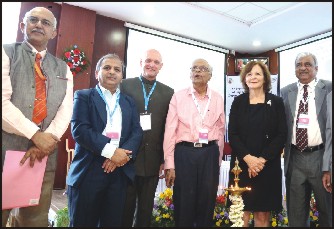
Dr. V. Prakash, Director R&D with Innovation, JSS Mahavidyapeetha, Dr. B.G. Sangameshwar, Joint Director (Academic), JSS Mahavidyapeetha, Gerd Hoefner, Managing Director and CEO of Siemens Technology and Services, B.N. Betkerur, Executive Secretary of JSS Mahavidyapeetha, Prof. Nadia Magnenat, Director, Institute for Media Innovation School of Computer Engineering, Nanyang Technological University, Singapore and Dr. Syed Shakeeb-ur-Rehman, Principal, SJCE are seen at the three day International Conference on ‘Contemporary Computing and Informatics’ that began at SJCE this morning.

Mysuru :

Prof. Nadia Magnenat, Director, Institute for Media Innovation School of Computer Engineering, Nanyang Technological University, Singapore, this morning inaugurated the 3-day International Conference on ‘Contemporary Computing and Informatics’ at the Golden Jubilee Hall of SJCE organised under the aegis of SJCE and the Department of Master of Computer Applications of SJCE.

Gerd Hoefner, Managing Director and CEO of Siemens Technology and Services was the chief guest. The keynote address was delivered by Dr. V. Prakash, Director R&D with Innovation, JSS Mahavidyapeetha.

B.N. Betkerur, Executive Secretary of JSS Mahavidyapeetha presided. Dr. B.G. Sangameshwar, Joint Director (Academic), JSS Mahavidyapeetha, Dr. Syed Shakeeb-ur-Rehman, Principal, SJCE and Dr. M.P. Pushpalatha, Head, Department of MCA, SJCE were present.

source: http://www.starofmysore.com / Star of Mysore / Home>  General  News  / Thursday , November 27th, 2014