MLA Tanveer Sait is seen presenting prize to the first prize winner of State-level milking contest held at J.K. Grounds in city yesterday. Others seen are actor Darshan, MLA Vasu, Mayor N.M. Rajeshwari, MP A.H. Vishwanath, District Minister V. Sreenivasa Prasad, Ex-Mayor Dhruvakumar, MNGS President D. Nagabhushan and others.
Mysore :
Bangalore may be the Silicon city but it does not lag behind in dairy skills which came to fore yesterday when a cow from the State capital yielded 46 litres of milk to win the prize of Rs. 1 lakh at the three-day State-level milking contest held at J.K. Grounds in city in memory of Late actor Thoogudeepa Srinivas by Mysore Nagara Gopalakara Sangha (MNGS).
Dairy farmers from Bangalore also outclassed their counterparts from Mysore by winning top three positions in the contest which had been a tradition of Mysore.
Cows belonging to Pradeep Devegowda, a resident of Adugodi, Venkatesh Sommanna, residing near Nettakallapa Circle and Lakshman Hogebandi of Bangalore yielded 46.75 litres, 40.75 litres and 40.40 litres winning the first three places respectively as a cow belonging to Aishwarya, a relative of former Mysore Mayor Dhruvakumar, which yilded 39.95 litres finished fourth.
Pradeep Devegowda won Rs. 1 lakh and a pair of silver lamp weighing 2 kg. Venkatesh Somanna won Rs. 75,000 and a silver crown weighing 1 kg. Lakshman Hogebandi won Rs. 50,000 and a silver crown weighing 1 kg. as First, Second and Third prizes respectively while Aishwarya of Mysore got Rs. 25,000 as the Fourth prize.
A total of 17 cattle from different parts of State particularly from in and around Bangalore participated in the competition and the prizes were presented to the winners by actor Darshan Toogudeepa at a function organised at Srikanta Datta Narasimharaja Wadiyar stage at J.K. Grounds yesterday.
District in-Charge Minister V. Sreenivasa Prasad, MP A.H. Vishwanath, Mayor N.M. Rajeshwari, MLA Vasu, Mysore Nagara Gopalakara Sangha President D. Nagabhushan and others were present.
source: http://www.starofmysore.com / Star of Mysore / Home> General News / January 20th, 2014
Karnataka Muktaka Sahitya Academy, Mysore, will confer the coveted DGV Muktaka Sahitya Award on Prof. H.S. Lakshminarayana Bhatta, popularly known as ‘Kaggada Bhatta’, during its 14th anniversary celebrations to be held on Feb. 16 in city.
Four eminent personalities — Dr. V.S. Sampathkumaracharya (Music), Dr. J.S. Hegde (Medicine), Prof. B.N. Manjunathaiah (Education) and Prof. S. Shivaji Jois (Literature) — who have rendered yeoman service in their recpective fields will be felicitated on the occasion.
Profile of Prof. Bhatta
Born in 1946, Prof. Bhatta is a M.Sc. Degree holder in Physics, a ‘Visharada’ from All India Hindi Prachara Sabha, an ‘Uttama’ from All India Bhagawad Geetha Study Centre, Gorakhpur. He has served as Professor of Physics in Visweshwarapuram Science College, Bangalore and also as Principal of the same college.
He has given a number of discourses and lectures on DVG’s Mankutimmana Kagga and other Muktaka literatures in and outside the State. He has aired a number of programmes on Kagga on Doordarshan and Akashavani and has participated in online programmes with listeners.
Prof. Bhatta has to his credit a number of books on Kannada Literature including his Ghamaghamisuva Vanasuma, DVG – Timmaguruvina Darshana (Gundopanishat). He has received a number of awards and titles for his work in this field.
source: http://www.starofmysore.com / Star of Mysore / Home> General News / January 20th, 2014
Lakshmi, a homemaker from Periyapatna, who delivered her first child at government-run Chaluvamba Hospital here years ago, chose the same hospital for her second delivery, the lack of privacy notwithstanding.
The 27-year-old Lakshmi was one of 200 new mothers crammed into the wards of the century-old hospital, which sees, on an average, 40 new babies coming into the world daily. The rate at which deliveries happen at the hospital makes it Karnataka’s busiest maternity ward.
Like her, many mothers have to struggle for beds as large number of women from across the state comes here. With wards always being full, new mothers have to make do with the floor, awaiting their turn for cots. However, beds and necessary treatment will be provided to them while they wait for cots.
Hospital’s medical chief Dr B Krishnamurthy said that women from Bangalore, Ramnagara, Bidadi and Chikkamagalur have delivered here apart from women from old Mysore region of five districts. He claims may be the busiest maternity hospital in state because even in Bangalore’s Vani Vilas hospital not many deliveries are conducted than us. “I have attended state level health meetings but have never come across so many deliveries taking place in single day in any other hospital in Karnataka.”
Even Sumaya Banu from Hunsur preferred this hospital for her second delivery. Her husband, Jaffer, a driver, says the facility is no less than private hospital. Even 20-year-old Ciema Kauser, who delivered her first child, too was fine with the hospital’s situation.
Biggest challenge is to accommodate all mother to-be arriving here. We can’t say no to anyone but if they agree to the situation, we are okay with it but we ensure to provide quality treatment without for free, the medical superintendent says.
Of the total 420 beds available in hospital, over 50 pc beds are reserved for new moms, who will be treated for three days in case of normal deliveries and five days for C-section deliveries Nearly 80 pc deliveries are normal. Claiming people throng here because of quality treatment, Krishnamurthy, head of department of pediatrics, says we have improved services and security to prevent deaths and baby-swapping over the years.
source: http://www.articles.timesofindia.indiatimes.com / The Times of India / Home> City> Mysore> Private Hospital / by Lawrence Milton, TNN / January 11th, 2014
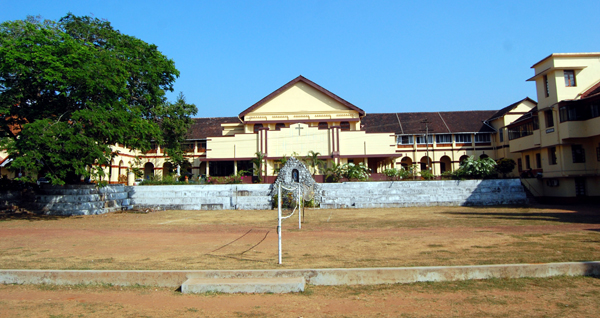
St Agnes Convent, Bendore is all set to celebrate the centenary of its Foundation Day (1914-2014) with a public function on Sunday January 12. The Convent was started in 1914 in order to reach out for the education of girls in the suburban area around Kadri and Kankanady. St Ann’s School, Bolar started by the Sisters of the Apostolic Carmel, founded by Mother Veronica of the Passion, an English woman, in 1870; St Mary’s School, Falnir started to accommodate the increasing number of students; and Victoria Caste School, Dongenkery, Kodialbail (later shifted to Ladyhill) started at the persistent appeal of GSB Community for the education of their daughters, were the only three schools in South Canara district, to impart quality education exclusively for girls, in the much valued medium of English.
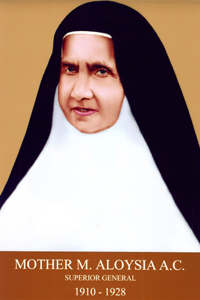
Mother Aloysia, the second Superior General of the Apostolic Carmel after five years of assiduous search and negotiations for some twenty different sites between Kankanady and Kadri, including a plot of “Hulli Mulli” an arid area, and the surrounding plots, which were inhabited by sixteen proprietors in clustered huts and cottages measuring twelve acres of land, were bought on June 29, 1913.
February 8, 1914 was a memorable day in the history of the Apostolic Carmel when Dr Paul Perini, Bishop of Mangalore blessed the whole property and laid the foundation for St Agnes Convent, the residence for the Sisters to carry out their service to women through education. The next day a Secondary English Medium School, as it was called then, was opened with Classes I and II. There were 80 pupils on roll. A week later, an elementary school was opened for the poorer children with 46 pupils on roll. Since then the campus has grown with St Agnes School started in 1914, St Agnes College (the first college in India by an Indian private Management), St Agnes Special School for the Mentally Challenged started in 1970, as the Centenary Memorial of the establishment of the Apostolic Carmel. As the sisters of St Agnes Convent celebrate the hundred years of prayer and service on 12th January 2014, we remain ever grateful to God in transforming the Hulli Mulli Hill into an Educational hub, a light house, a city built on the hill where hundreds of students have been educated and enlightened over the past hundred glorious years and sent out to the wide world as the ambassadors of St Agnes to proclaim to all people that God is our Strength.
The concluding function of the Centenary of St Agnes Convent will be held on January 12. The Centenary Mass will be celebrated by Dr Aloysius Paul D’Souza, Bishop of Mangalore, with a large number of priests concelebrating with him at St Agnes College Auditorium. The Open Air public function that follows will have the Bishop as the president, Dr Sr Agatha Mary, Superior General of the Apostolic Carmel will be the chief guest, Sr Linette, Provincial Superior, J R Lobo, local MLA and Flavia Agnes, alumna, St Agnes and legal and social activist from Mumbai will be the guests of honour. A documentary on the history of St Agnes Convent and a dance drama on the life and times of Mother Aloysia, the founder St Agnes Convent will be the highlights of the programme. The former Superiors of the Convent will also be felicitated. Among the Centenary projects will be the poor students’ fund to be initiated.
St Agnes Convent – Centenary Celebrations
(1914 – 2014)
“Foremost in the roll of Indian women educationists stands the name of Mother Aloysia of the Sacred Heart, the second Superior General of the Apostolic Carmel. Almost a pioneer in the west coast field of education, she has for half a century and more laboured with untiring energy to raise the intellectual standard of our girls to the highest accepted grade.”
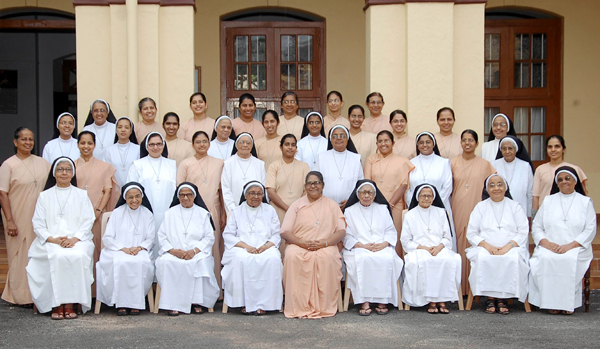
This was the tribute paid by J B Machado, Secretary of the Indian Christian Civic League, Mangalore, for the achievements of Mother Aloysia, in the field of education when nominated for the Kaiser-i-Hind, Gold Medal I Class award from the British Administration, in recognition of her services. We are presenting this valiant woman and her band of committed sisters, who founded St Agnes Convent, Bendore, Mangalore as we are poised to celebrate the Centenary of its establishment and that of the school, St Agnes School. The lamp that was lit by Mother Aloysia at St Agnes in the year 1914 has been kept burning for the past hundred years by every sister who lived at St Agnes with the oil of love, prayer, sacrifice and service.
Old Primary School
St Agnes in 1921
‘The Rest’ where St Agnes Special School was started
Mother Veronica, nee Sophie Leeves, an English woman was chosen and called by God to found a “Carmel for the Missions” in India towards the faith formation of the Catholics and the education of the young girls along the west coast. The dream of education that Mother Veronica harboured in her heart when she was serving in Calicut as a sister of St Joseph of the Apparition, “…all along the coast the young girls are entirely without any means of instruction…”, was realized when she started the Apostolic Carmel in France in 1868 and the three sisters trained by her arrived in Mangalore on 19th November 1870. Mother Marie des Anges, French by origin was the First Superior General and was called the Nurturing Mother while the one who shaped the Apostolic Carmel education was Mother Aloysia nee Mary Pia Rosario. The pioneering of quality education for girls thus belongs to the Apostolic Carmel with the starting of St Ann’s Convent and School in 1870, at Pandeshwar, Mangalore preceding even a school of this caliber for boys’ education which happened only in 1880.
In the first decade of the 20th century, St Ann’s High School flourished and St Mary’s, Marjil, the offshoot of St Ann’s, to accommodate the growing number of students and the Victoria Caste School at Dongerkery, Kodialbail, (later shifted to Ladyhill) the outcome of the persistent appeal of the GSB community for the education of their daughters were the only schools in South Canara district, to impart education exclusively for girls, in the much valued medium of English. These schools were nearer the central location of Mangalore. At this time, Mother Aloysia, who was elected as the Second Superior General and who was literally the brain behind the three schools, with her wide vision and deep apostolic spirit saw the need for extending the facilities to a larger number of girls by opening a school for girls in Bendore, the suburb and an underdeveloped area away from the township at Bolar. After five years of assiduous search and negotiations for some twenty different sites, a plot of “Hulli Mulli”, an arid area belonging to the ancestors of Sr Julia’s and the surrounding plots which were inhabited by sixteen proprietors in clustered huts and cottages measuring twelve acres of land, were bought on June 29, 1913.
February 8, 1914 was a memorable day in the history of the Apostolic Carmel when Dr Paul Perini, Bishop of Mangalore blessed the whole property and laid the foundation for St Agnes Convent. The next day a Secondary English Medium School, as it was called then, was opened with Classes I and II. There were 80 pupils on roll. A week later, an elementary school was opened for the poorer children with 46 pupils on roll. Mother Aloysia chose St Agnes as the patron saint of the convent and of all the institutions on the campus with the motto “God is our strength”. Young girls desirous of studying in English medium flocked to St Agnes Convent from Udupi, Kallianpur, Kundapur, Karkal. Mulki, Kinnigoli, Belthangady and other surrounding villages. The original old cottages were fitted up as dormitories and a boarding house was started.
Realizing that girls from their sheltered homes would hardly dare to go as far as Madras, Mother Aloysia envisioned higher education for girls. July 2, 1921 was another day of significance in the history of St Agnes when a college was started under her dynamic leadership and far sighted vision. St Agnes First Grade College was the only one for women in South India and the first in the whole of India to be run by an Indian private management. To meet the ever growing demands for admissions that came in from the rural areas a temporary “L” shaped building was put up on the plot closest to the road. This block stood for 82 years when more spacious buildings came up to accommodate the growing number of students.
Mother Theodosia another woman of caliber and a dynamic personality with practical experience took charge as Principal in 1934. She took the initiative of introducing Science into the Intermediate Course, an option till then not available to women. By adding subjects such as Mathematics in 1936, Natural science in 1937 and Chemistry in 1939, the college gradually blossomed. Through the years under the leadership of Principals and faculty with dynamism and commitment, St Agnes College has grown with several more courses and programmes. In 2007 St Agnes College obtained academic autonomy. Soon after, the Post Graduate Programmes were introduced and another block was erected for the same.
The Intermediate Course was changed into Pre-University in 1955 and at the same time St Agnes College parted ways from Madras University with the re-organization of states and was affiliated under Mysore University. In 2001 St Agnes Pre-university College was bifurcated and was accommodated in a new building.
The year 1970 was a landmark in the history of the Apostolic Carmel, the year of the Centenary of the establishment of the Apostolic Carmel in India. The pioneers of girls’ education in Mangalore had fresher avenues to explore and the education of children with disabilities was found to be the best Centenary Memorial to fill this void in Mangalore as there was no provision for the education of children with disabilities, in particular, the mentally challenged children. St Agnes Special School, the first school for the mentally challenged in the district, was inaugurated on August 4, 1970 with five children, in ‘The Rest’, a cozy house on St Agnes Convent premises with the motto, ‘In Love We Grow’. In 1973 the children were shifted to the premises opposite St Agnes Convent in the new building that was constructed.
The mission of the sisters of St Agnes Convent in educating the youth from Kindergarten to Post graduation has attained fruition where 5330 students illumine the campus today not merely aspiring towards academic excellence but very importantly using the many opportunities for strengthening faith and values of the students. Besides educating the youth, the sisters offer humane services to the society, the local church and the society at large in every possible way. In 1998 the Apostolic Carmel Association (ACA) was started for the purpose of sharing the spirituality of the congregation with lay people.
With heads bowed and hands folded in gratitude to God, as we, the sisters of St Agnes Convent celebrate the hundred years of prayer and service on January 12, we remain ever grateful to God in transforming the Hulli Mulli Hill into an educational hub, a light house, a city built on the hill where hundreds of students have been educated and enlightened over the past hundred glorious years and sent out to the wide world as the ambassadors of St Agnes to proclaim to all people that God is our Strength.
source: http://www.daijiworld.com / DaijiWorld.com / Home> Top Stories / by Sr M Lydia, St.Agnes Convent / Mangalore – January 09th, 2014
Soon, alternative medicine and two-wheeler emergency care units may be used to tackle cardiovascular disease – the world’s largest killer.
According to the World Health Organisation (WHO), the disease accounted for 30 per cent of deaths around the globe in 2013.
A team of medical professionals from India and the USA have come up with the dual approach.
“Since cardiovascular disease is a lifestyle disease, it can be prevented with the right diet and lifestyle. Alternative medicine, that is the use of herbs, naturally derived materials and non-pharmacological tools, has demonstrated significant benefits in prevention of cardiac diseases directly or indirectly,” said Dr Naresh Shetty, president, M S Ramaiah Memorial Hospital, at a symposium held here on Wednesday.
The MS Ramaiah Medical College (MSRMC), Narayana Health, The Institute of Trans Disciplinary Health Sciences and Technology and University of Illinois have taken the initiative to partner with the local community, clinics, and community health workers to provide mobile healthcare services to patients using two-wheelers.
“Traffic and accessibility to the patient is critical in emergency situations. We have proposed the two-wheeler model of emergency care so that the paramedic can carry the required medicine and equipment to the patient,” said Dr Arunachala Ramesh, head of the department of emergency medicine at MSRMC.
“The focus is to develop preventive emergency medicine strategies for highest risk individuals. Patients identified in the highest risk category will receive more intensive healthcare that utilises ambulance, paramedics and health worker home visits,” Dr Shetty explained.
source: http://www.newindianexpress.com / The New Indian Express / Home> Cities> Bangalore / by Express News Service – Bangalore / January 09th, 2014
Home-style food is rare to come by in a restaurant. Imli succeeds in fulfilling that void. Located at Indiranagar, this place is much sought after by vegetarians.
(Restaurant review: Imli…)
Decor
Imli is one of the hidden secrets of Indiranagar and you might easily miss it unless you happen to drive by this striking yellow corner bungalow with minimalistic decor. Conceived as a casual hangout, it’s an ‘adda’, serving popular snacks and basic chai with a small artists’ corner. Free Wi-Fi access attracts many regular customers who flock here during lunch and evening hours. Try some board games like Scrabble, Jenga or Uno while your food is being prepared.
Food
Order the Khichdi aur Baigun Bhaaja or Stuffed Moong Dal Cheela and you will remember mom’s cooking. A wide range of parathas is available — stuffed with aloo, gobi, paneer, matar, methi, mooli, pyaaz and papad. Intrigued, we ordered the latter — roasted papad, crumbled and stuffed in a paratha! During lunch and dinner times, they serve a ‘Pet Puja’ Thali, which has phulkas/ rice, two vegetables of the day, dal, roasted papad, vinegared onions, dessert and some amazing pickles. Soya Pulao is flavoursome and very popular. Baingan Bharta, Missi Roti and one of their many seasonal fruit Lassis is a combination hard to beat. The owners take pride in their home-style food and are present to greet you most of the time. Chaats are well represented here, including our favourite — the Kolkata-style Jhal Muri, with just the right amount of sharp mustard oil. Or simply drop in here to snack a little and have one of their many varieties of chai.
Service
The wait staff is well trained, so expect good service.
Plus and minus
Very few places in Bangalore can match up to the ‘Ghar ka Swad’ taste here. Service can be patchy on busy days.
Must try: Papad Paratha, Pet Puja Thali and Jhal Muri
source: http://www.articles.timesofindia.indiatimes.com / The Times of India / Home> Life & Style> Food> Indiranagar / by Suresh Hinduja, TNN / January 18th, 2014
A three-day conference on women organized by Konkani Language and Cultural Foundation in commemoration of the 110th year of social reformer and freedom fighter Kamaladevi Chattopadhyaya got under way at Nehru Maidan here on Thursday January 9. The conference has been organized as part of the ongoing NBT book fair.
Basti Vaman Shenoy, president of World Konkani Centre welcomed the guests.
Speaking after inaugurating the conference, Kannada writer Padma M Shenoy said, “Mangalore abounds with culture and writers, which is very good. They serve as a guidance for the youth.”
She further said that women’s writing today is improving and as they are sharing their work openly.
Commenting on the issues and problems prevalent today, “In these days in newspapers we only read about gang-rape, molestation, kidnapping and many more bad things. Criminals who are doing all this must be dragged on to the streets and have their faces exposed to everyone,” she said.
“Woman is everything in this world. It is a shame that the youth of our country are involved in bad habits,” she added.
Books ‘Janara Kathegalu’ by Mumtaz Begum, ‘Vaishaka Fullo’ by Padma Shenoy, ‘Nanna Aduge’ by Geetha Kini and ‘Ajjiya Katha Bhandara’ by Geetha Shenoy were released on the occasion.
Writer Prema Bhat, addressing the gathering, she said “The dais looks very clean with none of the corrupt politicians being invited to the programme.”
“Writing is life and life is writing. It is easy to write your life story when you are not corrupted,” she said.
Writer Dr Vasundhara Bhupathi said “I can see women’s writing conferences happening in a few places. We want the youth to read more novels. They must start reading books. A book provides all the information you need. Kannada is a rich language and everyone must spread Kannada everywhere, in all the places. Mangaloreans are lucky to have good libraries. If a person gets addicted to books, he will stay away from all bad habits. Education must teach social values, and encourage youth to stay away from bad habits. Media is being used for wrong purposes these days.”
Writers Vijayalakshmi B Shetty, Janaki Brahmavar, Karnataka Tulu Academy registrar Chandrahasa Rai B and others were present.
source: http://www.daijiworld.com / Daijiworld.com / Home> Top Stories / by Daijiworld Media Network – Mangalore (MD) / January 09th, 2014
Infosys’ former board member TV Mohandas Pai will deliver a lecture on “How to make India a $10-trillion economy”. PTI
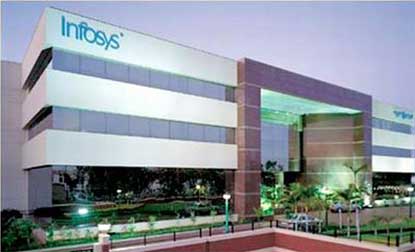
Day before Infosys Q3 results were unveiled, it has been revealed the company will brainstorm its future strategic direction in Mysore, in a three-day annual summit to be held during January 11-13.
The internal event will host former directors, board members, investors, key customers, foreign analysts and academicians. Former board member TV Mohandas Pai will deliver a lecture on “How to make India a $10-trillion economy” while co-founder Nandan Nilekani will talk on “Handling large projects.”
The other key non-Infosys executive will be Vishal Sikka, member of the executive board at SAP, who will speak on innovation. Sources indicated that former independe-nt director Deepak Satwale-kar and co-founder K Dinesh are also expected to attend the event called STRAP 2014, add-ing “the idea is to get all the key people together from Infosys across the globe and provide a networking platform.”
There has been a growing disquiet in the manner in which the over $7-billion IT-services firm was drifting away from a highly competitive Indian IT landscape, with growth lagging its peers’, and losing its status as the bellwether of the industry.
The annual strategy and the action-plan meet will focus on the IT major’s roadmap and the preliminary understanding of the overall demand environment. Traditionally, the event is held in Mysore but, last year, it was held in Bangalore.
source: http://www.financialexpress.com / The Financial Express / Home> Economy / by fe Bureau / Bangalore – January 10th, 2014
It is to honour people for excellence in the field of education
The prestigious Derozio award for excellence in the field of education was conferred upon four heads of schools from across the country during the valedictory function of the 92nd Association of Heads of Anglo-Indian Schools of India held at Bishop Cotton Boys’ School on Wednesday.
The award, which was instituted by the Council for Indian School Certificate Examinations in 1999, is in the memory of Anglo-Indian leader Henry Louis Vivian Derozio – a nationalist poet and teacher from West Bengal.
The winners of the 2013 Derozio award are John K. Zachariah, principal of Bishop Cotton Boys’ School in Bangalore; Norina Fernandez, principal of Lilavatibai Podar High School in Mumbai, Maharashtra; Jagpreet Singh, headmaster of Punjab Public School in Nabha, Punjab; Neena Singh, principal of Himalayan Public School in Dehradun, Uttarakhand.
The Laksman Public School in New Delhi and Ashadeep School in Guwahati also received the award in the special educational institution category.
The award consists of an engraved gold medal, a citation, a silver plaque, certificate and Rs. one lakh in cash.
Giving away the awards, Governor H R Bhardwaj lauded the contribution of Anglo-Indian and missionary institutions such as Bishop Cotton and The Doon School. “I often meet highly motivated and successful people who are from these schools,” he said. He also recalled the contribution of the Jesuit priest and educationist Marshall D. Moran and said, “We have a powerful system of education inherited from missionary-run institutions.”
English necessary
Mr. Bhardwaj expressed displeasure at the growing linguistic fanaticism and provincialism, which is resulting in rejection of English education in several regions of the country.
“Dismantling the systems established by Anglo-Indian educationists and replacing them with linguistic institutions is not good,” he said.
source: http://www.thehindu.com / The Hindu / Home> News> Cities> Bangalore / by Staff Reporter / Bangalore – January 10th, 2014
Ashraff, 15, can rattle off the atomic weight of the first 15 elements in the periodic table in one breath. Vaibhav, a Class 11 student, says he reads 25,000 words per minute.
Geniuses in the making? But both these kids introduce themselves as average students. The magic mantra, they say, are memory enhancing workshops.
It’s the season to charge those grey cells, and what better way than a workshop. From pills and tonics to tips and techniques, memory enhancers are the in thing. And these workshops have much on offer to help students fare well.
One common technique is the pegging model, where subjects difficult to memorize are pegged to something else. “We train them in the law of imagination. Students are taught to visualize. Next, they connect the visuals to themselves. The link could be ridiculous but helps easy recall,” says Biswaroop Roy Chowdhury, a memory trainer, Dynamic Memory, Faridabad. Biswaroop visits Karnataka often to conduct workshops.
D Krishnamurthy, a memory technologist in Hanumanthnagar, works on similar lines. “Rote memory is constant repetition. If you forget one key word, you tend to forget everything. Here, you aren’t losing anything because it’s systematic. There are visual and imaginary elements to it,” he says. Predictably, January is a busy time for him. “There are more students during January and February, when the knowledge gathered through the year is cluttered and needs organization,” he says.
There are others who promise more. Life strategist Md A A Ahmed conducts exam maximizer programmes which comes in beginners and advanced capsules. Level 1 gives tips on learning long answers in a single reading, memorizing key words in 120 seconds, and helps concentrate on boring subjects. Ahmed wants to patent a technique called flash reading, which he has developed. Here, a student can read 30,000 words in a minute. According to him, the student actually comprehends what he reads, and it’s not merely rote learning.
Midbrain Masters, a training centre headquartered in Malaysia, says it can help children activate their ‘midbrain’. “An activated midbrain helps improve concentration, enhance memory and speed up the learning process,” says Rajeev Ahuja, trainer.
Experts, however, feel sheer rote learning is promoted in such cases. “Many of these techniques look at rote or associative memory. Since our academic system is based on rote learning, and not much on analytical skills, it helps score marks. The methods assist them retain more facts but doesn’t do much to improve cognitive ability,” points out Sulatha Shenoy, director, Turning Point Psychological Centre.
“There are some simple facts where there’s nothing to understand; like Gandhiji’s date of birth, or the boiling point of a liquid. One has to have an imaginary understanding of it,” says Biswaroop.
Memory apart, these workshops also focus on concerns like confidence levels, stress, emotional baggage, etc. “Students complain about issues like the mood to study and short attention span. We train them to overcome such obstacles,” says Ahmed.
POINTS TO BE NOTED
Workshops should look at emotional, social abilities, leadership skills and teamwork. Most students I get are looking to improve memory. What they really need is an interest in the subject, some motivation, and better teachers.
Sulatha Shenoy | director, turning point psychological centre
Several factors lead to poor memory. Most kids multi-task while studying; some fiddle with their phones, some listen to music. Many suffer from low self-esteem and become anxious. All workshops address these problems. However, the techniques they learn don’t help in the long run. Boards like CBSE have started insisting on analytical learning. When Narayana Murthy says our engineering graduates are not employable, it is not surprising. Marks are important, but there’s more to life.
Vikram Prabhu | psychiatrist, sagar hospital
There’s no quick-fix to enhance memory. The techniques cannot be universally applicable. Factors like emotional stress, motivation level and interest affect memory. Feedback and follow-up is important to see if the techniques are working.
Meera Ravi | psychologist, prerana academy
Such workshops stem from the idea of rote learning. If a teacher deals with a subject engagingly, kids will learn. If not, they will have to look at mechanical ways of doing it. It boils down to good teaching approaches and pedagogy.
Maya Menon | teacher foundation
I feel like I have textbooks in my head. I know what’s on which page. When we have to look at tabular columns during exams, things are much easier for me because I know them by heart.
Vaibhav | class 11 student who attended Ahmed’s workshop
source: http://www.articles.timesofindia.com / The Times of India / Home> City> Bangalore> Rote / by Sruthy Susan Ullas, TNN / January 10th, 2014