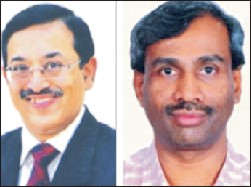
I want to turn Professional : Aditi Ashok

AditiBF14jun2014

Aditi Ashok, the soft-spoken Bangalore girl who has been making waves with her brand of golf in the International and Indian golfing scene, represented India as a Junior at the age of 15 years at the Duke of York Young Champions Trophy in 2013. Aditi played in the 2nd Asian Youth Games 2013 at the age of 15 years. Aditi is the youngest amateur in the World at 13 years and 5 months to win the Hero WGAI’s Clover Greens Ladies Professional championship in 2011. Aditi has to her record as the best finished Indian Lady golfer and tied 8th at the Hero Women’s Indian Open 2012.

In December 2011, Aditi became the youngest Amateur (also equalled the record), at the age of 13 years, to win the 95th All India Ladies Amateur Open Golf Championship 2011 at Chandigarh Golf Club, Chandigarh. Aditi is the first junior girl in the country to have chosen to compete in the higher category. Aditi is the first Indian Amateur at 12 years to have represented India at the Asia-Pacific Invitational, 33rd Queen Sirikit Cup 2011.

Aditi won her maiden International junior title at 13 years (Individual Girls U-14 and Team India) at the 100 Plus Malaysian Junior Golf championship 2011 and won the Asia Pacific Juniors 2012 (U15 girls). Aditi is the National Junior champion and won the Toyota Etios Player of the Year 2012 (Junior Girls). Presently Aditi is ranked No 3 in the IGU Ladies Merit List and No.1 Junior in the country.

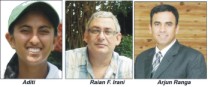
Aditi Ashok is currently taking part in the N R Group IGU Ladies & Junior Girls Amateur Golf championships at JW golf course from June 7-10th 2014, and she shared her views with SOM Correspondent. The writer also spoke to Raian F Irani, President, Indian Golf Union (IGU), who is responsible for bringing the National Ladies and Junior tournament to Mysore. Arjun Ranga, Managing Director, N R Group of Companies have given patronage by supporting golf in a big way and have sponsored the tournament in Mysore.

Below are the excerpts of the interviews with all the three of them.

SOM: How do feel taking part in the N R Group IGU Ladies & Junior girls Amateur golf championships played at the J W Golf course here in Mysore ?

Aditi: I have not played in this course for the last five years. I have been playing in different tournaments and did not have a chance to play in Mysore. Now the greens are good and the course is much better and the club authorities have done a lot of good work to keep the course in good playing condition.

SOM: You have achieved many firsts- the first amateur golfer at 13 to represent India and also to win the All India Ladies championships. What do you attribute your success to?

Aditi: I really liked golf and am a very focused person. I put in a lot of hard work and played really well and that yielded results. Hard work and practice helped me to achieve success at all levels.

SOM: You are currently ranked No.3 in the IGU Ladies merit list and No.1 in the country in the Junior girls section. What are your future aims?

Aditi: I definitely want to turn professional and become one of the top golfers in the World. I will decide in the next two years as I have to finish my schooling before turning a professional.

SOM: How did you take up to playing golf and who inspired you to do so?

Aditi: Nobody inspired me into playing golf. I accompanied my father to KGA and liked the game and took up to playing the game when I was 6 years old. My parents Ashok and Maheshwari encouraged me and I started playing tournaments when i was 7 years old at the Karnataka Golf Course (KGA) in Bangalore.

SOM: Which are the future tournaments you are going to take part?

Aditi: By playing well on the National circuit, I will get to play for India. I aim to represent India in the forthcoming Asian Games, the World amateur championships. I will also be taking part in the Junior Open in United Kingdom in August 2014 and in the Duke of York tournament in September.

SOM: How do think is the present Indian golfing scene?

Aditi: Golf in India has become more famous. Many girls have taken up the game which is a good sign. There are lot of golf courses coming out in the country which in turn will help lot of people to take up to play golf. The myth that golf is a old man’s game has been broken with more and more youngsters and girls taking up to the sport in the country.

SOM: How do you balance your studies with playing golf?

Aditi: My school-Frank Anthony’s Public school, Bangalore have been very supportive and have helped me a lot in perusing and excelling in golf. They let me take leave to play in tournaments and the teachers are supportive and take extra classes to help me cover the portions. That’s how, I could manage studying as well as playing in the higher level.

SOM: Who is your present coach and how has the coaching helped you in improving your golf?

Aditi: I train under Australian Steven Giuliano at Malaysia. I go often to Malaysia to train under him. I am in constant touch with him and when in Bangalore, I practice at the KGA. His coaching methods has helped me to improve on my game and since September 2012.

I would like India to be a power house in Golf: Raian F. Irani

SOM: As President IGU, how has been your stint so far?

Raian: Excellent. A lot of good things are happening. The IGU team is putting in lot of hard work to develop the game in the country. We have started different programmes to popularise the game and have introduced golf to children in schools in order to increase the base and attract and spot fresh talent.

SOM: How do you feel bringing bigger tournaments to two tier cities like Mysore and who will it help in popularising the sport?

Raian: Definitely it will help the stature of golf and in the longer run. Two tier cities will benefit with these type of exposure and tournaments. Local sponsors like N R Group, headed by Arjun Ranga, coming in to sponsor the IGU Ladies & Junior Girls Amateur tournament in Mysore also goes a long way in promoting the sport. It indirectly helps the clubs in Two-tier cities who lack in certain facilities, but they make it up with hundred percent commitment to the game.

SOM: How do you think is the future for Indian golf in the days to come?

Raian: The golfing scene in the country is vibrant. It is a positive sign. We are going step by step and trying to give more exposure to the players by sending them to play in as many international tournaments as we can. In 7-10 years we would like India to become a power house in golf.

SOM: Tell us on the future plans of IGU?

Raian: We are presently laying more emphasis on training and upgrading the quality of coaches and tournament directors. IGU intends to increase more number of golf courses in the country and are in talks with the respective state governments to allot lands for golf courses and academies.

NR Group will continue to help sports activities: Arjun Ranga

SOM: Your views on N R Group of Companies promoting golf by sponsoring the IGU Ladies & Junior amateur golf tournament in Mysore?

Arjun: We are lucky to have Mysorean Raian Irani, as the President of IGU, who went a long way getting this tournament to Mysore.

N R Group has always supported sports in a big way. As our organisation is also into women empowerment with the Agarbathis manufacturing, we found it fit to sponsor the tournament.

SOM: NR Group has always been supporting sport in Mysore. How do you think this venture of yours will help the upcoming golfers in Mysore?

Arjun: This in one way where-in we could provide more opportunities for local golfers to get the needed exposure in taking part in such tournaments. With the IGU allotting the tournaments to Mysore it will benefit the youngsters a lot and will be an annual affair. N R Group will be sponsoring this event annually.

source: http://www.starofmysore.com / Star of Mysore / Home> Sports News / June 09th, 2014
Florence Nightingale Award presented to Nurses

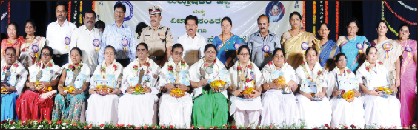
 The Florence Nightingale award recipients are seen with dignitaries at the award presentation ceremony organised by the District Wing of Karnataka State Government Nurses' Association to mark the Nurses' Festival at Jaganmohan Palace here yesterday.
The Florence Nightingale award recipients are seen with dignitaries at the award presentation ceremony organised by the District Wing of Karnataka State Government Nurses’ Association to mark the Nurses’ Festival at Jaganmohan Palace here yesterday.

Mysore :

“Private hospitals have become extortion zones where deliveries are being deliberately done under caesarian section,” alleged MLA M.K. Somashekar.

He was speaking after inaugurating a function organised by the District Wing of Karnataka State Government Nurses’ Association at Jaganmohan palace here yesterday to mark Nurses’ Festival and presentation of Florence Nightingale Awards for the 6th year.

Somashekar lauded Cheluvamba Hospital where normal deliveries were common, thanks to the good doctors and nurses. He said that an appeal has been made to the Chief Minister to establish a District Government Hospital in K.R. Constituency.

Speaking on the occasion, Police Commissioner Dr. M.A. Saleem said that nursing profession was a noble one and asked nurses to emulate Florence Nightingale. The Association General Secretary Vijaya Nayak presented a charter of demands to the MLA.

The Florence Nightingale award for 2014 was presented to nurses Uma H. Bellary, Indiramma, Sunandamma, Winfred, V. Sowbhagya, Elizabeth Saralakumari, Susheelamma, D.K. Leelavati, R. Leela, Jayanandakumari, Sumitra Bai and Tanuja. The Best Service Award for 2014 was presented to T.M. Meenakshi, B.P. Ghanavati, B.M. Anita, S.V. Padmalata, P.P. Kamini of K.R. Hospital, Dhanalakshmi of Lakshmidevamma Hospital in Jayalakshmipuram, lecturer Pushpalata and student Lingarajamma.

DHO Dr. H.T. Puttaswamy, MMC&RI Dean and Directo Dr. B. Krishnamruthy, K.R. Hospital Medical Superintendent Dr. B.G. Sagar, Cheluvamba Hospital Medical Superintendent Dr. S. Radhamani, ESI Hospital Medical Superintendent Dr. Ramesh Jevur, Association District President Shivamma, State President B.S. Bhyramma and others were present.

source: http://www.starofmysore.com / Star of Mysore / Home> General  News / June 08th, 2014

Pandit K.S. Hadapada award presented

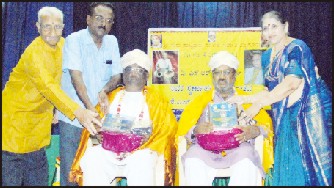
Vocalist Dr. Ashok Huggannavar and tabla maestro Pt. Allammaprabhu Kadakola being felicitated with ‘Pandit K.S. Hadapada Award’ at a function organised by Guru Puttaraju Sangeetha Sabha at Nadabrahma Sangeetha Sabha on JLB road in city yesterday.

Mysore :

Dr. Ashok Hugganna of the Dept. of Music of SDM College, Honnavar and tabala artiste Pandit Allammaprabhu Kadakola of Dharwad were presented with Pandit K.S. Hadapada Award instituted in the memory of Late S.R. Krishnamurthy at a function organised by Guru Puttaraju Sangeetha Sabha held at Nadabrahma Sangeetha Sabha on JLB road in city yesterday.

Inaugurating the programme, Karnataka State Dr. Gangubai Hangal Music and Performing Arts University Vice-Chancellor Dr. Sarvamangala said that from time immemorial music has remained a major attraction among people of all classes and added that the awards were being presented to artistes for their outstanding contributions to Hindustani and Karnatak music.

Corporator and Hon. President of Sri Guru Puttaraju Sangeetha Sabha M.V. Ramprasad presided over the function in which retired Director of Archaeological Survey of India (ASI) Dr. K.M. Badri and others were present.

Today at 6 pm, there will be a solo tabla performance by Bheemashankara Bidanur of Mysore accompanied by Gurubasava Mahamane of Dharwad on Lehar.

At 6.45 pm, Dr. Ashok Huggannavara from Honnavara will present a vocal recital, accompanied by Pt. Allamaprabhu of Dharwad on tabla, Gurubasava Mahamane of Dharwad on violin and H. Mrityunjaya of Mysore on harmonium.

source: http://www.starofmysore.com / Star of Mysore / Home> General  News / June 08th, 2014

NR Group to host ‘ IGU Ladies Amateur Golf Championship ‘ in city for the first time

NR Group is bringing to Mysore for the 1st time ever the National-level Ladies Golf Tournament. The Golf Tournament is called NR Group All India IGU Ladies Golf Championship. The Tourney will be conducted by the Indian Golf Union (IGU) at the JW Golf Club Mysore. The 1st Tee Off is on June 8 at 8 am and the prize distribution ceremony will be held on June 10 at 1.30 pm.

The three-day tournament will witness 70 amateur golfers from across the country vying to be crowned as champions. The Championship will have Top national-level golfing ladies such as Seher Atwal, Gaurika Bishnoi and Aftha Madan.

The event will feature competition in four categories — Ladies Open for women who are 18 years of age and above; Junior Girls Category-A for young girls between 15-18 years of age; Junior Girls Category-B for girls aged between13-14 years of age and Sub-Junior for girls aged 11-12 years.

Speaking about the tournament, Arjun Ranga, Managing Partner, NR Group said, “NR Group has legacy of supporting and nurturing sporting talent. We are confident, that the NR Group IGU Ladies Amateur Championship will offer amateur golfers a platform to display their golfing talent. This national event will present the golfers of Mysore an excellent opportunity to treat their golfing spirits as well.”

For details, contact Mob: 97422-79654 or 97422-72210, according to a press release.

source: http://www.starofmysore.com / Star of Mysore / Home> Sports News / June 07th, 2014

Pages from history : Memorials to household animals

by Prof. A.V. Narasimha Murthy, former Head, Department of Ancient History & Archaeology, University of Mysore

Setting up memorials has been an ancient practice in India including Karnataka. Of the large number of memorial stones found in Karnataka which are generally referred to as hero-stones (Viragallu), the more interesting and rare ones are those dedicated to pet and household animals. Of all the household animals, dog occupies a prominent place because of its faithfulness in serving the man in addition to its use in a variety of ways. In fact, often dogs are treated as a part of the family, with the exception of cows which attained an eminent position because of its sacred character. Naturally, memorials to dogs are available in greater number as compared to other animals. Some instances may be referred to here.

The most interesting memorial to a dog is from Atkur in Mandya district dated 950 AD, belonging to the Rastrakuta period. A battle was fought between the Cholas and the Rashtrakutas in which Ganga King Butuga’s general Manalera took part. The King was pleased by the valour of Manalera and the latter requested the dog Kali as a present. He was given the dog Kali. It was taken to his native place and it became his pet dog.

One day Manalera went for hunting along with his dog. Boars came to attack Manalera and on seeing this, the dog attacked the boars and saved his master’s life. But in the process the dog died of injuries sustained. Manalera was overcome with grief over the death of his pet dog Kali. He erected a huge memorial stone with a long inscription which narrated the entire incident and the heroic part played by his dog Kali. He also carved the scene of Kali fighting with the boar. Not satisfied by this, he appointed a Gorava priest to worship this memorial stone daily before taking food and made provisions for all these things. Thus Manalera elevated the dog to the level of a divinity and that is why this is considered as a rare memorial to a pet dog.

The story of other two dogs by name Dhalaga and Loga is recorded in an inscription of 971 AD from village Melagani in Kolar district. The two dogs were taken by their master for hunting in the local forest. Dhalaga killed 26 boars and Loga killed 75 boars and saved their master. Unfortunately both the dogs succumbed to the injuries. The grief-stricken master decided to erect a suitable memorial to both the dogs. He carved the entire hunting scene on a stone slab which has two friezes. The first frieze depicts the dog Loga killing 75 boars while the second frieze shows Dhalaga killing 26 boars. Thus this is a fitting sculptural memorial to the heroism of two dogs by a grateful master. Incidentally the above two instances show that naming dogs was an ancient practice and at least as old as one thousand years.

Another memorial stone from village Nelavagilu (Bangalore district) depicts vividly a hunting scene in which a hero is assisted by two dogs. One of the dogs is charging against the boar almost tearing its front portion while the other dog is shown as attacking from the top. The hero is shown as piercing the boar from his long and sharp weapon.

Yet another inscription of the eleventh century refers to Pallavagauda who took his dog named Madakesari on a hunting expedition to a forest in which the dog killed many boars but it was also killed in the encounter.

One more memorial may be referred to here: A fine memorial stone has been found in Balligave in Shimoga district. It is dated 1183 AD. It has three friezes. The bottom most frieze depicts a fight against a boar by three dogs. The dogs are shown as attacking the boar. The second panel depicts the celestial nymphs carrying the hero. The third shows the hero enjoying heavenly pleasures.

Memorial stones of other types may also be referred to now. A tiger entered into a village called Tavarekere. The people were scared of this. A hero by name Kambaladana immediately took action. He asked his pet dog to fight against the tiger. It fought bravely but was killed by the tiger. But the tiger ran away to the forest. Immediately Kambaladana erected a memorial stone in which is shown a fight between the dog and the tiger. The inscription records the heroism shown by the dog.

A dog attacking an elephant is carved on a memorial stone found in Yelahanka, Bangalore. On the upper frieze is shown the fight between the dog and the elephant and the second panel shows the death of the dog. It is interesting that the dog chose to attack a huge elephant.

Horses are generally used in battles and also as a means of transportation in the ancient period. We have a large number of memorial stones depicting soldiers sitting on horses and fighting the enemies. Even some of the hero-stones depict such scenes in sculpture. Such panels have to be carefully examined if they were really meant to be memorials to horses or soldiers sitting astride them. There are some which are really meant for horses. Kumararama of Kammatadurga was a great hero. He had a horse name Bolla to which he was greatly attached as it carried him in all types of battle-fields successfully. Naturally he developed great love and affection for this horse. There is a sculptural panel in the vicinity of Kumararama temple in which a horse is shown and this has been identified as Bolla. Thus it is a fine memorial erected by Kumararama himself to his pet horse.

There is a bronze sculpture of a horse in the temple at Bilikere in Challakere taluk of Chirtradurga. It is a representation of a horse used by the soldier Vira Chikkanna. There is another temple at Nagavageri in Kolar district. It has a bronze horse which is being worshipped by the people. A sculptural representation of a horse is seen on a boulder in the village Talaganavara in Kolar district. Obviously this is a memorial by a couple whose sculptures are seen in the same place. There are many horses carved on the boulders of Chitradurga fort and they are taken to be memorials.

Erecting memorials to cows was a common practice in ancient Karnataka. Stealing of cows became a practice of political significance. They are referred to as Gograhana. There are hundreds of such cow memorial stones in ancient and medieval Karnataka. At such times local heroes fought against the thieves and protected the cows and perhaps some of them died. In such cases memorial stones were erected with the pictures of heroes accompanied by cows. For example an inscription of 1140 AD from Shimoga states that the hero fought against the robbers, rescued the cows but he himself died. Another hero-stone from Soraba informs the sacrifice made by Kamagauda while saving the cows. Even a woman taking part in such fights is seen from a hero-stone from the village Sarakanur in 1041 AD. Lakshamma killed the miscreants who stole the cows but she died in the process.

Rarely do we find memorials to elephants also. The best example is a small silver sculpture of an elephant now kept in the Igguthappa temple at Padi in Kodagu. It has an inscription which refers to the hunting by King Lingaraja II who is described as having caught 34 elephants and 8 young ones alive. To commemorate this event, he gifted a silver image of an elephant to the temple. Thus people showed their love, affection and respect for household animals and erected memorials. This shows how they cared for the pet animals in the ancient times.

source: http://www.starofmysore.com / Star of Mysore / Home> Feature Articles  / by  Prof. A.V. Narasimha Murthy / June 07th, 2014

Bankers Recreation Club fetes merit students

MeritStudentsBF12jun2014

Mysore :

“Children should be allowed to pursue education in the subject of their choice instead of their parents forcing them to choose a course,” opined Dr. M.R. Ravi, Addl. Regional Commissioner.

He was speaking at the Prathibha Puraskar award presentation function organised by Bankers’ Recreation Club at its premises in Sharadadevinagar here last evening.

Dr. Ravi said that during earlier days only a few students used to score high marks in examinations and used to go unnoticed. However, he pointed out that many students excel in examinations because of good parental support and encouragement.

SBI Deputy General Manager S. Ramesh Rao advised the students to widen the scope of their learning as competition was prevalent in every sector.

Totally, 25 students who had excelled in SSLC exam were presented with Prathibha Puraskar. They are: Nithyasurabhi (622 – MMHS), daughter of Roopasri and Ananthashayanam; Hymavathi (620, SVHS), daughter of Gowramma and B.K. Udayashankar; Gaurav (619 – VVHS), son of Aparna Dattatri and Dattatri; Sumitha S Rao (618 – SVHS), daughter of B.S. Suchetha and B. Suresh Rao; M. Aashik Narayan (618 – RKVS), son of Ashabharathi and M. Ganapathy Prasad; Monisha Gowda (617 – SVHS), daughter of Mamatha and Dr. Ankegowda; Chandana Shravani (617 – CKC), daughter of N. Shobha and Mahadevegowda; H. Parikshith (617 – SVHS), son of Shobha and Honnegowda; Aashritha (617 – SVEI), daughter of J. S. Poornima and S. Dinesh; M. Ganavi (617 – BVB), daughter fo Rohini and T. N. Harish; Ancia D’ Souza (617 – SVEI), daughter of Dr. Alphonsus D’ Souza and Dr. Veena D’ Almeida; Y. K. Sai Supreth (616 – RKVS), son of Divyaraj and Y. B. Kuppuraju; Praneetha (615 – SVHS), daughter of Dakshaynini and Thammaiah; B. Namratha (615 – SVHS), daughter of D. L. Savitha and T. V. Bhanuprakash; B. Niranjan (614 – SVHS), son of Rajamma and Gangadharaiah; Mohammed Faidh (614 – SVHS), son of Razia Sultana and Mohd. Aslam; L. Sangeetha (614 – SVHS), daughter of Nagasulochana and B. Lingaraju; Ravi Kiran (614 – SVHS), son of Gowramma and Doddaswamy; B. S. Raveesh (614 – RKVS), son of Dr. H.R. Nalina and B.T. Suresh; Sanjay N. Shastri (614- Gnagaganga), son of Sujatha and D. Shankar Narayana; Shamitha Shekar (613 – SVHS), son of Shubhada Shekar and K. L. Rajashekar; P. Samhith Sharma (613 – CFTRI), son of Dr. K.S. Bharathi and Dr. P. Ramesh Kumar; Apoorva (613 – VVHS), daughter of Swaroopini and T. Ramesh; Amitha (613 – VVHS), daughter of Roopasri and Gopalakrishna; Sahid Nehal (613 – MMHS), son of Shahida Begum and Aleemullah Khan.

Club President M.S. Umesh, Vice-President H. Balakrishna, General Secretary P. Suresh Nayak and others were present.

source: http://www.starofmysore.com / Star of Mysore / Home> General News / June 06th, 2014

Rare surgery performed at JSS Hospital

Doctors remove mass and also half of the left lung.

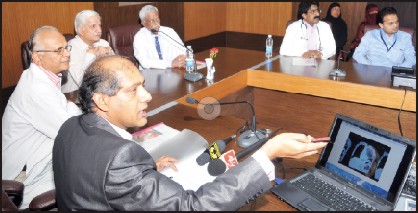
Dr. Shyam Prasad Shetty is seen explaining about the procedures involved in the surgery performed on the woman at the press meet at the hospital yesterday, as the team of doctors who were involved in the surgery and the management of the hospital look on.

Mysore :

Doctors at JSS Hospital, Mysore have performed a rare surgery on a 24-years-old woman from Channarayapatna with a three months history of intermittent episodes of cough, difficulty in swallowing, difficulty in breathing, coughing out whitish material along with hair.

The woman had few episodes of blood in the sputum and had lost 3 kgs of weight over a period of three months.

Dr. Shyam Prasad Shetty, Cardiothoracic Surgeon, speaking at a press meet at the hospital in city yesterday, said that the woman was initially treated at a local hospital and was referred to him for expert care. The chest X-ray and CT thorax showed a large mass in the left side of the chest very close to the heart.

The large mass was abutting (closely adjacent to) the main blood vessels coming out of the heart. A scope was inserted into the airways by Dr. Jayaraj, Prof. of Pulmonology and these revealed long tufts of hair and whitish material coming out of the left main branch of the lung, confirming that this mass was communicating with the left lung.

The patient and her family were explained about this unusual large mass in her left lung, about its approximation to the heart and the great vessels and about the risks involved in surgically removing it.

A multidisciplinary team of specialist doctors comprising of Dr. Shyam Prasad Shetty, Dr. Umesh Nareppa Cardiothoracic and Vascular Surgeons, Dr. Jayaraj and Dr. Mahesh- Pulmonologists, Dr. Dinesh Kumar and Dr. Murugesh Wali- Cardiac Anesthesiologists was formed and a plan of care evolved. Surgery was done under general and epidural anaesthesia by ventilating only one of the lungs. The left side of the chest was opened and a large mass measuring about 8 cm x 9 cm adjacent to the main pulmonary the left pulmonary arteries, invading into the left upper lobe of the lung was found.

This was a difficult and technically challenging surgery. The doctors removed the mass also had to remove half of the left lung also since this mass was connected to it. After the surgery, she was in the intensive care unit for five days and was discharged two weeks after the surgery.

If the mass was left unattended, this would have become life threatening by rupturing into the lung and its air ways, into the heart and its major blood vessels.

Dr. R K Chaturvedi, Director, JSS Hospital said, “This case was a challenge to the cardiothoracic surgeons, pulmonologists and cardiac anesthesiologists. A multi-specialty team equipped with high end infrastructure which is available at JSS hospital-Mysore made it possible to carry out this major surgery on a very rare and unusual mass in a young lady. Since the patient was a beneficiary of Vajpayee Aarogyashri Scheme (BPL), the patient was not charged any money.”

The team comprised of Dr Shyam Prasad Shetty, Dr Umesh Nareppa Cardiothoracic and Vascular surgeons, Dr. Jayaraj and Dr. Mahesh Pulmonologists, Dr. Dinesh Kumar and Dr. Murugesh Wali- Cardiac Anesthesiologists.

source: http://www.starofmysore.com / Star of Mysore / Home> General News / June 06th, 2014

TRAVELOGUE…: 14,000 feet to heaven

Scaling the Saurkundi Pass-1

Trekking through snow is an unforgettable experience for the simple reason, there is no path or trail waiting for you; you have to create your own path, where even a small miscalculated step can be your last, says Aishwarya Sunaad, Trekker, International Academy of Mountaineering and Allied Sports, Mysore.

by Aishwarya Sunaad

As the IAMAS (International Academy of Mountaineering and Allied Sports) team bid good bye to Mysore on the evening of 30th April, nobody could anticipate the adventure that awaited us 3000 kilometres away. We were 47 of us, of all ages and sizes, from 3 different States, making our way to conquer (as we would later learn) one of the toughest expeditions in the past 6 years.

SaurkaundipassBF11jun2014

Our journey took us backpacking through 5 States and several cities before we could officially start our endeavour up the mountains from Manali. There is a certain unexplored joy in visiting a new city everyday and as our team wound its way through each of these new places, it was like unravelling a different world. New people, new cultures, new experiences, new stories.

The star highlights of our backpacking being an exclusive visit to the Rashtrapati Bhavan in Delhi; reliving history in Agra and Mathura, experiencing sanctity at the Golden Temple in Amritsar, reliving the stories of partition at the Wagah Border with Pakistan at touching distance, 14 kilometres of White Water Rafting amidst class 6 rapids in the Ganga at Rishikesh and a VIP visit to the prestigious Indian Military Academy at Dehradun, to name a few.

After these indelible experiences, we arrived at our Base Camp in Manali on the 8th of May. Set in the Beas River Valley in the Kullu district of Himachal Pradesh, Manali is a treat to ardent trekkers and tourists alike. Our base camp, set amidst apple orchards with snowcapped mountains and pine forests on all sides marked the beginning of one of the greatest adventures we could experience. After acclimatising to the cold of Manali from the heat of the plains with some thrilling rappelling and river crossing, we started our trek officially on the 11th of May to Segli, our first camp.

The team descended down to a landmark point called ‘15 Mile’ before beginning the 12-kilometer ascend to Segli, at a height of 7,100 feet. The trail wound through small villages and dense vegetation, with the Dhauladhar mountain ranges surrounding us. Just as the team halted for lunch, we were greeted by the first spells of heavy showers. With raincoats and ponchos and an undying spirit, we trekked through the rain and reached the camp site by evening. Sipping some hot tea to combat the chill, we geared up for the next day.

The rain had subsided as we wound upwards towards the camp of Haura Thatch, at 10,700 feet on May 12; ‘Thatch’ means ‘plateau like land.’ Our camp site was actually on a Plateau up a Mountain! This goes to say, nature has her own mysterious ways. We trekked about 10 kilometres through dense green forests and gurgling streams with occasional glimpses of the mountains through the canopies. The sights that we saw and the scenes that we experienced are beyond description.

Trees, flowers, leaves, mosses, birds, insects and all other wonders of nature of all shapes and sizes ! It was paradise. As we were taking in the surroundings, we were greeted by rain, heavier than before. We couldn’t stop. With the rain and hail pounding, we continued upwards. It was getting cold and we were drenched to the bone. At one point, it seemed impossible to go any further when we reached a clearing that seemed suitable to camp. Tents were pitched and a fire was lit under a rock. After vain attempts to dry ourselves we retired to our tents. It rained the entire night and the next morning of 13th, the weather was so ruthless we couldn’t move camp. It was a truly chilling experience. By evening, on the 13th, the weather cleared and the sun peeped out. As we saw the first rays of sun in 2 days, the world seemed magical. We had set up camp near a small stream in an evergreen forest with pine trees on the fringes. There were colours even our cameras couldn’t capture!

But now, there was a crisis. Before starting the trek, we had already decided to forego our fourth camp at Dohra because of extreme snow conditions. Now we were lagging behind yet another day as we could not trek to Camp 3, Maylee, because of the rain. To make up the distance and keep the time schedule, a bold decision was taken. A decision of risk and daring. A decision that would test our courage and endurance, our mental strength and will power. A decision of ultimate adventure. A decision to cover the entire distance to Saurkundi Pass Summit in one day!

We started on the trail at 4 am in the morning on May 14. With torches in our hands and adventure in our hearts, we continued upwards. We encountered the first patches of snow and the first rays of light around 5.30 am. It was breathtaking. By 6.15 am, we had hit the snow.

[ Part 01…To be continued]


TRAVELOGUE…: SCALING SAURKUNDI PASS-2 

Aishwarya Sunaad
Aishwarya Sunaad

Trekking through snow is an unforgettable experience for the simple reason, there is no path or trail waiting for you; you have to create your own path, where even a small miscalculated step can be your last. The temperature kept dropping to subzero values and the sun shone harsher. It was maddeningly white everywhere and without goggles one could go blind. The snow seemed never ending and the summit was nowhere in sight. It was getting colder and colder.

There was snow in our shoes and pants, our feet were going numb and we couldn’t feel our fingers. We had walked for nearly 6 hours up the mountain without stopping and still there was no sign of the Summit. Finally, at around 11.06 am, after a grueling walk, we reached the Saurkundi Pass. The snow was about 3 feet deep and it was snowing heavily.

Despite this, we crossed the Pass and summited, at a height of 13,500 feet. There is no greater feeling than having successfully summited an expedition. You are literally and figuratively on top of the world. We had the frozen Saurkundi Lake on one side and never ending ranges of mountains on all sides. We could almost touch the clouds.

By this time, our feet were frozen and our fingers non-existent. That was the day we realised that cold is the most unforgiving condition you can experience. But the joy of having summited one of the most difficult treks, however easy I may make it look, overshadowed everything else.

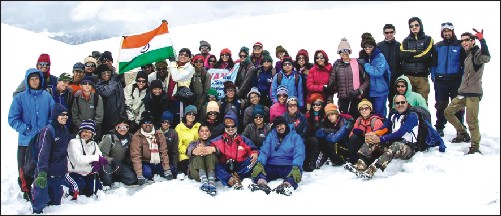
The 20 minutes we spent on the summit with the Indian flag and the IAMAS banner fluttering proudly in the wind, I can guarantee, will be the most important moments of our lives. But it did not end there. What we thought was difficult while climbing up was nothing compared to what we encountered while descending.

The snow was falling heavily and there was no route we could follow. We were numb and hungry but had to soldier on. We had no choice but to slide down the slopes ! Slide down with no equipment apart from a rope, which we used occasionally.

That was real adventure and the adrenaline rush was simply superb. With everything at stake, we made it down to the tree line by around 4 pm. We had trekked through the most extreme conditions for 12 hours. We finally reached our campsite at Longa Thatch by 6 pm after 14 hours of ascending and descending. We had done it with zero casualties! It was the most satisfying feeling one can feel.

After a good night’s sleep and merry making, we set off for base camp. The weather was sunny with the city of Manali, which looked like the Map of India from that height, sprawling beneath us. We descended down to Lekhni on May 15. The sights were like a poem. After staying at an authentic log hut that night, we finished our expedition on the 16th of May 2014 after successfully reaching Base Camp.

The next few days saw us exploring the city of Manali and seeking some more adventure while rafting in the Beas River. The team left for Delhi on the evening of 18th, where a privileged visit to the Parliament House added another feather to our caps. We caught the Duronto Express back home on the 19th with truckloads of memories and made it home on the 21st of May 2014, successfully.

Every expedition brings your best side to the forefront because it is the ultimate challenge one can face alone. And if you are an adventurous person and need the adrenaline, it is the call of the mountains you must answer. And finally, if you want to test your daring and mettle, it is the Saurkundi Pass you must conquer. For, if there is a paradise, it is this, it is this, it is this.

[Concluded]

Part 01:

source: http://www.starofmysore.com / Star of Mysore / Home> Feature Articles  /by Aishwarya Sunaad / June 06th, 2014

Part 02:

source: http://www.starofmysore.com / Star of Mysore / Home> Feature Articles  /by Aishwarya Sunaad / June 07th, 2014

Over a cup of evening tea : A most ordinary but unusual man

Rangaswamy
Rangaswamy

by  Dr. K. Javeed Nayeem, MD

Yesterday morning I had a most unexpected visitor, Rangaswamy, at my consulting room. He had come all the way from his native place, Banavara near Arsikere to see me with his young son who had not been feeling too well for the past few weeks. This very small built, ever-smiling man is an itinerant seller of kitchen utensils who goes about from village to village on his rickety and always over-loaded moped from dawn to dusk. But that is not his main job and what he is good at most. It is what he does when he is not selling utensils that makes him unusual.

Rangaswamy is a professional monkey-catcher, much in demand and it is in this unusual calling that his talents and ability stand out most. I first met him nearly two decades ago when he became a sensation with his skills in the town of Kollegal where I used to then practice. I still have a weekly outreach clinic there. The town used to be plagued by a herd of more than a hundred monkeys that used to pillage and plunder the crop in all the coconut and fruit trees in addition to harassing citizens on the streets by jumping on them and snatching away anything edible.

No child could walk home from the neighbourhood shop with an ice-cream stick or a packet of chips and no housewife could walk home safely with her daily purchase of vegetables or groceries. And, because the monkeys loved to play with all the clothes that used to be put out for drying I am not too sure whether the womenfolk there had evolved a laundry sorting service in their respective neighbourhoods, not unlike the postal department, to exchange their misplaced and interchanged clothes! I do not know who gave them the idea but one day the town municipal authorities who were under tremendous pressure to do something about the problem decided to rope in Rangaswamy.

He arrived on the scene with his wife and started a two-day survey of the town and the magnitude of its problem before getting down to work. And when he got down to work it was all child’s play for him. In just a week’s time he had all the rouges, big and small, dancing and prancing to his tunes but now safely behind the bars of a large cage from where they could do no harm. The much relieved municipal authorities would then pack their tormentors off in batches by truck to be let off in the distant forests of Malai Mahadeshwara Hills. Since Rangaswamy used to always be on the rooftops with his magic traps while at work, I could not see his handiwork at close quarters although I was tempted at times to follow him and learn the basics of his art.

Strangely, I have always been and I still am fascinated by anything that can be called ‘monkey business’! But on the terraces and rooftops, Rangaswamy seemed as agile as any monkey and unfortunately this was not my forte. But I used to always discuss his exploits and achievements at his every visit to my clinic and he would tell me all about himself and his art with great enthusiasm. I would always tease him that the monkeys were attracted to him because he looked exactly like one of them which is what made his job easy for him. He would say “Yaay hoogi swamy, neevu sari” and break into a shy grin.

But very strangely, yesterday, although I tried very hard I could not get my friend to smile for his photograph. If you happen to see even a wee bit of a smile on his face here it is largely due to your imagination. I would get to spend some time with him unfailingly at the end of each day of his stay in Kollegal because his newly married wife happened to be a bit hypochondriac and he happened to be a very caring and affectionate husband, not unlike me.

He would wait patiently for the crowd of patients to melt away before bringing her into my consulting room. She would have some complaint or the other for which I would prescribe a new and different looking placebo that would satisfy both husband and wife immensely but just for the next twenty-four hours. The next evening they would be back and the lady would narrate a different set of symptoms for which I would evolve a different remedy.

But taking pity on the poor and hapless man I decided to cure her permanently before they left Kollegal. And, I did it too by resorting to a rather drastic but ridiculously simple trick for which Rangaswamy pledged his lifetime gratitude before leaving. I told her that she would soon find her husband going in for a second wife if she did not stop complaining about her minor aches and pains and this unusual treatment seems to have worked wonders. Rangaswamy yesterday told me that his wife who has borne him two sons after our last meeting now dreads going to doctors and that is why this time he had come to see me without her! In case you have a monkey problem, you can contact Rangaswamy on Mob: 9972146839. And, in case you have a hypochondriac wife, you can contact me!

e-mail: kjnmysore@rediffmail.com

source: http://www.starofmysore.com / Star of Mysore / Home> Feature Articles  / by  Dr. K. Javeed Nayeem, MD  June 06th, 2014

19-year-old Boy undergoes stenting for Aortoarteritis at JSS

StentingBF11jun2014

Mysore :

A 19- year-old boy from Mandya district underwent a rare surgery at JSS Hospital in city recently. The surgery was performed by Dr. Arun Srinivas and Dr. H.P. Guruprasad, Senior Interventional Cardiologists of JSS Hospital here.

He had stents implanted in his abdominal aorta and kidney arteries for a rare disease called Aortoarteritis, also called Takayasu’s disease in which major arteries supplying blood to the arms, brain, intestine, kidneys and legs can get blocked and can cause severe complications in young adults.

According to Dr. Arun Srinivas, this is a rare disease and the first time such a treatment has been performed in Mysore. The patient made an excellent recovery after the procedure and was discharged with good recovery of his kidney function.

Stents and treatment were given free of cost as he was a poor patient and was a beneficiary Below Poverty Line (BPL) card.

Dr. Arun Srinivas also stated that all heart diseases including heart attack and emergency care are provided free of cost at JSS Hospital Cardiovascular Services for poor patients with BPL card.

source: http://www.starofmysore.com / Star of Mysore / Home> General News / June 06th, 2014