Top Indians for Bangalore 10K run

Some of  India’s top athletes will be participating in the Tata Consultancy Services World 10K Bangalore Run here May 18.

Procam International, the promoters of the event, announced here Saturday that over 60 leading Indian athletes will run alongside a superfast elite athlete field.

The Indian challenge includes BC Tilak, VL Dangi, Soji Mathew and Santosh K among men, and Vijaymala Patil, Priyanka Singh Patel, Neelam Rajput and Manisha Dattatray Salunkhe among women.

While the total prize money is in excess of $ 170,000, the winners – that can include Indian and overseas finishers – in the men’s and women’s World 10K categories will receive $21,000 each.

The top Indian men and women finishers will be presented with Rs.2 Lakh, the runner-up Rs.1.5 Lakh, followed by Rs.1.25 Lakh and Rs.1 Lakh. The Indian athletes have a jackpot of Rs.2 lakh each for men and women, if they lower existing Indian course records.

Vijaymala, who was runner-up at the 2014 Mumbai Marathon (2:59:58) and fourth in Delhi Half Marathon, will spearhead Indian women’s challenge along with Priyanka, winner of the 2011 Mumbai Half Marathon.

Well-known, Neelam Rajput, the 2012 National Marathon champion, has dominated running events in places such as Goa, Surat, Vadodara, Satara and Pune. She recorded a top finish at the recent Surat Half Marathon.

Young Manisha Salunkhe was among the top 10 finishers at last year’s Bangalore World 10K. She finished sixth at the 2013 Delhi Half Marathon and is in good form.

Leading the men’s contingent, Tilak clocked 1:04:45s at the Mumbai Marathon in 2011, his personal best. He finished fourth at the 2013 Jaipur Marathon and is aiming for a top position at this year’s run.

Army man Dangi was runner-up at the 2013 World 10K Bangalore and finished the 2013 Delhi Half Marathon in 1:04:53s. Looking to better last year’s performance, he should be the man to beat.

Kerala’s Soji Mathew is another of India’s top runners and he recorded a 1:05:45s finish at the 2014 Mumbai Marathon. His personal best in a Chennai road running event is a respectable 29:49 while Santosh K finished last year’s Bangalore World 10K in 31:53 and looks forward to a better finish this year.

source: http://www.business-standard.com / Business Standard / Home> News-IANS> Sports / by IANS / Bangalore – May 10th, 2014

Mangalore: Bunts Hostel marks aborted centenary – A brief history

Mangalore :
Reading in the media about the projected start of centenary celebrations of Bunts Hostel on May 9, 2014, announced on May 7 by a high profile group of Bunt leaders at a press conference, I had to refresh my memory as a tracker of developments in Tulu Nadu. I had projected Bunts Hostel as a surviving centurion in the media little ahead of the centenary mark in the middle of the last decade – assuming that it would survive a couple of years to justify its surviving centurion tag. It did. But, the centenary celebrations apparently did not take place. Checking on it, a leading light of the Bunt community explained that there were some impediments which are now behind it to launch the aborted celebrations. Better late than never. It is relevant to trace history of the 100-plus years of this organization.
Bunts1BF22may2014
One of the landmarks of Mangalore is Bunts Hostel Circle (now reconstructed and shifted a bit and awaiting inauguration on May 9) which derives its name from the community’s hostel for students, located in a vast complex to the north of the circle. The hostel, under the auspices of Buntara Yane Nadavara Sangha ®, was on the threshold of celebrating its centenary when I tracked it in the middle of the last decade. Elaborate preparations were on with a group of scholars researching the community’s background to publish a comprehensive history of Bunts.
It is interesting to note that the community, which was mainly rural-based and land-owning, had the foresight of looking into the needs of its youth coming to Mangalore town in quest of education—over a century ago. Even in the decades since, the thrust of Bunts had been to establish hostels for students in various taluk and other centres in Tulunadu. The idea was abroad much before the concrete move was made in 1907 and its future, with added dimensions is well poised to justify the consideration of Bunts Hostel as a surviving centurion.
Bunts2BF22may2014
Before we come to the first Bunts Hostel and its several replications, let us briefly consider the background of Bunts. According to the Gazetteer of South Canara (Madras District Manual), edited by John Sturrock, ICS, and first published in 1894, Bunts, as their name implies (Bunt in Tulu is a powerful man, a soldier), were originally a military class and the use of the term Nadava, instead of Bunt, in the northern portions of undivided South Canara (north of Kallianpur River) points, among other indications, to a territorial organisation by “Nads”. But few traces of such organisation now prevail, great changes having been made when the Vijayanagara government introduced, more than six hundred years ago, a system of administration under which the local Jain chiefs, though owing allegiance to an overlord, became more independent in their relations with the people of the region. Under the Bednore kings, and still more under the Mysore rule, the power of the chiefs also swept away, but the old local organisation was not reverted to.
As Sturrock noted 120 years ago, “the Bunts are now the chief land-owning class”. Since the early centuries of the Christian era, Tulunadu seems to have had chieftains who were in constant state of fighting for hegemony. This threw up a class of people known as Bantaru or warriors who, in course of time succeeded in becoming the owners of land which did not fall to the share of the priestly class, Brahmins.
Bunts, notes Sturrock, are a fine stalwart race with a sturdy independence of manner and the comparatively fair complexion common to the West Coast. They had not largely availed themselves of European education, and consequently there were but a few of them in government service; but among these few, some had attained high office and been much respected.
Ten years after Sturrock describing the status of Bunts as above, the community leaders realised the need to help students going to Mangalore for higher education. This gave birth to Buntara Yane Nadavara Sangha in the first decade of twentieth century. The community leaders, mainly landed gentry living in mofussil areas, realised the importance of educating their youth if the community was to progress. There were few higher educational institutions in Mangalore and students coming from distant villages, in the absence of modern transport as now, needed residential accommodation in town. October 23 and November 3 of 1907 are historic dates for the Bunts. On these dates, 37 leaders of the community covering the geographic areas from Kasargod to Basrur, decided to establish student hostels in Mangalore and taluk towns. Even before these two meetings, 16 local meetings had been held in various centres in Tulunadu.
On May 17, 1908, the first general body meeting of the Sangha was held in Ramakrishna Vidyarthi Bhavan in Mangalore, under the presidentship of Attavara Ramayya Punja, Civil & Military Station Judge, Bangalore. The first office bearers included Attavara Devappa Punja (President), Kodialguthu Krishna Salaya, (Vice President), B. Mahabala Hegde (Secretary) and Attavara Balakrishna Shetty (Treasurer). The Sangha was registered under Madras Government on May 10, 1908.
In 1907, the hostel was started in a bungalow at Karangalpady with six students. Later, on March 3, 1908, the Sangha acquired its present land and constructed the first hostel which was inaugurated on May 19, 1909 by the then District Collector – with 52 students. While this hostel served well in succeeding decades, a new hostel, Vittal Shetty Memorial Building, now serves the students of the community. Since then, many hostels, schools, old age homes and multi-purpose halls have been constructed by the Sangha in taluk towns and other centres.
Bantara Yane Nadavara Sangha name was changed to Bunts Alias Nadavara Mathr Sangha in 2002. Federation of Bunts Associations was established in 1987. In 1995, the first World Bunts Convention was held in Mangalore followed by a second Convention in 2002. The forthcoming centenary celebrations are sure to provide fresh impetus to the Sangha’s activities and hopefully help to heal the factors that delayed the celebrations by six years.
source: http://www.daijiworld.com / DaijiWorld.com / Home> Top Stories / by John D. Monteiro / Thursday – May 08th, 2014

Taluku – The Achievers’ Village

Pages from History

AchieversBF22may2014

by Prof. A.V.Narasimha Murthy

The Maharaja met Prof. Venkannaiah and requested him to give private tuition to the prince on a monthly remuneration of Rs. 250 per month, which was a luxury in those days. But Venkannaiah politely refused the offer, but made arrangements for the private tuition, through some other scholar. The family members of Venkannaiah were very unhappy for his refusal which they thought was a god-send opportunity. But Venkannaiah had a different logic — “I am a Professor at the College for which I receive salary and to take up private tuition is an offence and hence I rejected the offer.” While sending him back, the Maharaja had sent fruits in a huge silver plate. The Professor humbly kept the fruits and sent back the empty plate to the Palace. He was told that the silver plate was also a gift along with fruits. That was how the Maharaja treated him, with respect.

Some months ago, we were returning to Mysore from Hampi after finishing the South Indian Numismatic Conference. Our wives insisted on visiting Molakalmuru famous for the silk sarees. At this place every home has a weaving machine to produce silk sarees which have a good market. While returning from Molakalmuru, to our right, I saw the name board ‘Taluku’ which was the name of a village.

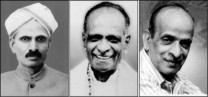
I was thrilled because this small village has given great scholars to Kannada literature. It became famous because of Talukina S. Venkannaiah, Professor of Kannada in Mysore Maharaja’s College. Practically, he was the pioneer in starting the Kannada Department here. Even educated persons also might not have heard about this man’s greatness. Such persons should refer to Kuvempu’s Sri Ramayana Darshanam. This book contains a dedication page, dedicated to Kuvempu’s Guru Prof. T.S. Venkannaiah whom the former has treated as an embodiment of divinity. One has to read it to believe it. Ta. Su. Shamarao has given a good glimpse into the life and works of Prof. Venkannaiah in his famous book Mooru Talemaru (Three generations).

Venkannaiah was a towering personality and commanded great respect as a Professor. Mysore Maharaja Krishnaraja Wadiyar IV (Nalwadi) had also heard of this great Professor and thought that this man was best suited to give private tuition to Prince Jayachamaraja Wadiyar. The Maharaja sent the Palace car to the residence of Venkannaiah and the Professor went to the Palace. The neighbours were pleasantly surprised that the Palace car had come to the residence of this Professor who had the good fortune of travelling in the Palace car. The neighbours’ respect for the Professor increased. The Maharaja met the Professor and requested him to give private tuition to the prince on a monthly remuneration of Rs. 250 per month, which was a luxury in those days. But Venkannaiah politely refused the offer, but made arrangements for the private tuition, through some other scholar. The family members of Venkannaiah were very unhappy for his refusal which they thought was a god-sent opportunity. But Venkannaiah had a differ

ent logic- “I am a Professor at the College for which I receive salary and to take up private tuition is an offence and hence I rejected the offer.” While sending him back, the Maharaja had sent fruits in a huge silver plate. The Professor humbly kept the fruits and sent back the empty plate to the Palace. He was told that the silver plate was also a gift along with fruits. That was how the Maharaja treated him, with respect.

Venkannaiah believed and lived according to the adage ‘Simple living, high thinking.’ Though not rich he was generous to a fault. Once a law college student wrote him a post card, asking money to pay his examination fee. Venkannaiah did not know that student but took pity on him. But he had no money at that time. Immediately he borrowed Rs.150 and sent it to that student. At another time a theft took place in his house. The thief could not get anything except a silver plate which he was using for eating. Everybody was cursing the thief but Venkannaiah said, ‘I am grateful to the thief who has stolen my silver plate so that I can eat along with others in an aluminium plate.’ Such anecdotes are available in plenty. That is how Venkannaiah lived. He died in 1939 and hence I did not have the good fortune of seeing or meeting that great personality.

But this is amply compensated by my close association with his brother Prof. T.S. Shamarao who was also a Professor of Kannada and a towering personality. One of his sons was my student and even today I feel guilty that I could not get him a job in Archaeology. But he on his own got a job in a bank and now is a retired happy person. Prof. Shama Rao did not mistake me for this lapse. In those days monthly meetings at the residences (Satsang) used to be held in which about 10 scholars took part. These meetings used to begin with breakfast, lunch, afternoon tea with a lecture by a scholar, and later, a discussion on the lecture. One day my turn came and I went to Prof. Shamarao’s residence where I saw H.M. Shankaranarayana Rao, Venkataramappa and others. I was asked to give a talk on ‘Ancient Indian education with special reference to Karnataka.’ It was my good fortune that the scholars present there admired my lecture.

Chief Minister Bangarappa was a student of Ta.Su. Shamarao. One day, he came to the residence of Shamarao and paid respects. He said, ‘Sir, the Government has come to your doorstep, please command.’ The condition at Professor’s house was not encouraging. Bangarappa promised to give jobs to his sons and daughter and give him a State award. Shamarao did not like it and addressing Bangarappa in singular, said, ‘Administer the State well and earn a good name, that is all I want.’ A similar thing happened to Minister Abdul Nazir Saab too.

With the passing away of Shamarao, everyone thought that Taluku publication would end. At that stage, a young and energetic son, T. S. Chayapati, came on to the scene with a determination to continue Talukina Venkannaiah Memorial publication started by his father. He has published more than one thousand books and continues to do so. He has earned the title ‘Savira Pustakagala Saradara.’ Almost all the great Kannada authors are included in his publications including K.B. Ganapathy whose four books he has published including Adarshavadi.

Almost all my Kannada books have been published by him. Not only is he a publisher, he is also an author and has 23 books to his credit.

On turning 70, Mysore District Kannada Sahitya Parishat, under its dynamic President Chandrashekar, jointly with Ranganath of Savigannada fame had organised a function, during which a felicitation volume titled ‘Chayabhinandana’ was released. Chayapati has made immense contribution to the society through his publications and the society salutes this achiever in public. Most people celebrate their birthdays at home but it is the privilege of some to get the distinction of celebrating birthday through public service. Persons like Chayapati have no retirements who is planning to publish more books.

I will be failing in my duty if I do not refer to with admiration the part played by his wife Pushpa Chayapati who has been his backbone and stood by him in all his activities including publications. She is a good PRO and Chayapati also accepts this truth without any hesitation. On this happy occasion of the release of the felicitation volume on attaining 70, I wish him good health, long life and all prosperity including more publications under the magic name Taluku. Hope all my readers will say ‘amen.’

source: http://www.starofmysore.com / Star of Mysore / Home> Feature Articles / May 17th, 2014

Auto Driver’s daughter secures 94.56% in SSLC exams

Mysore :

AutodriverBF21may2014In today’s competitive world, students securing almost cent percent results in any exam is nothing new; thanks to the various resources available to them like internet, study materials and most essential, the tuitions. But, once in a while, there are exceptional students who achieve wonders without any aids except that of what they get at School.

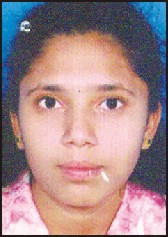
And here’s one such girl, S. Monika, daughter of M.B. Siddaraju, an auto driver in city and a student of Good Shepherd High School, who secured 94.56% in the SSLC exams without any aids than that of her sheer determination and the drive to excel.

Hailing from a very poor family, Monika has managed to score 123 in Kannada; 96 in English; 98 in Hindi; 95 in Maths; 86 in Science and 93 in Social Studies. Her father’s wishes of seeing his daughter shine in academics has been fulfilled and all he aspires for his daughter in the future is to achieve greater success.

source: http://www.starofmysore.com / Star of Mysore / Home> General News / May 16th, 2014

‘Parisara Mitra ’ Awards presented to 60 Achievers

ParisaraBF21may2014

Mysore :

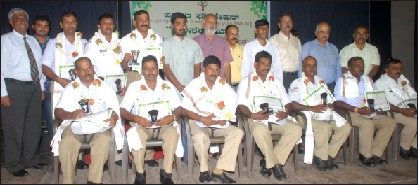
Marking the anniversary of ‘Parisara Foundation’ of Unnatha Shikshana Trust, ‘Parisara Mitra’ award was presented to 60 people from various fields who have been striving for the protection of environment at a programme organised by the Trust at Sarada Vilas Centenary Hall, Krishnamurthypuram, here on May 14.

The recipients of the award included Journalists, Police personnel, Forest Department staff, Lecturers and Industrialists.

Speaking on the occasion, Bandipur National Park ‘Project Tiger’ Director H.C. Kantharaj said that ‘Parisara Foundation’ was into several activities pertaining to environmental protection by organising camps for people from various fields. He added that Eco Clubs in Schools were being encouraged by the Foundation which has been functioning without any grant from government or private parties.

Sarada Vilas Institutions President B.S. Parthasarathy inaugurated the programme. Mysore University NSS Co-ordinator Dr. K. Kalachannegowda, Canara Bank Assistant General Manager Diwakar Shetty, Mysore District Journalists Association (MDJA) General Secretary K. Deepak, Mysore University Students’ Welfare Director Dr. Rudraiah, Unnatha Shikshana Trust President S.K. Ananthanarayan and others were present on the occasion.

source: http://www.starofmysore.com / Star of Mysore / Home> General News / May 16th, 2014

Riding into the sunset

This executive director unwinds on horseback, and admits to being emotionally connected to his horse

Faiz Rezwan (34) Executive Director, Procurement and Contracts, Prestige Group

As a 14-year-old child, Faiz Rezwan would watch his father and uncle ride their house — Matador, around their Hennur farm. Sometimes, his indulgent father would hoist him up too. That boyhood experience has translated into him owning two horses–Dragon Lady, a warm blood German mare bred for jumping, and Mr Bean, a thoroughbred ex-race horse that Rezwan has given to the Embassy Riding School to help children learn how to ride.

Despite a back problem, nothing stops Rezwan from riding at 5.30 am, at least five times a week. “I have to ride no matter what,” he says. “It’s important to stay in touch with the horse every day.” His beloved pets also get five-star treatment — a few years ago, at the stable at Equestrian Centre for Excellence, he flew down a saddlemaker from France, and around a year and a half ago, a vet was flown down from Germany to work on the acupressure points of the horses. Dragon-Lady is also given regular supplements for her joints, and her horse-shoes are changed every two weeks.

A rather expensive hobby, this. But his “investments” have also paid dividends. Five years ago, Rezwan, who also handles award-winning golf development Prestige Golfshire, got into show jumping. He even competes in the Equestrian Premier League at Embassy International Riding School every year, and took part in the Delhi Horse Show two years ago. “My passion is show jumping,” he says, hoping to make it to the Asian Games some day and even shows in Europe.

Being with Dragon-Lady keeps Rezwan fit and “is a stress buster,” he says. The animal-lover also owns a cat, two dogs, half a dozen birds, and fresh water and marine fish at home. But “Dragon-Lady is my star,” he says. “I’d never want to sell her and get another horse. Starting my day with her sets me up for the day,” he says, admitting to being emotionally connected to her. Rezwan recently bought another horse from Ireland, a Belgian-born warmblood called Valentino.
“If there was no work, I’d be riding all day,” he says. The dream life.

source: http://www.bangaloremirror.com / Bangalore Mirror / Home> Columns> Work /  by Khushali P. Madhwani, Bangalore Mirror Bureau / May 19th, 2014

Today, a butcher’s daughter will walk away with 6 golds at BU convocation

Noorjan briefly quit studies to support her family. Thanks to the chemistry of dad’s backing and her passion for academics, she excelled in her masters

NoorjanMPOs21my2014

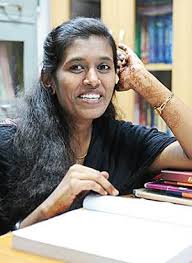
Her father never made it past class VII, her mom dropped out after class II, her five siblings have gone through education with a yawn. They are not to blame; their circumstances were such. But Noorjan A R rose above all that. On Tuesday, Noorjan will rewrite her family’s history when she picks up six gold medals as postgraduate topper in Chemistry at the 49th convocation of Bangalore University.

Noorjan’s has been a long and arduous journey, but not a solitary one. Hailing from a remote town — Bagepalli — about 90 km from Bangalore, Noorjan’s father is a butcher. Despite his meagre earnings from the mutton shop, he made sure Noorjan never lacked the resources to chase her dreams. But an even greater gift the head of the conservative family gave her was freedom to make her choices and his unstinting support.

Given her family’s circumstances, Noorjan didn’t start out dreaming big. She says she passed Class X with a first class and then took up II PU (Science). Instead of thinking of higher studies, she decided to take a short cut and do a D Ed (Diploma in Education) so that she could support her family. But luck eluded her as she couldn’t get a job of her choice. Keen to help out, she worked as a teacher for a few years but realised the calling of higher studies was too strong to ignore. So she went back to her parents to tell them she wanted to join a college and do a BSc in Chemistry.

“I was really scared to speak to my father as I didn’t know what his reaction would be. My father works in a mutton shop and my mother is a homemaker. I was surprised when my father told me he would even take loans, but I should pursue my academic goals,” says Noorjan.

Coming from someone with a conservative background, Noorjan says it motivated her. She enrolled for a BSc course in her town. “The three-year course redefined my attitude as I came second in the state in Chemistry. My dreams got wings. Now, I wanted to pursue a postgraduation,” she says. But this would mean travelling to Bangalore and she was once again besieged by fears about her parents’ reaction. However, they stood rock-solid behind her decision. This was also the time she decided to start paying for her education by giving tuitions.

“Every day, I would get up early to take the bus to reach Bangalore University and come back home late. The two-three hours’ journey was definitely tiring but my passion kept me going.” Seeing her struggle, her teachers suggested she take up accommodation at the hostel as it would save time. Apprehensions came flooding back as Noorjan wondered if her parents would ever agree to such an idea. “But they had full confidence in me and finally I joined the hostel. However, during study holidays, I would go back to my town where a school used to give me one month’s work.” The chemistry classes gave her a chance to infuse her love for the subject among students in her home town. “It was a refreshing experience,” she says. Noorjan’s years of hard work have finally paid off with summa cum laude results. “I worked really hard but never expected to score first,” she says.

Her lecturer Dr Mohammed Afzal Pasha, HoD, Chemistry department at the varsity, lauds her as a “really bright student.” “Despite travelling so much and coming from an underprivileged background, she managed to get good marks.”

Her father Abdul Rafiq said, “I could not study much and became a daily wage labourer, while my other kids did not fare well in studies either. I was glad Noorjan was very interested in studies. I have told her come what may, she should pursue her dream.” Noorjan’s mother Shakila takes special pride in her daughter. “I am very happy that my daughter has done her post-graduation and secured first place, which is the highest academic achievement in my family by a long distance.”

Noorjan now dreams of pursuing a PhD and hopes to continue her research in Chemistry.

source: http://www.bangaloremirror.com / Bangalore Mirror / Home> Bangalore> Cover Story / by Sridhar Vivan, Bangalore Mirror Bureau / May 20th, 2014

MDAA confers ‘ Nandi Awards 2014

The awardees are seen with (standing from left) MDAA Hon. Secretary B. Srikanth (third from left), Sr. NIS National Athletic Coach K.L. Shive Gowda, District Minister V. Sreenivasa Prasad, MLA and MDAA Chairman Vasu, MDAA President S. Somashekar, Vice-President C.K. Muralidharan, Hon. Treasurer Gopal Khare and Vice-President T. Parashuram. [Pic. by Yadav]
Mysore

The Mysore District Athletic Association (MDAA), Mysore, conferred ‘Nandi award 2014’ to the outstanding sports persons, Sports Promoter, Sports Journalist and Sports Photographer, in a grand function at Lions Hall in city yesterday.

D. Varshini (Below 14 years), S. Ashwini (Below 16 years), M. Manjula (Below 18 years) and K.R. Meghana (Below 20 years) were given ‘Nandi award 2014’ in the girls category; B. Manush (Below 14 years) and Amruth Marigowda (Below 18 years) were conferred ‘Nandi award’ in the boys category. On the occasion, MDAA also conferred ‘Distinguished Sports Promoter’ award on Mysore University DPE Director Dr. C. Krishna; ‘Distinguished Sports Journalist’ award was conferred on Girish R. Doddamani and ‘Distinguished Sports Photographer’ award on Nethra Raju.

District in-Charge Minister V. Sreenivasa Prasad honoured the awardees. MLA and MDAA Chairman Vasu, Sr. NIS National Athletic Coach K.L. Shive Gowda, MDAA President S. Somashekar, Hon. Secretary B. Srikanth and others were also present.

Speaking on the occasion, Sreenivasa Prasad, congratulated all the awardees and stressed the importance of sports activities in day to day life. He said that sports brings people together and develops National integrity and wished that our country improves in the sporting front in the international scene in the days to come.

MLA Vasu, speaking on the occasion, said that MDAA has started off with the Nandi awards this year and will continue to strive hard to promote sports in the District in the days to come. He also said that with the financial grant from the MUDA, the University’s Oval Grounds will be developed with modern facilities in the days to come

source: http://www.starofmysore.com / Star of Mysore / Home> Sports News  / May 15th, 2014

The story of the famous Mysore Silk … and the Italian connection

BallalBF20may2014

by  N.K.A. Ballal, Retd. Sr. Vice-President, ITDC

Recently my wife was airing some of her sarees and I noticed a beautiful bottle green Mysore Silk saree, which was gifted by my father 36 years ago. I was surprised to see that this saree still looked so fresh, elegant and shimmering with the zari shining as if new. This wonderful fabric is magical, since it makes the fairer sex look slimmer than what they are. I then decided to find out more about this namma ooru silk and some interesting facts came out from my research which I wanted to share with my readers.

Year 1911, Sir M. Visvesvaraya (MV), the genius visionary of Mysore, decided to develop sericulture as an economic activity for Mysore. He was helped by one Mr. Appadurai Mudaliar, the first Inspector of Sericulture. They decided to get the help of an Italian expert named Signor Washington Mari to develop a strain of silk worm which would suit this climate. Before leaving for India, Mr. Mari despatched about 12 varieties of pure European and Chinese races of silk worm to breed them at Mysore. Mr. Mari was successful in cross-breeding a hybrid which was better than the original and also disease-resistant. The first factory was established at Channapatna and subsequently sericulture took its roots in other centres at Mysore and nearby places. I am not sure if Mr. Siddharamaiah, our CM, is aware of this Italian connection.

More or less at the same time, that is in 1912, the Maharaja of Mysore, Nalwadi Krishnaraja Wadiyar, decided to open a factory for the manufacture of silk fabrics, exclusively meant for the family members and its armed forces. The looms as well as the yarn were imported from abroad. In 1980, Karnataka Silk Industries Corporation (KSIC) was formed to take over both the factories at Mysore and T. Narasipura. Ksic is probably the only organisation in the world taking care of all gamuts of silk production from reeling of cocoons to the weaving of the pure silk fabrics, all under one roof. Side by side ksic started modernising their equipment to ensure that the quality and the design of the fabrics improved with time.

What is unique about this material? What is the difference between Mysore Silk and other famous silks like Kancheevaram and Benaras? The basic difference is that in Mysore Silk the yarn is processed in grey, woven and then de-gummed and dyed, whereas in other fabrics it is other way round. The yarn itself is dyed and de-gummed before the manufacture of the material. Another basic difference is that Mysore Silk has always used pure zari [65% silver and 0.65% of gold] in their sarees, whereas 90 percent of the sarees manufactured at Benaras or Kancheevaram use tested zari. The unique grainy effect which is seen in the Mysore Silk fabric is as a result of using different twists in the weft yarn. Apart from this, except Mysore Silk, other manufacturers use Chinese yarn and polyester and that is the reason they are able to sell their materials at such a cheap price. The Kancheevaram and Benarasi sector is still unorganised and is distributed all across and the competition among the manufacturers is so fierce that each one tries to get the better of other by manufacturing newer designs and colours. Another major problem facing Mysore Silk is that since Mysore Silk is made in powerloom, intricate designs across the body and pallu is not possible whereas Benaras sarees are still manufactured in handloom and as such intricate designs is possible. But are you aware, Mysore Silk is washable at home, which is not possible in any other material.

Another unique feature of Mysore Silk is the “GI” registry [Geographical Indication], an international patent stamp for the product as well as the name. The factory has installed 139 looms and the manufacturing capacity is around 75,000 sarees a year. But sadly this famous local silk is out of reach for the middle class because of its cost. Ksic being a government body has its problems of over-staffing, a huge corporate overheads and an ageing staff. However, it is to its credit that it is running in profits unlike other government bodies. The last year’s turnover was supposed to be a record, that is Rs. 127 crores. A pittance compared to the turnover of hundreds of crores of Kancheevaram and Banarasi silks. This organisation needs a complete makeover in term of sales, marketing and designing. I would like to give the following suggestions to Mr. Jannu, IAS [MD of ksic], based on my experience of marketing and work at a Central PSU:

1. Revamp the existing showrooms. They are so dull and uninspiring, one hardly gets any walk-in customers.

2. The present sales staff have to be replaced gradually with bright young men and women, with fixed minimum salaries and commissions based on the sales. This will motivate the sales staff to try and sell the higher end sarees and also invite their friends and relatives to buy. The present staff who are so indifferent have to be sent for some motivational training. They have forgotten to even smile [personal experience].

3. Design a mobile showroom on wheels. An old bus can be remodelled. This can be taken to all the huge psus like bhel and bel for on-the-spot sales with credit offers on festival days.

4. Take legal action on all the other silk manufacturers who are present in the website selling spurious Mysore Silks. One has to just type Mysore Silk in the google search and tens of manufacturers appear in the site offering Mysore Silks from Rs. 500 to Rs. 7,000. Since you have the gi patent for name also, no other manufacturer can sell their product as Mysore Silk.

5. Start actively to export this material. There is a big market for manufacturers with “gi” tag. Money is no constraint; 50 dollars a metre is no big deal in the international market.

6. Buy the latest jacquard machines with 5,000 hooks for wider design capabilities.

7. Try to introduce hand painted sarees, exclusive block printed or embroidered sarees in select outlets. There is always a demand for exclusive materials.

8. Tie up with some national fashion designers to ensure presence in big events like Lakme Fashion Week or any other fashion event. This year I saw some designers promote Kota materials in a big way.

9. Introduce summer and winter collections/colours and have regular fashion shows in Golf Clubs across Karnataka using local fashion designers.

10. Regular mailers to all the Golf members across Karnataka, with an extra discount offers of Rs. 200 thrown in for the customers carrying the mailers to the showroom. This extra discount should be over and above any discount on offer. This kind of mailers is very popular abroad and it can be tried in Karnataka also.

11. Start another unit at Bangalore with tested zari or moga silk to reduce the cost. One can call these product as “Bangalore Silk”; the low income groups would be happy with these products.

12. Start a ‘Silk Tour’ at Mysore for international and domestic tourists using the services of a local travel agent on the lines of Wine Tour, very popular abroad.

13. Try new avenues of advertisements like radio jingles in the fm radios. Very effective.

14. The Ad Agency lacks creativity. The ads in the newspapers are just boring.

15. Please explore the possibility of manufacturing silk upholstery materials. Though it will be very expensive, there is a good export market demand for these materials.

16. Announce a design competition with a prize of one lakh for best original design, both for crepe silk and printed silks.

Sir, some of my out-of-the-box suggestions may sound absurd/outlandish but I am sure that even if some of them are implemented, the sale of your products can be doubled. Sir MV started this economic activity at Mysore more than 100 years back. Let us take it forward and increase it by leaps and bounds since we have an incomparable product, that is “The Mysore Silk.” This would enormously benefit the sericulture farmer and the modern youth in terms of increased employment opportunities. Next time I visit the US or Singapore, I will feel very proud to see namma ooru silk sold across the counter at some departmental store there (All the technical details, courtesy: Mr. Sadanandaswamy, General Manager, ksic, Mysore).

[Do write your comments to: ananthballal@yahoo.com]

source: http://www.starofmysore.com / Star of Mysore / Home> Feature Articles / May 15th, 2014

City artist Ganjifa Raghupathi Bhatta’s paintings to be unveiled at Brussels Museum on May 17

Mysore

City artist Ganjifa Raghupathi Bhatta’s series of commissioned miniature paintings featuring avatars and episodes from the Ramayana and Mahabharata will be unveiled at an exhibition called “Enduring Epics” on May 17 at the Museum of Sacred Art (MOSA) in the ancient 11th Century Chateau de Petite Somme, in the canton of Septon – Durbuy near Brussels in Belgium. This is yet another honour to a Mysorean.

It may be recalled, a few months ago some of the works of scriptural artist G.L.N. Simha had been acquired and given a special display at MOSA.

The expo of Raghupathi Bhatta’s paintings will be inaugurated by Manjeet Singh Puri, Ambassador of India to the European Union, Belgium and Luxembourg.

The Indian Embassy has played a proactive role in support of initiatives showcasing Indian artists. In 2012, the Indian Embassy had also been in the forefront of the opening of the second gallery at the Museum of Sacred Art.

Legendary Flautist Hariprasad Chaurasia with Subrata De on the Sitar will be performing at the inauguration of the expo.

Raghupathi Bhatta’s exhibition follows the inauguration of a new monument what will house three large-size statues of Vishnu, Varahadeva and Narasimha, according to the Founder-Director of MOSA, Martin Gurvich.

According to R.G. Singh, Secretary, Ramsons Kala Pratishtana, Mysore, it was a chance ‘sighting’ by Martin Gurvich of the works of G.L.N. Simha at an exhibition in Mysore that led him to the works of Ganjifa Raghupathi Bhatta.

Martin Gurvich was introduced to Mysore School or Style of Paintings by R.G. Singh, who also arranged for a series of meetings with artists like K. Shreehari, J.S. Sridhar Rao, Ganjifa Raghupathi Bhatta, B.P. Ramakrishna, Puttaraju in Mysore and Narasimhalu, Ramesh Gorjala and Jonalagada Niranjan of Sri-Kalahasthi.

The works of Mysore artists along with other art works sourced from different parts of India form the basis of ‘Living Traditions’ theme of MOSA, says Martin Gurvich. Currently there are around 300 works of sacred art in MOSA and it is expected that around 1000 works of arts comprising various genres and all relating to sacred art will be acquired and housed in MOSA.

In addition to Ganjifa Raghupathi Bhatta’s commissioned works being unveiled, the works of two other artists, Shobha Broota whose theme is ‘Looking Within’ and Poosapathi Parameshwar Raju whose theme is ‘Timeless art’ will also be exhibited, according to R.G. Singh.

source: http://www.starofmysore.com / Star of Mysore / Home> General News / May 15th, 2014