IRB Infra signs contract with NHAI

New Delhi  : 

IRB Infrastructure Developers Ltd today said it has signed an agreement with National Highways Authority of India (NHAI) for four-laning of NH-17 from Goa/ Karnataka Border up to Kundapur, with the project cost estimated at Rs 2,600 crore.

“The Project is to be executed on DBFOT (toll) pattern with a concession period of 28 years… Estimated project cost is approximately Rs 2,600 crore and the construction is to be completed within 910 days from the appointed date,” IRB said in a filing to the BSE.

The agreement has been signed by the company through a wholly-owned subsidiary, IRB Westcoast Tollway Pvt Ltd. The project is being developed under National Highways Development Programme (NHDP) phase IV on design, build, finance, operate and transfer (DBFOT) basis.

The company added that the scope of work for the project involves upgradation of existing section of NH-17 between Goa/Karnataka Border and Kundapur from existing 2 lane highway to 4 lane highway.

The construction is to be completed within 910 days from the appointed date and IRB Infrastructure’s subsidiary will get tolling rights upon completion of construction, it further said.

The company has sought a grant of Rs 536.22 crore from NHAI to execute the project.

Meanwhile, in a separate filing, IRB Infrastructure also said that its promoter Virendra Mhaiskar has marginally increased his stake in the company to 25.11 per cent by buying shares worth Rs 5.87 crore. Before the transaction, Mhaiskar used to hold 24.95 per cent stake in the company.

The company’s scrip ended the day at Rs 113.05 on the BSE, up 1.39 per cent from the previous close.

source: http://www.thehindubusinessline.com / Business Line / Home> Companies / by PTI / New Delhi – March 26th, 2013

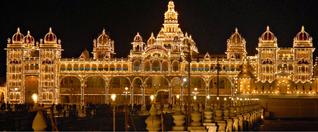
Mysore palace to glow on weekdays as well

Magnificent:The Mysore palace will be lit from 7.40 p.m. to 7.45 p.m. on weekdays after the sound and light show.— Photo: M.A. Sriram / The Hindu

The famous Amba Vilas Palace or Mysore palace, which is lit up with more than one lakh incandescent bulbs on weekends, will now shine on weekdays too.

This is for the benefit of tourists, especially those coming from abroad just to see the palace.

The one-hour illumination of the century-old palace on Sunday has been cut to 45 minutes to ensure lighting from Monday to Friday.

The palace is illuminated from 7.40 p.m. to 7.45 p.m. on weekdays after the sound and light show.

T.S. Subramanya, Deputy Director of the Mysore Palace Board, says: “I have seen many tourists enquiring about the illumination on weekdays. The palace was earlier lit only on Saturday and Sunday, and on public holidays. It is now illuminated every day for about five minutes after the sound and light show.”

Mr. Subramanya told The Hindu that tourists, particularly those coming from abroad, are happy to get a glimpse of the lit palace.

For 10 minutes

The palace is illuminated for 10 minutes on Saturday after the sound and light show. At least 1,200 tourists watch the show on Saturday. Earlier, the palace used to be lit for over 30 minutes on Saturday. However, the duration was reduced after the launch of the sound and light show.

Mr. Subramanya said the English and Hindi versions of the show were likely to begin in two months.

source: http://www.thehindu.com / The Hindu / Home> National> Karnataka / by Shankar Bennur / Mysore, April 11th, 2013

Party people in the house!

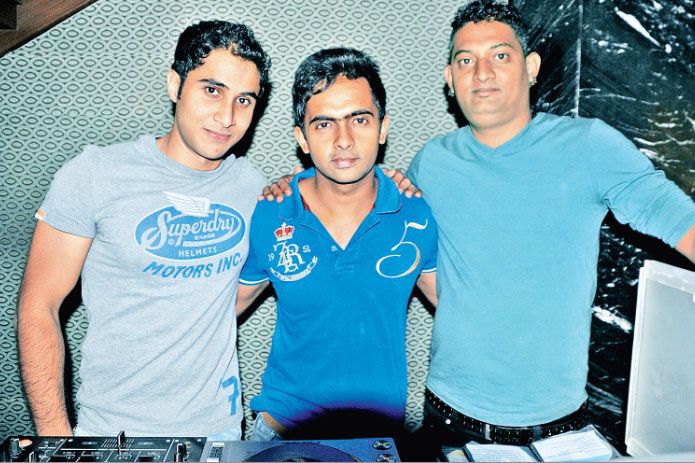
The city revellers who wanted their weekly fix of house music headed to this star hotel, where DJs Yash and Sharvin were in charge of the console.

partyBG19apr2013

The floor at Sheraton Bangalore Hotel at Brigade Gateway was packed with party peeps who grooved the evening away. TOI spotted Chaitra, Jaideep and Mansoor among the guests at this do.

source: http://www.articles.timesofindia.com / The Times of India / Home> Life & Style> Parties / TNN / April 10th, 2013

A unique puppet festival for all

As a festival for children during summer, Dhaatu Puppet Theater will design, curate and organise the Dhaatu Puppet Festival 2013 on April 12, 13and 14 at the Indiranagar Sangeetha Sabha’s Purandhara Bhavana. Dhaatu puppet theater is one of the leading puppet theaters of India working towards promoting, preserving and reviving the fading art form of Puppetry of Karnataka.

Dhaatu has designed this festival to familiarise its audience with all the traditional forms of puppetry of Karnataka. They will also feature string puppet theater, rod puppet theater, shadow puppetry, glove and specialised string puppet theaters like the Eachanoor style of Karnataka.

There will also be a puppet parade in Indiranagar commencing from the Indiranagar Sangeetha Sab-ha at 4 pm on Friday. For further details contact dhaatu@gmail.com or 65683396.

source: http://www.newindianexpress.com / The New Indian Express / Home> Cities> Bangalore / by Express News  Service – Bangalore / April 11th, 2013

Elfa Cleofe appointed as Director of Sales and Marketing for the first Ritz-Carlton Hotel in India, Bangalore

The Ritz-Carlton Hotel Company L.L.C. has announced the appointment of Ms. Elfa Cleofe as the Director of Sales and Marketing for The Ritz-Carlton Bangalore, India.
In her capacity as the Director of Sales and Marketing,  Ms. Cleofe will be heading the Sales, Catering, Revenue,  Public Relations and Marketing divisions  of the hotel.

ElfaBF23apr2013

Scheduled to open in summer of 2013 the Ritz-Carlton, Bangalore is the first internationally branded luxury hotel in Bangalore.  “I could not be more delighted to have such a First Class lady join our Ritz-Carlton team,” said Shane Krige, General Manager of the hotel. “Her in-depth knowledge and worldwide experience in the luxury market will contribute to the successful launch of the first Ritz-Carlton hotel in Bangalore and India.”

A worldly traveler, having been to more than 40  countries, Ms. Cleofe’s  quest for adventure and knowledge led her to Lhasa, Tibet, the most mystical and fascinating destination in the world and now to India.

The first Ritz-Carlton hotel in India – The Ritz-Carlton, Bangalore is a 277-room, five-star luxury hotel, which will offer exquisite restaurants, extensive meeting and flexible events space, The Ritz-Carlton Spa by ESPA, an outdoor swimming pool and high-end retail boutique.  In addition to the spacious guest rooms and suites, the hotel will include The Ritz-Carlton Club, a private floor accessible only by elevator key, offering complimentary 24-hour Food and Beverage service and a dedicated concierge throughout the day.

Ms. Cleofe has been in the hospitality industry for over 20 years. Prior to joining The Ritz-Carlton, Bangalore, she opened The St. Regis Lhasa Resort. Prior that, she worked at the Four Seasons Hotels in Tokyo, New York and Philadelphia and the Ritz-Carlton Hotels in New York and Washington D.C. where she gained extensive experience in international luxury hotel brands.

source: http://www.incentivetravel.co.uk / Home> News> Latest Appointments / Wednesday, April 10th, 2013

Kundapur: Venkatesh Kamat & Bharat Rao Bag GSB Inter-District Men’s Doubles Shuttle Badminton Trophy

Kundapur : 

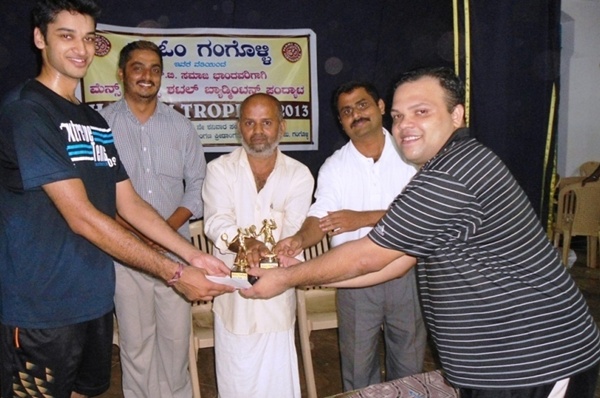
Venkatesh Kamat and Dr Bharat Rao of Manipal bagged Hari Om Trophy and cash award of Rs 4,444 in GSB community inter-district men’s doubles shuttle badminton tournament held at Gopal Nayak Rotary Indoor Stadium of Gujjady Government Pre-University College, here on Tuesday April 2.  It was organized by Hari Om Organization of Gangolli, near here.
Prashant Pai and Vinod Kini – Padutirupati A team of Karkal bagged the runner up trophy and cash award of Rs 2,222.

KundapurBF18apr2013

Vedamurti G Vasant Bhat and local entrepreneur M Nagendra Pai presented the trophy and cash awards during the valedictory function held at Gujjady near here on Tuesday April 2 night.
Gangolli entrepreneur K Ramanat Nayak presided the function.The entrepreneur M G Ragavendra R Bhandarkar was present.
Thirty-six teams from different districts participated in the tourney.

source: http://www.bellevision.com / Belle Vision / Home> News /by Bernard J DCosta / Bellevision Media Network / April 03rd, 2013

India-based Firms Break New Ground in Hiring

Wipro and Tata have found success in recruiting thousands of workers in a short period of time. So how do they do it?

U.S. companies struggling to land top talent outside their home countries could learn a lesson from Wipro  and Tata Consultancy Service . Both companies are huge global technology service providers based in India that recruit thousands of new young employees every year, so their recruiting teams are constantly thinking about how to attract and retain the best people.

In fiscal 2012, Tata recruited 70,400 employees around the world, including 32,263 fresh hires from college campuses, according to its annual report. And the company’s attrition rate was just 12.2 percent. In comparison, corporate India reported an average attrition of  19.3 percent for 2012 , according to Aon Hewitt’s Annual Salary Increase Survey.

The key to successfully hiring so many employees is to look beyond pedigrees, and focus on finding smart people who can be trained to do the job, says Prasad Menon, chairman of Tata Quality Management Services, which provides business excellence training and structure to all Tata companies.

Tata recruits candidates from hundreds of colleges every year, and they are not all “tier one” schools, such as the prestigious Indian Institutes of Technology, Menon says. But that doesn’t matter. “The students at these schools are no less intelligent. They just haven’t received the best training.”

Menon’s attitude speaks to what some call  ” The India Way” of leadership . Wharton School management professor Peter Cappelli and others have noted that India-based firms have traits including a tendency to seek holistic engagement with employees and to improvise amid complex, volatile business conditions.

Tata assumes most recruits will come to the company with skill gaps, so it created a six-month training program that covers everything from engineering and technical skills to teamwork, leadership and other soft skills. “The training enables youngsters from less-privileged background to be as good if not better than those from elite universities,” he says, “and it makes them very loyal to the company.”

THE BENEFITS OF AVERAGE

When companies open themselves up to candidates from lower-ranking schools, they also have a better opportunity to fit employees to the corporate culture, says Abhijit Bhaduri, chief learning officer and head of corporate human resources development for Wipro, the $7.3 billion multinational information technology provider headquartered in Bangalore. Wipro has more than 140,000 employees, and hired 13,000 employees last fiscal year.

“We understand the value of engagement,” Bhaduri says of Wipro’s hiring process. “It doesn’t matter if someone comes from a second-rung college. We look at whether the person will enjoy the type of work we offer and our culture.”

Bhaduri is the author of Don’t Hire the Best: An Essential Guide to Picking the Right Team, which talks about the importance of assessing personality and culture fit along with skills and education when recruiting.

He urges Wipro recruiters to use behavioral interviewing to determine whether candidates will be happy in a role—not just whether they have the right technical qualifications. “IQ and GPA have a limited impact on a person’s success,” he says. “Excellence comes when they enjoy what they do.”

Like Tata, new recruits at Wipro participate in an extensive training program. Wipro puts new hires through an eight-week program called Campus to Corporate. “They all come with different skills and degrees of recall,” he says. “This program gets them all on a common platform.”

Wipro’s training center can accommodate 4,000 people per day, and Bhaduri’s team offers a catalog of voluntary and mandatory training courses employees can take to improve their technical, communication and leadership skills as they move up the corporate ladder. Such access to training and career opportunities helps Wipro keep attrition down, and it transforms candidates with even the most mediocre academic training into valuable, long-term employees. Wipro reported an annual attrition rate of 14.4 percent as of April 2012.

“Global sourcing is a very difficult challenge, Bhaduri says, “but when you look beyond labels, you find the people who will be a good fit for your company, and those are the ones you want to stay.”

However neither company has a perfect record with respect to employees. Tata recently agreed to pay $29.8 million to settle a class-action lawsuit over wage disputes by Indian employees working in the United States. The lawsuit claimed Tata deducted taxes from their India-benchmarked salaries then forced them to turn over their U.S. federal and state tax refunds to the company. The settlement will be shared among 12,800 employees.

Both firms have also been accused of underpaying employees, although Bhaduri says that other aspects of the corporate culture help to attract and retain the best employees. “Salary is always important to everyone … but workplaces cannot compete on salary alone,” he says. He argues that the ability to work with talented people and to take on challenging projects motivates employees as much as salary. “The opportunity to grow one’s skills is an important driver for many.”

Sarah Fister Gale is a writer based in the Chicago area.  Comment below or email editors@workforce.com  

source: http://www.workforce.com / WorkForce / Home> Featured Articles / by Sarah Fister Gale / April 02nd, 2013

Faiz Siddique Interview: “Bangalore shows lots of enthusiasm towards polo”

PoloBF17apr2013

He has been on the polo circuit for over a decade now. Having trained himself in one of the best stables in Argentina, Major Faiz Siddique is an ambitious man. He aims to make Bangalore a Polo loving city, and is tirelessly working towards it at least until his posting lasts here. He is passionate about horses and he displays the same when he is saddled up for a game of polo.

In a free-wheeling chat with Sportskeeda, he talks about the polo season that began in Bangalore today and about Bangalore’s interest in the sport…

Can you explain about the arena polo since it’s not what’s played at a competitive level?

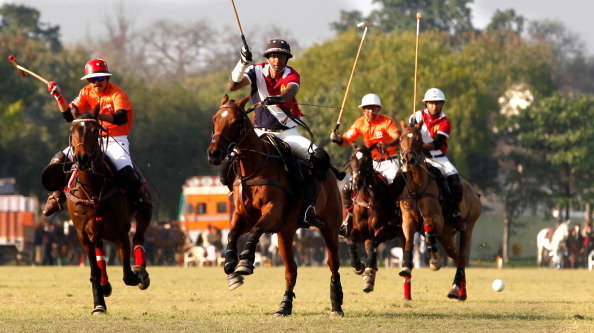
It’s more like an exhibition match. We start at around 7 in the morning and it goes on till 10pm. The fact that it is played under lights gives this a festive atmosphere, and with the DJ playing in the back and a fashion show after the match, will only add to the glamour. Arena polo is played on a smaller ground and hence gets easier for first timers to follow the sport better.

What’s the response you get for polo in Bangalore?

People in Bangalore have shown a lot of enthusiasm. The response to Polo is improving by the passing year. They want to come ride, learn polo and even want their kids to pursue the sport.

Is the event restricted for civilians?

There is no restriction for civilians to come watch the matches. You know, when there’s any event happening in an army establishment, civilians hesitate to come. Especially when you refer to polo, people presume that it can’t be free of cost. The army is not charging any entry fee and anyone can come watch the matches. The whole purpose of hosting the season here is to promote the sport among civilians.

Can you elaborate on the growth of polo in Bangalore?

When I started off in Bangalore, there were fewer kids. But over the past year and a half, we have been able to build a team of 15 players who can play good polo. This number is more than what we had seen in the past 15 years put together. We have even taken six of the best players to play in Hyderabad and Delhi to gain exposure.
Polo2BF17apr2013

Is there anyone from Bangalore with a non-army background who has taken to the sport and done well?

Well in the Indian circuit, Dhruvpal Godhara and Manupal Godhara are good examples of civilians taking to the sport. Speaking of Bangaloreans, This boy called Pranav Kapoor picked up the sport inspired by what he had seen during one such Bangalore polo season. He recently moved to Delhi and bought five horses. Sahara hired him to play for their team and he was to play in Delhi, Jaipur, Jodhpur and Mumbai, but unfortunately suffered an injury during the game in Jaipur and had to pull out of the event.

Since you mentioned injury, isn’t this a big worry for parents who want their kids to pursue the sport?

Well yes, injury is a worry. It is a dangerous contact sport. There is an element of fear, but if you train well enough, the chances of getting hurt is reduced drastically.

Can you tell us about how you got into the sport?

Since I grew up during an era when television played Tippu Sultan, I was drawn towards horses and fancied riding them. When I joined the National Defence Academy (NDA) when I was 19, I had an opportunity to learn riding and that’s when I discovered my interest towards polo.

Don’t you find it pressurising to balance playing polo and pursuing a job of a soldier?

Well, when I am posted in the field like in the borders, etc., I can’t dedicate time for polo. But whenever I have the time, I’d love to be playing the sport. There is no pressure at all. For me, it couldn’t have gotten better.

source: http://www.sportskeeda.com / Home> All Sports> Polo> Interview / by N S Kumar , Correspondent  / April 09th, 2013
City students bag 2nd prize for Hybrid Bicycle

HybridBicycleBF17apr2013

Mysore  :

 The students of final year Automobile Engineering Department of D.Banumaiah’s Polytechnic in city, who participated in the ‘Do-it-Yourself’ State-level Project Exhibition, organised jointly by BCN Polytechnic, Lakshmeshwar in Gadag and Board of Technical Education, Bangalore, won the second prize for their Hybrid Bicycle concept for the academic year 2012-13.

The city students, who have developed the Hybrid Bicycle are S. Harish, Idrish Pasha, H.P. Praveen Sharma, V. Srinivasa, Syed Ummer, J. Nagaraju and H.M. Narayana. They were guided by A.R.Nanda Kumar and HOD B. Lakshminarayan.

The Hybrid Bicycle runs with the help of both petrol and solar energy. The advantages of this bicycle are: rapid developments in hybrid technology to improve engine efficiency, reduces pollution, helps reduce dependency on fossil fuels which directly affects fuel prices, powered by an electric motor and a small internal combustion engine, gives better mileage and are much cleaner than normal vehicles with lesser CO and other green house gas emission.

source: http://www.starofmysore.com / Star of Mysore / Home> General News / April 12th, 2013

An astronomical wonder

The phenomenon is a testimony to the fact that our ancient sculptors were extremely knowledgeable in the areas of astronomy and architecture | EPS

Most people in Karnataka are aware of the ancient astronomical observatories at Stonehenge in England, Newgrange in Ireland, Temple at Karnac in Egypt, Machu Picchu – Intihuatana Stone in Peru and the Jantar Mantar in Delhi but are oblivious to the astronomical wonder in the ancient cave temple of Gavi Gangadhareshwara atop a small hillock in Basavanagudi, Bangalore.

A celestial happening marks the Makara Sankranthi every year and the sun rays illuminating the South-facing idol inside the cave, indicates the shift of the Sun’s movement northwards (Dakshinayana to Uttarayana). In the evening, as the sun sets in the west, sun’s rays falling from the south-western part of the temple passes through an arch and a couple of windows placed perpendicular to each other and later through the horns of the Nandi(the bull mount of Lord Shiva) to fall on the idol of the temple for about 15 minutes(4.55 pm to 5.15 pm). It is as though the sun himself pays homage to Lord Shiva while welcoming Makara Sankranthi.

The phenomenon is a testimony to the fact that our ancient sculptors were extremely knowledgeable in the areas of astronomy and architecture. In the courtyard of the temple, there are mysterious monolithic stone structures – two large vertical discs on pillars, a large trident of Shiva, a small two-headed drum and two fans.

It is believed that such discs are not found in any other temple in Karnataka or south India. Their significance has been explained recently by scientists Dr.Jayanth Vyasanakere and Dr. B S Shyalaja of the Jawaharlal Nehru Planetarium, Bangalore, who have come to the conclusion that this temple has astronomical significance.

The study published in Current Science Journal opines that Suryapana and Chandrapana have been positioned for astronomical observations in the medieval period. The shadow of the bronze pillar (Dvajastamba) falls on the eastern disc for 40 minutes. The two discs have been installed in alignment to the summer solstice sunset and that explains the significance of the phenomenon on Makar Sankranti.

The discs stand parallel to each other a few metres apart. They have ornate sculptures of bulls appearing to support the weight of the discs and two perpendicular lines that intersect at the centre of the disc. “This kind of arrangement cannot be seen anywhere in the world. The arrangement is made specifically for astronomical purposes.” Dr. Shylaja explained.

Researchers believe that this apparatus was used to precisely mark the solstices and hence, measure time and their deductions which are based on marking the shadow of the western disc till the ‘last possible minute’ (which was around 40 minutes before the actual sunset) and then predicting the situation at the time of sunset.

The alignment of the arch, windows and Nandi to ensure that the sun’s rays fall on the idol on Jan 14th and the alignment of the two discs to summer solstice sunset is a fact that was unknown till now. The walls and windows have also been built in such a way that the light should reach the cave on Jan 14th.

Dr. S.K.Aruni of the Indian Council of Historical Research (ICHR) speculates that the cave was initially occupied by Jain monks by comparing the secluded location of the cave with similar ones in Sravanabelagola and Melkote. As per historical sources, this belief is supported by the dominance of Jainism in the region in the early part of the second millennium AD.

Later, it is believed that Kempegowda built the structures that are seen today in the early part of the 17th century, introducing the illumination event and making it a Shaivite temple.

The monolithic structures, the stone umbrella (Chatri) adjacent to the temple and a watch tower (Kavalu-Gopura) point to that fact. Legends shroud the presence of a dark tunnel going into the bowels of the hill.

Ardent devotees believe that there are actually two of these tunnels; one goes all the way to the north of India, to the City of Shiva, Varanasi, and the other to a temple town, Shivaganga, 50 km north-west of Bangalore. However this has not been proved but a tunnel exists on the banks of Kempegowda’s Kempambudhi tank, a few hundred metres away.

A high-walled prakara surrounds the cave temple considered a fine piece of Indian rock-cut architecture of the 9th century. In addition to a monolithic idol of Lord Shiva made of granite, the temple houses a rare idol of Agni, the fire god.

source: http://www.newindianexpress.com / The New Indian Express / Home> Cities> Bangalore / by Dr.Mamatha B R – Bangalore / April 11th, 2013