Category Archives: Science & Technology

US scientist dedicates book to Bengaluru physicist

Bengaluru :

When the LIGO team discovered gravitational waves for the first time in 2015, it didn’t just prove Albert Einstein’s theories right, but also an important concept proposed by city-based scientist CV Vishveshwara, a black holes expert, who died in January 2017.

The team publicly acknowledged his contributions, although Vishvewshwara was never directly part of the Laser Interferometer Gravitational-Wave Observatory (LIGO). It was his work in 1968-1970 that provided fundamental insights into the nature of black holes, which became instrumental in LIGO’s findings.

He used the equations of Einstein’s theory of general relativity to carry out meticulous calculations and analyse the structure of black holes. He went on to prove the stability of black holes that assured their continued existence in nature once they were formed.

Forty-eight years after he published histheory and a year after hisdeath,Prof Nils Andersson of the University of Southampton has dedicated a book, A Gentle Wizard, to Vishveshwara. While Andersson’s dedication has been lauded by the scientific community, the scientist himself had spent most his life away from the limelight.

The India launch of the book, which discussesEinstein’s viewsof theuniverse, starting with 1905 and ending with the recentdiscovery of gravitationalwaves from colliding black holes, was in Bengaluru on Thursday. The International Centre for Theoretical Sciences (ICTS), which organised the launch, plans to distribute free copies to interested students and researchers.

source: http://www.timesofindia.indiatimes.com / The Times of India / Home> News> City News> Bangalore News / TNN  / May 26th, 2018

IIHR in the process of developing elite mango variety

The proposed variety is an improvement on the Amrapali variety, to get red colour from Vanraj

The biggest mangoes (Tenneru variety from Andhra Pradesh), with each fruit weighing around 2 kg, alongside smaller varieties.   | Photo Credit: Handout E Mail
The biggest mangoes (Tenneru variety from Andhra Pradesh), with each fruit weighing around 2 kg, alongside smaller varieties. | Photo Credit: Handout E Mail

If mango is the king of fruits, the Alphonso variety is the king among mangoes due to its taste, attractive colour and moderate size. However, horticultural scientists are in the process of developing another elite mango variety, which is said to be superior to Alphonso.

What is a matter of pride for the State as well as the Garden City of Bengaluru is that the research is taking place in the Hessarghatta-based Indian Institute of Horticultural Research (IIHR).

Dr. M. Shankaran, principal scientist in IIHR’s Fruit Crops Division, told The Hindu that the researchers are trying to get ‘red shoulders’ for the proposed elite variety from the Vanraj variety of mango. “The new variety is going to be an improvement on the Amrapali variety of mangoes by getting characteristics responsible for colour from the Vanraj variety,” he said. “The research has entered the fifth year,” he pointed out.

The new elite variety is expected to be preferred for exports, he said.

IIHR researchers are also working towards developing mango varieties that can be grown in saline soil. If successful, several non-mango regions of the country, particularly coastal areas, may see cultivation of the fruit, Dr. Shankaran said.

For this, the scientists have chosen root stocks from the natural varieties, which have resistance to salinity. These root stocks will be grafted with other improved varieties to get good quality fruits with resistance to salinity, he said. “Presently, such natural varieties do not have quality fruits while the varieties with quality fruits do not have resistance to salinity,” he noted.

Meanwhile, the three-day mango and jackfruit diversity fair began on Thursday at the IIHR campus in Hessarghatta with 350 varieties of mango and 150 varieties of jackfruits, including those grown by farmers, on display.

The varieties of mango on display include appe midi (used as pickles), table varieties and those preferred for juice. A dozen exotic varieties from various countries, including the US, too were on display.

The jackfruit collection had interesting variety in terms of taste, colour and size.

Custodian of genetic diversity

In a bid to encourage farmers to protect native varieties, the IIHR on Thursday nominated farmer Shankaraiah from Hulikatte of Gubbi taluk in Tumakuru district as custodian of an unique variety of jackfruit being grown by his family.

The jackfruit with copri red flakes is very sweet in taste and weighs around 3 kg. As per the agreement, IIHR scientists will take up multiplication of the variety and also sell them. Proceeds from the sale would be shared by the farmer and the institute.

This is the second such farmers’ variety to be identified by the IIHR under the custodian of genetic diversity scheme. Recently, another jackfruit variety titled ‘Siddu jackfruit’ from the same district had been chosen.

Cine personality-turned-environmentalist Suresh Heblikar inaugurated the three-day fair in the presence of environmentalist Yellappa Reddy and IIHR Director Dr. M.R. Dinesh and Additional Director of Horticulture Dr. Parashivamurthy.

A mango that weighs two kg

It was not just the variety, but also the variations in size, colour and shape that mesmerised visitors.

The fair displayed the biggest mangoes with each fruit weighing around 2 kg (Tenneru variety of Andhra Pradesh) and several small-size varieties whose fruits weighed just around 40 gm.

There was one variety from Andhra Pradesh titled ‘elephant head’, as it resembled the head of a pachyderm.

source: http://www.thehindu.com / The Hindu / Home> News> Cities> Bengaluru / by B S Satish Kumar / May 24th, 2018

First ship under ‘Make in India’ arrives on Mangaluru shores

Welcoming of Indian Coast Guard Ship ‘Vikram’, the first in the series of seven 98m Offshore Patrol Vehicle which has been designed and built indigenously by M/S Larsen and Toubro to Base Port Mangaluru on Sunday.

Mangaluru :

ICGS Vikram, the first in the class of seven new generation offshore patrol vessels (OPVs) contracted by the ministry of defence (MoD) in March 2015 under the government’s initiative of ‘Make in India’ arrived at its base port — the New Mangalore Port, on Sunday.

The 98.2metre long and 15metre wide vessel has been designed and built indigenously by Larsen and Toubro.

Subash Bhamre, union minister of state for defence, had commissioned the ship in Chennai on April 11.

ICGS Vikram has a 3.6metre draught, 2,140 tonnes displacement and a range of 5,000 nautical miles. It can attain a sustained speed of up to 26 knots. The ship has been fitted with state-of-the art navigation and communication equipment, sensors and machineries. It also features a 30mm gun and a 12.7mm gun with fire control system giving an edge to its fighting efficiency. The ship is also designed to carry a twin engine light helicopter and a twin engine heavy helicopter with night flying capabilities. It is also capable of carrying pollution response equipment to contain oil spill contamination at sea. It can stay at sea for 20 days without any replenishment.

The ship with 14 officers and 88 men is commanded by Commandant Raj Kamal Sinha.

source: http://www.thehindu.com / The Hindu / Home> News> City News> Mangalore News / TNN / May 14th, 2018

Eco-Friendly Waterless Car Wash Service In Mysuru

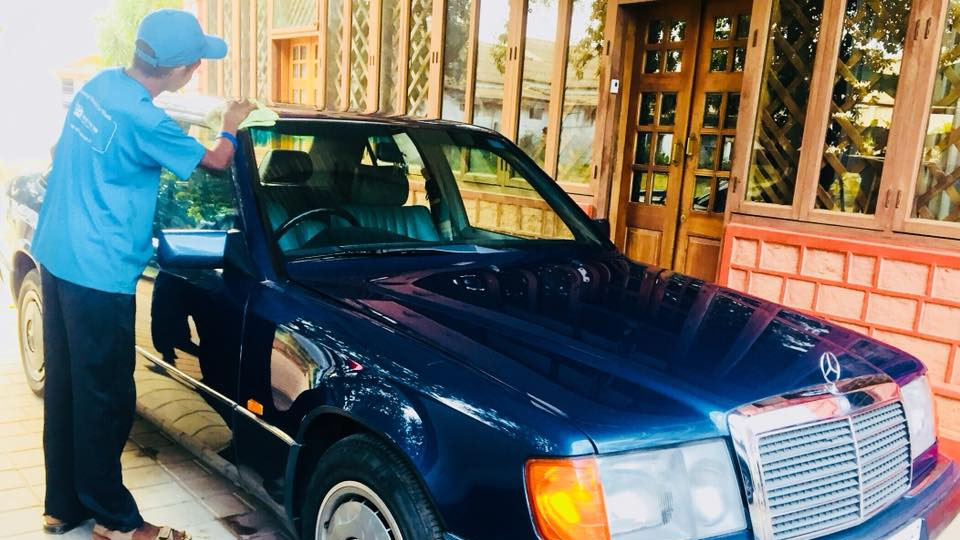
CarWash01BF20may2018

Mysuru:

Studies and surveys have revealed that India’s current per capita water consumption is at 150 litres a day. The country is expected to suffer persistent water shortage by 2020 with the per capita accessibility of water coming down to less than 1,000 cubic meters.

One source of water wastage is vehicle washing and this number is set to soar as more vehicles get on the road. Mysuru has over 3 lakh private vehicles and assuming 10 litres of water is needed on an average for a single vehicle wash, the wastage of water is humongous — nearly 30 lakh litres of water every day.

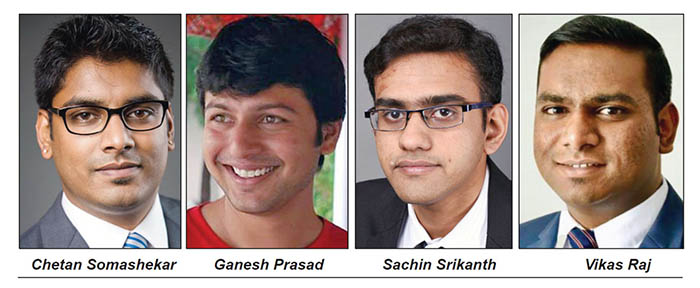
In what could be tagged as a pioneering initiative to provide an environment-friendly car wash service in Mysuru, a group of automobile enthusiasts have started ‘Clean Our Car’ — Waterless car wash. This group consists of four friends who have studied engineering — Vikas Raj, Chetan Somashekar, Sachin Srikanth and Ganesh Prasad.

Vikas and Chetan have done their Master’s in Automobile Service Technology from Germany while Sachin has done his Master’s in Surface Technology (Germany) and Ganesh Mechanical Engineering in Malnad. These like-minded friends have quit their jobs and thus ‘Clean Our Car’ took birth in Mysuru.

Speaking to Star of Mysore, Vikas Raj said, “Lots of water is being consumed for washing cars and during summer and drought situations, washing cars and scarcity of water is a huge concern. We are related to the automobile industry and were experimenting with this idea from Sept. last year. It became a reality in Nov.”

CarWash02BF20may2018

About water savings, he said, “This can save lots of water. A normal car wash in service stations requires about 160 litres of water per car and so does the traditional and automated car washing techniques. The latest foam wash method too consumes about 90 litres of water for a single car. We wanted to change this concept. We use only about 3 to 5 litres of water per car and we provide door-step service to customers. The response in Mysuru has been very good.”

The team uses a biodegradable solution to wash the car. The surfactants in their formula helps remove dirt and suspends it from the car’s surface. It creates a thin film between the paint surface and the dirt, which helps clean the surface without scratching it. The solution dilutes mud, sand and dust particles rather than dissolving them.

Their formula contains active agents which lift dirt and grime from the pores, encapsulating it and making the surface easier to clean. The solvent is a protector-cum-shiner. It contains natural wax which protects against dust and ultraviolet rays, preventing fading of plastic and fibre parts.

Clean Our Car ensures that your car is neat and clean within one hour. Though the team has their office set up in Kuvempunagar, customers can ask for door-step service. And the prices that they offer are reasonable. They charge about Rs. 260 for a basic car wash, around Rs. 290 for exterior as well as interior car wash and Rs. 320 for a special exterior and interior plus car wash. They also have several other packages.

Vikas adds, “We use this biodegradable formula which has no harsh chemicals and thus it does not damage the surface of the body. The dust does not stick to the surface of the car as the solvent has the formula of a blend of wax coating.  Customers can use Clean Our Car App. Once registered, with just a click of a button we will be there at their doorstep to wash their car. We have services like exterior cleaning, interior cleaning, interior polishing, tyre dressing, wheel shine, interior vacuum, door sill cleaning, door pads cleaning, etc.”

source: http://www.starofmysore.com / Star of Mysore / Home> Feature Articles / by V. Shourabh / May 18th, 2018

His farm-fresh innovations are helping many farmers

Sharanabasappa Patil has invented several low-cost equipment and methods that are helping farmers reap benefits

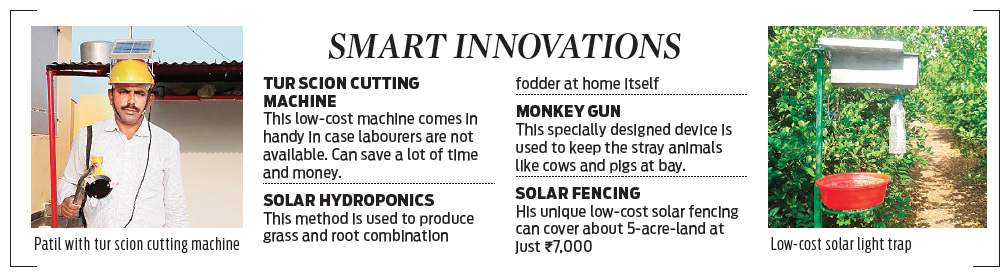
Sharanabasappa Patil of Hal Sultanpur village in front of his Solar hydroponics

Kalaburagi  :

THIS farmer from Kalaburagi does not hold any degree in agriculture science, but that did not deter him from turning his field into a laboratory for innovations. In his 5-acre-farmland, both ideas and creativity take shape, and his innovations leave everyone in awe. Sharanabasappa Patil of Hal Sultanpur village has invented several low-cost equipment that are helping farmers of not only Karnataka, but also the neighbouring states.

Till date, he has eight inventions to his credit, and people from as far as Visakhapatnam visit his farmland to get an insight into ways to do farming with affordable equipment.Low-cost solar sirens, solar light trap and tur scion cutting machines are some of the innovations that have earned Patil accolades at the state level. He has won many prizes till date, including Krishi Pandit Award and Raita Vignani Award given by agriculture department and University of Agriculture Sciences, Raichur, respectively. He had also bagged the first prize at the state-level innovative farmers’ conference held in 2017.

“When I visited his farmland in Hal Sultanpur, I was completely bowled over by his innovations. I requested Patil to visit Visakhapatnam, and with his help I got my field covered with low-cost solar fencing. Now, I am adopting most of his innovations by using the machines and methods employed at his farmland,” says Ravindra from Visakhapatnam.

Patil02BF11may2018

Ningappa Molakera of Chimmeidalayee village says, “Many farmers of my village have put low-cost solar fencing around their fields. On their advice, I recently visited Hal Sultanpur to get myself acquainted with the new method of keeping animals and birds away from the field. I also procured the unique tur scion cutting machine from Patil.”

Tur scion cutting machine has helped thousands of farmers of the region who could not afford labourers. “Since workers are not easily available these days, this low-cost machine comes in handy and saves lot of time and money,” says Ningappa.

Patil’s another innovation is Solar hydroponics which can produce fodder without using land. He has also invented a monkey gun device to keep the stray animals like cows and pigs at bay.From where does he get the ideas to innovate? To this, the progressive farmer replies: “Necessity is the mother of invention. Drought, shortage of water for crops and attack on crops by pigs and pests are the trigger behind my inventions. Whenever any problem arises, I try to solve it rather than just complaining about it.”
And in his endeavours, he is also supported by the Agriculture Research Centre of Kalaburagi. “He has created wonders on his farmland. We provide him expert opinions and suggestions which help him fine tune his innovations and equipment,” says Centre head and senior agriculture scientist RajuTeggalli.

source: http://www.newindianexpress.com / The New Indian Express / Home> States> Karnataka / April 29th, 2018

Inspired by HMT, two Bengaluru techies launch a fine-watch brand

All it took was an introspective six-month sabbatical from their tech jobs to give-up comfortable paycheques and turn into ecommerce entrepreneurs. This story is pretty much routine now for new-age Bengalureans but what’s different here is that Nirupesh Joshi and Mercy Amalraj found their calling in the offbeat business of watch-making in India. While Joshi worked for Akamai Technologies in Hong Kong for ten years, Amalraj was a freelance mobile app developer and quality assurance engineer.

Few weeks ago, the husband-wife duo launched Bangalore Watch Company. The fine watch-making brand based out of the IT city manufactures mid-segment gentleman’s timepieces, priced at about Rs 40,000 each.

BlreWatchBF27apr2018
 Interestingly, their first collection of 500 limited edition pieces pays a tribute to the legendary Indian watch brand Hindustan Machine Tools (HMT) by incorporating design details like vintage arrow-head indices and dauphine-shaped hands on the dial.

Plan is to narrate Indian stories in all their successive collections too. Even their brand logo incorporates the geometric interpretation of the coat of arms symbol from the erstwhile kingdom of Mysore.

 Joshi says, “I often wondered why fine watch-making never took off in India the way fine jewellery has made a mark. Indian watch brands like Titan have a cult following but they are not in the luxury category. Final turning point came when legendary brand HMT shut down in 2015. We quit our jobs and turned our passion into a business plan.”

Joshi has turned into a watch designer. His assembly unit located in Kanakapura brings together components sourced from across the world to manufacture these pieces.

In the last three weeks, they have found takers in tech-executives, entrepreneurs, artists and architects above the age of 30. “They appreciate things of Indian origin and want to add our watch to their existing collection of timepieces,” adds Joshi. The brand’s next collection will be rolled out in October this year.

source: http://www.economictimes.indiatimes.com / The Economic Times / Home> ET Home> RISE> Startups> News Buzz / by Smita Balram, ET Bureau / April 25th, 2018

US-based Analog Devices opens new facility in Bengaluru

US-based technology company Analog Devices (ADI) on Wednesday unveiled its new state-of-the-art facility for nearly 600 Bengaluru-based staff who are part of ADI India.

Bengaluru:

US-based technology company Analog Devices (ADI) on Wednesday unveiled its new state-of-the-art facility for nearly 600 Bengaluru-based staff who are part of ADI India.

The new facility, which houses one of ADI’s top three global design centres, will focus on developing and selling technologies and solutions for the global automotive, industrial, healthcare, consumer, Internet of Things (IoT), security, communications, and energy markets, the company said in a statement.

“We have been aggressively investing in our global facilities. This investment in ADI India will better position us to accelerate growth and impact for ADI,” said Yusuf Jamal, Senior Vice President of ADI’s Industrial, Healthcare, Consumer, and IoT Solutions and Security Group.

ADI India started as a three-person product development centre in 1995.

Today, ADI India is a global development centre, working collaboratively across ADI businesses at every stage of product development as well as providing the supporting software.

“As we move into this new facility, we plan to expand our university relations programme work with reputed academic institutions, which includes fellowships, sponsorships and internship opportunities, through additional partnerships and talent acquisition from engineering colleges across the country,” said Sai Krishna Mopuri, Managing Director, ADI India.

ADI India plans to hire software, systems engineering, and IC design and development engineers both at the experienced and entry levels.

source: http://www.telecom.economictimes.indiatimes.com / ET Telecom from The Economic Times / Home> Telecom> Latest Telecom News> Industry / by IANS / April 25th, 2018

Rubber farmers to get free rain guard

Bengaluru :

Tyre manufacturer MRF Limited will provide free rain guarding materials to about 7,500 rubber farmers in Chikkamagaluru, Kodagu, Udupi and Mangaluru.
MRF stated on Monday that they have identified seven cooperative as well as rubber processing societies in the state for implementing this programme.

“With four months of heavy rainfall, marginal farmers in Karnataka are unable to eke out their living by tapping rubber as they are unable to afford rain guarding materials. Seeing their plight, MRF has now stepped in deciding to extend support to such farmers” said a press release.
“We have decided to cover 8,005 hectares of rubber plantations in Karnataka with more than 32 lakh rubber trees for rain guarding this year,” said Arun Mammen, vice chairman and managing director of MRF Limited.

source: http://www.timesofindia.indiatimes.com / The Times of India / News> City News> Bangalore News / by Christin Mathew Philip / April 24th, 2018

Tech Incubator Sandbox Startups Provide DST-NIDHI Funding to Three Hubli Based Companies

Central Government-recognized technology startups incubator, Sandbox Startups invests in three of the incubated companies under NIDHI-SSS funding backed by the Department of Science and Technology, Government of India. Funding will enable the startups to graduate to the next level in terms of technology and this will take them to a better position to raise funds for further growth.

NIDHI-SSS (National Initiative for Developing and Harnessing Innovations-Seed Support System) is an umbrella program targeting at startups which aims to nurture knowledge-based and technology-driven ideas into successful startups. They also provide financial assistance to startups whose ideas or products offer promise and are designed to address novel problems. The three startups which received funding under the NIDHI-SSS are: Freshboxx Services Pvt.Ltd., a supply chain e-Commerce startup; Wide Mobility Mechatronics Pvt. Ltd., which offers end-to-end machine vision and inspection designed for different industries; and Microchip Payments Pvt. Ltd., a Hubli-based startup that offers reliable digital payment solutions.

C M Patil, CEO, Sandbox Startups, says, “Most entrepreneurs struggle hard to raise the angel or seed funding during the early stages and this fund from NIDHI-SSS is like a boon for the entrepreneurs in the ecosystem. We at the Sandbox Startups are building an entrepreneurial ecosystem in non-metros. Because of our geographical location, it is more difficult for entrepreneurs here to raise funds. We are thankful to the DST for this fund allocation which would help organizations like our Sandbox Startups, a central government-recognized technology business incubator, to invest against equity and build a self-sustainable model wherein we can co-create entrepreneurial culture in our ecosystem. With this funding mechanism in place, it allows us to invite the investment firms to co-invest in the startups associated with us, which in turn will help more mission-driven entrepreneurs.”

Founded in 2008 by Deshpande Foundation, Sandbox Startups is a Hubli-based global incubator which supports impactful entrepreneurs from tier II and tier III cities with seed funding, mentoring, network support, tech assistance, co-working space. It joined hands with Department of Science and Technology, Government of India in 2015-2016 and they’ve incubated more than 70 startups and aided almost 300 budding entrepreneurs.

Incubated three years ago, Freshboxx is an online fruits and vegetables enterprise that caters to customers in tier II cities and operates in B2B and B2C segments. With a network of over 10,000 farmers, Freshboxx saw an exponential growth rate after the incubation. Rohan Kulkarni, CEO of Freshboxx, says, “We want to enable a unified supply chain from farms to stores and our next focus will be to leverage machine learning, Artificial Intelligence and data analytics for improved decision making in understanding the needs of our customers. We are in talks with potential institutional investors to raise funds.”
In 2016, Sandbox Startups incubated Wide Mobility Mechatronics that delivers digital scanning services to industries like food, automobiles and electronics. It also provides internal inspection of products using X-Rays,cameras and digital radiography. Shekhar Basavanna, CEO of Wide Mobility Mechatronics, comments, “Sandbox, I would say, has first of all brought in an understanding of looking into all aspects of growing a start-up, making us realize that making a product/materializing a concept is just a part of the work done.”
On the other hand, Microchip Payments’ mobile-based payment application and point of sale device helps users to make payments without internet connectivity. The product gained appreciation from Massachusetts Institute of Technology, DCB Bank and others. Speaking about his startup journey, the company’s CEO & CTO, M. Farhanuddin Firaq says, “Post demonetization, we saw that one of the major problems that people faced in making online payments was poor internet connections. We started working on this idea and were supported and incubated at Sandbox startups.” Adding further, he says, “Today, we are proud to say that we are the world’s first company to build a completely non-internet powered digital transaction mobile application and a point of sale device.”

source: http://www.siliconindia.com / SiliconIndia / Home> Top News> Business / by SiliconIndia / April 19th, 2018

National portal to share research facilities soon

The institutions that have the equipment will provide access to researchers through an online reservation system.   | Photo Credit: Reuters
The institutions that have the equipment will provide access to researchers through an online reservation system. | Photo Credit: Reuters

Easy access to expensive equipment

Soon researchers in any college or institution and research organisations can check, reserve and have easy access to even expensive research equipment and facilities anywhere in India, thanks to the efforts by the Centre for Nano Science and Engineering (CeNSE) at the Indian Institute of Science, Bengaluru.

The centre is in the process of collating information about scientific and research equipment and facilities available at academic institutions and research organisations across the country.

Online reservation

The portal — Indian Science, Technology and Engineering Facilities Map (I-STEM) — will soon become operational. The government green signalled the project last month.

The institutions and organisations that have the equipment and facilities will provide access to researchers for both academic and non-academic work through an online reservation system.

‘Many benefits’

“This initiative will have many benefits. It will provide access to researchers to any equipment or facility that has been procured using public funds, the equipment will be better utilised and it will avoid duplication of expensive equipment as much as possible,” says Dr. Sanjeev Kumar Shrivastava of CeNSE and one of the two researchers who came up with this idea. “Sharing expensive equipment can bring down the cost of doing research in India.”

Putting to rest the fear that this initiative may come in the way of premier institutions which are just coming up from procuring essential equipment, Prof. Navakanta Bhat, chairman of CeNSE and the principal investigator of the I-STEM project, says: “Each institute will need certain equipment that is absolutely necessary and essential for regular use. It is not at all the intent of this initiative to stop such institutes from procuring equipment but to ensure that each instrument is better used.”

“We are trying to replicate the Indian Nanoelectronic Users Programme (INUP) model at CeNSE and IIT Bombay that has been in operation since 2008 to provide access to sophisticated device fabrication and analytical equipment to any academic researcher in the country. I-STEM is inspired by our positive experience with INUP,” says Dr. S.A. Shivashankar, visiting professor at CeNSE and the other person who is the brain behind this initiative.

The idea of starting a national network was shared with Dr. R. Chidambaram, former Principal Scientific Adviser.

The proposal was formally sent to the government in November last year.

source: http://www.thehindu.com / The Hindu / Home> Science / by R Prasad / Chennai – April 19th, 2018