Category Archives: Travel

Remembering Sir Mirza Ismail

Mysore city is blessed in more ways than many other cities of South India. Its location is ideal. An imposing hill with a temple of Goddess Chamundeshwari. River Cauvery flows just 12 kms away. River Kabini is just 35 kms away. A green cover all around with a salubrious climate. Even summer is forgotten as fast as one started complaining of the heat with the monsoon setting in by May end.

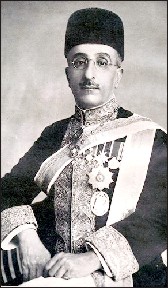
If these are nature’s bounty bestowed on our city, providence too has been kind with the Wadiyar dynasty ruling the Kingdom of Mysore with this city as its capital. And blessed are the people because the Kings who ruled after 1800 AD have all been good kings with most of them being patrons of art, literature and music. And during the long reign of Krishnaraja Wadiyar IV the Kingdom became a Rama Rajya as Gandhiji called it and the King himself was a Rajarishi. Philosopher-king. It was this king who ruled the kingdom with the help of renowned Dewans [Prime Ministers]. One among them was Sir Mirza Ismail.
SirMirzaIsmailMPOs07jul2014

For some years I was a member of ‘Freemasons,’ sort of secret club known as The Grand Lodge of India, Lodge Mysore. Recently I was going through its publication known as ‘The Square and Compasses’ and was intrigued to find the name of Sir Mirza Ismail being mentioned in it in glowing terms just as his work in Mysore was much appreciated.

His name was mentioned in connection with the problems the ruler and administrators faced in the Kingdom of Jaipur, Rajasthan, from vested groups. The situation was similar to what happened during the building of the Great Temple in Jerusalem after Jews were freed from their Babylonian captivity after 70 years of exile.

It appears during the year of exile of Jews, there was no government of any kind in the country and many outlaws, murderers, debtors and others with dubious characters from neighbouring countries came and settled in the Jewish country, specially in the city of Jerusalem. These people resented the arrival of Jews, from their Babylonian exile, trying to restore law and order. There was daily strife between the two warring sides which compelled the labourers at the temple area literally to work with the ‘trowel in hand and sword by the side.’ This, of course, has become part of the traditional ritual in the Freemason ceremony.

Recalling this historic ancient incident, the report in the magazine connects it to an incident in modern times. It says, “In our own times, we have heard of Sir Mirza Ismail — Special Officer entrusted with the task of beautification of the city of Jaipur in Rajasthan. With undaunted courage and determination, he went on with pulling down dozens of houses as per his masterplan without fear or favour, even those of big and influential citizens who naturally tried to oppose his doings.”

No wonder the grateful citizens of Jaipur named a major road after Sir Mirza Ismail. Now compare this with ourselves. Is there a road named after this great Dewan of Mysore Sir Mirza Ismail? I don’t know. Is there a road named after Sir M. Visveswaraya? I do not know. Yes, someone told me there indeed is a Mirza Road but it does not run even a km length in Nazarbad. In Jaipur, I have seen Sir Mirza Ismail Road, a double road, running to a few km length in keeping with his stature. Yes, there is also one inconspicuous Circle named after Sir MV ! Could they not have a statue of Sir MV there just like the other two statues of Maharajas?

Incidentally, the message from the Grand Master Most Worshipful Brother Vasudev J. Masurekar, OSM, has the opening paragraph that takes you to 2nd century BC and then brings you to 2014 AD. It speaks of Delphic Oracle in Greece where I had been about five years back, hence my interest. The Grand Master says:

The temple of Apollo at Delphi, built in the 2nd century BC, has three phrases carved into the stone. First is, “Know thyself,” second “Nothing in excess” and the third is “Make a pledge and mischief is nigh.”

These three statements have made the Oracle of Delphi famous universally.

All the three statements are profound and impacts on every individual’s life. Because we do not try to know ourselves, we delude ourselves as someone that we are not. Buddha has taught us to follow the golden path, the middle path. Nothing in excess. Neither more nor less. The third statement is rather complex. No wonder over the centuries there have been many interpretations of these words and debates by philosophers and scholars.

However, let me venture to interpret the third statement in the light, nay in the dim light, of my own wisdom. It says, “Make a Pledge and Mischief is Nigh.” These are the days where politicians in our democratic country keep making pledges, from swearing on our Constitution, to protect and preserve it, to provide a good administration and infrastructure. But, our experience has been that they seldom keep their pledge. That is why I interpret this statement to mean, ‘when you make a pledge, you are near a mischief.’ You are upto some mischief! Read politician in the place of you. Howzzat?

e-mail: kbg@starofmysore.com

source: http://www.starofmysore.com / Star of Mysore / Home> Abracadabra….Abracadabra / by K.B. Ganapathy  / July 02nd, 2014
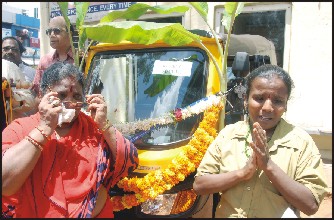
Lions Club gifts Auto to City’s First Woman Auto Driver

Veena, the beneficiary of Lions Club’s donation of an autorickshaw, is seen overwhelmed with emotion in front of the gifted autorickshaw along with her mother Lakshmamma.

Mysore :

The first woman auto driver in city, Veena, was all smiles today as she got an autorickshaw from Lions Club of Mysore Heritage City at a function organised at the premises of Mangalore Motors on Dewan’s Road here today.

The Lions Club, which felicitated Veena during Women’s Day celebrations recently, had agreed to get her an autorickshaw and the keys of the same were handed over to Veena by Kiran Bolar, Proprietor of Mangalore Motors and President of Lions Club of Mysore Heritage City.

Speaking to Star of Mysore, Veena, 39, mother of two daughters, said that she was deserted by her husband 10 years ago and was living with her mother since then. She said that she was unable to eke out a livelihood by driving a rented auto and was now happy to have one of her own.

When asked about the behaviour of male auto drivers with her, she said that they were very cordial and had no qualms.

Club Vice-President C.H. Mallepura, Secretary Gangadharappa, Treasurer K.S. Kumar and Veena’s mother Lakshmamma were present.

source: http://www.starofmysore.com / Star of Mysore / Home> General News / July 02nd, 2014

Over a cup of evening tea : A sentimental journey and a narrow escape

by  Dr. K. Javeed Nayeem, MD

Last Sunday my wife and I went on a journey that we had wanted to undertake for the last thirteen years ever since she lost her brother who was serving in the army as an officer. Major S. M. K. Ghori, a former student of the Maharaja’s College here, laid down his life in the cause of the motherland while fighting insurgency in the forests of Baramulla District in the State of Jammu and Kashmir on 1st July 2001. Two of his most trusted men too went down fighting alongside him on that fateful evening. Four days later while we were waiting with all our grieving family members at the Bangalore Airport for his body to arrive, I told my wife that we should try and visit his unit not only to see where exactly he was serving when his end came but also as an act of homage to his sacrifice.

A trip to Kashmir somehow never materialised over the next thirteen years and finally when a chance came up last week in the form of a group tour with about a dozen doctors’ families, my wife and I felt that it was the right time for us to go there. Having finished our sight-seeing in and around Srinagar with the others members of our group we extended our stay by a further two days to accomplish what we had been looking forward to. Upon contacting the army top brass through my brother-in-law’s wife we were told that his unit was still stationed near Baramulla and arrangements would be made to allow us a visit.

Very soon a Colonel who was the chief of the unit called us up and said that he would be happy to show us around the place and also insisted that we stay back for lunch. We very politely declined this part of the invitation as we did not want to intrude on the time of officers and men who were expected to be in a state of operational readiness round-the-clock. However, we agreed to have a cup of tea with them without wasting much of their time. A friend in Srinagar who used to meet us every evening arranged for a trusted cab driver to drive us to our destination and back since he did not consider it safe for us to go there with an unknown person. As he was from the nearby town of Sopore where he had his ancestral house, he said that we should be his guests for lunch which would expose us to the traditional Kashmiri hospitality. This was a suggestion to which we readily agreed and left early in the morning. The drive from Srinagar towards the western border of the country was full of security bottlenecks with all vehicles being stopped and photographed by heavily armed men in combat readiness. The road lined on either side by tall poplar trees passed through some very fertile countryside, full of verdant apple orchards nourished by a maze of mountain streams with snow-clad hills in the not too distant background. The apparent tranquillity of the hills belied the turmoil that they have been witness to from time to time.

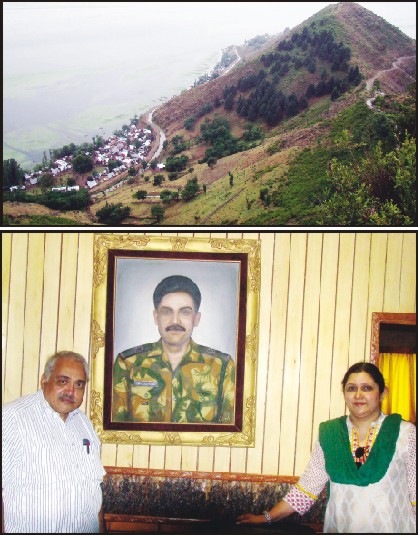
After a drive of about thirty kilometers from the town of Baramulla through some of the most remote and lonely stretches, we reached the army unit where we were welcomed with a warmth that we had never expected from men in uniform. The Colonel himself was standing with his deputy to receive us with fighting men’s iron handshakes and they escorted us to the drawing room of their barracks. It had a large life-sized portrait of my late brother-in-law on one of its walls since he was the only officer of the unit who had died in action since its inception while it had lost twenty-nine Jawans whose sacrifice was in no way less significant. Their photos too adorned another wall in a close cluster which perhaps was a reflection of the close ties they shared while they were alive.

The Colonel briefly told us about their life as soldiers and the uncertainty that comes with it. Later he himself drove us in his personal vehicle to the place from where we could see the hill across a lush valley at the base of which my brother-in-law and his men went down fighting. We stood in silence trying to visualise the final moments of their brave stand. Returning to the base we were a little surprised and even embarrassed to discover that the tea was almost a meal prepared and served by men in uniform in a manner that would have put the most talented hostess to shame.

KashmirMPOs02jul2014

We were then invited to stand alongside the painting of my brother-in-law and have a picture clicked as a keepsake of our visit which we did [see pic]. It was a very sentimental moment against which I had warned my wife well in advance and thankfully she put up a brave face.

After I signed the visitors’ book it was time once again for iron handshakes but this time to say goodbye. It was a very short drive to Sopore, a Spartan town with horse-drawn carriages and tin-roofed houses that seemed to have been frozen in a time warp like the rest of the Kashmiri countryside. The atmosphere seemed a little eerie as we found that every entry point was guarded by heavily armed soldiers alongside their armoured personnel carriers. We located our friend’s home which was tucked in a maze of narrow alleyways and were soon lost in another session of tea accompanied by some traditional Kashmiri snacks and dry fruits. The tea itself was a very distant cousin of what we drink here as it is salted instead of sugared. My host then suggested that he would take us for a traditional lunch to a resort overlooking the Wular Lake, the largest freshwater lake in Asia which was just a stone’s throw from his village. The breathtaking view from the place was something to be treasured forever in the mind’s e

ye. It is because of sights like this that Kashmir has come to be called a ‘Paradise on Earth’. After a hearty meal we parted company as it was time for us to get back to Srinagar. On the way back too we noticed unusually hectic military activity along the main road and on the outskirts of the town we even saw an ambulance and a large convoy of army vehicles parked around a house. We did not make much of it and reached Srinagar safely for a good night’s rest.

Early the next morning one of my friends who had been in our group and who had returned with the others a day earlier called me up from Mysore to tell me that Sopore had been the scene of a fierce gun-battle between security forces and insurgents the previous night. Since a civilian youth too was killed in the crossfire it appears there were widespread protests and an indefinite curfew had been imposed on the whole town with all roads completely blocked. Occurrences like these are a very common feature of life in Kashmir and the ensuing inconvenience is accepted as a normal part of living there. The whole of Monday and Tuesday, till we left Srinagar, life remained completely paralysed in the entire valley. My wife and I thanked God that we had been able to get away in the nick of time from what could have become a tricky situation blocking our exit. Our ‘Mission Kashmir’ had been accomplished at last !

e-mail: kjnmysore@rediffmail.com

source: http://www.starofmysore.com / Star of Mysore / Home> Feature Articles / Friday – June 27th, 2014

Relative Value: Young Turks behind the oldest Tiffin Room

Hemamalini Maiya (43), Vikram Maiya (40) and Arvind Maiya (30); Picture Credit: Durgesh Kumar Y

They might not be best friends, but they are great business partners and always look out for each other

This brother and sister might be poles apart, but when it comes to their 90-year-old family business they are a single unit. Though Hemamalini Maiya (43) and Vikram Maiya (40) are the faces of the landmark Mavalli Tiffin Rooms, popularly known as MTR, not many know that the business has a sleeping partner ( 35 year old sibling Priya) and a low-key partner (30-year-old youngest sibling Arvind).

Ironically, the siblings never imagined that one day they would be spearheading the family business. They didn’t want to.

As we settle down in the deluxe area of MTR on Lalbagh Road with Vikram and Arvind, waiting for Hemamalini to join us, Vikram jokingly tells his brother Arvind, the quieter of the siblings, “We should speak before Hema comes in…we won’t get a chance after that.” Bingo! The affable (and talkative) Hemamalini walks in. And the room is filled with laughter.

Going back in time Hemamalini was thrown into the restaurant business a day after her father Harishchandra Maiya’s death in 1999, after a prolonged illness. (Her father was the nephew of the founder of MTR, Yajnanarayana Maiya, and took over the reins of the restaurant after his death in 1968)

Hemamalini reminisces about her father wanting her to “study engineering” and go overseas. “But things changed with my father’s illness,” she says. “I think my taking over the restaurant wasn’t all that sudden. I guess somewhere along the way my father knew that I would have to and started preparing me mentally.”

Today, when she looks back on those troubling initial years, she clutches her head in her hands and says: “Overwhelming experience.” From being hands-on in the kitchen, doubling up as cashier and dealing with troublesome staff… Hemamalini doesn’t have many pleasant memories of those years. She recalls fighting her way through in the “male-dominated space”. It wasn’t at all easy for her to slip into her father’s ‘big’ shoes and she says women “at the top are never taken seriously. In fact, at one point people thought it was time I pack up and leave. But the more I was told that, the more determined I was to show them that I was here to stay”. She adds, “Looking back I don’t know how I did it.”

By 2000 Vikram decided to leave his job at the Global Trust Bank and join the family business. Till then it “was all about friends, parties and rock music,” Vikram confesses. “I hardly remember being at home during my teenage years.” He also doesn’t remember being particularly “close” to his siblings while growing up. “After we turned teenagers, our friends circle was completely different,” admits Vikram. That’s another reason that even to this day he says, he isn’t as close to his cousins as his siblings are.

But Hemamalini has fond memories of cycling and skating with her brother. Pointing to Vikram, she says, “He’d fall down often and hurt himself. We had an old cook, who would follow him around as he learnt to cycle. He was always in a hurry to learn. On the other hand, I would meticulously follow the rules.” Hemamalini’s biggest grouse during their growing years was having to follow several rules. “Vikram got all the freedom and I had so many restrictions…like I had to come home before dusk, while he hardly came home in the night,” she recalls.

At school they were always referred to as the ‘ones from MTR’. “And every school picnic would have food catered from the hotel,” Vikram remembers.

Growing up in the MTR House, (located close to the restaurant, which is now turned into MTR’s central kitchen and manufacturing unit), brother and sister recall playing with the children of the staff, which later led to many awkward situations. “Many of ‘those children’ became employees of MTR. And when we took over and had to order them around it was quite odd,” Vikram says.

“We had a wild childhood, which this guy missed,” the duo chorus pointing to Arvind who quietly listens as his older siblings go down memory lane. Arvind who was in class 10 when his father passed away recalls his friends mistaking his dad as his grandfather. “I just remember that by the time I was in class 7, I didn’t want my father to come to any PTA meetings,” Arvind says. Soon Hemamalini replaced her father at these meetings. “My parenting skills began back then,” says Hemamalini.

Arvind is considered the calm and level-headed sibling. “Growing up he was the exact opposite of Vikram,” Hema says. “But he did trouble our mother as a three-year- old, refusing to walk; he’d sit on the sofa all day and watch television. He’d sing Bruce Springsteen’s Born in the USA with an imaginary mic…” Arvind interrupts: “I must have had the cleanest feet!”

The here and now Today the three of them handle different areas of the business — Hemamalini takes care of finance, Vikram, the overall growth, expansion and quality control and Arvind the human resources department. Though MTR still stands in the same place as it did for more than five decades, the youngsters have been the wind beneath its wings — from a stand-alone restaurant, MTR expanded into a restaurant chain with the opening of its second restaurant in Rajajinagar in 2004 and in Singapore in 2013.

They still might not be ‘close’ as siblings are expected to be, but they have a clear understanding and respect for each others’ strength. “I must say I’ve learnt everything from both of them,” says Arvind. And Vikram chips in: “If I’ve learnt to be focused, it is thanks to Hemamalini.”

They sure look out for each other. “We connect at a more mature level now,” Vikram says. And when it comes to business, they are all on the same page.

source: http://www.bangaloremirror.com / Bangalore Mirror / Home> Columns> Sunday Read / June 21st, 2014

When passion swirls to reality …..

ChaiPatheBF19jun2014

Mysore :

You can always trust women to do things unique and differently as women and multi-tasking are two words that have always gone hand-in-hand. Their dynamic ability to juggle between altered roles at a time is one quality that helps them find themselves in great places.

Today, we will take you through the story of two such dynamic ladies who have been successfully juggling between three different interesting roles each of which hold a unique place in their lives.

Meet Nandita Nagaraj and Deepha Chengapa. This energetic duo has chosen three different things do. One for passion, one for soul and another for living.

Their passion has given birth to a very uniquely functioning café called Chai Patthe; they teach English to little children at a government school to please their souls and for a living, the ladies are into setting up solar power plants which they have already done for several buildings across the country.

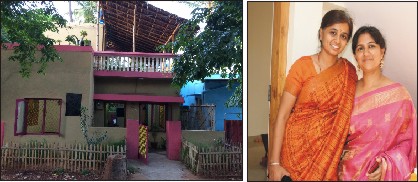
Let’s talk about Chai Patthe. A one-year-plus-old eatery with a very different touch to it for the way it functions. Chai Patthe is Nandita and Deepha’s dream-child, prepared and sold where are a whopping 70 different varieties of Tea along with some very interesting items to munch on. And all that’s available at the place is all the more special, for everything prepared there is made by no cooks but Nandita and Deepha themselves.

Walk into this cosy home with bean bags and cane seats within the rooms, relaxing upon which anyone can relish a simple Maggi to pasta and burgers or sandwich to cookies and brownies, in a very homely atmosphere. What’s more, top them up with some delicious varieties of tea which gets served to you in attractive earthen cutlery, and chances are, you’ll end up spending more than half a day at the place relaxing.

That’s not all. The place has much more than these to keep you at it. Book lovers visiting Chai Patthe can feast reading books from a mini library that’s maintained at the place, with a few but interesting books of varied genres. Those of who love playing games can enjoy playing uno, ludo, chess or crosswords with friends while their food and drink orders are being taken care of by the hosts.

“Our intention of starting Chai Patthe was not just for profit but to provide the visitors a nice and homely atmosphere where they could relax and enjoy a few simple and peaceful moments. Hence, we do not run it like a hotel. All things done and sold here are home-like,” explains Deepha, adding, “We also have a thatched roof seating where people are free to come over and celebrate their special days, read books, paint an art piece, write college records or even do school home works. We are glad we have such visitors too.”

The place which is open between 10.30 am and 7.30 pm daily, remains closed on the days when the ladies are busy with their power plant works for which they tend to travel outside the city. And before 10.30 am each day, Nandita and Deepha are in the Government School, where they teach the children.

“We do not bother if we have to close the cafe at times as our customers who are regular know the way we function. We are very happy working this way and have no plans to expand, as we are into it just out of passion,” says Nandita.

They so prove that they started Chai Patthe for just passion that they have never advertised about the cafe anywhere till date. All the popularity they have gained is by just word of mouth.

Chai Patthe is a non-smoking, wi-fi enabled zone and is one lovely place where any visitor can walk-in directly to the kitchen. “And as our customers, most of whom are acquaintances, know it is just the two of us who cook, they wait patiently until their orders are placed,” says Deepha. “And it is lovely when some of our friends who visit us even help us in the kitchen,” she gushes, who freshly makes the home-baked cakes served at Chai Patthe at her home daily. And all the health conscious ones will love the cooking here as the women use nothing but brown breads and buns and only olive oil to cook dishes and believe in keeping the place plastic-free. Everything here is served in earthen containers, porcelain and glassware. We indeed need to applaud the women for so successfully juggling between so many things at one time. Chai Patthe is located at Jayalakshmipuram [0821-4195033].— AN

source: http://www.starofmysore.com / Star of Mysore / Home> General  News / June 14th, 2014

TRAVELOGUE…: 14,000 feet to heaven

Scaling the Saurkundi Pass-1

Trekking through snow is an unforgettable experience for the simple reason, there is no path or trail waiting for you; you have to create your own path, where even a small miscalculated step can be your last, says Aishwarya Sunaad, Trekker, International Academy of Mountaineering and Allied Sports, Mysore.

by Aishwarya Sunaad

As the IAMAS (International Academy of Mountaineering and Allied Sports) team bid good bye to Mysore on the evening of 30th April, nobody could anticipate the adventure that awaited us 3000 kilometres away. We were 47 of us, of all ages and sizes, from 3 different States, making our way to conquer (as we would later learn) one of the toughest expeditions in the past 6 years.

SaurkaundipassBF11jun2014

Our journey took us backpacking through 5 States and several cities before we could officially start our endeavour up the mountains from Manali. There is a certain unexplored joy in visiting a new city everyday and as our team wound its way through each of these new places, it was like unravelling a different world. New people, new cultures, new experiences, new stories.

The star highlights of our backpacking being an exclusive visit to the Rashtrapati Bhavan in Delhi; reliving history in Agra and Mathura, experiencing sanctity at the Golden Temple in Amritsar, reliving the stories of partition at the Wagah Border with Pakistan at touching distance, 14 kilometres of White Water Rafting amidst class 6 rapids in the Ganga at Rishikesh and a VIP visit to the prestigious Indian Military Academy at Dehradun, to name a few.

After these indelible experiences, we arrived at our Base Camp in Manali on the 8th of May. Set in the Beas River Valley in the Kullu district of Himachal Pradesh, Manali is a treat to ardent trekkers and tourists alike. Our base camp, set amidst apple orchards with snowcapped mountains and pine forests on all sides marked the beginning of one of the greatest adventures we could experience. After acclimatising to the cold of Manali from the heat of the plains with some thrilling rappelling and river crossing, we started our trek officially on the 11th of May to Segli, our first camp.

The team descended down to a landmark point called ‘15 Mile’ before beginning the 12-kilometer ascend to Segli, at a height of 7,100 feet. The trail wound through small villages and dense vegetation, with the Dhauladhar mountain ranges surrounding us. Just as the team halted for lunch, we were greeted by the first spells of heavy showers. With raincoats and ponchos and an undying spirit, we trekked through the rain and reached the camp site by evening. Sipping some hot tea to combat the chill, we geared up for the next day.

The rain had subsided as we wound upwards towards the camp of Haura Thatch, at 10,700 feet on May 12; ‘Thatch’ means ‘plateau like land.’ Our camp site was actually on a Plateau up a Mountain! This goes to say, nature has her own mysterious ways. We trekked about 10 kilometres through dense green forests and gurgling streams with occasional glimpses of the mountains through the canopies. The sights that we saw and the scenes that we experienced are beyond description.

Trees, flowers, leaves, mosses, birds, insects and all other wonders of nature of all shapes and sizes ! It was paradise. As we were taking in the surroundings, we were greeted by rain, heavier than before. We couldn’t stop. With the rain and hail pounding, we continued upwards. It was getting cold and we were drenched to the bone. At one point, it seemed impossible to go any further when we reached a clearing that seemed suitable to camp. Tents were pitched and a fire was lit under a rock. After vain attempts to dry ourselves we retired to our tents. It rained the entire night and the next morning of 13th, the weather was so ruthless we couldn’t move camp. It was a truly chilling experience. By evening, on the 13th, the weather cleared and the sun peeped out. As we saw the first rays of sun in 2 days, the world seemed magical. We had set up camp near a small stream in an evergreen forest with pine trees on the fringes. There were colours even our cameras couldn’t capture!

But now, there was a crisis. Before starting the trek, we had already decided to forego our fourth camp at Dohra because of extreme snow conditions. Now we were lagging behind yet another day as we could not trek to Camp 3, Maylee, because of the rain. To make up the distance and keep the time schedule, a bold decision was taken. A decision of risk and daring. A decision that would test our courage and endurance, our mental strength and will power. A decision of ultimate adventure. A decision to cover the entire distance to Saurkundi Pass Summit in one day!

We started on the trail at 4 am in the morning on May 14. With torches in our hands and adventure in our hearts, we continued upwards. We encountered the first patches of snow and the first rays of light around 5.30 am. It was breathtaking. By 6.15 am, we had hit the snow.

[ Part 01…To be continued]


TRAVELOGUE…: SCALING SAURKUNDI PASS-2 

Aishwarya Sunaad
Aishwarya Sunaad

Trekking through snow is an unforgettable experience for the simple reason, there is no path or trail waiting for you; you have to create your own path, where even a small miscalculated step can be your last. The temperature kept dropping to subzero values and the sun shone harsher. It was maddeningly white everywhere and without goggles one could go blind. The snow seemed never ending and the summit was nowhere in sight. It was getting colder and colder.

There was snow in our shoes and pants, our feet were going numb and we couldn’t feel our fingers. We had walked for nearly 6 hours up the mountain without stopping and still there was no sign of the Summit. Finally, at around 11.06 am, after a grueling walk, we reached the Saurkundi Pass. The snow was about 3 feet deep and it was snowing heavily.

Despite this, we crossed the Pass and summited, at a height of 13,500 feet. There is no greater feeling than having successfully summited an expedition. You are literally and figuratively on top of the world. We had the frozen Saurkundi Lake on one side and never ending ranges of mountains on all sides. We could almost touch the clouds.

By this time, our feet were frozen and our fingers non-existent. That was the day we realised that cold is the most unforgiving condition you can experience. But the joy of having summited one of the most difficult treks, however easy I may make it look, overshadowed everything else.

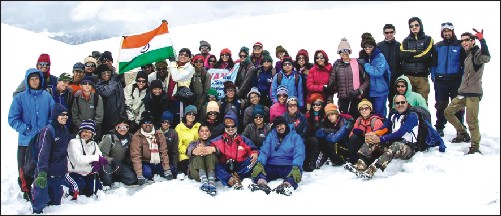
The 20 minutes we spent on the summit with the Indian flag and the IAMAS banner fluttering proudly in the wind, I can guarantee, will be the most important moments of our lives. But it did not end there. What we thought was difficult while climbing up was nothing compared to what we encountered while descending.

The snow was falling heavily and there was no route we could follow. We were numb and hungry but had to soldier on. We had no choice but to slide down the slopes ! Slide down with no equipment apart from a rope, which we used occasionally.

That was real adventure and the adrenaline rush was simply superb. With everything at stake, we made it down to the tree line by around 4 pm. We had trekked through the most extreme conditions for 12 hours. We finally reached our campsite at Longa Thatch by 6 pm after 14 hours of ascending and descending. We had done it with zero casualties! It was the most satisfying feeling one can feel.

After a good night’s sleep and merry making, we set off for base camp. The weather was sunny with the city of Manali, which looked like the Map of India from that height, sprawling beneath us. We descended down to Lekhni on May 15. The sights were like a poem. After staying at an authentic log hut that night, we finished our expedition on the 16th of May 2014 after successfully reaching Base Camp.

The next few days saw us exploring the city of Manali and seeking some more adventure while rafting in the Beas River. The team left for Delhi on the evening of 18th, where a privileged visit to the Parliament House added another feather to our caps. We caught the Duronto Express back home on the 19th with truckloads of memories and made it home on the 21st of May 2014, successfully.

Every expedition brings your best side to the forefront because it is the ultimate challenge one can face alone. And if you are an adventurous person and need the adrenaline, it is the call of the mountains you must answer. And finally, if you want to test your daring and mettle, it is the Saurkundi Pass you must conquer. For, if there is a paradise, it is this, it is this, it is this.

[Concluded]

Part 01:

source: http://www.starofmysore.com / Star of Mysore / Home> Feature Articles  /by Aishwarya Sunaad / June 06th, 2014

Part 02:

source: http://www.starofmysore.com / Star of Mysore / Home> Feature Articles  /by Aishwarya Sunaad / June 07th, 2014

Karnataka sites make to Unesco world heritage tentative list

Mysore :

Architectural jewels in Belur and Halebid in Hassan, historical monuments in Srirangapatna and remnants of history from Deccan sultanate are in line to be declared as the world heritage site by the Unseco.

Put together, these sites represent the pluralistic spiritual beliefs that the state government is planning to preserve and promote.

The three sites have been included in the Unesco’s world heritage tentative list, thanks to the department of heritage, archaeology and museum which is now working with experts to prepare dossiers of each of them. Experts from across the world will evaluate the submission of the department and make recommendations. To be included on the world heritage list, the sites must be of outstanding universal value, according to the Unesco.

The chief minister Siddaramaiah on Thursday announced the inclusion of the three sites in the tentative list of the Unesco indicating that the government is serious in protecting the monuments. He linked it to tourism promotion in the region where the government is planning to create a tourist circuit comprising Mysore, Mandya, Hassan and Chamarajnagar to revive the local economy pointing out that many nations depend on tourist inflow to sustain their economies.

Heritage commissioner C G Betsurmath said he submitted the proposal to the Union ministry of culture in mid-February. “We consulted the experts and prepared the proposals focusing on the unique character of each of the sites identified,” he told The Times of India. The sites of Belur and Halibedu throws light on the pluralistic spiritual beliefs of Vaishnavism, Shaivism, and Jainism. Here the spiritual intersected with ordinary people while monuments at Srirangapatna we’ve projected different developmental stages of defence architecture in Hindu and Islamic traditions, he stated adding that the fort is a symbol of strength given that it was breached only four times. The Deccan sultanate properties indicate the convergence of different styles of Islamic architecture and their intersections with the prevalent Hindu architecture of the period, he stated.

A string of monuments in historical Srirangapatna, including the Fort, Bahmani monuments at Gulbarga, Bahmani and Barid Shahi monuments at Bidar and Adil Shashi monuments at Bijapur and properties of heritage value at Belur and Halebid have made it to the tentative list. He has received a communication from Shikha Jain, the member-secretary of the advisory committee on world heritage maters, in the Union ministry of culture asking him to work on presenting the dossiers. There are several parameters and we are keenly working them out, Betsurmath stated.

The world heritage site gets international attention for conservation and helps attract visitors from across the globe. The state’s prized possessions have passed the stage two among the five stage process. The next is be evaluation by two advisory bodies– the International Council on Monuments and Sites and the World Conservation Union. They will provide the world heritage committee with evaluations allowing it to make a decision. According to Shikha Jain, the dossiers can be submitted after February, 2016.

Presently group of monuments at Hampi and at Pattadakal are recognized as the world heritage sites by the Unesco. This comes a decade after Srirangapatna, Bidar among other towns were declared as heritage cities.

source: http://www.timesofindia.indiatimes.com / The Times of India / Home> India / by H M Aravind, TNN / May 22nd, 2014

Sleeping amongst the fauna in Bandipur

Snapshots from Bandipur

Chennai:

Bandipur is situated at the southern edge of Karnataka, and the National Park located there has drawn its fair share of visitors. Sharing its boundaries with three other national parks — Nagarhole, Mudumalai and Wayanad — which together form the Nilgiri biosphere reserve, Bandipur makes the ‘must-see’ list for most nature lovers. This belt is considered an eco-sensitive region and is also a part of the Project Tiger scheme since it has a considerable tiger population.

Bandipur’ s biggest lure is its promise of wildlife sightings. The reserve is home to a variety of species, including tigers, leopards and sloth bears, which is the reason for visitors to come. Bandipur National Park is amongst the most beautiful and oldest national parks in the country. Declared as a National Park in 1974, it once served as a hunting ground of the Mysore Maharajas. Bandipur National Park covers an area of 890 sq km, housing some of the most exotic species of flora and fauna along with Nagarhole National Park, it is the largest protected area in south India and a part of the Nilgiris, which is located 560 km from Chennai and 80 km from Mysore, Karnataka.

Bandipur lies in the rain shadow region of the Western Ghats and hence the vegetation is rather dry and deciduous but this lack of forest cover increases one’s chances of spotting wildlife. The yellowish-brown grass and scrub that covers the land is reminiscent of the African savannah and the occasional tree with its widespread branches seems like the perfect location to spot a wild cat lounging around. When we visited Bandipur, it was just before the monsoons, the weather cool in the evenings only.

This is the route we took when we drove to Bandipur and Mudumalai from Chennai: It was Chennai — Ranipet — Chittoor — Bangalore — Mysore — Bandipur, a journey of about 560 km that took us eight hours, with stops at Chittoor, Bangalore and Mysore.

The four of us set out at 11pm from Chennai. We stopped at Chittoor for coffee. By 4 am we were in Bengaluru, where we stopped for about 15 minutes before going on to Mysore. The weather was pleasant, perfect for driving without an AC. By 7 am, we were on the last leg of our journey from Mysore.

We were stopped by security when we reached the forest area for the toll fee and for safety and environment conservation tips. This was a strictly plastic-free zone and the speed limit 30 km. There was pin drop silence in the forest. We spotted a deer and peacock the moment we began our slow drive through the 13 km to the resort where we were going to stay.

source: http://www.deccanchronicle.com / Deccan Chronicle / Home> Lifestyle> Travel / DC / by S. Somasundaram / May 15th, 2014

MELANGE : A mouthful of goodness

Tradition rules at Albert Bakery./ Photo Murali Kumar K. /  The Hindu
Tradition rules at Albert Bakery./ Photo Murali Kumar K. / The Hindu

Come one, come all to Albert Bakery and indulge in an array of nostalgic slices of confectionaries that are a rich part of Bangalore’s culinary heritage

Nestled in the heart of Frazer Town on the famous Mosque Road is a slice of the city’s history so unassumingly located that you would miss it entirely if you were walking or driving fast enough. And yet, Albert Bakery is one spot you would always want to stop by and taste their array of confectionaries. Bangalore is famous not only for its music and climate but also, over the years, for its food and Albert Bakery has been a major player in the city foodscape forever. The 112-year-old bakery is easily the city’s oldest and has been upholding a gastronomical tradition over the decades.

A thriving hotspot, the bakery is open only from 3 p.m. to 9 p.m. and is sometimes so packed that there are traffic snarls on Mosque Road.

And for those who frequent the street during the festive season of Ramzan, if you haven’t stopped at Albert Bakery to grab a bite of their goodies, then everyone will tell you that you haven’t lived life to the fullest.

Mohammad Sabir Faizan, the son of the proprietor Nawab Jan, says they strive to uphold the traditional baking practises. “We have always opened from 3 to 9 p.m. because we make the confectionaries fresh in the morning. Other bakeries may belong to a chain of supplies so they add preservatives and improvers which we never do. We make batches that are sufficient for each day.”

Established in 1902 by Sabir’s great grandfather Mohammad Yacoob, the bakery was initially a godown in Sangam lane off Kamaraj Road. “We used to deliver only buns and bread. That used to be the usual catering back then. We cycled down the roads with baskets of bread and buns delivering it to people in the locality. We shifted to Mosque Road in 1921 and since then we have stayed here,” recalls Sabir.

When my grandfather Mohammad Ibrahim was around, they had bread, biscuits, rusks, tea biscuits and other regular items. “It was only after my father Nawab took over that he introduced the kova naans, coconut cherry cookies, mini cocktail samosas and other specialities.”

From delicious hot kova and keema naans and mini cocktail samosas to butter salt biscuits and coconut cherry cookies, Albert Bakery boasts of a variety of foodstuffs that make mouths water at the mention of the bakeries name.

The spread available at Albert Bakery./ Photo Murali Kumar K. / The Hindu

On the name, Sabir says back in the early 1900s, “My great grandfather felt it would appeal to everyone if it had an English name. There is a common misconception that the shop was started by some foreigner called Albert. We had a lot of Britishers as customers so a common name like Albert would make it easy to relate to and the name stuck.”

Being the fourth generation in this line, Sabir hopes to carry this legacy forward. “We may launch an outlet elsewhere but all the production will always be here. We don’t want to expand much because of the freshness factor. We will never compromise on quality.”

A bakery like Albert in a city like Bangalore is a blessing, says Sabir. “There were no shops in this area when we started. Now there is a huge boom in development. The city has helped us come up. We also have a lot of competition so that helps us strive to be more creative and innovative. We are proud to be part of Bangalore’s rich cultural and culinary heritage.” The bakery’s other specialties are the hot cross buns on Good Friday, marzipan Easter eggs on Easter Sunday, non-alcoholic plum cakes for Christmas and brain puff for Ramzan.

They also have daily specialties like the chocolate lava cake, chicken Swiss and mayo rolls, tarts, quiches, banana and grape muffins, chocolate croissants and donuts and pizzas.

source: http://www.thehindu.com / The Hindu / Home> Features> MetroPlus> Food / by Allan Moses Rodricks / Bangalore – May 16th, 2014

Brigade Group to come up with 8 hotels in south India

Brigade Group that currently has two operating hotels – The Grand Mercure, Bengaluru and the Sheraton Bangalore Hotel at Brigade Gateway in the country has confirmed to come up with eight new hotels in south India soon.

Nirupa Shankar, Director, Brigade Group said, “We currently have eight hotels in the pipeline – one in Chennai, two in Mysore, two in Kochi and three in Bengaluru. The hotel in Chennai and one of the hotels in Mysore will be launched in 2015. None of them are opening in 2014, as they are still under construction or under design development.”

Brigade Group has a signed management contract for the two hotels opening up in 2015. They are Holiday Inn-Chennai, Old Madras Road (managed by IHG) and Grand Mercure in Mysore (managed by Accor). The management of the remaining hotels is still under discussion with major international operators mentioned Shankar.

source: http://www.hospitalitybizindia.com / HospitalityBizIndia.com / Home> News Travk / by Shweta Ramsay, Mumbai / Friday – May 02nd, 2014