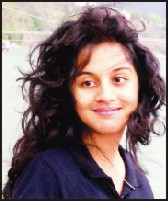
Sakina khatun with the bronze medal she won at the Commonwealth Games in Glasgow. / The Hindu
Her success is all down to her hard work: coach
Life has not been kind to Sakina Khatun, who won a bronze medal at the Commonwealth Games on Saturday.
In Glasgow’s Clyde Auditorium, the 25-year-old Bangalore-based para-athlete lifted a weight of 88.2 kg to finish third in the women’s powerlifting event (Lightweight Group A). It was a success that came after prolonged hardship.
“My parents cried when I broke the news to them on the phone,” she told The Hindu from Glasgow.
Her coach and mentor Farman Basha, who also competed at the Games, faltered in his event on account of an injury, but his delight was enormous. “She has been through a lot. So I’m very happy for her,” he said.
Sakina hails from Basirhat in West Bengal’s North 24 Parganas district. Her mother is a farm labourer while her father, ailing with a serious back condition, is unable to work. “He can’t even walk,” Sakina said. “We don’t have the money for his treatment.”
Afflicted with polio at a young age, she took up swimming on her doctor’s suggestion, learning in ponds in her village before a teacher in school noticed she had an aptitude for it. “Despite steady success at the national level, I was ignored for the 2010 Commonwealth Games team. It left me disheartened and I quit the sport,” she said.
Sakina switched over to powerlifting on the advice of one of her swimming coaches, and in 2010 was directed to Basha. “She wanted to come over to Bangalore to be trained by me,” he said. “She had no money and I couldn’t afford to spend a rupee on her.”
But Sakina found a benefactor in Dilip Majumdar, a businessman who volunteered to support her training. “I’m a girl and my parents were against my leaving home,” she recalled. “But my sponsor managed to convince them.”
“At first, she could only lift around 25 kg,” recalled Basha. “But gradually she improved. Her success is all down to her hard work.”
source: http://www.thehindu.com / The Hindu / Home> News> Cities> Bangalore / by Shreedutta Chidananda / Bangalore – August 04th, 2014
City’s noted snake rescuer and wildlife conservationist popularly known as Snake Shyam who has been elected as the Corporator of MCC Ward No. 17 was featured in Daily Mail, a UK tabloid on July 23.
The article in the tabloid says that Snake Shyam, despite being allergic to most anti-venom, catches some of the deadly species in Mysore every day.
It also says that this serpent-lover had been bitten four times and the doctors discovered that their treatments were prompting a severe allergic reaction which could kill him.
That means that Snake Shyam’s next call-out could be his last – but despite the dangers, he refuses to give up.
The article also features photographs of Shyam catching snakes, documenting them, his Maruti Omni Van and video of him catching a snake.
Reaches 28,000 mark yesterday
With the rescue of a Rat Snake at a steel godown in Bannimantap here yesterday, Shyam has so far rescued 28,000 snakes.
Snake Shyam speaking to SOM said that he began catching snakes in 1980 and had not documented them till 1997. He further said that on the advice of some, he began to document the snakes he had rescued from 1997 and has so far rescued 28,000 snakes and released them into their habitat far from urban areas.
He has called upon the people not to kill them, but instead call him on Mob; 94480-69399 and keep a watch on the snake till he arrives.
source: http://www.starofmysore.com / Star of Mysore / Home> General News / July 25th, 2014
S. Kavyashree (centre) is seen showing her thesis on former Chief Minister Kengal Hanumanthaiah to NR Group Chairman R. Guru (second from left) during the graduation day held at Ranga Rao Memorial School for Visually Challenged in city yesterday. Others seen are (from left) District Disabled and Senior Citizen Welfare Officer Balaram, B. Siddaramu and Meenakshi, Kavyashree’s parents. It is said that the valuators of Kavyashree’s thesis impressed by the amount of research put into the work have recommended the University of Mysore to convert the same into a book.
by Nandini Srinivasan
When S. Kavyashree expressed her views on life at the graduation ceremony at the Ranga Rao Memorial School for the blind in the city yesterday, she was reflecting on her own life. All the threats that seemed to loom large in her life were turned into opportunities, thanks to her grit and the continuous support that she received from her family and well-wishers.
The visually challenged Kavyashree, who was born completely blind, today has completed her Ph.D in Political Science. Her thesis on ‘Dynamics of Administration in Karnataka with special reference to Kengal Hanumanthiah regime,’ has been accepted by the University of Mysore which has notified that she be awarded the Ph.D and is eligible to receive the degree in the next convocation of the varsity.
Her parents B. Siddaramu, a retired Commercial Tax Inspector and mother Meenakshi, swell with pride at their daughter’s achievements. All the fears and agony that they underwent when they realised Kavyashree was completely blind, when she was around 8-months-old, seemed unfounded as they saw her outgrow her shortcomings and excel in everything she did. Kavya’s elder sister and brother have been her main pillars of strength.
“I was always fascinated by the ‘Doctor’ tag with one’s name. I knew I couldn’t become a doctor because of my blindness. It was my siblings who encouraged me and said I can get a ‘Dr’ tag if I get a Ph.D” she says laughingly and warmly recalls the efforts of one Nataraj, who initiated her into schooling even as her parents were unsure about any school that would admit her. Nataraj, who had just then completed his training in Braille script, persuaded her parents to enrol Kavyashree in the MTM Government School in Ashokpuram. It was here that Kavyashree was ably supported by the teachers of the school, especially the music teacher R. Krishnaiah and Nataraj who drove home the importance of education and fuelled her interest to pursue her education in spite of all odds.
Kavya later joined the Ranga Rao Memorial School for the blind where she studied from 5th to 7th standard. It was here that she strengthened her skills in Braille and was able to give a clear structure to whatever she studied. She came into the main stream of education from the 8th standard when she joined the Jayalakshmi Smaraka High School in Ramakrishnanagar. The teachers were impressed with the kind of interest Kavyashree evinced and were extremely supportive. “They would go slow when dictating notes, so I could take them down in Braille script. They patiently explained when I had doubts and were more happy than me when I scored well in the exams,” says Kavyashree.
The same support from the faculty and friends continued during her PUC at the Sri Vivekananda Composite Junior College in Jayalakshmipuram and her BA degree at the Vishwakavi Kuvempu First Grade College.
“During those days we had to completely rely on Braille and the lectures in class. There were no recorded texts or computers that we use today. My father always read out to me and I made my notes during the lectures. I also knew that if I needed to get a good job and settle down in life, a mere degree would not help. I had to achieve something more which will not only help me overcome my physical disability but also ensure that I can aspire for a decent job” says Kavyashree who has a passion for teaching and is eagerly looking forward to taking up the profession. She has already cleared the National Eligibility Test too and is now preparing for the IAS exams.
Having studied up to MA (Political Science from Manasagangotri) in Kannada medium, Kavyashree till then did not find the necessity to learn English and was happy with the little knowledge of the language she had. However, when she decided to pursue her Ph.D, she met her Guide Dr. Midathala Rani, who insisted that she wrote her thesis in English and encouraged her to learn the language. Though very apprehensive about learning English well enough to write her thesis, Kavyashree decided to give it a try. She also realised that she would need English if she had to use the software for the blind. She did pick up the language quickly and today she speaks English fluently, fluent enough to write articles for reputed national dailies and Journals and present papers at Seminars.
Kavyashree has presented papers on Social Work Ethics and Human Values in Ananthapur, Andhra Pradesh and on Politico Administrative Relations at the Sri Venkateshwara University, Tirupathi.
With the progress in technology, new software helps the blind read and work on computers. Kavyashree took up a six-month computer course at the JSS Polytechnic. The special software JAWS helps the blind to scan books, read and work on the computers.
“The Manasagangothri library has some very good equipment and not many are aware of this. The sad part is that there are so many facilities for the blind but many of them are still unaware. If the people concerned take a little more responsibility in sharing basic information, it would be of great help to the needy,” says Kavyashree and added that all the schemes and projects envisaged for the visually challenged are indeed praiseworthy but will be beneficial only when they are actually implemented.
The first visually challenged lady, who has got a Ph.D degree from the University of Mysore, Kavyashree dreams of earning enough to be able to give a good life to her parents who have given her so much. She proudly says that she helps her mother with all the household chores, except cooking.
The only challenge she faced during her studies is mobility as she had to depend on her father to take her around everywhere. She has no complaints about life whatsoever. “Society has been kind to me. There are problems in everyone’s life and we need to go ahead getting over them. Nothing special about me. May be I had to strive a little harder,” she says.
Kavyashree’s say to the world is to look at her and treat her as a normal person, which makes life much easier. She eagerly awaits the next convocation as she is again back to her books preparing for her IAS exams. ‘Life looks beautiful! I may not be able to see it, but I surely can feel it with my heart !’ she says with a beautiful smile on her lips.
source: http://www.starofmysore.com / Star of Mysore / Home> Sports Feature Articles / July 11th, 2014
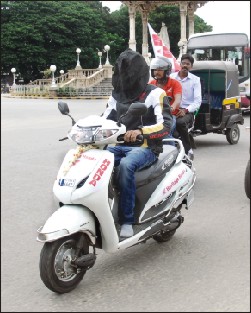
Seated blindfolded on a Honda Activa scooter, M.K. Sudarshan Jadugar, aged 21, resident of Lashkar Mohalla, today rode blindfolded from Siddalingapura to Srirangapatna and returned to Columbia Asia Hospital junction later today, after riding blindfolded for nearly 30 kms. Earlier, he did a trial run near the Palace.
Originally, Sudarshan was supposed to ride blindfolded from Mysore to Srirangapatna. However, he was denied permission by DCP M.M. Mahadevaiah who told Sudarshan to undertake the drive from Siddalingapura.
Before proceeding to Siddalingapura blindfolded, Sudarshan this morning offered pooja at Kote Anjaneya Swamy temple to symbolically begin his blindfolded ride in the presence of Ilai Alwar Swamiji and his friends and sponsors including Heritage Honda in city.
It is said that Sudarshan, who is aiming at entering into the Limca Book of Records, had ridden a bicycle blindfolded across the city in 2008 after being inspired by a show by magicians Ramesh and Uday while he was in a hospital.
Sudarshan, accompanied by an ambulance, an auto making announcement and a few friends on their bikes, claims that he would not violate any traffic rules during his blindfold ride including following traffic signals.
M.K. Sudarshan Jadugar is the son of M.K. Keshavamurthy and Vijayalakshmi, residents of Lashkar Mohalla in city.
source: http://www.starofmysore.com / Star of Mysore / Home> General News / July 09th, 2014
Mysore city is blessed in more ways than many other cities of South India. Its location is ideal. An imposing hill with a temple of Goddess Chamundeshwari. River Cauvery flows just 12 kms away. River Kabini is just 35 kms away. A green cover all around with a salubrious climate. Even summer is forgotten as fast as one started complaining of the heat with the monsoon setting in by May end.
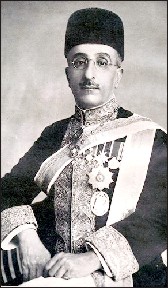
If these are nature’s bounty bestowed on our city, providence too has been kind with the Wadiyar dynasty ruling the Kingdom of Mysore with this city as its capital. And blessed are the people because the Kings who ruled after 1800 AD have all been good kings with most of them being patrons of art, literature and music. And during the long reign of Krishnaraja Wadiyar IV the Kingdom became a Rama Rajya as Gandhiji called it and the King himself was a Rajarishi. Philosopher-king. It was this king who ruled the kingdom with the help of renowned Dewans [Prime Ministers]. One among them was Sir Mirza Ismail.
For some years I was a member of ‘Freemasons,’ sort of secret club known as The Grand Lodge of India, Lodge Mysore. Recently I was going through its publication known as ‘The Square and Compasses’ and was intrigued to find the name of Sir Mirza Ismail being mentioned in it in glowing terms just as his work in Mysore was much appreciated.
His name was mentioned in connection with the problems the ruler and administrators faced in the Kingdom of Jaipur, Rajasthan, from vested groups. The situation was similar to what happened during the building of the Great Temple in Jerusalem after Jews were freed from their Babylonian captivity after 70 years of exile.
It appears during the year of exile of Jews, there was no government of any kind in the country and many outlaws, murderers, debtors and others with dubious characters from neighbouring countries came and settled in the Jewish country, specially in the city of Jerusalem. These people resented the arrival of Jews, from their Babylonian exile, trying to restore law and order. There was daily strife between the two warring sides which compelled the labourers at the temple area literally to work with the ‘trowel in hand and sword by the side.’ This, of course, has become part of the traditional ritual in the Freemason ceremony.
Recalling this historic ancient incident, the report in the magazine connects it to an incident in modern times. It says, “In our own times, we have heard of Sir Mirza Ismail — Special Officer entrusted with the task of beautification of the city of Jaipur in Rajasthan. With undaunted courage and determination, he went on with pulling down dozens of houses as per his masterplan without fear or favour, even those of big and influential citizens who naturally tried to oppose his doings.”
No wonder the grateful citizens of Jaipur named a major road after Sir Mirza Ismail. Now compare this with ourselves. Is there a road named after this great Dewan of Mysore Sir Mirza Ismail? I don’t know. Is there a road named after Sir M. Visveswaraya? I do not know. Yes, someone told me there indeed is a Mirza Road but it does not run even a km length in Nazarbad. In Jaipur, I have seen Sir Mirza Ismail Road, a double road, running to a few km length in keeping with his stature. Yes, there is also one inconspicuous Circle named after Sir MV ! Could they not have a statue of Sir MV there just like the other two statues of Maharajas?
Incidentally, the message from the Grand Master Most Worshipful Brother Vasudev J. Masurekar, OSM, has the opening paragraph that takes you to 2nd century BC and then brings you to 2014 AD. It speaks of Delphic Oracle in Greece where I had been about five years back, hence my interest. The Grand Master says:
The temple of Apollo at Delphi, built in the 2nd century BC, has three phrases carved into the stone. First is, “Know thyself,” second “Nothing in excess” and the third is “Make a pledge and mischief is nigh.”
These three statements have made the Oracle of Delphi famous universally.
All the three statements are profound and impacts on every individual’s life. Because we do not try to know ourselves, we delude ourselves as someone that we are not. Buddha has taught us to follow the golden path, the middle path. Nothing in excess. Neither more nor less. The third statement is rather complex. No wonder over the centuries there have been many interpretations of these words and debates by philosophers and scholars.
However, let me venture to interpret the third statement in the light, nay in the dim light, of my own wisdom. It says, “Make a Pledge and Mischief is Nigh.” These are the days where politicians in our democratic country keep making pledges, from swearing on our Constitution, to protect and preserve it, to provide a good administration and infrastructure. But, our experience has been that they seldom keep their pledge. That is why I interpret this statement to mean, ‘when you make a pledge, you are near a mischief.’ You are upto some mischief! Read politician in the place of you. Howzzat?
e-mail: kbg@starofmysore.com
source: http://www.starofmysore.com / Star of Mysore / Home> Abracadabra….Abracadabra / by K.B. Ganapathy / July 02nd, 2014
Last Sunday my wife and I went on a journey that we had wanted to undertake for the last thirteen years ever since she lost her brother who was serving in the army as an officer. Major S. M. K. Ghori, a former student of the Maharaja’s College here, laid down his life in the cause of the motherland while fighting insurgency in the forests of Baramulla District in the State of Jammu and Kashmir on 1st July 2001. Two of his most trusted men too went down fighting alongside him on that fateful evening. Four days later while we were waiting with all our grieving family members at the Bangalore Airport for his body to arrive, I told my wife that we should try and visit his unit not only to see where exactly he was serving when his end came but also as an act of homage to his sacrifice.
A trip to Kashmir somehow never materialised over the next thirteen years and finally when a chance came up last week in the form of a group tour with about a dozen doctors’ families, my wife and I felt that it was the right time for us to go there. Having finished our sight-seeing in and around Srinagar with the others members of our group we extended our stay by a further two days to accomplish what we had been looking forward to. Upon contacting the army top brass through my brother-in-law’s wife we were told that his unit was still stationed near Baramulla and arrangements would be made to allow us a visit.
Very soon a Colonel who was the chief of the unit called us up and said that he would be happy to show us around the place and also insisted that we stay back for lunch. We very politely declined this part of the invitation as we did not want to intrude on the time of officers and men who were expected to be in a state of operational readiness round-the-clock. However, we agreed to have a cup of tea with them without wasting much of their time. A friend in Srinagar who used to meet us every evening arranged for a trusted cab driver to drive us to our destination and back since he did not consider it safe for us to go there with an unknown person. As he was from the nearby town of Sopore where he had his ancestral house, he said that we should be his guests for lunch which would expose us to the traditional Kashmiri hospitality. This was a suggestion to which we readily agreed and left early in the morning. The drive from Srinagar towards the western border of the country was full of security bottlenecks with all vehicles being stopped and photographed by heavily armed men in combat readiness. The road lined on either side by tall poplar trees passed through some very fertile countryside, full of verdant apple orchards nourished by a maze of mountain streams with snow-clad hills in the not too distant background. The apparent tranquillity of the hills belied the turmoil that they have been witness to from time to time.
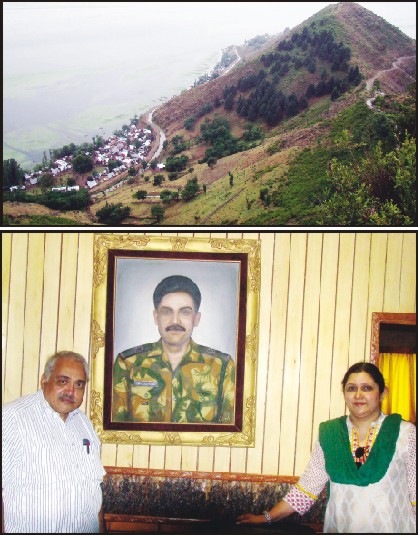
After a drive of about thirty kilometers from the town of Baramulla through some of the most remote and lonely stretches, we reached the army unit where we were welcomed with a warmth that we had never expected from men in uniform. The Colonel himself was standing with his deputy to receive us with fighting men’s iron handshakes and they escorted us to the drawing room of their barracks. It had a large life-sized portrait of my late brother-in-law on one of its walls since he was the only officer of the unit who had died in action since its inception while it had lost twenty-nine Jawans whose sacrifice was in no way less significant. Their photos too adorned another wall in a close cluster which perhaps was a reflection of the close ties they shared while they were alive.
The Colonel briefly told us about their life as soldiers and the uncertainty that comes with it. Later he himself drove us in his personal vehicle to the place from where we could see the hill across a lush valley at the base of which my brother-in-law and his men went down fighting. We stood in silence trying to visualise the final moments of their brave stand. Returning to the base we were a little surprised and even embarrassed to discover that the tea was almost a meal prepared and served by men in uniform in a manner that would have put the most talented hostess to shame.
We were then invited to stand alongside the painting of my brother-in-law and have a picture clicked as a keepsake of our visit which we did [see pic]. It was a very sentimental moment against which I had warned my wife well in advance and thankfully she put up a brave face.
After I signed the visitors’ book it was time once again for iron handshakes but this time to say goodbye. It was a very short drive to Sopore, a Spartan town with horse-drawn carriages and tin-roofed houses that seemed to have been frozen in a time warp like the rest of the Kashmiri countryside. The atmosphere seemed a little eerie as we found that every entry point was guarded by heavily armed soldiers alongside their armoured personnel carriers. We located our friend’s home which was tucked in a maze of narrow alleyways and were soon lost in another session of tea accompanied by some traditional Kashmiri snacks and dry fruits. The tea itself was a very distant cousin of what we drink here as it is salted instead of sugared. My host then suggested that he would take us for a traditional lunch to a resort overlooking the Wular Lake, the largest freshwater lake in Asia which was just a stone’s throw from his village. The breathtaking view from the place was something to be treasured forever in the mind’s e
ye. It is because of sights like this that Kashmir has come to be called a ‘Paradise on Earth’. After a hearty meal we parted company as it was time for us to get back to Srinagar. On the way back too we noticed unusually hectic military activity along the main road and on the outskirts of the town we even saw an ambulance and a large convoy of army vehicles parked around a house. We did not make much of it and reached Srinagar safely for a good night’s rest.
Early the next morning one of my friends who had been in our group and who had returned with the others a day earlier called me up from Mysore to tell me that Sopore had been the scene of a fierce gun-battle between security forces and insurgents the previous night. Since a civilian youth too was killed in the crossfire it appears there were widespread protests and an indefinite curfew had been imposed on the whole town with all roads completely blocked. Occurrences like these are a very common feature of life in Kashmir and the ensuing inconvenience is accepted as a normal part of living there. The whole of Monday and Tuesday, till we left Srinagar, life remained completely paralysed in the entire valley. My wife and I thanked God that we had been able to get away in the nick of time from what could have become a tricky situation blocking our exit. Our ‘Mission Kashmir’ had been accomplished at last !
e-mail: kjnmysore@rediffmail.com
source: http://www.starofmysore.com / Star of Mysore / Home> Feature Articles / Friday – June 27th, 2014
The birth centenary year of Noor Inayat Khan, the famous Indian-origin World War II spy, was observed in the UK this week.
Popular English novelist and political commentator Frederick Forsyth was among the key guests at a special memorial event in London to celebrate the life of Noor, the great-great-great-grand-daughter of Tipu Sultan, who became the first female radio operator to be sent from Britain into occupied France.
“What is so remarkable about Noor Inayat Khan is that she owed us nothing; she didn’t have to go,” said Forsyth, the well-known thriller writer behind books such as ‘The Day of the Jackal’ and ‘The Odessa File’ who compared her to the 18th century ruler, Tipu Sultan, known as the ‘Tiger of Mysore’.
“When it came to being recruited for the SOE (Special Operations Executive), she could have said ‘thank you but no’…but she volunteered. There must be something of the old tiger in her genes. It is recorded that she fought like a tigress…Noor absolutely did not die for nothing.
“She is an amazement, a remarkable and extraordinarily brave woman who did what she did for a country to which she owed nothing,” Forsyth said.
The memorial event was organised by the Noor Inayat Khan Memorial Trust set up by Shrabani Basu – author of the World War II heroine’s biography ‘Spy Princess’.
It coincided with the dates of June 16-17, 1943, when Noor – under her codename Madeleine – was flown to the landing ground in Northern France.
“She combined the rational side of her personality with her hatred of injustice and became one of our greatest heroines. My hope is that she would have gone back to that inner life that sustained her,” said Christine Crawley, a Labour party politician who has campaigned for the contribution of women agents in the war to be commemorated.
The SOE was an underground force established in Britain in 1940 by war-time Prime Minister Winston Churchill to “set Europe ablaze”.
It recruited men and women to launch a guerilla war against Hitler’s forces.
Noor, born in September 1914 to an Indian Muslim father and an American mother, grew up in Britain and France.
Despite her pacifist views, she decided to join the war effort to defeat the Nazis and was eventually captured.
In spite of being repeatedly tortured and interrogated, she revealed nothing and was executed by an SS officer on September 13, 1944, at Dachau concentration camp at the age of 30.
She was later awarded the George Cross, the highest civilian decoration in the UK, in recognition of her bravery.
A bust in Noor’s memory now stands at Gordon Square in central London, a stone’s throw from the home she briefly lived in.
source: http://www.ndtv.com / NDTV / Home> Diaspora / Press Trust of India / June 19th, 2014
Doctors remove mass and also half of the left lung.
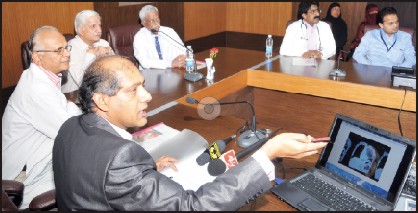
Dr. Shyam Prasad Shetty is seen explaining about the procedures involved in the surgery performed on the woman at the press meet at the hospital yesterday, as the team of doctors who were involved in the surgery and the management of the hospital look on.
Mysore :
Doctors at JSS Hospital, Mysore have performed a rare surgery on a 24-years-old woman from Channarayapatna with a three months history of intermittent episodes of cough, difficulty in swallowing, difficulty in breathing, coughing out whitish material along with hair.
The woman had few episodes of blood in the sputum and had lost 3 kgs of weight over a period of three months.
Dr. Shyam Prasad Shetty, Cardiothoracic Surgeon, speaking at a press meet at the hospital in city yesterday, said that the woman was initially treated at a local hospital and was referred to him for expert care. The chest X-ray and CT thorax showed a large mass in the left side of the chest very close to the heart.
The large mass was abutting (closely adjacent to) the main blood vessels coming out of the heart. A scope was inserted into the airways by Dr. Jayaraj, Prof. of Pulmonology and these revealed long tufts of hair and whitish material coming out of the left main branch of the lung, confirming that this mass was communicating with the left lung.
The patient and her family were explained about this unusual large mass in her left lung, about its approximation to the heart and the great vessels and about the risks involved in surgically removing it.
A multidisciplinary team of specialist doctors comprising of Dr. Shyam Prasad Shetty, Dr. Umesh Nareppa Cardiothoracic and Vascular Surgeons, Dr. Jayaraj and Dr. Mahesh- Pulmonologists, Dr. Dinesh Kumar and Dr. Murugesh Wali- Cardiac Anesthesiologists was formed and a plan of care evolved. Surgery was done under general and epidural anaesthesia by ventilating only one of the lungs. The left side of the chest was opened and a large mass measuring about 8 cm x 9 cm adjacent to the main pulmonary the left pulmonary arteries, invading into the left upper lobe of the lung was found.
This was a difficult and technically challenging surgery. The doctors removed the mass also had to remove half of the left lung also since this mass was connected to it. After the surgery, she was in the intensive care unit for five days and was discharged two weeks after the surgery.
If the mass was left unattended, this would have become life threatening by rupturing into the lung and its air ways, into the heart and its major blood vessels.
Dr. R K Chaturvedi, Director, JSS Hospital said, “This case was a challenge to the cardiothoracic surgeons, pulmonologists and cardiac anesthesiologists. A multi-specialty team equipped with high end infrastructure which is available at JSS hospital-Mysore made it possible to carry out this major surgery on a very rare and unusual mass in a young lady. Since the patient was a beneficiary of Vajpayee Aarogyashri Scheme (BPL), the patient was not charged any money.”
The team comprised of Dr Shyam Prasad Shetty, Dr Umesh Nareppa Cardiothoracic and Vascular surgeons, Dr. Jayaraj and Dr. Mahesh Pulmonologists, Dr. Dinesh Kumar and Dr. Murugesh Wali- Cardiac Anesthesiologists.
source: http://www.starofmysore.com / Star of Mysore / Home> General News / June 06th, 2014
Trekking through snow is an unforgettable experience for the simple reason, there is no path or trail waiting for you; you have to create your own path, where even a small miscalculated step can be your last, says Aishwarya Sunaad, Trekker, International Academy of Mountaineering and Allied Sports, Mysore.
by Aishwarya Sunaad
As the IAMAS (International Academy of Mountaineering and Allied Sports) team bid good bye to Mysore on the evening of 30th April, nobody could anticipate the adventure that awaited us 3000 kilometres away. We were 47 of us, of all ages and sizes, from 3 different States, making our way to conquer (as we would later learn) one of the toughest expeditions in the past 6 years.
Our journey took us backpacking through 5 States and several cities before we could officially start our endeavour up the mountains from Manali. There is a certain unexplored joy in visiting a new city everyday and as our team wound its way through each of these new places, it was like unravelling a different world. New people, new cultures, new experiences, new stories.
The star highlights of our backpacking being an exclusive visit to the Rashtrapati Bhavan in Delhi; reliving history in Agra and Mathura, experiencing sanctity at the Golden Temple in Amritsar, reliving the stories of partition at the Wagah Border with Pakistan at touching distance, 14 kilometres of White Water Rafting amidst class 6 rapids in the Ganga at Rishikesh and a VIP visit to the prestigious Indian Military Academy at Dehradun, to name a few.
After these indelible experiences, we arrived at our Base Camp in Manali on the 8th of May. Set in the Beas River Valley in the Kullu district of Himachal Pradesh, Manali is a treat to ardent trekkers and tourists alike. Our base camp, set amidst apple orchards with snowcapped mountains and pine forests on all sides marked the beginning of one of the greatest adventures we could experience. After acclimatising to the cold of Manali from the heat of the plains with some thrilling rappelling and river crossing, we started our trek officially on the 11th of May to Segli, our first camp.
The team descended down to a landmark point called ‘15 Mile’ before beginning the 12-kilometer ascend to Segli, at a height of 7,100 feet. The trail wound through small villages and dense vegetation, with the Dhauladhar mountain ranges surrounding us. Just as the team halted for lunch, we were greeted by the first spells of heavy showers. With raincoats and ponchos and an undying spirit, we trekked through the rain and reached the camp site by evening. Sipping some hot tea to combat the chill, we geared up for the next day.
The rain had subsided as we wound upwards towards the camp of Haura Thatch, at 10,700 feet on May 12; ‘Thatch’ means ‘plateau like land.’ Our camp site was actually on a Plateau up a Mountain! This goes to say, nature has her own mysterious ways. We trekked about 10 kilometres through dense green forests and gurgling streams with occasional glimpses of the mountains through the canopies. The sights that we saw and the scenes that we experienced are beyond description.
Trees, flowers, leaves, mosses, birds, insects and all other wonders of nature of all shapes and sizes ! It was paradise. As we were taking in the surroundings, we were greeted by rain, heavier than before. We couldn’t stop. With the rain and hail pounding, we continued upwards. It was getting cold and we were drenched to the bone. At one point, it seemed impossible to go any further when we reached a clearing that seemed suitable to camp. Tents were pitched and a fire was lit under a rock. After vain attempts to dry ourselves we retired to our tents. It rained the entire night and the next morning of 13th, the weather was so ruthless we couldn’t move camp. It was a truly chilling experience. By evening, on the 13th, the weather cleared and the sun peeped out. As we saw the first rays of sun in 2 days, the world seemed magical. We had set up camp near a small stream in an evergreen forest with pine trees on the fringes. There were colours even our cameras couldn’t capture!
But now, there was a crisis. Before starting the trek, we had already decided to forego our fourth camp at Dohra because of extreme snow conditions. Now we were lagging behind yet another day as we could not trek to Camp 3, Maylee, because of the rain. To make up the distance and keep the time schedule, a bold decision was taken. A decision of risk and daring. A decision that would test our courage and endurance, our mental strength and will power. A decision of ultimate adventure. A decision to cover the entire distance to Saurkundi Pass Summit in one day!
We started on the trail at 4 am in the morning on May 14. With torches in our hands and adventure in our hearts, we continued upwards. We encountered the first patches of snow and the first rays of light around 5.30 am. It was breathtaking. By 6.15 am, we had hit the snow.
[ Part 01…To be continued]
TRAVELOGUE…: SCALING SAURKUNDI PASS-2
Aishwarya Sunaad
Trekking through snow is an unforgettable experience for the simple reason, there is no path or trail waiting for you; you have to create your own path, where even a small miscalculated step can be your last. The temperature kept dropping to subzero values and the sun shone harsher. It was maddeningly white everywhere and without goggles one could go blind. The snow seemed never ending and the summit was nowhere in sight. It was getting colder and colder.
There was snow in our shoes and pants, our feet were going numb and we couldn’t feel our fingers. We had walked for nearly 6 hours up the mountain without stopping and still there was no sign of the Summit. Finally, at around 11.06 am, after a grueling walk, we reached the Saurkundi Pass. The snow was about 3 feet deep and it was snowing heavily.
Despite this, we crossed the Pass and summited, at a height of 13,500 feet. There is no greater feeling than having successfully summited an expedition. You are literally and figuratively on top of the world. We had the frozen Saurkundi Lake on one side and never ending ranges of mountains on all sides. We could almost touch the clouds.
By this time, our feet were frozen and our fingers non-existent. That was the day we realised that cold is the most unforgiving condition you can experience. But the joy of having summited one of the most difficult treks, however easy I may make it look, overshadowed everything else.
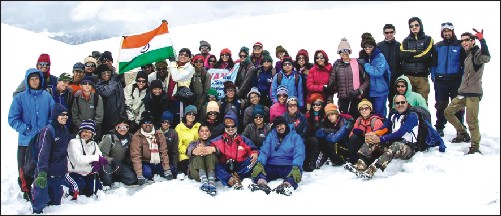
The 20 minutes we spent on the summit with the Indian flag and the IAMAS banner fluttering proudly in the wind, I can guarantee, will be the most important moments of our lives. But it did not end there. What we thought was difficult while climbing up was nothing compared to what we encountered while descending.
The snow was falling heavily and there was no route we could follow. We were numb and hungry but had to soldier on. We had no choice but to slide down the slopes ! Slide down with no equipment apart from a rope, which we used occasionally.
That was real adventure and the adrenaline rush was simply superb. With everything at stake, we made it down to the tree line by around 4 pm. We had trekked through the most extreme conditions for 12 hours. We finally reached our campsite at Longa Thatch by 6 pm after 14 hours of ascending and descending. We had done it with zero casualties! It was the most satisfying feeling one can feel.
After a good night’s sleep and merry making, we set off for base camp. The weather was sunny with the city of Manali, which looked like the Map of India from that height, sprawling beneath us. We descended down to Lekhni on May 15. The sights were like a poem. After staying at an authentic log hut that night, we finished our expedition on the 16th of May 2014 after successfully reaching Base Camp.
The next few days saw us exploring the city of Manali and seeking some more adventure while rafting in the Beas River. The team left for Delhi on the evening of 18th, where a privileged visit to the Parliament House added another feather to our caps. We caught the Duronto Express back home on the 19th with truckloads of memories and made it home on the 21st of May 2014, successfully.
Every expedition brings your best side to the forefront because it is the ultimate challenge one can face alone. And if you are an adventurous person and need the adrenaline, it is the call of the mountains you must answer. And finally, if you want to test your daring and mettle, it is the Saurkundi Pass you must conquer. For, if there is a paradise, it is this, it is this, it is this.
[Concluded]
Part 01:
source: http://www.starofmysore.com / Star of Mysore / Home> Feature Articles /by Aishwarya Sunaad / June 06th, 2014
Part 02:
source: http://www.starofmysore.com / Star of Mysore / Home> Feature Articles /by Aishwarya Sunaad / June 07th, 2014
Yesterday morning I had a most unexpected visitor, Rangaswamy, at my consulting room. He had come all the way from his native place, Banavara near Arsikere to see me with his young son who had not been feeling too well for the past few weeks. This very small built, ever-smiling man is an itinerant seller of kitchen utensils who goes about from village to village on his rickety and always over-loaded moped from dawn to dusk. But that is not his main job and what he is good at most. It is what he does when he is not selling utensils that makes him unusual.
Rangaswamy is a professional monkey-catcher, much in demand and it is in this unusual calling that his talents and ability stand out most. I first met him nearly two decades ago when he became a sensation with his skills in the town of Kollegal where I used to then practice. I still have a weekly outreach clinic there. The town used to be plagued by a herd of more than a hundred monkeys that used to pillage and plunder the crop in all the coconut and fruit trees in addition to harassing citizens on the streets by jumping on them and snatching away anything edible.
No child could walk home from the neighbourhood shop with an ice-cream stick or a packet of chips and no housewife could walk home safely with her daily purchase of vegetables or groceries. And, because the monkeys loved to play with all the clothes that used to be put out for drying I am not too sure whether the womenfolk there had evolved a laundry sorting service in their respective neighbourhoods, not unlike the postal department, to exchange their misplaced and interchanged clothes! I do not know who gave them the idea but one day the town municipal authorities who were under tremendous pressure to do something about the problem decided to rope in Rangaswamy.
He arrived on the scene with his wife and started a two-day survey of the town and the magnitude of its problem before getting down to work. And when he got down to work it was all child’s play for him. In just a week’s time he had all the rouges, big and small, dancing and prancing to his tunes but now safely behind the bars of a large cage from where they could do no harm. The much relieved municipal authorities would then pack their tormentors off in batches by truck to be let off in the distant forests of Malai Mahadeshwara Hills. Since Rangaswamy used to always be on the rooftops with his magic traps while at work, I could not see his handiwork at close quarters although I was tempted at times to follow him and learn the basics of his art.
Strangely, I have always been and I still am fascinated by anything that can be called ‘monkey business’! But on the terraces and rooftops, Rangaswamy seemed as agile as any monkey and unfortunately this was not my forte. But I used to always discuss his exploits and achievements at his every visit to my clinic and he would tell me all about himself and his art with great enthusiasm. I would always tease him that the monkeys were attracted to him because he looked exactly like one of them which is what made his job easy for him. He would say “Yaay hoogi swamy, neevu sari” and break into a shy grin.
But very strangely, yesterday, although I tried very hard I could not get my friend to smile for his photograph. If you happen to see even a wee bit of a smile on his face here it is largely due to your imagination. I would get to spend some time with him unfailingly at the end of each day of his stay in Kollegal because his newly married wife happened to be a bit hypochondriac and he happened to be a very caring and affectionate husband, not unlike me.
He would wait patiently for the crowd of patients to melt away before bringing her into my consulting room. She would have some complaint or the other for which I would prescribe a new and different looking placebo that would satisfy both husband and wife immensely but just for the next twenty-four hours. The next evening they would be back and the lady would narrate a different set of symptoms for which I would evolve a different remedy.
But taking pity on the poor and hapless man I decided to cure her permanently before they left Kollegal. And, I did it too by resorting to a rather drastic but ridiculously simple trick for which Rangaswamy pledged his lifetime gratitude before leaving. I told her that she would soon find her husband going in for a second wife if she did not stop complaining about her minor aches and pains and this unusual treatment seems to have worked wonders. Rangaswamy yesterday told me that his wife who has borne him two sons after our last meeting now dreads going to doctors and that is why this time he had come to see me without her! In case you have a monkey problem, you can contact Rangaswamy on Mob: 9972146839. And, in case you have a hypochondriac wife, you can contact me!
e-mail: kjnmysore@rediffmail.com
source: http://www.starofmysore.com / Star of Mysore / Home> Feature Articles / by Dr. K. Javeed Nayeem, MD / June 06th, 2014