IISc scientists develop new bio-molecule to treat cancer using light as a source for burning away malignant cells
Conventional cancer treatment methods of surgery, chemotherapy and radiation — known as cut, slash and burn for the brutal side-effects they cause on patients — are largely unsuccessful in differentiating between healthy non-cancerous cells and tumour-causing cells.
A team of scientists from the Indian Institute of Science have developed a new bio-molecule that can help treat cancer using light as a source for burning away malignant cells, a method which is more successful at targeting only cancerous cells.
This bio-molecule can be used in a relatively new form of cancer treatment known as photodynamic therapy, where a chemical (called a photosensitiser) is used kill small groups of cells. Put simply, the new molecule acts as a photosensitiser, which when exposed to a specific wavelength of light, gets triggered and kills nearby cancerous cells, leaving healthy cells intact, according to an IISc release.
Akhil R. Chakravarty, professor at the Department of Inorganic and Physical Chemistry, IISc, and his team are behind the development. The major benefit is that medical professionals have more control over which cells are targeted in the patient’s body. “Photodynamic therapy kills off cancer cells selectively, meaning toxicity to healthy cells can be reduced,” Dr. Chakravarthy told The Hindu.
Multiple methods
The bio-molecule, a vanadium (chemical element) containing complex molecule, targets cancerous cells through multiple methods: it carries a separable chloride ion due to which it caused cross-linking in DNA, leading to cell death. Cross-linking occurs when chemical agents react at two different positions in the DNA.
The molecule, when exposed to visible light, also generates a form of oxygen which can kill nearby cells. The team found that this bio-molecule was non-toxic in normal cells. This has major implications in the field of cancer treatment as existing treatments cause indiscriminate harm to healthy living cells, along with cancerous cells.
“Photodynamic therapy is an emerging field of cancer treatment. It may take some time for doctors in India to start using it,” said Dr. Chakravarthy. Their research was published in the July edition of peer-reviewed journal MedChemComm, produced by the Royal Society of Chemistry, United Kingdom.
source: http://www.thehindu.com / The Hindu / Home> News> Cities> Bengaluru / by Staff Reporter / Bengaluru – August 05th, 2016
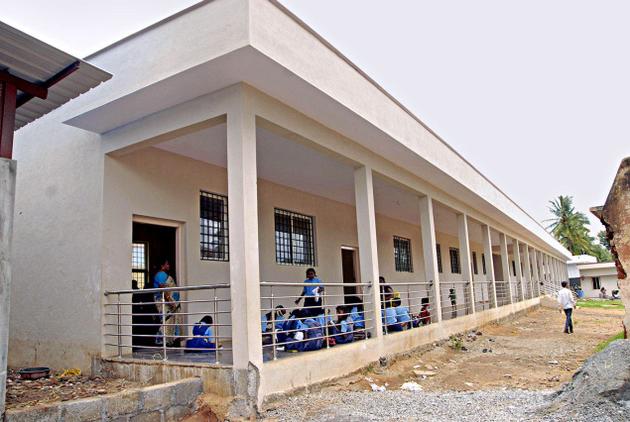
But just two years ago, the Government Model Higher Primary School in Guluru was a crumbling edifice lacking basic infrastructure
A 108-year-old government school at Guluru in Tumakuru taluk has embraced modernity gracefully and has become a model for others. Just two years ago, the Government Model Higher Primary School was a crumbling edifice lacking basic infrastructure. However, today it boasts of computer labs, airy classrooms, a library, science labs, separate toilets for boys and girls, and all other amenities offered by private schools that charge hefty tuition fees.
“We proudly tell our friends who go to private schools that we work on computers,” says Nethravathi. V. G, an eighth standard student. Like his friends, he can’t get over the fact that till recently, their school was in a dilapidated state with broken tiles, leaky roofs and cracks in walls.
Worried about the safety of their children, villagers approached MLA Suresh Gowda seeking a new school building. Mr. Gowda sanctioned Rs. 80 lakh from the MLA LAD (Local Area Development) funds.
MLC Lehar Singh offered Rs. 10 lakh and former minister V. Somanna contributed Rs. 5 lakh towards construction of a new building. L&T, an Indian MNC, offered Rs. 10 lakh as part of its corporate social responsibility initiative, which is being used to pay the salaries of LKG and UKG teachers, the computer teacher and a sweeper.
“Earlier, our friends used to make fun and tease us, as we were studying in an old building. But now, we are happy to show them our new school,” said Vinutha N., a seventh standard student.
The co-ed school, which has LKG, UKG and classes from I to VIII, has a total strength of 282. The pride of the school is the computer laboratory, which has 20 computers and Wi-Fi connection.
Another student Akbar Khan adds, “Seeing us in such a nice building, now my friends want to join our school.”
Headmistress N. Hemavathi says, “After the revamp, we have been getting applications from students of private schools nearby.”
The school will be celebrating its 108th anniversary on Friday.
source: http://www.thehindu.com / The Hindu / Home> News> Cities> Bengaluru / by S. B huvaneshwari / Bengaluru – August 05th, 2016
Table Tennis is a global sport which is popular in the world sporting scene. It needs excellent hand and eye co-ordination combined with skill and physical fitness to excel in the higher level. Mysuru has always been producing talented players who have gone on to represent the country and the State in different events in this popular sport.
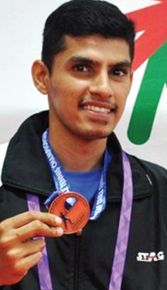
One such talented table tennis player is our city’s youngster Ullas Naik, who has made every-one proud with his feats by representing India in the World Deaf Table tennis Championships 2016 held at Samsan, Turkey, from July 18-24, 2016 and won the men’s doubles bronze medal teaming up with Tanuj Mukherjee. An excellent performance in the world arena by this youngster from our city is a fit choice for this week’s ‘Star This Week.’
Ullas Naik, 24, is the son of Udhayshankar and Prafulla, who reside in Saraswathipuram, Mysuru. Ullas Naik who cannot hear from a young age, took up to Table Tennis in 2002, when his mother took him to Umesh Urs, the chief coach at the Harsha Table Tennis Centre in Kuvempunagar.
Umesh has been coaching him since then giving him all the needed encouragement and is responsible for his improvement in the sport.
Ullas Naik, a II year B.Arch. student at the University School of Design at the Manasagangotri, Mysuru, representing India in the World Deaf TT championships 2016 at Turkey from July 18-24, 2016, won bronze in the men’s doubles. Earlier in 2013, he had represented India in the Deaf Olympics in Bulgaria and in 2006 had represented India in the Friendly International Tournament at Pakistan and won gold in the men’s singles event.
Earlier, Ullas Naik, did his Diploma in Architecture in JSS Ploytechnic and was encouraged to the maximum by HOD Chandrashekar to pursue his sporting interests.
Ullas also takes part in the State Ranking TT Championships when he finds time now and earlier was regularly taking part in the Championships from time to time and has won medals.
He has been supported and encouraged well by his parents, coach Umesh Urs (HTTA), the Mysuru University and PG Sports Centre in continuing to play this sport in the highest level.
Ullas Naik intends to continue playing this sport and aims to perform well in the National and International level for the country. This multi-talented lad needs to be encouraged and hope he goes on to achieve greater laurels in this sport in the days to come.
source: http://www.starofmysore.com / Star of Mysore / Home> Sports News / July 31st, 2016
Fears three kinds of dangerous silence that would make democracy dictatorial
Renowned poet and author Jayant Kaikini (front row – fourth from left) and Padma Shree awardee Prof. G.N. Devy (fifth from left), who were the chief guests during the inauguration of Mysore Literary Association at the A.V. Hall of Mahajana First Grade college in Jayalakshmipuram last evening, are seen with (front row – from left) Prof. K. Latha Biddappa (Association Treasurer), Prof. P.N. Sridevi (Executive Committee Member), Prof. K.C. Belliappa (President), Prof. B.N. Balajee (Secretary), Prof. Nalini Chandar (EC Member); (back row – from left) Prof. H.S. Shivanna, K.C. Haridas, Prof. Anitha Braggs (partly seen) and A.K. Monnappa (all EC Members).
Mysuru :
Two distinguished speakers last evening captured the minds, hearts and imagination of the people gathered at the A.V. Hall, Mahajana First Grade College and set them, hopefully, on the path of thinking and acting on what they conveyed in the speeches.
The occasion was the inaugural ceremony of the Mysore Literary Association (MLA). Highlighting the importance of the year 2016, Prof G.N. Devy, a renowned literary critic, an activist and the Founder-Director of Bhasha Research and Publication Centre, Vadodara and Adivasi Academy at Tejgadh, Gujarat, in his inaugural address, began his talk going back to the years 1616 and 1756 and their significance to Indian history and literature.
He then talked about the identity issues that were prevailing during the pre-independence days and how those issues are considered in the post-independence days of our country. He then came to the most important subject of the day that has been confronting the people of the country but are afraid to address them directly.
“I am talking about Silence now, which is completely different from the identity issues. There are three types of silence that the world is facing today and our country is no exception to this,” said Prof. Devy even as the audience were just warming up to the subject.
“There were around 6,000 languages in the world out of which 4,000 have disappeared. This is the first type of silence where a systematic attempt to impose ‘Aphasia (Inability to use or understand language)’ is going on. From a multi-lingual society we are becoming a monolingual one,” he cautioned.
Is all this bad, he asked and then added, “it is an evolutionary process and the present day youth are exposed to the multi-planetary, multi-temporal consciousness and the cyberspace is also imploding.”
“However, there was a time when I came to Mysuru and remembered 25 phone numbers of my friends. Sadly, now I don’t remember my wife’s telephone number. It is the telephone which remembers it,” he said.
The second silence, he spoke about is the lack of conversation between people. “Society has become successful. But with the mobile phones, texting has become the norm and even there, in the texts there are no full sentences. It is a networking society of silence,” he regretted.
The third type of silence is the most disturbing and to which most of us are helpless witness or a part of it. “This is the silence of protests all over the world. Most of the Democratic Governments in the world are becoming monopolitical and India is no exception,” Prof. Devy said and added, “All democracies are becoming dictatorial.”
“Any kind of protest or anyone who protests is termed as a traitor. I was in Grenoble in France, where the night talks were banned by the Corporation there. When I asked the Mayor, he said that it cannot be allowed. I cried that day because that is the place where the idea of freedom of free speech had begun,” he revealed and said, “as littérateurs you have to voice against this kind of silence.”
He spoke about the three writers who had great influence on his life and they are: Dr. U.R. Ananthmurthy, Naryan B. Desai and Mahsweta Devi and how the fears of all these three about the government suppressing the voice of dissent have come true.
Prof. Devy called on the members of the Association to take up the issue of silence ‘again and again’ and said, “only then will Mysuru, one of the cradles of civilization, will stand in the front and the forming of the Mysore Literary Association will have a meaning.”
Then, it was the turn of renowned Kannada poet and author Jayant Kaikini who preferred to speak in Kannada. Taking a dig at Prof. K.C. Belliappa, the President of MLA, in lighter vein, he said that, the President called him and wanted him to speak in English. When he (Kaikini) refused, he (Belliappa) agreed and then only he agreed to come.
Peppering his talk with a great sense of humour, Kaikini regaled the audience about how he was not able to connect with Mysuru though he had heard so much about it simply because there was no direct bus to Mysuru from his home town Gokarna.
“Every town is becoming a Vriddha Ashram (old age home) and unlike our childhood where there was so much about connecting, the children today have completely lost it,” he said.
Giving example of how a family boards a bus in Bengaluru and talks to their children only in English and how by the time they reach Chitradurga their languages becomes a mix of English and Kannada and finally pure Kannada when they reach Gokarna, Kaikini explained how languages are used in our country.
He exuded much of bonhomie and exuberance as he spoke. He was full of information about the way the society was moving, the sounds of silence, where the parents were going wrong etc. that brought applause from the audience.
However, after the talk, when this writer tried to connect with Kaikini, somehow, he could not find the same warmth that Kaikini exuded on the stage both with his words and body language.
President of MLA Prof. Belliappa welcomed the gathering and spoke about the Mysore Literary Association and how they planned for a Mysore Lit Fest on the lines of other Lit fests being held in the country in near future.
Ms. Ayesha Huq introduced the speakers and Prof. Balajee proposed a vote of thanks.
source: http://www.starofmysore.com / Star of Mysore / Home> General News / July 31st, 2016
Dr Srivats Bharadwaj talks to children and teachers of Brindavan School in JP Nagar
Bengaluru :
A public-spirited dentist is taking oral health care to the doorsteps of people. Dr Srivats Bharadwaj and his team of 15 doctors are also on a mission to make people aware of the importance of paying attention to oral health.
At Vatsalya – Centre for Oral Health, experts have been providing care to individuals with no access or awareness about the same. Over the years, the team has conducted campaigns, workshops and camps in the villages, towns and cities of Karnataka. Vatsalya focuses on three areas — home care, clinical care and community health.
“We are on a mission to give world class treatment on a par with the West or even better,” explains Dr Srivats.
Recently, the team treated 450 children at government schools in Bengaluru. Its community initiatives began at Chittadhama near Kabini in H D Kote, at a centre for the mentally ill, where patients needed urgent help in oral health care.
. A girl at Government School in Manjunathnagar receives treatment | Express
The team carried a portable dental unit that fits into a suitcase and can do everything, including scanning and drilling. Similar camps took the team to Chikkamagaluru and Tumakuru, besides old age homes and orphanages in Bengaluru.
In 2013, the team adopted Kudur village in Tumakuru district to run a regular oral health care programme. Socare, an organisation that looks after indigent children of convicts, roped the team for a camp.
Dr Srivats has been treating children with cardiac problems for the past 5 years who need dental care, and the initiative is supported by ENR Foundation, Germany. The 41st group of children visited Vatsalya this month and over 25 children were treated before their heart surgery. More than 500 under privileged children have got a new lease of life under this initiative.
“Oral health is a window to one’s overall health, and my idea is to drive home this point. Our focus is on prevention as tooth decay and other problems can lead to multiple organ failure and 120 other health conditions,” he explains.
Drilling, filling and billing is what dentists do today, Dr Srivats says. “Dentists are seen in a poor light when they advocate procedures that are unnecessary and expensive. They don’t advise sealant medicine for children below 18 for the prevention of tooth decay. I am launching a Seal India prevention and interventional programme as it can keep the problem at bay for 20 years,” he adds.
Vatsalya has two centres in Bengaluru and is opening the third in Rajajinagar. In the coming days, the team hopes to spread its activities to Nepal, Bhutan, Bangladesh and Pakistan.
“We are not aligning with venture funds but are definitely looking at contributors with a social commitment,” says Dr Srivats.
The aim is to set up community health centres not funded by the government “We hope to make a huge difference in the coming years,” he says.
source: http://www.newindianexpress.com / The New Indian Express / Home> Cities> Bengaluru / by Meera Bharadwaj / July 31st, 2016
Cyclist Sandesh Uppar dreams of qualifying for the Olympics
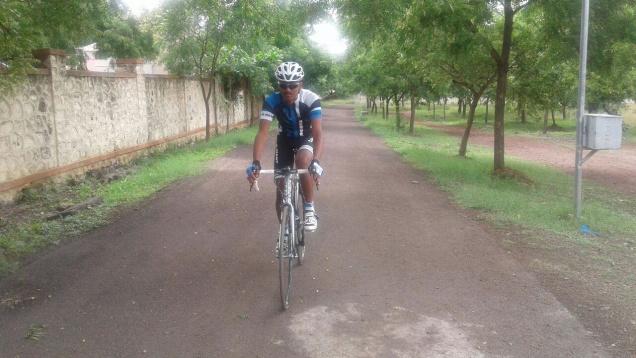
Sandesh Uppar has always been interested in sports. Born in Shiggaon, a town in Haveri district, he would keenly follow every sporting event. A snippet on cycling caught his attention and he was soon hooked on to cycling.
He got in touch with a cycling institute in Vijayapura, Karnataka’s cycling hub. The 19- year-old has gone on to win medals in State and National Championships. He also excelled in the MTB National Championship in Pune last year. However, lack of funds seemed to have put breaks on his career.
Help came from Starkenn Sports Private Ltd, a bicycle company. He says, “Starkenn believed in my talent. They helped me with money and other resources.” Sandesh hopes to participate in the Asian Championships in New Delhi next year and dreams of qualifying for the Olympics.
He says, “In a couple of decades, I want to start a coaching centre where I can guide and train young passionate cyclists who don’t have adequate resources.”
source: http://www.thehindu.com / The Hindu / Home> Features> MetroPlus / T.R.Karthik / Bengaluru – July 30th, 2016
Prabhakar Rao, 85, prepares Ganapathy idols for the coming festival season | Rajesh Shetty Ballalbagh
Mangaluru :
A family has been making artistic, traditional Ganesha idols for four generations and 87 years.
Prabhakar Rao (85) and 20 others come together every festival season to shape idols the time-honoured way. “Our patriarch, the late Mohan Rao, began the tradition in the days when idols were still made by hand and with clay. We still abide by his methods,” says Ramu, son of Prabhakar Rao.
The family makes not more than 200 idols in a season, and 16 of them are consecrated at public places such as Sanghaniketan, New Mangaluru Port Trust, Kudremukh Iron Ore Company, Karnataka Milk Federation, Mangalore Chemicals and Fertilizers, Police Lines, and the fisheries college.
In recent years, the family has been finding it difficult to source the raw material: clay and dried rice stalks. Prabhakar Rao has received many honours. The district administration has commended him on two occasions for promoting eco-friendly idols in a Plaster of Paris era.
“We never use lead-based colours. We use safe pigments and vegetable dyes. The tallest idol we make is 14 feet in height, and is worshipped at Sanghaniketan,” he says. Even at his advanced age, Rao scrupulously follows all traditions attached to sculpting. For example, the making begins only on a day with ‘Chitra Nakshatra,’ a star associated with Ganesha’s birth.
Quoting the Ganapati Sookta, a religious text, Rao says the deity clears obstacles in the devotees’ way. “Our family has followed sculpting tradition for 87 years. When I was an apprentice to my father, he taught me the standards. I am handing them over to the younger generations without any change,” he said.
Doc’s touch
The oldest member in the team is Prabhakar Rao at 85, and the youngest Ankush, all of nine years. The work force arrives at an ancestral house for the season. Dr Preetam Rao, a member of the family who works as a medical practitioner in London, has also arrived this time.
He is a trained hand at painting the idols.
source: http://www.newindianexpress.com / The New Indian Express / Home> Cities> Bengaluru / by M Raghuram / July 31st, 2016
The house of gardener Sampangi, which was built using the funds collected under the Rupee
Bengaluru:
For over 30 years, 44-year-old Sampangi and his wife and three daughters lived under a leaky roof which they called their home. “The roof would leak every time it rained and we’d have to shift clothes and electronic items to one corner of the house. The house would shake whenever there’s heavy wind,” the gardener recalled.
Today, Sampangi lives in a two-bedroom home with a garden and three dogs that he found abandoned on streets. His eldest daughter is now married, while his two younger daughters are school students. A photograph of Japanese volunteers from NGO Habitat for Humanity, who constructed the house, is displayed on top of the TV shelf, and his eyes light up whenever he sees the people who made this possible.
“As my children got older, my wife and I would talk about building a better home. We had even begun saving some money from the meagre amount we earned. But four years later, we were left with only about Rs 1 lakh,” he said.
Things changed for the better when he met a person from the Habitat for Humanity, through whom he learned about interest-free loan. The rest, is history. Rupee for change
What can you do with Re 1 is a question that everyone asks. Apparently, you can build houses.
Habitat for Humanity has tied up with 20 schools in Bengaluru. Students, parents and teachers contribute Re 1 per day towards funds to construct houses for people from low-income group. In the past two years, the NGO has raised Rs 10 lakh which has gone into constructing 14 houses in Nagenhalli, Byrathi, Bagalur, Yerapanahalli and other parts of the city. Students, through the volunteer build programme, are also assisting in renovation activities.
India faces a shortage of about 6 crore housing units, said Rajan Samuel, managing director, Habitat for Humanity India. 12 lakh in need of houses
“In Karnataka alone, over 12 lakh people don’t have a decent home while 49% of the population does not have access to a toilet. The Centre has introduced policies like ‘Housing for All’ to provide adequate shelter to each and every family by 2022. The state government too has undertaken measures to provide affordable homes to the poor and to redevelop slums. About 70% per cent of the urban housing need is in the affordable segment and this is where Habitat for Humanity is working,” he said.
In Karnataka, the NGO is building 74 homes and 123 toilets for the low income, marginalized people, he added.
According to him, in most cases, women bear the brunt of lack of housing or toilets. Learning experience for students
While lives of people like Sampangi or Kaliyamma, who recently moved into her newly constructed two-bedroom home are being transformed, student volunteers are learning as well.
“Recently, our students painted a government school as part of the volunteer build programme and they were surprised to see a blackboard. Most of them have seen white boards in classrooms, but never a blackboard on which chalk is used,” said Asha Samuel, faculty incharge of CAS at Canadian International School.
“These activities help them grow. They come back realizing that there are so many things that they take for granted and so many things they should be grateful for,” she said.
Poor women bear the brunt
Women and girls from the lower income families live in highly unsafe and substandard conditions without access to basic sanitation. Majority of them suffer from poor health since they do not have the liberty to relieve themselves when required and have to wait till dusk to go out and defecate. Owning a house with proper sanitation facilities is a deep desire of all poor women across the country. By providing access to decent housing and sanitation facilities, Habitat for Humanity India intends to improve health and provide security for the whole family
– Rajan Samuel, managing director, Habitat for Humanity India
source: http://www.timesofindia.indiatimes.com / The Times of India / News Home> City> Bangalore / Merlin Francis / TNN / July 31st, 2016
City-based Glorious Festival of Harmony is set to celebrate 25 years of harmony singing on July 30 and 31. From its quiet start in 1996, Glorious is a much-awaited festival today.
“When we started, it was difficult to put together six choirs from the city because there were no choirs then and nobody was excited about harmony singing. It is starkly different today, with harmony singing being a part of mainstream music. Every year, when schools and college reopen we have students waiting for the festival,” says Regi Chandy, co-founder of the festival, in which over 1000 people participate every year.
This year, the silver jubilee celebrations include performances by the city’s best schools, colleges, churches and even children’s choirs. Besides independent choir Astrophels, from Kottayam in Kerala, a performance by popular singer-songwriter Sheldon Bangera from Mumbai is another highlight.
For Chandy, harmony singing is more than just a music performance. “It is not about giving prominence to only one singer. It’s a performance where every voice comes together to make beautiful music,” says Chandy.
The 25th Glorious Festival of Harmony will be held on July 30 and 31, 5.30pm to 9.30pm, in Dr B R Ambedkar Bhavan, Vasanthnagar.
source: http://www.timesofindia.indiatimes.com / The Times of India / News Home> City> Bangalore / TNN / July 29th, 2016
In an age marked by excessive competition, Bharatanatyam duo Kiran Subramanyam and Sandhya Kiran tell Archana Nathan that there can be no substitute for hard work, practise and simplicity
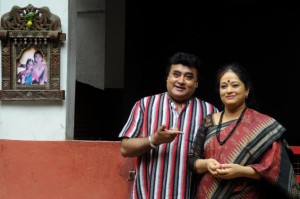
For years now, the sound of the thattu kazhi emerging from a low-roofed house on 18th cross road in Malleswaram in Bangalore, has greeted commuters and passers by. There are tiny boards with the title ‘Rasika Arts Foundation’ pinned onto the gates today but nothing else has changed about the appearance of the 27-year-old dance school set up by Bharatanatyam duo Kiran Subramanyam and Sandhya Kiran. It is modest in size, retains an old-Bangalore charm, and has survived the commercial strains tugging at the heart of Malleswaram.
This, however, is not so surprising when you meet the Kirans. If you walk into the room in which Kiran and Sandhya took their first class in 1989 for a batch of four students — a room that is kept intact and now houses a tiny study — one sees that the foundation of humility and simplicity has been laid by the hosts themselves. Years have come and gone but their simplicity seems to have been untouched.
Kiran and Sandhya are not new to those who are familiar with the landscape of Bharatanatyam in Bengaluru. Their institution has been prolific whether in terms of dance productions, workshops or collaborations. It is home to around 300 students and is the alma-mater for many others settled across the world.
The couple met when they were both students of Padmini Ravi and then went to train under the Dhananjayans in Chennai – V.P. Dhananjayan and Shantha Dhananjayan – before setting up the Rasika Academy finally in 1989. “When Sandhya came to learn from Padmini Ravi, she had already learned Bharatanatyam for a few years. I was one among two male students in the class at that time. I was very confused because while my heart was in dancing, I was wondering whether I could take it up full-time. Sandhya and I became the best of friends and eventually I told her I want to take up dance as my career. She only said one thing: ‘If you have the conviction, then go ahead. Somehow things will fall in place,’a dictum she believes even today,” says Kiran. By then, Sandhya had already ditched options of CET and Engineering to take up an arts course, just so that she could focus on dance.
“I realised there was a certain oneness in our thought process and I felt I should ask Sandhya to marry me. When I did, she said she wanted a day’s time. I don’t know what she did in that one day,” he recalls. “I also don’t know what I did with that day. But I told him the next morning that I was okay with getting married but that I was scared too,” adds Sandhya.
When the couple went to their guru, Padmini Ravi, to tell her that they wanted to take up dance as their career, they got a rather unexpected response. “She said if you are going to take this up as a profession, then I will not allow you into my class. We did not know it then but this was her way of testing us whether we were serious about our decision. Later, she sat down with us and spoke to us about what taking up dance as a career really entails,” recalls Kiran.
Padmini Ravi, say the Kirans, is someone they are in love with. “Not only was she unconventional when it came to the kind of innovations she introduced in classical dance, she was also unorthodox when it came to her relationship with her students,” says Sandhya. “Fearless is the word. She didn’t hesitate in trying different choreographies and movements. She presented her dance in such a beautiful manner that others too were encouraged to try new things. Sometimes, we feel that a part of her fearlessness has rubbed off on us too,” adds Kiran.
How did they choose to go to the Dhananjayans in Chennai? “We wanted to learn the nuances of ‘duet dancing’ from them. But another aspect that we discovered is their proficiency in what we today call art management. Apart from stellar dancing, the Dhananjayans knew how to take care of communication, networking and public relations at a time when all of these weren’t professions in themselves. They could put together a show perfectly all by themselves,” says Kiran. “Shantha akka used to say, V.P. na enna theriyuma? (you know what VP stands for?) ‘Very Punctual’ Dhananjayan,” says Sandhya.
From the Dhananjayans, the Kirans learnt the essence of a duet. “A duet demands that ideas, concepts and thought processes of the two dancers match too. Of course there needs to be synchronisation in terms of physical movements. But most importantly, the sattvam – the essence – has to be one even if it is two different individuals and mindsets performing together,” they explain.
They recall how in the initial days of Rasika, the first half of the month would be spent teaching their students and the second half, travelling to Chennai and performing there. Teaching, they say, helped them look at dance differently. “With a school like Rasika, it became our responsibility to create the next generation of connoisseurs of dance. These need not be dancers but people who can appreciate dance, which is crucial today,” says Sandhya.
Having seen a whole new generational change of students over the years, the Kirans feel that students today are a bit impatient and want to have it all. “It is not just the students but their parents too who get worried if their child is not up on stage in a few months after he or she has started learning dance. That apart, young dancers today want to be everywhere and do everything at the same time. They strain and injure their body in the process. Reality TV and Facebook’s offer of instant popularity has made things worse. There are very few takers for the long haul, for a deep investment in dance,” they say.
Is it also because of a lack of conviction? “There is either a lack of conviction or just too much conviction that they can do everything under the sun. Creativity cannot be forced or planned. It is intuitive,” says Sandhya.
Ultimately, it is a phase, they say. “A Facebook post today about someone’s dance or play performance is now capable of sparking off a whole gamut of insecure reactions in many others. It is quite amusing to be honest. Why can’t one do one thing properly and focus on it? Why is there such a plaguing worry of irrelevance today? What substitute can there be for hard work and simplicity?” they ask.
source: http://www.thehindu.com / The Hindu / Home> Features> Friday Review / Archana Nathan / Bengaluru – July 28th, 2016