Pages from History : Dr. S.R. Rao: A World Class Archaeologist from Karnataka

by Prof. A.V. Narasimha Murthy, former Head, Department of Ancient History & Archaeology, University of Mysore

Dr. Shikaripura Ranganatha Rao, popularly known as Dr. S.R. Rao all over the world, has made not merely Karnataka but our country proud by his contributions to Indian Archaeology, art and culture. It was my good fortune that I was his contemporary and I have learnt a lot from him and his works. Added good fortune is that I have been asked to deliver the third Dr. S.R. Rao Memorial Lecture at Bengaluru arranged by his daughter Dr. Nalini Rao, a Distinguished Professor of World Art in one of the American Universities. This is not an ordinary achievement indeed!

If my memory is right, Dr. Nalini Rao prepared her thesis under my guidance and I am proud of such a brilliant student. Now she has taken the initiative to arrange Dr. S.R. Rao Memorial Foundation for Indian Archaeology, Art and Culture where our Central Minister Ananth Kumar will inaugurate the photo exhibition at Bengaluru (Mythic Society) on Sunday, 24th July 2016.

About Dr. S.R. Rao: Born in 1922 at Anandapuram in Shimoga district, he received BA (Hons) and MA degree from Mysore and Nagpur Universities. Mysore University awarded the D.Lit degree to him for his magnum opus Lothal and Indus Civilisation. After retiring from the Archaeological Survey of India (ASI), he met Jawaharlal Nehru, our first Prime Minister and apprised him of the Indus civilisation. Nehru shrugged his shoulders and said that Harappa and Mohenjodaro have gone to Pakistan and what will you do sitting in India. Dr. Rao had a stock reply: But now I have discovered Lothal in Gujarat which is a better maritime site than Harappa.

Immediately Nehru saw that Dr. Rao was conferred with the Jawaharlal Nehru Fellowship. Dr. Rao did not turn back. He researched and wrote the book Lothal and Indus Civilisation. Though lot more research has been done now even today it is considered as the most authentic book on Lothal. When he discovered the dockyard, the first of its kind in the ancient world, he did not like to presume things on his own. He invited technical experts who examined the Lothal dockyard and said that large ships could come down to Lothal and proved that Indus people participated in international trade during that period, which is more than 5,000 years old. The world of scholars were astonished at this great discovery.

Another special feature of Indus sites was the occurrence of small, square or rectangular clay seals which generally had an animal and a pictographic label writing above. Scholars all over the world tried to decipher this script, but nobody could give a satisfactory reading. Dr. Rao also tried to decipher the script by following a scientific methodology and learnt ancient scripts of Babylonian and Assyrian and began comparing the letters. Many scholars had presumed Indus civilisation to be Dravidian and tried to read the script as early Tamil. By this time it was known that Indus civilisation was the creation of the Aryans themselves. Without any presumption

Dr. Rao prepared a concordance of all the symbols found on the Indus seals and analysed them. He found that certain symbols occurred very frequently. Thus he came to the conclusion that Indus people were evolving an alphabet from picture writing. This gave him certain readings like pala, mahapala, baka, mahabaka etc. Thus he showed that they were proto-Samskrita and not Dravidian.

David Diringer, the greatest authority on ancient scripts exclaimed that Dr. Rao has hit the nail on its head. The Russian and Scandinavian scholars agreed to the suggestion of Dr. Rao. Dr. Walter Spink of Michigan University hailed the readings of Dr. Rao’s Indus script. It could safely be said that nobody has improved upon the readings of Dr. Rao. Many scholars suggested that this work deserves a Nobel Prize. Thus Dr. Rao’s contribution to the study of Indus Valley civilisation has not been surpassed by anybody. He was hurt when Dr. Mortimer Wheeler who become the Director-General of ASI wrote a book titled ‘2,500 years of Pakistan’ and even a school child knows that Pakistan was born in 1947. Thus he tried to give a false boost to Pakistan.

Another important contribution of Dr. Rao was the inauguration of under-water archaeology, known as Maritime Archaeology. He may be called as the founder of this branch of study in India. ASI did not show much interest in this branch. Without the active support of the government, he swung into action with the help of corporates interested in it. Many people thought that Krishna’s Dwaraka was a literary bunkum and was based upon myths. But Dr. Rao disagreed with this and went to Dwaraka (Bet Dwaraka) and with the help of deep sea divers went down to the bottom of the water. He collected lots of pottery and other artefacts which were in use at Dwaraka during Lord Krishna’s period and the scholars all over the world were greatly impressed by this. The devotees of Sri Krishna expressed their gratefulness to Dr. Rao for this great discovery. With assistance and guidance from National Institute of Oceanography, Goa, Dr. Rao opened up a new branch to trace the rise and fall of maritime civilisation. This led him to take interest in ancient as well as modern ship-wrecks. Apart from all these, Dr. Rao took interest in murals of Ajanta, Ellora, Badami, Lepakshi, Padmanabhapuram, Mattancherry and traditional paintings of Karnataka. He also gave more interest to conservation of monuments and also beautified the surroundings by gardens and lawns.

Yet another achievement of Dr. Rao is the formation of a Circle Office at Bangalore (Mid – Southern Circle) which was given the responsibility of maintaining monuments in Karnataka. Thus Hampi, Shravanabelagola, Pattadakal, Aihole and other places flourished well under his guidance. When he was in Hampi, he found a stone image of a saint and immediately he identified it as that of Purandaradasa. A workaholic, Dr. Rao did not take any rest and worked hard to spread the message of India through archaeology, art and architecture. When he passed away, condolences poured in from scholars all over the world.

source: http://www.starofmysore.com / Star of Mysore / Home> Feature Articles / July 23rd, 2016
Travel Fellowship for City Doctor

DrHanumanthacharBF28jul2016

Mysuru :

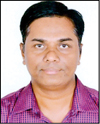
Dr. Hanumanthachar Joshi (in pic), Principal, Sarada Vilas College of Pharmacy, Mysuru, has been awarded the prestigious Travel Fellowship Award by Alzheimer’s Association, USA. Travel Fellowships are awarded to young scientists who make exceptional contributions to Neuroscience Research, especially Alzheimer’s disease.

He has been invited by the Association to present a research paper on “Cerebro-protective effects of Gangetin alkaloids on sodium nitrite induced hypoxia and ethanol induced neurodegeneration” at Alzheimer’s Association International Conference at Toronto, Canada, from July 24 to 28.

Dr. Joshi is working in the areas of drug discovery for management of neuro-degenerative disorders, particularly for Alzheimer’s disease. He is also invited by Department of Psychology, Ryerson University of Toronto, Canada, to deliver a guest lecture on management of Alzheimer’s disease and associated complications.

source: http://www.starofmysore.com / Star of Mysore / Home> General News / July 22nd, 2016

For him, the battle continues

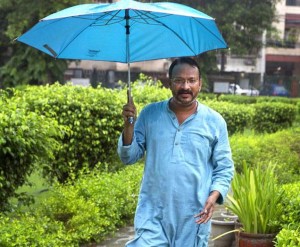
Bezwada Wilson.
Bezwada Wilson.

The Magsaysay Award winner says India still has over two lakh manual scavengers

Fifty-year-old Bezwada Wilson, national convenor of the Safai Karmachari Andolan (SKA), was declared one of the six recipients of the 2016 Ramon Magsaysay Award by the Philippines-based award foundation, in Manila on Wednesday. Recognised for his efforts to eradicate manual scavenging, Mr. Wilson told The Hindu that India still has over two lakh manual scavengers who needed to be rescued, according to a nationwide survey by the SKA.

The award citation recognises Mr. Wilson’s work in “asserting the inalienable right to a life of human dignity”. Of the estimated 600,000 scavengers in India, SKA has liberated around 300,000, the citation notes.

Hailing from a Dalit family in Kolar, Karnataka, Mr. Wilson said his first brush with the local authorities over the abominable practice was in 1986-87, when he saw poor Dalit women cleaning human waste in the public latrines of Kolar Gold Fields. His own family members had been manual scavengers for generations.

“It was a big town, and in those days KGF was known to be the most electrified town after Tokyo,” he said. Yet, the town lacked public toilets with running water. Moved by the plight of the women who had to clean them every day, Mr. Wilson decided to petition the local town municipality to improve facilities. In 1986, he sent a complaint about dry latrines to the authorities and, when it was ignored, he sent the complaint to the Prime Minister, threatening legal action, the award citation notes. As a result, the town’s dry latrines were converted into water-seal latrines and the scavengers transferred to non-scavenging jobs.

Despite his 32 years of activism, Mr. Wilson says challenges remain in putting an end to the practice. “No thorough survey has been conducted as yet to enumerate manual scavengers though State governments have been promising one since 2010,” he said. Expressing scepticism over the implementation of the government’s flagship Swachh Bharat Abhiyan, he said the scheme did little to address the plight of manual scavengers and only sought to build more and more toilets.

Mr. Wilson formed the SKA as a network of activists in 1993. A PIL he filed in the Supreme Court, naming all the States, Union Territories, and relevant government departments as violators of the 1993 Manual Scavenging Prohibition Act, produced positive results. In 2014, the SC ruled in his favour demanding that all States ban manual scavenging and even fixed a compensation of Rs. 10 lakh for families of scavengers who had died on the job.

“In 2014, we gave the Centre a list of 1,073 people who had died while cleaning sewers, but the families of the dead are yet to be compensated fully. Only 36 people from the families of dead sewer cleaners have been compensated, but they did not get the full amount prescribed by the court,” he said.

Our Special Correspondent from Bangalore adds:

Practice still rampant in Kolar

In the hometown of Bezawada Wilson, who has been honoured with the Ramon Magsaysay award for 2016, manual scavengers are not hard to find.

The century-old mining set-up at the Kolar Gold Fields (KGF) saw thousands of people — primarily from Dalit communities — being brought in to deal with night waste. Mr. Wilson’s father was among those brought from Andhra Pradesh to KGF.

Though mining operations ended in 2001, the prohibited practice continues in the town where dry latrines are abundant.

The government claims that there are only 82 manual scavengers in KGF. This is disputed by activists and government officials who peg the figure at 800 families — making it the highest density of manual scavengers in Karnataka.

“While more than 12 criminal cases have been filed across the State for manual scavenging, there is little clarity on the prevalence of the banned practice. A 2007 survey threw up a figure of 15,375 manual scavengers. This is clearly under reporting, says Narayana, Chairman of Karnataka State Commission for Safai Karmacharis.

“The number is higher than 25,000,” he alleged. “We have sought a re-survey, but government officials are looking at their list and claiming that the number has reduced.”

The announcement of the Magsaysay award for Mr. Wilson did not trigger celebrations in KGF. Much of his activities have been in Andhra Pradesh or at the national level.

source: http://www.thehindu.com / The Hindu / Home> News / Vidya Venkat / Chennai – July 27th, 2016

R.K. Narayan’s nephew and grandson visit Writer’s Yaadavagiri house

Memorabilia brought from Chennai being arranged for display at the Museum.

MCC Commissioner Dr. C.G. Betsurmath is seen displaying the Padma Bhushan Award Certificate of late R.K. Narayan at the writer’s house in city this morning. Others seen are Corporator D. Nagabhushan, MCC Superintending Engineer Suresh Babu, RKN’s grandson Karthik Krishnaswamy and nephew R.S. Jayaram.

Mysuru :

With the renovation work of Novelist late R.K. Narayan’s house on Vivekananda Road in Yadavagiri reaching completion, the arrangement of the writer’s memorabilia brought from Chennai commenced this morning at the house turned museum, which will be inaugurated soon. The memorabilia include RKN’s cot, chair, table, watch, glasses, books, medals, awards and certificates won by him.

The photographs and paintings that adorned the walls of the house earlier too have been brought back.

RKN’s nephew R.S. Jayaram and grandson Karthik Krishnaswamy have arrived in city from Bengaluru to inspect and guide the arrangement of memorabilia. Incidentally, Jayaram too had been living in the same house and was very familiar with the arrangements of all items.

MCC Commissioner Dr. C.G. Betsurmath, Superintending Engineer Suresh Babu, Assistant Executive Engineer Manjunath, Development Officer Jagadish and Corporator D. Nagabhushan were supervising the arrangements at the museum.

Speaking on the occasion, Dr. Betsurmath said that MCC had spent Rs. 29 lakh for renovating the house and another Rs. 5 lakh for landscaping.

He pointed out that the building has been renovated to the original looks including the colour of the paint and wood structures to bring back the memory of yesteryears. He added that the maintenance aspects have to be worked out in future.

Speaking to Star of Mysore, Jayaram recalled the nostalgic memories of his stay in the house and his association with his uncle RKN. He expressed happiness in conversion of the house into a memorial keeping the heritage intact.

Dr. Betsurmath has requested people who are in possession of any memorabilia of RKN to pass it on to MCC which could be exhibited at the Museum.

source: http://www.starofmysore.com / Star of Mysore / Home> General News / July 21st, 2016

Book Talk : A. Kiran Subbaiah

City’s Multifaceted Sculptor

SculptorBF26jul2016

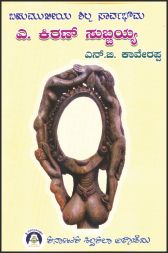
Title : Bahumukhiya Shilpi Sarvabhouma A. Kiran Subbaiah

Author : N.B. Kaverappa

Pages : 100 (including 20 pages of pictures)

Price : Rs. 100

Publisher : Ila Mudrana, Bengaluru

by Dr. Prakash Padakannaya

Recently I attended a book release function at Kalamandira where a Kannada book entitled ‘Bahumukheeya Shilpa Sarvabhowma A. Kiran Subbaiah’ was introduced and officially released in the presence of several artists, Academy officials, and art lovers of Mysuru. The book was authored and designed by N.B. Kaverappa, a well-known artist and founder of Bharani Art Gallery in the city. Karnataka Shilpakala Academy, Bengaluru, celebrating its 20th anniversary, is the publisher of this unique book.

I am not an expert on sculpture art but I was curious about the book and also the sculptor as I had heard many remarkable things about Kiran Subbaiah’s work from the author. After the function, I bought a copy of the book availing 50% discount offered on the book releasing day.

The book, though runs into only 71 pages, is very well designed with attractive cover page and several illustrative quality pictures without which the descriptions would have been incomplete. The editorial comments by L. Shivalingappa and preface by the author provide the necessary background for the book. The author, who knew A. Kiran Subbaiah personally for the past three decades, has been very successful in presenting the life and work of this extraordinarily talented sculptor and his magnificent sculpture in a lucid yet scholarly way.

The book has been divided into two parts. The first part, ‘inside the sculptor’s life’ deals with the life sketch of Mr. Kiran Subbaiah while the second part, ‘inner turmoil beneath the external looks of sculptures’ describes major works of the sculptor with illustrations. The first part narrates the innate aptitude that Mr. Subbaiha had from childhood for sculpturing; and his extraordinary and eventful yet dedicated saga of what he has accomplished in the field so far.

His passion for sculpturing was ignited when he visited Beluru-Halebidu temples during his college days. His prodigious skill was exemplified by the fact that he could master the entire syllabus of five year diploma course in sculpture at Chamarajendra Technical Institute, Mysuru, in just one year. It is irony that such a prodigy was forced to leave the Institute after three years of basic training (he was not allowed to go for advanced course by his supervisor though the same teacher in later years pleaded him to apply for the lecturer’s vacancy, which Mr. Subbaiah turned down). Such incidents also testify how creativity and dedication triumph over all odds.

Mr. Subbaiah’s perseverance and diligent experimentation in sculpturing with all kinds of stones made him probably one of the greatest contemporary sculptors of our land. Hailing from Kodagu, today he owns a museum of sculpture ‘Shilpanikethan’ in Mysuru, which houses hundreds of wonderful stone sculptures carved by him.

The author makes a sincere attempt at highlighting the sculptures sculpted by Mr. Subbaiah, in terms of both breadth and depth of sculptor’s creativity, in the second part of the book.

The illustrations of his work presented in the book demonstrate that Mr. Subbaiah is as proficient with traditional style as with contemporary and modern style. Normally a sculpture has only a front view. But Mr. Subbaiha has mastered the art of carving multifaceted or many-sided sculptures using a single stone (the same piece may depict one image when seen from front and a different image when seen from sides or back). It is like four different sculptors carving four different sculptures on four sides of a stone! This is an astounding feat by any standard!

Mr. Kaverappa describes the way Mr. Subbaiah goes about creating these multisided sculptures. It seems when Mr. Subbaiah has a piece of stone in front of him ideas keep running and he visualises them in his mind first. Then he makes a rough sketch directly on the stone and begins carving. When he has multiple ideas and icons in his mind’s eye, he first whittles all of them coarsely on the stone. Then, he starts the fine work simultaneously on all of them till they attain their proper shapes. Again, at the end he would start fine finishing work concentrating on one of them at a time.

The book also gives an account of a master piece in making, the most wonderful work of art by Mr. Subbaiah, the stone sculpture of ‘Lord Adishesha’ displaying 135 hoods with a special pedestal. When completed, this pedestal will also depict 45 snake Gods with different poses carved on it. Presently, Adishesha deity at Pashupathinatha temple in Nepal holds the world record with 108 hoods. Adishesha that Mr. Subbaiah is making with 135 hoods a height of 4 feet and 3 inches without the base (5 feet and 1.5 inches with the base) shall get that name and fame. Shree Yanthra, Om Yanthra, and Gayathri Manthra have been engraved on the back side of this unique statue. This statue carving took three years till now. It seems another 6-8 months’ hard work is required to finish the intricate carving of the main statue and the pedestal. According to Mr. Subbaiah, once he starts this arduous task, he has to devout at least 8-10 hours per day for this work for several months!

The author of the book has sprinkled some of his own observations on the work of Mr. Subbaiah throughout the book. One of them is related to the artists who have influenced Mr. Subbaiah. Kaverappa has mentioned the influence of Henry Moore, one of the greatest modern sculptors of 20th century, in Mr. Subbaiah’s creations. He has also rightly observed that five-sided sculptures (five in one) are not viable as a visual treat as it actually disturbs the composition of the sculpture as a whole. One cannot miss ubiquitous presence of ‘shringar rasa’ (flavour of erotic/ romantic love) in most of the contemporary sculptures of Mr. Subbaiah.

Editor of the book, L. Shivalingappa, in his foreword comments that depiction of shringar rasa theme in Mr. Subbaiah’s sculptures is a lot more powerful than words can explain. Mr. Subbaiah himself acknowledges that ‘…the female nude form…from time immemorial… has caught the fancy, imagination, liking and admiration of a vast majority of mankind, artists, sculptors and writers’ (page 19). Mr. Subbaiah is no exception!

The book gives us a list of multisided sculptures done by the sculptor since the year 2008, list of recognitions conferred, and a list of glossary along with the direct contact address of the sculptor at the end for the benefit of readers and art lovers. Some of the colour reproductions of original work are also excellent.

When I finished reading the book, I felt that there is a genius sculptor, probably one of the best in the country, living amongst us in ‘namma Mysuru’ without getting due recognition (may be it does not matter to Mr. Subbaiah). I do hope that this book will help people of Karnataka to know and feel proud of the genius sculptor in Appaneravanda Kiran Subbaiah. Both Karnataka Shilpakala Academy and N.B. Kaverappa should be commended for their great service to the art and culture of Karnataka by introducing this master sculptor and his works to the public. It is a must read book to all those interested in sculpture art.

About the author of the book

Author of this book, Nellamakkada B. Kaverappa (in pic.) is an eminent senior artist of Kodagu living in Mysuru. He is well-known as the founder of Bharani Art Gallery, the first private art gallery in the city that he established in 1994 with a noble purpose of promoting visual art. Artists who like to exhibit their work are given the gallery for free of rent and also an independent guest room to stay (also free) for the duration of the expo. Artists from neighbouring States as well as other countries such as Australia and Finland have exhibited their paintings in Bharani Art Gallery.

Mr. Kaverappa has immense interest and actively involved in creative visual art (multihued) and literature. As an artist, he has been part of many Karnataka Kala Melas. He exhibited his ‘Creation’ series of oil paintings at Ahmedabad, Gujarat and ‘Dance of Kodavas’ at India International Centre, New Delhi. He has been honoured by Karnataka Kodava Sahitya Academy (in art field), Kodava Samaja Bangalore and Kodava Samaja, Mysuru. His oil portrait of legendary ‘Haradas Appacha Kavi’ is the most authentic one and is displayed at Kodava Samaja Bangalore as a gift. He is also a frequent writer in Kannada and Kodava periodicals. He has translated two books for Karnataka Lalithakala Academy.

source: http://www.starofmysore.com / Star of Mysore / Home> Feature Articles / July 20th, 2016

Release of Book on JC Wadiyar’s compositions marks Vaggeyakaras’ Day

Pramoda Devi Wadiyar (fourth from left), who inaugurated the Vaggeyakaras’ Day celebrations organised by Karnataka Sangeetha Nritya Academy at Jaganmohan Palace in city on Monday, is seen releasing a book titled ‘Jayachamarajendra Wadiyar’s Compositions’ authored by Musicologist Karnataka Kalasri Vid. V. Nanjundaswamy (third from right). Others seen are Academy Member-Convenor Dr. Sukanya Prabhakar, KSGH Music and Performing Arts University VC Dr. Sarvamangala Shankar, Academy Chairperson Gangamma Keshavamurthy, Registrar Banashakari V. Angadi and author’s wife Prof. H.S. Umadevi Nanjundaswamy.

Mysuru :

“Jayachamarajendra Wadiyar’s contribution to music as a composer and critic will always be cherished by musicians,” opined Dr. Sarvamangala Shankar, Vice-Chancellor, KSGH Music and Performing Arts University.

She was speaking at a function organised by Karnataka Sangeetha Nritya Academy, Bengaluru, at Jaganmohan Palace in city on Monday to mark Vaggeyakaras’ Day.

Dr. Sarvamangala said that thousands of composers like Patnam Subramania Iyer, Bidaram Krishnappa and Mysore Vasudevacharya laid a strong foundation for music with rich literature. She added that music and literature were both soothing elements for mind but not just that as a music should have a good literature for real value.

Pramoda Devi Wadiyar, who inaugurated the programme, also released the book ‘Jayachamarajendra Wadiyar’s Compositions,’ authored by Musicologist Karnataka Kalasri Vid. V. Nanjundaswamy, on the occasion. The day also witnessed Dr. Veena and troupe rendering compositions of Mysore Vasudevacharya and Jayachamarajendra Wadiyar, lecture by the author, veena recital by Vidu. Rajalakshmi and troupe and violin duet by Tejas Manjunath and Pranav Manjunath.

Academy Chairperson Gangamma Keshavamurthy, Registrar Banashakari V. Angadi and others were present.

source: http://www.starofmysore.com / Star of Mysore / Home> General News / July 20th, 2016

DFRL Director inaugrates Instant Idli Sambar and Chutney production unit in Hebbal

InstantIdliBF26jul2016

Mysuru  :

Dr. R.K. Sharma, Director, Defence Food Research Laboratory (DFRL), Mysuru, inaugurated the Instant Idli Sambar and Chutney Production Unit of Rajaganapathy Agro Food Industry in Hebbal here on July 11.

DFRL transferred the technology and know-how of Instant Idli Sambar & Chutney to Rajaganapathy Agro Food Industry.

The inventors Dr. G.K. Sharma, Sc. ‘G’, Dr. A.D. Semwal, Sc. ‘G’, Padmashree, Technical Officer, Govindaraj, Technical Officer, Neha Negi, Sr. technical Assistant, Dr. M. Pal Murugan, Scientist ‘D’, Technology Transfer Team and Managing Partners of Rajaganapathy Food Industries were present on the occasion.

Rajaganapathy Food Industries is a joint venture company making entry into food industry by adopting the food technology from DFRL to serve the Indian Armed Forces and the civilian population.

Idlis, a fermented steam cooked south Indian delicacy, is relished all over the country due to better digestibility with unique textural and sensory attributes. However, idlis are highly perishable in nature and get spoiled within 24 hrs of preparation. To overcome the above problem, instant idlis along with sambar and chutney was developed by DFRL using combination drying technology.

The products are capable of reconstitution by mere addition of hot water within 4-5 minutes. The shelf life of the product is 12 months at ambient conditions.

source: http://www.starofmysore.com / Star of Mysore / Home> General News / July 20th, 2016

DRDO finds way to keep meat fresh sans fridge for one week

MeatBF25jul2016

A Defence Research & Development Organisation (DRDO) laboratory has a pleasant surprise for meat-eaters and the meat industry to reduce storage costs. It has developed a simple technology to extend the shelf-life of mutton to up to a week without cold storage facilities.

Normally, mutton after being cut remains fresh for only six hours without refrigeration, and up to two days with refrigeration. According to meat stall owners and cold storage managers at supermarkets, after that period unsold meat is wasted.

But scientists from the animal products division at the Mysuru-based Defence Food Research Laboratory (DFRL) of DRDO have developed a special extract from pomegranate peels that can be injected or applied to the meat and kept out without bothering about the meat rotting due to harmful bacterial action. And it can remain fresh for a week without affecting the meat’s natural taste or flavour.

_________________________________________

HIGHLIGHTS

  • A Defence Research & Development Organisation (DRDO) laboratory has developed a simple technology to extend the shelf-life of mutton to up to a week without cold storage facilities.
  • DFRL addressed the problem by identifying and applying a natural edible preservative – the pomegranate peel extract – and carried out sustained experiments
  • ______________________________________

DFRL scientists said while the research was mainly focussed on mutton, the beneficial effects of the pomegranate peel extract could similarly protect chicken meat and pork too.

At present no technology is available for the preservation of fresh mutton without any chemical preservatives that can improve the shelf life beyond 20 hours, claimed DFRL scientists.

DFRL addressed the problem by identifying and applying a natural edible preservative – the pomegranate peel extract – and carried out sustained experiments. They discovered that it significantly enhanced the shelf life of fresh mutton to seven days at ambient conditions.

PE Patki, head, food preservation, DFRL, informed Bangalore Mirror that pomegranate peels are powerful antioxidants (substances that inhibit oxidation that supports bacterial action and are used to counteract the deterioration of stored food products) with antimicrobial properties.

This prevented bacterial action on the meat even when kept out at room temperature.

Generally, meat kept out of cold storage for long periods are attacked by one or few of a whole range of harmful bacteria – Escherichia coli, salmonella, campylobacter jenuni, Clostri-dium botulinum, Clostridium perfringens, to name a few. Ingesting meat affected by these bacteria can cause severe symptoms like abdominal cramps, headache, fever, diarrhoea (sometimes with blood), and even death (if untreated).

Patki said to prevent these bacteria the meat industry generally used artificial chemicals-based additives for preservation. “These are toxic and not consumer-friendly, which necessitated finding plant extracts to raise the shelf life of meat at room temperature,” he said.

Primarily, the research aimed at finding a way to use natural preservatives to extend the shelf life of meat supplied to Indian Army jawans posted at the forward posts. “It takes a long time for the meat supply to reach them from the base camps; which is why we conducted this research and came out with this new technique, which we found was the best suited to extend the shelf life of mutton,” he said.

Senior DFRL scientists said the technology was ready to be transferred to the industry so the common people could avail of it.

The DFRL’s pomegranate peel extract is awaiting technology transfer and has been listed with the DRDO-Federation of Indian Chambers of Commerce and Industry Initiative on Accelerated Technology Assessment & Commercialisation, of which the centre’s Technology Develop-ment Board is a part.

source: http://www.timesofindia.indiatimes.com / The Times of India / News Home> City> Bangalore / by Nirad Mudur / Bangalore Mirror Bureau / July 25th, 2016

In her shoes

Special Arrangement / The Hindu

The fascinating story of Anu Vaidyanathan, the first Asian woman to compete in Ultraman Canada.

As someone who goes to bed praying the morning papers will publish findings that pizza is good for weight loss, two questions popped up when I read Anywhere but Home: Adventures in Endurance, written by Anu Vaidyanathan, “the first Asian female to have competed in Ultraman Canada”. It sounds suspiciously like auditioning for a superhero movie set in Nova Scotia, but what is it really? The answer is easy enough, as it exists in the finite and definable realms of sport and mathematics: a 10-km swim, a 420-km bike ride, and an 84.4 km run. (Four weeks later, again in Canada, Vaidyanathan switched her allegiance to a different superhero: Ironman. This time, a 3.8 km swim, a 180-km bike ride, a 42.2 km run.) I then asked the tougher question, the answer to which lies in the diffuse dimensions of metaphysics: Why?

I get why people climb the Everest. It sounds like something you’d want on your obituary note, or at least your Facebook post. But what glories can swimming, running and biking bring? As it turns out, Vaidyanathan is searching for a “why” too.

Despite the broad motivational-poster nature of the narrative (sample quote: “If it were easy, it wouldn’t be worth doing”), Anywhere but Homeis also an intimate portrait of a single woman in India — “a quintessential Tamilian Brahmin — five times a year at least, during Pongal, Nombu, Ganapathi Chaturthi, Krishna Jayanti and Deepavali” — brushing off the “when are you going to settle down?” question, training on bad roads, without much money for equipment, putting her body through unimaginable stress, all because… Because… The answer, finally, comes from writer and Holocaust survivor Victor Frankl. What athletes do with their goal-setting “frees them up from commerce or the meaningless pursuit of goals that depend on other people’s validation.” The other reason: “the grand challenges of survival were absent because we were children of luxury.” Hence the transformation of life into a hurdle race with a series of self-imposed challenges.

Vaidyanathan writes like a runner — breathlessly, without getting sidetracked. The pages seem to pant. The prose is observant (“watching dark grey clouds tease the distance between them and my rear-view mirror”), if sometimes too cute (a chapter is titled “An Inheritance O’Floss”). And often very funny, in the way everything circles back to running, even romance. About an early boyfriend, she writes, “I think I was in love. You would have to be, with a boy who took you on a 13-km run through the woods on a first date.” Later, she writes about dating a tall, soft-spoken German boy who did not understand why a ride was so much more exciting than a movie. “Miffed with his lack of understanding, I took off on a long run.”

I must say I saw the German boyfriend’s point. Vaidyanathan is quite a character, someone whose idea of a memorable Thursday includes a 3.5-km swim, a two-hour run, an hour of commuting on the bike, and 30 minutes of upper-body weights. (One can only imagine what her idea of a perfect Valentine’s Day is.) She never seems to rest. If she’s not working towards a PhD in Electrical Engineering, she is at home in Bangalore plunging into a start-up.

Anywhere but Home is mostly the story of a solitary pursuit but filled with family and friends. We meet the people Vaidyanathan leaves behind when she goes off on her runs and bikes and swims, the people she yearns to be with while living out of suitcases. We get to know her roommates and boyfriends (though we never seem to know when the relationships ended). We meet members of the running community, people who seem to think nothing of scrounging up enough money to fly off to exotic locations (Brazil! China!) for endurance events. And everyone is so giving. During a run, when Vaidyanathan was suffering from dehydration, sleeplessness and worries about an unsupportive crew, “Lena held my hand for nearly two kilometres, running alongside me, reminding me to never give up.”

The last chapter deals with another sort of hand-holder, finding “someone crazy enough to marry me”. And we sense a calming down, especially after the birth of Vaidyanathan’s son. “Giving birth brought with it a moment of great clarity. There was magic beyond what any class in engineering, science or objective observation had taught me. However, to sustain that magic past the endorphin rush of birth would involve a great deal of humility… Overnight, I went from being someone’s daughter to being someone’s mother.”

The epiphany lasted about six weeks. Soon, Vaidyanathan was back on the road, participating in a 10 km race. It wasn’t easy, but she finished, “just for the pleasure of having my son know that his mother embraced life’s challenges.”

Anywhere But Home: Adventures in Endurance; Anu Vaidyanathan, Harper Sport, Rs. 350.

source: http://www.thehindu.com / The Hindu / Home> Books> Literary Review / by Baradwaj Ranjan / July 23rd, 2016

Karnataka State U-25 Chess Championship: City’s Augustin triumphs

AugustinBF24jul2016

Hassan :

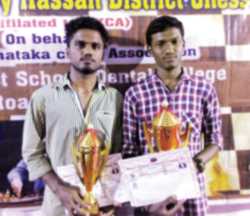
City’s A. Augustin (SJCE, Mysuru) with 8.5 points from 9 rounds won the coveted Karnataka State U-25 chess title in the tournament conducted at Christ School, Hassan recently.

R. Manoj of Hassan finished second with 8 points, while Arjun Adappa with 7.5 points secured the third place. M. Tulsi of Mysuru secured the fourth place with 7 points, while V.P.S. Darshan of Mysuru finished fifth with 7 points.

The winner A. Augustin received Rs.3,000 and a trophy, while R. Manoj took home Rs.2,200 and a trophy. Arjun Adappa who secured the third place secured Rs.1,800 as cash prize with a trophy, while M. Tulsi of Mysuru took home a cash prize of Rs.1500 and a trophy.

The top two players A. Augustin and R. Manoj will represent the State in the National U-25 championship.

Final Placings 1. A. Augustin (8.5 pts) 2. R. Manoj (8.0 pts) 3. Arjun Madappa (7.5 pts) 4. M. Tulsi (7.0 pts) 5. V.P.S. Darshan (7.0 pts) 6. Navaneetha Krishna (7.0 pts) 7. N. Nishanth (6.5 pts) 8. S. Naga Kiran (6.5 pts) 9. L. Vivekananda (6.5 pts) 10. Akshay R. Kashyap (6.5 pts)

Best U-10 Boys 1. Srivatsa (6.0 pts) 2. Patrick P. Johnson (5.5 pts) 3. M.H. Akash (5.5 pts)

source: http://www.starofmysore.com / Star of Mysore / Home> Sports News / July 19th, 2016