Meet the brothers who built Bengaluru’s first apartment block

Paresh apartments was build in 1974 by contractors H N Anantharaman (top right) and H N Dwarkanath

Bengaluru :

While Bengaluru today is dotted with apartment complexes and housing societies, many may not know that one of first steps in this direction was taken by H N Anantharaman, now aged 91, and his 89-year-old brother H N Dwarkanath way back in the 1970s.

FirstApartment02BF28apr2018

Having been hired as contractors by the Paresh Apartments Cooperative Society , the duo built the city’s first apartment complex in 1974, which stands tall in Malleswaram even today.

“In the early 1970s, 24 of us got together and bought this plot of land. Anantharaman and Dwarkanath were the contractors, and we all respect them for building such a solid structure,” said Sooryakanthi Madiman, who moved into her flat in 1974 at the age of 27, following her marriage to Madiman, who was a DRDO scientist.

Sooryakanthi says that while newer and fancier buildings are plagued with problems like seepage and leakage, theirs has a strong foundation. “When workers carry out repairs in our houses, they find it very hard to even drill a nail into the wall,” she added.

The complex comprises a cluster of three-storey buildings, and a majority of the original 24 families continue to live here even though the surroundings have rapidly transformed, with individual houses giving way to large apartment complexes.

Born in Hiremagalur, a hamlet in Chikkamagaluru, the brothers were brought to Bengaluru — where they studied engineering — by their older brother who was working here. After a few years, during which they worked in Tamil Nadu, the brothers decided to get into business and started building water tanks, water treatment plants and civil structures.

“They were ahead of their time. They realised that with the rising growth rate, people would start running out of land to build houses on. So, they started constructing multi-dwelling units and venturing into joint-development projects, which was rare at that time,” said Narayan Babu, Dwarkanath’s son.

“They wanted to build homes for people who had saved their hard-earned money for the purpose, unlike today when people are entering the industry purely for business gains,” said Gopinath, Anantharaman’s son.

The duo worked in tandem — while Anantharaman handled financial matters by meeting people and raising funds, Dwarkanath designed the structure and monitored the work.

The brothers, however, are unhappy with the current state of affairs under which members of lower-income groups are unable to find affordable homes within city limits and so have to live on the outskirts.

Honour for pioneer

Anantharaman was recently honoured by Rotary Bangalore Downtown, and conferred the Rotary Pioneer award in recognition of his “pioneering contributions to the field of group housing and construction by developing the first apartment block in Bengaluru, and establishing the industry association KOAPA (Karnataka Ownership Apartment Promoters’ Association), the precursor to the present CREDAI.”

source: http://www.timesofindia.indiatimes.com / The Times of India / News> City News> Bangalore News / by Niharika Alva / TNN / April 28th, 2018

The first Communist MLA

The Kolar Gold Fields (KGF) Assembly constituency in Kolar district has the distinction of sending the first ever Communist legislator to the Karnataka (then Mysore) Assembly.

Eminent trade unionist and Bharat Gold Mines workers’ leader K.S. Vasan became the first Communist MLA in the State in 1952. He represented the undivided Communist Party of India (CPI).

In retrospect

In the 1957 elections also, the CPI could get its candidate, veteran trade union leader M.C. Narasimhan elected to the Assembly. KGF became a reserved segment in 1962 and continued the tradition of electing Communists to the Assembly.

S. Rajgopal was elected from this segment in 1962. After the party split, neither the CPI nor the CPI(M) succeeded in the electoral battle in the KGF constituency for more than three decades. It was in 1985 that T.S. Mani of the CPI(M) got elected to the Assembly. That was the last time a Communist member got elected from this constituency.

source: http://www.thehindu.com / The Hindu / Home> Elections> Karnataka 2018> Karnataka 2018> A Look Back / by Vishwa Kundapura / Kolar – April 29th, 2018

It’s celebration time for them

Several candidates from Karnataka, who were gunning to make the cut in the Civil Services, had reason to celebrate when they found that they had cleared the competitive exam. The Union Public Service Commission released the list of candidates who cleared the Civil Services Exam 2017 on Friday.

For Bengalurean Swetha M. who secured the 119th rank, this was her fourth attempt. “It is a big relief and there is a feeling of satisfaction to see my name on the list,” she said. The 27-year-old had quit her job with a multinational company in 2014 to prepare “rigorously” for the exams.

Shubhamangala, ranked 147, attributed her success to “dedication” and “sustained effort”. The 34-year-old gynaecologist, who owns a clinic in Bengaluru and is a mother of a three-and-half year old, said her initial preparations were focussed on her son. “I then started reading from the laptop,” Ms. Shubhamangala said.

She managed to clear it in her second attempt. “I did not clear the prelims in my first attempt. Last year when I wrote the prelims, I was sure that I would clear it. Hence I started cutting back on my work hours and spent more time studying,” she said.

Prathiba Rani
Prathiba Rani

Prathibha Rani, an engineer who bagged the 78th rank moved to Bengaluru in 2016 to prepare for the examinations. Ms. Prathibha hails from Jharkhand and said that she decided to get into administration as she thought it was the best way to make a difference to the society. For Keerthi Kiran Poojar (rank 115), this is his second time clearing the UPSC exams. He first cleared the exam in 2015 and got into IRS (932). He is currently being trained at Nagpur. He wanted to give one more shot at IAS and hence made up his mind to write the exam again. “This was my third attempt. I had taken one year sabbatical from my training to prepare for the exam,” he said.

Sachin Gupta who secured the third rank, said that he juggled between Bengaluru and New Delhi to prepare for the examination.

source: http://www.thehindu.com / The Hindu / Home> News> Cities> Bengaluru / by Staff Reporter / Bengaluru – April 28th, 2018

English kills the creativity of a bhasha-writer, says Sahitya Akademi president

Sahitya Akademi president Chandrashekhara Kambara | Photo Credit: K. Bhagya Prakash

Sahitya Akademi’s new chief, Chandrashekhara Kambara, hopes for a multilingual and oral revolution

Kannada writer Chandrashekhara Kambara dons many hats. He is a poet, playwright, novelist and critic who has been honoured with the Padmashree, Sahitya Akademi Award, Kabir Samman and the Jnanpith Award. Kambara has been passionate in his advocacy of the regional traditions of art and literature, and of plurality in social structure. Recently elected the president of Sahitya Akademi, when I met him at its regional office in Bengaluru, he firmly defended the Akademi’s autonomy and underlined the necessity of writing in one’s mother tongue.

You are heading this institution at a time when there is a strong feeling among writers and thinkers that freedom of expression is under threat and that the Sahitya Akademi has remained a “passive, powerless body.” How do you view this?

There are many issues involved here, and I shall try to be brief in explaining them. First, the Sahitya Akademi is a non-partisan and non-political institution, and its sole function is to “develop literature and literary culture in all Indian languages and to promote through them plurality and cultural unity of the country.” You cannot expect one institution to do the job of another. Secondly, it is an autonomous and independent body…

Are you sure the Akademi will continue to enjoy autonomy and freedom in future?

I am positive, because the Akademi has inbuilt structural devices for any course-correction needed from time to time.

Can you please explain what those ‘devices’ are?

The Sahitya Akademi came into being through an act of Parliament in 1954, and any major structural changes in it have to be made by Parliament. The Akademi’s office-bearers, including the president and the vice-president, are elected by the members of the Akademi. Also, all the members are chosen by the Akademi on the basis of recommendations from different literary and cultural associations. There is no place for any kind of governmental or external influence.

You have said in an earlier interview, “Revitalising State languages is my top priority.” Can you elaborate?

You see, we have become too dependent on English to the detriment of regional languages. Hence, the priority of the Akademi is to reduce this dependence.

The Akademi organises continuous workshops for people to learn neighbouring languages; it encourages translations directly from one regional language to another rather than through English; in collaboration with universities in different regions, it will get authoritative textbooks, including science texts, in State languages; it is planning to bring out bilingual and multilingual dictionaries; as a representative body, it constantly brings pressure on State governments to make the State language the medium of instruction at the primary level… I can go on and on.

However, the Akademi alone cannot do much in this direction; we expect educationists, writers, and parents to join hands with the Akademi.

Have you ever felt that had you written in English you would have had a larger readership and greater international recognition?

Never, not even for a moment. Had I written in any language other than Kannada, I wouldn’t have been a poet or a playwright. It is as simple as that. You see, English kills the creativity of a bhasha-writer.

Can you explain please?

Think of a child. If she hears a story from her grandmother, she won’t tell the same story to others; she will create newer versions of it each time she tells the story to a brother or friend. But if the child hears the story in English in school, she will tell the same story in the same words over and over again.

In all this, where do tribal languages and oral traditions figure?

They figure prominently. The Akademi has already established the North East Centre for Oral Literature in Agartala, and a Centre for Oral and Tribal Literature in New Delhi. They are designated to preserve our heritage in a systematic way. The Centre in New Delhi launched a major series on ‘unwritten languages’ last year; it has already brought out four works on oral traditions. In addition, the Akademi proposes to archive original oral texts in audio and video formats.

However, we have to understand that orality is not a concrete object; it is a view of life and a way of living. Consequently, the concept of orality also changes with changing times. Similarly, it is impossible to save all spoken and written languages in any country. As long as there are speakers and the language fulfils their needs, it lives; once there are no speakers left, it goes into oblivion.

Who are the ‘implied readers’ of the translations published by the Akademi? How do translations fare compared to works from commercial houses?

First, the ‘implied readers’. Please remember that the Akademi publishes works in 24 languages — that is, an award-winning text in each language is translated into 23 listed Indian languages, including English. This means the translations published by the Akademi are primarily for Indians. If a Kannadiga is knowledgeable today about Mahashweta Devi or M.T. Nair, it is mostly through the Akademi’s Kannada translations. Till date, the Akademi has published over 6,000 books in regional languages.

I don’t have with me the exact sales figures, but since the Akademi’s five zonal centres have sales sections, and since many works get reprinted every year, I presume the books are reaching readers. In fact, I have recently had discussions with the UGC and the Ministry of Human Resource Development regarding Akademi publications; I have suggested that they should persuade State governments to buy them in bulk every year, and distribute them in public libraries. There are also plans to sell our books online.

Often people complain about the quality of translation (especially of English works) in the Akademi publications. True, there is a review system in place, but a reviewer cannot or does not go through every line of the script. Why doesn’t the Akademi appoint competent copy editors as private publishers do?

I haven’t thought about it, but I shall certainly discuss it with my colleagues. Let me add that the Akademi welcomes any feedback, whether suggestions or criticism.

The interviewer is a critic, translator, and former professor of English

source: http://www.thehindu.com / The Hindu /  Home> Books / by C.N. Ramachandran / April 28th, 2018

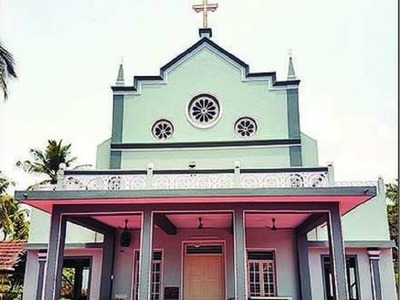
Neermarga church set for golden jubilee fete

NeermargaChurchBF27apr2018

Mangaluru :

The St Joseph the Worker Church in Neermarga is all set to celebrate its golden jubilee. The celebration of the church, built in 1968, will commence from Saturday and conclude on April 30 with a solemn mass.
According to history of the church, there were around 170 families in the beginning and now it has increased to 470.

The church premises also has a Kannada medium school which provides education to more than 400 children and has served successfully for the last 102 years imparting education to thousands of children.

According to the Rev Fr Anil D’Mello, parish priest of the church, the celebrations will commence from Friday with horekanike being offered by people.

Youth and sports day will be held on the next day. On April 23, the day is dedicated to the sick and elderly, while children’s day will be held on April 24. An all-religion conference will be held on April 25 and 26 will be the day for couples. April 27 will be dedicated to departed souls, while April 28 will be reserved for the church organization. The next is a spiritual day.

The golden jubilee celebrations will be held on April 30. Most Rev Aloysius Paul D’Souza, Bishop of Mangalore Diocese, will be the main celebrant of the jubilee mass, Most Rev Thomas D’Souza, Archbishop of Kolkata, will participate as co-celebrant.

source: http://www.timesofindia.indiatimes.com / The Times of India / News> City News> Mangalore News / TNN / April 20th, 2018

Inspired by HMT, two Bengaluru techies launch a fine-watch brand

All it took was an introspective six-month sabbatical from their tech jobs to give-up comfortable paycheques and turn into ecommerce entrepreneurs. This story is pretty much routine now for new-age Bengalureans but what’s different here is that Nirupesh Joshi and Mercy Amalraj found their calling in the offbeat business of watch-making in India. While Joshi worked for Akamai Technologies in Hong Kong for ten years, Amalraj was a freelance mobile app developer and quality assurance engineer.

Few weeks ago, the husband-wife duo launched Bangalore Watch Company. The fine watch-making brand based out of the IT city manufactures mid-segment gentleman’s timepieces, priced at about Rs 40,000 each.

BlreWatchBF27apr2018
 Interestingly, their first collection of 500 limited edition pieces pays a tribute to the legendary Indian watch brand Hindustan Machine Tools (HMT) by incorporating design details like vintage arrow-head indices and dauphine-shaped hands on the dial.

Plan is to narrate Indian stories in all their successive collections too. Even their brand logo incorporates the geometric interpretation of the coat of arms symbol from the erstwhile kingdom of Mysore.

 Joshi says, “I often wondered why fine watch-making never took off in India the way fine jewellery has made a mark. Indian watch brands like Titan have a cult following but they are not in the luxury category. Final turning point came when legendary brand HMT shut down in 2015. We quit our jobs and turned our passion into a business plan.”

Joshi has turned into a watch designer. His assembly unit located in Kanakapura brings together components sourced from across the world to manufacture these pieces.

In the last three weeks, they have found takers in tech-executives, entrepreneurs, artists and architects above the age of 30. “They appreciate things of Indian origin and want to add our watch to their existing collection of timepieces,” adds Joshi. The brand’s next collection will be rolled out in October this year.

source: http://www.economictimes.indiatimes.com / The Economic Times / Home> ET Home> RISE> Startups> News Buzz / by Smita Balram, ET Bureau / April 25th, 2018

Full of Energy

An exclusive interview with RCB all-rounder Aniruddha Joshi who candidly talks about his struggles and the road to the IPL.

Aniruddha Joshi
Aniruddha Joshi

He is one of the two players from Karnataka to have made it into team Royal Challengers Bangalore (RCB), and he’s predictably thrilled about it. Meet Aniruddha Joshi, a small-town lad from Gadag, who’s worked painstakingly to make his way into the IPL. We caught up with the all-rounder who got candid about his struggles and more…

“It feels really good to be playing for RCB. When the auction was happening, Pavan (Deshpande) and I were giving our officers’ exam for SBI. When I got done with the exam, I had 134 Whatsapp messages and 40 missed calls! My mom called me and told me that I’d been picked for RCB, and honestly, it felt so surreal that I didn’t know how to react.  I felt on top of the world — to be sharing dressing rooms with players like Virat Kohli and ABD is something else,” smiles Aniruddha.

How has the IPL journey been so far for him? “We had a preparatory camp before the tournament. Daniel Vettori and Ashish Nehra have been guiding us and captain Kohli has been really nice. I’m a huge admirer of his — he was so positive during and after the first game — it’s been amazing to be around him,” reveals Aniruddha, who’s also been interacting with international players like Moeen Ali, Colin de Grandhomme and Chris Woakes. “They are all such kind-hearted people. It was so nice speaking to Moeen as he talked to me in Hindi too! I haven’t interacted with the legendary ABD yet, I’ve only just met him,” he adds.

As he takes us back to his early days, he reveals that with Sunil Joshi as his uncle, it was obvious that his family was a cricket-loving one. “When I was 14, I started playing cricket with my father as my first coach. After that, I played club matches in Gadag, a place with hardly any facilities. So, I went to the academy in Hubli for want of better facilities. I represented the Dharwad Zone at 17, and that year, I was chosen to play for Karnataka U-17. I came here for the U-19 and got a job in DTDC as a guest player where I played many matches and scored runs and later, I got a job in SBM (now SBI). When I moved to B’luru, my mentor Santosh Menon helped me a lot,” he shares.

Having toiled quite a bit to get here, the cricketer reveals that he used to take the train from Gadag to the KSCA Academy in Hubli every day. “I’d reach there by 6.30 am. I’d finish practice and catch the train at 10.30 and post 11, I’d go to school. It’s been a tough journey and now, my hard work is paying off.”

As for his uncle, Aniruddha reveals that Sunil has been a constant source of support. “He’s a big role model to me. Whenever, I have asked anything from him, he has taken me to his house and helped me. Even now, I take advice from him and he calls me everyday to check on my preparation. For the past few years, he’s been telling me that my time will come if I perform well,” he says.

While RCB lost their opening game against KKR, Aniruddha isn’t worried. “This is my debut IPL. I’ve learnt so many things. In fact, I wasn’t even on Instagram — Pavan made me join the platform recently,” he laughs.

source: http://www.asianage.com / The Asian Age / Home> Life > More Features / by Ikyatha Yerasala / The Asian Age / April 15th, 2018

Book Talk: The Last White Hunter – Mysuru & Hollywood Connection

BookTheLastWhiteHunterBF26apr2018

Title: The Last White Hunter: Reminiscences of a Colonial Shikari, Donald Anderson

Author: Joshua Mathew

Pages: 265 / Price: Rs. 650 / Publisher: Indus Source Books

WhiteHunterBF26apr2018

The jungles of Mysuru had caught the attention of a number of Britishers during the colonial era, particularly during the period of Krishnaraja Wadiyar IV. The royal city was a must in their itinerary for hunting and for witnessing the thrilling Khedda operations at Karapur. Special Khedda operations were arranged for the visiting Viceroys and Princes by the Maharaja. Along with them came the Hollywood film producers.

Films like the Elephant Boy, featuring Mysuru’s Sabu Dastagir and the royal elephant Airavatha and the Harry Black and the Tiger, starring Stewart Granger, Barbara Rush and Anthony Steel were shot in these forests and these films became famous. Increasing hunting activity gave an impetus to the business of taxidermy. Taxidermists like Van Ingens earned international reputation for mounting animals life-like.

Britishers, who had settled down in places like Mysuru and Bengaluru, were lovers of game. They did not miss a weekend opportunity to go for hunting or fishing. Forests and scrub areas were just a few miles away and wildlife was abundant.

However, by mid-1900s awareness towards wildlife began to gain importance. Hunting had to be done by taking a license. Even prior to the introduction of license, hunting of tigers had been banned. The landmark Wildlife Protection Act in 1972 finally brought a halt to even licensed hunting.

Among the White hunters, there were lovers of the forest and wild animals. Donald Anderson and his father, Kenneth Anderson, were two such Britishers who had settled down in Bengaluru, and made frequent trips to the jungles in Karnataka and Tamil Nadu. Though they hunted some animals for sport in the early years, they became lovers of the forest and the wildlife later. That was even before the 1972 Wildlife Act. Kenneth was a conservationist and an author too. His outhouse in the Cantonment had lots of cages that were filled with his pets “including python, a slender loris, hyenas, jackals, geese and iguana, and even a small mugger (crocodile)” in 1960s. They only shot man-eaters which struck terror and carried away cattle in the villages, sometimes harming the life of villagers. The Forest authorities often sought their expert shooting skill to destroy panic creating tigers or panthers.

“In his youth, Dad may have shot a few tigers and panthers for sport, but as he grew older, he only shot when it was absolutely necessary — when he felt that human life was at stake,” says Donald in “The Last White Hunter,” reminiscences of a Colonial Shikari, written by Joshua Mathew.

Lamenting over the loss of a lot of India’s wildlife, Donald says, “I know of high-ranking government officials who shot tigers in the early eighties, from forest department jeeps, with huge flashlights.”

He also bemoans that the genuine love for the jungles and its denizens is not imbibed in those who have been given the responsibility to do so today. “Back in the day, every official would know every bend in the road, every nullah, every rivulet that traversed his kingdom.”

Donald, who began going to the jungles at the tender age with his dad and until his last days with his junior friends, including Joshua, more for the love of it, was the last White shikari.“I am the last heir of the Anderson family. I am possibly the last living Scot from British India, who chose to stay on after Independence. And I am the last of the white hunters for whom the forests of India have provided unimaginable adventure and excitement,” Donald, who remained a bachelor, says.

In his 265-page book, Joshua takes us back to the bygone age by chronicling the life and adventures of both Donald and his dad in a captivating style. He superbly weaves the last white hunter’s life in Bengaluru, experiences in the jungles when he accompanied his father, and later went with his friends hunting tigers, panthers and small game. He gives a graphic account of their thrilling encounters with wild elephants, and angling trips to catch and release back into the waters the famous mahseer in the Cauvery, Donald to become a record holder by catching a 104-pounder in 1989. He also describes how Donald acted as a stunt double in the Hollywood film, Harry Black and the Tiger that was shot in the Bandipur forest in 1958.

“The Last White Hunter” is an extraordinary story of Donald’s life from 1934 to 2014, when he passed away in penury. It is a book all those who love the jungles and the life in the days of the Anglo-Indians must read.

email:gourisatya@rediffmail.com

source: http://www.starofmysore.com / Star of Mysore / Home> Feature Articles / by Gowri Satya, Senior Journalist / April 26th, 2018

US-based Analog Devices opens new facility in Bengaluru

US-based technology company Analog Devices (ADI) on Wednesday unveiled its new state-of-the-art facility for nearly 600 Bengaluru-based staff who are part of ADI India.

Bengaluru:

US-based technology company Analog Devices (ADI) on Wednesday unveiled its new state-of-the-art facility for nearly 600 Bengaluru-based staff who are part of ADI India.

The new facility, which houses one of ADI’s top three global design centres, will focus on developing and selling technologies and solutions for the global automotive, industrial, healthcare, consumer, Internet of Things (IoT), security, communications, and energy markets, the company said in a statement.

“We have been aggressively investing in our global facilities. This investment in ADI India will better position us to accelerate growth and impact for ADI,” said Yusuf Jamal, Senior Vice President of ADI’s Industrial, Healthcare, Consumer, and IoT Solutions and Security Group.

ADI India started as a three-person product development centre in 1995.

Today, ADI India is a global development centre, working collaboratively across ADI businesses at every stage of product development as well as providing the supporting software.

“As we move into this new facility, we plan to expand our university relations programme work with reputed academic institutions, which includes fellowships, sponsorships and internship opportunities, through additional partnerships and talent acquisition from engineering colleges across the country,” said Sai Krishna Mopuri, Managing Director, ADI India.

ADI India plans to hire software, systems engineering, and IC design and development engineers both at the experienced and entry levels.

source: http://www.telecom.economictimes.indiatimes.com / ET Telecom from The Economic Times / Home> Telecom> Latest Telecom News> Industry / by IANS / April 25th, 2018

Tech graduate among 4 devotees to take deeksha

Shravanabelagola (Hassan) :

Twenty-five years ago, her grandfather took sanyasa deeksha in Shravanabelagola and travelled across the country, propagating universal peace and harmony. Charukeethi Bhattaraka Swamiji of the mutt had presided over the event.

Kumari Siddhaini
Kumari Siddhaini

On Wednesday, 29-year-old Kumari Siddhaini, a resident of Sanawad, Madhya Pradesh, disassociated herself from all worldly connections, again in the presence of Charukeerthi Bhattaraka Swamiji in the same place.

After performing various rituals, she was given Mataji deeksha in the presence of thousands of devotees and hundreds of saints. After all the rituals, she was renamed Aryika Mahayashomati Mataji. Her father Ajaykumar said he will also take Sanyasa deeksha.

After completing MTech, Kumari Siddhaini worked as a journalist for a few years. She edited the souvenir of Acharya Vardhamanasagar Maharaj. According to her family, for the past 10 years, she was with the Sangha of Acharya Vardhamanasagar Maharaj and had travelled across the country. As she used social media extensively to propagate Jainism, thousands of her followers from various parts of the country gathered at Shravanabelagola to witness her deeksha programme.

Along with Kumari Siddhaini, Nemichandra Jain, 83, a businessman from Damoh, Madhya Pradesh; Raosaheb Nabukoruche, 75, an agriculturist from Mumbai, and Subhashji Jain, 69, a resident of Kolegaon, Maharashtra took sanyasa deeksha and become munis.

source: http://www.timesofindia.indiatimes.com / The Times of India / News> City News> Bangalore News / by Shrinivasa M / TNN / April 26th,2018