Going to town with a colonial legacy

Time warp: In striking contrast to nearby Cambridge Layout, Murphy Town resists change and remains the settlement that was planned a century ago. Photo: Karan Ananth / The Hindu

Once called ‘a settlement too good for its inhabitants’, Murphy Town retains many of its century-old amenities

Sahayaraj, a 49-year-old driver, stays in a single bedroom house near Indiranagar, paying rent of Rs. 3 per month to the Bruhat Bangalore Mahanagara Palike (BBMP). So does 85-year-old Sivalingam, who works in the 125-year-old temple in his area, after having retired from the Army 25 years ago. Their neighbour pays only Rs. 0.50 a month for a slightly smaller house.

There are 37 such households living in what is perhaps the most unchanged legacy of the erstwhile Cantonment — Murphy Town. In striking contrast to the modern Cambridge Layout part of Jogupalya, Murphy Town is a settlement that stays true to its colonial past.

“My grandfather came here with the British army contingent from Vellore,” recalls Sivalingam. “Then, in 1913, Engineer Murphy, who went on to work for Binny Mills, designed this settlement for the Indian servants of the British army.”

LOADED WITH AMENITIES

Famously called ‘a settlement too good for its inhabitants’ by the colonial masters, Murphy Town retains many of its century-old amenities, which residents continue to use.

For starters, there is the Murphy Town market, well known for its meat sales all over east Bangalore. Shops assigned for chicken, mutton, fish and other meats are arranged around a square. A separated section sells beef.

35-year-old Mani has been cutting and selling meat here almost all his life. “I came here to work as a little boy. My parents were factory workers who got quarters in Murphy Town,” he narrates. Visitors to the market can also make use of the reading room set up by the State government in a stone building at the centre of the market.

“The State library is on the other side, occupying a whole floor of a corporation complex in Jogupalya,” says Kokilakshmi, the librarian. “But, many people, even the policemen who come to the grounds nearby, come here to read as the building is spacious, comfortable and well lit.”

OWNERSHIP ISSUES

“From what I remember, there is almost nothing that has changed in this area. Even the drainage system we use today was laid by the British,” Mani adds.

The rentals too stay at what was fixed by the British administration. “Once the country became independent, residents went to Murphy and demanded that they be given ownership of the houses,” Sahayaraj narrates. “Some 37 of them were left without papers and we are stuck, unable to do anything with our houses or sell them.”

But, does he want to sell his house and move out? His answer is an assertive no. “Nobody ever leaves this area. Some have built apartments on their sites and rented them out,” Sahayaraj says, pointing to a freshly painted three-storeyed building beside the row of single-storeyed houses with tiled roofs.

So, why the necessity to own a house when the rental is negligible? Karmegavannan, a political worker in the area, has a political explanation to the question. “They are still considered migrants when they go for services to government or other establishments. People treat them as if they are living on the charity of the government even though they are perhaps older residents of the city than many others,” he explains. “Getting legal documentation for their house strengthens their position.”

Karmegavannan has been living in Murphy Town since his childhood. He remembers visiting Jogupalya village to watch movies in the ‘tent theatre’ there, before Adarsha or Lido cinemas were built. He remembers a time when the Lakshmipuram graveyard was the only feature opposite Murphy Town, where CMH Road is now.

NON-STEREOTYPICAL

“People tend to stereotype the area as having a culture of only temple festivals such as ‘walking on fire’ ceremonies. But, it is actually a beautifully designed area. There are nine squares, with playgrounds in the middle, which are a riot of games in the evenings and on Sundays even today,” he says. “The roads are named after the Mudaliars who were prominent businessmen among the community here.”

“The schools used to be Tamil medium, now they have been converted to Kannada-medium schools,” he points out. One school bears the plaque ‘1913 Elementary School’. A crèche cum primary school also runs nearby. “People who go for construction or domestic work leave their children here,” says Kousalya, a teacher there.

The other school has a dilapidated stone building in the front named ‘the Evelyn Barton Welfare Centre’. Says the principal, M. Muniyappa, “This centre was closed down because the building was considered dangerous.” “Now, the appearance of the building from outside makes a bad impression on parents whose preference to put their children in the numerous English medium schools around gets reinforced.”

source: http://www.thehindu.com / The Hindu / Home> Features> MetroPlus> Society / by Niranjana Ramesh / August 08th, 2012

Anglo India hand

Eric Stracey talks about his book ‘Growing up in Anglo India’

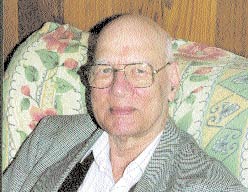
EricStaceyBF25dec2014

“If as a little boy in the 1920s, I had been asked what I was, I would have said, ‘English’.” In Growing up in Anglo India (EastWest) Eric Stracey, 80, writes about an elusive 400-year-old community. Sometimes reviled, often used, rarely admired, the Anglo-Indians are a people who perhaps got as close to immortality as they ever would with Ismail Merchant’s Cotton Mary.

“Cheap novelists and scriptwriters have often found in the Anglo-Indians ground for sensationalism,” says Stracey. Stracey’s writing is a nostalgic, picturesque, sometimes brutally honest journey through the times, places and achievements that characterised the lives of his parents and 11 siblings.

“There was the realisation that we were an unusual lot and that our story called for some kind of record,” he says. “Another reason was that Bangalore and the conditions prevailing there when I was growing up in the cantonment – the best of weather, pure air, clean water, fine schools, a moral climate and cheap living – have changed beyond recognition. Unfortunately for the worse.”
Stracey migrated to Australia for “family reasons” in 1980. During a retirement marked by “boredom and low spirits”, his writing flourished. He updated his first, unpublished novel Odd Man In – memoirs of his years in the police service, which climaxed when be became director general of police, Tamil Nadu, in 1979.
Growing up in Anglo India is in a sense a literary tribute to his people: “Among our proudest qualities are our sense of loyalty and steadfastness. We stuck to our post and did our duty when others faltered.” It is no wonder then that cities as far afield as Calcutta and Bangalore have their own mini-legends about Anglo-Indian police officers like Stracey.
And despite great distances, this father of two sons, Mike, 52, and John, 54, is as close as he ever was to his community. So while he writes with regret that a lack of financial resources has led to conditions among the Anglo-Indians “going downhill”, he might take consolation in the fact that he will always be remembered for knowing well and writing truly of a time when it was otherwise.
source: http://www.indiatoday.intoday.in / Indiatoday.in / Home> Society & The Arts> Books / by Sonia Faleiro / September 04th, 2014

Srinath Batni is new President of NIE

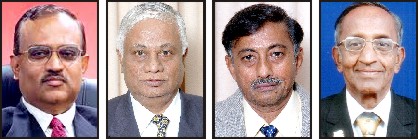
Srinath Batni, N. Ramanuja, Lakshminarayana, Chittaranjan

Mysuru :

Srinath Batni, Trustee, Infosys Science Foundation and former Board Member of Infosys, was elected as the President of the National Institute of Engineering (NIE) Society, Mysuru, while N. Ramanuja, former Chairman and Managing Director of HMT and Chairman of Bharatiya Vidya Bhavan, Bengaluru, was elected Vice-President.

S.K.Lakshminarayana and T.K.Chittaranjan were elected as Hon. Secretary and Hon. Treasurer respectively.

The other five directors, who got elected in the Society elections held on Dec. 14 are: S.L. Ramachandra, Partner, Gopika Perfumery Works; H.N. Ramatirtha, Proprietor, Aravinda Parimala Works; Dr. T.R.Seetharam, former Principal of NIE; R.S.Rajkumar, Head, Bosch India Foundation; V. Sivagopal, former Scientist, ISRO; G.S. Ramachandra, former Dy. General Manager, BHEL. The tenure of this newly constituted Managing Committee is five years.

Sixteen candidates, including M. Sreepada Rao, M.N. Shivaram, Prof. A.T. Bhashyam, Shantamurthy and Prof. C.K.N. Raja contested the elections.

The voters included N.R.Narayana Murthy, Founder, Infosys Ltd., cricketer Anil Kumble, renowned writer Dr. S.L. Bhyrappa and Ravishankar, Banker in London.

NIE, started in the year 1946, today stands at the 29th position among India’s top 100 Engineering Colleges that include IITs and NITs and 2nd in Karnataka. It is one of the 14 colleges in Karnataka that has been recognised and given autonomous status under Ministry of Human Resources Development-World Bank sponsored Technical Education Quality Improvement Programme (TEQIP). NIE is a recognised QIP Research Centre of AICTE, New Delhi.

source: http://www.starofmysore.com / Star of Mysore / Home> General  News  /  Thursday , December 18th, 2014

City’s first Mixed Martial Arts Fighter

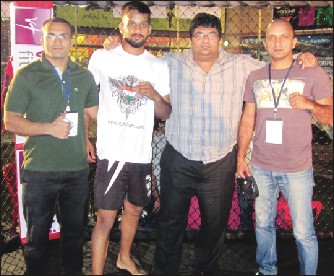
Seen in the picture (from left) Pro-MMA fighter Chaitanya Gawali, Basavesh of Mysuru, YFC President Jithendra Khare and Coach Samith Bhat.

Mysuru :

Basavesh of Mysuru has won his debut Mixed Martial Arts (MMA) fight in Yoddha Fighting Championship against an opponent representing Navi Mumbai. The event was held in Mumbai on Dec.13 and 14. Basavesh, city’s first ever MMA fighter, trains under Samith Bhat of Genesis.

Mixed Martial Arts is the world’s fastest growing sport. MMA includes both striking and grappling techniques. Fighters undergo training in various forms of martial arts like Kickboxing, Muay Thai, Boxing, Wrestling and Jiu Jitsu. Yoddha Fighting Championship (YFC) provides a platform for amateur fighters to test their skills.

Basavesh will be again fighting in Bengaluru on Jan. 17. Apart from Mixed Martial Arts, Basavesh has also participated in national-level Kickboxing, Wrestling and Jiu Jitsu championships and has won various medals

source: http://www.starofmysore.com / Star of Mysore / Home> Sports News  /  Thursday , December 18th, 2014

‘There is no place better than Karnataka for Tourism,’ says Dr. B.R. Shetty

DrShettyBF21dec2014

by S. Kenneth Shishir

SOM met Dr. Shetty on Friday, who was on a brief visit to the residence of former Secretary (Forests) to the State Government A.C. Lakshmana, on KRS Road in city who is the friend of Dr. Shetty’s brother Sachidananda Shetty, a resident of Mangaluru and had a short talk about his visit and projects he has taken up here. Excerpts…

SOM: Sir, is Karnataka a place for tourism?

Dr. Shetty: Of course, there is no better place than Karnataka for tourism.

SOM: Have you taken up any projects here?

Dr. Shetty: Yes, I have given a proposal to the Government of Karnataka for a project to supply water to Jog falls near Sagara in Shivamogga, especially during summer when the volume of water is reduced and the falls does not attract tourists. I have plans to supply water under his project on all 365 days to attract more tourists there. Speaker Kagodu Thimmappa has taken interest in the project and if the government approves the proposal, I will go ahead with it.

SOM: Have you planned to open a hospital in India?

Dr. Shetty: Yes, I have acquired a 220-bed hospital in Trivandrum in Kerala State and will be doubling its capacity. In central Raipur I have acquired a majority stake in an orthopaedics hospital as I want to expand it across India to serve Indians. My plan is to offer affordable health care in smaller cities and create a 12,000-bed hospital infrastructure in five years.

SOM: How is the medical sector doing in India?

Dr. Shetty: The medical sector in India is doing very well. The country can be developed as a medical tourism place also. We have the best doctors here.

SOM: How are Indian workers doing and being treated in UAE?

Dr. Shetty: Indian workers in UAE are doing good, well paid and well respected.

SOM: You have taken up many missions to help the downtrodden and the poor. What is your mission in life?

Dr. Shetty: My mission in life is to serve the community, by way of my professional ventures and personal pursuits.

Going from clinic to clinic selling drugs to doctors, loading cartons, hoisting barrels on his shoulder and climbing staircases was the first idea of Dr. Bavaguthu Raghuram Shetty popularly known as Dr. B R Shetty, Chief Executive Officer of NMC Healthcare, UAE Xchange and Neopharma, while working in the UAE in the early days.

Born in Kaup, Udupi in 1942, Dr. Shetty served as the Vice-Chairman of the Municipal Council in Udupi, where he worked towards the cause of providing proper sanitary facilities, building concrete roads, schools, underground drainage and septic tanks for people to lead a better and healthier life.

In 1973, he set foot in the desert land of the United Arab Emirates (UAE) to pursue his ambitions armed only with a clinical degree in Pharmacy and was able to start, build and succeed at multiple businesses over the years and today, his business empire is spread across the globe.

In UAE, Dr. Shetty who noticed the deficiency for basic clinics in the region, established New Medical Centre (NMC), a small pharmacy cum diagnostic clinic and became successful. Today, Dr. Shetty is the proud visionary behind 15 healthcare facilities which cater to more than one million patients annually. He has also come to the aid of regions hit by natural calamities and other adversities.

Dr. Shetty who is also interested in the tourism sector has taken up many projects to develop certain places as tourist destination with extraordinary infrastructure.

Some of the awards Dr. Shetty has won in recognition of his service are: the Padma Shri by the Government of India, Pravasi Bharatiya Samman Award, Order of Abu Dhabi, by the Government of Abu Dhabi and Forbes Middle East Top Indian Leaders in the UAE award to name a few.

source: http://www.starofmysore.com / Star of Mysore / Home> General  News  /  Sunday , December 21st, 2014

He will grow with a remote-controlled leg

Bengaluru  :

This 10-year-old cancer patient from Sri Lanka has his limb remote-controlled. To ensure that he doesn’t undergo surgical procedures often, doctors have increased the length of the magnetic metallic implant on his left leg through remote-control. The implant was placed after a cancerous tumour was removed from his knee.

Binura Lakvindu from Colombo, who was diagnosed with bone cancer, underwent surgery at BGS Global Hospital, Bengaluru, recently.

“For Binura, we have implanted the expandable prosthesis that has an in-built magnetic disc, gear box and a telescoping rod. The growth anticipated from that bone was calculated and the prosthesis was designed accordingly. He has to visit the hospital once in three months and place his leg in a magnetic coil, and the limb will be lengthened by 1 mm in 4 minutes. The required length will be achieved without additional surgeries. Binura will have limb growth up to 14 to 15 years,” said explains Dr Srinivas C H, consultant, orthopaedic onco-surgeon, who operated on Binura.

He developed pain in the knee in July, 2014. “We noticed him limping and avoiding cricket, his favourtite sport. We consulted a local physician who prescribed him medicines for pain. But the pain didn’t subside and a month later, we noticed swelling above his knee. An orthopaedic surgeon in Colombo suggested that this could be a tumour in his thigh bone and advised treatment in Bengaluru,” says Mallikarachchige L R, Binura’s father.

HOW DOES IT WORK

When the prosthesis is placed in the magnetic field, it leads to rotation of the magnetic disc at 16,000 rpm (revolutions per minute). The telescoping rod moves, resulting in expansion of the prosthesis. The tailor-made implant was imported from the UK to suit the unique specifications of Binura. This technique is tried only on paediatric cases with bone cancer.

source: http://www.timesofindia.indiatimes.com / The Times of India / Home> City> Bengaluru / by Sunitha Rao, TNN / December 19th, 2014

Bangladesh war : Victory Day Today

A War Record — All for a bottle of Scotch !

December 16 is celebrated as ‘Victory Day’ because on this day in 1971 a spectacular victory was achieved by India under the able political leadership of the then Prime Minister Indira Gandhi with brilliant military leadership provided by the Chief of Army Staff, Field Marshal SHFJ Manekshaw. This victory not only liberated erstwhile East Pakistan (present Bangladesh) but handed over the most humiliating defeat to Pakistan. Pak Army in the East surrendered unconditionally and India took 93,000 Prisoners of War who were released only after Shimla Agreement.

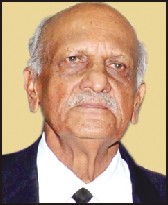
Maj. Gen. C. K. Karumbaya, SM (Retd.), now a resident of Mysuru, had the honour of taking part in this war, as part of 2 Corps, 4 Mountain Division, in the Western segment of Bangladesh which was defended by 9 Pak Division. Here is an account of the pursuit operation of 5 Maratha L I (Royals), under Maj. Karumbaya’s command which is considered as a post-Independence war record as the longest and fastest. Now read on. —Ed
MajGenBF21dec2014

by Maj. (later Maj. Gen.) C. K. Karumbaya, SM

It was a proud moment for our Bn, 5 Maratha L I (Fifth Royal) when our GOC Maj. Gen. M. S. Brar, PVSM, presented us a bottle of Scotch whisky, which he had promised during the height of the Bangladesh Liberation War. The occasion was the gala victory dinner for the officers of 4 Mtn. Div. (Red Eagle Division) at Jessore Cantonment. A proud moment indeed.

Mission with a Bait: I took over the command of Fifth Royal after our CO, Lt. Col. J. P. Torpy, VSM, was wounded in the battle of Elangi and evacuated on Dec. 6, 1971. On Dec. 8, we were ordered to move North to Jhenida and link up with 41 Mtn. Bde. I reached Jhenida at about 1100 hrs on Dec. 8 with B Coy commanded by Maj. P. K. Chatterjee, VrC, D Coy commanded by Maj. Shri Ram Singh and A Sqn 45 Cav (PT76) less two tps commanded by Maj. Batra. The rest of the Bn with a Coy of 7 Punjab (SCOTS APCs) who were placed under command were trailing behind as the APCs had problems traversing swampy areas.

Jhenida was still being mopped up by the troops of 41 Mtn Bde. On arrival, I was briefed by 41 Mtn. Bde. Commander, Brig. A. H. E. Michigan, MVC in the presence of GOC, Maj. Gen. M. S. Brar and my own 62 Mtn. Bde. Commander, Brig. Rajender Nath. I learnt that Pak 57 Bde. after its defeat at Jhenida was carrying out an orderly withdrawal towards Magura where HQ of Pak 9 Div. was located. Magura was a strategically located medium sized town. It was 30 km away from Jhenida and connected by a good concrete road. It was a communication centre with excellent roads connecting Khustia in the North, Kamarkhali-Faridpur in the East and Jessore and Khulna in the South.

My Bde. Commander then ordered me to lead the advance of the Bde. and instructed me to be cautious and take all precautions. Thereafter, the Div. Commander stressed the importance of the mission and said half in jest, “Karumbaya, 50 (I) Para Bde is also advancing towards Magura from Jessore and if your Bn succeeds in capturing it earlier than them, I shall present you with a bottle of Scotch!”

I was willing to take the above bait because the morale of Pak Army was in their boots due to a series of setbacks they had suffered earlier on. In contrast our own morale was sky high with our outstanding success, especially at Suadih. This psychological advantage had to be fully exploited.

Calculated Risk and Unorthodox Formation: I took a calculated risk. I used the tanks at my disposal aggressively and unconventionally. Instead of making the tanks move cross country on either side of the road axis (which could have slowed down our speed of advance and made the tanks vulnerable to any nuisance mines which enemy may have placed), I put them all in a road formation with about a 100 yd interval between each tank. I made my D Coy, R Gp and part of B Coy to ride piggy-back on the tanks and drive with full speed towards Magura. I ordered other coys to follow with whatever vehicles they could muster and the balance to march on foot to catch up.

The vanguard Coy Commander, Maj. Shri Ram Singh was in the second tank with Sqn 2IC, Capt. Metha. I followed in the fourth tank with the Sqn. Commander, Maj. Batra and FCO from the Medium Regt. I instructed Maj. Shri Ram Singh to keep watching the area in front and engage suspected delaying positions with prophylactic fire while on the move to scare the enemy. He was not to get bogged down dealing with small batches of enemy stragglers who would be taken care of by follow up troops. I kept a careful watch of the area in front with binoculars glued to my eyes so that we did not fall into a trap as cautioned by the Bde. Commander. As a commander, I realised that I should mix audacity with caution. The occasion certainly called for more audacity and willingness to take calculated risks.

Advance turns into pursuit: The advance (or pursuit) commenced at 1300 hrs and progress was very rapid as though we were in a road race! I was inspired by Field Marshal Rommel, who led his famous Afrika Korps in the deserts during the Second World War! Ironically, our Red Eagle Division had played a prominent part in his eventual defeat. On the way we saw some Pak stragglers running away from the main axis, but we pressed forward relentlessly and reached the outskirts of Magura at 1515 hrs. Infantry and tanks quickly got into assault formations for attack.

The enemy was taken completely by surprise. We were heavily shelled in which one of our artillery OP officer’s jeep was directly hit by a shell and all occupants were killed including the officer.

Capture of Magura: To our great relief, A and C Coys and SKOTS APCs (with their deadly machine guns) started trickling in. The enemy was in total disarray. They fled, leaving behind their 9 Pak Div. Operation Room complete with maps, Quarter Guard with their national and 29 Baluch Regimental flags, kotes full of weapons, ammunition dump (estimated to be about 300 truck loads) and ordnance stores, intact. They had started to make preparations to blow up their ammunition dump with a 6 hr delay fuse which would have been devastating had they had time to activate it.

Pursuit continues: We continued the pursuit beyond Magura towards Kamarkhali, leaving behind C Company and Pioneer Platoon to guard the captured stocks and the prisoners that we had taken in the process. At last light we observed enemy troops crossing a canal after demolishing a culvert on the road about 6 kms ahead of Magura. They were subjected to heavy machine gun fire from our newly arrived APCs and the enemy replied with 105 Howitzers. We firmed in there at night and waited for the tail to catch up.

Pursuit up to Kamarkhali next day: We the Fifth Royal continued to lead the Divisional advance next day, that is on Dec. 9, at first light. The PT 76 tanks and APCs had to be unfortunately left behind due to demolished culvert over sharp banks but the Bn in true Patton style continued the advance on foot at light infantry speed. We reached Kamarkhali Ferry area on the banks of Madhumati river which was about 24 km away by 1130 hrs and firmed in.

Pak defences at Madhumati and their concept of Operations: Pak troops had taken up hasty defences on the East bank of the Madhumati river. Their morale was naturally low due to pressures put on them by us. The Pak Army was mainly road bound whereas we were able to move cross country on man pack basis. Their strategy was to fall back from their forward defences by taking successive delaying positions to their strong points in the rear. The Pak plans that might have looked impressive on paper had gone awry on the first day itself. We had learnt with experience that the enemy was highly sensitive to any outflanking moves as they were afraid of their withdrawal routes being cut off by us.

The Madhumati river was about 300 ft wide and 30 ft deep; but we did not consider it as an insurmountable obstacle. The PT 76 tanks had the ability to swim, ferry troops and stores. In addition, my Bn. had gained expertise in crossing rivers with our own expedients. All ranks knew swimming. To top it, the locals were too willing to carry us across in their own country boats — after all, we were a liberating Army fighting for their freedom.

Disappointment: To our great disappointment, the tanks and APCs which we had left behind near the demolished culvert were withdrawn from us and allotted to 22 Rajput (7 Mtn. Bde.) who were operating in Khustia Sector and we were ordered to stop further advance and firm in at Majai near Kamarkhali. We were ordered not to attempt crossing the Madhumati river.

Thus, our long pursuit ended on the banks of Madhumati abruptly. I felt that instead of pulling out troops from us, if the higher ups had only reinforced us to exploit our success, the 2 Corps Operations would have been a lot speedier and even more spectacular.

Our achievements: I have turned the pages of post-Independence military history books in vain to find out if any other unit of the Indian Army had carried out as long and as rapid a pursuit operation during war as my Battalion. According to Col. Afridi, the Col. Staff of 9 Pak Div. who was taken as PW at Faridpur and remained in our custody, our lightning advance resulted in GOC 9 Pak Div. (Gen. Ansari), who had moved from Jessore to Magura on the first day of the war, losing all control over his brigades. His 107 Bde. (Brig Makhmad Hayat) was forced to withdraw southwards towards Khulna and his 57 Bde. (Brig Manzoor) was hemmed in at Khustia instead of falling back to Madhumati-Faridpur through Magura as visualised earlier.

Perhaps the circumstances were highly favourable to us or the offer of Scotch Bottle promised by the GOC was too tempting to resist; but the fact remains that we in the Fifth Royal are proud of the extremely fast pursuit operation we carried out not only to capture Magura, the HQ of 9 Pak Div; but after capturing it, pursue the enemy much beyond it up to the banks of Madhumati, till ordered to halt.

I am happy to note that the Scotch Bottle, its contents having been emptied on the day of the presentation itself, is now beautifully decorated, mounted and displayed in our Officers’ Mess along with the Pak flags which we captured at Magura.

source: http://www.starofmysore.com / Star of Mysore / Home> Feature Articles /  Tuesday , December 16th, 2014
Desi national handloom awards presented

To encourage and honour the contribution of individuals and organisations striving to promote the country’s handloom sector, ‘Desi’, a local brand in the sector presented the national handloom awards to five artists in the city on Sunday.

Noted film maker Shyam Benegal, who presented the awards, called upon people to promote traditional weaving as it has its own historical importance.

Stating that art and handicrafts are two sides of the same coin, Mr. Benegal said it is not proper to identify these as two different entities.

Retired Director General of Police Ajai Kumar Singh said the handloom sector had contributed a lot to women empowerment. This sector should further be promoted, he said.

The awards were given to Sangappa Basappa Mante from Yadgir district, Shivshankar Eshwarappa Mudalagi from Bagalkot district, Jagada Rajappa from Hyderabad, M V Chandrasekar and U Ravikiran from Bengaluru in recognition of their contribution to the development of handloom sector.

source: http://www.thehindu.com / The Hindu / Home> News> Cities> Bengaluru / by Special Correspondent / Bengaluru – December 21st, 2014

Beary Sahitya Academy honorary awards for three

Awards to be presented at Chikkamagaluru on January 10

The Karnataka Beary Sahitya Academy will confer its annual honorary awards 2014 on B.M. Ichalangodu, B.A. Shamshuddin Madikeri and Y. Mohammed Beary Edapadavu.

While Prof. Ichlangodu is being honoured for his contributions in Beary language research, Mr. Shamshuddin is being honoured in the field of literature and Mr. Mohammed Beary in the field of education, said academy chairman B.A. Mohammed Haneef.

Mr. Haneef told presspersons here on Monday that the awards would be presented at the Beary Language Conference to be held at Chikkamagaluru on January 10. More than 5,000 Beary-speaking people were expected to attend the event, he said.

The Chikkamagaluru District Beary Federation would be co-hosting the event at the Vokkaligara Sabha Bhavana where the language conference would be held from 10 a.m. and the award presentation would be held from 3 p.m.

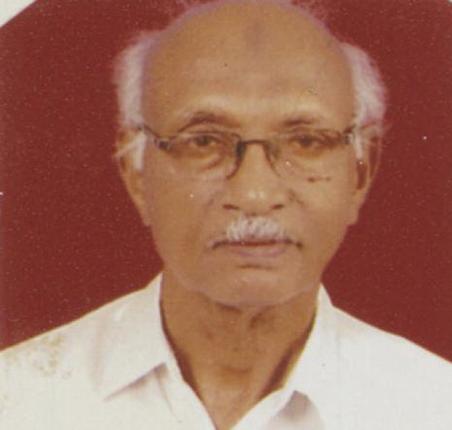
B.M. Ichlangod
B.M. Ichlangod

Prof. Ichlangod worked in various colleges in the undivided Dakshina Kannada and has written many works including translation of Koran, and Muslims of Tulunadu. He has also been active in the consumer rights movement.

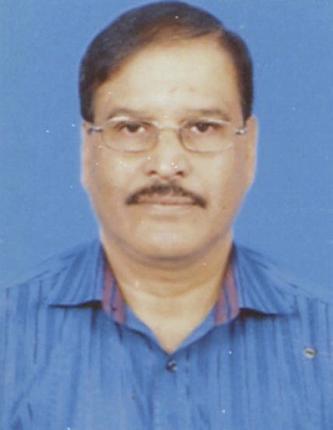
B.A. Shamshuddin Madikeri.

Mr. Shamshuddin has worked as a journalist for many publications in Madikeri and has penned many works in Beary language.

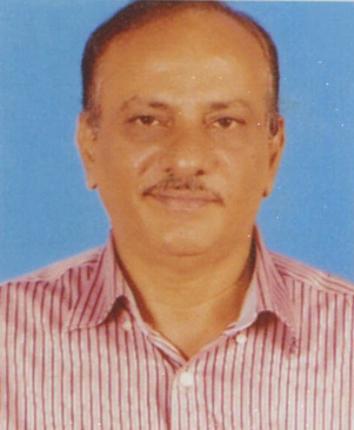
Muhammad Byari Yedapadavu.

Mr. Mohammed Beary, after serving the Syndicate Bank for 22 years, established Ideal English Medium School at Edapadavu and has been the president of the Federation of Dakshina Kannada and Udupi district English Medium Schools. He is also the president of the committee of families of victims of Mangaluru air crash.

The awards carry Rs. 10,000 in cash and citation. The Kannada and Culture Department has proposed to the government to increase the cash purse to Rs. 75,000 each, but the academy is not sure when that would come into effect, Mr. Haneef said.

The academy has also identified nine personalities to be felicitated during the language conference for their contributions to various fields.

They are: Mariam Ismail, Ismail Azad, A.M. Sridharan and Umar Farooq (for literature); K. Mohammed (for defence); Moidin Kunhi (for medicine); Azala Ayub and B.H. Noor Mohammed (for social service) and Mohammed Iqbal (for singing), he said.

source: http://www.thehindu.com / The Hindu / Home> News> Cities> Mangaluru / by Anil Kumar Sastry / Mangaluru – December 16th, 2014

Siddalingaiah to chair 81st Kannada lit fest

Dalit poet Siddalingaiah (in pic) has been selected as the president of the 81st Akhila Bharatha Kannada Sahitya Sammelana scheduled to be held at Shravanabelagola in Hassan district in February, 2015.  

SiddalingaiahBF20dec2014
President of Kannada Sahitya Parishat (KSP), Pundalika Halambi announced the name of the Siddalingaiah at a press conference held in the city on Friday. Siddalingaiah’s name was suggested by the KSP Executive members at the meeting held on Friday.

He is the first ever dalit writer to preside over the Akhila Bharata Kannada Sahitya Sammelana. Senior Dalit writer Devanooru Mahadeva had turned the request to preside over the event.

Halambi told reporters that Siddalingaiah has been chosen not because of his Dalit background but due to his significant contribution to Kannada literary world and his immense talent.

Siddalingaiah is a prominent Kannada poet and one of the founders of the Dalit Sangharsha Samiti. A former chairman of the Department of Kannada Studies at Bangalore University, he was a nominated member of the Legislative Council for two terms. He is also a former chairman of the Kannada Development Authority and Karnataka Book Authority

Meanwhile, Halambi said the Parishat will not hold Sahitya Sammelana from now on in case the state government fails to impart primary education in Kannada medium mandatorily within the deadline of one year given by KSP.

source: http://www.deccanherald.com / Deccan Herald / Home> State / Saturday – December 20th, 2014