The 1st Mysore Professional Chess Academy’s (MPCA) All India tournament 2014, held under the aegis of the United Karnataka Chess Association and the Mysore District Chess Association under the guidance of AICF and World Chess Association, began at the Chamundi Vihar Indoor Stadium here this morning.
Around 300 chess players from Karnataka, Tamil Nadu, Andhra Pradesh, Kerala, Maharashtra, Goa, Gujarat, Delhi, Orissa and West Bengal are taking part in the tourney.
The tournament was inaugurated by M.R. Suresh, COO, Cycle Pure Agarbathis, Mysore, K. Suresh, Asst. Director, DYES, Mysore and Prof. S.K. Anand Thirtha by lighting the lamp and moving the pawns.
Two rounds will be held today and the tournament will be held upto Apr. 25 and will have 10 rounds.
Keen completion is expected from the participants and they will compete for a total cash prize of Rs. 1,50,000 plus 35 trophies.
source: http://www.starofmysore.com / Star of Mysore / Home> Sports News / April 22nd, 2014
At 68, he still has an undying flair towards stone and wood carving. He has so far carved more than 10,000 idols and trained hundreds of students. He has also won a number of prizes. The person here is Chandrashekharachary, a sculptor, whose hands are well versed in the art for more than 50 years now.
Born in Mysore to an artisan family on May 13, 1946, he soon developed his interest in the art and was introduced to the tools and techniques used in sculpting at a very early age. Though he graduated in Science from Maharaja’s College (1966 – 1969) with Statistics as a main subject, stones attracted him more.
“My elder brother had drawn a sketch of Lord Ganesha when I was in 8th grade and that’s when I took up a small piece of stone and laid my hands on it. It wouldn’t have been an easy task to pick up this art if I wasn’t born in an artisan family,” said Chandrashekharachary while speaking about his early days.
He also added that the profession is hereditary to his family. His father was a goldsmith and two elder brothers were sculptors who have worked for the Chamarajendra Technical Institute and also the great Palace of Mysore.
For ten years after graduation, Chandrashekharachary worked as a craftsman for Cauvery Emporium and Chamarajendra Technical Institute during 1969 – 1979. “I would stay at home all day drawing the design and carving it on wood or stone. After the completion of an idol I would take it to Cauvery Emporium in Bangalore and sell it to them. They paid money lesser than a direct customer would pay but the process was easy,” commented Chandrashekharachary while speaking about his early experiences as a craftsman.
Later, he was recommended by the technical institute to work at Poompuhar, also known as the Tamil Nadu Handicrafts Development Corporation Ltd., as a master craftsman and superintendent. He worked there for two years and later in 1981, he was appointed as a project officer at Cauvery Emporium for five years in places like Sirsi, Kumta and Bangalore.
He added “I was exposed to big machines during my tenure at Cauvery Emporium and along with my team of eminent craftsmen, I worked on hundreds of idols every day,” while recapitulating those moments.
Speaking about the procedure he follows, he said, “First, I draw a basic sketch so as to maintain accuracy while carving. After the basic sketch is completed, I draw it again on stones or wooden blocks and later start carving them” and added, “Usually I draw the sketches based on my imaginations. Everything is imprinted here inside my brain” with a confident smile.
Later, speaking about working conditions, safety measures and life style, Chandrashekharachary said, “we artisans usually work with dust surrounding us which makes our hands and legs rough. I particularly sometimes wear glasses to protect my eyes during wood carving as small pieces of wooden dust may enter into the eyes which is hazardous. We artisans usually live a poor living as we are given piece rate wages and many people hesitate to pay appropriate money as it is just a piece of stone. They don’t seem to see 3 to 12 months of hard workmanship behind it.”
After working at different places, Chandrashekharachary is now settled in Mysore near T. Narasipur Road with his son who is a software engineer. He still travels daily 14 kilometres from his home and works whole day under the hot sun with stone pieces and dust surrounding him. When asked him the reason, he said, “I love this art. My next generation is not leading it anywhere. So let me take it further with me as much as possible.”
He then elaborated, “the art is fading nowadays. Time has changed. There is no such support from government for sculptors. I am also ready to teach students who come to me to learn this beautiful art, but it seems that the younger generation is interested in more of computer education than the art!”
Some notable works of Chandrashekharachary include an elegant chair in rose wood which is 5 feet in height and can be seen at Puttaparthi Sathya Saibaba Ashram and Lord Ranganatha for a Ranganatha Swamy Temple in Bangalore.
Chandrashekharachary is also a writer during his free time. He has written around hundred vachanas by his pen name “Maradilingeshwara” for which he has been presented with an award in 1975 from Kannada Sahithya Parishat and also his Kannada article “Saahithyavannu Yeke Odhabeku” has been published in Youth Karnataka magazine.
It is not just Chandrashekharachary, but there are many other sculptors too whose works have be to recognised by the people and supported by the government more and more.
source: http://www.starofmysore.com / Star of Mysore / Home> Feature Articles / April 22nd, 2014
Erangere badane, a thin and long brinjal variety, once cultivated at Erangere village in the taluk and hence having derived its name from the same, is no longer grown at Erangere due to rapid urbanisation. Only a few farmers in villages around Mysore continue to cultivate this variety, but in smaller quantities.
In this backdrop, the State Department of Horticulture has approached the Geographical Indications Registry, under the Controller-General of Patents Designs and Trade Marks (CGPDTM), seeking Geographical Indication (GI) status for ‘Erangere Badane,’ an exclusive of Mysore.
A geographical indication (GI) is a name or sign used on certain products which corresponds to a specific geographical location or origin (for example, a town, region, or country). The use of a GI may act as a certification that the product possesses certain qualities, is made according to traditional methods, or enjoys a certain reputation, due to its geographical origin.
When SOM contacted Senior Assistant Director of Horticulture (State), M.S. Raju, he said that the Department had sought GI tag for Erangere Badane. It had applied for it four months ago and the issue was before the CGPDTM (GI Registry), Chennai. “GI Registry officials are expected to conduct an inspection and collect information on this variety, including its genesis and other details, before processing the application. A presentation will be made by the higher authorities of the State Dept. on the need for granting GI tag for this variety of brinjal,” Raju added.
Stating that this once indigenous brinjal variety was on the verge of extinction, Raju said there is a need to conserve it for future generations. “GI tag will help us in promoting its cultivation and giving a new lease of life for the dying crop,” he reiterated.
Also, the State Horticulture Dept. has created a seed multiplication facility of Erangere Badane at its nursery at Kukkarhalli Lake premises to boost the cultivation and also help establish a ‘repository of seeds.’ Here, Erangere Badane is grown on half-acre plot and its seedlings are distributed among interested farmers and others to boost its cultivation, Raju said.
Erangere Badane’s supply is limited as only very few farmers are cultivating it. Among the farmers growing this brinjal variety, Mellahalli on Bannur Road is in the forefront.
Erangere Badane is presently available at Devaraja Market and its price ranges from Rs. 30 to 40 a kg.
“All efforts would be made to encourage farmers to take up cultivation of Erangere Badane and preserve its seeds,” M.S. Raju said.
source: http://www.starofmysore.com / Star of Mysore / Home> General News / April 22nd, 2014
Bhramara Trust of Y.T. and Madhuri Thathachari has organised a programme at Rani Bahadur Auditorium, Bahadur Institute of Management Sciences, Hunsur Road, on Apr. 24 at 5.30 pm, to present Bhramara’s Lifetime Achievement Award for Science -2014.
Prof. P. Balaram, Distinguished Professor of Molecular Biophysics and Director of the Indian Institute of Science (IISc), Bangalore, is the recipient of the Award.
Dr. K.S. Krishnan of the National Centre for Biological Sciences, will be the chief guest. Prof. Ram Rajasekharan, Director, Central Food Technological Research Institute (CFTRI), Mysore, will preside over the programme.
About Prof. P. Balaram: Prof. Balaram’s main research interests are in Bio-Organic Chemistry and Molecular Bio-Physics. He is the author of over 400 research papers. He received his M.Sc from IIT Kanpur (1969) and Ph.D in Chemistry from Carnegie-Mellon, Pittsburgh, USA (1972).
Prof. Balaram is a Fellow of the Indian Academy of Sciences, Indian National Science Academy and the Third World Academy of Sciences, Trieste, Italy. He has received many awards/honours in recognition of his work, of which mention must be made of the Shanti Swarup Bhatnagar Prize of CSIR (1986), Alumni Award for Excellence in Research from IISc (1991), TWAS Award in Chemistry (1994), G.D. Birla Award for Scientific Research (1994), Distinguished Alumnus Award of IIT Kanpur (2000), Padma Shri by the Government of India (2002) and Padma Bhushan by the Government of India (2014).
Prof. Balaram has delivered a number of lectures and has served on the Editorial Boards of journals, both national and international. He has served on many committees of the Government of India, and is currently a Member, Science Advisory Committee to the Union Cabinet and Scientific Advisory Council to the Prime Minister, among others. He has been the Editor of “Current Science” during 1995-2013.
source: http://www.starofmysore.com / Star of Mysore / Home> General News / April 22nd, 2014
Bukhatir sons greet the Vijay Mallya who once owned two boxes in the cricket stadium
Vijay Mallya with Khalaf and Waleed Bukhatir, sons of Abdul Rahman Bukhatir, at the Sharjah Cricket Stadium. / Image Credit: COURTESY: SCC
Dubai:
It was a nostalgic moment for Vijay Mallya, the owner of the Royal Challengers Bangalore team. He returned to Sharjah Cricket Stadium, during his team’s match against Delhi Daredevils on Thursday after nearly two decades.
Mallya was a regular visitor for Sharjah’s Cricketers Benefit Fund Series (CBFS). “Mallya used to own two VIP boxes in the stadium and he made sure he enjoyed almost all the matches in the company of his friends during the eighties and nineties,” remarked Mazhar Khan, the General Manager of the Sharjah Cricket Stadium to Gulf News.
Mallya is a friend of Abdulrehman Bukhatir, who was responsible for sowing the seeds of cricket in this desert by bringing international cricketers to play in matches at Sharjah. It was also a special moment for Khalaf and Waleed Bukhatir, the two sons of Bukhatir who were very young when Mallya used to visit the stadium. Abdulrehman Bukhatir could not attend the first match as he is abroad and is expected to return in time for the third match at Sharjah.
Khan was also the chief coordinator of the CBFS and hence used to make all arrangements for the VIPs and film stars to be comfortable in their special boxes at the ground which used to have a fridge and individuals small televisions on each box.
Mallya who is one of India’s leading industrialists is an ardent sports lover and owns Force India Formula One team. He had purchased Indian star all-rounder Yuvraj Singh for a whopping Rs140 million (Dh8.52 million) in the player’s auction. After Singh’s match winning knock in Sharjah, Mallya said: “What particularly pleased me was Yuvraj Singh coming back to his old vintage self. His stroke play was magnificent.”
Before the start of the IPL’s seventh edition, Mallya gave a pep talk to his team players and said: “You can do it, you know you can do it. Just go do it and we want to take that IPL-7 trophy in our hands this year, so good luck to all of you and we have a great team, great atmosphere. Play hard and party hard too.”
source: http://www.gulfnews.com / GulfNews.com / Home> IPL2014 / by K. R. Nayar, Chief Cricket Writer / April 19th,m 2014
The River Tunga, Mathur./ by Special Arrangement / The Hindu
On how the pundits of Mathur set an example.
Mathur, the Sanskrit speaking village in Shimoga, Karnataka, is not new to the readers of these columns. This is an attempt to share my experience during a visit to the village where a three-day festival took place.
The annual utsavam for Lord Chenna Kesava Murthy and His Consort, Mahalakshmi, was a grand affair with all the elements of tradition in place.
This festival started on a Poornima day with the utsava murti getting a bath in the waters of the Tunga to the background of Vedic mantras chanted by scholars.
The deity was brought in a palanquin to a chariot, beautifully decorated. It was 10 a.m. and the deity was placed on His mount Garuda and installed in the chariot, which set off in a procession led by nagaswaram players, bhajan singers following them.
Chanting of Vedas
The pitch perfect chant of the Vedas is something unique to the place. The unhurried and harmonious rendition in flawless diction transports one to a different world. .
The car was taken around the four Maada streets. Approximately half way through, around 1.30 p.m., the procession was halted for a sumptuous feast at the village community hall. Pundits and their families and scholars from the neighbourhood, who had gathered for the festival partook of the lunch.
Lord Chennakesava being taken on the Pallakku after the river bath./ by Special Arrangement / The Hindu
The procession was resumed at 7 p.m. to complete the circumambulation of the Mada streets and it was around 2.30 a.m.
On the next day, again the deity was bathed in the Tunga and the chariot began its run. It was called Rathotsava and the deity with His consort was seated on a horse.
The final day was set aside for the chanting of the Vedas. An interesting highlight was the smearing of holy powder on all gathered. Everybody then went to the river to have a bath. The three-day festival closed with dinner but not before bhajans were sung early in the evening.
Right from the cleanly swept streets that are decorated with marvellous kolams to the conduct of festivals that combines hospitality, the pundits of Mathur showcase heritage quietly. What is more they show that it is possible to make tradition a way of life.
Wish to visit the village and stay in the agraharam? Chenna Kesava Dikshitar is the person to approach. Several foreigners stay in Shimoga and visit the village to learn Sanskrit.
(The writer can be contacted at sbpl@airtelmail.in )
Meet the pundits
The Kalyana Nagar Association, Mandavelipakkam, (No. 29, West Circular Road) has arranged the sambhashanam of the Sanskrit Pundits of Mathur, 9.30 a.m. onwards tomorrow, Saturday, at the Association premises.
For details contact 24952997 and 24611674.
source: http://www.thehindu.com / The Hindu / Home> Features> Friday Review> Faith / by T. S. Viswanathan / April 17th, 2014
Bisu Parba, harvest festival is being celebrated in Tulunadu every year on April 14. Bisu Parba – 2013 was celebrated at the aegis of Bantara Sangha Mumbai with mega event as per the heads of all Bantara Sangha.
World Bunts Day – 2014, 40th annual get-together will be organized by UAE Bunts at Armed Forces Officers Club auditorium, Abu Dhabi on Friday April 25. The heads of worldwide Bunts Sangha will be the specially-invited guests present on the occasion.
UAE Bunts Patron Dr B R Shetty will preside the mega event, while Swami Vidyavachaspati Vishwa Santosh Bharati of Barkoor, Udupi district, will inaugurate the programme.
Swami Vidyavachaspati Vishwa Santosh Bharati of Barkoor, Vijayanat Vittal Shetty, and Sarvotham Shetty
Banta Vibhushan Award to be conferred on Sri.Vijayanat Vittal Shetty
The annual prestigious Banta Vibhushan Award will be conferred on Vijayanat Vittal Shetty, in recognition of his entrepreneurship, contributions to social service, sports and religious spheres.
Special attraction – ‘Bale Telipule’ Tulu comedy Skits
Bale Telipule Tulu comedy skits will be presented on World Bunts Day by the award winning Prashamsa theater troupe of Kaup, Udupi district. Kusalda Birse famed artiste Sandeep Shetty Manibettu, Prasanna Shetty Bailoor, Mervin Shirva and Sharat Ucchila will be other casts enthrall the gathering.
The contemporary Tulunadu culture and splendor of Bunts hierarchy will be unveiled during the daylong mega event. The stage has been set to exhibit the folk art talent of children, youth and veterans.
The preparations are underway at the leadership of UAE Bunts president Sarvotham Shetty, along with the executive Committee comprised of members from Dubai, Abu Dhabi, Sharjah, Al Ain & Norther Emirates.
The executive Committee urges all Bunts brethrens to arrive in traditional attire at the venue, as UAE Bunts have been known to present the show with punctuality and disciple in unveiling the rich tradition and practice of Bunts community.
For more info, contact the executive Committee members:
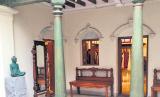
When a 140-year-old quaint and beautiful house near Lalbagh was passed down to City-based designer Latha Puttanna’s husband, she didn’t give up the opportunity to create a retail space for her brand Shrishti.
Having been in the industry for the past 23 years, she decided to forego her previous business model of exhibitions and orders and worked with two interior designers to spruce up the heritage home.
“Siddapura used to be a village and S Kempanna, who built this house, was the Patel (head). He was from my husband’s paternal lineage and it’s now been passed down to the fifth generation. It’s sad not to utilise old homes like this, so I decided to start an in-house manufacturing and design unit here.
But seeing the rising demand for retailing, I opened it as my flagship Bangalore store last year. I’ve tried to keep it modern but with a vintage touch,” shares Latha, elaborating that though the old tiles, well and courtyard have been retained, objects like antique mirrors and cupboards have been added to enhance the look.
Asked how the place makes her feel, Latha replies, “I’m very sentimental as a person and the old-world charm of this house complements the clothes I design, which largely work with the revival of dying techniques like ajrak, kalamkari and ikat. And it isn’t only me — when visitors come down the street and find the store, they are instantly charmed by it.”
Shrishti includes a range of exquisite saris, blouses, kurtis, churidars, salwars and Indo-Western wear in various cuts, styles and colours.
It is located at 102, 2nd Cross, Lalbagh, Siddapura.
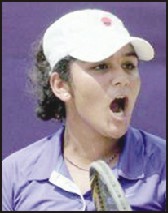
Tennis is a global sport and Mysore has been producing talented tennis players who have gone on to represent the country at different levels. One such player who has made her mark in the International level in the junior girls section is city Dhruthi T. Venugopal. She has represented India in the junior level and has been consistently performing well in the ITF tournaments. Recently taking part in the Asian Junior Tennis Championships which concluded in Delhi on Saturday, Dhruthi teaming up with Vasanthi Shinde finished runner-up in the junior girls doubles event. She also took part in the singles and performed well. She is our “Star This Week”.
In the junior doubles singles, Dhruthi and Vasanti Shinde lost to Kamonwan Buyan and Yijio Shao 4-6, 1-6 in the final. In the semi-finals the duo beat Indian pair of Ojasvinee Singh and Prajula M 6-3, 6-1. In the quarter-finals, Dhruthi and Vasanti beat Snehal Mane and Nandini Sharma 6-3, 6-3. Dhruthi earlier taking part in the India ITF 1-Grade 3 junior tennis tournament at Chandigarh performed well and finished runner-up in the junior girls doubles and also entered the quarter-finals in the junior girls singles event.
Dhruthi T Venugopal, is a Ist PU student at Vidaya VikasPU College, Mysore and is the daughter of Venugopal and Vanamala who encourage her to the maximum. Dhruthi trains in Pune and takes part in most of the ITF junior circuit tournaments. Dhruthi presently is ranked No. 4 in the country in the junior girls (Under-18) section and is the No.1 player in the State. Dhruthi is an attacking player and is quite consistent in her performances in the junior circuit representing the country but has to improve her skills to be able to perform at the International level.
source: http://www.starofmysore.com / Star of Mysore / Home> Sports News / April 20th, 2014
Swimming is a great recreational activity for people of all ages. Recreational swimming can provide you with a low-impact workout and it’s also a good way to relax and feel good.
Some people who enjoy swimming want to take it to a competitive level. This can provide health benefits of a vigorous workout as well as the fun and thrill of competition.
Meet Sundaresh Satyanarayana, Swimming coach of Team India and Karnataka State Sports Director for Special Olympics, a resident of J.P. Nagar in city who trains swimmers taking part in competitions.
Sundaresh is a qualified swimming coach from Netaji Subhas National Institute of Sports (NSNIS), Sports Authority of India. He also has an additional degree from Michael Phelps Swim School, USA.
Speaking about his early days, Sundaresh said that he first entered the water at the age of nine when the University of Mysore had organised a free swimming camp and added that from that day onwards it was only swimming, swimming and swimming.
His love for swimming earned him many laurels in many levels.
After completing his primary schooling at Jagadamba Shishuvihar in city, he joined St. Thomas School in Vishweshwara Nagar and completed his middle school and later joined Sarada Vilas institutions where he completed his High School and PU studies. He later graduated at NIE College of Science in city.
Sundaresh, after completing his graduation, took up a job as a technical staff of printing section at HCL HP. But as he wanted to achieve at higher levels in swimming and wanting to train young talents in swimming, he quit his job in the year 1999 and joined NSNIS-SAI, Bangalore, for graduation in swimming.
After graduation in swimming, he joined AIR Bangalore and Mysore as a Correspondent on contract basis. In the year 2000, he was appointed as a swimming coach for Deccan Gymkhana in Pune and in the year 2001, he was appointed as a coach at Sports Authority of Karnataka (SAK), Bangalore.
He was then posted to Davangere where SAK had constructed a pool which gave him a challenge to prepare new swimming talents from zero level.
Speaking about swimming and swimmers in city, Sundaresh said that the city requires at least four or five swimming pools as the University of Mysore swimming pool is the only pool in the city which is catering to the needs of public at present.
He said that all the swimming activities like training, competitions and others are concentrated only in Bangalore and added that there are grounds for athletics, volley ball courts, skating rinks and tennis court all over the State but there are a handful swimming pools in the State.
He said that though there is a handful or no pools throughout the State, still Karnataka stands at number one spot in National levels and added that maximum swimmers in the country who represented in international levels were trained by talented coaches in Karnataka.
He regretted that swimming coaches were being paid a meagre sum as salaries which is not even sufficient for a square meal a day.
Speaking about swimming, Sundaresh said that swimming is a healthy sport which is certified by World Health Organisation (WHO).
He further said that swimming is a healthy, low-cost activity that you can continue throughout the life and added that swimming is a low-impact activity that has many physical and mental health benefits.
Swimming is a great workout because one needs to move the whole body against the resistance of the water, he said and added that swimming is a great way to keep fit, stay healthy and make friends.
Organised swimming began in the 1800s and 1900s with the creation of Swimming Associations and Clubs that competed against each other. Competitive swimming continued to grow in popularity during 1800s and was included in the first modern Olympic Games in Athens in 1896. In 1904, the Olympics in St. Louis included the 50-yard, 100-yard, 220-yard, 440-yard, 880-yard and one-mile freestyle, the 100-yard backstroke and 440-yard breaststroke and a 4×50-yard freestyle relay.
Women took part in swimming for the first time in the Olympic Games at Stockholm in 1912 and Johnny Weissmuller (of Tarzan movies fame) became the first person to swim 100 meters in less than one minute. In India, G.S. Nair of Kerala was the person to swim 100 mts below one minute.
Breaststroke, backstroke, butterfly, and crawl (freestyle) are the most popular swim strokes. The breaststroke and butterfly are more difficult to learn than the backstroke and crawl. Sundaresh said that though Butterfly stroke is difficult, it is the easiest stroke to master.
He said that like the breaststroke, butterfly stroke is a difficult stroke and not recommended for beginners because it requires perfect timing and a good deal of strength. During the stroke, the legs move together in a dolphin kick, the arms move together to push the water downward and backward, and the torso undulates like an earthworm as the body moves forward through the water.
The backstroke is easier than the butterfly or breaststroke and similar to the crawl in that you use an alternate windmill arm stroke and flutter kick. Two keys to a proper backstroke are that your arms move with equal strength, otherwise you will swim off to one side, and that your body rolls from side to side so that your arms catch enough water to propel you forward.
The crawl or the freestyle is the most popular stroke and the easiest for beginners to learn. It is a simple flutter kick and windmill arm motion, like the backstroke, only on your belly. The most difficult part is coordinating the breathing since your face is in the water most of the time.
Sundaresh said that swimming also provides health benefits as swimming is a great workout because one needs to move the whole body against the resistance of the water, keeps the heart rate up but takes some of the impact stress off the body, builds endurance, muscle strength and cardiovascular fitness, helps maintain a healthy weight, healthy heart and lungs, tones muscles and builds strength and provides an all-over body workout, as nearly all the muscles are used during swimming.
Providing some general tips, Sundaresh said that before one dives into the water, make sure you know how to swim, choose a safe environment (stay away from rives and lakes with crocodiles in it), warm up and stretch your muscles and joints before entering the water, have plenty of fluids on hand and drink regularly, don’t overdo it if you’re just starting out and see a doctor if you haven’t exercised for a long time.
Speaking about equipments needed to swim, he said that one will need a swimsuit. Like many other things, technology has entered the swimsuit arena as well. Fabrics are designed for minimal resistance through the water, they tend to last a long time, and they resist fading even when used repeatedly in chlorinated pools. Of course, not all of us would be comfortable in the skimpy suits that you see Olympians wear, but the good news is that you can also find more modest suits at sporting stores.
The bottom line to a swimsuit is to select one that’s comfortable. You’re less likely to swim if you’re uncomfortable in your suit, he said.
Goggles protect your eyes from chlorine, and they help you keep your eyes open while you swim so that you can see where you’re going. You can even get prescription swim goggles if you wear glasses.
Swim caps can serve several purposes. Some pool managers will require individuals with long hair to wear caps to keep hair from getting into the pool, and some people just like to protect their hair from the chlorine in the water. You may also decide to wear a bathing cap to cut down on resistance in the water. This really works, and so if you’re looking to increase your time a bit, a bathing cap might help. Many caps are made of latex, although you can find silicone, neoprene (keeps you warm) and Lycra as well. Choose the one that fits your head and is most comfortable.
Some swimmers may also require Swim Fins, Drag suits, Paddles, Kick-board, Pull buoy, Ankle bands, Snorkel, etc.
Giving his piece of advice to the young and budding swimmers, he said that hard work with dedication would take them to great heights and will help them to achieve what they want.
He said that youngsters should dream to achieve it. Sundresh says, “Dream first, then Plan, then be Committed to it, Achieve what you dreamt of and finally Celebrate your achievements.”
Sundaresh is now training swimmers at Mysore Sports Club swimming pool on Lalitha Mahal Road in city under the banner of Association of Integrated Mysore Swimmers (AIMS) for which he is the Founder Secretary and can be contacted on Mob: 98454- 77929.
source: http://www.starofmysore.com / Star of Mysore / Home> Feature Articles / April 20th, 2014