Jubilant Biosys Ltd, a Bangalore-based subsidiary of Jubilant Life Sciences Ltd, said the USFDA had accepted its IND (Investigational New Drug) filing for a ‘novel’ molecule targeting prostate cancer with Endo Pharmaceuticals of the US.
This molecule would now progress toward the next phase of development and is anticipated to go into clinical trials by late 2013, a company release said.
Subir Kumar Basak, President, Global Drug Discovery Services, Jubilant Life Sciences, said the “successful outcome” was the result of collaboration between the scientists at Endo (a US-based specialty healthcare company) and Jubilant Biosys.
source: http://www.thehindubusinessline.com / Business Line / Home> Companies / by The Hindu Bureau / New Delhi – August 07th, 2013
Acquisition includes new 200-bed tertiary care hospital under construction in nearby location
Manipal Health Enterprises, the healthcare arm of the Manipal Education and Medical Group, has acquired a 70-bed hospital in Klang, Selangor District of Malaysia. This acquisition by Manipal Hospitals also includes a new 200 bed tertiary care hospital which is presently under construction in a nearby location, which will be commissioned by last quarter of the Financial Year 2014-15, said a company statement. The hospital, was set up by Dr Poraviappan Arunasalam, an obstetrics and gynaecology consultant in Klang about 14 years ago.
According to a statement, the hospital will focus on a combination of wellness, prevention and curative care levels – for both the domestic and an emerging overseas patient traffic into Malaysia from neighboring countries.
Swaminathan Dandapani — Executive Chairman of Manipal Health Enterprises, said, “This acquisition is a part of the company’s strategy to expand its footprint in India and in countries of West Asia, Africa and Asia Pacific. In the near term, significant capacities will be created to add on to the present group capacity of 15 hospitals and 5,000 beds.
The Manipal group has already two campuses in Malaysia — a Medical school at Melaka since 2001 and a newly formed (in 2012) Malaysia International University at Nilai, Kuala Lumpur.
source: http://www.business-standard.com / Business Standard / Home> Companies> News / by BS Reporter / Mumbai – August 08th, 2013
Gururaj ‘Desh’ Deshpande is an Indian American investor, best known for cofounding Sycamore Networks and the Deshpande Center for Technological Innovation at MIT in the US. In Bangalore, he co-founded Tejas Networks. Three years ago, US President Barack Obama appointed him co-chair of the National Advisory Council on Innovation and Entrepreneurship. For those new to this space, he is related to Infosys’ N R NarayanaMurthy (his and Murthy’s wives are sisters ), and it is said that Deshpande used to be introduced as Murthy’s brother-in-law in India, and vice-versa in the US. Deshpande spoke exclusively to TOI on a visit to Bangalore on Thursday:
How do you see the immigration debate in the US?
The US wants highly talented people to be part of its economy. When we went to the US in the ’70s, we didn’t have that many opportunities to come back. Now, a lot of people going there for education are not staying back and the US is getting to the point where their education is the best in the world and they are not benefiting from it. They are pro-immigration for highly talented people. But there are also 20 million illegal immigrants in US, hence there’s this big debate about granting citizenship to immigrants.
You advise Obama on innovation and entrepreneurship. How is that initiative going?
Innovation is as important in the US as it is in India. In the US, for the last 15 years, 5 lakh new companies have started every year, generating 4 million new jobs each year. This has happened independent of slowdowns . The only way to solve the long-term problem is to create more jobs and take it to 8 or 10 million. The question is how do you get startups and how do you bring them up to speed? We cameup with a policy on how to generate ideas, promote entrepreneurship and provide access to capital. The key message that applies to India also is that government should not be in the game of picking winners and losers. They should explore co-investing opportunities or give tax breaks to angel investors and VCs.
What is your assessment of the startup ecosystem in India?
I’m excited. Sometimes in India people’s expectation goes out of hand. People think that they can create entrepreneurship by building infrastructure and incubators. It doesn’t happen. It happens only by people actively engaging in it. The best policy is, you let a lot of people play and not pick the winners and losers. It’s like having a cricket team with a lot of street cricket. Once you have big platforms, you have good people coming to it.
You’ve set up what you call a Social Innovation Sandbox to nurture social enterprise and innovation in the Hubli-Dharwad region. How is that going?
If impact is what you desire, you have to get connected to real problems. If you want social innovation to happen, you have to have a deep understanding of the problem itself and then to solve it. You need new ideas that needn’t be patentable and looking for huge competitive advantage. Relevance is the most important piece in social innovation. We have 10,000 college students in Hubli-Dharwad doing about 2,000 projects. You’re using society as a lab. Even if 3-4 % of them become entrepreneurs and employ 10 or 100 people, it’s a huge booster to the economy. When you bring execution excellence to the compassion of the non-profit , magic happens. Ratan Tata was a part of the Sandbox last year. I met him in Mumbai recently and he said he wants to do something similar. Ratan is motivated to solve huge problems . He thinks Akshaya Patra can scale from feeding 1.2 million to 100 million.
source: http://www.articles.timesofindia.indiatimes.com / The Times of India / Home> Tech> Enterprise IT> Entrepreneurship / by Shilpa Padnis & Sujit John, TNN / August 09th, 2013
The Mysore Industries Association on Monday sought the intervention of Congress MLA Vasu to get requisite funds to set up an exports centre in Mysore, which, it said, will boost investment prospects in the area.
The association asked the Chamaraja MLA to get funds allocated in the budget and also extend Rs 20 lakh from MLA local area development funds so that the project is implemented without any delay.
Members of the association, who are rooting for the creation of the centre since five years, said the Visvesvaraya Inustrial Trade Centre (VITC), a unit under the department of industries and commerce, is planning to set up the centre at the District Industries Centre (DIC) though a plot in Hebbal industrial area is reserved for the proposed project.
The association drew the attention of Vasu during an export promotion and awareness programme on export credit insurance in India jointly hosted by the VTPC, DIC in association with Karnataka Small Scale Industries Association and Mysore Industries Association.
Vasu said he will approach chief minister Siddaramaiah on the issue but also stated to the stakeholders in industrial development that there are other priorities. The association pointed out that Mysore region has potential for industrial growth given the availability of land and water, the two basic components for industrial development. They said Mysore region has 25,000 micro and small industries and some 100 medium and major industries arguing the case for setting up of the export centre. In their representation, they said the project promoted by the MIA was announced in the 2010-11 budget, which was followed up with sanctioning of Rs 30 lakh during last fiscal. The funds were released by the Karnataka Industrial Areas Development Board (KIADB) through VTPC. The project is estimated to cost Rs 6 crore and MIA is proposing to fund Rs 1 crore for the project and seeking assistance from the state pointing out that the Centre will extend financial assistance too.
During the meeting, industry leaders threw light on exporting and the requirements for export to businessmen from small and medium enterprises. Export is one area in which the small scale industries has made rapid strides in Karnataka, B P Shashidhar, president, Karnataka Small Scale Industries Association (KASSIA) said. The growth rate of exports from small scale industries from Karnataka is significant, he said.
Karnataka’s contribution to the export of electronics, IT, textiles and garments, silk , processed foods and handicrafts has been quite impressive, he said, adding the state’s export policy has helped in this.
Shashidhar underlined the importance of entrepreneurs asking them to update their knowledge, which, he pointed, can be achieved by visiting trade fairs. Participation in domestic and international exhibition every year will be a rewarding exposure. It will widen the entrepreneurs contact network, he added.
VITC deputy director Shariff spoke about the basic requirements for exports.
source: http://www.articles.timesofindia.indiatimes.com / The Times of India / Home> City> Mysore / TNN / July 02nd, 2013
St John’s Medical College, Bangalore, which has emerged as one the best medical colleges in the country, is all set to celebrate its golden jubilee this year with many events and programmes starting from August 7.
The college was started in 1963 by the Catholic Bishop’s Conference of India (CBCI), New Delhi, with the lofty objective of training doctors to work in the underserved areas of India.
Karnataka Governor H D Bhardwaj would be inaugurating the year-long golden jubilee celebrations on August 11 with dedication of four golden jubilee projects comprising St John’s Oncology Centre for treatment of cancer patients, Unit of Hope for treatment of children with disabilities, renovation of the auditorium and students’ dining hall.
Dr Aaron Friedman, Dean of Medical School, Minnesota University, USA, will be the guest of honour while Most Rev Francis Kallarkal, Archbishop of Verapoly and Chairman of St John’s Governing Board, will be presiding over the golden jubilee year inaugural function being held at the St John’s Medical College Lawns.
Infosys Technologies Executive Chairman N R Narayana Murthy will be the guest of honour at the public function to mark the golden jubilee year programmes on August 9, which will have Most Rev Salvatore Pennacchio, Apostolic Nuncio in India, at the chief guest and His Eminence Baselios Cardinal Cleemis Catholicos, CBCI Vice President I, will preside. The Apostolic Nuncio in India Most Rev Salvatore Pennacchio will be the main celebrant at the solemn Eucharistic celebration prior to the public function. 1500 Alumni To Attend
The actual golden jubilee year celebrations will commence with Alumni Reunions on August 7 and 8, which will be participated by over 1500 almni from all over the world, including nearly 300 religious sisters, according to Rev Dr Lawrence D’Souza, Chairman of the Organising Committee and Director of St John’s National Academy of Health Sciences.
The Alumni will be participating in the sports and cultural events organised as part of the golden jubilee year programme, he said pointing out that the Alumni occupied key positions in leading medical institutions all over the world including McMaster University, King’s College, Emory University, Mayo Clinic, University of Nottingham etc.
Adressing a news conference on Saturday, Fr D’Souza said two other important events forming part of the Golden Jubilee on August 9 will be the special orations by Dr Sr Lucian, President of Sister Doctors’ Forum in India, on ‘Contribution of St John’s to the promotion of health and prevention of illeness in the medically underserved areas’ and Dr Salim Yusuf, Endowed Chair at CVS Research for Heart and Stoke Foundation, Ontario, on ‘Contribution of St John’s to the promotion of medical and clinical research.’
There will be two other orations by Dr K M Venkat Narayan, Emory University, who is a world-renowned authority on diabetes and public health, and Dr Mario Vaz, a former student and staff of St John’s Medical College, on the history of St John’s, along with a programme for felicitation of all retired teachers.
“The golden jubilee year will be a befitting occasion for the institution, its students, staff and alumni to celebrate this glorious journey and a recognition to the yeomen service rendered by the staff and students in the field of healthcare,” said Fr D’Souza, adding: ”This is an occasion for reflection, re-evaluation and setting new goals and missions to meet contemporary social needs in a rapidly changing country. Intake Increase from 60 to 150
With clamour for admission in the college over the years from different parts of the country, Fr D’Souza said the intake for admissions for the MBBS course was proposed to be increased from the present 60 to 150 from next academic year.
“We will submit a detailed proposal to the Rajiv Gandhi University of Health Sciences (RGUHS) by this year end and Medical Council of India is expected to inspect availabilities facilities in coming February,” he explained.
He said the college and its hospital had the necessary infrastructure to accommodate the increased intake. ”We wish to fully utilise the teaching material and infrastructure available on the campus,” the Director said.
The college conducts all India entrance test for admission of MBBS students and the practice was started from the very first batch with examinations conducted in Bangalore, Mangalore, Belgaum, Trivandrum, Chennai, Vijayawada, Mumbai, Ahmedabad, Ajmer, Nagpur, Ranchi, Allahabad, Kolkata, Shillong and Delhi besides Hyderabad, Ernakulam, Panaji, Mapusa and Colombo, which were added as examination centres later. Compulsory Rural Service for Docs From 1973
”One of the distinguishing quality about the St John’s Medical College is the reservation of 15 seats for religious sisters every year, who will be permanently serving in rural areas,” explained Fr Glen Mascarenhas, adding: ”The college has made 2-year compulsory rural service bond for all students from 1973 itself.”
Over 250 religious sister almni were permanently serving in rural and remote hospitals, including disturbed areas in Kashmir, Jarkhand and north-east, Fr D’Souza said. As many as 25 per cent of the graduates were permanently settled and working in undeserved and remote areas including Jharkhand, Chattisgarh, Kashmir, tribal belts of Orissa, Assam, Meghalaya and Andaman and Nicobar islands.
The college offers graduate, postgraduate, diploma and super specialty degrees recognised by the RGUHS, said Dr Prem Pais, Dean.
Dr Ranganth Nayak said the college has specialized facilities like kidney dialysis, critical care, neonatal intensive care, renal and corneal transplantation, open heart surgery, cardiac catherisation lab. It offers super-speciality training courses in D.M. (Cardiology), M.Ch (Plastic Surgery), M.Ch (Paediatric Surgery), D.M. courses in Neonatology, Nephrology, Neurology, Endocrinology and Gastroenterology and M.Ch courses in Urology and Neosurgery. First Medical College to Teach Medical Ethics
”St John’s is the first medical college to include teaching of medical ethics as part of MBBS curriculam and has set up a full-fledged department of medical ethics,” he said,
The college will be opening a new e-library facility and establish a clinical skill laboratory to meet the basic and highly advanced training requirements of students and faculty during the year.
The present college building came up in 1968 and was inaugurated by late Dr Zakir Hussain, the former president of India. The college gets students from various parts of the globe and also receives externship students from countries like USA, UK, Germany, Australia, Canada, Sweden, UAE, Oman and Malaysia.
Equipped with a full-fledged Department of Medical Education, the college conducts regular training programmes for doctors from several medical colleges across the country. It also has a research society conducting round-the-year training and programmes in research methodology.
St John’s is one of the few leading medical colleges in the country to have academic and scientific collaborations with institutions like National Institutes of Health, International Atomic Energy Agency, Wellcome Foundation, WHO, Department of Science and Technology, Department of Biotechnology and Indian Institute of Science, said Dr Prem Pais.
The college recently received the Singh-Obama Award and got itself connected with the Harvard School of Public Health under the Harvard-India Nutrition Initiative.
Dr Prem Pais said that the college has 1250 bed teaching hospital and nearly 2500 patients receive treatment daily. About 18000 patients received various treatments, including surgeries per year.
source: http://www.daijiworld.com / DaijiWorld.com / Home> Top Stories / from Special Correspondent of DaijiWorld / Daijiworld Media Network – Bangalore / Saturday, August 03rd, 2013
St John’s Medical College, Bangalore, is all set to celebrate its golden jubilee this year with a series of events from August 7.
Governor H.D. Bhardwaj will inaugurate the celebrations on August 11 and dedicate four newly-built buildings. N.R. Narayana Murthy, executive chairman, Infosys, will be the guest honour at a function on August 9.
Rev. Lawrence D’souza, Director, St. John’s National Academy of Health Sciences, told presspersons here on Saturday that a decision had been taken to increase the student intake for MBBS course from 60 to 150 from the next academic year.
“We will submit a proposal to the Rajiv Gandhi University of Health Sciences (RGUHS) by this year end and Medical Council of India is expected to inspect availabilities facilities in February,” he said.
The main reason for increasing MBBS seats is to fully utilise the teaching material and infrastructure available on the campus, Dr. D’souza said.
e-library
The college would also open a new e-library and establish a clinical skill laboratory to meet the basic and highly advanced training requirements of students and faculty.
Started in 1963 by the Catholic Bishop’s Conference of India, St. John’s Medical College has grown to be listed as one of the top medical educational institutions in the country.
The college has a two-year compulsory rural service bond for its students from 1973.
“About 25 of students are permanently working in remote areas, and are committed to addressing the desperate health needs of these unreached rural populations,” he said.
The present college building came up in 1968 and was inaugurated by Zakir Hussain, the former president of India.
The college receive students from various parts of the globe and recently it has received the Singh-Obama Award.
Dr. D’souza said 1,500 alumni from across the world are attending the golden jubilee celebrations from August 7 to 11 and various cultural and sporting events.
Prem Pais, Dean, said that the college has 1,250-bed teaching hospital and nearly 2500 patients receive treatment daily. About 1,800 surgeries are conducted a year.
To mark the occasion, the college would dedicate renovated students’ dining hall, auditorium, St John’s Oncology Centre, and Unit of Hope (for treatment of children with disabilities).
source: http://www.thehindu.com / The Hindu / Home> News> National> Karnataka / by Special Correspondent / Bangalore – August 04th, 2013
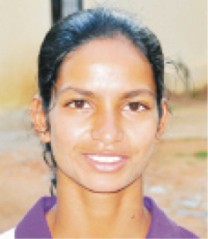
Athletics is a sport which is considered as the mother of all sporting activities and an individual who needs to excel in athletics needs to have the power, stamina, killer instinct to make it to the higher level in this world’s most attractive Olympic sport. Our city’s talented athlete Reena George made waves with her performance in the recently concluded Karnataka State Junior Athletics Championships-2013 held at Shimoga by winning the ‘Best Athlete’ award in the girls Under-20 section. Reena won gold in the girls Under-20 200m and 400m event and bagged the coveted title. She is our “Star This Week.”
Reena George is a product of the Sports Hostel, Mysore, and is a student of the Teresian College, Mysore. She is coached by former International athlete, Damodar Gowda, SAK athletic coach at the DYSS, Mysore.
Reena has been making a steady progress in the athletic scene in the State as well as in the National level in her age category. She has represented Karnataka State in the junior Nationals last year and has performed creditably.
Reena, taking part in the Karnataka State Junior Athletic Meet held in Shimoga from August 3 to 5, won the girls Under-20, 200m gold with a timing of 24.9sec. She completed a fine double by also winning the girls Under-20 400m gold with a timing of 56.5s. With this performance, she was adjudged as the ‘Best Athlete” in the girls Under-20 section in the championship.
Reena has been selected to represent the State in the South Zone Junior Athletic Meet-2013 to be held in Madurai, Tamil Nadu, next month.
Reena, taking part in the Mysore District Athletic Association’s District Athletic Meet a fortnight back, won gold in the 100m event with a timing of 12.34s and emerged as the fastest athlete in the girls Under-20 section.
Reena George, encouraged by the Department of Youth Services and Sports (DYSS), Mysore, Teresian College, Mysore District Athletic Association (MDAA) and guided well by her coach Damodar Gowda, intends to work hard and make a mark in the National and International level in the days to come.
source: http://www.starofmysore.com / Star of Mysore / Home> Sports News / August 11th, 2013
Multi-talented Poorvi K Rao has earned several feathers to her cap at a young age. A bundle of talents, Poorvi, a class 3 student of Mount Carmel School, has made achievements in dance, singing, fancy dress and several other fields.
She started learning dancing at the age of 2 and has bagged several prizes. She won her first big award in the ‘Champion of Champions’ competition, organized by Future Group at Big Bazaar in the year 2010. With this victory, she got a chance to become model for a cloth store ‘Costume Cottage’. Thereafter, her bag of achievements never stopped filling.
In 2010, she won the JC Princess crown at the JC Prince Princess competition held at Town Hall.
In 2011, she was awarded ‘Little Master Mangalore – 2011’ award at Big Bazaar. In 2011, she bagged the first place in ‘Shri Krishna Vesha Competition’ organized by Kalkura Prathistana held at Kadri Temple and bagged second place along with her mother in national level ‘Yashoda Krishna’ competition.
The judges lauded her dancing skills in the ETV dance reality competition ‘D’. She was one among the five contestants to reach the finals and performed Western, Bollywood, classical, semi-classical, Kathak and Tappanguchi. Presently she is hosting the show ‘Putaani Bataani’ in Sahaya TV. She was also featured in programmes on Kannada channels. She has participated in ‘Chinnara Chilipili’ Udaya TV programme.
Mangalore’s singing and cultural committee, Samatha Balaga Mangalore, Shaastri Pratishtana Kulai, Lions Club Mangalore, Subramanya Sabha Sadhana Mangalore, Oceans Friends Club Aakashbhavan, Kadri Friends Mangalore and other organizations have honoured her.
She was awarded the ‘Yuva Prathibhe’ award by Lions Club Mangalore in 2011-12. She has won more than 175 awards. Aamir Khan is her favourite actor, and she herself is called ‘Choti Madhuri Dixit’. She is learning western dance from Boyzone Dance acadamey and is trained by Prathima Shreedhar for classical dance.
source: http://www.daijiworld.com / DaijiWorld.com / Home> Top Stories / Daijiworld Media Network – Mangalore / Tuesday, July 30th, 2013
Replica of theDandi March statue at Freedom Fighters park in city.
The city of the Mysore is usually identified for its tradition, culture and aesthetics. Thousands of tourists from across the globe visit Mysore every day to view various tourist spots across the city. While the Government has been chalking out plans to improve city’s tourism, little is done to promote the city’s role in the freedom struggle and freedom fighters who laid their lives. Tyagis such as Thagadur Ramachandra Rao, M.N. Jois, Yashodamma Dasappa, Ramaswamy and many more fought for the freedom. Mysore, which was a Princely State then, witnessed ‘Mysore Chalo’ agitation against the rulers, for disagreeing to join the Union of India. Prior to Mysore Chalo, freedom fighters took active part in the ‘Quit India Movement.’
This Weekend’s Star Supplement tries to give an insight into the freedom struggle in Mysore.
Freedom Struggle and Mysore
Mysore :
As India celebrates its 67th Independence Day on August 15, 2013, people in Mysore also remember the contributions of freedom fighters from Mysore, who braved their hearts to fight for Independence and also during ‘Mysore Chalo,’ the post-independence struggle to bring the Princely State of Mysore under the Union of India.
At a time when the struggle for independence had begun, Mysore was also influenced by the national awakening which was being evidenced by newspapers such as The Hindu, The New India, Maratha and some of the local newspapers such as Karnataka Prakashika, Suryodaya Prakashika and Vrittanta Chittamani.
There was definite activity in the direction of national awakening as was evidenced during the I World War when Thagadur Ramachandra Rao started his movement against the foul criticism of the Hindu Society by the Christian Missionaries and also started selling pictures of Jalianwallah Bagh tragedy at his shop in Mysore in 1919.
When Bal Gangadhar Tilak passed away on August 1, 1920, there was a huge procession of mourners and shops in Mysore were closed. Even the district court was forced to shut. The procession was led by the students of Maharaja’s College followed by the boys of Marimallappa High School and other schools and among the leaders were Devudu Narasimha Shastry, a college student then, M. Venkatakrishnaiah, who was the Principal of Marimallappa High School, who were responsible for bringing in leaders such as Thagadur Ramachandra Rao, M.N. Jois, Palahalli Sitaramaiayya and Agaram Rangayya to the national cause.
When KPCC was formed in the Nagpur Congress convention, its branches were opened all over Karnataka in 1921 and M. Venkatakrishnaiah was the first President of Mysore District Congress Committee. In the mofussil areas, Visveswara Gowda of Nanjangud, T. S. Subbanna of Thagadur, T. Rama Rao, Siddhoji Rao and T.P. Boraiah at T.Narasipur, advocate M.A. Srinivas Iyengar and G. Krishna Murthy of Hunsur and Ganapathi Shastry of Saligrama were some of the early leaders of Congress during 1920s and early 1930s who spearheaded the freedom movement.
The Congress in this part of the region was funded by philanthropists like Sahukar D. Banumaiah, P.N. Sangappa and hotelier Badri Prasad.
By 1938, the struggle for independence intensified after the Shivapura Congress was held. Many leaders were imprisoned after the Shivapura Satyagraha and Dwaja Satyagraha in Mysore region. Freedom fighters from Chamarajanagar and K.R. Nagar actively participated in the freedom struggle which resulted in about 6000 people being sent to jails across Karnataka.
Speaking to Star of Mysore, Mysore District Freedom Fighters Association President D.S. Jagadish said that at the time of Quit India Movement people involved in freedom struggle laid a siege on the post offices, damaged the railway tracks and cut off the telephone lines in protest. The protest intensified after news about Mahatma Gandhi’s arrest was announced.
Majority of the planning regarding the freedom struggle was being done at Subbarayana Kere, which is located opposite Anathalaya on Narayana Shastri Road in city.
Mysore also witnessed the visit of Mahatma Gandhi during the freedom struggle on August 19, 1927 to propagate the cause of khadi following which a khadi production unit was started at Badanawal in Nanjangud Taluk.
Later, at the time of the Simon Commission visit to India, Thagadur Ramachandra Rao published a booklet ‘Simon Commissionnige Dhikkara’ (Down, Down Simon Commission) and addressed a public meeting in Mysore. He was sent to 15 days imprisonment and thus became the first political prisoner in Mysore State (1928).
The Tricolour was hoisted by M.N. Jois and L.V. Rajagopal on January 26, 1930 at Mysore as per the call of the All India Congress Committee. When the Civil Disobedience movement was launched in the British territories, two batches of volunteers — one led by Siddhanath Pant and another led by G.R. Swamy — went to Bombay-Karnataka area and returned after the signing of Gandhi-Irvine Pact in 1931.
Mysore also witnessed the commencement of Diamonds’ League, a nationalist youth organisation started by B. Srinivas Murthy and Krishnamurthy Padaki with the help of A.N. Suryanarayan Rao at Chamundipuram. The organisation was started to mobilise youths for the national movement. It also organised an exhibition of Swadeshi goods in 1932 at Chamundipuram.
Again, a large number of youths went to Bombay in 1932 and underwent imprisonment. Among them were M.N. Jois, his wife Subbamma Jois, Suryanarayan Pandit, N.D. Srirangachar and T.S. Subbanna. Many faced social boycott on return and M.N. Jois and his wife were even refused entry into their house.
Thagadur Ramachandra Rao organised temple entry programme for untouchables at Nanjangud and also founded a Harijan hostel in Thagadur in 1934. Gandhiji visited Mysore to advocate the eradication of untouchability and raised contributions for Harijan fund. After this, Thagadur Ramachandra Rao and his colleagues like M.N. Jois had to face lot of humiliation and insults when they went to work among the villagers. They were denied food and shelter even by the hostels and were greeted by pelting of stones, footwear and cowdung.
In later years, student leaders like Ramachandra Jois, H.S. Sadashivaiah and T.S. Subbanna conducted nationalist programmes at Maharaja’s College including flag hoisting in 1937, 1938 and 1939. To curb the nationalist activities among students, an order was passed in June 1938 that students failing in annual examination of the high school classes should not be allowed to attend classes for a second year. This resulted in Congress leaders like M.N. Jois taking initiative to start the Mahajan High School for victimised students in 1938.
Student strike continued even after the students spread themselves in groups to mofussil areas. Eight student leaders including H.Y. Sharada Prasad and Abdul Gafoor were arrested and 26 elder detainees from Mysore Jail were shifted to Bangalore Central Jail with a view to keep the students in ‘isolation’ in Mysore Jail. Despite all efforts by the Government to stop the students from striking, it continued. But, the death of a student, Shankarappa, in Mysore jail due to lathi charge on October 29, 1942, created panic among both the jail inmates and their parents. A student meeting at the Town Hall on November 23, 1942 which was chaired by Bhupalan Vasudeva Murthy, was attended by more than 1000 students who passed a resolution to withdraw the strike and return to classes and engage themselves in national and constructive work.
This was followed by the release of H.Y. Sharada Prasad and other convicted leaders on December 3, 1942. Even after the schools and colleges reopened, incidents of explosions were reported from Maharaja College Library on December 9, 1942. M.V. Krishnappa, one of the leaders, who was underground, offered satyagraha and courted arrested in January, 1943. The 11- week student struggle in Mysore went on to become one of the unique factors in Karnataka’s history of Quit India Movement.
Even today, freedom fighters in Mysore observe Quit India Movement Day. The District Freedom Fighters Association organises special function on August 9 every year and remembers those who sacrificed their lives during independence struggle.
Mysore Chalo
Even after India achieved independence from the British Rule on August 15, 1947, the celebrations in Mysore were subdued due to the resistance from the administrators of the Princely State. The then ruler Jayachamaraja Wadiyar refused to establish Responsible Government. Even the Indian Tricolour was not allowed to be hoisted. This prompted for yet another struggle called as ‘Mysore Chalo’, the last phase of freedom struggle. Even when the nationalists hoisted the flag at Subbarayana Kere, the Police intervened and removed the flag on September 3.
The Congress gave a call to volunteers from all parts of the then Mysore State to organise jathas to officially announce the commencement of ‘Mysore Chalo’ on September 4, 1947. Everyone including the students, workers, railway employees from all parts of the State rushed towards Mysore to take out rallies against the rulers of Mysore. Several liquor shops were attacked, taluk offices gheraoed, telegraphic wires delinked and railway lines removed.
At the time of intense protest, one high school student, Ramaswamy, died in Mysore when the Police opened fire at a procession at the Circle in the junction of JLB Road and Chamaraja Double Road, which has been appropriately named after him. A boy called Chandrashekar managed to hoist the National Flag on the Palace. As the jails were full, the arrested were taken in vehicles to be let off in far off places.
Later, Maharaja Jayachamaraja Wadiyar climbed down by accepting the demands on September 24, 1947 which was announced by K.C. Reddy at Subbarayana Kere. Following this, a responsible K.C. Reddy was sworn-in as CM on September 27.
The city also observes the ‘Mysore Chalo’ anniversary every year at the Freedom Fighters Park. People who participated in the ‘Mysore Chalo’ movement assemble at the park and pay respects to those who lost their lives in the struggle. It is said that around 69 people died and about 229 were injured during the struggle. [Source: Karnataka State Gazetteer]
source: http://www.starofmysore.com / Star of Mysore / Home> Feature Articles / August 10th, 2013
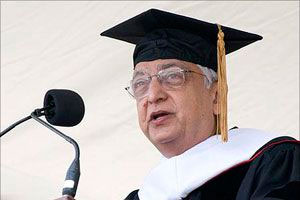
Premji completed his schooling from St Mary’s School in Mumbai, and later to pursue his graduation he went to the world renounced Stanford University, USA. Unfortunately he had to drop his studies because of the untimely demise of his father, M.H.Premji, the then owner of Wipro and so, Premji had to take over of the chairmanship. # Tagged among the World’s Most Powerful CEOs
Premji is a person of clear vision with the ability to create a brand name through sheer integrity and innovation. Infact, he is the voted as the most powerful CEOs in 2013.
It wasn’t an easy task for Premji to guide his company for four decades which has now become one of the most successful companies in the world. In the year 2000, he was voted as 20 most powerful personalities in the world by “Asiaweek”.
Forbes recognized Premji as 100 most influential people in the world in 2000. For many years now, he was voted as one of the richest people in India and in the year 1995, he was honored with Padma Bhushan in 2009 and Padma Vibhushan in 2011.
source: http://www.siliconindia.com / Silicon India / Home> News> Business / Tuesday – July 23rd, 2013