Round Table India to celebrate ‘Change over Banquet’ in city

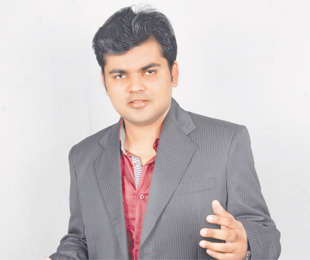
Tr. Ashwinni Kumar Hemdev, Tr. Harish Shenoy

2nd Mysorean to take over as Round Table India President

Mysore :

The ‘Change over Banquet’ of the Round Table India will be held in Mysore for the first time in the history of the city.

The function will be held tomorrow (July 19) at Hotel Lalitha Mahal Palace here at 7 pm during which city businessman Tr. Harish Shenoy, member, Mysore Heritage Round Table-109, will be sworn-in as the National President of Round Table India.

This is for the second time that a Mysorean will be taking over as the National President of Round Table India.

Tr. Harish Shenoy will be taking over the post from Tr. Vineet Parikh, member of Round Table-40, Ahmedabad.

Earlier, city-based industrialist Tr. Ashwinni Kumar Hemdev of Darshan Flexibles Private Limited, member of Mysore Round Table-21, became the first Mysorean to take charge as the National President of Round Table India in the year 2011-12, which was also the Golden Year of Round Table India.

More than 300 delegates from all over India will be taking part in the event.

The delegates will be staying at Lalitha Mahal Palace, Windflower Resorts & Spa and Hotel Regaalis during their visit to Mysore.

source: http://www.starofmysore.com / Star of Mysore / Home> General News / July 18th, 2013

The man of notes

He has been collecting Indian currency from the time he was a 15-year-old boy. Today, he has a priceless collection, which he says “is more valuable than his kids”.

Rezwan Razack ,  Managing Director, Prestige Group
Rezwan Razack ,
Managing Director, Prestige Group

His is a familiar name among the realtors in the city. His name is on most buildings dotting the urban skyline of Bangalore. Rezwan Razack is a busy man, yet he makes time for his hobby, collecting notes, which began when he was a teenager. Even after 40 years his passion for currency remains evergreen.  “I don’t do metal. I am an Indian notes specialist,” says Razack.

The love for “notes” was triggered when he found a Rs 5 note in his granddad’s house with Reserved Bank of India printed on it. What made this note special and which piqued Razack’s interest was a seal on the note that said:  Pakistan note payment refused. “I couldn’t understand why an Indian note had a Pakistan seal. That aroused my curiosity to find out what it was all about,” he says. Apparently, Pakistan didn’t have their own currency but had an arrangement with the RBI to use Indian currency with an over-print that said Government of Pakistan in English and Hukkumat of Pakistan in Urdu. The notes were printed in the Nasik press; till June 1948. Some people would use a blade to erase the over-print. When it came for encashment the banks were looking for the serial numbers. Instead of tearing it up, banks would put a rubber stamp and say Pakistan note payment refused.

That was the beginning of Razack’s life-long dalliance with notes.  “After this I got a good starter kit from my cousin in Coonor,” he says about the time when he received 30 notes from his cousin.

“Traditionally, not many people collected money because paper disintegrates over a long time. But I do because of the satisfaction it gives me. It is a stress buster to find out the history behind each note.” Razack collects only Indian currency notes. He has around 1,000 in his collection, valued “priceless,” he says. “To me, it’s a national treasure of notional value. It’s more valuable than my kids.” Razack collects his notes  at auction houses, cut note dealers and even from relatives and friends.

One of the oldest notes in the world is a Rs 100 Indian currency from 1812, and you can find it in Razack’s collection. It bears the serial number 108. He also has a note with a serial number 10.02.58, which also happens to be his birth date. “I don’t chase the notes, they come to me,” he says.

Razack preserves his notes first in a Mylar holder before storing them in albums. He also has a curator to help him with his collection because, he says, “it is important to have a curator to keep a tab on the notes collected and preserved”.

“My family thinks I’m crazy,” he says. “My shopaholic daughter says that I should spend all this money on her retail therapy and not notes.”

As Razack’s hobby started many years ago, he did not pay a fortune for these. He says, “For a Rs 10,000 note, I would have paid Rs 15,000, but today, it would cost close to Rs 5 to 6 lacs. It’s like buying land.” But, one wrong bend or fold can devalue the note. It has to be handled with care. “If you’re not mad, you can’t do this. You have to be obsessed. This is my stressbuster. Each note is a learning experience.”

source: http://www.bangaloremirror.com / Bangalore Mirror / Home> Wellness> You> Story / by Khushali P Madhwani / Sunday, July 14th, 2013

Not good enough for Manipal, but good enough for Massachusetts

From MIT to MIT…

Rahul Gupta has written 22 international research papers. During his Manipal days, the engg student never topped in class but recently got a call from the more famous MIT to present papers

An Information Technology student who was never a topper in terms of grades and marks has penned 22 international research publications on business analytics, artificial intelligence and information retrieval. Rahul Gupta, who has just completed his engineering from Manipal Institute of Technology, is likely to surpass the current record in the Limca Book of Records for the highest number of research papers written by an undergraduate student. Official confirmation from Limca records is expected soon.

“Teachers tend to judge students on their ability to score high marks. It should be discouraged,” Gupta, the first in the family to take up engineering, said. His parents, Rajendra Gupta and Gayatri Gupta, are government servants. “I have covered a whole range of marks by getting a meagre GPA of 5.5 out of 10 in first semester to 9.9 out of 10 in the eighth semester. I believe that marks can never define the ability of student,” Gupta said.
Research and development is Gupta’s passion and he has won several awards in this field. He has already given 35 technical presentations all across the country and was invited by the Massachusetts Institute of Technology (MIT), USA to present two research papers last week.
Last year, he was called to Cape Town, South Africa to present his innovative software which was in a form of a research paper. His papers have been published in leading science organisations and journals like IEEE, Springer and ASME and he is credited with being the youngest in the reviewing team for many science journals and international conferences.
“Engineering was a platform to learn something new each day,” Gupta, who is from Jaipur, said. “My attendance in every subject was close to 100 per cent which is rare in an engineering course. Attending lectures was never a burden and it helped me realise that there is so much more to explore in artificial intelligence, which is my main field of research. Of the total 22 research papers that I have published in last two years, I was first author in 21 of the papers. Labs and practical sessions are of great interest. In the last two years, working late night in labs was my favourite way to spend time. I mostly used to be alone. ”
EngineerBf22jul2013
The two papers co-authored by Gupta which were presented at the Sixth International Conference of MIT’s Learning International Networks Consortium (LINC) in Cambridge, Massachusetts last week were: A Satellite EDUSAT: ‘Changing the State of Education in India’, and ‘E-learning: Enabling the Differently Able People in India’.
The papers he presented this year include: ‘Stock Market Prediction Accuracy Analysis Using Kappa Measure’ at the International Conference on Communication Systems and Network Technologies (CSNT) held at Gwalior from April 6 to 8 and ‘Working mechanism of Sponsored Search using a new algorithm to calculate CTR’ at the International Conference on Artificial Intelligence, Soft Computing (AISC) held in Bangalore from February 18 to 20.
Record research
Rahul Gupta is likely to erase V P Sree Divya’s feat of 16 international and national level research publications from the Limca Book of Records. Divya, a BTech graduate from Sri Nidhi Institute of Science and Technology (SNIST), Hyderabad, had seven more in the pipeline when she entered the record books. Eleven of her published works were presented at international conferences and three in journals of international repute.
The two papers co-authored by Gupta which were presented at the Sixth International Conference of MIT’s Learning International Networks Consortium (LINC) in Cambridge, Massachusetts last week were: A Satellite EDUSAT: ‘Changing the State of Education in India’, and ‘E-learning: Enabling the Differently Able People in India’.
The papers he presented this year include: ‘Stock Market Prediction Accuracy Analysis Using Kappa Measure’ at the International Conference on Communication Systems and Network Technologies (CSNT) held at Gwalior from April 6 to 8 and ‘Working mechanism of Sponsored Search using a new algorithm to calculate CTR’ at the International Conference on Artificial Intelligence, Soft Computing (AISC) held in Bangalore from February 18 to 20.
source: http://www.bangaloremirror.com / Bangalore Mirror / Home> Cover Story / by Deepthi Shridhar, Mangalore / Saturday – June 29th, 2013

Vinyl allure

Tucked away among the shops selling textbooks (” IAS tutorials on USB Drives: With free USB” ), jewellers and medicine shops, opposite the Balaji temple on bustling Avenue Road, is a small store that seems to specialise in bronze statuettes of Ganesha and Krishna. You might be forgiven for assuming it to be just another shop selling trinkets for the lost tourist, but Seetha phone Company (Since 1924) also sells gramophones and records. If you ask for turntables, or LPs for that matter, the shop assistant will take out a long steel key and lead you through a warren of side streets and up a dingy staircase to a small second-floor room. The room is packed with old LP records and players. “We sell hundreds of LPs, we have customers coming from Tamil Nadu, Andhra and Kerala as well, all making bulk purchases ,” he says.

Vinyl is back. Worldwide. For a medium that was written off 20 years ago — “End of track”, The Economist mourned in 1991— LP records have begun to see a resurgence. Sales of vinyl almost doubled in the US in 2009, and have been bucking the music industry’s downward slump, growing by 14% last year when overall album sales dropped 13%.

“I got hooked on to vinyl about five years ago,” says Adrian Cooke, a 38-year-old Bangalorean who handles Levi Strauss’ retail operations. “It was at my friend’s place. He had a Garrard 401 LP player and I was struck by the depth and clarity of the sound. I decided to get myself a turntable and picked up Garrard Zero 100 player for Rs 2000 at Lingarajapuram. Since then I’ve been collecting LPs,” he says. You get exposed to a lot of new music through LPs, feels Cooke: “I started off by collecting country music and rock and then moved on to jazz.”

Vazir Alli Minhaz is the proprietor of Habitat, a shop on Church Street that sells vinyl. Habitat initially started out as a gift shop and diversified into video cassettes and CDs, echoing Minhaz’s interests. “Habitat always targeted a niche market, one that reflected my tastes,” he says. Minhaz started selling vinyl last year. “I’ve been collecting vinyl since I was 16; I’m 64 now,” he smiles. “After a point, I realised that I had many records that did not bear up on repeated listening and it was in an attempt to prune my collection that Habitat started selling vinyl,” he says.

The collectors’ instinct drives several vinyl aficionados. Suresh Ramabhadran is a senior executive with a software company who has been collecting vinyl for nearly seven years. “My obsession with vinyl started when my father brought home a Philips turntable when I was seven. The first record I listened to was MS Subbulakshmi singing Bhaja Govindam — the one with a spoken introduction by Rajaji. The 70s and early 80s were a wonderful time for Carnatic music vinyl lovers. The advent of CDs and MP3s changed that, but there is nothing that equals the pleasure of finding a rare Semmangudi Srinivasa Iyer performance backed by L Shankar and Palghat Mani in the dusty stacks of a second-hand record store.”

“I spend one day every week going around Bangalore, looking for vinyl,” says Jonathan Freer, a 28-year-old Bangalorean . Jonathan’s affair with vinyl started when he found his father’s old turntable languishing in an attic. He refurbished it and now has more than 500 albums.

“More than 50% of my records have were bought secondhand. It takes time to tell a good secondhand record from a bad one — I made a lot of mistakes buying scratched or warped records initially, but now, I just have to take a look and handle a record and I can tell if it is good,” he says. “I used to collect cassettes and CDs, and friends would always borrow and seldom return them. I don’t have that problem with vinyl,” he says, smiling.

According to Minhaz, the vinyl market is not large, but its fans are dedicated. “Some of them are tired of just downloading music. There are others who buy records without having turntables. Some of them buy records as an investment. And then you have the collectors.”

But vinyl collection is not cheap. “I spend anything between Rs 4000 and Rs 10,000 every month, and I’m permanently broke,” laughs Freer. Cooke says that a good condition Garrard turntable can cost anywhere between Rs 60,000 and Rs 1 lakh. “I started off with a Philips 312 turntable, like my father’s . Now I have four of them,” says Sridhar.

Record companies and retail stores have noticed. Lijin Varghese, head of marketing at Landmark, says that the chain started stocking vinyl after the record companies began imports last year. Since then, Landmark has seen a small but steady demand for vinyl. “Its usually classic rock or classical music that sells best. And our customers come to us with requests for specific albums which we then import.”

source: http://www.articles.timesofindia.indiatimes.com / The Times of India / Home> City> Bangalore / by Narayanan Krishnaswami, TNN / July 15th, 2012

Water festival to be held at Barachukki falls

With the increase in discharge of water from the Kabini reservoir following heavy rains in the catchment area, Chamrajnagar District Minister H S Mahadeva Prasad has planned to hold the ‘Barachukki Ustava’ at Barachukki falls in Kollegal taluk.

He visited the spot and announced that the festival will be held soon, to promote tourism in the region.

The water festival was held in 2006, to boost tourism in the backward district. However, they could not continue, as there was a drought situation and a lack of resources.

Meanwhile, the state government with the assistance of the Centre, has constructed watch towers, toilets as well as parapet walls, renovated steps and banned the use of plastic at the falls.

He said that there was no dearth of funds for tourism activities and the government was keen to explore and tap the potential in the district, which has around 49 per cent under forest cover, wildlife sanctuaries as well as water falls.

source: http://www.newindianexpress.com / The New Indian Express / Home> States> Karnataka / by  Express News Service – Mysore / July 01st, 2013

Women at Work: Wipro’s Sangita Singh

Sangita Singh, pictured, is the only woman to have ever led a business unit at Wipro

Sangita Singh, a senior vice president at Wipro Ltd., India’s third-largest software exporter by sales, is one of the few women to rise up the ranks in an industry dominated by men. The 44-year-old mother of a young teenager is the only woman to have ever led a business unit at the Bangalore-based outsourcing firm.

Despite growth in India’s $110 billion information technology industry, few women are seen at the helm of operations in the sector. Ms. Singh says companies are growing conscious about the lack of representation of women at key positions. “I would be very surprised if, in the next five years, you don’t have women in senior positions at Indian IT companies,” she says, adding that firms, including her own, have recently made an effort to recruit more women staff.

At Wipro, where Ms. Singh’s career has spanned two decades, the IT executive has donned several hats, including the role of chief marketing officer and the head of the company’s business applications software unit.

This week on India Real Time’s  “Women at Work” series , Ms. Singh speaks about why few Indian women venture into the world of business, the challenges of being a female executive, and what organizations can do to retain women employees.

Edited excerpts:

The Wall Street Journal: At what stage do Indian women decide to pull the plug on their careers?

Ms. Singh: When a woman starts her career, she is young, ambitious, and wanting to make a difference. You see a lot of women in that stage. In fact, they do better than men at that stage. The real challenge is when they reach the crossroads, when they have to get married or have kids.

WSJ: What can organizations do to prevent this?

Ms. Singh: Most of the organizations have started opening crèches and offering some form of flexible working hours to such women. But they have not been able to address the softer aspects around it, which is mentoring, counseling, or the relationship with the individual at that time, to give them courage and motivation.

Organizations have to take personal interest in giving such women flexibility to take breaks. It can’t just be lip service. Give them roles where they can balance both family and work and get past that crossroads stage.

Even society can play a role in terms of making sure that they instill a sense of pride in women wanting to achieve their best.

WSJ: What challenges have you faced as a woman executive?

Ms. Singh: The crossroads stage was the toughest one. One has to have supreme motivation to be able to ride through this stage.

Also, people have very low expectations about what a woman will bring to the table. So if they do well, it’s good, but if they don’t, it is fine.

WSJ: What mistakes do women often make at the workplace?

Ms. Singh: Sometimes, women themselves create barriers. They don’t take the initiative to network. As a result, there could be an issue of access, because you are not known enough. Networking may come easily to a man, but it doesn’t to a woman.

What is important is to be aware of those things. If you are conscious about it and start working on it, it will help you. If you think that you are not being included in a network, you have to take that initiative of networking with people. Don’t wait for organizational mandates to say you need to have a woman chief executive, because you have had three men CEOs. You be the agent of change and demonstrate those traits that they would need in a leader.

At the end of the day, everybody wants to run a successful business. If you have the ability to deliver a successful business, leaders will take that call of you being at the head of affairs. A lot of the onus today lies on us rather than the organization.

Follow India Real Time on Twitter   @IndiaRealTime 

source: http://www.blogs.wsj.com /  The Wall Street Journal – India / India Real Time / Home> Economy & Business> Article / by Dhanya Ann Thoppil / July 01st, 2013

These doctors have gone several extra miles

Bangalore :

Little did Dr Swaminath G, a psychiatrist, know that a casual visit to an NGO working with tribals in Mysore district 17 years ago, would change the course of his life.Swaminath was shocked by what he saw: Tribals suffering from mental illness had nowhere to go and would wander deep into the forests, with danger lurking at every step.

His trysts with the wild have not stopped since. He holds free monthly psychiatric camps in association with the Swami Vivekananda Youth Movement, every second Sunday at Kenchenahalli, 80km from Mysore. “The camp caters to 40-50 persons suffering from mental illness,” he says.

Swaminath is also involved in Chittadhama, a residential rehabilitation centre for homeless persons with mental illness, 4km from HD Kote in Mysore district.

“With help from a group of psychiatrists, psychologists and psychiatric social workers, we rescue mentally ill homeless persons in this tribal land and other districts. At the centre, the patients are fed, cleaned and given new clothes. After initiating treatment, a search is launched for their families. The inmates are reintegrated with their families at the earliest,” he says.

Swaminath’s feats are legion in urban jungles too. He’s treated people who haven’t ventured out of their bathrooms for eight years. “One such patient, a lawyer, is likely to go back to his profession, thanks to the acceptance of his family and colleagues,” he adds.

From Halli to Halli

Dr Channakeshava TA, 43, a senior specialist with a government hospital in KGF, Kolar district, has a special love for villages. In his 15-year career, he’s never sought an urban posting. Dr Channakeshava, in fact, has made sure his services are restricted to villages, and travelled to many parts of the state to conduct medical camps. And he’s determined to stick to the itinerary.

So what drives Dr Channakeshava? “I’m a villager myself, from Mayanayakana Hosahalli in Ramanagaram district, so I choose to stay connected with them. As a child, I’ve seen villagers suffering and dying due to a lack of health facilities,” he added.

Dr Channakeshava says rural health service is not easy. “Just to answer nature’s calls, I’ve had to travel 2km. Forget medical equipment, there was no proper drinking water in many villages. These things discourage freshers, especially women, from venturing into rural areas,” he points out.

Channakeshava feels today’s doctors must not restrict themselves to special surgeries but also focus on implementing national and state health programmes on immunization, nutrition, sanitation awareness and potable water.

The ‘village doctor’ beams as he narrates how implementation of contraception programmes in villages in Tumkur and Kolar districts has resulted in many villagers going in for smaller families.

Addicted to de-addiction

Dr Vishal Rao US, consultant oncologist in Bangalore, makes it a point to vanish into the hinterland every now and then. With a team of like-minded doctors and in association with Satya Sai Seva Organisation, he conducts rural outreach programmes, especially on deaddiction, in Madanapalli and Tharanahalli in Andhra Pradesh and several parts of Karnataka.

Dr Vishal says they focus not only on the effect, but also the cause. “Over the years, healthcare focus in rural areas has been on delivering medical care. But seldom is the focus on the cause of the problems, such as smoking, chewing tobacco or alcohol. We could achieve much through counselling, preventive education and deaddiction activities,” he explains.

Vishal and his team create this awareness. “We go house to house and make power point presentations on the ill-effects of tobacco. Villagers are motivated into quitting the habit by discussing the associated diseases and economic burden of treating them. Counselling includes education on community health aspects of sanitation, diet and hygiene, which have a far-reaching impact on rural health,” he adds.

Dr Vishal says doctors should reach out to the rural masses as healthcare in cities is exorbitant. “For the rural patient, treatment includes travel expenses to the city and accommodation,” he says.

source: http://www.articles.timesofindia.indiatimes.com / The Times of India / Home> City> Bangalore> Villages / TNN / July 01st, 2013

Vintage Jawa bikes vroom on Intl. Jawa Day

SP of Excise and Lottery Enforcement Cell Basavaraj Malagathi is seen riding a vintage bike after flagging off the rally from Regency theatre premises in city this morning.

Mysore :

About 185 vintage Jawa and Yezdi motorbikes ranging from 1947 to 1996 models, hit the roads in city today to mark the International Jawa Day.

Owners of bikes manufactured by Jawa such as the 1957 Jawa CZ 175 cc, Jawa twin cylinder 350 cc, Yezdi 350, Yezdi Roadkings, Oilking, Yezdi ‘B’ type and Yezdi Colt under the aegis of Jawa Friends Club, assembled at Regency theatre premises in Ittegegud from where they took out a rally.

SP of Excise and Lottery Enforcement Cell Basavaraj Malagathi, who flagged off the rally, rode a vintage bike for a distance which passed through Chamaraja Double road, Ramaswamy Circle, Kuvempunagar, Vontikoppal, Kalidasa Road and to the place where Jawa factory stood earlier, culminating at Bal Bhavan in Bannimantap.

The rally was led by Sameer, Manju, Khizer, Hameed and others.

Earlier, senior Jawa mechanics and employees of Jawa factory Anwar, Prabhakar, Manju, Shankar, Sangam, Majid and others were felicitated on the occasion.

The word ‘Jawa’ was coined using the first words of Czech founder Janeek, Frantisek and Wanderer, the German bike he started producing at his plant in Prague. But for Mysoreans, Jawa is also the acronym for its ruler Jayachamarajendra Wadiyar.

Jawa Yezdi bikes were manufactured in India at Yadavagiri in city. Today, apartments have come up on the land where the plant was once situated.

Gavin Wilson of CZ Jawa Yezdi Owners Club of Mysore who had been organising the event till last year, did not participate in the rally.

Gavin and his entire family had been participating in the rally from the beginning and SOM discovered that Gavin Wilson and his brother Ainsley Wilson own 18 of the rarest bikes ranging from 55cc Pionyr to Roadking.

Gavin and his friends, as a tribute to Jawa, rode their prized possessions to Tonnur Kere in Pandavapura.

source: http://www.starofmysore.com / Star of Mysore / Home> General News / July 14th, 2013

Rangayana plans drama books library

Dharwad Rangayana has embarked on a novel project titled  Ranga Granthayana  wherein it will collect the drama books  and other books related to theatre from houses and maintain them in the library.

Rangayana director Subhas Narendra on Tuesday said the Rangayana is aiming to set up a full-fledged library at its premises to give a boost for new experiments in the field of theatre.

As part of this, it will launch the Ranga Granthayana. The Rangayana members and artistes will go to the doorsteps of people asking them to donate rare theatre books. Narendra said, the new generation does not have any idea of the books bought by their forefathers and many households have stacked them in book shelves. If these books are donated to Rangayana, a full-fledged library could be set up and the plays that have not been staged could be considered for performance.

Sulochana Kotur has donated as many as 250 books, while Shahshidhar Narendra has given more than 50 books to Rangayana.

Recently at the Ranga Samaj meeting, the state government was urged to hand over the Kannada and Culture Department library to Dharwad Rangayana. The government has positively responded to the plea and has handed over the library to the Rangayana, Narendra informed.

Now, the books donated by the theatre personalities and writers would be stored here. This project would begin from this week, he added.

Narendra said, the Rangayana was involving people from all walks of life in its activities in different capacities. Already, training camps for school, college children has been organised and now,

Rangayana would be holding a month-long theatre training camp from Thursday for the inmates of Beggars Rehabilitation Centre located at Rayapur.

The centre has 150 inmates and the theatre artistes would identify the inmates interested in theatre works and train them in dramatics. At the end of the camp those trained will stage a play.

source: http://www.business-standard.com / Business Standard / Home> Economy & Policy> News / by BS Reporter / Dharwad – July 02nd, 2013

Environmentalists want rocky areas to be declared ecological parks

A group of 40 environmental scientists are mulling over recommending the State Government to declare rocky areas in the State as ‘Ecological Parks’.

EnvironmentalistBF19jul2013

Delivering a talk on ‘Water is the product of forest’ as part of ninth conservation speak organised by Sri Chamarajendra Zoological Gardens, popular as Mysore Zoo, in the city, on Tuesday, A N Yellappa Reddy, former secretary of forests and environmentalist, said, it is imperative to conserve rocky areas in the State from B R Hills in Chamarajanagar district to Hampi in Bellary district as they are also considered as ‘oldest granite rock system’.

Similarly, at Chitradurga and Holenarsipura. Moreover, they are called as ‘rocky mountain forests’.

Referring to recent Uttarakhand natural calamity, that has claimed many lives leaving behind a trail of destruction, Yellappa Reddy said, “the natural fury in the State could be owed to the destruction of natural resources.”

In our own Karnataka, nature’s fury in north Karnataka in the year 2009 has left behind a similar story. Yet, conservation of environment assumes least significance in political party manifestos, he said.

Yellappa Reddy said, “Herbs like magadi beru (used in preparing pickles) and sogade beru, grown on rocky surfaces, play a bigger role in the conservation of environment, by facilitating percolation of rain water. He called them as ‘intact natural forest’ that are ‘most reliable dynamic hydro-bio-systems’.

If quarrying is allowed in such rocky areas, ecology will be disturbed. However, nature is being manipulated according to the people’s whims and fancy.

Taking all these factors into consideration, Yellappa Reddy said he and a group of 40 scientists from the Geological Survey of India (GSI) and Ecological Survey of India (ESI) recently visited Ramanagar, dotted with rocky areas, where illegal quarrying has reached its peak.

Similarly, Yellappa Reddy termed trees as mini dams, which trap water immensely, contributing to the ecosystem. Whenever there is a decision involving trees, in the name of development, cutting trees should be the last option, he stressed.

Kempegowda’s efforts gone in no time

Making a mockery of successive governments that boast conferring awards in the name of erstwhile ruler of Bangalore Kempegowda, A N Yellappa Reddy said, “The efforts of the late ruler in building 4,000 tanks in the then Bangalore and surrounding areas has gone in vain”. Yellappa Reddy said, earlier there were nearly three to four tanks in every villages around the State capital. Some areas like Malleshwaram and Basavanagudi were receiving abundant water. In the later days, most water sources were exploited, making water a mirage in the city.

source: http://www.deccanherald.com / Deccan Herald / Home> District / DHNS / Mysore – July 02nd, 2013