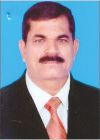
Khadri Achyuthan has a soft corner for rural India. First as a journalist with a Kannada newspaper and then as a communications officer with the government, he had to extensively travel to the rural areas of Karnataka and popularise new methods of agriculture and irrigation. Even after retirement, the 70-year-old has found it difficult to sever ties with the rural people.
He wants them to grow, and come on a par with the ones living in urban land. To ensure that, Achyuthan is now on a mission to take social media causes to the grassroots level. Realising the importance of social communication in the rural areas, a group of journalists has launched a media research studies institute in Bengaluru, and as a managing trustee, he is training village youngsters in skill development.
The institute, which started its journey in the beginning of the month, is trying to garner funds by holding monthly media workshops, seminars and publications. “Journalism has taken different shapes and has impacted the society over a period of time. But technology has overtaken the language of the media and young journalists have to be equipped with storytelling abilities for portraying an event in the right perspective,” he says, adding that media education scenario in the country is quite depressing. “Language is losing its importance. The academicians and journalists have to come together to give hands on training to print and broadcast journalists,” he says.
Before taking up the government job in 1966, Achyuthan worked as a journalist with Navakalyan, a weekly paper published from Gulbarga. As he speaks, the veteran admits that the travails have helped him dissolve into something complete and fulfilling. It was in 1965 that he came to Bengaluru in search of a job. “My mother was not well and we had no money to buy her medicines, but she was bent upon sending me to the city. I managed to get a job at a salary of `60 per month. My passion for Kannada did not allow me to join an English newspaper. I shunted from one paper to another,” he says.
During his stint with Navakalyan, he came closer to rural people. However, after the Indo-Pak war in 1965, the government of India was in need of information officers and he cleared the tests successfully in an emergency recruitment in Madras and joined service at Shimla in 1966.
He was also one of the first 24 candidates to be selected by the Union Public Service Commission (UPSC) and was posted as Field Publicity Officer, a position created by Jawaharlal Nehru to popularise the Five Year Plan at the grass-roots level.
In those days, when television was a distant dream, people flocked to see the news reels or any developmental films shown by the government. “Topics on agriculture, family planning and national integration were shown to the masses and the issues discussed threadbare. Most of the audience were illiterate and cinema itself was a new medium,” he says.
In his long tenure, he has come across instances when the government found it difficult to spread social issues among the rural people. He still remembers how the villagers would run away from the government officials thinking that they would be forced to follow family planning programmes.
Even as the influx of refugees from Bangladesh began in 1971, Achyuthan admits that rural communications in the country grew at that time. “Films Division was making and sending documentaries on the plight of Bangladeshis. We had to explain rural people about the creation of West Pakistan and the exploitation of East Pakistanis. To our surprise, people were eager to know and understand the refugee problem, while school children used to queue before information office to know the show timings,” he says.
Also a noted Kannada author, Achyuthan’s tryst with audio-visual communications began in 1981 when the first regional Kannada news on All India Radio Dharwar was launched. “Telecommunications had not improved and with the Dharwar services, both Press Trust of India and United News of India too started. Our bulletin almost became a mouthpiece for Gokak agitation in 1982-83,” he says.
The veteran journalist and a writer believes that those avenues helped rural communication grow. He has also written a book in Kannada on the Indian Space Research Organisation and its grassroots application. His other works include translation of Ashok Mehta’s studies in socialism, a German diary, Tenali Ram’s applications for modern business management.
source: http://www.newindianexpress.com / The New Indian Express / Home> Magazine / by Meera Bharadwaj / February 27th, 2016
by Ankitha Kishorchandra, National Balshree Awardee for Creative Writing
I still remember the day that found my mom and me shooting off to Jawahar Bal Bhavan right here in Mysuru. She was taking me to participate in the district-level Balashree Competition under the Creative Writing category. She had seen the circular in this very paper, Star of Mysore. I was initially hesitant and unwilling to participate in the competition for the prestigious Balashree Award which is a Presidential Award. I never knew the intensity and importance of the whole award then !
Finally, I groused, groaned, moaned about losing a whole afternoon [which would have been spent in reading books, nevertheless…], I sat behind my mom on her two-wheeler and found myself in Bal Bhavan.
There, I could see kids around my age and older, carrying things that totally matched the category they were participating in. I saw a few kids in colourful Bharatanatyam costumes and some carrying musical instruments. Others were holding bags overflowing with brushes, paint tubes, and pencils. Some were balancing science models precariously in their hands. The rest were like me; wielding nothing but an exam pad and a pen or two… All of us kids under the ‘Creative Writing’ category were made to sit in an auditorium in the campus itself. Parents were asked to move out, and my mom taking her cue, flashed me a ‘thumbs-up’ sign and requested me to take the whole thing seriously as taking things seriously was not something that I usually did for any competition.
The competition started. We were told that there would be three different sessions and were given sheets of paper. The first session was to write an essay on ‘India’s Heritage Sites.’ With a rather resolute sigh, I started penning down whatever I knew about our heritage sites, and almost coincidentally, just when I was finishing my essay with a flourish, a person came to take the sheet away and gave us new ones for another session.
This time, we had to write a story with mythological elements… This was my piece of cake ! I made my protagonists the avatars of Indian Gods [I know what you are thinking…But I had never even heard of the Kane Chronicles then!], and they saved their city from blood-thirsty demons.
The next hour was truly poetic… We had to write a poem on ‘Nature.’ We had to write only four stanzas… Nothing more, nothing less. I made it as beautiful as I could… and thus ended my saga here at Mysuru.
Two days later, the good news reached us! I got selected to compete in the Zonal-level between Andhra Pradesh [it included Telengana then] and Karnataka. I couldn’t have been more pleased! Heartened by this good happening, I started believing my own abilities better. So, the D-day arrived and we found ourselves in Hyderabad for the competition. There were arrangements for us to stay in a very nice hotel, which was quite spacious [and I do miss the food!]. On the first day, we did some sightseeing and did some shopping too. The sessions started on the second day. Forgive me, I only remember two sessions out of the four sessions that we had. One session was a poem that we had to write on ‘Superstitions’ and the other session was about writing a story on ‘Time Travelling.’ I made a few friends too — Pabitra, Ansar, Sathvika and Prathyusha.
Soon, we were heading back to Mysuru. I had done my best in Hyderabad. It was now up to the guiding light above me, to put me through to the National-level or not. The long wait ended with good news again. I was through to the National-level to be held in Delhi. But what was more exciting to me was all my friends from the Zonal-level had also made it to the Nationals! So, in August of 2014, we headed to Delhi [we first got down at Agra and paid a much needed visit to the Taj. Wah, Taj! My friends and I had a happy reunion in Delhi National Bal Bhavan, where only we kids and our escorts were supposed to stay. Our parents had to find other places for accommodation. It was a rather wild, ragged experience, staying away from my mom for five days.
For the National-level, we had seven sessions in all and I remember every session very vividly. But I don’t think I can give an elaborate writeup on every one of them, as unfortunately, my time is running short… It is a mysterious thing, time, always being fluid at the wrong hour. Anyway, that is not relevant. Back to square one.
The first session was a common session for all the four categories. We had to dish out different uses of a cotton cloth — that was quite brain-storming. The second session was to write a poem on ‘Mythological characters’ — this was a little tricky as we were given word and stanza limits. The third session was also a poem on ‘I remember.’ The fourth session was to write a story based on a picture that was given to us. The fifth session was again a story on ‘I lost my way’ [I gave it a tinge of terror]. The sixth session was to write ‘An autobiography of our School Gate’ [Yes, you read it right], and lastly, the seventh session was to come out with an advertisement to invite people to our home city for an event it was famous for [I proudly showcased our Dasara], but this had to be done in just 6 sentences!
The sessions were brain storming, but nice and different.
We all had an awesome time and it was then time to bid adieu to Bal Bhavan… another sad farewell to my friends and Delhi too.
And then, the eternal wait started… My mom anxiously scoured through the official website of National Bal Bhavan at least a gazillion times everyday. The number of times she went through the site everyday actually resulted in ‘National Bal Bhavan’ becoming a suggested site on the Home Page. I just kept silent, and when anyone asked me about my chances of winning the award, I gave an aloof ‘I don’t know’ and acted like I didn’t care. But I did. A lot. It would colossally crush me if I didn’t get it. And then one fine day, on March 17, 2015, to be precise, my mother was doing her routine check on the site [this time on her phone]. She saw a marquee ‘National Balashree Results 2013’ flashing past. She immediately swept away to the computer to check it on a ‘big screen,’ all in a state of great confusion and impasse, on whether I would get it or not. This was it. The sounding board. The judgement of my ability. The state of my ego. My entire life. I was totally freaking out and I tried my best not to hyperventilate. My mom clicked on that marquee with a shaking mouse, or rather, a shaking hand. The first category was Creative Performance, the second was Scientific Innovation, and the third was Creative Writing. As we went down the list of awardees, I felt my heart in my mouth. There was no trace of my name. Not yet… And there it appeared! Serial No. 41-ANKITHA KISHORCHANDRA, all in bold! My mom gave a resounding scream of delight and thereafter, she burst into volumes of tears. I admit, I teared up a little. It was a huge relief for me. Then there were the phone calls to our family and friends and the good news went around.
Life went on normally after that. Then the time came for us to send certain details about me to Bal Bhavan, Delhi, for the Award Ceremony and all this was done through e-mails and couriers, and my mom took great pleasure in sending all these herself.
The days, instead of slowly passing by, started whizzing past on full thrust… The day of the Award Ceremony dawned upon me like a bright star. But I had to taste this sweet with a huge pinch of salt. My father could not come to attend the Award Ceremony as someone had to stay behind to look after our pet dog, Bonia, and he chose to. I was of course, engulfed with sadness, and I knew that no pleading or compelling on my part would help.
So, again January 31, 2016 found us (my mom and me) in National Bal Bhavan, Delhi. None of my friends from the Zonal and National-level had made it, so I made other friends, though I missed my old friends very much. The stage rehearsals went on in full swing on February 1 and 2. We, the Creative Writing awardees had to write a poem and we decided on the topic ‘A clean India in the eyes of the youth.’ We didn’t focus only on the garbage littering the streets of our country but also on the social evils that have almost swallowed India. The Creative Performance kids had prepared a beautifully choreographed dance ready and the Creative Arts Awardees got busy with painting huge canvases. All these preparations along with rehearsals kept us busy for those two days.
And then the day arrived… February 3, it will be etched in the memory of all of us 62 Awardees forever in our lives. We were taken to the Vigyan Bhavan at 8.30 in the morning where we had another round of rehearsal.
The Plenary Hall, Vigyan Bhavan was the venue. Our parents followed us at 10.30. Time flew past in great dollops. The chief guest for the day was Hon. Minister for HRD, Smt. Smriti Zubin Irani. She arrived exactly on time, 12 noon. The ceremony started. Though every second passed by faster than the speed of light, I remember each second clearly… The Award Ceremony began with the Creative Performance awardees.
Soon, my name was called out to go and receive the award. I was not nervous, but I did feel trembly, happy, proud, confident and satisfied, all at once (and I do not know if there is a word that includes all those feelings). I received the award, spoke a few words with the Minister [everybody later told I spoke a lot…] and went back to my assigned seat. The ceremony got over just as quickly as it had started. I was extremely happy for myself and for my parents too and knew they felt the same. The next day, we were on our way back to Mysuru.
The whole experience was very nice, memorable and made me think and view things differently. The feeling and the Euphoria of winning a Presidential Award has not yet sunk in, and I do not want to think too much about it. I want to be the humble person that I am and keep reading more and more books always…
source: http://www.starofmysore.com / Star of Mysore / Home> Feature Articles / March 03rd, 2016
Dr. S.G. Ramdasa Reddy, HoD of History and NSS Officer at the Government First Grade College in Kuvempunagar here has bagged the ‘Best NSS Officer’ State Award and the NSS Unit of the college has been selected for the ‘Best NSS Unit’ State Award.
The awards were conferred by Governor Vajubhai Rudabhai Vala at a function organised at Rajbhavan in Bengaluru this morning.
Dr. Ramdasa has, in a press release, expressed his gratitude to NSS volunteers, students, College Principal Dr. Annegowda and NSS Co-ordinator Dr. K. Kalachannegowda, University of Mysore, for guiding him in all his activities.
source: http://www.starofmysore.com / Star of Mysore / Home> General News / Saturday, March 05th, 2016
The alumnus of B.K. Model High School will organise a two-day exhibition of ancient and rare coins, and currency notes to mark the golden jubilee of the 1966 batch of Kannada medium students from March 5. It will be open from 11 a.m. to 5 p.m.
According to Raja Katti, president of the school’s board of management, I.G. Paramshetty, an alumnus of the school, will showcase his rich collection of ancient coins and currency notes from India and other countries. Sulabha Wadeyar, who also belonged to the same batch, and retired as a teacher from the school, would exhibit his collection of paintings. Mr. Katti, a senior photographer, would display antique and vintage camera and a few of his photographs.
source: http://www.thehindu.com / The Hindu / Home> National> Karnataka / by Special Correspondent / Belagavi – March 02nd, 2016
A joint initiative of HKRDB and Calcutta University to document an Ashoka Circuit for Karnataka from Sannati to Siddhapura has been launched.
Head of Ancient History Department of Calcutta University Prof Susmita Basu Majumdar is the Principal Investigator. As part of this expedition, a documentary will be filmed and a pictorial Pali-English-Kannada dictionary will be compiled.
Karnataka has perhaps the largest number of Ashoka sites and those dating back to the 3rd century BC are the earliest legible records found from Afghanistan in the northwest, Andhra Pradesh in the south, Odisha in the east to Girnar in the west. The project will first document all the Ashokan sites in Karnataka and then establish the full circuit from Afghanistan.
A team of three, Prof Susmita Basu Majumdar, artist Rajib Chakraborty and film maker Ranjay Ray Choudhury visited the Chandralaparameshvari temple at Sannati on Sunday, to document the spot where the Ashoka edict was found. They found the original idol of deity Mahakali broken into four pieces lying on the western side of the temple on the banks of river Bhima.
Prof Basu Majundar took the initiative to re-join the idol and narrated the interesting story behind the discovery of the Ashoka inscriptions. In 1986, a portion of the roof of the temple collapsed and caused damage to the 12th century seated four handed figure of goddess Mahakali wearing mundamala and holding damaru, trishula, kapala and sword.
Presently, this beautiful piece of sculpture only shows the trishula and kapala and the other two hands are broken but the temple authorities informed that the present image of Chandraparameshwari which is worshiped in the temple is a replica of the previous Goddess.
The khandita pratima of the deity lying on the banks of Bhima was almost awaiting the visit of this team and when the sculpture was joined it looked as if the beautiful Goddess had reappeared.
The idol base had a protruding pillar like hinge which was fitted into a stone socket. The stone on which the Ashoka inscription was engraved was used to form the base of this deity. When the idol was damaged, the inscription was discovered.
This inscription carried the separate edicts one and two and rock edits 12 and 14 of Ashoka (274-232 BC). Karnakata was the southernmost boundary of the Ashoka’s Mauryan Empire.
This inscription was discovered in 1989. Now the original idol which is about 600 years old is also restored to the temple. The matter is being reported to the ASI for further action.
source: http://www.newindianexpress.com / The New Indian Express / Home> States> Karnataka / by Express News Service / March 02nd, 2016
To mark National Science Day, the Centre for Science Education and Research and KS Hegde Medical Academy (Kshema) will honour two clinician scientists, Dr VI Mathan and Dr Minnie Mathan, for their contribution to medical research on Monday.
Prof Mathan, who superannuated from Christian Medical College, Vellore, as professor of medicine and gastroenterology and director, has a number of awards to his credit. This includes the Ambedkar Award of the Indian Council of Medical Research for his lifetime contributions to health research. Prof Minnie was the head of the department of gastrointestinal sciences at the college till her superannuation in 1997.
At the event Prof Mathan will speak on the challenges of clinical research and Prof Minnie on integrated research.
source: http://www.timesofindia.indiatimes.com / The Times of India / News Home> City> Mangalore / TNN / February 29th, 2016
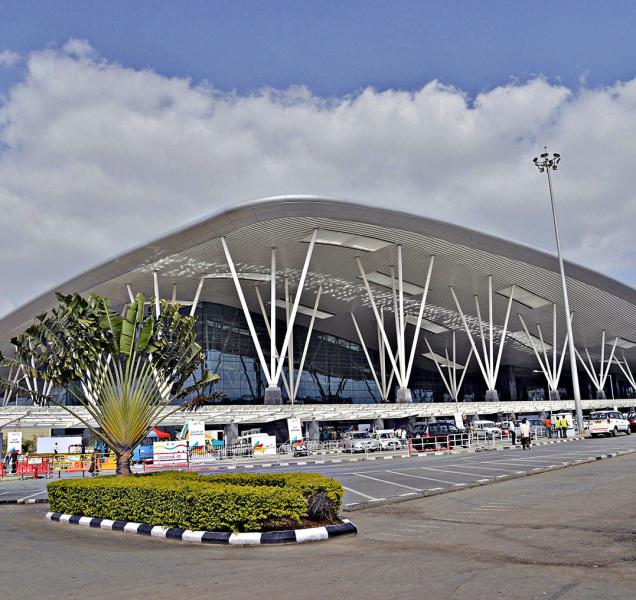
Kempegowda International Airport has become the first and only airport in the country to obtain a ‘GreenCo Platinum’ rating from the Green Building Council (GBC).
In a statement on Sunday, Bangalore International Airport Ltd. (BIAL) said the rating, given by the Confederation of Indian Industry (CII), reflects the environmental strategies adopted at the airport, which include water conservation, adoption of biofuel for ground operations, and use of solar energy, among others. The airport had received the ‘GreenCo Silver’ rating in 2012, becoming the first in the country to receive the rating after its launch by the Union Minister for Energy in 2011.
“We see this rating from the CII’s Green Building Council as a testimony towards our efforts in building an energy efficient and green airport,”said Hari Marar, president, Airport Operations, Bangalore International Airport Ltd.
source: http://www.thehindu.com / The Hindu / Home> News> Cities> Bengaluru / Staff Reporter / Bengaluru – February 29th, 2016
My friend Dr. L.R. Kadiyali died on 17th instant in Delhi at the age of 83. He is from Karnataka and his father Ramabhatta was a teacher in Kodagu.
He leaves behind his wife Bharathi and two daughters, Vrinda and Vasuda. Dr. Vrinda is an Associate Dean for Academic Affairs and Professor of Marketing and Economics in Cornell University.
Dr. Kadiyali graduated from Poona Engineering college securing first rank. He took premature retirement and established his own firm called Kadiyali Associates. It was a consulting firm which did work in the field of Highways all over India. This Kannadiga was a shining star in the firmament of engineering profession and has left many footprints in Karnataka’s prestigious Highway projects.
It is not merely a personal loss because he was my colleague in the Ministry and later became my boss and mentor when I worked in Orissa. We were also family friends. In his death India has lost an outstanding engineer.
He has left an indelible imprint with his works and also with two important books titled ‘Traffic Engineering’ and ‘Transportation Planning and Highway Engineering’ which are like a bible for engineers. They were the reference books for doctoral thesis for many students. Dr. Kadiyali has also done monumental research work funded by the World Bank titled ‘Road User Cost Study,’ which specifies the optimum speed for various types of vehicles to consume minimum amount of fuel. He was passionate about concrete roads and an authority on concrete technology. He was given the Life-time Award by Vizag Engineering College and in 2015 he got Life-time Award from the Indian Road Congress also. His firm, Kadiyali Associates, did not grow nor survive because he followed the strict principle of not bribing to get contracts.
He was soft spoken, simple and lived a spartan life. Dr. Kadiyali donated one of his kidneys to his relative when he was alive. And after his death he had asked his people not to do any havan or other ceremonies including shraddha. He had also instructed that nobody needed to come for his last rites but wanted his daughter Vrinda to press the button at the electric crematorium.
Later his daughter Vrinda sent me an e-mail which said: Thank you uncle.
He had a great life and a great end, we should all be so lucky to go this way.
NOTE: I must immensely thank Bapu Satyanarayana for sending this tribute for publication. Very thoughtful of him in these days of ‘blind-liberal democracy’ where every other Tom, Dick and Harry gets an award sponsored by the State and the State-funded Cultural, Sports and Academic institutions but not those like Dr. L.R. Kadiyali.
Reading this mere pen sketch of a profile of Dr. L.R. Kadiyali, I am wowed. People like him are the patriots, they know the real meaning of ‘Nationalism,’ unlike those leaders who visited JNU to cheer those who are still in the dark even after 69 years of independence to understand what ‘Nationalism’ means for India.
Nationalism should not be equated with secularism. In Hindu majority India, specially after partition on the basis of religion alone, Nationalism means simply loving your land first, then your religion or whomsoever (your party leader and the family, for example). Therefore, for all Indians, Nationalism should simply mean Bharat Mata ki Jai or Jai Hind or Vande Mataram.
No doubt Dr. Kadiyali is one gem among many, with purest ray serene stuck in the dark caves of unfathomed ocean called India and a flower born to blush unseen wasting its sweetness on the vast merciless Indian desert air, to add my voice to Thomas Gray’s regrets in a poem quoted in the beginning of this tribute. Which is why he did not even get a Padma Shri.
Looking at our roads, I wonder how many road building engineers might have read his books!
As in life, in death too Dr. Kadiyali has kept his ‘sacred’ sense of understanding life in its natural state and equanimity seen in the manner he wanted his mortal body’s disposal. Everything to the furrow, nothing to the grave. Even in death this man only thought about common good to all. To speak the language of Shakespeare:
His life was gentle, and the elements
So mixed in him that Nature might start up
And say to all the world, “This was a man.” — KBG
source: http://www.starofmysore.com / Star of Mysore / Home> Feature Articles / Monday – February 29th, 2016
Roller skating is a popular sport in Mysuru city and many roller skaters have gone on to do well in the National and International levels. Our city’s talented skater Rea Elizabeth Achaiah has done everyone proud with her performances in the National and International level in roller skating and Ice skating championships. Recently, Rea represented India in the tri-series Ice skating championship held at Singapore from Feb. 18 and performed well. She is our ‘Star This Week.’
Rea, daughter of K.N.Achaiah and Priya Achaiah, is a student of St. Joseph’s Central School, Vijayanagar.
Rea has represented India in the Pre-winter Olympic Camp held at South Korea in 2015 and has represented Karnataka in the National ice-skating championship held at Gulmarg, Srinagar in January 2016 and won 2 golds. She also represented Karnataka in the National Roller skating championships and won 4 golds and 1 silver medal in her age category.
This talented skater has so far won 15 golds, 2 silvers and 2 bronze medals in National championships and has emerged as the Individual champion twice.
This year, she was awarded the Pratibha Puraskar by the Governor of Karnataka for her achievement in the sport of skating.
Rea is coached by Ekalavya Awardee K.Srikantha Rao at Rao’s Roller Skating Club in Mysuru. Encouraged by her parents, her school and her coach, Rea intends to work hard in the days to come and bring more laurels for her State and country in both roller skating and ice skating.
source: http://www.starofmysore.com / Star of Mysore / Home> Sports News / February 28th, 2016
Senior Konkani litterateur Rev, Fr. V.J. Menezes seen interacting with writer and poet Valli Vagga (right) during the Konkani Literature Fest at Konkan Bhavan in city this morning.
Mysuru :
“The crave for English among younger generation has resulted in the age-old Konkani language, which has close links with Marathi, reaching a stage of extinction and there is a need to revive Konkani by creating awareness among children on the use of the language to preserve it,” opined President of Konkani Christian Association, Mysuru, Vincent Crasto, here this morning.
He was speaking after inaugurating the one-day All-India Konkani Literature Festival, organised by Konkani Christian Association (KCA), Mysuru, in association with All India Konkani Writers Organisation (AIKWO), Mangaluru, at Konkan Bhavan in Vijayanagar here which was attended by more than 400 persons from Mysuru, Mandya, Bengaluru and Mangaluru among other places.
Regretting a steep fall in the usage of Konkani even at homes, Vincent Crasto suggested that all efforts should be made to revive the language by organising seminars and other programmes which would not only help preservation of the language but also its growth.
AIKWO General Secretary, Dr. Edward Nazareth, speaking on the occasion said that publication of articles in newspapers and other forms of media would help in restoring the glory of Konkani, which needs to be preserved for future generations.
During the festival which began at 11am, Rev. Fr. V.J. Menezes interacted with Konkani Writers after which Dr. Rocky Miranda conducted a symposium on ‘The Old Konkani Bharatha’ after which participants from Mumbai, Bengaluru, Mangaluru and Mysuru participated in a ‘Poet’s Meet’.
A short play titled ‘GULIYO,’ written by Richie John Pais of Mangaluru and Directed by George William D’Souza of Mysuru was staged and winding up the day’s programme was Cultural programme in Konkani by the members of the association.
Earlier, before the commencement of the festival, a ‘Konkani Mass’ was held at the premises under the supervision of Rev. Fr. V.J. Menezes
KCA General Secretary John William D’Souza, Treasurer John Leo Rebellow, AIKWO President Vincy Quadras, Treasurer Richard Moras, Literature Festival Coordinator Valli Vagga were among those present.
source: http://www.starofmysore.com / Star of Mysore / Home> General News / February 28th, 2016