Heritage buffs find 13th-century stone inscription in Bengaluru

SLICE OF HISTORY: The inscription bears the name of king Veera Ballala

Bengaluru :

A team of heritage enthusiasts has stumbled upon a 13th-century stone inscription in JP Nagar’s Sarakki in south Bengaluru. Strangely, a major portion of the relic is buried in the foundation of Anjaneya temple and talks are on with the temple trust to recover the same.

Rajeeva Nrupathunga, founder of Revival Heritage Hub (RHH), an NGO, said the inscription bears the name Veera Ballala, who was a king of the Hosyala empire. “The Hosyala dynasty ruled the present Karnataka region between the 10th and 14th centuries. A large portion of the stone, which measures 8×8 ft, is buried in the foundation. Going by the dimensions, it could be the second-biggest stone inscription for the city after the Hero Stone Inscription in Begur, which dates back to 900AD,” he added.

“After speaking to the temple trustee, we learnt that the stone inscription might have shifted to the foundation area during the temple’s renovation about 60 years ago or another makeover the temple went through 15 years ago. The temple has ahistory of over 350 years,” said Prashanth B, a heritage buff.

RHH is in talks with temple authorities to restore the stone inscription so that it can be studied. “There was more than one king by the name Veera Ballala under the Hoysalas. Only after analysing the entire inscription can we say which one it mentions,” said an RHH member.

According to historians, Bengaluru was home to over 175 recorded stone inscriptions in the early 21st century, with some dating back to the 5th century. But 70% of them have either been lost or are in bad shape due to negligence.

source: http://www.timesofindia.indiatimes.com / The Times of India / News> City News> Bangalore News / by Rohith BR / TNN/ May 29th, 2018

75 years of Bengaluru’s famed benne masala dose

The management keeps track of the number of customers each day through a dose lekka . | Photo Credit: V Sreenivasa Murthy

Vidyarthi Bhavan in Basavanagudi has stood the test of time

What started as a modest eatery for students has, over the years, become a landmark of sorts. Vidyarthi Bhavan in Basavanagudi has come a long way since it was established in 1943. This year, as it turns 75, the restaurant has managed to stand the test of time, the changing palates of Bengalureans, and the onslaught of newcomers in the food and beverages space offering everything from Mediterranean to Vietnamese cuisine, with its staple six offerings.

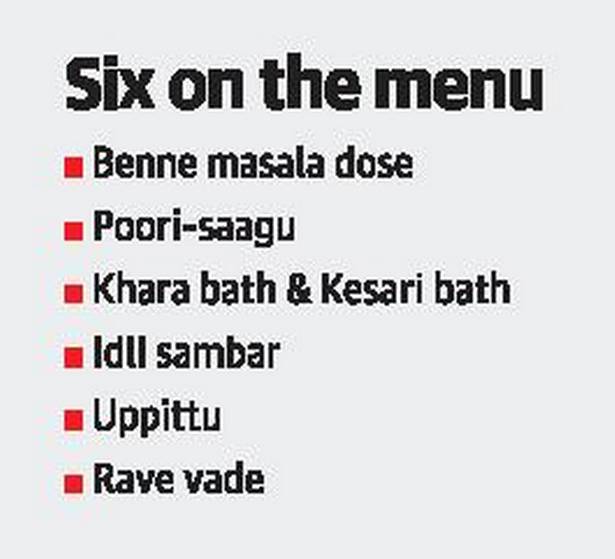
To this day, the benne masala dose is the top seller. In fact, the management keeps track of the number of customers each day through a dose lekka. The number is around 1,250 on a weekday, and up to 2,200 per day on a weekend. The other items are poori-saagukhara bath and kesari bathidli-sambaruppittu and rave vade.

The menu has more or less remained the same over the years. One item that disappeared, said Arun Adiga, managing partner, Vidyarthi Bhavan, was the gulab jamun (not in the regular round shape) after the chef who made it from scratch passed away in the 1980s.

The benne masala dose remains the top seller. | Photo Credit: KARAN ANANTH

Changes over the years

The timings have been extended only slightly, closing at 8 p.m. now instead of 7.30 p.m., on popular demand. There are no plans to extend this further though, as the restaurant does not offer meals. The management pointed out that it will have implications on the shift timings of the 28 employees.

The rates, though, have seen a huge change: from ₹1 in the 1980s to ₹46 for a dosa now. This, Mr. Adiga said, was proportional to other overheads.

Their customer base has expanded. “Bengaluru has changed. In the 1940s, when Vidyarthi Bhavan was started, people were conservative about eating out. People who came here were students and people who came to Bengaluru. Now, it is the other way round. People barely cook at home and eating out is the norm. People will search for new restaurants. But, unless you maintain quality, there will not be repeat customers,” he said.

he timings have been changed only slightly. | Photo Credit: V Sreenivasa Murthy

Flip side of popularity

From being an adda of intellectuals, writers and famous personalities, including the likes of Rajnikanth — who apparently comes in disguise, Masti Venkatesh Iyengar, D.V. Gundappa, C. Ashwath and Nissar Ahmed, to becoming one of the must-go destinations for anyone who lives in or is exploring Bengaluru, publicity through media, particularly social media, has expanded its popularity beyond its regular circles and south Bengaluru. But, there is a flip side.

Mr. Adiga said some customers come in with high expectations, and end up disappointed with the way things are, be it the building (the management has brought in some changes, yet kept it like its old self), the fact that they may have to share a table with strangers, or if they are not blown away by the taste of the food.

“Some people ask for the menu. They are disappointed when we tell them that we have only six items to offer. In other cases, even before they have paid the bill, they have reviewed the food on social media and branded it good or bad. But we can’t satisfy everyone, though we try to satisfy at least 90% of the customers,” he said.

VidyarthiBhavan04BF30may2018

source: http://www.thehindu.com / The Hindu / Home> News> Cities> Bengaluru / by Staff Reporter / May 29th, 2018

Nyamagouda laid to rest in Jamkhandi

Deputy Chief Minister G. Parameshwara and former Chief Minister Siddaramaiah paying tributes to Siddu Nyamagouda, veteran Congress leader, at Jamkhandi in Bagalkot district on Tuesday.

The last rites of Siddu Nyamagouda, Jamkhandi MLA, were performed with full State honours at his native town of Jamkhandi on Tuesday.

The Congress veteran died in a road accident in Bagalkot taluk on Monday.

His body was first kept at Polo Grounds in town for the people to pay their last respects. Later, the body was taken in a procession to Jamkhandi sugar factory premises — of which he was the chairman — where he was buried.

Thousands of people, mainly farmers, participated in the procession and paid tribute to the leader.

Former Chief Minister Siddaramaiah, KPCC president G. Parameshwara, elected representatives of various parties of Bagalkot district, and several seers were present on the occasion.

In his condolence message, Mr. Siddaramaiah remembered Nyamagouda as ‘Barrage Siddu’ a moniker he got when he took the onus of constructing a barrage at Chikkapadasalagi village for the farmers, with public money and support.

In his address, Dr. Parameshwara said the party has lost a true public leader and down-to-earth man.

Chikkapadasalagi barrage

Karnataka Pradesh Campaign Committee chairman D.K. Shivakumar on Tuesday urged Chief Minister H.D. Kumaraswamy to name Chikkapadasalagi barrage after Congress legislator Siddu Nyamagouda. In a letter, he said Siddu Nyamegouda was instrumental in building the barrage across the Krishna through shramdhan and donations received from farmers. Naming the barrage after him and installing his statue would be a befitting honour, he added.

source: http://www.thehindu.com / The Hindu / Home> News> States> Karnataka / by Special Correspondent / Bagalkot – May 29th, 2018

60 mushroom species documented at Yenepoya campus

Mangaluru :

In an unique initiative, Yenepoya (deemed to be university), has undertaken a comprehensive study of the mushrooms present on the Derlakatte campus.

MushroomsYenepoyaMPOs29may2018

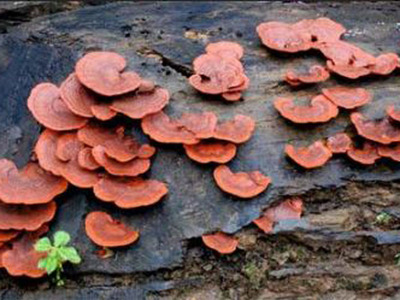
The study, which was conducted over a period of six months, has yielded rich information on the macrofungal resources of the campus. About 60 species of mushrooms have been observed on the campus, out of which about 40 have been described in the book. Out of the 40 species published, 12 species are edible, 12 species are medicinal, two species ectomycorrhizal and one species is parasitic. Two species which are rare and known to be poisonous are also recorded.

The information was documented in a ready reference book titled ,‘Macrofungal resources of Yenepoya University’. Yenepoya chancellor Abdullah Kunhi released the book at a ceremony held on the campus on Tuesday, in the presence of vice-chancellor M Vijayakumar and registrar G Shreekumar Menon. The book is dedicated to M Abdul Rahiman, former vice-chancellor, Kannur and Calicut Universities.

Yenepoya is the first educational institution in the region to initiate such a study of mushrooms on the campus. Though mushrooms play a unique role in the ecosystem, importance is always given to only flora and fauna, said sources. Yenepoya has initiated other similar studies to document the flora and fauna of the campus too.

The study of macrofungal life on the campus was undertaken by a research team led by K R Sridhar, Dr N C Karun and Dr Bhagya B Sharma from June-November 2016.

Yenepoya has striven to make its 32 acre campus into an eco-friendly zone. The institution has undertaken various measures for greening the campus with different landscapes like lawns, arboretum, bamboo thickets, medicinal plant garden, areca plantation and acacia grove. The campus includes a large rainwater harvesting pond, roof water harvesting facilities, waste water treatment and recycling plant, vermicompost unit and solar power generation facility. The university carries out a regular environmental audit of the campus and has an eco club for students. It is hoped that these activities will inculcate a love for nature among the students who study here, and inspire them to act as brand ambassadors for nature conservation in their future life.

source: http://www.timesofindia.indiatimes.com / The Times of India / News> City News> Mangalore News / by Kevin Mendonsa / TNN / May 23rd, 2018

KMC, Manipal doctors discover new gene causing human limb abnormalities

Manipal :

Department of Medical Genetics at Kasturba Medical College, Manipal collaborated with Institute of Medical Biology, A*STAR, Singapore and Istanbul University, Turkey to discover a new gene as a cause of human limb abnormalities or tetra amelia syndrome.

The Manipal team led by Dr Girish Katta, comprising Dr Anju Shukla and Dr Shalini S Nayak, along with the international teams found that mutations in RSPO2 gene as the cause of the condition.

“These doctors offer postnatal evaluation of fetuses as a routine clinical service. They came across a consanguineous family (parents who are close relatives) with three consecutive pregnancies affected by complete or partial absence of all four limbs along with agenesis of lungs and cleft lip and palate,” said Dr Pragna Rao, dean, KMC, Manipal while giving the details of the discovery. “The international collaboration then brought together more affected families and discovered the mechanism of disease”, she added.

Eleven affected individuals from five families from the different parts of the world were noted to have either complete absence or deficiency of upper and lower limbs along with small or absent lungs and cleft lip and cleft palate. The work has been now published in a highly reputed journal ‘Nature’ published by Nature Publishing Group.

Girish said, “The study not only identified the cause of human limb abnormalities or tetra amelia syndrome but also explains the mechanism of how exactly the defect in RSPO2 (R-spondin 2) gene leads to deficiencies in limb and lung growth by conducting several experiments on HEK293T and HEK293T-STF cell lines and animal models such as mouse and frog.” Girish added that the department of Science and Technology, New Delhi, India partially funded the work.

Dr H Vinod Bhat, vice chancellor of Manipal Academy of Higher Education appreciated the hard work done in identifying the genetic causes of human diseases. He added that a new neurodevelopmental disorder ‘Multiple mitochondrial dysfunction syndrome’ and a bone disease ‘Short rib thoracic dysplasia type 16’ were also identified by this team and these are already catalogued in Online Mendelian Inheritance in Man (OMIM). “MAHE is working towards becoming one of the best research centers globally,” Bhat said.

Dr Poornima Baliga, pro vice chancellor, (Health Sciences) and N Udupa, professor and Research Director (Health Sciences) congratulated the team for the discovery.

source: http://www.timeofindia.indiatimes.com / The Times of India / News> City News> Mysore News / by Kevin Mendonsa / TNN / May 17th, 2018

Farmer couple in Periyapatna cultivates 15 varieties of ladies finger

Farmer couple Shankar and Roopa have cultivated 13 different varieties of Ladies Finer at their land in Periyapatna taluk

Mysuru:

Organic farming is no longer just a buzzword that inspires those living in cities to leave their highly lucrative and conventional, ‘Nine to five’ jobs and return to the roots, and till the soil to reap the dividends of their labour. Tucked away in a small village in Periyapatna taluk, a farmer couple has successfully managed to cultivate 15 different varieties of ladies using organic means.
With the help of the city-based NGO Sahaja Samrudha, farmer couple Shankar and Roopa have managed to harvest a rich yield of ladies finger crop – all 15 varieties are of Indian origin – on their half acre plot in Hittnehebbagilu village in Periyapatna taluk. The NGO had organised Field Day on May 17 to encourage farmers to grow indigenous varieties of vegetables.

The seeds of the many varieties of ladies finger and other vegetables have been collected by Sahaja Seeds, an organisation that has gathered them at crop and agriculture fairs held across the country. It was from Sahaja Seeds that Shankar and Roopa managed to get the seeds for their plot.

Star okra from Odisha, red bhindi from Puducherry, Sri bhindi from Sri Lanka, besides breeds local to Karnataka are among those that have been cultivated by Shankar and Roopa, in what was an experiment to see if different breeds of ladies finger could be grown under the same climactic conditions.

The farmer couple planted 30 seeds of each variety in single beds, and have managed to reap a rich yield, with each plant bearing at least 25 ladies finger, much to their delight.

“I have not used chemical fertilisers or pesticides in my plot. I used a type of organic pesticide called Jeevamrutha, which has earthworm compost as one of its ingredients. Compared to growing other vegetables, cultivating these Indian varieties of ladies finger did not require as much money. The seeds will be processed further,” Shankar told TOI.

Asha of Sahaja Seeds, said that on Field Day, farmers were shown a wide assortment of seeds of ladies finger. “Farmers, who had years of experience, selected those varieties that promised a good yield. Women from the village, meanwhile, prepared dishes using the ladies finger, and we held tasting sessions throughout the day. Farmers have already chosen what varieties they want to cultivate,” she told TOI.

Assistant professor at the College of Horticulture JS Aravind Kumar said, “Organic breeds are rich in nutritional value, when compared to other vegetables. In the coming days, through participatory varietal selection, more farmers in Periyapatna will be able to grow different breeds of vegetables. Lately, there is a lot of buzz around organic food and health consciousness, and demand for ‘Desi’ ladies finger will be high on the market.”

source: http://www.timesofindia.indiatimes.com / The Times of India / News> City News> Mysore News / May 24th, 2018

Archaeologists stumble upon 5th-century wall in Mysuru district

The wall was built to save the then settlement from floods

Bengaluru :

A team of archaeologists recently discovered a 10-ft thick and100-ft deep masonry wall in Mysuru district, which dates back to the 5th century.

The wall, excavated in Talakadu, a desert-like town on the left bank of Cauvery river and located about 45km from Mysuru, was built to save the then settlement from floods, according to experts.

Archaeologist MS Krishna Murthy, who spearheaded the excavation work, said some portions of the wall still stand strong indicating the level of expertise of ancient engineers. “We have excavated the wall up to a length of 15ft. But evidence from the site shows the wall was once 1-km long. It is the largest masonry wall in South India. Historical and archaeological analysis shows it stood strong for at least 1,000 years from the 5th to 15th century,” he said

Murthy, who has conducted extensive excavation work in Talakadu since 1992, made this revelation as spoke on ‘New archaeological discoveries at Talakadu, Karnataka’, at an event organised by the southern regional centre of the Indian Council of Historical Research (ICHR).
The expert said the outer side of the wall bears signs of corrosion, which can be attributed to the continuous presence of river water. “The wall is even more significant as it is mostly built of bricks, clay and mortar as stones were not available in large quantities in the region. It has three layers and an interesting design, which indicates how skilled the people were during that era.It may have been built during the regime of Kiriya Madhava, a ruler from the Ganga dynasty,” he added.

source: http://www.timesofindia.indiatimes.com / The Times of India / Home> News> City News> Mysore New / TNN / My 23rd, 2018

Medlife launches its first diagnostic lab in Bengaluru

Bengaluru (Karnataka) :

Medlife, a fastest growing healthcare company and largest omni-channel pharmacy, has launched its first diagnostic lab in Bengaluru , as part of an aggressive plan to expand its offline footprint in India. The company has started off with Bengaluru  and will gradually ramp up to other metro cities in the country.
As the largest e-pharmacy in India, covering over 80 percent of the country’s pin-code, Medlife offers customers both medicines, diagnostics and other healthcare facilities through its online portal, mobile application and customer care centres.
With scalable technology and deep analytics, Medlife, in a short span, has successfully created a strong distribution network and unparalleled delivery model that has made healthcare simple, accessible and affordable to people across India. It was, thus, time to leverage these capabilities and deep learning and create a world-class offline business that provides its customers with a seamless healthcare experience.
The company expects revenue of INR 200 million by the end of this financial year from the diagnostic vertical. Medlife has already invested INR 6 Million and is planning to invest another 43 Million within the next year, to set up 6 satellite labs in addition to the centralized lab launched in Bengaluru . The lab is undergoing ISO certification and will receive its NABH and NABL certification by FY 19-20. The diagnostic lab will operate under the name ‘Medlife Labs’. Medlife Labs also promises same day report delivery and free home sample collection to all their customers.
Tushar Kumar, CEO, Medlife said, “Our focus is to build a world-class infrastructure for healthcare. We, at Medlife, have constantly endeavoured to ensure quality healthcare services with affordable rates reach the maximum number of people in India. Through our innovative tech-enabled platform, we’re building customer touch points across online and offline platforms that can seamlessly integrate to provide a high-quality healthcare experience for our end-users. The launch of lab services is in line with this commitment and endeavour.”
“Around 70 per cent of treatment decisions in India are based on lab results. Needless to say then, diagnostic services constitute one of the most critical components of medical care in India. It also helps in building a preventive care ecosystem and better diagnosis of health problems. Thus, creating substantial impact on the continuum of care,” added Kumar.
The diagnostic laboratories industry in India is poised for strong growth because of rising demand for healthcare but lack of regulation remains a major concern, considering the risks it poses to patients. The diagnostic laboratories sector in India is highly fragmented with standalone centres accounting for ~ 70 percent of the market and organized ones having ~ 30 percent shares. India has around 100,000 diagnostic laboratories, which include pathology laboratories and radiology centres.
Since its inception as an e-pharmacy company in 2014, Medlife has diversified into 24X7 e-consultation, laboratory services, and app-based healthcare-related services. In a short span of just over two years post-launch, Medlife went on to create a customer base of one million unique customers. The company recently launched its own line of generic drugs in line with the Government of India’s recent efforts to encourage the use of affordable generic drugs in India. Apart from diagnostic labs, Medlife will also be launching offline stores across 50 cities this financial year.
Backed by promoters with credible experience in pharmaceutical and healthcare e-commerce businesses, Medlife is known for its best-in-class quality, 100 percent regulatory compliance and zero-delivery error. With a planned internal investment of $30 million to scale up operations, the company expects to earn revenue of Rs 900-1000 crores by financial year 2019. (Businesswire-India)

source: http://www.aninews.in / ANI / Businesswire India / May 28th, 2018

Old ovens make great cakes

Bengaluru :

A look at the iconic 56-year-old Thomsons Bakery in Cox Town, where wood-fired ovens run through the day.
Tradition runs deep with this modest bakery owned by CT Abraham, popularly known as Thomsons Bakery. Founded in 1962 by the late C I Thomas and wife Anita, who moved to Bengaluru in 1943.

Business started small, in a nook tucked away in a street next to St Peter’s Church, Cox Town. Although the bakery is small, it has made its mark in Bengaluru and attracts the local population and has connected with its customers over the years. As you enter the bakery, a mouth watering aroma of freshly baked bread greets you and lures you in. The bakery is stacked with goodies rows of rich brown plum-cake, crispy samosas and light, flaky macaroons.

The Thomases initially started supplying bread and other bakery goods in bulk to industrial canteens like ITI and MICO, besides the Army and Air Force canteens as their quality and reasonable prices made them popular.

“When World War II broke out, Dad came down from Kerala to look for a job, as a lad of 25. He worked in various places and after picking up experience in business, decided that it was a good idea to get into the food business because bakery products were always in demand and there were no established bakeries in east Bengaluru,” says son C T Abraham, a chartered accountant.

Thomsons Bakery has, over the years, gained popularity for its plum cakes. The secret, says Abraham, is the wood fire technique. “It give the plum cake a unique flavour which is hard to get in any other oven. Even our bread and other products have a distinctive flavour because of this,” he says.

The fireboard is set aflame every day at 9:30 am. The wood is burned for an hour, after which the ashes are removed and the baking process begins, going on for about 45 minutes or so, and voilà, a fragrant batch of 150 loaves is out. The concept of using a fireboard and following tradition is quite crucial as they believe that using it adds a woody flavour to the bread. “It is indeed a big responsibility to maintain quality day in day out and especially in a food business. Support of family members is crucial”, added Abraham.

Just as son Abraham took over the bakery, loyal customers have extended to new generations too. The bakery has seen a number of weddings, having supplied plum cakes and other goodies too. Their products are bought by customers to gift to friends and family abroad.

Abraham says, “Business blooms in the wedding season as well as during Christmas, when over 6000kg of plum cake is produced.” Their recipe goes back generations, with roots in English tradition. A lengthy process is followed, involving the fermenting of fruits for six months. The cakes last for two to three months at least.

The bakery has a menu with 45 to 50 varied items that range from apple cake, cream cookies, chocolate pastries and jam roll to chicken puffs, samosas and vegetable cutlets. The 56-year-old bakery does quite well, while remaining on the quieter side with its advertising and promotion, and reaching out to retail customers. They have no plans of expanding as they prefer to stay that way such that quality can be maintained.

“It takes a lot of commitment, hard work and constant supervision to produce a few tons of quality plum cakes every year to satisfy our customer base and reputation,” included Abraham.

Big brands and bakery chains have left a dent in Thomsons business, but Abraham knows that no mechanized bakery can beat their plum cakes.

The bakery produces most of its products in its own small factory located down the road from the bakery. Nine employees work within the humble ambience of the bakery and factory. Even with the steady pace of business, the future of the bakery is uncertain because of the probable absence of someone to take over the enterprise in future.

—Pariza Khan

source: http://www.timesofindia.indiatimes.com / The Times of India / News> City News> Bangalore News / TNN / May 26th, 2018

Indo-Israeli tie-up increases mango produce in Kolar

MangoBF28may2018

Bengaluru :

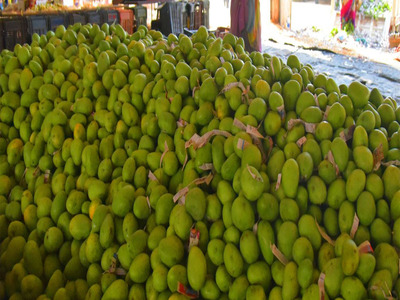
Mango cultivators in Hogalagere village of Kolar have reason to cheer. The yield has doubled as more than 600 mango trees can be grown within one acre of land as against the previous limit of 60.

Lavanya, project manager at the Kolar centre of excellence for mango cultivation and horticulture, said this has been possible only due to the partnership between India and Israel. “The tie-up has helped us get better yields since 2016,” added Lavanya. Earlier, it was possible to grow only 60 mango trees in an acre but employing the root stocking technique, where grafting is done to increase production, has upped the number to 600. “This method reduces the lifespan of trees. Normally, a mango trees lives for 100 years but the technology decreases it to 25 years,” explained Lavanya.

The partnership began with a project called Mashav, initiated by the Israeli foreign ministry, which is aimed at achieving sustainable development and ensuring food security. Under the project, work is on in four main sectors — agriculture and rural development, socio-economic development, rural and urban development and education. It began in 2008 was later extended.

At present, the Kolar centre is growing Mallika, a mango variety which is being sold at Rs 80 per kg. “The yield has been comparatively good. We use drip irrigation to water the trees and don’t depend on rain,” said Lavanya.

The Indo-Israel agricultural cooperation has benefited both the countries, said the deputy chief of mission, Embassy of Israel, Dana Krush. “The new Karnataka chief minister HD Kumaraswamy had visited Israel in August and wanted to send state farmers to the country to learn new technologies and implement them here,” said Krush.

source: http://www.timesofindia.indiatimes.com / The Times of India / News> City News> Bangalore News / TNN / May 25th, 2018