Bengaluru boy bags 1st rank in ComedK

Durbha Aditya
Durbha Aditya

Bengaluru :

Springing a surprise a day ahead of the expected date, ComedK authorities announced the results on Sunday evening, for students across the country seeking admission to engineering colleges in Karnataka .

The list of top 10 rank holders was an all-male affair, and of them, three ranks went to Bengaluru-based students.

Durbha Aditya , a student of NPS, HSR Layout, bagged the first rank and expressed interest in pursuing artificial intelligence.

Nikhil S Pai and Pratik Sanjay Bhirud bagged ranks 5 and 6 respectively.

Of the first 100 rank holders, 42 are from Karnataka.

The exam, held on May 13, was taken by 62,306 students. The test was conducted online in 291 centres located in 137 cities across the country. Details regarding the number of seats, fees and counselling dates would be notified by the Karnataka Examiniation Authority at a later date.

source: http://www.timesofindia.indiatimes.com / The Times of India / News> City News> Bangalore New / TNN / May 28th, 2018

Photo journalist dead

Keshav Vitla
Keshav Vitla

Photo journalist Keshav Vitla passed away here on Monday. He was 56 and was suffering from renal problem.

Born in Vitla in Dakshina Kannada district, he began his career with the Kannada daily Mungaru. Later he joined the Indian Express group. Recently he was into freelance photography.

The funeral will be conducted at Vitla this afternoon.

source: http://www.thehindu.com / The Hindu / Home> News> States> Karnataka / by Special Correspondent / Mangaluru – May 28th, 2018

US scientist dedicates book to Bengaluru physicist

Bengaluru :

When the LIGO team discovered gravitational waves for the first time in 2015, it didn’t just prove Albert Einstein’s theories right, but also an important concept proposed by city-based scientist CV Vishveshwara, a black holes expert, who died in January 2017.

The team publicly acknowledged his contributions, although Vishvewshwara was never directly part of the Laser Interferometer Gravitational-Wave Observatory (LIGO). It was his work in 1968-1970 that provided fundamental insights into the nature of black holes, which became instrumental in LIGO’s findings.

He used the equations of Einstein’s theory of general relativity to carry out meticulous calculations and analyse the structure of black holes. He went on to prove the stability of black holes that assured their continued existence in nature once they were formed.

Forty-eight years after he published histheory and a year after hisdeath,Prof Nils Andersson of the University of Southampton has dedicated a book, A Gentle Wizard, to Vishveshwara. While Andersson’s dedication has been lauded by the scientific community, the scientist himself had spent most his life away from the limelight.

The India launch of the book, which discussesEinstein’s viewsof theuniverse, starting with 1905 and ending with the recentdiscovery of gravitationalwaves from colliding black holes, was in Bengaluru on Thursday. The International Centre for Theoretical Sciences (ICTS), which organised the launch, plans to distribute free copies to interested students and researchers.

source: http://www.timesofindia.indiatimes.com / The Times of India / Home> News> City News> Bangalore News / TNN  / May 26th, 2018

IIHR in the process of developing elite mango variety

The proposed variety is an improvement on the Amrapali variety, to get red colour from Vanraj

The biggest mangoes (Tenneru variety from Andhra Pradesh), with each fruit weighing around 2 kg, alongside smaller varieties.   | Photo Credit: Handout E Mail
The biggest mangoes (Tenneru variety from Andhra Pradesh), with each fruit weighing around 2 kg, alongside smaller varieties. | Photo Credit: Handout E Mail

If mango is the king of fruits, the Alphonso variety is the king among mangoes due to its taste, attractive colour and moderate size. However, horticultural scientists are in the process of developing another elite mango variety, which is said to be superior to Alphonso.

What is a matter of pride for the State as well as the Garden City of Bengaluru is that the research is taking place in the Hessarghatta-based Indian Institute of Horticultural Research (IIHR).

Dr. M. Shankaran, principal scientist in IIHR’s Fruit Crops Division, told The Hindu that the researchers are trying to get ‘red shoulders’ for the proposed elite variety from the Vanraj variety of mango. “The new variety is going to be an improvement on the Amrapali variety of mangoes by getting characteristics responsible for colour from the Vanraj variety,” he said. “The research has entered the fifth year,” he pointed out.

The new elite variety is expected to be preferred for exports, he said.

IIHR researchers are also working towards developing mango varieties that can be grown in saline soil. If successful, several non-mango regions of the country, particularly coastal areas, may see cultivation of the fruit, Dr. Shankaran said.

For this, the scientists have chosen root stocks from the natural varieties, which have resistance to salinity. These root stocks will be grafted with other improved varieties to get good quality fruits with resistance to salinity, he said. “Presently, such natural varieties do not have quality fruits while the varieties with quality fruits do not have resistance to salinity,” he noted.

Meanwhile, the three-day mango and jackfruit diversity fair began on Thursday at the IIHR campus in Hessarghatta with 350 varieties of mango and 150 varieties of jackfruits, including those grown by farmers, on display.

The varieties of mango on display include appe midi (used as pickles), table varieties and those preferred for juice. A dozen exotic varieties from various countries, including the US, too were on display.

The jackfruit collection had interesting variety in terms of taste, colour and size.

Custodian of genetic diversity

In a bid to encourage farmers to protect native varieties, the IIHR on Thursday nominated farmer Shankaraiah from Hulikatte of Gubbi taluk in Tumakuru district as custodian of an unique variety of jackfruit being grown by his family.

The jackfruit with copri red flakes is very sweet in taste and weighs around 3 kg. As per the agreement, IIHR scientists will take up multiplication of the variety and also sell them. Proceeds from the sale would be shared by the farmer and the institute.

This is the second such farmers’ variety to be identified by the IIHR under the custodian of genetic diversity scheme. Recently, another jackfruit variety titled ‘Siddu jackfruit’ from the same district had been chosen.

Cine personality-turned-environmentalist Suresh Heblikar inaugurated the three-day fair in the presence of environmentalist Yellappa Reddy and IIHR Director Dr. M.R. Dinesh and Additional Director of Horticulture Dr. Parashivamurthy.

A mango that weighs two kg

It was not just the variety, but also the variations in size, colour and shape that mesmerised visitors.

The fair displayed the biggest mangoes with each fruit weighing around 2 kg (Tenneru variety of Andhra Pradesh) and several small-size varieties whose fruits weighed just around 40 gm.

There was one variety from Andhra Pradesh titled ‘elephant head’, as it resembled the head of a pachyderm.

source: http://www.thehindu.com / The Hindu / Home> News> Cities> Bengaluru / by B S Satish Kumar / May 24th, 2018
15-year-old on cycling journey

Maharshi Sanket set out from Bengaluru on May 21. | Photo Credit: The Hindu

The student wants to raise awareness about abuse, bullying

A song asking the perpetrator of abuse to think from the perspective of the victim; paintings that depict the theme of bullying; a cycle tour from Bengaluru to Mumbai to spread awareness — this is what a 15-year-old has embarked on to get people to ‘Speak out’ against bullying and sexual abuse.

Maharshi Sanket, a student of Treamis World School, launched the campaign to break the silence around abuse.

“We keep hearing news about rape and abuse every day, so much so that people have become used to it. I have seen many of my friends who have silently endured abuse, unable to speak about the trauma. All of this is disturbing. I wanted to do something about it,” said Sanket.

To spread awareness among people in rural and urban areas, he decided to go on a cycle tour from Bengaluru to Mumbai, covering towns and cities along the way. “I chose to cycle because unlike travelling by a car, this ensures there are no barriers and brings you closer to people,” the young campaigner said.

He started from Cubbon Park on May 21 and will bicycle through Tumakuru, Sira, Chitradurga, Davangere, Haveri, Dharwad, Belagavi, Kolhapur, Satara, Pune and Lonavala. He expects to reach Navi Mumbai and Mumbai by June 2. He is accompanied by art director Sukant Panigrahy, and a social activist to speak on the cause.

The idea occurred to him during his board exams. Once he was done with the exams, he started planning the campaign.

He always found art to be an effective medium for expression. Before venturing out on his cycle, he launched the campaign with an event displaying his paintings on the theme of abuse and its effect on the victims. He also released an anthem, which was produced and composed by Chris Avinash, penned by Sadhu Nityanand and sung by Ankita Kundu.

“Bullying is still not part of the mainstream discourse and victims are asked to ignore the issue. When boys try to talk about it, their masculinity is questioned. Such abuse can have long-term effects. Hopefully, my campaign will encourage people to open up and talk about the issue, without shame or taboo,” said Sanket.

source: http://www.thehindu.com / The Hindu / Home> News> Cities> Bengaluru / by Staff Reporter / May 23rd, 2018

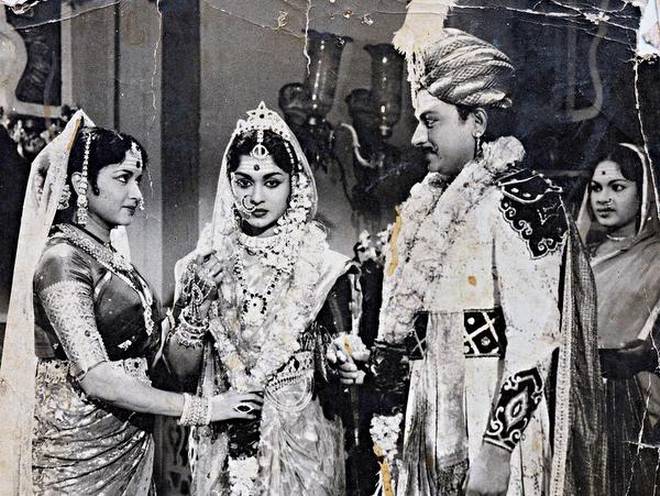
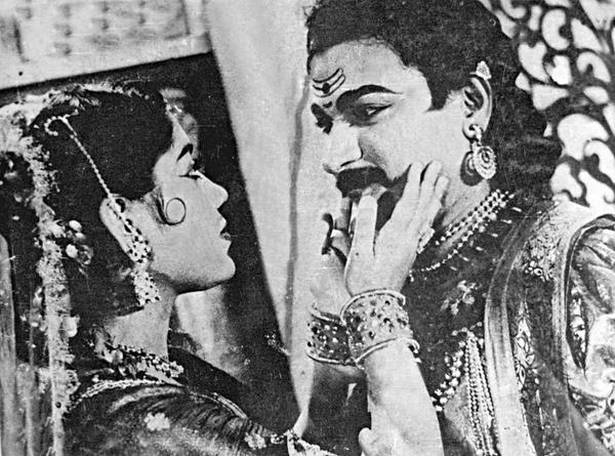
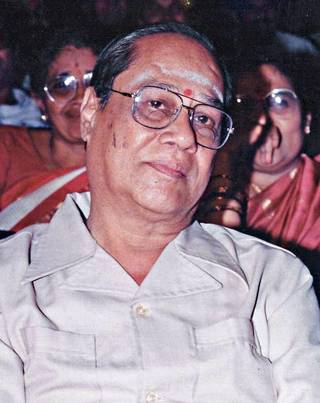
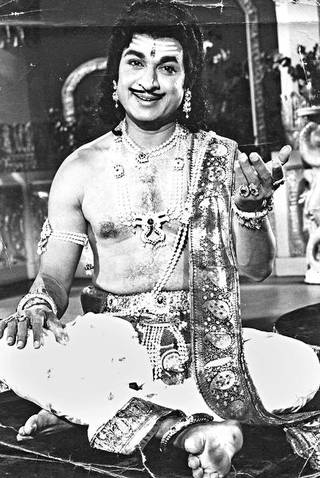
On TG Lingappa and his musical legacy in Kannada cinema

Lingappa01BF23may2018

TG Lingappa composed some of Kannada’s masterpieces. His sense of music was impeccable and he infused it with a rich theatricality

When you listen to the music of TG Lingappa, you hear the rich textures of the leg harmonium. The grand instrument gets its evocativeness from a combination of pumping that is deep and shallow, quick and slow — weaving a luxuriant tapestry of sounds. The crescendos and diminuendos that a leg harmonium achieves gives it a high mimetic character, in fact, the company dramas of yesteryear gave this instrument centre stage.

His father’s music certainly made a huge impact on TG Lingappa. Govindarajulu Naidu, Lingappa’s father, played the leg harmonium in company dramas. Story goes that the actor-singer MK Thyagaraja Bhagavathar was Naidu’s good friend and often visited their residence and had several singing sessions. KB Sundarambal, who was also a theatre artiste and later made it big in Tamil cinema, was Naidu’s disciple. Lingappa’s father sold musical instruments and the astute young boy could play almost every instrument that he set his eyes on. When the family moved from Tiruchi to Madras, the young Lingappa looked for opportunities in cinema. Theatre did become a thing of the past, a world that they had left behind, but it remained the eternal conscience of his musical expression.

Lingappa02BF23may2018

Music in a theatre production has a specific purpose: at the cost of under-theorising it, one could say it heightens the mood. But more than seeing music as redolent or suggestive, it is important to understand what a piece of music does. If cinema can be seen as an extension of theatre, for Lingappa music was a piece of theatre too. So, he not merely made music for cinema, but also created a complementary cinematic narrative through music. An extremely gifted musician, Lingappa could play several instruments and made a living from orchestra in his early days. This perhaps gave him a clear picture of the music that each of these instruments could generate and as one sees in his film music orchestration, Lingappa does a phenomenal job of layering of sound.

This can be illustrated through some of his works. Let’s take “Yaaru Tiliyaru Ninna Bhujabalada Parakrama” from the film Babruvahana (1977). The song is a dialogue, a verbal contest to begin with. Lingappa sets it to the highly dramatic, traditional kanda padya rendering style, but with the sharp, instrumental interludes he prepares you for the conquest that is to come after this exchange of words. To emphasize on his theatre influence, throughout this song (for that matter any song of Lingappa), not once are the words overshadowed by music: in fact, you can see how there are points where the song lets go of the tune and articulates it in the spoken word style as emphatically as music. This song is a wonderful coming together of two artistes from theatre background – Lingappa and Rajkumar. It requires enormous courage for a playback singer to sing just to the drone of the tanpura, and Rajkumar produces a masterpiece. Of course, PB Sreenivos who is Rajkumar’s co-singer, isn’t far behind. There is yet another short piece in the film, “Barasidilu badidante” which is also rendered in a similar style. The song opens with stunning violin passages that are akin to those in a symphonic orchestra. In both these songs, you can see Lingappa’s signature style, that is to change the raga or melodic harmony to heighten the drama. In “Aradhisuve Madanari” from the same film, all musical tools like raga portrayal, swara prasthara, konnakol, and tani avarthanam, become dramatic techniques.

Lingappa03BF23may2018

Let’s consider three songs that would perhaps be broadly classified as devotional: “Shiva Shiva Endare” (Bhaktha Siriyala, 1980), “Jaya Jaya Samba Sadashiva Shankara” (Guru Shishyaru, 1981) and “Yaarige Yaaruntu” (Gaali Gopura, 1962). He interprets all the three differently – the first two are eulogies with upbeat tunes and an elaborate orchestra. In fact, in “Jaya Jaya” he uses instruments like chande and cymbals to give Lord Shiva his many dimensions. The third is a Purandara Dasa composition and Lingappa gives it a mellow narration without violating the philosophical core. It is clear that Lingappa was not thinking merely about the melodic composition: words, intent and the context formed the marrow of his work.

Lingappa04BF23may2018

Lingappa was a versatile composer. He composed songs of different kinds, making it hard to believe that he composed them all. He made extensive use of sitar, veena and violins. Listen to “Ninna Neenu Maretarenu” (Devara Kannu, 1975) – he blends both schemes of Indian music, despite the violin passages which have a western orientation. “Entha Sogasu” (Taayige Takka Maga) is a stylish composition with an RD Burman kind of orchestration. The slow and soothing lullaby “Pavadisu Paalaksha” (Sati Shakti, 1963) in Malkauns is surely the best. “Jaari biddiye O Jaana” in Kedar is a brilliant composition: it works completely on syncopation like the verses in a qawwali. Janaki’s rendition is liltingly memorable. Of course, “Maatege migilada devarilla” is everyone’s hummable favourite.

Lingappa’s time also had other brilliant composers like MV Raju, GK Venkatesh, Vijay Bhaskar and others. But each of these musicians brought an amazing variety and authenticity to film music. Though all of them came from different backgrounds, they not only knew Indian music, but had studied Western music as well. But they way their music embodied all these different musical idioms is a fascinating study in itself. To understand TG Lingappa through the dramatic element is therefore, just one of the ways of looking at this superb musician. There can be several other perspectives. Lingappa’s music, like that of the leg harmonium, fills the ears, and the heart too. This is but a cursory look.

Inner Voice is a fortnightly column on film music.

source: http://www.thehindu.com / The Hindu / Home> Entertainment> Inner Voice – Movies / by Deepa Ganesh / May 22nd, 2018

Bengaluru gets its first ‘Bicycle Mayor’

Consulate General, embassy of the Kingdom of the Netherlands, Jaap Werner presenting the trophy of Bicycle Mayor to Satya Shankaran in Bengaluru on Monday. | Photo Credit: G_P_Sampath Kumar

Satya Shankaran was announced the winner from among 19 applicants

Bengaluru got its first ‘Bicycle Mayor’ on Monday as 42-year-old civic activist Satya Shankaran was announced the winner from among 19 applicants, six of who were shortlisted for the post.

The selection panel included civic activists Ashwin Mahesh, V. Ravichander and Srinivas Alavalli, and urban transport experts Pawan Mulukutla and Prof. Ashish Verma.

The city is the third in India to have a Bicycle Mayor after Vadodara in Gujarat and Guwahati in Assam.

The Bicycle Mayor is an honorary two-year position, part of a global programme envisioned by Amsterdam-based NGO ByCS, which aims to ensure that 50% of the transport in cities is made up of bicycles by 2030.

In India, the project is being implemented in coordination with the NGO Evangelical Social Action Forum (ESAF).

Mr. Shankaran is the co-founder of the NGO Prajaa, which has been focusing on civic interventions in Bengaluru, and the founder of Citizens for Sustainability (Cifos), focusing on technology and infrastructure. He has been actively involved in projects concerning non-motorised transport.

He plans to focus on bringing together experts and cycling enthusiasts. To begin with, he would reach out to all the contestants and encourage their participation in the movement. That apart, he would focus on creating awareness among school students. The idea is to approach schools and teach students subjects such as physics, health and civics through cycling, he said.

Parking hubs

On the occasion, the Department of Urban Land Transport (DULT) announced that the city will soon get 400 parking hubs for bicycles and 125 km of cycle lanes under a project executed by the Bruhat Bengaluru Mahanagara Palike.

N. Murali Krishna, Special Officer, DULT said of the 125 km cycling lanes, about 50 km will be developed in sub-arterial routes. “This is likely to be ready within the next six months. For the rest, planning has to be done,” he added.

source: http://www.thehindu.com / The Hindu / Home> News> Cities> Bengaluru / by Staff Reporter / May 21st, 2018

First ship under ‘Make in India’ arrives on Mangaluru shores

Welcoming of Indian Coast Guard Ship ‘Vikram’, the first in the series of seven 98m Offshore Patrol Vehicle which has been designed and built indigenously by M/S Larsen and Toubro to Base Port Mangaluru on Sunday.

Mangaluru :

ICGS Vikram, the first in the class of seven new generation offshore patrol vessels (OPVs) contracted by the ministry of defence (MoD) in March 2015 under the government’s initiative of ‘Make in India’ arrived at its base port — the New Mangalore Port, on Sunday.

The 98.2metre long and 15metre wide vessel has been designed and built indigenously by Larsen and Toubro.

Subash Bhamre, union minister of state for defence, had commissioned the ship in Chennai on April 11.

ICGS Vikram has a 3.6metre draught, 2,140 tonnes displacement and a range of 5,000 nautical miles. It can attain a sustained speed of up to 26 knots. The ship has been fitted with state-of-the art navigation and communication equipment, sensors and machineries. It also features a 30mm gun and a 12.7mm gun with fire control system giving an edge to its fighting efficiency. The ship is also designed to carry a twin engine light helicopter and a twin engine heavy helicopter with night flying capabilities. It is also capable of carrying pollution response equipment to contain oil spill contamination at sea. It can stay at sea for 20 days without any replenishment.

The ship with 14 officers and 88 men is commanded by Commandant Raj Kamal Sinha.

source: http://www.thehindu.com / The Hindu / Home> News> City News> Mangalore News / TNN / May 14th, 2018

Eco-Friendly Waterless Car Wash Service In Mysuru

CarWash01BF20may2018

Mysuru:

Studies and surveys have revealed that India’s current per capita water consumption is at 150 litres a day. The country is expected to suffer persistent water shortage by 2020 with the per capita accessibility of water coming down to less than 1,000 cubic meters.

One source of water wastage is vehicle washing and this number is set to soar as more vehicles get on the road. Mysuru has over 3 lakh private vehicles and assuming 10 litres of water is needed on an average for a single vehicle wash, the wastage of water is humongous — nearly 30 lakh litres of water every day.

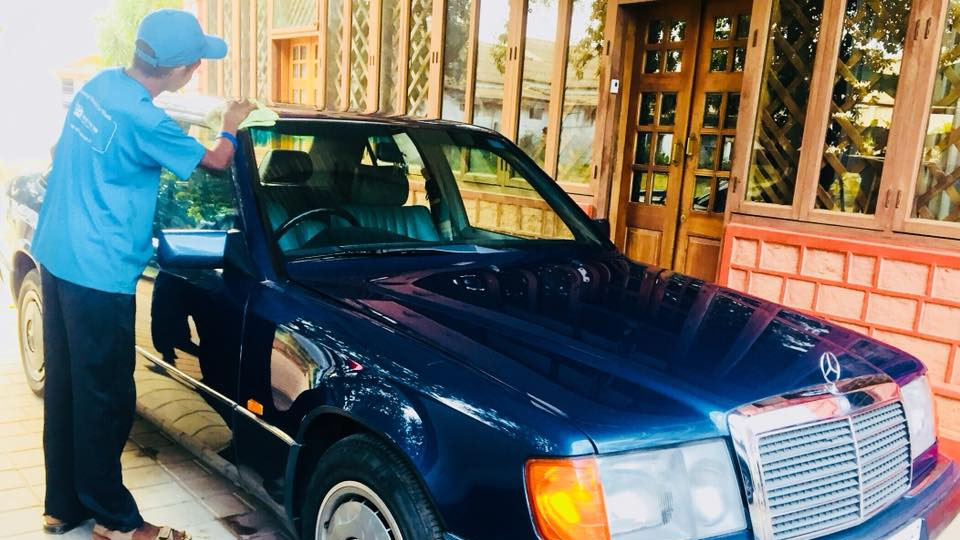
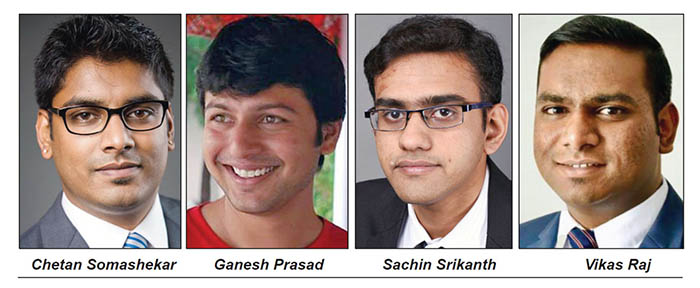
In what could be tagged as a pioneering initiative to provide an environment-friendly car wash service in Mysuru, a group of automobile enthusiasts have started ‘Clean Our Car’ — Waterless car wash. This group consists of four friends who have studied engineering — Vikas Raj, Chetan Somashekar, Sachin Srikanth and Ganesh Prasad.

Vikas and Chetan have done their Master’s in Automobile Service Technology from Germany while Sachin has done his Master’s in Surface Technology (Germany) and Ganesh Mechanical Engineering in Malnad. These like-minded friends have quit their jobs and thus ‘Clean Our Car’ took birth in Mysuru.

Speaking to Star of Mysore, Vikas Raj said, “Lots of water is being consumed for washing cars and during summer and drought situations, washing cars and scarcity of water is a huge concern. We are related to the automobile industry and were experimenting with this idea from Sept. last year. It became a reality in Nov.”

CarWash02BF20may2018

About water savings, he said, “This can save lots of water. A normal car wash in service stations requires about 160 litres of water per car and so does the traditional and automated car washing techniques. The latest foam wash method too consumes about 90 litres of water for a single car. We wanted to change this concept. We use only about 3 to 5 litres of water per car and we provide door-step service to customers. The response in Mysuru has been very good.”

The team uses a biodegradable solution to wash the car. The surfactants in their formula helps remove dirt and suspends it from the car’s surface. It creates a thin film between the paint surface and the dirt, which helps clean the surface without scratching it. The solution dilutes mud, sand and dust particles rather than dissolving them.

Their formula contains active agents which lift dirt and grime from the pores, encapsulating it and making the surface easier to clean. The solvent is a protector-cum-shiner. It contains natural wax which protects against dust and ultraviolet rays, preventing fading of plastic and fibre parts.

Clean Our Car ensures that your car is neat and clean within one hour. Though the team has their office set up in Kuvempunagar, customers can ask for door-step service. And the prices that they offer are reasonable. They charge about Rs. 260 for a basic car wash, around Rs. 290 for exterior as well as interior car wash and Rs. 320 for a special exterior and interior plus car wash. They also have several other packages.

Vikas adds, “We use this biodegradable formula which has no harsh chemicals and thus it does not damage the surface of the body. The dust does not stick to the surface of the car as the solvent has the formula of a blend of wax coating.  Customers can use Clean Our Car App. Once registered, with just a click of a button we will be there at their doorstep to wash their car. We have services like exterior cleaning, interior cleaning, interior polishing, tyre dressing, wheel shine, interior vacuum, door sill cleaning, door pads cleaning, etc.”

source: http://www.starofmysore.com / Star of Mysore / Home> Feature Articles / by V. Shourabh / May 18th, 2018

Newest frog for India from Karnataka

New species: Mangaluru narrow-mouthed frog is found only in a small industrial area in Mangaluru.

The Mangaluru narrow-mouthed frog is found only in a small industrial space in the city

The latest addition to India’s frog fauna is the Mangaluru narrow-mouthed frog, which has been found in a small industrial region in coastal Karnataka.

The new find, described by a team of Indian scientists in the international journal Zootaxa on Tuesday, is christened Microhyla kodial after the city of Mangaluru (called kodial in the Konkani language) from where they spotted it two years ago.

The frog is seen only in a small industrial region here — a former timber dumping yard — surrounded by seaport, petrochemical, chemical and refinery industries. The yard is bounded by the rail line of the Mangalore Refinery and Petrochemicals Limited on one side and the busy National Highway 66 on another.

The frog’s presence in this urban area could have been easily overlooked given its small size too: the greyish-brown frog is just 2 cm long. A thick olive-green band on its head, less-prominent dark green bands on the rest of its body and a few other physical features also set it apart from other similar-looking frogs. However, it was the frog’s very distinct loud, long calls that prompted the study’s lead author Vineeth Kumar (of Karnataka’s Mangalore University) and his colleagues to study it further.

While the team’s surveys showed that the frogs are not seen outside of the urban area, behavioural observations revealed that the frogs breed only during the monsoon. Detailed genetic studies proved the team’s hunch right: the frogs were indeed a species new to science. Accidentally introduced? Interestingly, the scientists’ genetic work also reveal that the Mangaluru narrow-mouthed frog is more closely related to southeast Asian frogs than Indian frogs. The industrial patch where the frogs are currently found used to be a depot for timber imported from southeast Asia; therefore, the frogs could have been accidentally introduced with timber that came from Myanmar, Malaysia and Indonesia, write the scientists.

“There are several examples of animals including molluscs and Aedes mosquitoes that have been introduced to new places through traded goods,” said the study’s co-author N. A. Aravind of Bengaluru’s Ashoka Trust for Research in Ecology and the Environment.

“The new species could need some attention because we noticed new construction and truck movement in the industrial area,” he added. The Mangaluru narrow-mouthed frog is the 42nd species belonging to the genus Microhyla recorded from south Asia. More than 650 microhylids – or frogs belonging to the family Microhylidae – are found across the world’s tropics.

source: http://www.thehindu.com / The Hindu / Home> Sci-Tech> Environment / by Aathira Perinchery / May 16th, 2018